

TALKING TEXTILES
cultural thread
Image courtesy of Gallery MOMO
Until the 12th of May 2019, The Textile Museum in Tilburg, The Netherlands, is all about 'Cultural Thread' and using textiles as a tool for socio-political reflection. Featuring work by Aiko Tezuka, Célio Braga, Eylem Aladogan, Fiona Tan, Hana Miletić, Jennifer Tee, Mary Sibande, Otobong Nkanga, and Vincent Vulsma. The exhibition explores the vulnerability of human existence, cultural exchange, cultural textile and the long slave trade history of textile.“We live in a world where boundaries between countries and people are becoming increasingly blurred, power relations are shifting radically and cultures are mixing. The exhibition Cultural Threads presents exceptional pieces by contemporary artists who use textiles as a powerful tool to address a range of socio-political issues. They link textiles to their own search for identity and belonging in a globalizing world and use them to unravel histories and outline new future perspectives.”This theme is partly inspired by the book Cultural Thread - Transnational Textiles Today by Professor Jessica Hemmings. This book and the exhibition are all about the role that artists and designers play in the representation of global history, identity, and cultural interweaving.
photo by Eylem Aladogan
photo by Kristien Daem
talking textiles : japan 2018
photo by galen crout for unsplash
A unique journey hosted by Marcella Echavarria & Philip Fimmano Edelkoort Inc. is proud to present the third adventure in a series of special journeys delving into textiles as part of its TALKING TEXTILES educational initiative. This intimate experience will allow a select number of travelers the opportunity to emancipate themselves from their daily lives and escape into the magic of Japan and its culture. Accompanied by textile experts and curators, guests will tour esteemed textile collections, learn about natural fibers, regional traditions and local weaving techniques, all the while immersing themselves in Japan’s traditional culture. SAVE THE DATES: August 23-September 3, 2018 Please join us this summer for an unforgettable journey into the heart of Japanese culture. Philip Fimmano and Marcella Echavarria invite you to discover some of the country’s most inspiring textile mills and retail experiences. Accompanied by Kaori Ieyasu from Edelkoort East’s Tokyo office, this insider’s look will introduce you to our favourite addresses and places. PRELIMINARY TOUR SCHEDULE August 23 : arrival in Tokyo 4 nights in Tokyo Visiting the city’s most inspiring retail venues to uncover Japan’s latest trends and creative ideas. Includes a visit to Nuno with Reiko Sudo, a stop at Pigment Tokyo with over 4500 shades or the world’s biggest art supply, the Issey Miyake studio and a surprise museum treat! Accommodation is at Hotel Claska, one of the city’s new-style hotels. August 27: 1 night in Mount Fuji Take a bullet train to Yamanashi, a traditional textile region that has reinvented itself over the past few decades. We will visit small mills creating sophisticated textiles for fashion and interiors in innovative yarns and techniques. We will also introduce you to the weavers themselves during an intimate interactive meeting. Accommodation is in a peaceful ryokan, located under Fuji-san’s protective eye and serving fine Japanese food and wine. August 28 : 2 days in Kyoto Continuing on to Kyoto, the tour will visit niche artisans working in diverse crafts while allowing time to experience the country’s traditional capital. Accommodation is in one of the city’s old-style houses. August 29 & 30 : Tokushima The trip is highlighted by a textile trek to remote Tokushima to visit Buaisou, one of Japan’s last traditional indigo dye farms. Accommodation is in a local inn on Shikoku island. August 31 & September 1: Osaka September 1: Transfer to Osaka, the country’s industrial textile hub to visit interesting stores and its renowned National Museum of Ethnology. An amazing and inspiring end to the trip! September 2 :departure from Osaka airport or onwards via Tokyo COST - 13 DAYS US $7,800 per person, all inclusive (single occupancy) US $6,900 per person, all inclusive (couple occupancy) Discounted rates for academics & Talking Textiles trip alumni US $7,000 per person, all inclusive (single occupancy) US $6,100 per person, all inclusive (couple occupancy) Excludes airfares & airport transfers
photo by yu kato for unsplash

photo by sorasak for unsplash

photo by thomas tucker for unsplash
2018 dorothy waxman textile design prize call for entries
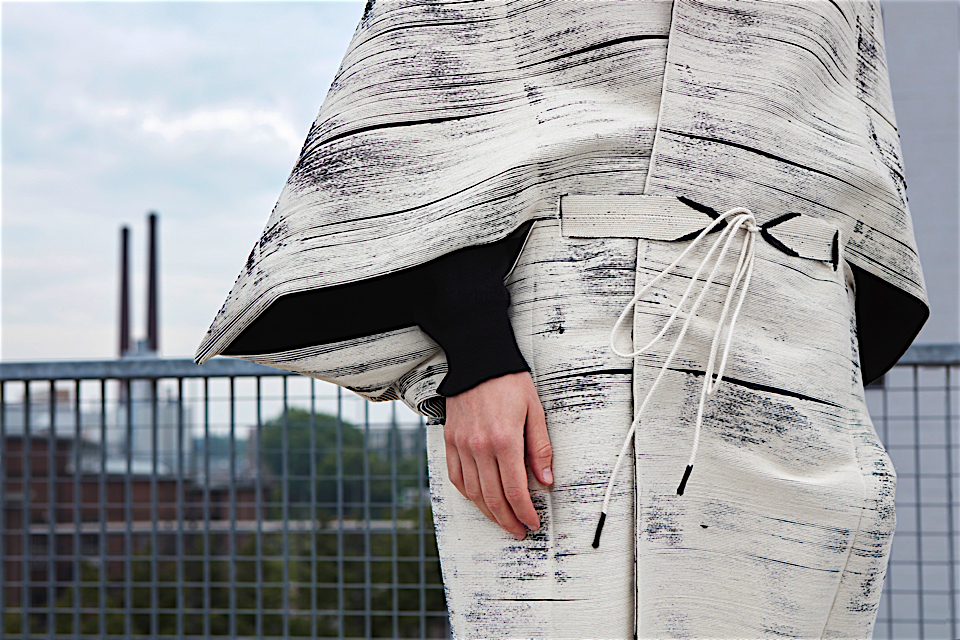
2017 Prize Winner Wendy Andreu
We are pleased to announce a call for entries to the fourth annual Dorothy Waxman Textile Design Prize, awarded to a textile or fashion design student who exhibits innovative thinking and inspiring creativity in textiles. Proudly supported by America’s leading carpeting and flooring company MOHAWK, the prize winner will receive $5,000 and coverage on Trend Tablet. The prize is part of Li Edelkoort and Philip Fimmano’s TALKING TEXTILES initiative that promotes textile education, creativity and awareness. Deadline for submissions: July 14th, 2018
Prize announcement: September 6th, 2018 as part of NEW YORK TEXTILE MONTH
The Dorothy Waxman Textile Design Prize honors Dorothy Waxman, the original driving force behind Trend Union and Edelkoort Inc. in the United States and contributing reporter to the magazines View on Colour, Textile View and Viewpoint. Waxman’s insatiable curiosity and discerning eye for the avant-garde has inspired Edelkoort and her team for decades. Waxman also introduced the American fashion industry to European textile partners with her work at the Fashion Group. As an avid textile aficionado, she believes that creative fabrics can change the design landscape in profound ways.

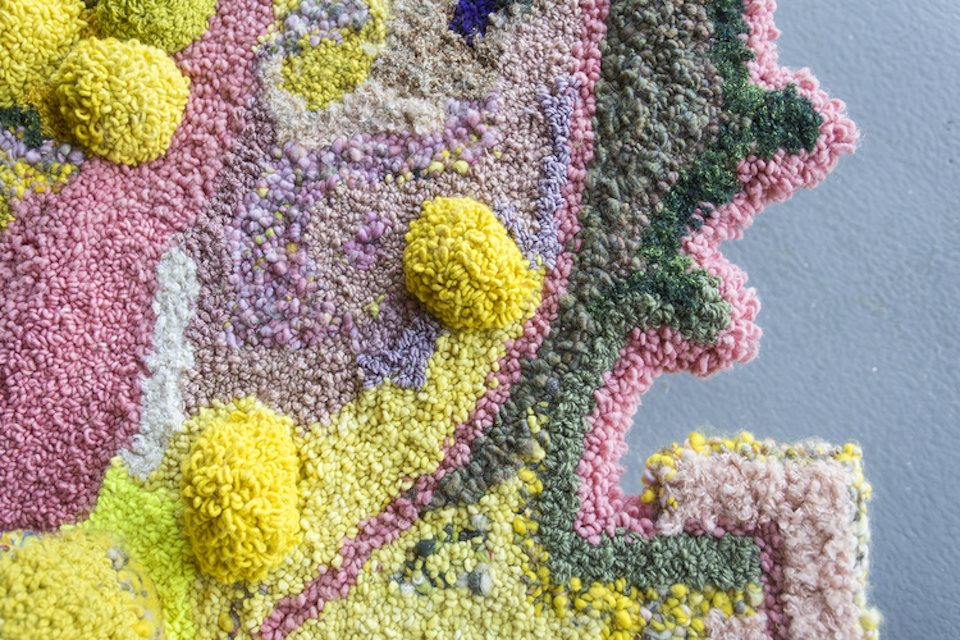
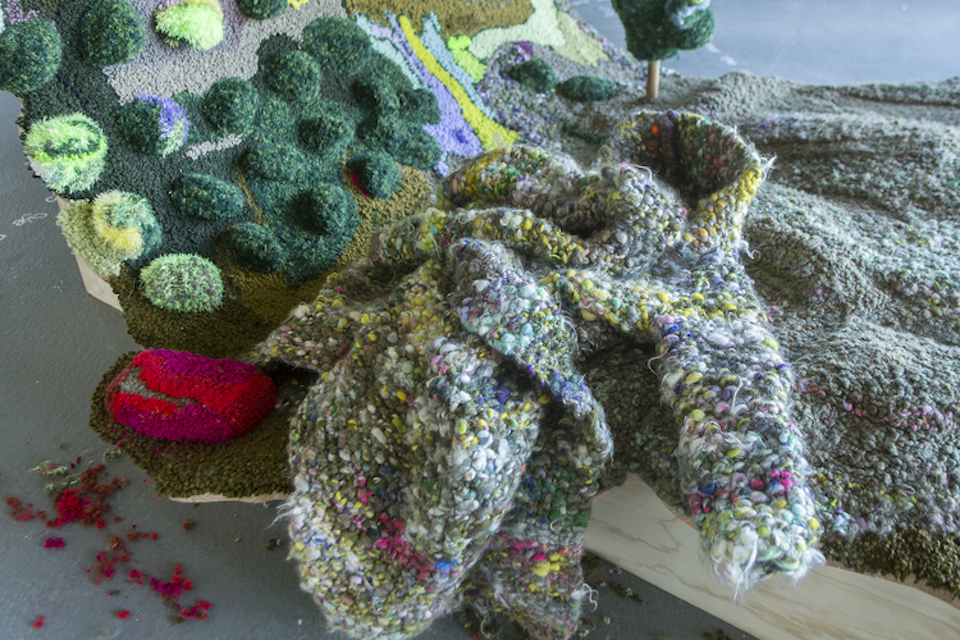
a neatly manicured hedge
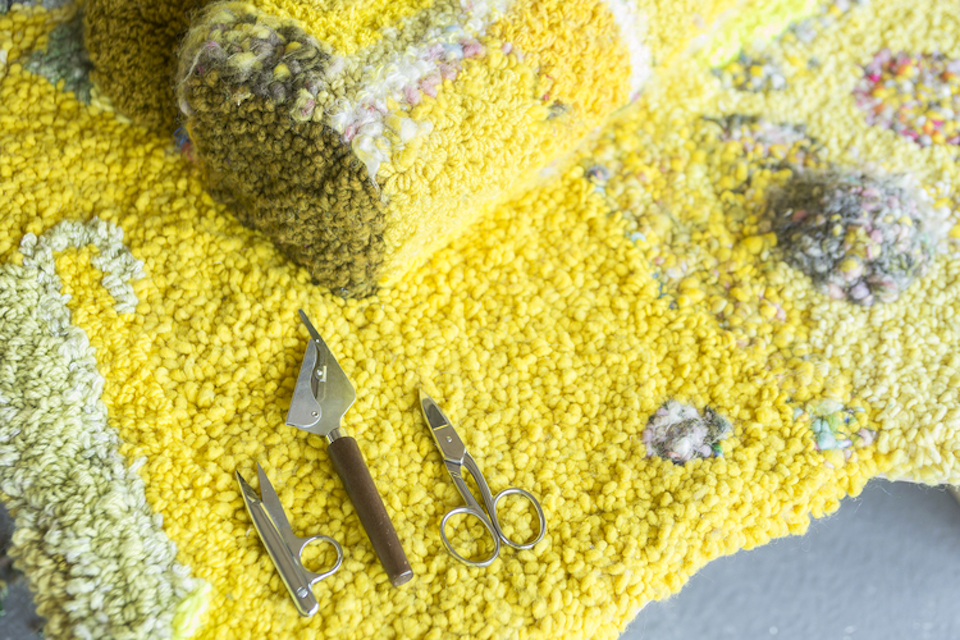
A Neatly Manicured Hedge is an installation consisting of a 3d tufted carpet, a knitted coat and a couple of tools such as scissors. Placed on a wooden stage with both a horizontal and vertical space and a distorted curve. The installation is supposed to be a space in a space, a world that is standing on its own inside our existing concrete world.
A Neatly Manicured Hedge started with the desire to make a all-encompassing material for a specific place. A material that holds a little bit of everything. A blend, a mixture, a melange, a tweed. The material would be something to hold time and place.
In my ambition to compose this all-encompassing material of a specific place, I decided to create that specific place first.
The world is a 3d carpet which is made with a mechanical tufting tool, the tool pushes loops of yarn trough a backing fabric. Each loop of yarn means one of my hand movements, the maker. I liked the idea of this process because it makes me feel like a true creator of my own world. I like to be the folly builder who is building a world stone after stone or tread after tread completely by hand. Building for the sake of building. Spending time is a luxury.
Part of the work is performative. During the performance I am a camouflaged creature, wearing a coat made out of the same materials as the environment. Tweed is a fabric that extracts its ingredients and colours from the land it grows on. Hunters used to wear tweed as camouflage.
Cutting the pile of the carpet, like a shepherd clipping a sheep or a gardener trimming a hedge. The carpet is made by hand. And it will also be broken down by hand. Giving each tread the attention it deserves. There is enough time. The only two things a sheep needs to grow wool are water and grass. During the performance I am the sheep whose coat is growing by spending time eating.
In the end, after a long time has passed, there will be nothing but a mountain of woolen fluff. Yet this mountain of fluff would not just be a mountain of fluff. It would be the all-encompassing material.
the urchins
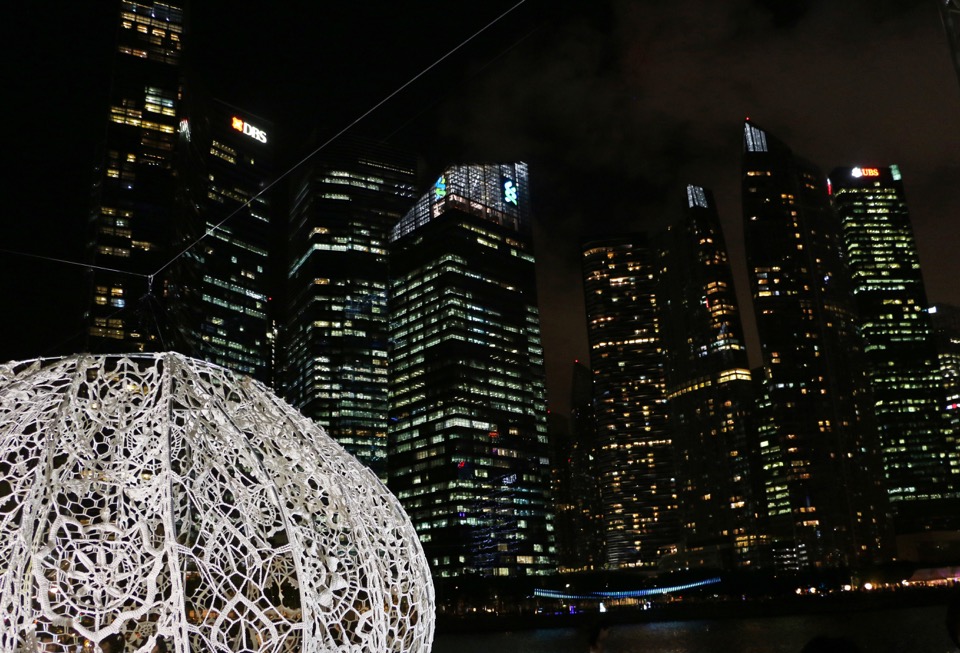
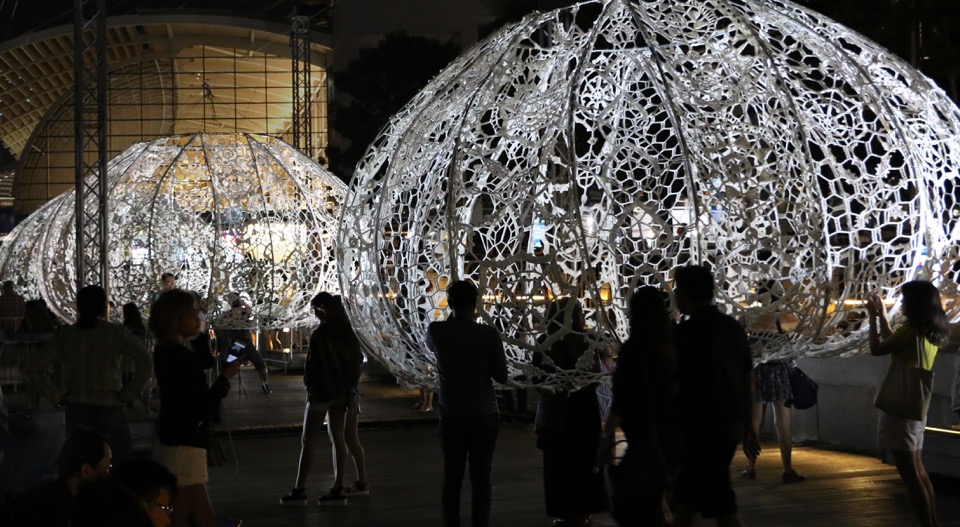
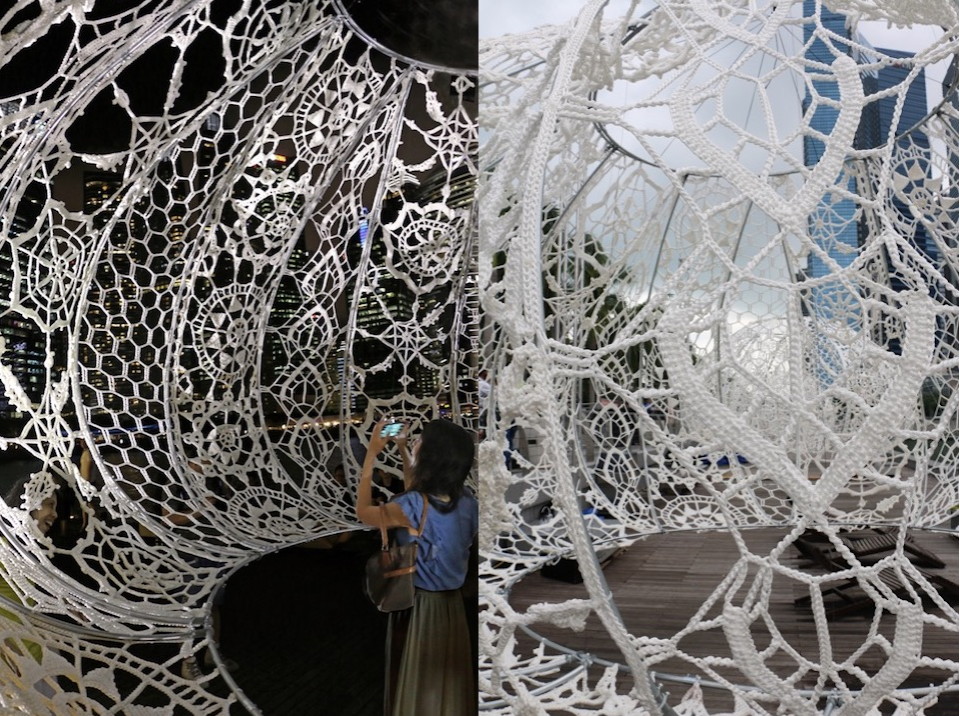
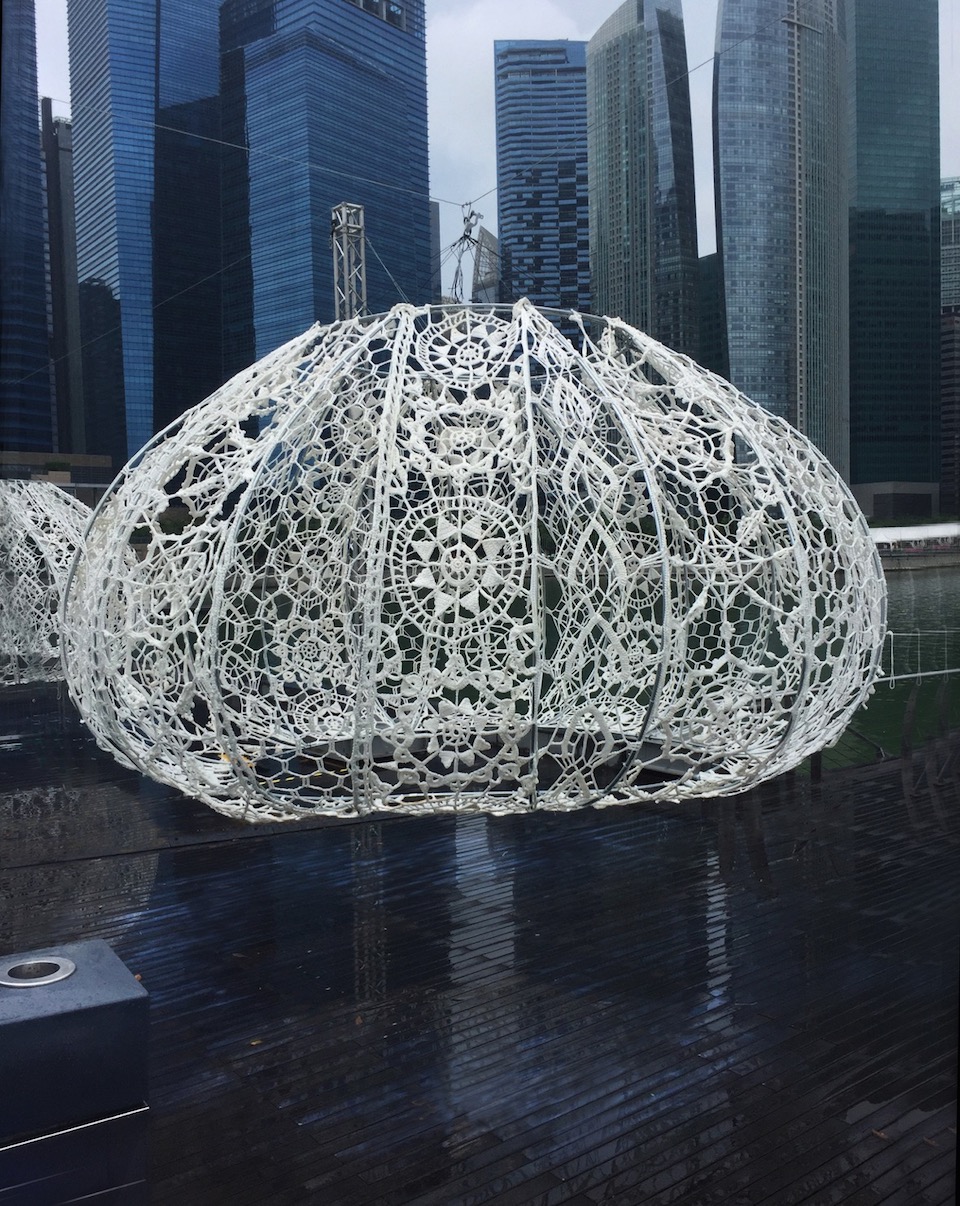
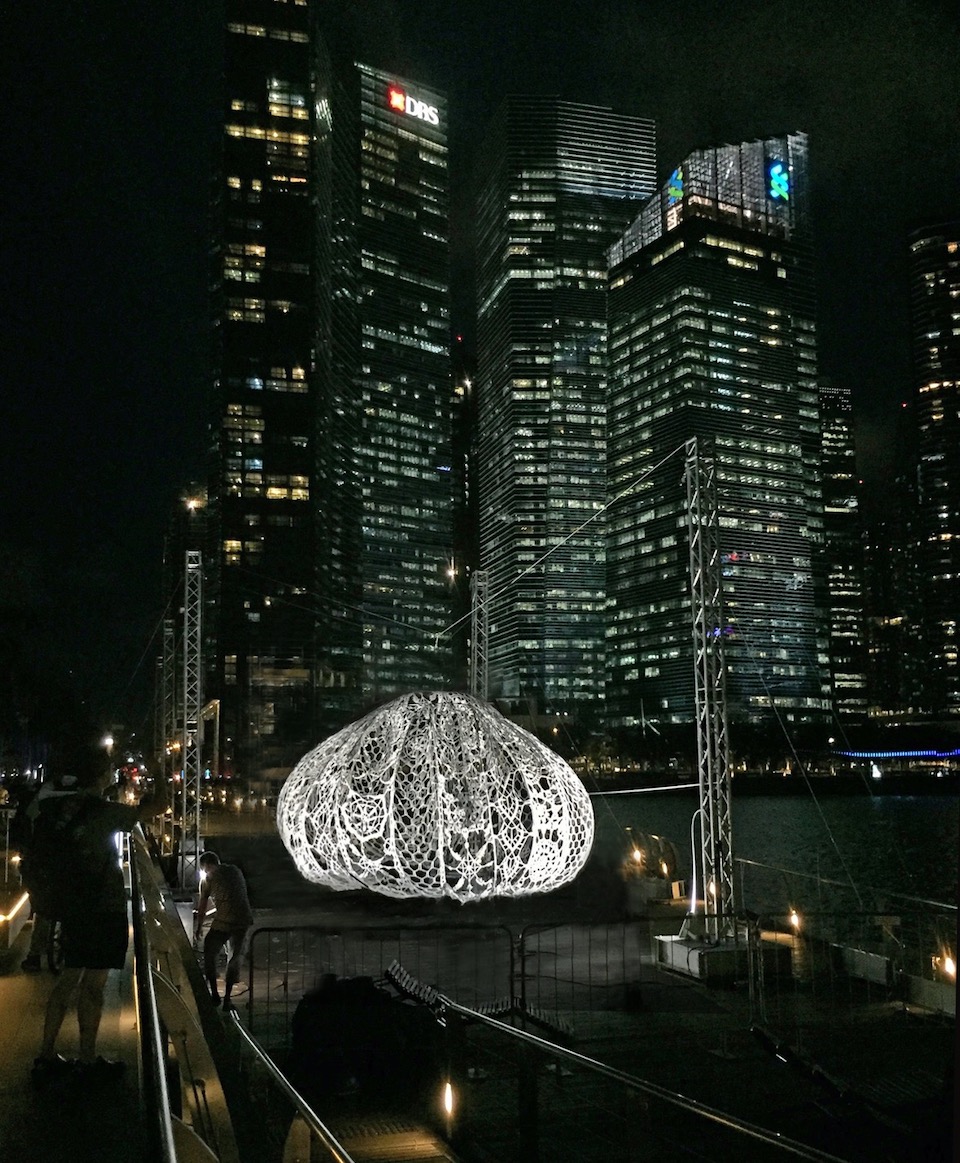
Collective Choi+Shine Architects has created a trio of installations above the water of Singapore for the 2017 iLight Marina Bay Festival which had the theme for the festival of Biomimicry and sustainability. The installation in-between the imposing skyscrapers, helps people to stop for a moment and take time to look again. The highly time-consuming installation has a length of 17 meter and weight of 100 kg each. Fifty people created this all in a period of two months. The giant crochets interact with natural light during daytime and glow when lightened during night.
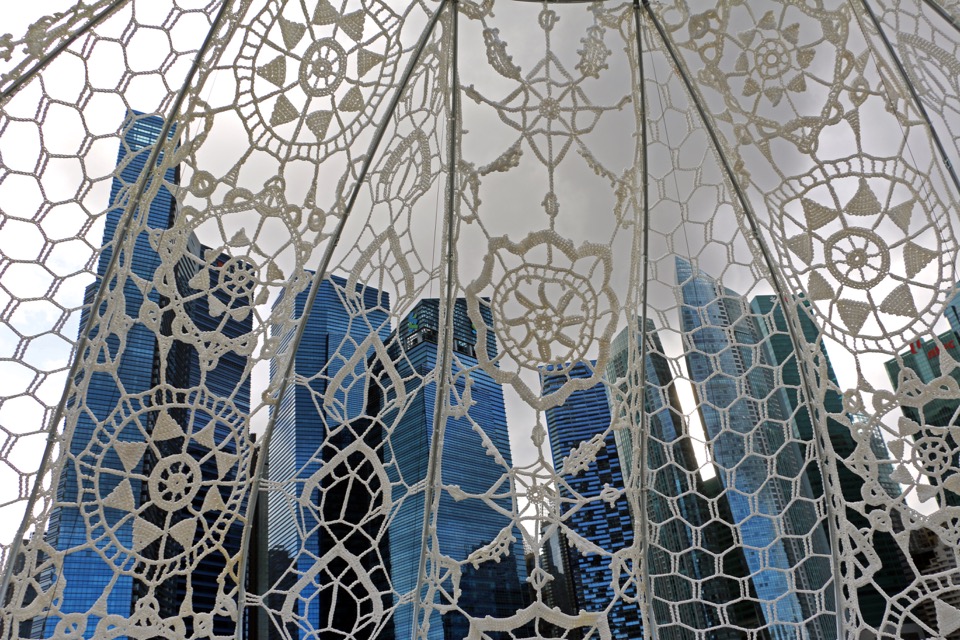
This project is inspired by sea urchin shells, which are enclosed yet light weight, delicate and open. Their textured and permeable surface interacting with light creates openness, while the pattern’s mathematical repetition brings visual rhythm and harmony. Against light, the sea urchin natural form reveals one of the most spectacular patterns found in nature.
The Urchins interact with natural light during the day, and glow when illuminated at night.
At night, the mysteriously hovering and glowing large Urchins create a sense of magic as if time has stopped. When viewers enter into the Urchins, they will be surrounded by a single layer of glowing, lacy surface, where they can enjoy the detail and texture of the Urchins and see the city, water and the sky through this visual filter. When other viewers see the occupants in the Urchins, the occupants will glow within the lacy room, creating an illusion of ethereal levitation of the occupants, while the occupants become a part of the art work.
Seeing hovering and glowing lacy objects against majestic skyscrapers and dark water would make them pause and gaze. This momentary pause of the mundane routine of our life would hopefully give us an opportunity to find the poetry around us.
During the day, the crocheted surface of the Urchins reflects, absorb and retransmit sunlight. In the morning or late afternoon sun, the Urchins appear as glowing, translucent object. During the full day sun, the lightweight and yet huge lace urchins cast intricate, patterned shadows creating both a pleasant visual experience and providing a small shelter from the hot sun.
Waxman Textile Prize – Winners #2017
wendy andreu
Lidewij Edelkoort and Philip Fimmano are pleased to announce that Wendy Andreu from Design Academy Eindhoven is the winner of the 2017 Dorothy Waxman International Textile Design Prize!
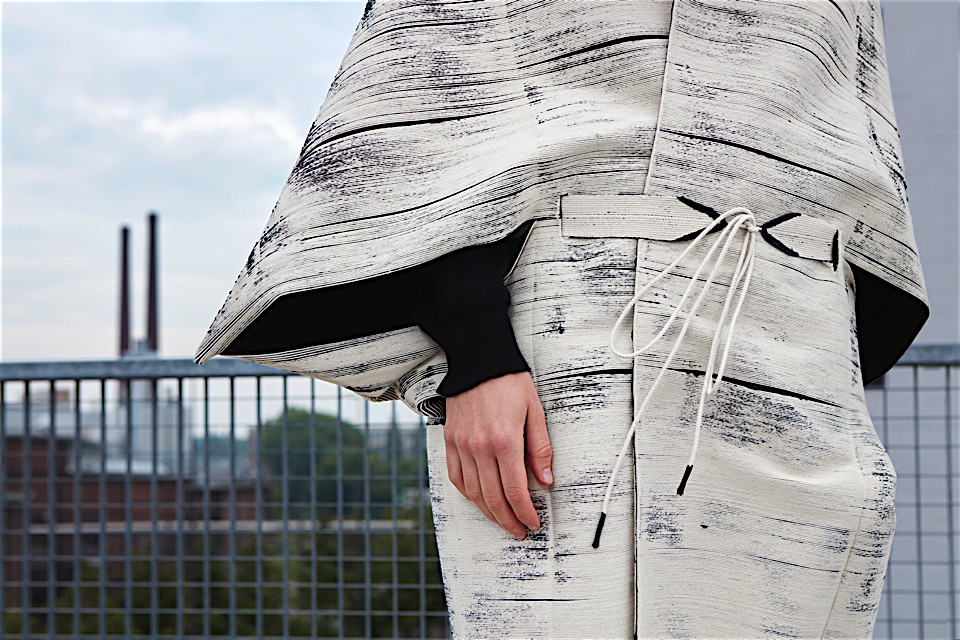
Her project impressed the jury with its neither woven nor knitted essence. Called ‘Regen (which means “rain" in Dutch), her textile is double-sided with water-repellent latex on one side, and cotton rope on the other. Where the dark latex seeps between the light rope it creates shading and textural detail that make each item unique. Wendy’s accessories and garments are made by coiling the rope around a laser cut steel mold. Generously supported by Mohawk Group, Wendy also receives a prize of US $5,000.
Presided over by Dorothy Waxman, the 2017 jury was comprised of Royce Epstein (Mohawk Group), Helen Oji (Eileen Fisher), Paul Makovsky (Metropolis Magazine), Chloe Sos (Edelkoort Inc.) and designers Lori Weitzner and Sherri Donghia. They decided to give a Special Jury’s Mention to Hanna-Kaisa Korolainen (University of Arts, Design and Architecture) and the duo Pawel Lasota & Magda Mojsiejuk (School of Form, Poznan).
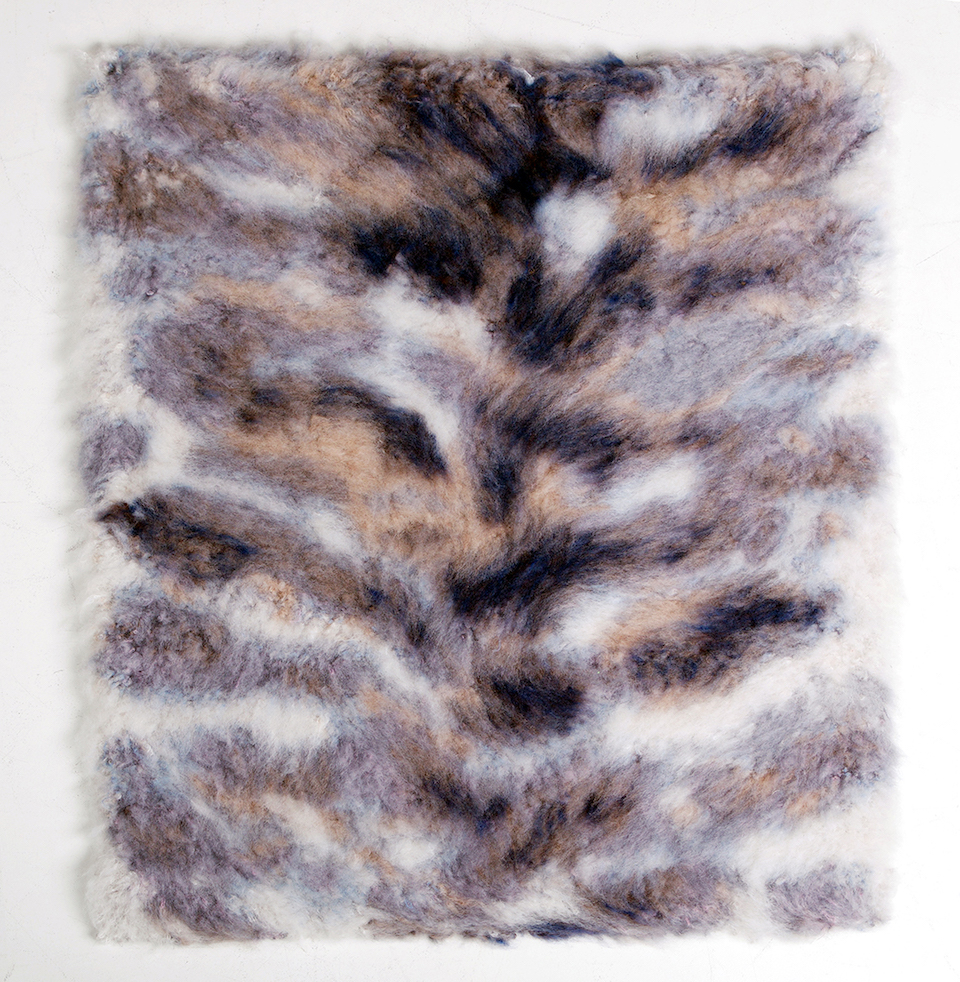
Design and style by Hanna-Kaisa Korolainen
Also giving reference to the rain, Hanna-Kaisa’s The House of Rain is a sumptuously-soft range of rugs and cushions in mohair that are a cosy antidote to today’s difficult times. Hanna-Kaisa wanted to see how sketches made with water could be developed into textiles and how sources of inspiration influence the process and the outcome.
Her textile’s surface resembles thick, dense fur where original motifs are blurred and almost disappear, because of the richness of the material. When brushed open, the mohair becomes organic and almost animal-like, it even feels warm. Its three-dimensional surface seems active as if it was alive and reaching out.
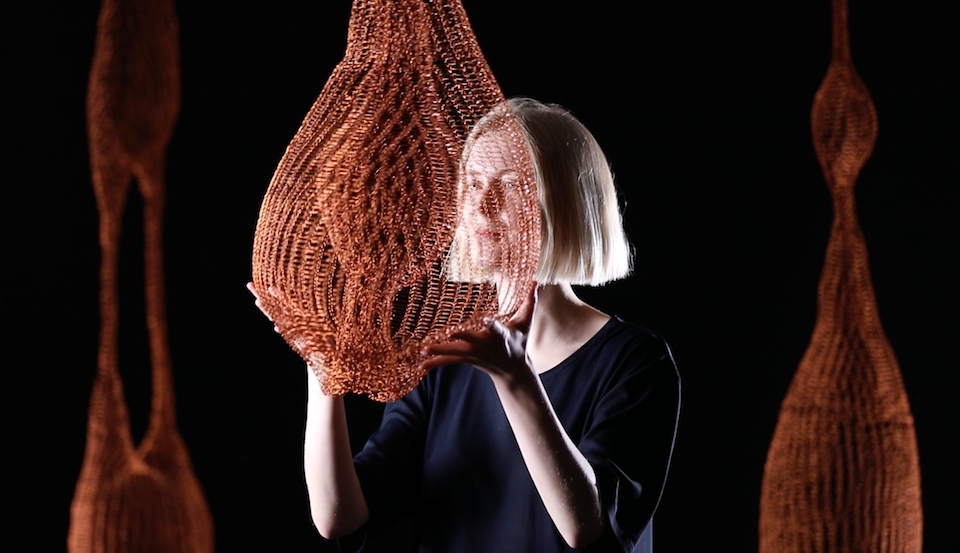
Knotty // Flexible-copper-structures-knitted-by-robot@Michał-Reich
Pawel Lasota & Magda Mojsiejuk also received a special mention because their project previews a future when technology and textiles will become one and the same, knitting everything from lamps to bridges. Knotty is a project that translates the knitting technique into the language and movement of a robot.
The resulting series of material copper wire structures displays the capabilities of this technology. Combining the properties of knitted fabric (constructing the material from a single line) with the properties of copper wire enables the structures to sense, react and produce sound. Let’s imagine a future where our surroundings constantly detect our presence and react to it.
peru 2018
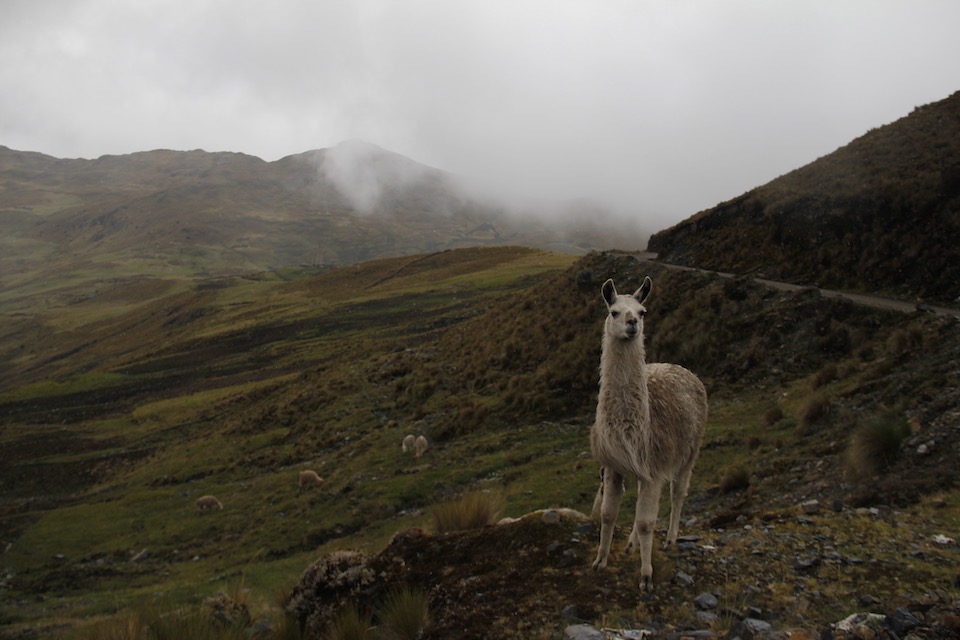
photo by Marcella Echavarria
Edelkoort Inc. is proud to present the second adventure in a series of special journeys delving into textiles as part of its TALKING TEXTILES educational initiative. This intimate experience will allow a select number of travellers the opportunity to emancipate themselves from their daily lives and escape into the Peruvian landscape and its culture. Accompanied by textile experts and curators, guests will tour esteemed textile collections, learn about natural fibers, regional rugs and local weaving techniques, all the while immersing themselves in Peru’s internationally-renowned food and folklore.
Peruvian textiles have been a part of history for over ten thousand years. Tour 1 travels deep into the Andes to seek out the essence of this expansive textile heritage, offering a small group of guests an up-close experience of the country’s natural yarns, unique traditions and handloom weaving techniques. Limited to a maximum of ten guests, this intimate tour includes visits to Arequipa, Lake Titicaca, Puno and Taquile Island, and gives guests an upclose and in-depth understanding the farming and processing of alpaca, highlighted by the once-in-a-lifetime opportunity to witness a Chaccu, the ancient shearing ceremony of the vicuñas.
Tour 2 will take guess to Lima, looking at the city’s amazing textiles, food & culture. Lima is a vibrant coastal capital, offering guests access to truly great textile experiences; from visiting unique private collections to seeing renowned museums, antique dealers and craft stores.
The city’s artistic neighborhoods, friendly creative community and cultural cognoscenti will leave guests inspired and enlightened. Lima is also famous for its dynamic food scene, blending local traditions with international influences to define a contemporary style nowadays influential around the world.
Guests on Tour 2 will also be introduced to several important dealers selling Peruvian crafts and textiles. Visits will also be organized to designers’ and artists’ studios, many of whom have been working in Peru for decades; creating a dialogue with local creatives and encouraging potential future collaborations. For professionals attending the tour, production introductions can also be made upon request.
While traveling together with other creatives, this shared experience will provide a setting in which to discuss the diverse topics and challenges we face today – seeking sustainable strategies and a more humanistic approach to redesign the future together.
For more information, please contact Chloe Sos at +1 (212) 420 7622 or by emailing chloe@edelkoortinc.com
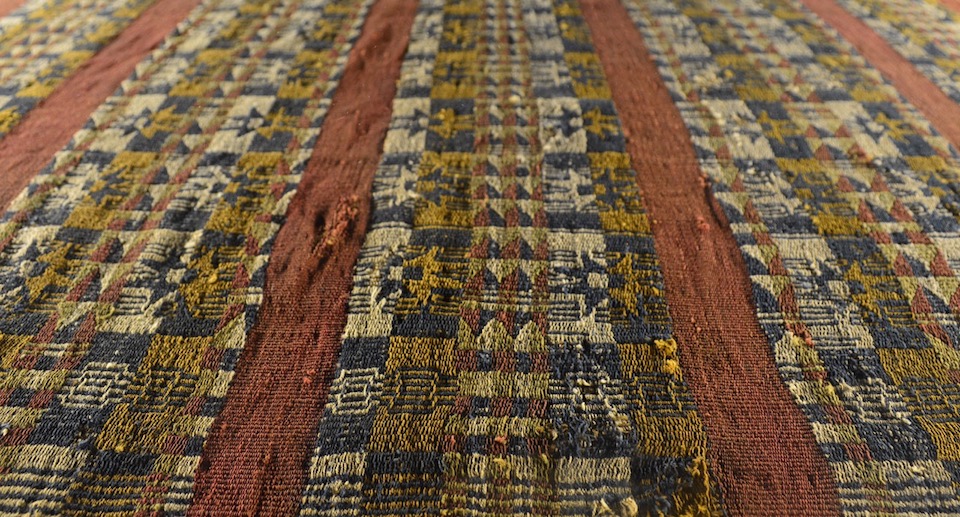
Amano Pre-Columbian Textile Museum, Lima
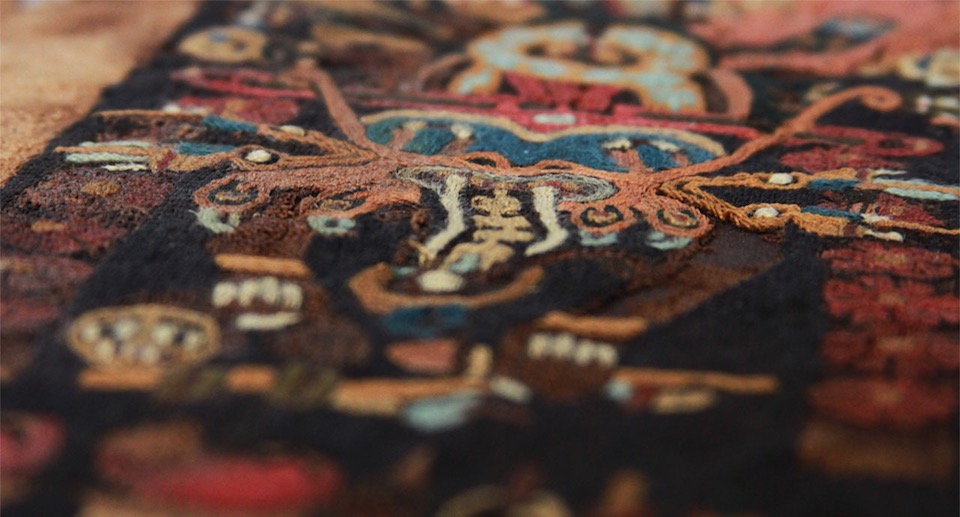
Amano Pre-Columbian Textile Museum, Lima
Waxman Textile Prize – Finalists #2017
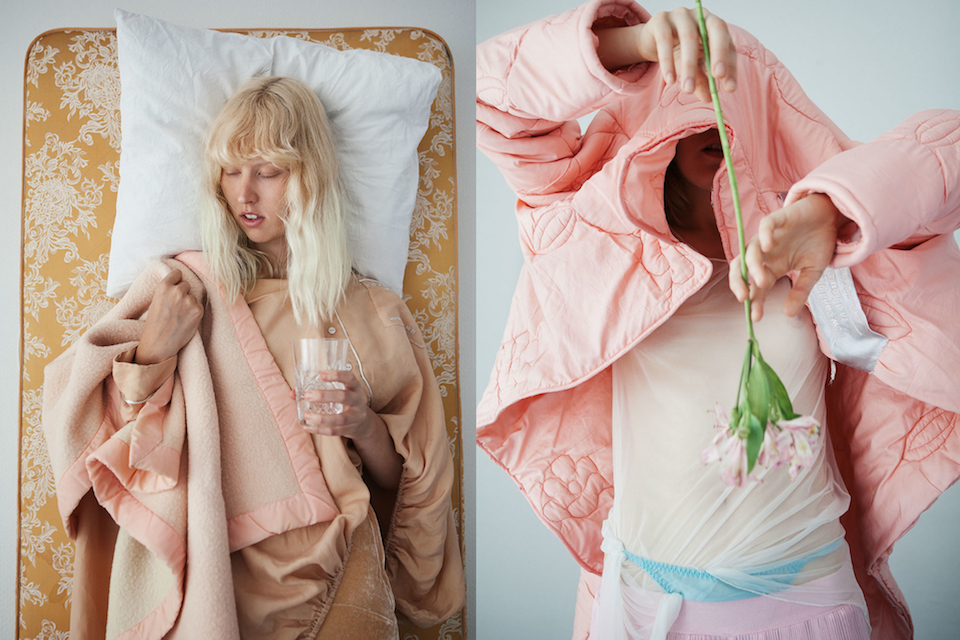
Aamu Salo (Finland)
Aalto University of Arts, Design and Architecture
Fictional Functions, 2016
The bed is a place where our minds are active while the body rests. It’s a shelter of comfort as well as where we are the most vulnerable. The framework of this project is around the bed, which refers to the usage of objects, textiles and rituals surrounding it as references.
Inspired by these references, the work envisions different scenarios involving these everyday life objects while speculating on their usage and meaning. Alike her other work, Aamu Salo seeks to find new angles in perceiving objects by deconstructing and questioning our environments.
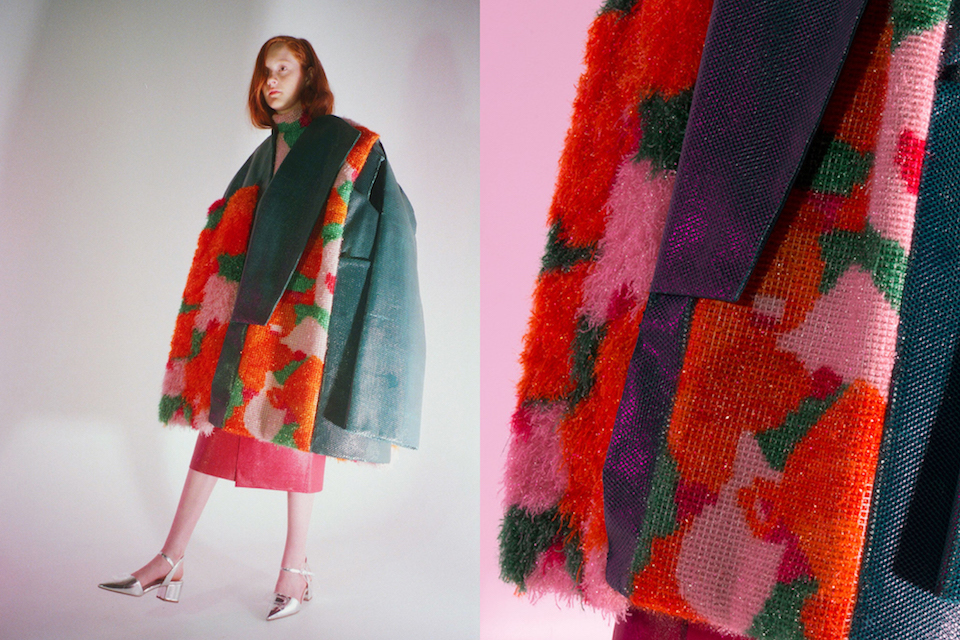
Stephanie Frig (United States)
The New School, Parsons School of Design
The Pepa Shaggy Flower textile, 2016
The Pepa Shaggy Flower textile was created via the techniques of hand dyeing and hand latch hooking. The synthetic Lurex yarn was hand dyed into their vibrant colorways, fire orange, burning magenta, forest green and rose petal pink. The pattern for the latch hooking aims to be one that is abstract and was formed through colour blocking flower shapes. Both the furry side and flat side was applied to the front and back panels of the enlarged coat.
Inspired by the over adorned and excessive nature of the 1980s films created by Spanish film maker Pedro Almodóvar and elderly women in their Sunday Best. This visually dynamic tactile-print led womenswear collection embraces an over embellished aesthetic where the lavish style of ‘dressing to impress’ is seen via structural box silhouettes saturated in immoderate textures and contrasting sickly sweet primary colours.
The dismissal of flat two-dimensional print making, encouraged a new form of print making that involved tactile unstable surfaces. This lead to the exploration of hand made techniques such as latch hooking and hand dying, relating back towards Pedro Almodóvar’s interior spaces of shaggy rugs, preserved furniture and wallpapers that match the curtains. There is an emphasis on hand made textiles to demonstrate importance towards traditional artisanal techniques as well as contemporary techniques such as laser cutting. Typical interior imagery such as floral and washing baskets were abstracted and redeveloped. The collection takes elements of everyday clothing and imbues them with a theatrical, exuberant aesthetic, reflecting feverish desire unleashed.
Agata Ciechomska (Sweden)
University of Boras, The Swedish School of Textiles
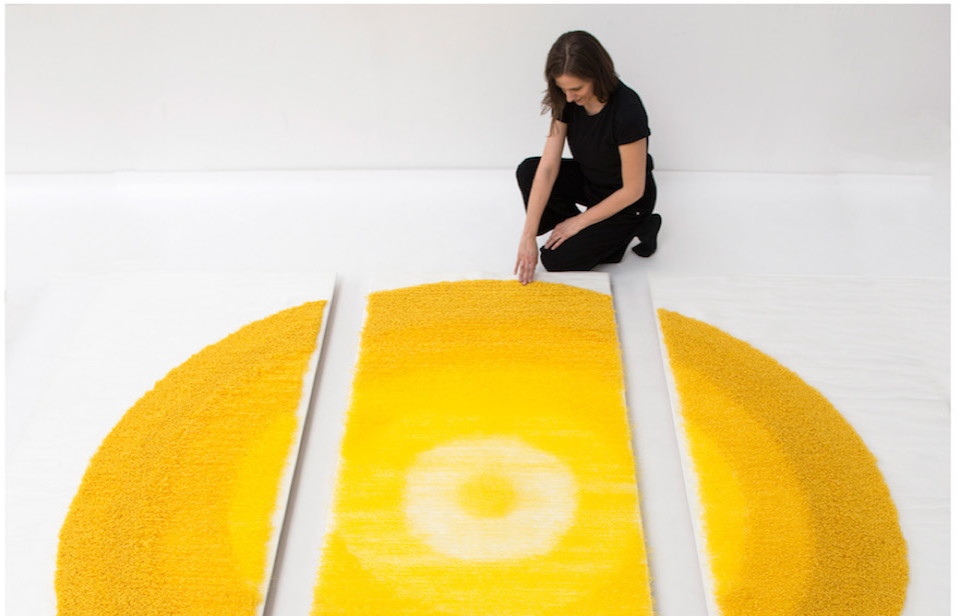
Colour in Loops 2017
The work consists of hand-tufted textiles performed on mainly transparent, woven on 16-shaft loom, backing. The base material in all of the pieces is monofilament, both, transparent and coloured, however to enhance its properties or strengthen the expressions, it is often combined with other kinds of yarns – cotton, wool, linen, synthetic yarns, as well as various effect yarns.
The motivation for this work is based on the challenge to the preconception of hand-tufting through material, colour and light. When imagining a rug, a very specific image appears in our mind.
Some details of that image could vary from person to person, but what is almost certain, dense and heavy, probably made out of wool, woven textile will pop up in front of our eyes. This work explores new expressions of hand-tufted textiles achieved by the material driven research. The investigation proves that qualities of monofilament yarn have a great ability to enhance colours as well as add certain kind of lightness to the hand-tufted piece. Furthermore, the transparency of monofilament yarn allows an interplay between the loops and the woven backing, opening up for new patterns and changes in colour perception.
Jacob Olmedo (United States)
Parsons the School of Design
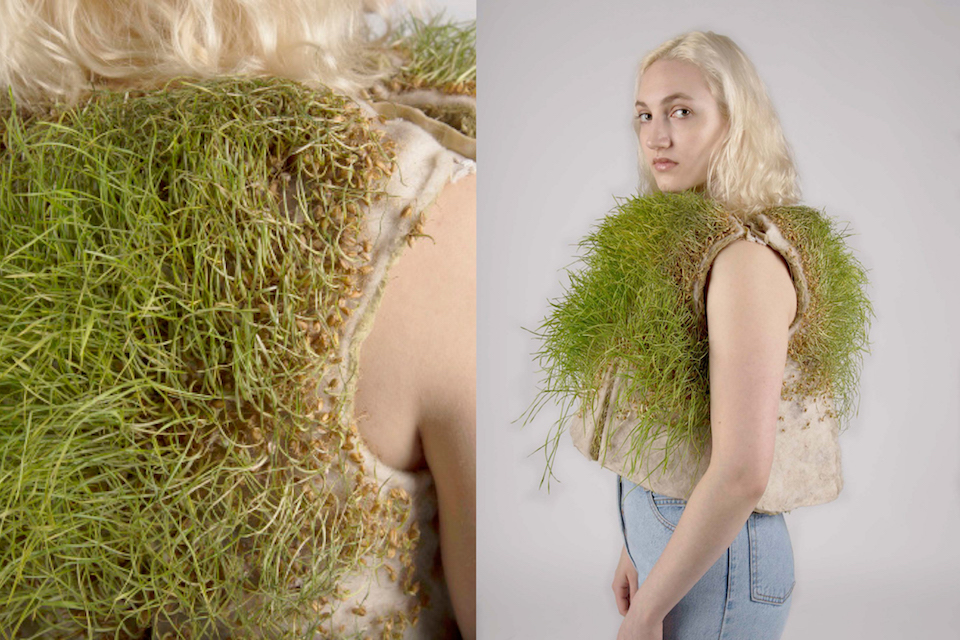
And The World Will Be As One., 2016-17
This textile is a hydroponic growing textile (a textile that supports and promotes plant life.) This textile is a compound of three different layers, the first being the un-dyed organic cotton twill (sourced in the United States) treated with beeswax (Sourced from hives in New York City) to make a water proof layer, the second is a strong compound of materials that holds all the moisture for the plants. The third is a biodegradable wood pulp felt that is soaked in nutrients- this layer is important once the seeds are layered on top of it. The top layer is wheat berry seeds (Wheatgrass) these seeds are finicky but are great in term of longevity. All of these layers are hand sewn together pattern piece by pattern piece.
We are currently in a new era, combating mass species extinction and climate change. This thesis explores the political and social implications of the environment through the eyes of a bee while also exploring the meaning and practice of guerrilla gardening. With the last intention to bring humans and the natural world together as one, this thesis is an expression of growth, change, activation, and participation.
The first act is three wearable garments that conceptually act as environmental armor made of a hydroponic textile that speaks closer to the natural world and humans coming together as one. I went through scientific experimental research to engineer this hydroponic growing textile, where I utilized and modified already existing hydroponic systems and technology to create this textile that supports and promotes plant life.
Laura Kunciūtė (Lithuania)
Vilnius Academy of Arts
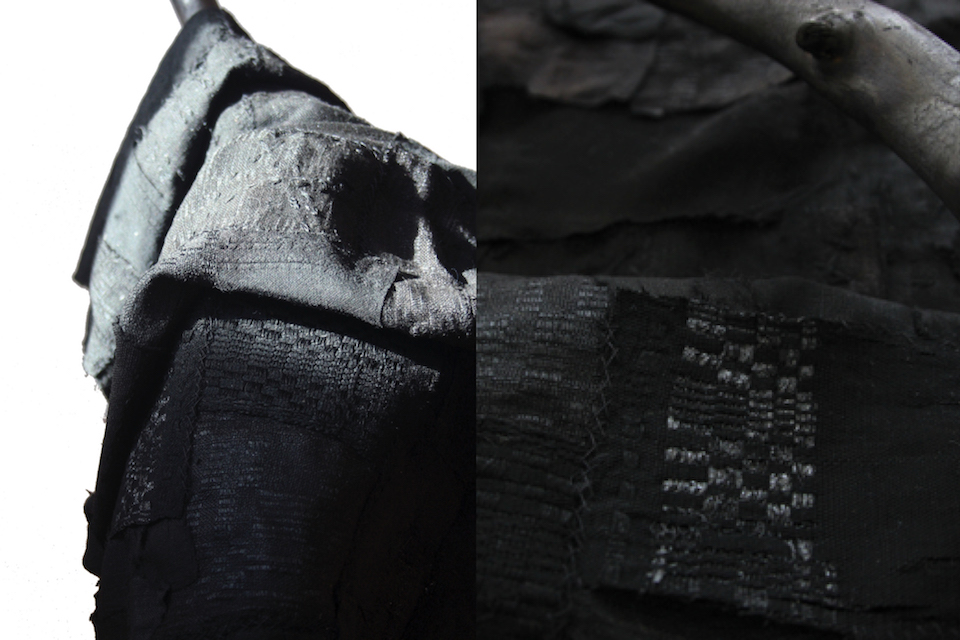
Charcloth, 2017
Charcloth: carbon-linen fabric; personal technique of charring, weaving, needlework; 35x110 cm. Textile Charcloth is a state of transformation, capturing the moment before fabric burns completely and only ashes are left behind. With my personal technique of charring or burning with smoke (similar method as the one used for black ceramics), I managed to create a unique fabric-like carbon. Previously qualifying as pure white linen, old scraps of fabric that I have once woven or gathered from my relatives or friends over the years, through the element of fire, revitalised as an extremely flammable different kind of material. Over the transformation, composition of the fabric has changed from linen to carbon (coal). Yet, the initial memory of the material, its weaving patterns or symbols, have remained.
Fabric Charcloth is based on aesthetics the of the materiality itself.
The driving force behind the textile was the memory of the material. I was mesmerised by this intuitive thought that the materials have memory.
Therefore, I focused my research on grasping the answer whether materialities such as simple home textiles, wood, wax, etc. can retain memories. In a nutshell, do materials remember themselves or others interacting with them. No longer identified as linen, with its structure changed to coal, through the process of charring, Charcloth still retains the memory of itself – the woven patterns, symbols remain. It being the proof of the hypothesis, that material remembers itself and has its own memory, is of great importance to the landscape of creative textiles‘ future. If the matter has memory, as a consequence, it would imply the existence of high energy places (such as religious architecture, nature‘s landmarks, etc.) as well as metaphysical pollution. With a vast increase of public spaces (such as shopping centers, night clubs), there is an urge to design energy filters. Charred linen cloth concentrating vast energies of warmth becomes extremely flammable and fragile, yet retains vibrancy of a memory. Having filtering qualities of coal, Charcloth, is a step towards filtering and revitalising spaces, as energy pollution has become more obvious in the era of globalization.
Sanne Bax (The Netherlands)
Gerrit Rietveld Academy
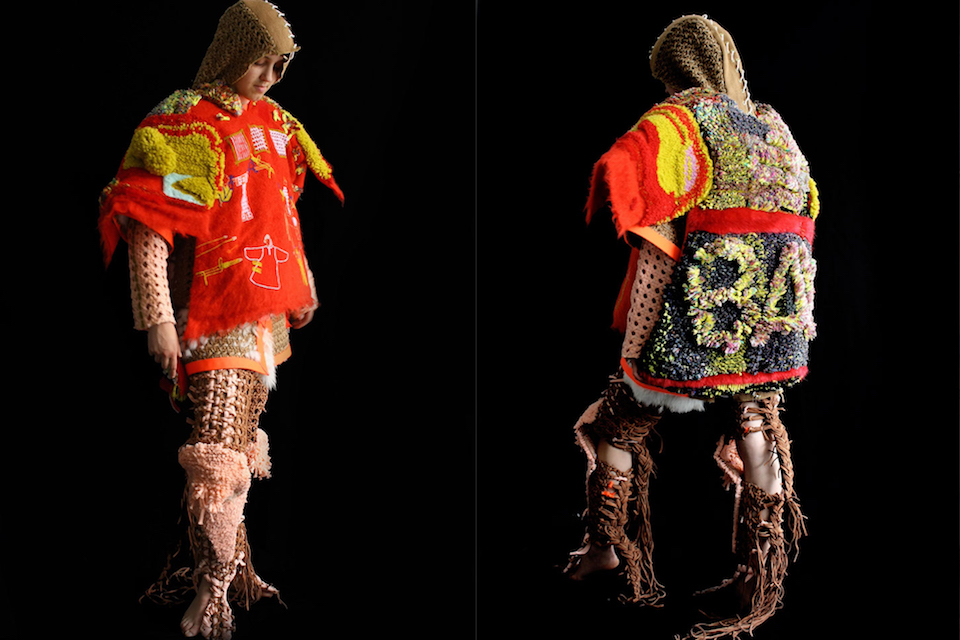
The Battle of the Tapestry, 2015
A woven, tufted and embroidered costume that links the technique of making a tufted carpet with a medieval battle : Wool, mohair, cotton, leather, jute, rabbit fur, metal and nylon. It starts with the preparations, the backing fabric on which you are going to tuft needs to be strong. Strong like the chain mail of a soldier, impossible to pierce. After the chain mail is made it will be stretched on a frame, the harness. The munition consists of wire or something similar, ribbons, strips or treads will soon be the pile. The act itself is one of pure violence.
This is why you use a gun to shoot the pile. You need a lot of force, otherwise it misses its target and remains stabbing halfway. In a relatively dense surface, a lot of chain mail per centimeter in combination with a relatively thick wire you can probably imagine that this is tough work. Many piles close together will form a phalanx that protects each other and is able to win.
Who remains is the rightful winner and will be rewarded.
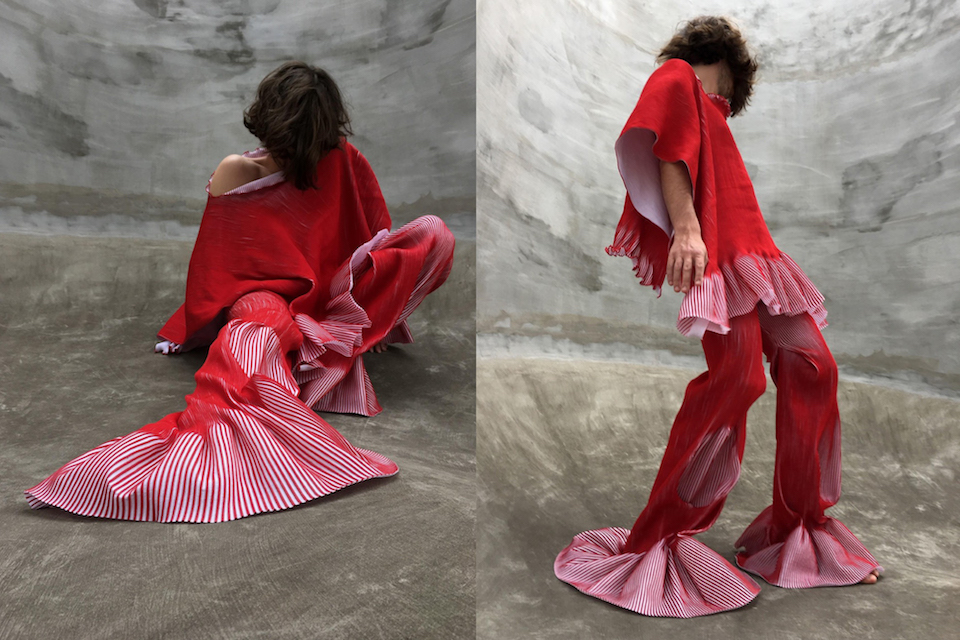
Dana Jasinkevica (Sweden)
University of Boras, The Swedish School of Textiles
Motion Capture, 2017
Taking materiality as the starting point of the design process, knitting jacquard rib material on the industrial circular machine. Using yarn combination of polyester/lycra/cotton. Manipulation of a jacquard rib material by gradually stretching and coating it into various shapes in different scale. Draping the created material on a body while allowing the coated shapes direct the garment silhouette and to interact with the perception of a body. Shapes - Most of the shapes were achieved by stretching the material around using tubular objects, during the process were used also round and angular shapes. The fixating was done by using coating CB21. My focus points were mainly on stretch ability, redefining knitwear, the motion capture which evokes an optical illusion and the perception of the body. Curving or bending of structural lines. The intention in creating this textile is to explore extremely stretchy jacquard knit material in relation to stretched and coated shapes that could lead to an unexpected strong visual expression.
Three finished outfits in my experiments tested an array of aspects connected to the methods to prove, through practical applications, experimentation and multiple results the strength of methodological framework, technique, concept/idea and possible applications. For the first experiments, I used red and black polyester and white cotton with the possibility to apply digital print on it. The knitted and coated material shows a lot of potential and the future applications may include more developed interaction between the body and material, exploration of other materials that act in a similar manner as the knit, for example, pleating. If experimenting further, next steps would be combining different printing techniques with the knit (and other materials). Issey Miyake is an important reference for my work - if I could do a contemporary take on his work and to build on his findings how would that materialize?
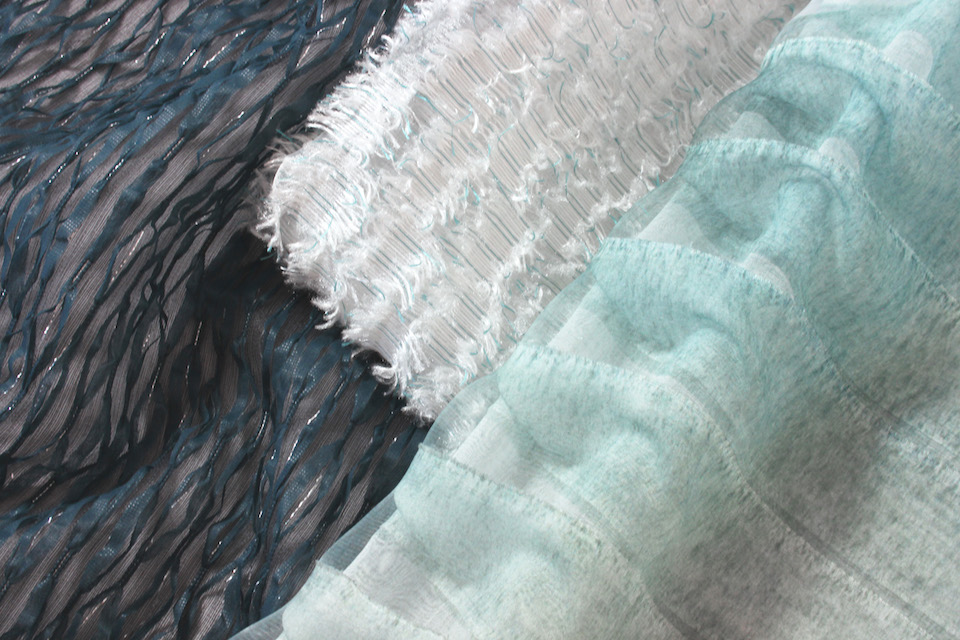
Tiina Paalivainen Frig (Finland)
Aalto University
Floating & Clipping, 2015
In this study, I have applied a practice-led research. I chose practice-led research as my research method because I was not familiar with the industrial production and constructions of clipped designs. By creative practicing I gained a deeper under-standing and new insights into the technique of floating and clipping. The creation of an idea port-folio by using various sketching methods and the development of the designs for production, represent an instrument in this research. In this study, creative activity meets theoretical background. Floating & Clipping collection provides new approaches of thinking when it comes to the clipped textile designs. The practice-led research method used in this Master’s Thesis develops sketching methods in designing of clipped fabrics and creates an idea portfolio in order to demonstrate the appearance of this type of cloths. The idea portfolio supports the dialogue between the designer and the technician in a design case in collaboration with the Italian weaving mill Lodetex. The Floating & Clipping collection is produced through the ideas evolved from the technique and the sketches.
The topic of my master’s thesis evolved not only from my own interest and fascination of jacquard weaving. A little bit of luck contributed to the final outcome of this study as well. At an early point of my study, I wanted to discuss the material and col-our design of woven textiles. I considered various ways on how to approach the subject from a fresh and meaningful point of view. In the beginning of the spring of 2014, I spent three months on an internship at the Italian weaving mill Lodetex. Lodetex is specialized in the production of jacquard fabrics for furnishing markets. I decided that doing my thesis in collaboration with Lodetex would be a viable continuum after working in the company as an intern. I discussed the matter with owner Luca Farhanghi and he agreed that a thesis collaboration would be interesting and beneficial for the both of us. He informed me about a few production lines that the company planned on developing. One of these lines related to clipped designs. To me, the development of clipped designs seemed like a fascinating and interesting topic to research. Since I had already designed two clipped designs during my internship, I realized that the weaving process of these fabrics required more advanced technical understanding in interwoven structure of cloth. Therefore, this project gave me a chance to improve my skills in artistic expression as well as develop my knowledge in designing, weaving and finishing of clipped cloths.
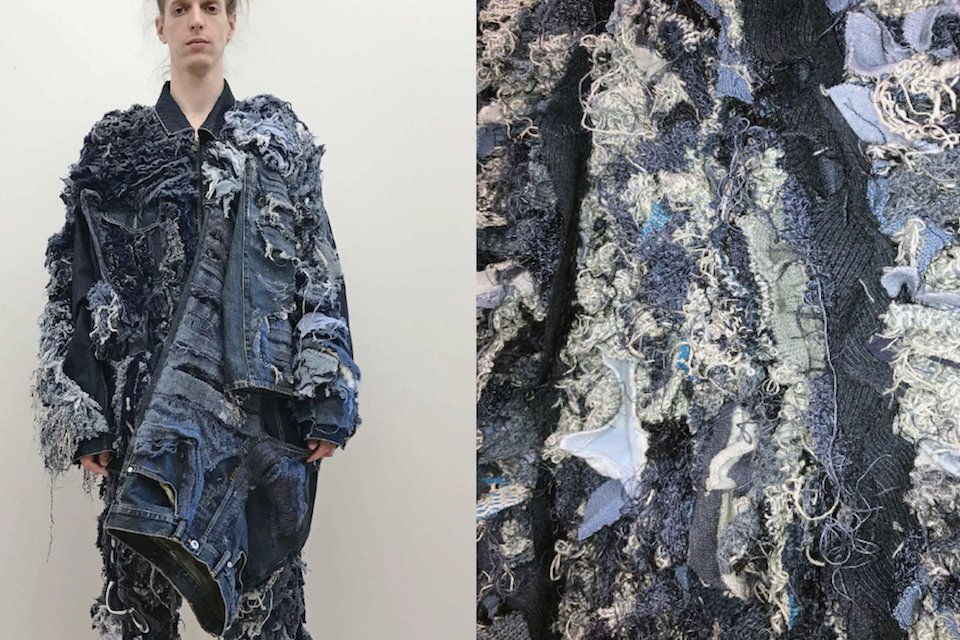
Venus Lo (United States)
The New School, Parsons School of Design
Hoarders, 2017
Machine needle.12.unching, knitting and hand felting with unwanted garments, yarns and scra.12.es
I want to celebrate the inside beauty of a hoarder's room. This is the key message I want to express through my work. Inspired by my experiences living with my father, who is a hoarder! felt embarrassed and misunderstood his behavior when young. However, I realized hoarders collect items instead of relationships because they lack security. Even normal people think they are imperfect, everything they collected bring back memories from what they experienced.
In order to celebrate the one man's trash is another man’s treasures, I translated the idea by collecting all the unwanted yarns, scrapes and donated garments in NYC, and using my own textile techniques to create new born fabrics. Playing with a big pile of yarns and recycle garments through needle punching, machine knitting and felting! I enjoyed the moment how I deconstructed, tearing, recombine the stuffs in my own way. I believe the vision of luxury is in spending time making for the wearer, not only purchasing expensive items blindly.
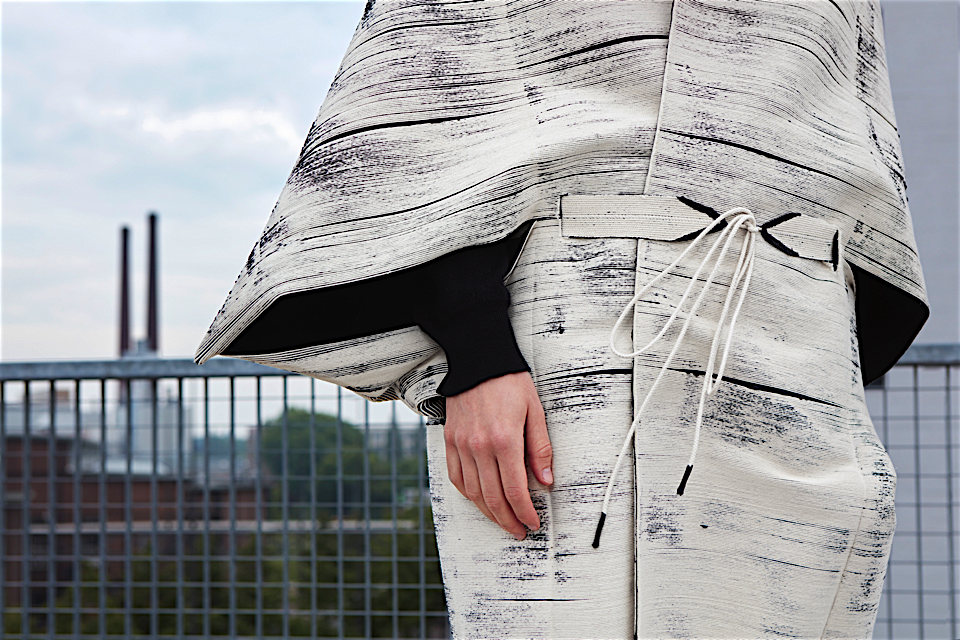
Wendy Andreu (Netherlands)
Design Academy Eindhoven
Regen, 2016
The textile Regen is made with cotton rope and latex, it is neither woven or knitted but glued. Wendy Andreu has devised a system for producing water-proof fabric. She makes these items of clothing without sewing or cutting patterns. Called ‘Regen’, the fabric is double-sided with water-repellent latex on one side, and cotton rope on the other.
Regen products are made by coiling the rope around a laser cut steel mould and covering it in latex. Where the dark latex seeps between the light rope it creates shading and textural detail that make each item unique. All the molds can be used multiple times without any loss of quality, adding to the value of this innovative sustainable tool and material.
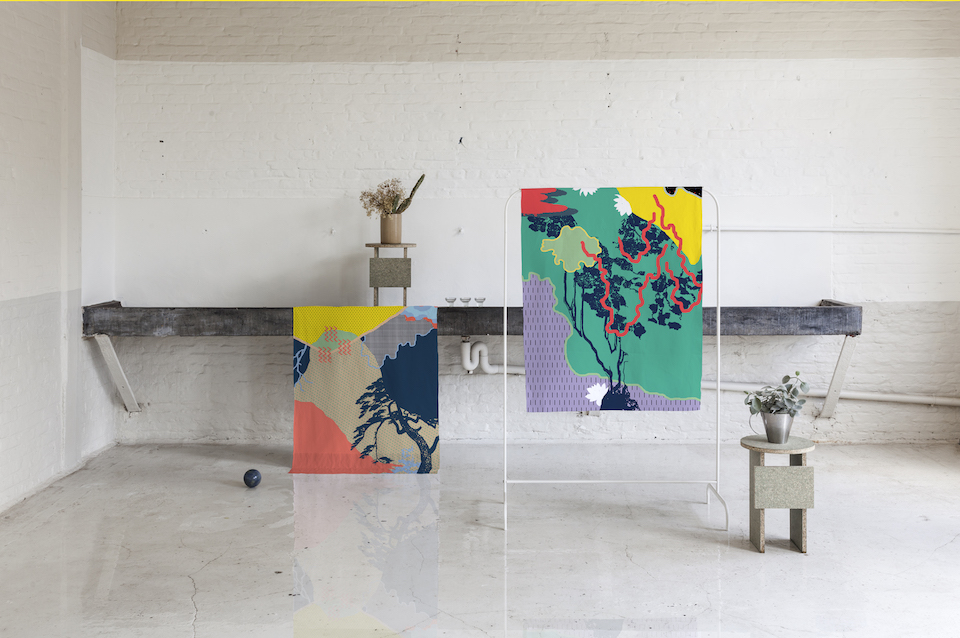
Mathieu Jauze (France)
ENBSA Lyon
Japan 80, 2017
In order to create a motif under influence, I choose to have two very different universes coexist in the same print: the Japanese landscape pattern and the Memphis style of the 80's. One difference concerns me particularly in this confrontation:
In Japan, the landscape print handles voluptuous and sinuous shapes with shaded hues. An atmosphere that evokes slowness and silence. The 80s combine sharp and random shapes, vibrant frames and saturated, noisy colors.
An atmosphere full of energy, speed and noise. This leads me to design patterns that combine these ingredients, balancing their differences.
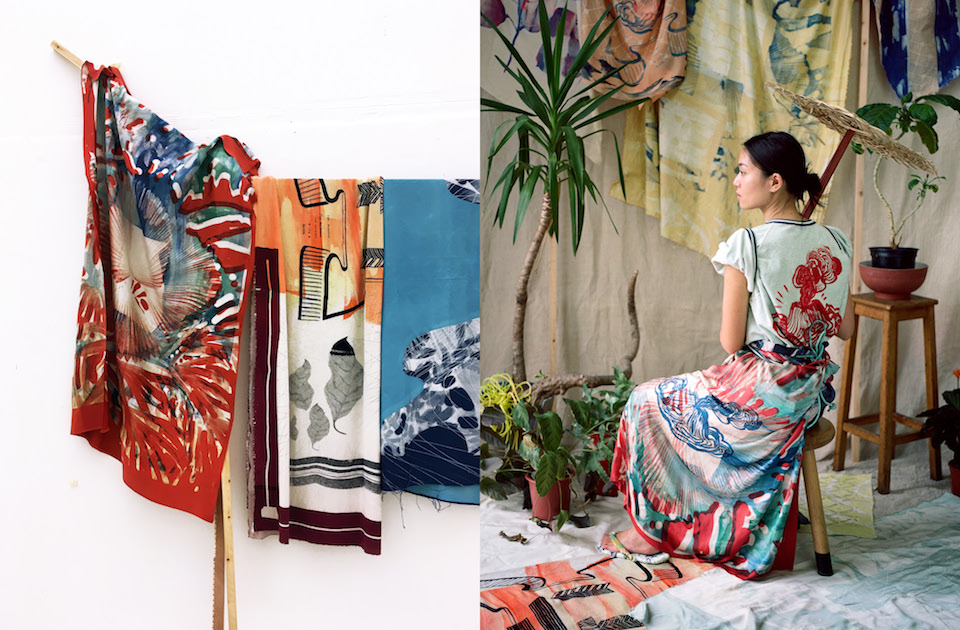
Marta Velasco Velasco
Royal College of Art
Pulau Banda,2017
Nutmeg was once considered the “Holy Grail of Spices”; worth its weight in gold, it was a symbol of luxury and prestige. Until the 19th-century, the world’s only source of nutmeg was the Banda Islands —a tiny archipelago in today’s Indonesia— imagined by Europeans as a luxuriant tropical Eden.
In the 17th-century the Dutch controlled all the islands except one, Run, an islet claimed by the English.
In their urge to keep the nutmeg monopoly, the Dutch agreed to cede Manhattan (back then called New Amsterdam) to the English in return for Run. After this hype, the spice started loosing its value and Banda got forgotten. ‘Pulau Banda’ is a collection of textiles and wall hangs inspired by this story and influenced by contemporary Indonesia. It plays with fact, fiction and storytelling to represent that world. The work integrates silk, bamboo and recycled plastic to comment on changes of material value while transporting us to the islands.
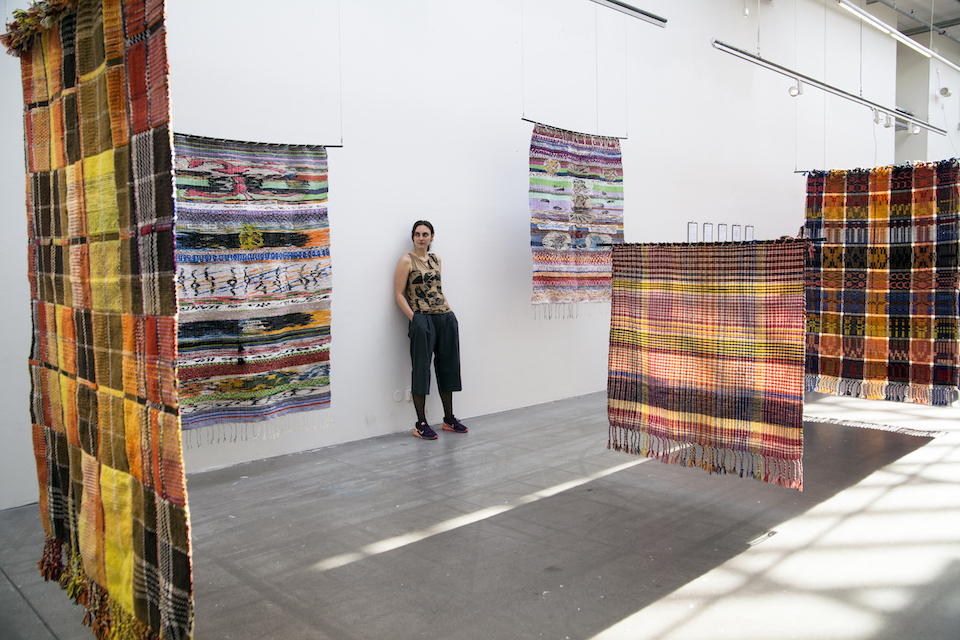
Josefin Gafvert
Konstfack University of Arts, Crafts and Design.
”A rug like me” (En matta som liknar mig) 2017
”The hopeful impossible” (Det hoppfulla omöjliga) Handwoven wool rug with hand dyed yarns. 136x 167 cm (93 cm with fringes)
The project 'A Rug Like Me' is a study of the history and present of weaving and women. I ask how the social situation of women has affected how the aesthetics of weaving. I try to understand why tradition pervades the craft, while in my own experience I can only weave abstractions of myself.
When a woman is forced into a structure where she is meant to please, she weaves what is expected of her. If the mind has been limited by visible and invisible power structures, that is reflected in the weaving. Does the piece become what we want to be or is it impossible to hide who we are in the work? What do we pass down and why?
During my time at Konstfack I have focused on weaving rugs. I always want to do something new, so my rugs are like large samples where careful planning meets the unforseeable. My intention is to get people to see handwoven rugs as something more than a design object, to ask Why? instead of How?
'The hopeful impossible' illustrates the energy and stress that come with being a woman today, especially as an artist and mother of young children.
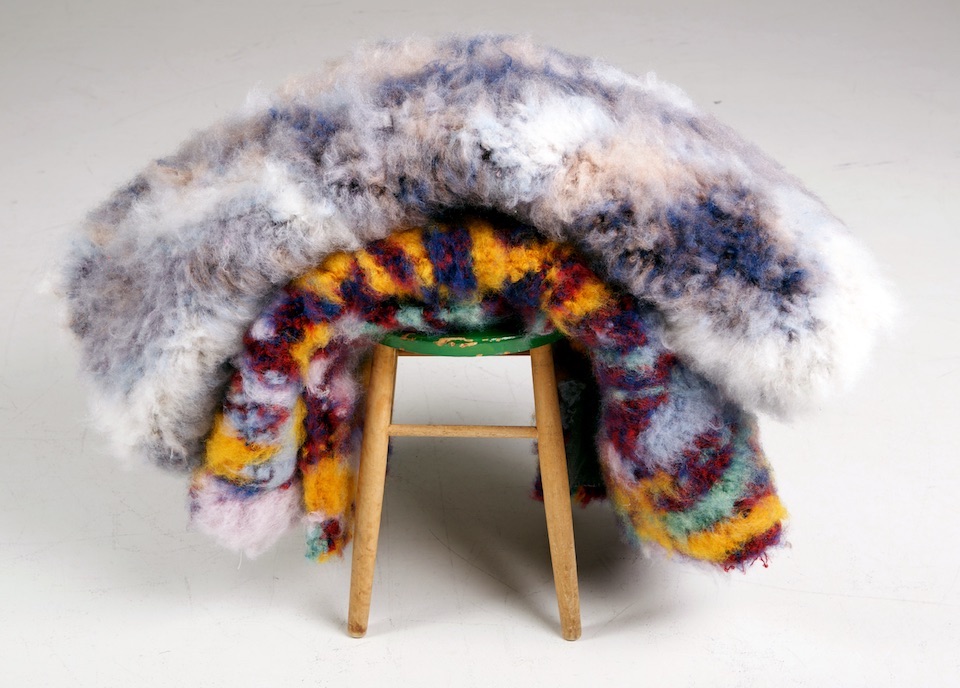
Hanna-Kaisa Korolainen Aalto University School of Arts, Design & Architecture The House of Play and Rain, 2017 "Ansa and Amur is a pair of hand-tufted rugs. They are part of a bigger exhibition entirety called The House of Rain – Exercises of water, that includes various textiles products from woven jacquards and printed cushions to silk shirts and furniture. Designs are inspired by watercolour paintings of German expressionist Emil Nolde and textile designs by French artist Raoul Dufy. I wanted to see how sketches made with water could be developed into textiles and how would my sources of inspiration influence the process and the outcome. Artworks are surrounded by feeling of nostalgia, Paris of 1920’s, the golden era of Raoul Dufy.
The starting point for Amur was a water colour painting that I made with wet–on–wet technique and the original sketch for Ansa was a flower pattern realized with ink. Surface resembles thick, dense fur where original subjects almost disappear, because of the richness of the material. When brushed open the mohair becomes organic and almost animal-like, it even feels warm. The three-dimensional surface seems active as if it was alive and reaching out. Rugs have been lined with soft wool, and can be worn as blankets when the heat is needed. I design my rugs to be touched."
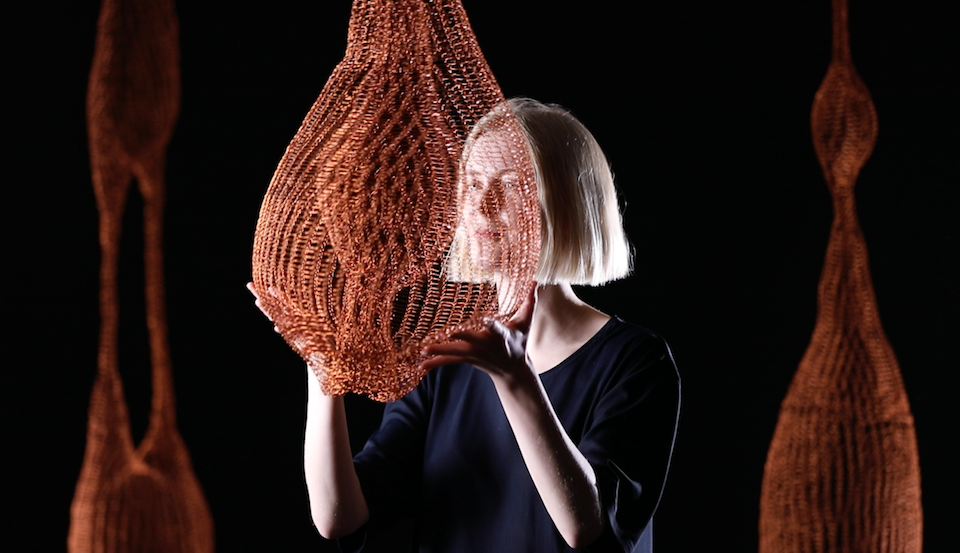
Pawel Lasota & Magda Mojsiejuk
School of Form Poznan
Knotty 2017
Knotty states that even if we don't realize it, the world senses us and reacts to our presence. It means that it is not constructed from fixed modules with predetermined place and role, but it is rather an open process in which the matter (however we choose to classify it) enters continuous interaction with itself. Knotty is a project that translates the knitting technique into the language and movement of a robot. The resulting series of material copper wire structures displays the capabilities of this technology. Combining the properties of knitted fabric (constructing the material from a single line) with the properties of copper wire enables the structures to sense, react and produce sound.
Let’s imagine a future where our surroundings constantly detect our presence and react to it. Building no longer need windows and doors, since—just like living organisms—they have cavities and orifices that can open when necessary. Knotty encourages interaction: let’s think about a soft future and share ideas as to what it could look like.
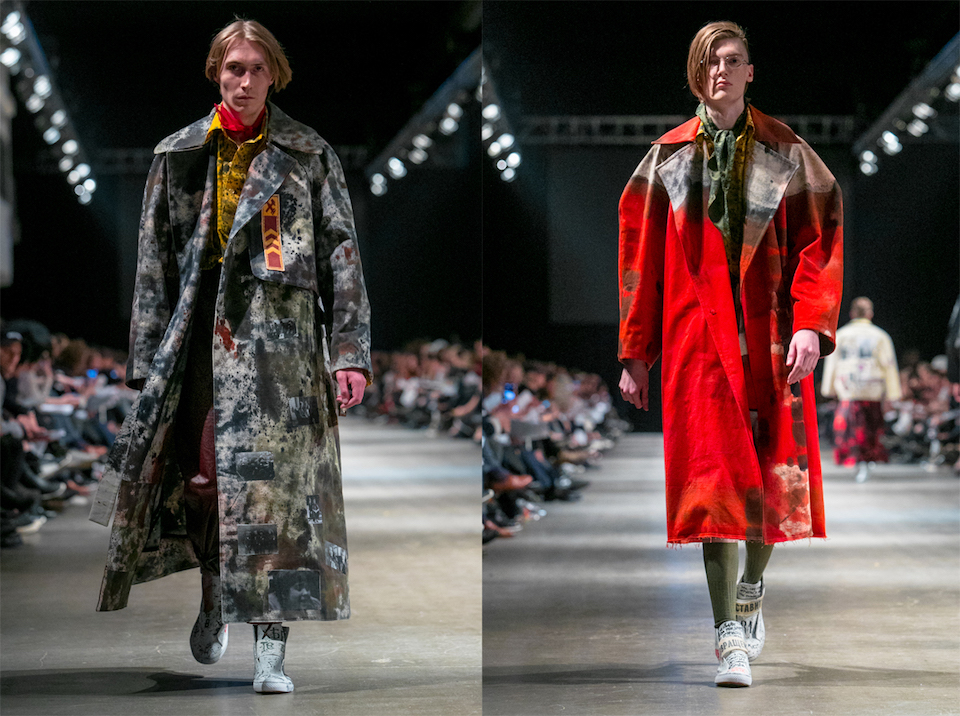
Models: Joni (left), Paavo (right) Photographer: Guillaume Roujas IG @guillaumeroujas
Antonia Sedakova (Russia)
Aalto University
Communication Tube, 2017
18 pieces (6 looks) in the collection, that were made with different textile technics: printing, weaving and knitting mostly using natural fibers.
“communication tube” fashion and textile based menswear graduation collection. The concept behind it is the story of the creative individuality in the 80s Russia, who does not want to follow any rules of society, but bound to be affected by them. Very artistic interpretation of the traditional image of the uniform mixed with an edgy style of the youth. An alternative view on the symbols and the silhouettes of that time. The main inspiration for the prints was the overall image of the lifestyle of the soviet banned underground music scene. Victor Tsoi – _is the lead singer of the rock band “Kino”, which was and still is one of the most influential band in Russia.
He was always very honest and open-minded about what he thinks about people and society. Eventually he became the idol of his generation and his style and attitude is forever admired. On the other hand, there were people, who followed the concept of the soviet government, and supported the limited way of thinking, promoting specific image in lifestyle, clothing and culture. This collection is an artistic interpretation of understanding those two contrasts in the society at that time.
antoninasedakova.wix.com/antoninasedakova
2017 call for entries
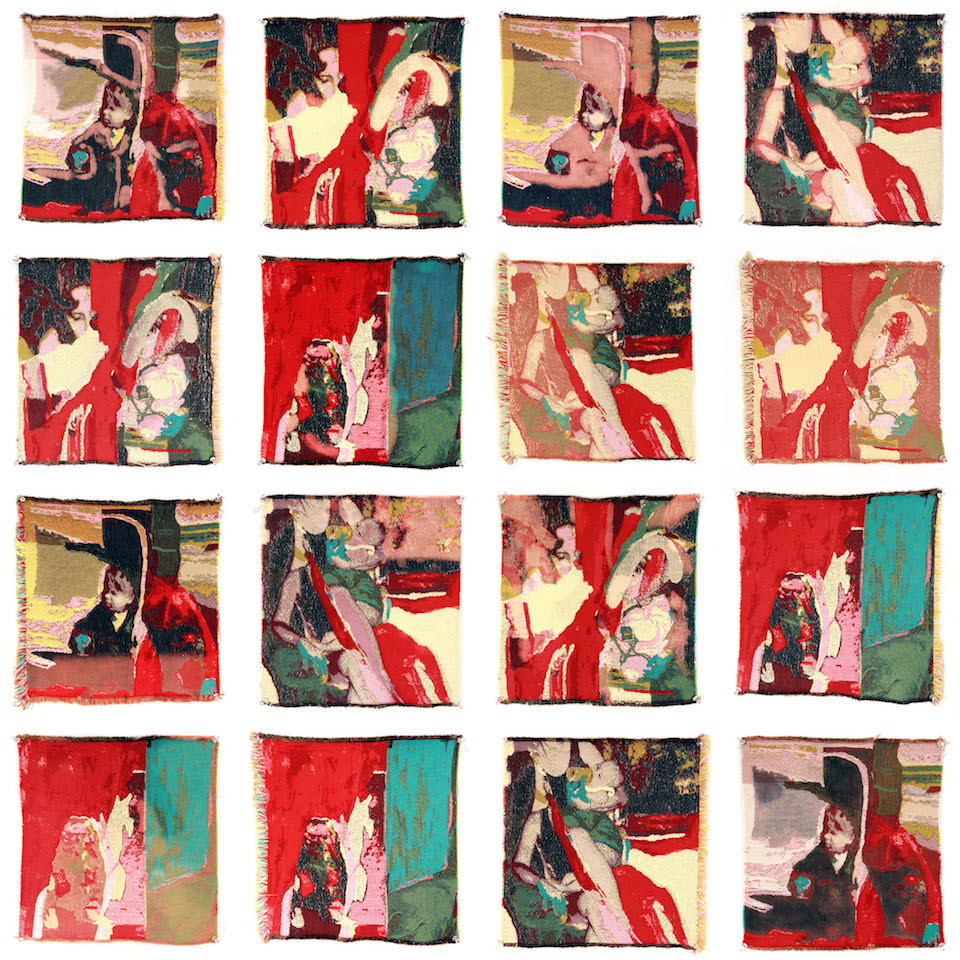
"I am My Mother’s Only One" by 2016’s Prize Winner Julia Wright (Rhode Island School of Design)
Trend forecaster Li Edelkoort and fellow curator Philip Fimmano are pleased to announce the continuation of their international design prize, to be awarded to a textile or fashion design student who exhibits innovative thinking and inspiring creativity in textiles. The competition is open to students from any country currently enrolled in a textile, fashion or knitting course creating original fashion, interior or lifestyle textiles. Based on creativity, innovation and aesthetics, the finalists and winner will be selected by a jury.
For the second year running, the prize is proudly supported by America’s leading flooring company MOHAWK GROUP. The winner will receive $5,000 and coverage on the online interactive trend platform TrendTablet.com. The prize is part of Edelkoort and Fimmano’s TALKING TEXTILES initiative that promotes textile education and creativity, with the winner announced in New York on September 14, 2017 at the TALKING TEXTILES CONFERENCE. The entire month of September is NEW YORK TEXTILE MONTH, a dynamic city-wide textile festival that promotes textile awareness. For more information, a full program will be available soon at www.textilemonth.nyc.
THE DOROTHY WAXMAN TEXTILE DESIGN PRIZE honours Dorothy Waxman, the original driving force behind Trend Union and Edelkoort Inc. in the United States and contributing reporter to the magazines "View on Colour", "Textile View" and “Viewpoint”. Waxman’s insatiable curiosity and discerning eye for the avant-garde has inspired Edelkoort and her team for decades. Waxman also introduced the American fashion industry to European textile partners with her work at the Fashion Group. As an avid textile aficionado, she believes that creative fabrics can change the design landscape in profound ways. The prize’s previous winners were Piero d’Angelo (Royal College of Art) in 2015 and Julia Wright (Rhode Island School of Design) in 2016, both of whom continue their innovative work in textiles.
Deadline for submissions: June 19, 2017
Download the application form
**SAVE THE DATE**
TALKING TEXTILES CONFERENCE 2017
NEW YORK: September 14 2017
tickets
supported by

a legendary japanese silk
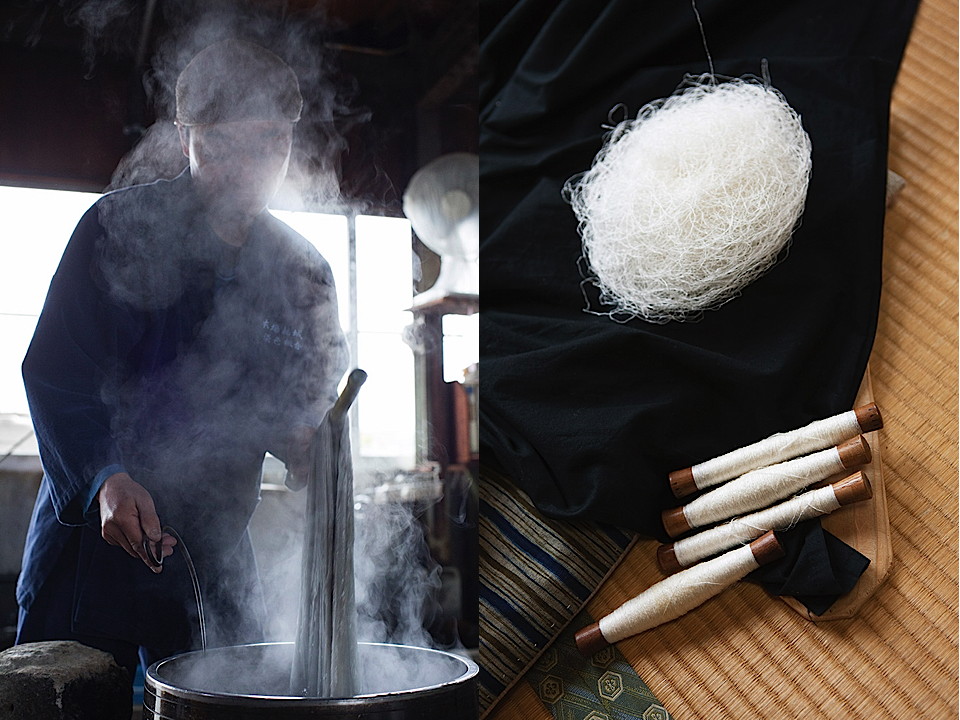
photo Christian Aschman
The Japanese fabric Yuki-tsumugi is used to make fine-quality kimonos and has a 2,000 year history in Japan. Making the cloth requires more than 40 procedures, each needing the handiwork of a skilled craftsperson. These skills have been passed down through the years, and in 2010 the Yuki-tsumugi production technique was inscribed on Unesco’s Representative List of the Intangible Cultural Heritage of Humanity.
OKUJUN’s fabrics have a beautiful luster, exceptional lightness, and rich texture. Supreme Yuki Silk is a fabric of highest quality produced by a method descended from the traditional technique and Yuki Silk is a new fabric that preserves the fine texture but made with a more efficient production process.
The secret of the incomparably soft texture of the silk resides in its raw material — floss silk, and the untwisted yarn spun tenderly by hand from floss silk while typical silk yarn is produced by tightly twisting together several filaments from separate cocoons.
Yuki-Tsumugi, silk fabric production technique is very complex.
The high quality fabric is a result of the artisans’ highly skilled hand craftsmanship. The fabric is woven from delicate hand-spun yarn, and is a layered masterpiece of skilled hand-craftsmanship from artisans who execute all the needed procedures. It is supported by a sophisticated combination of professional instinct and dexterous artistry, nurtured through long specialized practice. A single piece of cloth is born from the hands of many master artisans.
Floss silk is obtained from a cocoon and, with the use of a tool, gently stretched by hand into yarn, without spinning. During the process, sizing is applied to strengthen the delicate yarn.
By using a traditional back-tension loom called a jibata, the hand-spun yarn is woven into cloth while applying minimal tension to the yarn. The warp is tied to the weaver’s hip and inseparable from the loom, the weaver controls the tension of the warp through the movement of the hip while weaving. A Hia shuttle used to store weft yarn- made from an oak tree, and an osa -reed-are used to tighten the weave, to create a fine woven silk fabric.
Finally, after the process of sun drying, a cloth that is light, warm and extremely soft is born.
www.okujun.co.jp
www.christian-aschman.com
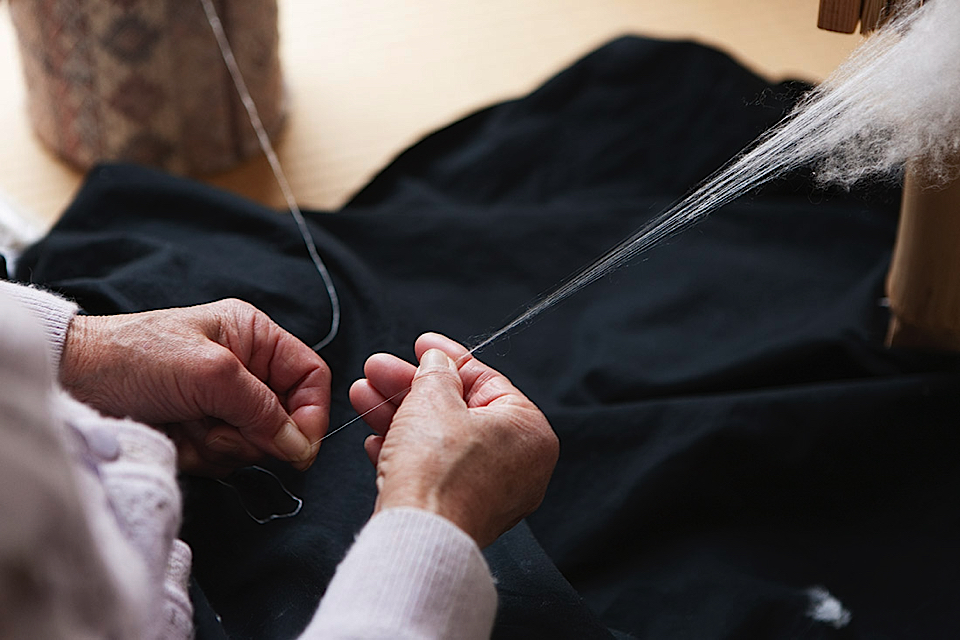
photo chritian aschman
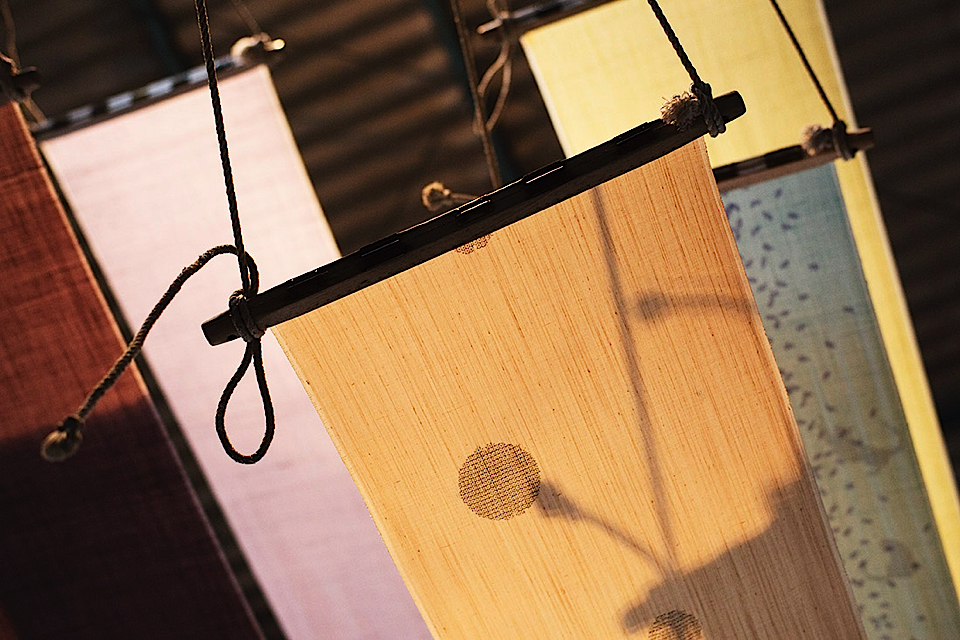
photo chritian aschman
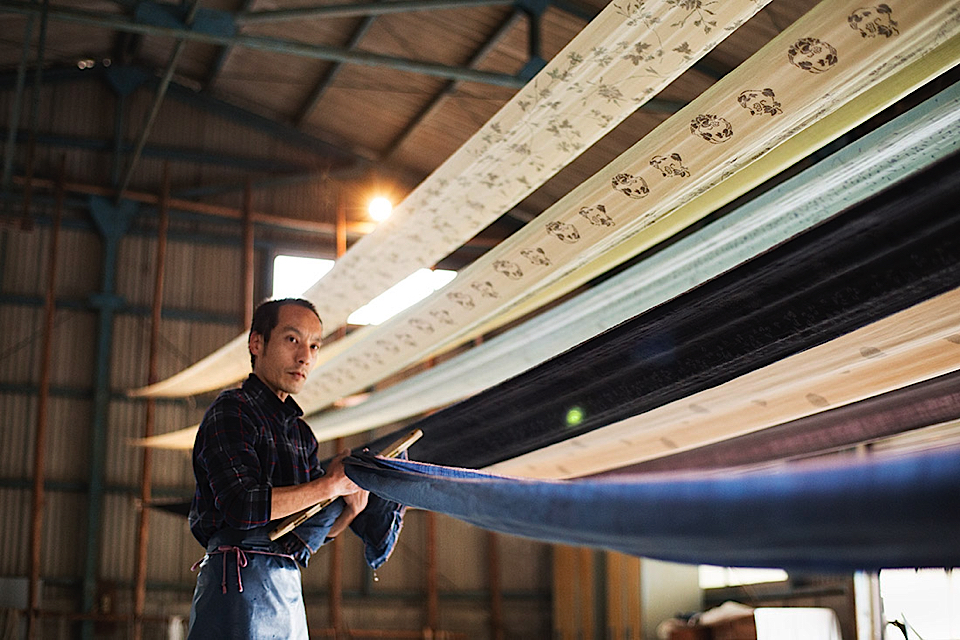
photo chritian aschman
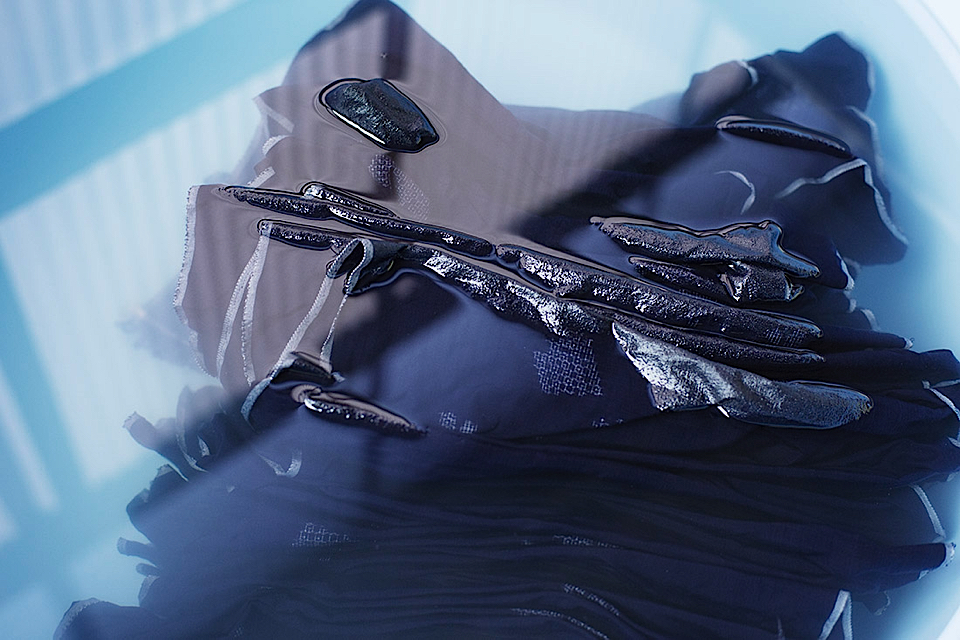
photo chritian aschman
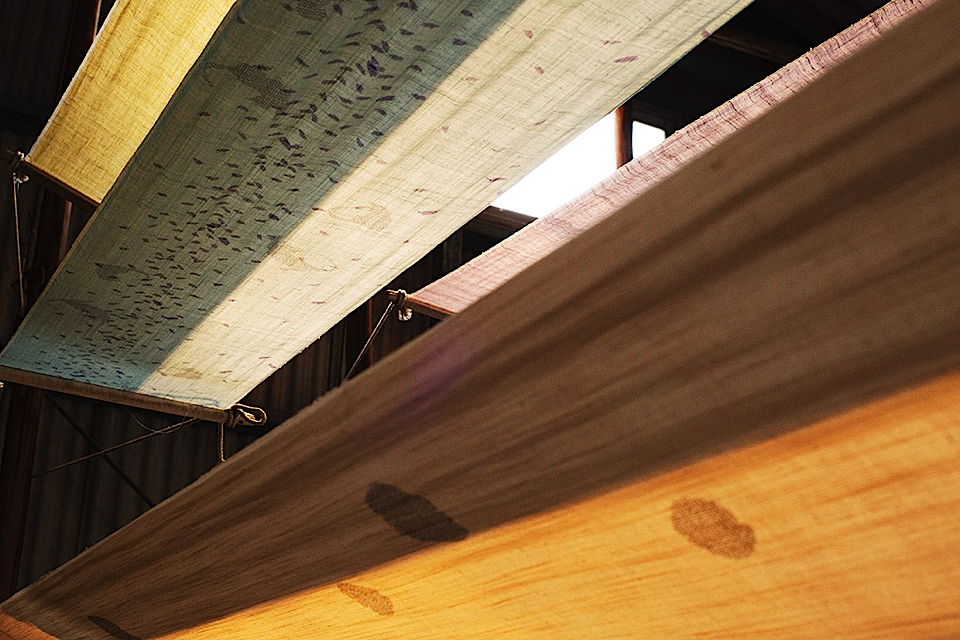
photo chritian aschman
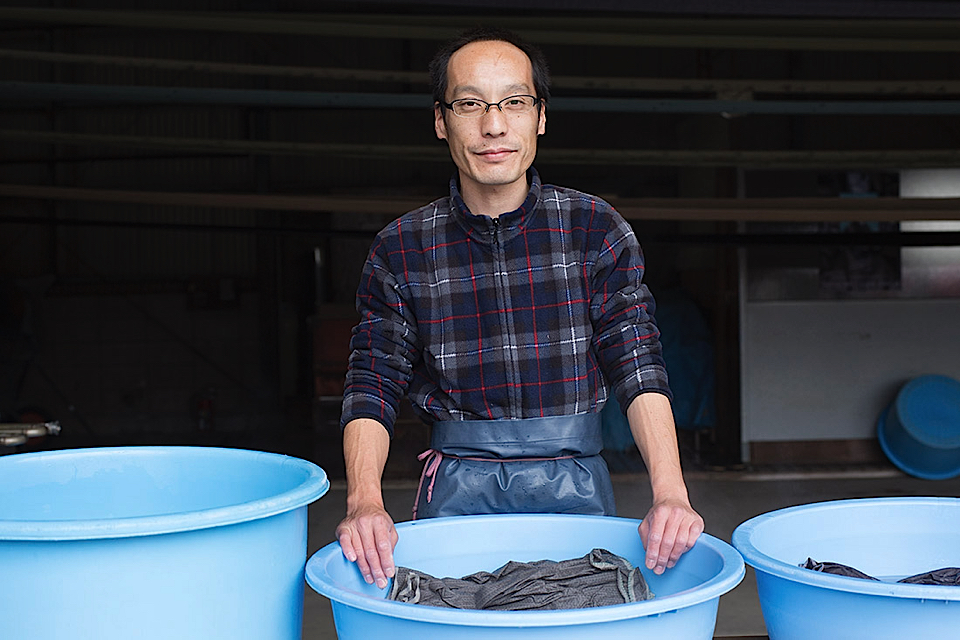
photo chritian aschman
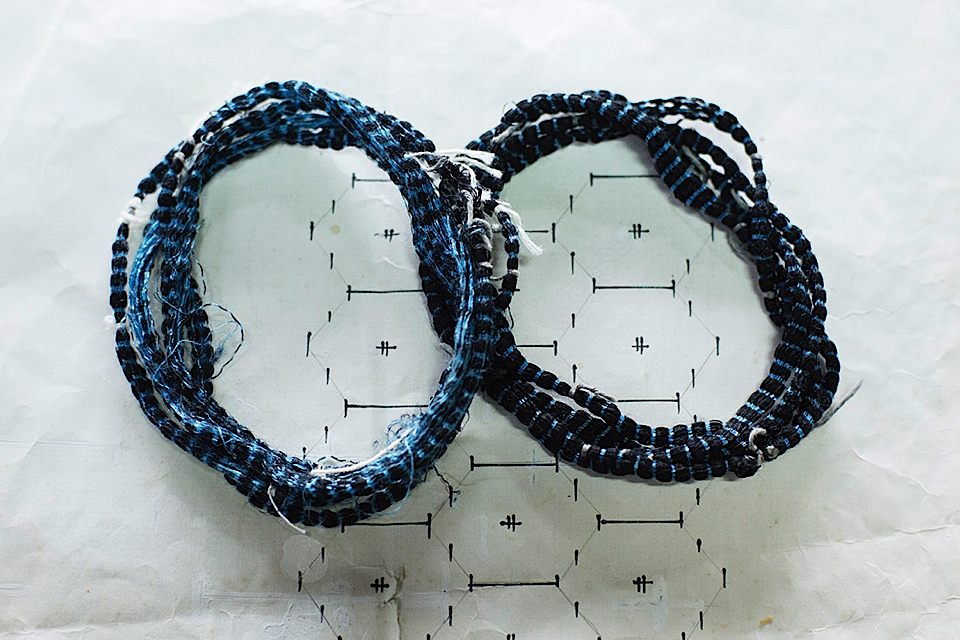
photo chritian aschman
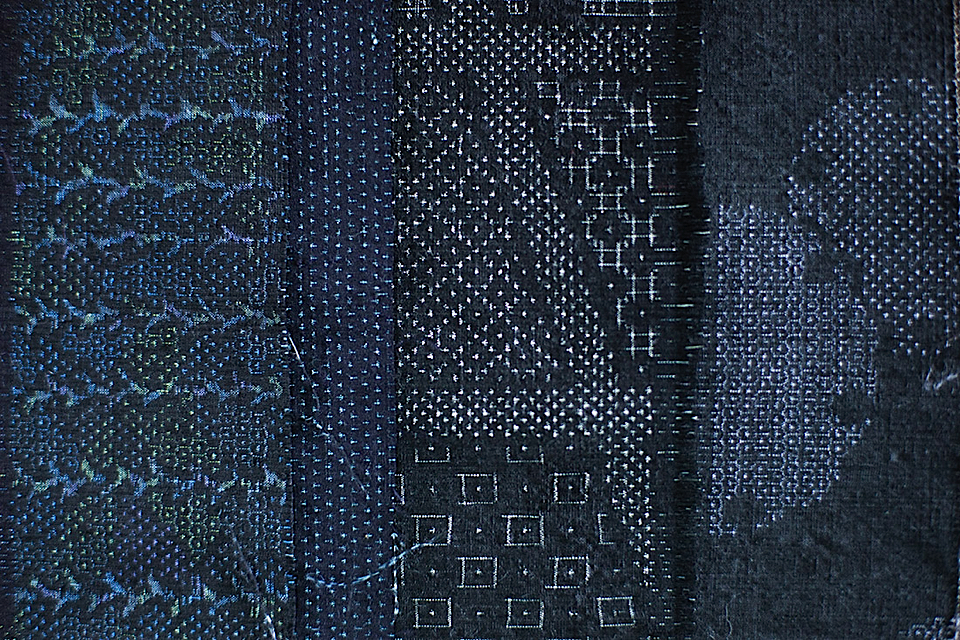
photo chritian aschman
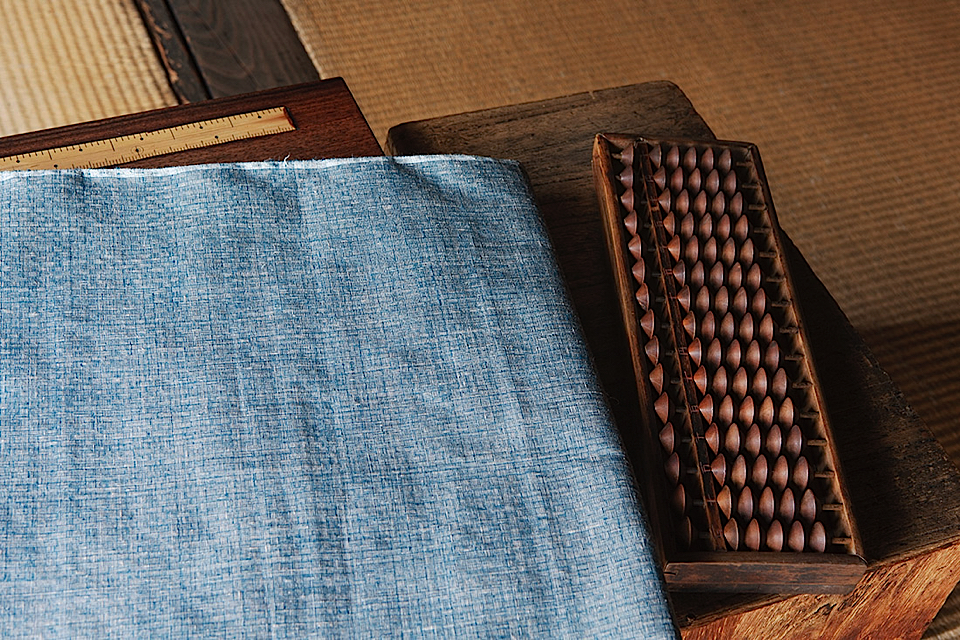
photo chritian aschman
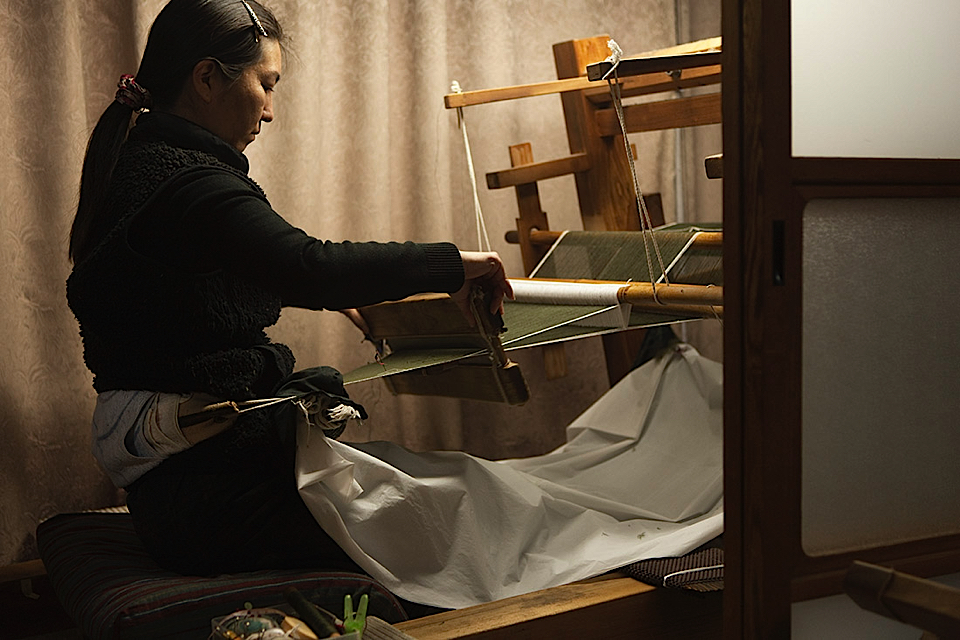
photo chritian aschman
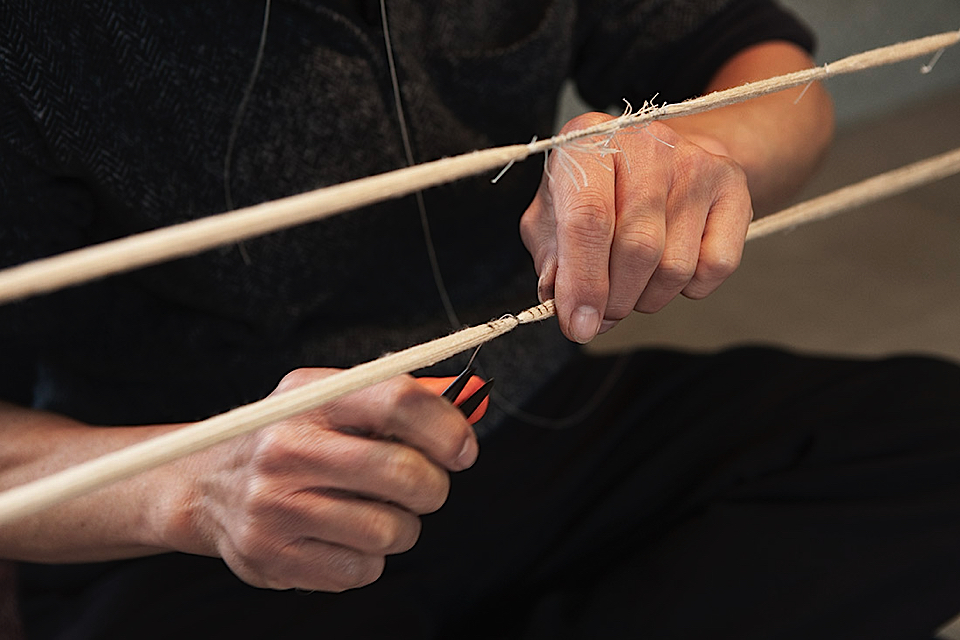
photo chritian aschman
Waxman Textile Prize – Winners #2016
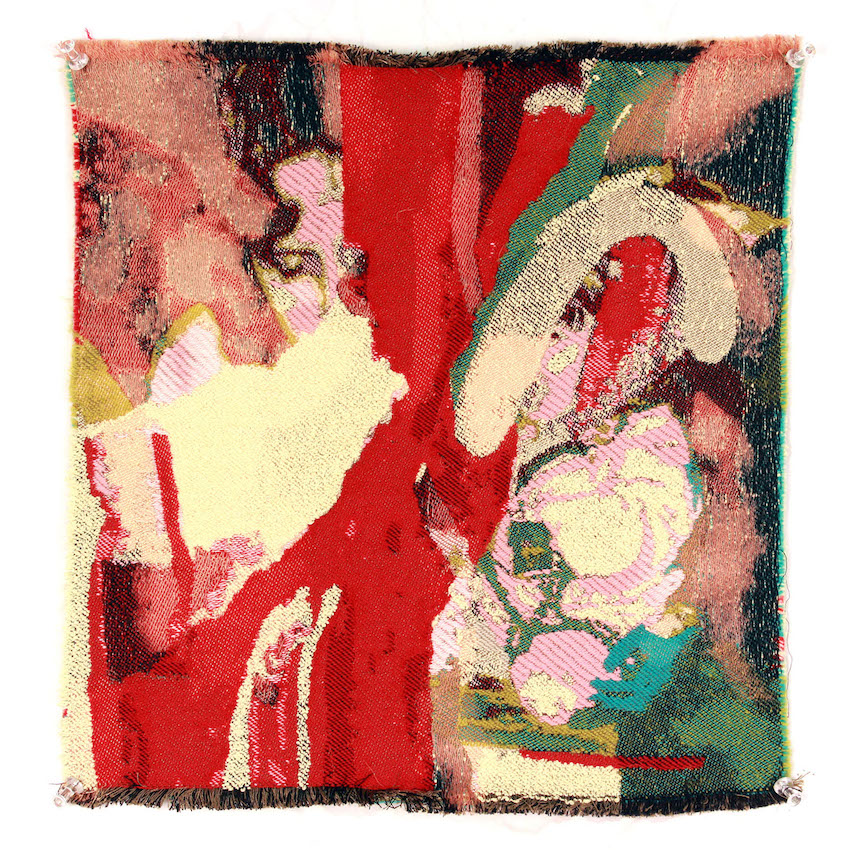
I am My Mother’s Only One (2015) Julia Wright
Dorothy Waxman and Edelkoort Inc. are pleased to announce the winner of the 2016 Dorothy Waxman International Textile Design Prize: Rhode Island School of Design’s Julia Wright! Mohawk Group has generously supported this year’s prize of easy payday loans $5,000 which was awarded to Julia for the visual language she employs to make her textiles talk, from the sophisticated collage aesthetics of her jacquards to the creative use of bleach and dyes applied by hand.
The jury also decided to create a Jury Special Mention for the work of Christian Frank Müller, who studies at the Kunstuniversitat Linz and previews the making of patterns with a human intervention before machines weave the rest of the textile.
Both works will join the other finalists on display at WANTED DESIGN this May 7 - 17, 2016 in New York:
INDUSTRY CITY
Sunset Park, 274 36th Street, Brooklyn, NY 11232
Jury Members:
DOROTHY WAXMAN – President
ROYCE EPSTEIN – Director, Design Segment, Mohawk Group
ODILE HAINAUT – Founder, WantedDesign
PAUL MAKOVSKY – Editorial Director, Metropolis
MATILDA MCQUAID – Deputy Curatorial Director, Cooper Hewitt
HELEN OJI – Creative, Inspiration & Research Director, Eileen Fisher

Julia Wright (United States)
Rhode Island School of Design (RISD)
I am My Mother’s Only One, 2015
"I am my mother’s only child, only daughter, only friend." The structure of Wright's family has shifted significantly since her parent’s recent divorce, and as such, each member of what was a three-person unit has learned to live on their own. This piece was created through Wright's reflection on childhood and her relationship with her mother, serving as a sort of necessary step for the designer to accept this new situation. Wright says her memory is driven by colour and shape, and through using the jacquard loom she was able to translate a personal photographic collage into a thick woven fabric, tangible and soft. Each cut square serves as a physical and material reminder of sweet childhood memories; the organization of which is unfixed and ever-changing. This work was created by collage and painting, and translated through Point Carre software to become woven pieces created on a Staubli jacquard loom. It is a 7-wefted weave, and has been cut apart and reconfigured. Many pieces were painted after weaving with bleach or dye.
Christian Frank Müller (Germany)
Kunstuniversitat Linz, Austria
TexLab, 2015
As a multi skilled designer and PhD student with a specialisation in textile design, Müller realises a wide range of different projects along the themes of diversity, details and simplicity with a twist. He perceives that design has a crucial influence on our lives. Good design improves our everyday lives and should be sustainable in terms of long lasting, timelessness, the use of the right materials and flexibility in use. And of course it should look good in every situation. Design is not pure decoration, it is the right ingredients mixed together in order to create a new, unexpected experience.
Müller says of his work: "I like simple things. Some people would say boring, but boring is in my opinion not bad. It’s just the absence of excitement in a world that is full of exciting things and where every new object is just trying to raise the level of excitement.”
In this experimental collection, fabrics are made with different unconventional dyeing, weaving and knitting techniques. Injection dyeing is used on folded, woven fabrics before they unfold to reveal a placed pattern of bleeding spots. Dye is also injected into bobbins and knitting spools before moiré and marle fabrics are machine woven or knit.
alpaca del peru
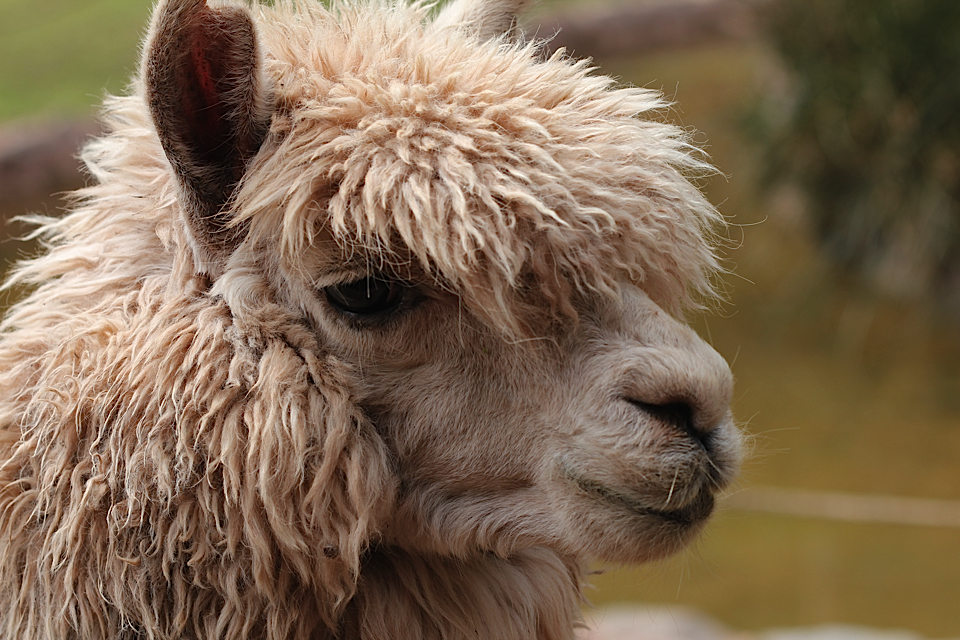
photo Marcella Echavarria
Edelkoort Inc. recently presented an installation featuring Peruvian designers that embrace using natural alpaca fibre. Supported by Promperu, the Autumn / Winter 2016-17 event took place in New York at D&A, an innovative ready-to-wear trade show for coterie collections. The exhibit included photography by Marcella Echavarria taken on location in Cusco, the high altitude region synonymous with alpaca farming.
Alpacas are a species of South American camelids and Peru generates approximately 80% of the world’s production. Alpaca is highly versatile, with many outstanding qualities, providing vast possibilities for designers in fashion and interiors – from luxurious knits, wovens and accessories to homeware textiles and performance activewear.
Alpaca absorbs deep saturated tints, while a range of many undyed colours are also available, from white to greys, beiges, browns and black. Alpaca fibres are fine while also being incredibly durable. Naturally hypoallergenic, alpaca enjoys thermal properties due to its micro air pockets. With today’s consumers seeking responsibly-made sustainable products, alpaca stands out as a renewable, ethical and eco-friendly fibre.
text: Philip Fimmano
photographs: Marcella Echavarria
www.perumoda.com
www.designersandagents.com
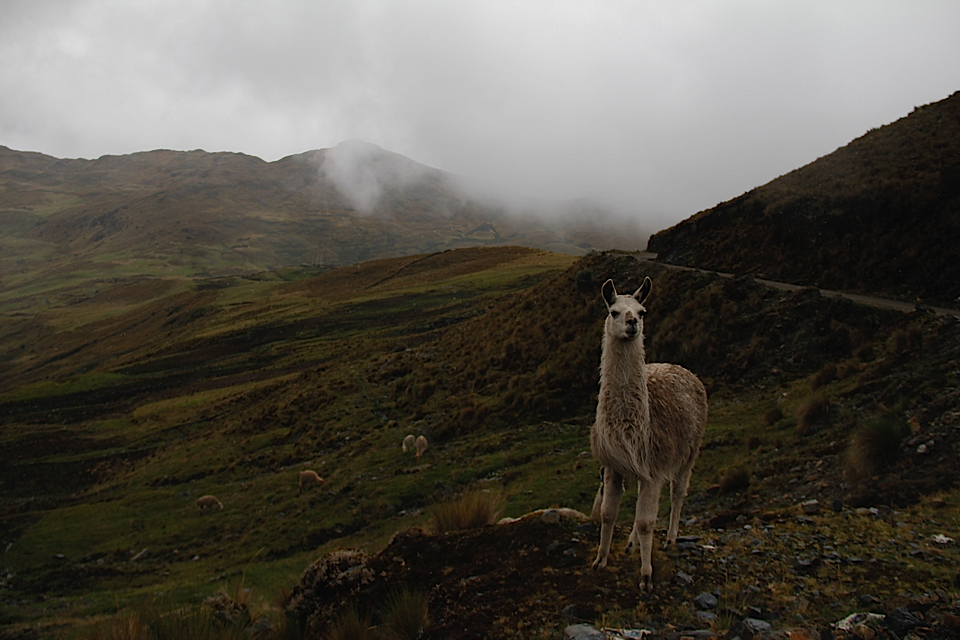
photo Marcella Echavarria
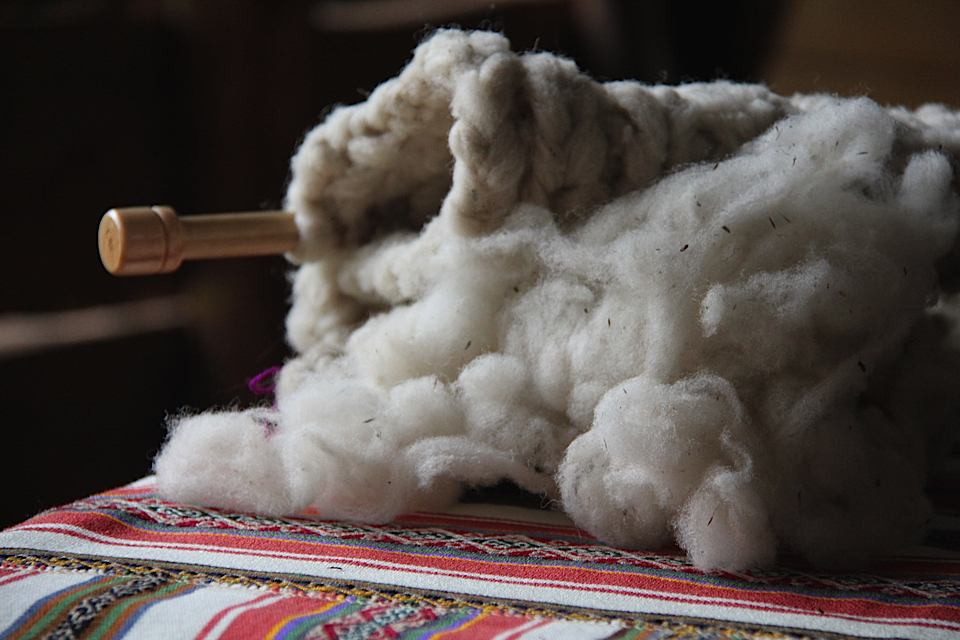
photo Marcella Echavarria
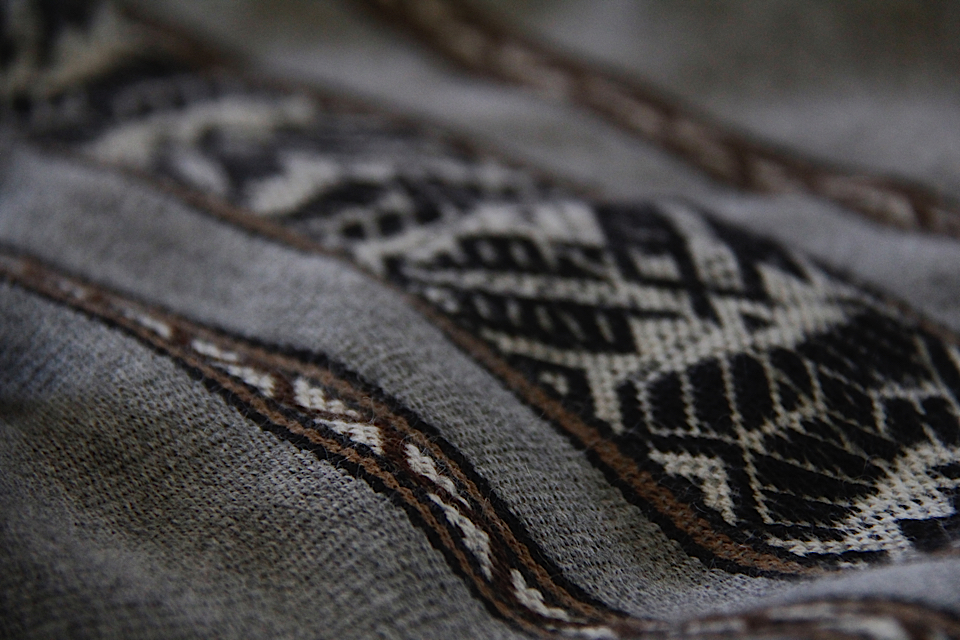
photo Marcella Echavarria
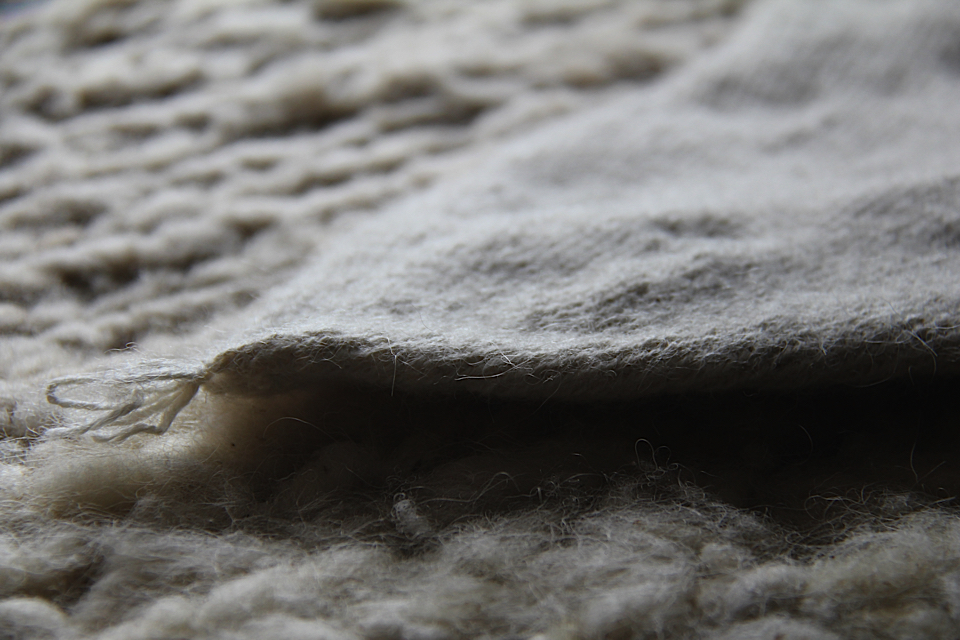
photo Marcella Echavarria
2016 call for entries
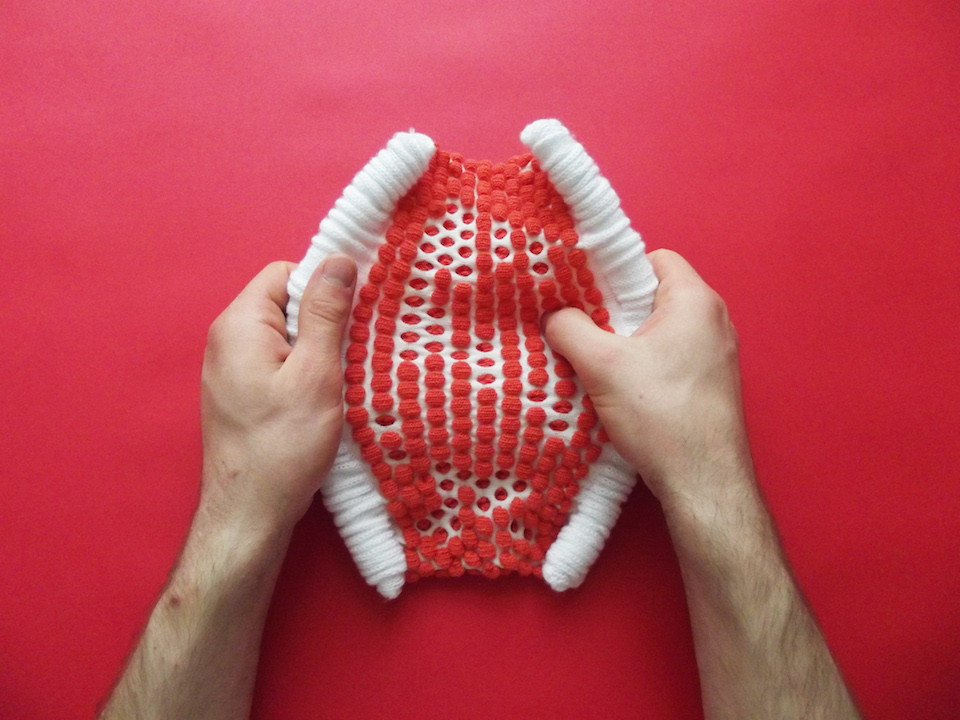
TALKING TEXTILES 2015 finalist Caroline Angiulo "Mind Wandering Bloom”
We are pleased to announce a CALL FOR ENTRIES to the 2016 Dorothy Waxman Textile Design Prize!
The competition is open to students from any country currently enrolled in a textile, fashion or knitting course creating original fashion, interior or lifestyle textiles. Based on creativity, innovation and aesthetics, finalists will be selected by a jury and have their work featured in an exhibition at WantedDesign in New York from May 7 to 17, 2016. America’s leading carpeting and flooring company MOHAWK is generously providing $5,000 for the prize winner who will be announced at the TALKING TEXTILES CONFERENCE on Wednesday, May 3, 2016.
DEADLINE FOR SUBMISSIONS is April 10, 2016.
Dorothy Waxman's jury is made up of the following additional industry experts:Royce Eptsein (Director of Design Segment, Mohawk Group), Paul Makovsky (Editorial Director, Metropolis); Helen Oji (Creative, Inspiration & Research Director, Eileen Fisher) and Mathilda McQuaid (Deputy Curatorial Director, Cooper Hewitt).
Started in 2011, TALKING TEXTILES is an initiative to discuss textiles, highlighting the importance of innovation and education. Exhibitions have taken place at Spazio Gianfranco Ferré and Ventura Lambrate, Milan (Salone del Mobile, 2011); Designhall, Stockholm (2012), Textielmuseum, Tilburg (2013 – 2014) and at WantedDesign, Industry City, Brooklyn (2015).
The programme founders Lidewij Edelkoort and Philip Fimmano believe that it is important to take notice again of contemporary textiles because they are themselves an endangered species. Mills around the world are vanishing one by one and educational institutions are downsizing their textile departments or replacing looms with computers, therefore soon textile talent may have no place to go.
Creativity is the only solution. Since textiles have the power to reflect the fabric of our society, the TALKING TEXTILES initiative provides an alternative solution to the problems of last century, with optimism and fantasy to transform our nomadic lives.
The TALKING TEXTILES CONFERENCE is an inspiring and educational half-day seminar to talk about textiles for fashion and interiors – exploring the important trends, fabrics, yarns and techniques for the seasons to come. Hosted in New York, the event elevates textile education for both students and professionals alike and is offered free to students and faculty, while tickets are available for purchase for professionals and textiles enthusiasts.
NEXT SEMINAR IS ON MAY 3, 2016 (tickets can be reserved through tickets@edelkoortinc.com).

weaving a home
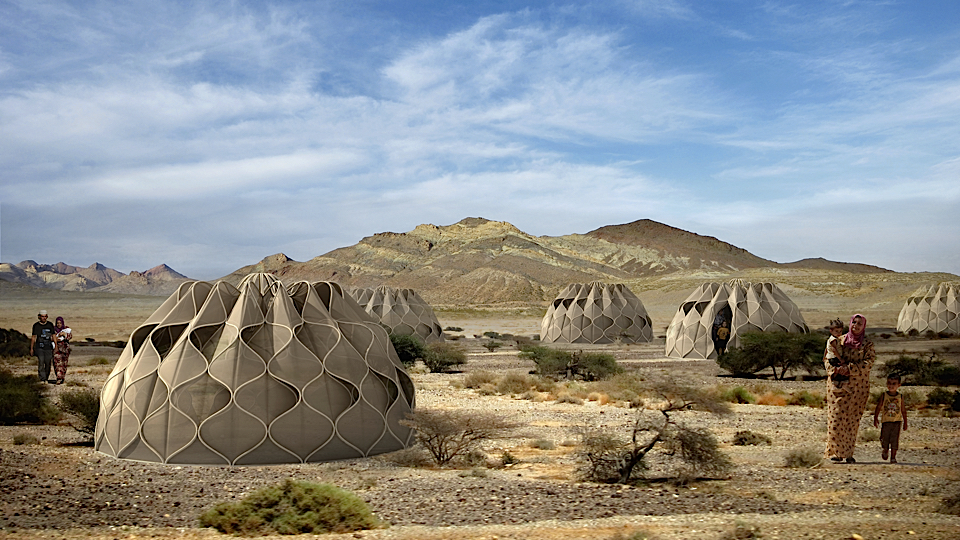
“Nature uses only the longest threads to weave her patterns, so that each small piece of her fabric reveals the organization of the entire tapestry.” Richard P. Feynman
Human life throughout history has developed in alternating waves of migration and settlement. The movement of people across the earth led to the discovery of new territories as well as creation of new communities among strangers, which eventually formed towns, cities, and nations. Navigating this duality between exploration and settlement, movement and stillness is a fundamental essence of what it means to be human.
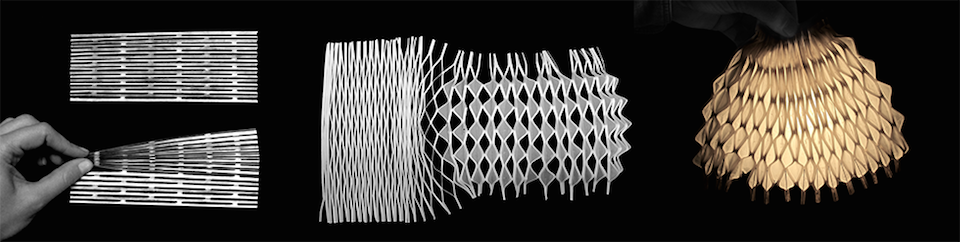
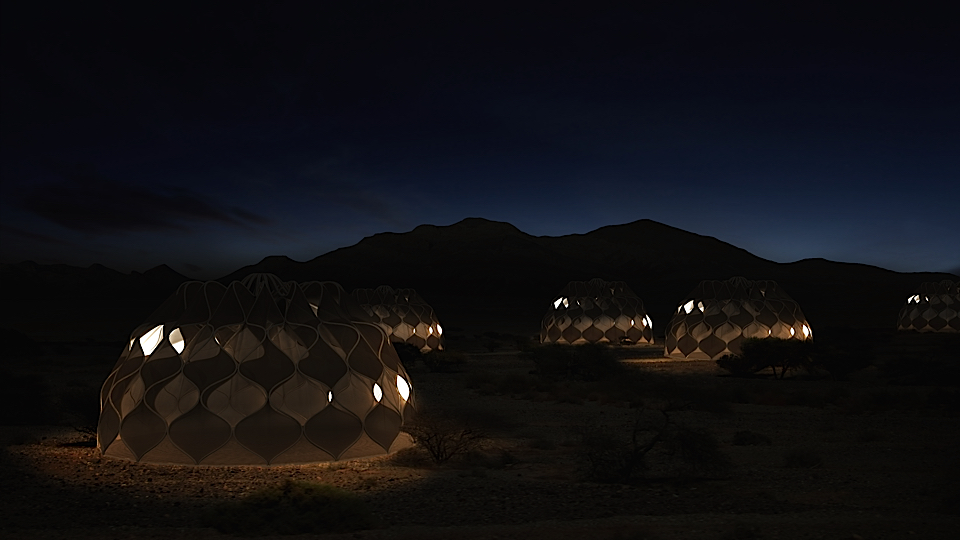
Over the last century, in the aftermath of global wars and natural disasters, the world has witnessed the displacement of millions of people across continents. As refugees seeking shelter from disasters (natural and manmade), they carried from their homes what they could and resettled in new lives, in unknown lands, often starting with nothing but a tent to call home. This project reexamines the traditional architectural concept of tent shelters by creating a technical, structural fabric that expands to enclose and contracts for mobility while providing the comforts of contemporary life (heat, running water, electricity, storage, etc.).
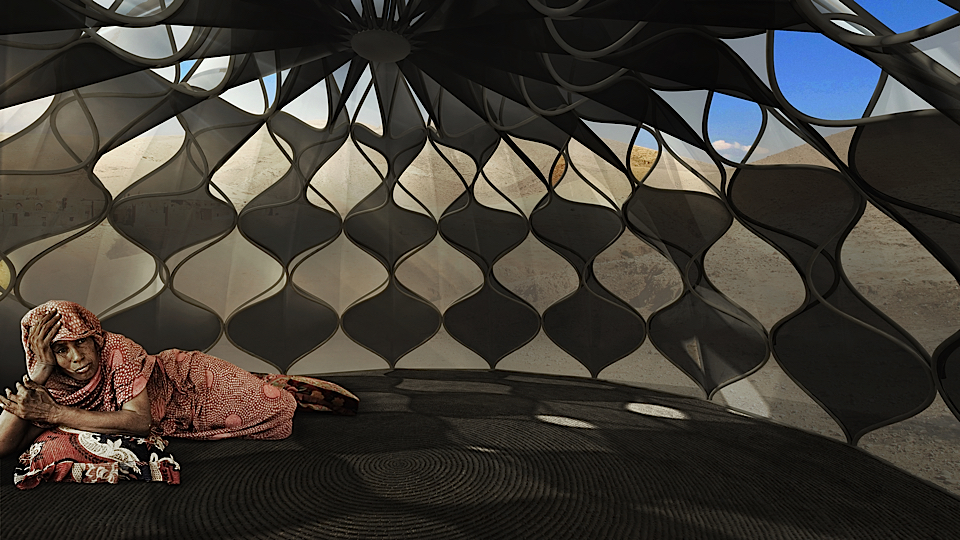
The concept behind the structural fabric is the timeless tradition of weaving members into lightweight forms that easily collapse into flat surfaces for transport. The various threads of the weave accommodate different purposes, for example: mesh for windows and storage, a stretchable solar fabric for sustainable energy, which feeds flexible pipes for water, heat, and electricity.
The structural fabric functions on multiple scales from the scale of the aperture to the scale of a tent city, a landscape of domes that facilitate community and transcend the basic need of survival and instead a place where community integrates, heals, and renewal thrives. A nomadic urbanism that physically and metaphorically weaves a community, service same day payday loans, functional design and beauty.
In this transient space, the nomads find a place to pause from their turbulent worlds, a place to weave the tapestry of their new lives.
Abeer Seikaly
www.weavinghome.php
ioweyou
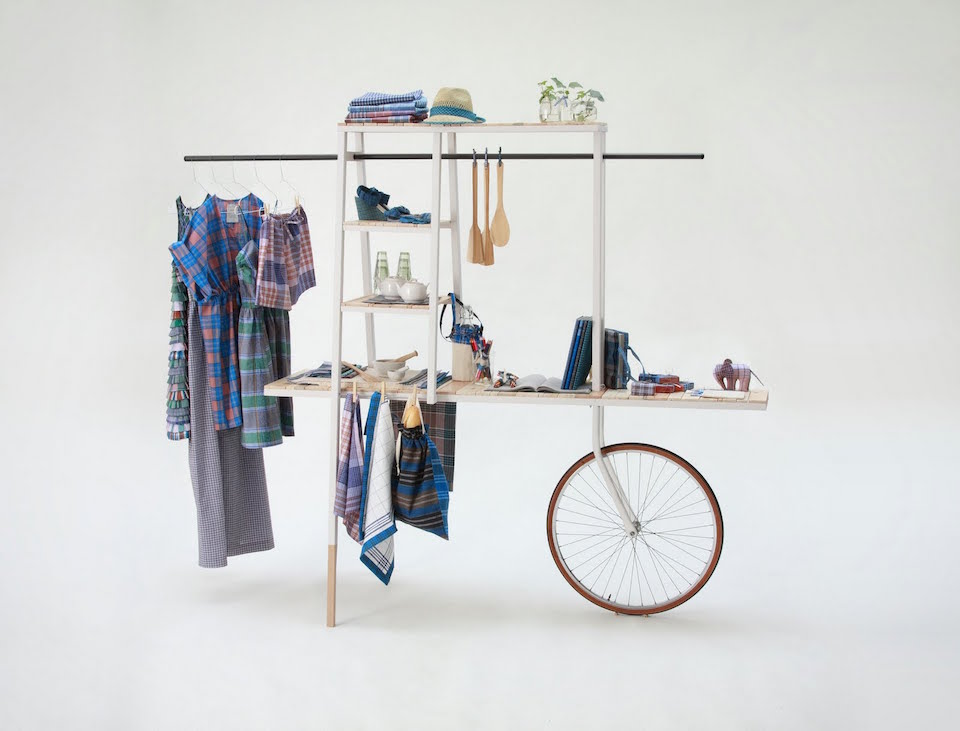
IOWEYOU is a disruptive new idea of what a fashion brand in the future can be. Founded by designer Kavita Parmar and engineer Iñigo Puente, it is a result of their personal convictions about preserving the love of craft and many years of experience in design and manufacturing.
Born from the need to empower both the artisan and the consumer IOWEYOU uses the full scope of modern technology and the social web by creating a new supply chain that they call the Prosperity Chain. IOWEYOU offers the sophisticated conscious consumer a very distinct product line based on the principals of provenance, heritage and artisanship; and not only enhances the online experience by linking end buyers with artisan producers, but also draws upon the most compelling aspects of social media to construct a community around its core brand values: authenticity, transparency, uniqueness, social & environmental responsibility.
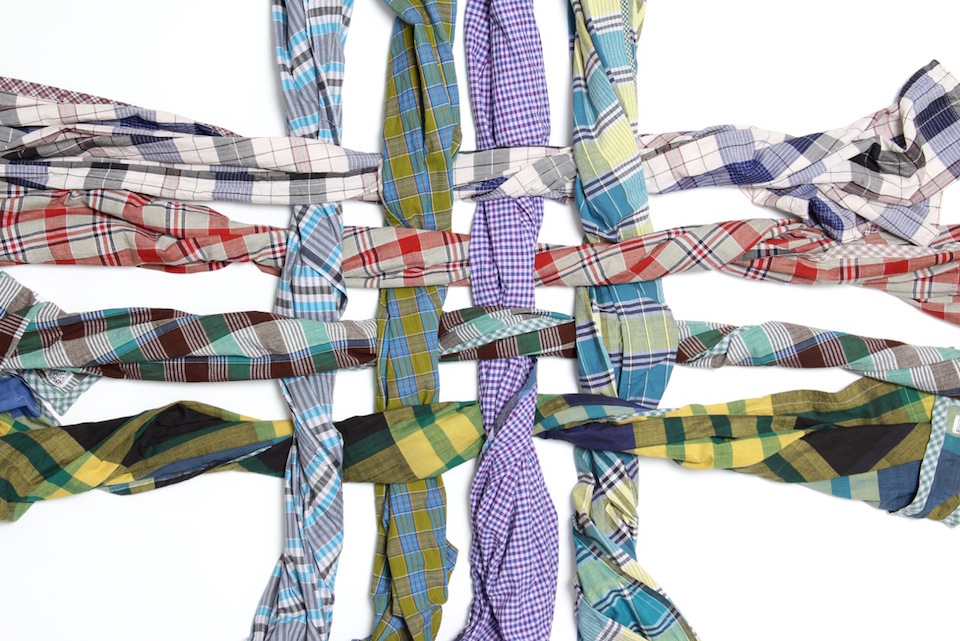
For its first collection, the label took traditional hand-woven Madras fabrics made by handloom artisans in India and turned them over to craftsman in Europe who created beautifully-crafted one-of-a-kind pieces. Each piece carries a QR Code that links clients back to the specific artisans and craftsman that created the unique piece.
The collection has expanded to include other authentic fabric sources and artisan groups. From real indigo plant-dyed denim made in Japan to cashmere wool from Northern India and Nepal, to yak wool from Tibet and Harris tweeds from Scotland, the collection has grown to give the discerning modern consumer an authentic and exquisite wardrobe that tells a story. All
of course sourced from artisan communities with full traceability and transparency.
The IOU Project also offers partner retailers and other brands the possibility of using its platform and MAAP (Mass Aggregated Artisan Produced) system to produce their designs; the founders are in talks with leading brands and retailers in the industry who are very excited about using the programme’s ̈Prosperity Chain ̈ to create product for their own customer base.
The project has already gained much attention worldwide, winning several prizes in 2012: the Luxury Briefing Award for Innovation of the Year, the SOURCE Award by Ethical Fashion Forum London and the Sustainable Luxury Award Latin America, among other accolades.
norlha
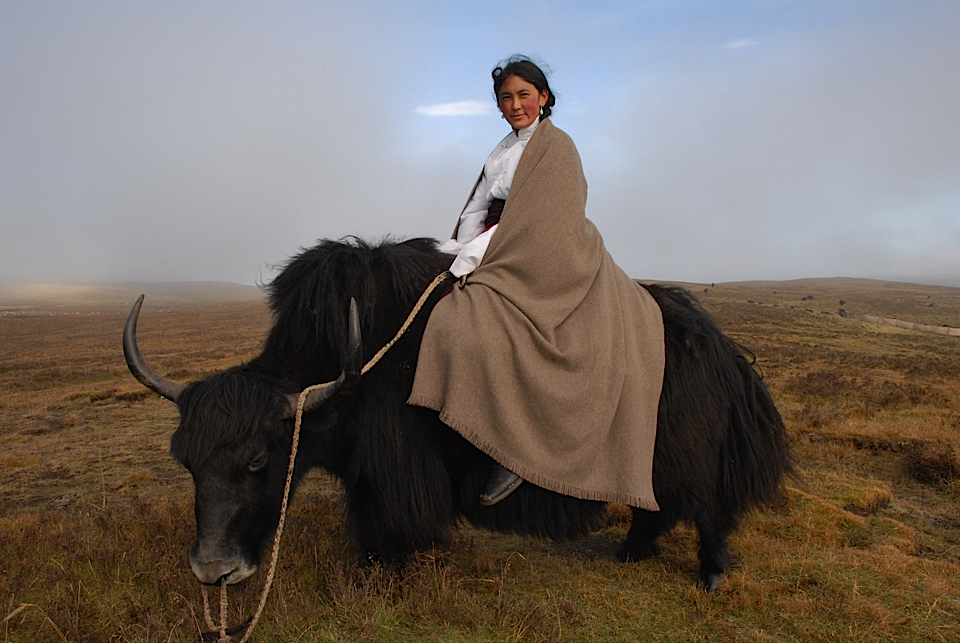
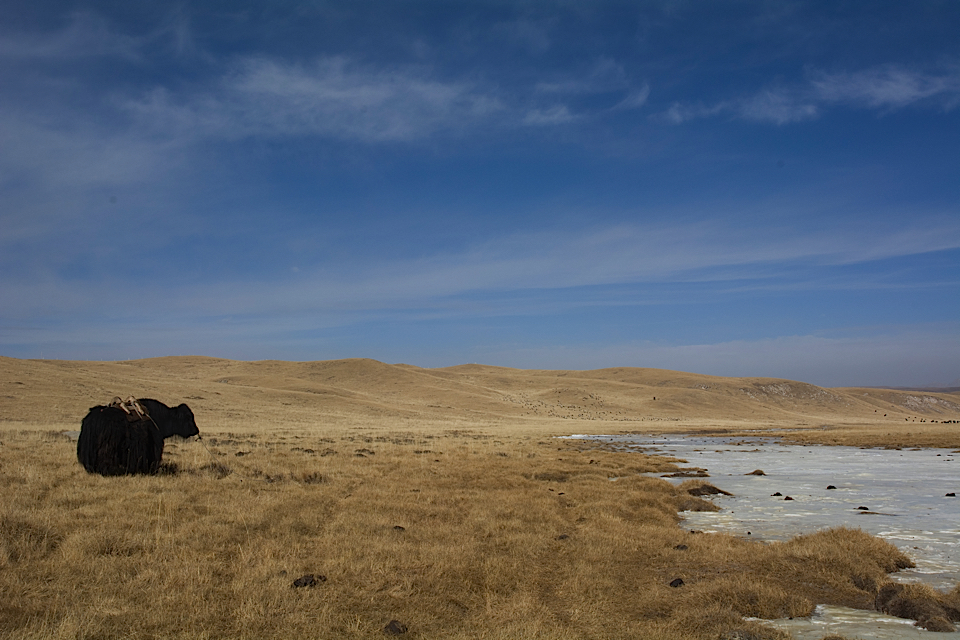
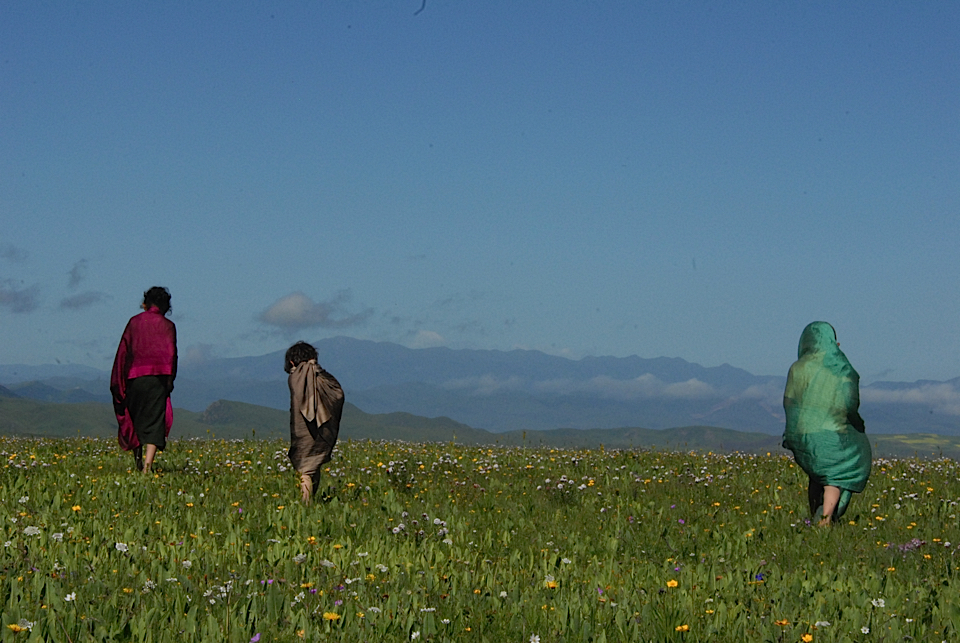
In a remote area of the Tibetan Plateau Norlha creates treasures for the luxury market using only the finest yak wool. Norlha is a contemporary structure functioning in a traditional setting, using the best of both worlds.
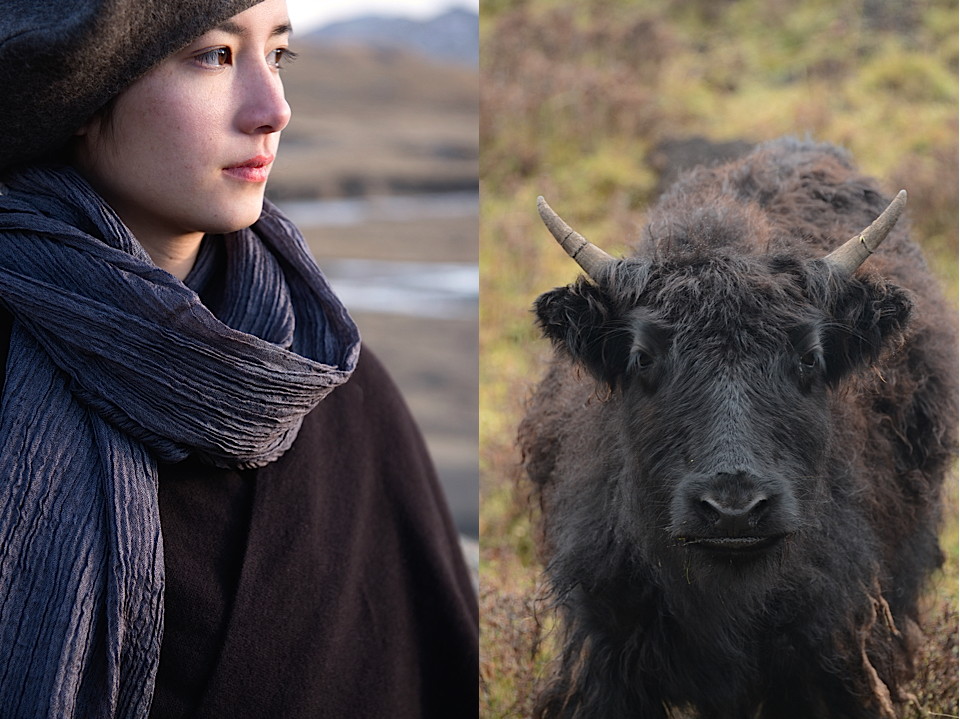
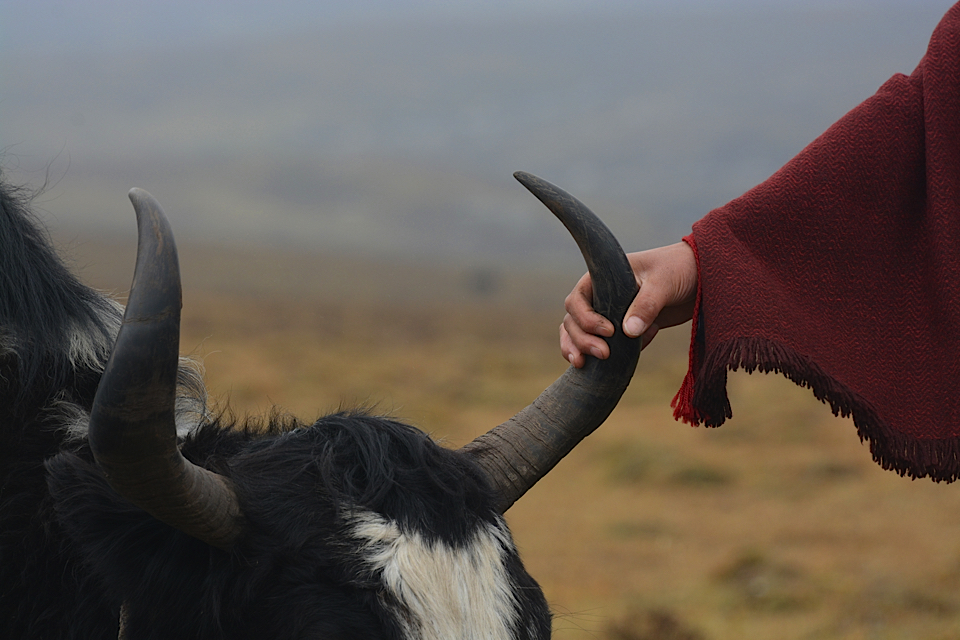
Tibetan nomads refer to their yaks as ‘nor’ or wealth. The Yak is a placid, even-tempered animal that grazes at altitudes over 2,500 meters. The yak’s natural reaction to the harsh environment of the Tibetan plateau is Norlha’s treasure; a precious brown fiber the Tibetans call ‘khullu’ that insulates it from the bitter winter cold.
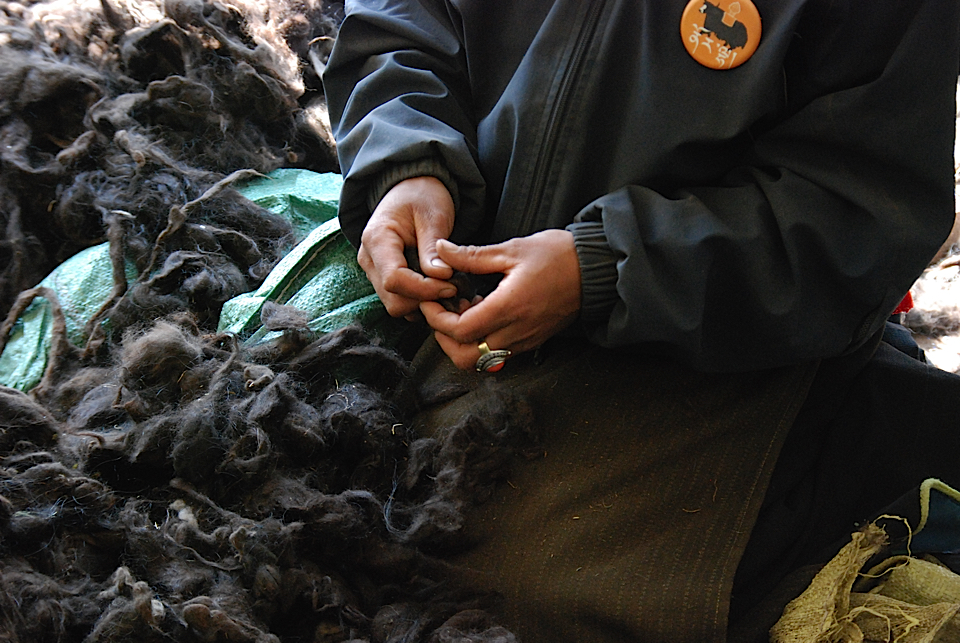
Norlha’s founders believe that culture thrives where people are happy, earning enough to sustain themselves, and free from the need of migration as a means of income. Their purpose is to develop the local economy and provide a livelihood in the village itself. Each year, Norlha recruits local herders to gather the first molting of the baby yak, known for its sumptuous softness and exceptional warmth. The wool is then transformed by local artisans in the Atelier into products of outstanding beauty and quality.
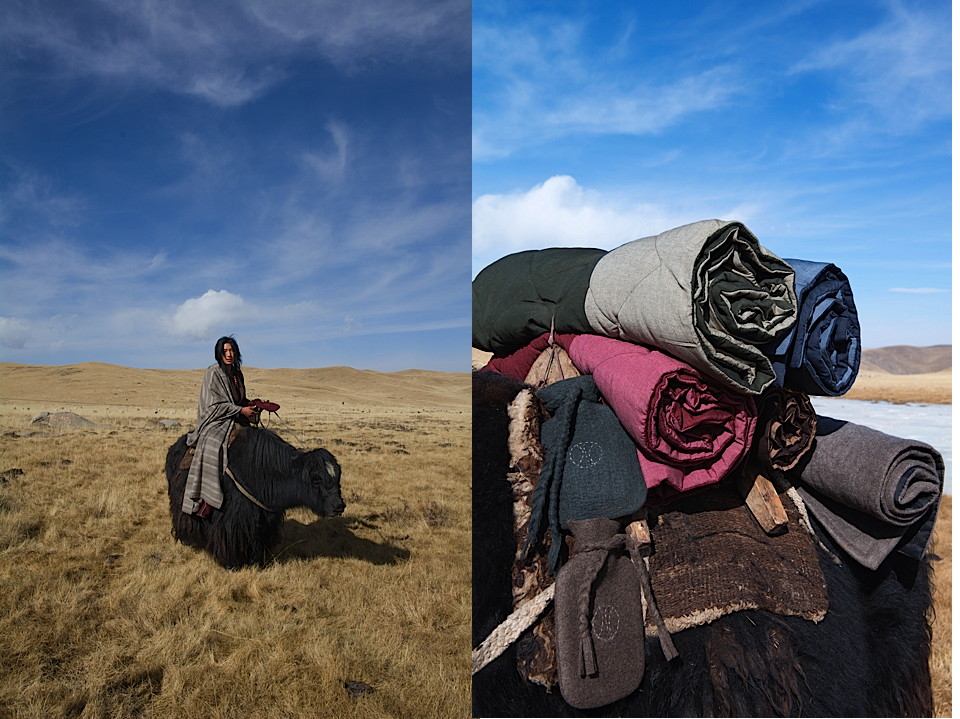
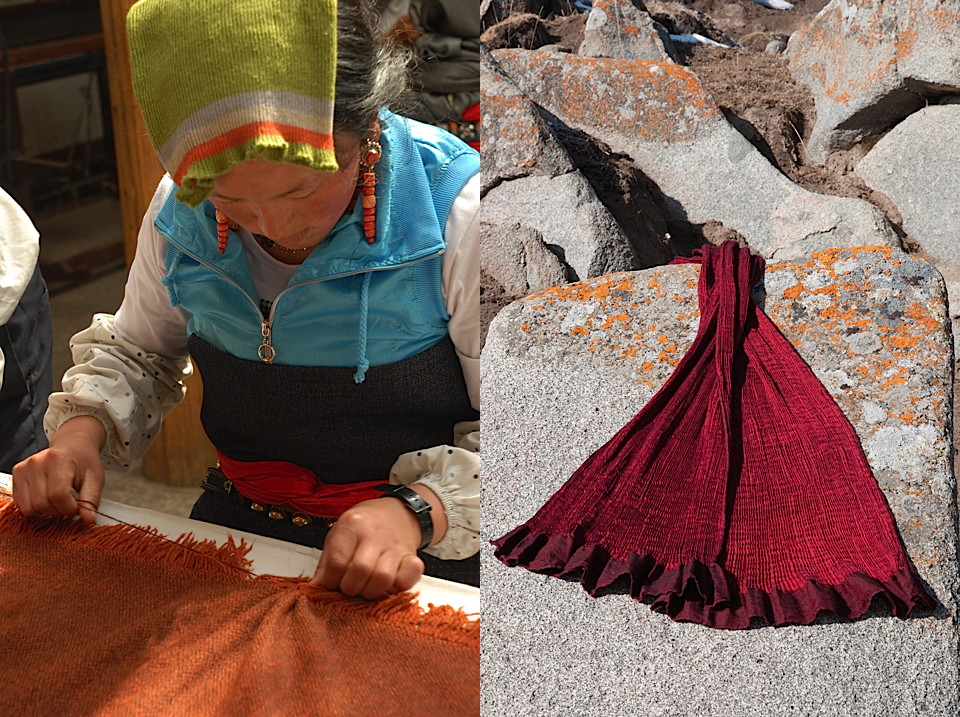
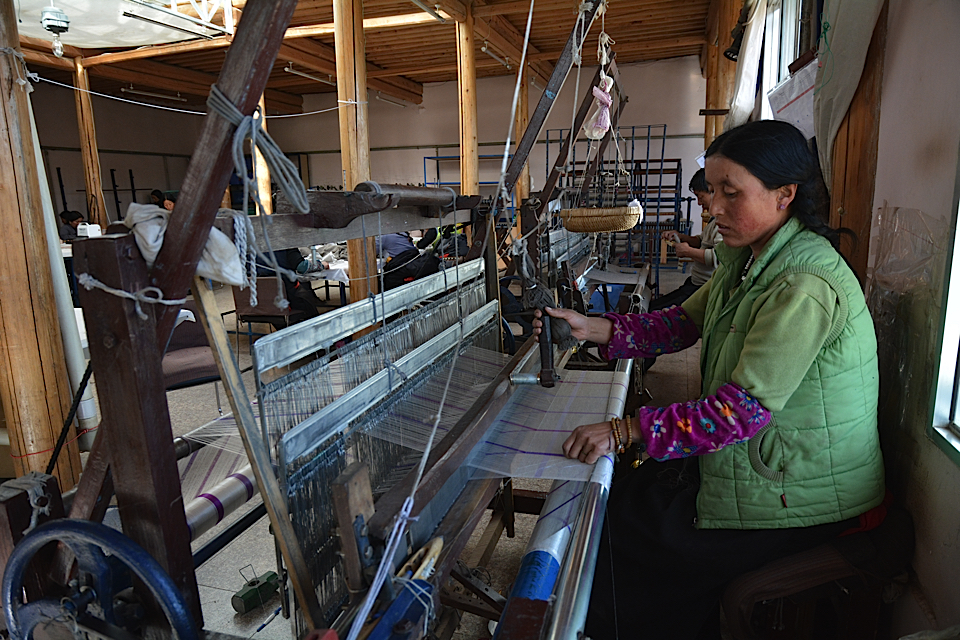
Built in 2007, the Atelier is a haven of efficiency and creativity. Constructed in the traditional Tibetan style, it comprises sections for design, weaving, felting, tailoring and knitting. The Atelier provides a safe, comfortable, light and airy workspace for 120+ artisans.
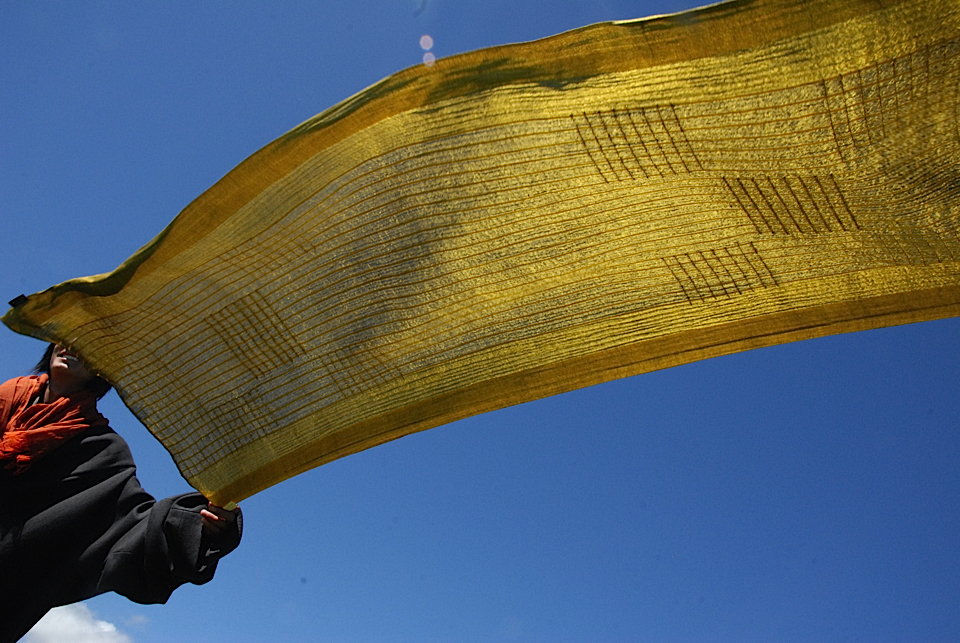
Mixing traditional methods and modern technology, Norlha transforms this exquisite fiber into accessories, fabrics and felts for discerning consumers all over the world.Those textiles are for all seasons pure yak fiber for winter and twisted yak/silk combinations for light summer shawls.
Norlha Atelier is the only place in the world to transform yak khullu into felt. The felt is hand made, or hand finished. It is an exceptional product of enduring beauty that exudes comfort. Supple and durable, its qualities only deepen with age.
Norlha is fashion as personal philosophy. Its precious fibers and hand made textiles, its creativity and quality, as well as the traditions from which it was born, all combine to make Norlha a real way of life.
NORLHA
Branding and Design by Marcella Echavarria
Photography by Kim and Dechen Yeshi
EXPERIENCE NORLHA IN JUNE, 2016
Edelkoort Inc. & Marcella Echavarria are proud to host an 8-day trend journey to this Tibetan plateau, visiting artisans, talking textiles and learning about the region’s folklore. To find out more about the trip, please contact info@edelkoortinc.com
piero d’angelo - prize winner
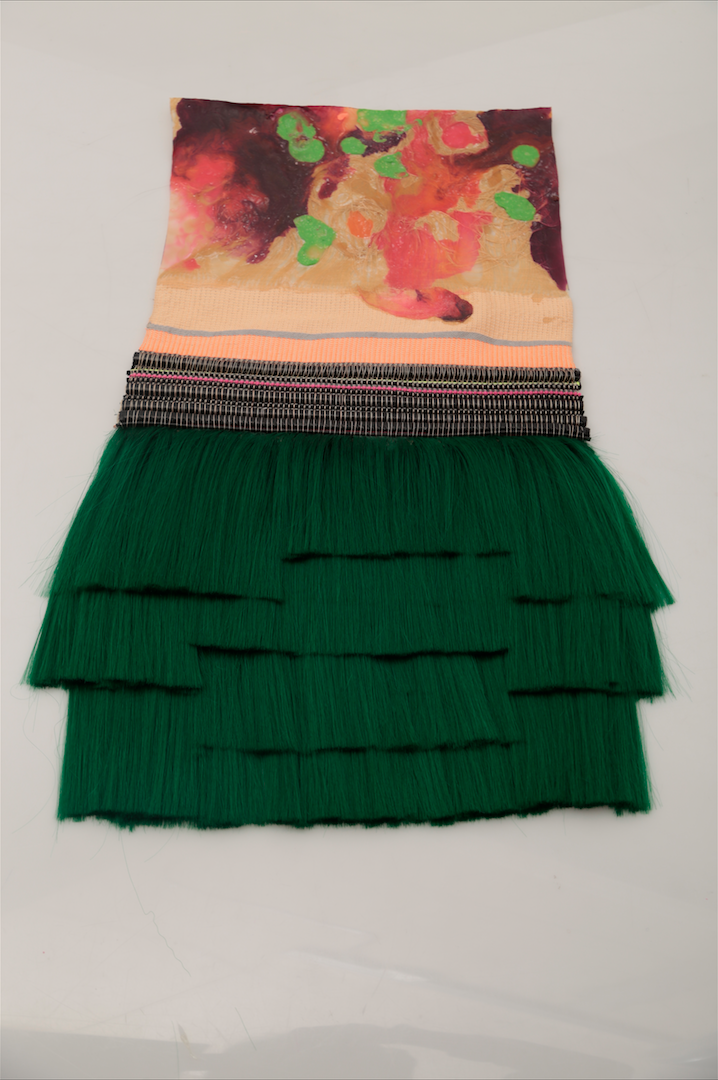
Hybrid (2014) by Piero d’Angelo, the recipient of the 2015 Dorothy Waxman Textile Design Prize
When Li Edelkoort and Philip Fimmano decided to fund a textile prize to bring attention to the importance of fabric in the design world and name the prize after me, I didn’t realize what a wonderful experience it would be.
As they toured the world they announced the prize to students from Finland to Australia and from Indonesia to Austria. Over 200 entries came in. I learned of schools from Boras in Sweden to the Academy of Art in San Francisco, as well as familiar schools like Parsons and FIT.
It was gratifying that many students were concerned with zero waste as well as other green imperatives.
The knitwear was phenomenal, really textile art.
It was not till I saw all the finalists hung in the wonderful Industry City warehouse at Wanted Design in Brooklyn that I realised how impressed I was by one entrant’s use of materials not usually found in textiles. It was the work of Piero d’Angelo from Central St. Martins in London. He uses wire, cables, plastics, and in one of his textiles he used hair extension threads with liquid latex to trap the ends’ warp weaving. He even added a colourful design to the latex.
What I particularly liked about his work is that with classic weaves of crepe or twill, he used unexpected materials and called it a hybrid between human and machine. To me that meant he was attempting to humanize the production of textiles.
Dorothy Waxman
WAXMAN TEXTILE PRIZE - THE FINALISTS #2015
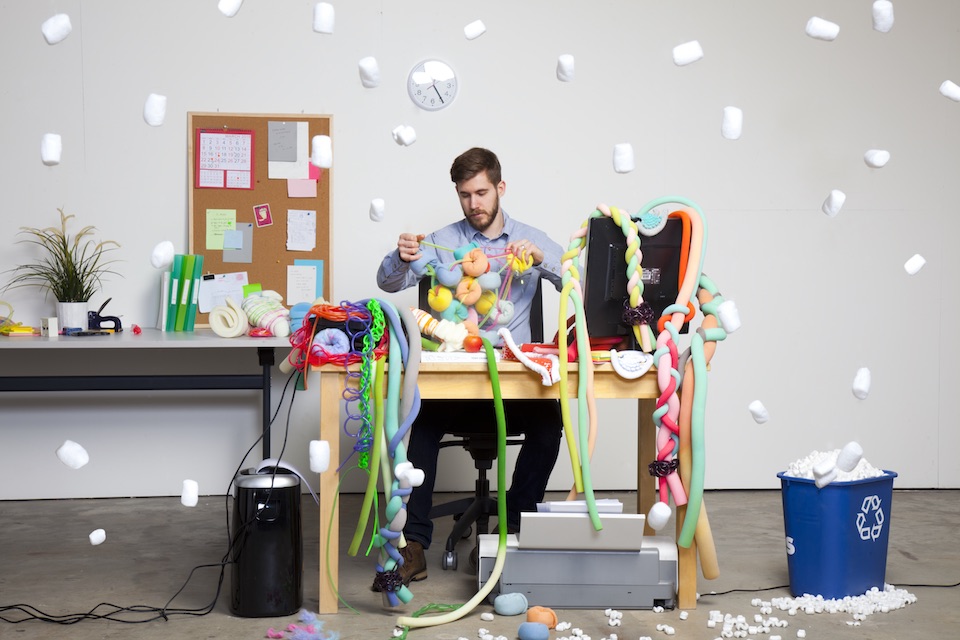
TALKING TEXTILES 2015 finalist Caroline Angiulo, "Mind Wandering Bloom”
We are on a quest to save textiles – to honor and promote them and take them to new dimensions.
It is important to take notice of textiles because they are an endangered species. Mills and factories around the world are vanishing one by one and educational institutions are downsizing their departments or replacing looms with computers therefore soon young talent may have no place to go.
Creativity is the only solution. This is why we have started the inaugural 2015 Dorothy Waxman Textile Design prize , awarding $5,000 to a student whose work fosters the future. An inspiring selection of finalists from more than 200 international entries at Industry City during WANTED Design showcases some of the most innovative ideas today for fashion and lifestyle.
These textiles will speak loud and clear and become the fabrics of life, knitting stories, illustrating pattern, whispering well-being and reviving the act of creative weaving.
TALKING TEXTILES is an initiative that promotes creative textiles. Exhibitions in Milan, Stockholm and Tilburg as well as seminars such as the one in New York on May 13, 2015 bring attention to the plight of the textile industry educating professionals and consumers alike about the importance of fabric design today.
Lidewij Edelkoort & Philip Fimmano
MAY 13, 2015 TALKING TEXTILES SEMINAR tickets
TALKING TEXTILES @ WANTED DESIGN
MAY 9 & 10 + MAY 14 to 19, 2015 from 11:00 AM to 6:00 PM free entrance)
274 36th Street, Sunset Park, Brooklyn
AINE BYRNE (Ireland) Royal College of Art, London
Work in Progress, 2015
technique: screen-printed wovens & jacquards in wool, silk, polypropylene & plastic, accompanied by a film (left)
My Work for my final MA project is concerned with exploring the human life cycle. I create oversized shrouds in many layers, each representing a period of human existence through the specific use of color material and symbolism. These coverings will engulf the human body with each layer, progressively revealing a more elaborate and embellished hand-worked textile.
In my research I have been influenced by various life and death ceremonies including Egyptian mummification where highly luxurious fabrics were contained within the inner layer of the corpses shroud for the journey to the after life.
I am fascinated with the mutability of the human experience and the many metaphorical and physical layers of skin worn and then discarded during life. I wish to highlight and externalise the inner layer of the human spirit. I want these fabricated coffins that will consume the wearer to be filmed on people gradually pealing each covering off, revealing the layers beneath.
The concept of burial and decomposition has lead me to use lots of natural fibers such as wool and silk which will decompose along side synthetic materials such as polypropylene and plastics which will remain in the earth when you have been buried, leaving this memory or the person who has died.
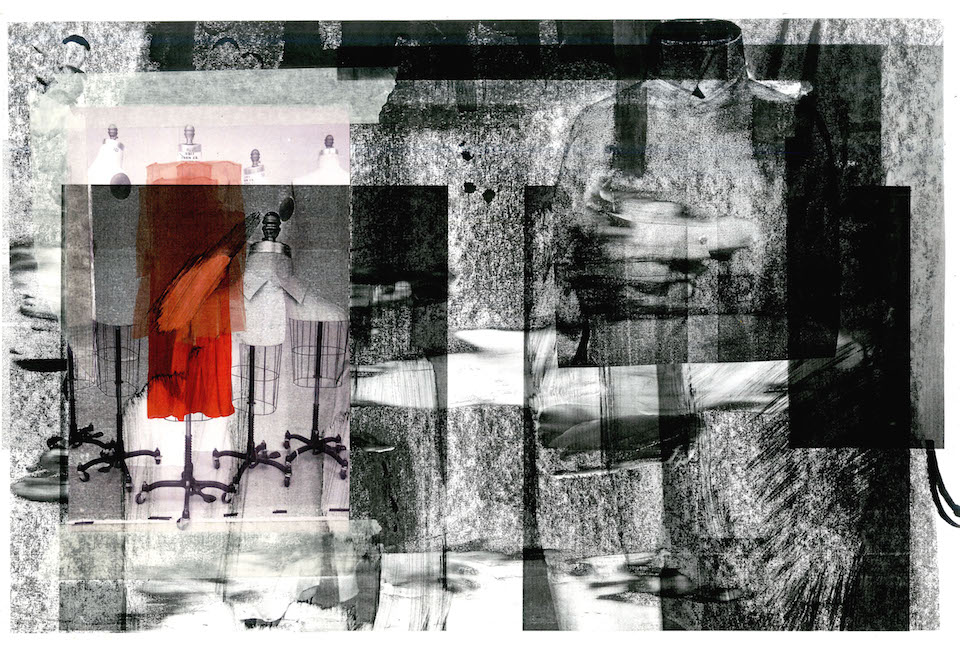
ALICE EARLY (Great Britain)
Parsons, The New School for Design, New York
Plastic Lace (study), 2015
technique: recycled plastic on tulle, sewn, laminated, heat pressed, spray painted & foiled
A combination of textile developments taken from research into being an un-precious precious artist, taking prints from a vintage dress and transforming the prints into ethereal tulle textiles.
Heat pressing recycled plastic onto gathered tulle to create a second lace effect, flaking beautifully. Pressing plastic onto sewn gathered tulle also created a dynamic effect and depth. The combination of textiles layered together to portray a story through the clothes.
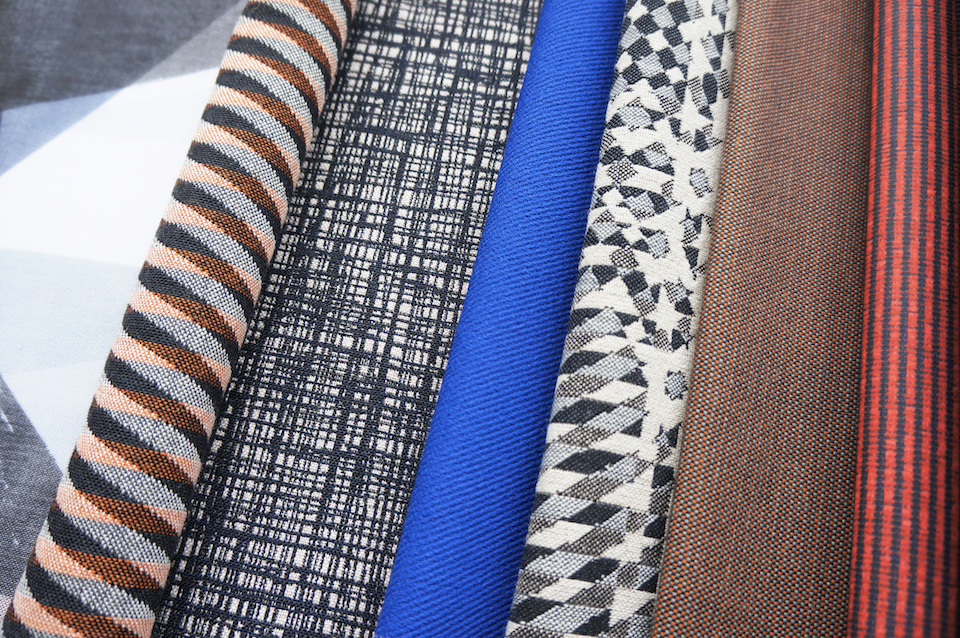
AOI YOSHIZAWA (Japan)
Aalto University School of Arts, Design & Architecture, Helsinki
Random Order, 2013–14
technique: jacquards in wool/polyamide & Trevira CS
For my MA graduation project, I have created a collection of textiles for public environments (contract textiles). The collection’s concept expresses a visual story for public spaces featuring the structural patterns of architecture and the echoing random movements of people. Based on this idea, I created intuitive patterns and structures in yet a systematic order by adding new expression to my previous design style.
In addition to the visual story of public spaces, this collection takes inspiration from the technical limitations and restrictions of the contract textile design process, as order also refers to rules and systems to be followed and obeyed. In this way, I considered limitations and restrictions as a valuable source of inspiration.
The collection consists of six upholstery designs and a curtain design in three different colorways. The technique used for the upholstery fabrics is jacquard weaving. To design a curtain, I used digital printing on a woven sheer fabric.
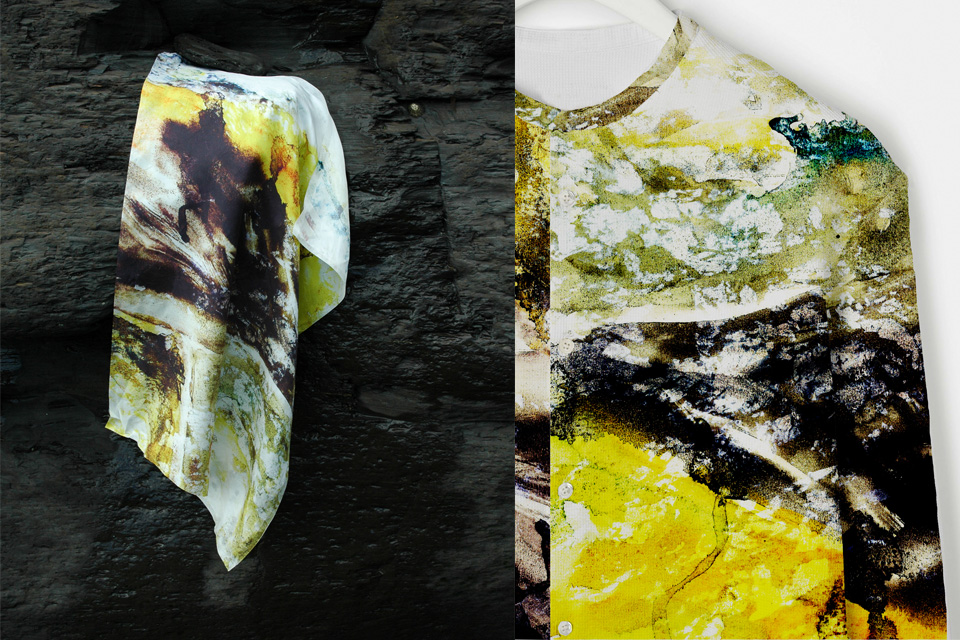
CARA MELLOR (Great Britain)
University of Huddersfield, England
Organic Element, 2015
technique: digitally-printed silk twill
In today’s fast paced society, so many beautiful moments occur within the natural world and go unnoticed. The concept behind this piece of fabric is to capture a moment in time. This could be wave movements, rain, snow or fire. These white moments in time should be celebrated and treasured, awakening the connection between humanity and nature. This sample shows wave recordings combined with original cave inspired paintings. The collaboration between art and textiles is evident as it is both conceptual and artistic. Designed for high-end menswear, I feel there is a cry for a new direction the menswear market which inspired me to explore innovative, unique design experimentation.
Movement and colour have been inspired by oceans in Australia. I used a practical method of recording the waves by painting ink onto fabrics and paper and watching the waves wash over them one at a time, focusing on the movement of the inks being drawn back by the wave. I rubbed sand into various test samples to add a natural texture to the surface. Natural fabrics such as silk worked well and absorbed the water, allowing the colours to set since the sea salt acted as a mordent. I combined these natural patterns with still life paintings of caves. The test samples were then developed using Adobe skills to enhance the colour, layer the textures and draw out the marks. This sample is digitally printed onto silk twill. Suit linings, shirts and knitwear are to printed, preserving the moment forever in my Organic Element menswear collection.
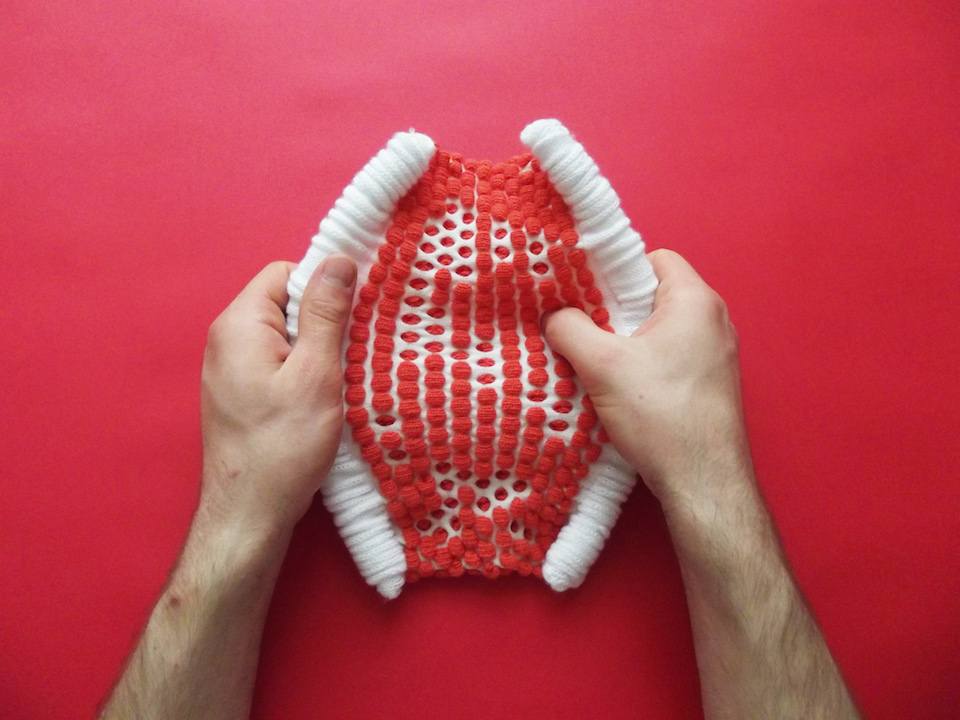
CAROLINE ANGIULO (Great Britain)
Central Saint Martins, London
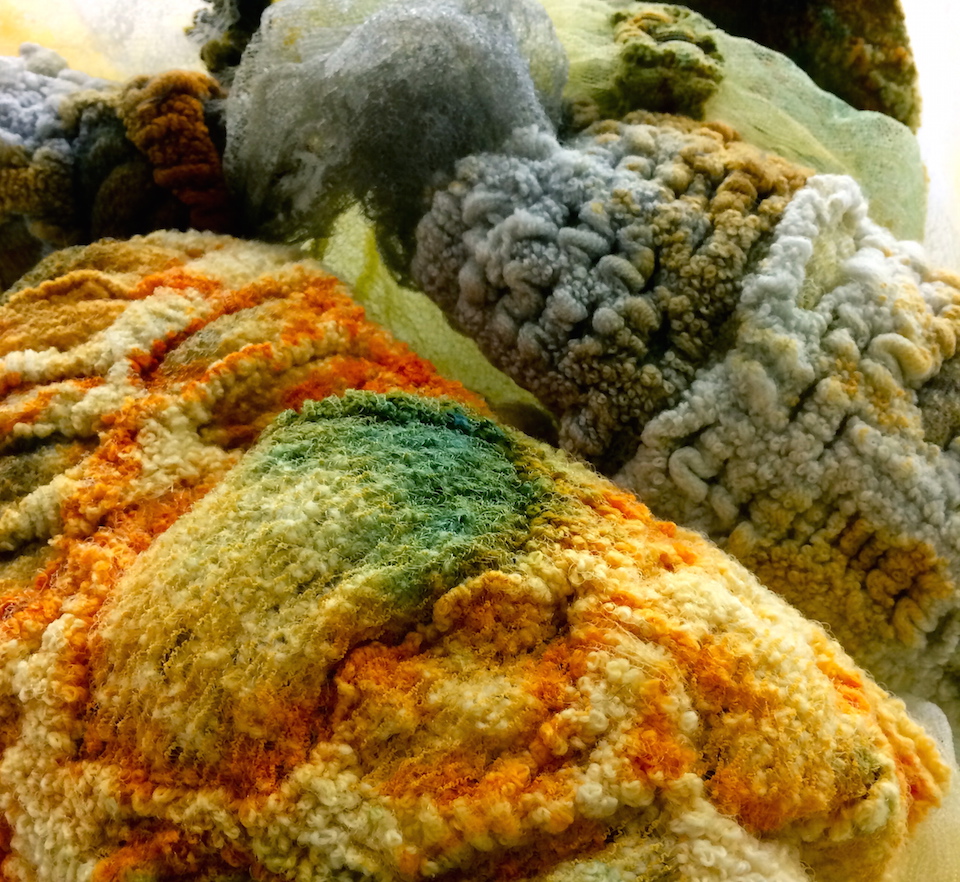
Mind Wandering Bloom, 2014–15
techniques: dyed, crocheted, braided, twisted, knotted, gathered, wrapped & attached compositions in cotton, wool, acrylic, Lycra, foam, rubber bands & silicone tubes
How can we trigger mind wandering in our daily lives?
I am interested in the potential of materials to encourage a state of mind wandering. That is, allowing us to temporarily disconnect from technology and our everyday lives to provide a moment of light relief, while introducing an element of the extraordinary and fantastical.
Mind wandering occurs when you are executing an easy, repetitive, and relatively unstimulating task, enabling you to lapse into ‘task-unrelated’ thoughts. Research suggests that this state of mind is healthy for mental well-being and can help stimulate creativity. Just like the rabbit hole in ‘Alice in Wonderland’, or the taste of the madeleine in the novel ‘In Search of Lost Time’, these ‘wander materials’ aim to facilitate mental time travel through material design, evoking your imagination and providing a short escape.
CHLOE COOPER (United States)
Rhode Island School of Design, Providence
Future Skins, 2014–15 (detail)
technique: monofilament machine knit, dipped in acid dye & rubber coating
For my thesis, I have explored the idea of manipulating human’s intrusion with evolution. In our culture, clothing is mainly worn for aesthetic purposes, and does not contribute to more of a progressive function for our movements and actions. These are very topical to our advancements in science and technology. Commenting on this, I created several ‘skin suits’, which will replace clothing in the future. These garments, when worn will transform the human body.
A person who has a specific part of their body that is failing their expectations, will be able to choose what parts of their bodies they would like to enhance, and put on this ‘skin suit’ that will fuse to their figure, transforming that particular highlighted area. I was intrigued by friends answers to ‘what would you change about your body for function and why?’ to create these specific bodysuits. Inspired by my sister’s answer of her stomach and problems with acid reflex, I created a stomach suit that will aid in smoother digestion, preventing stomach ulcers and acid reflex based off of research on how cows stomachs work.
I imagine a room set up like a future store, combining clothing with science, where people would be able to pick from a range of specimens which part of their body they would like enhanced, and have their own custom skin suit. In the future, we will be able to control our own bodies, instead of our bodies controlling us.
CHRISTINA MASCHKE (Germany)
University of Borås, Sweden
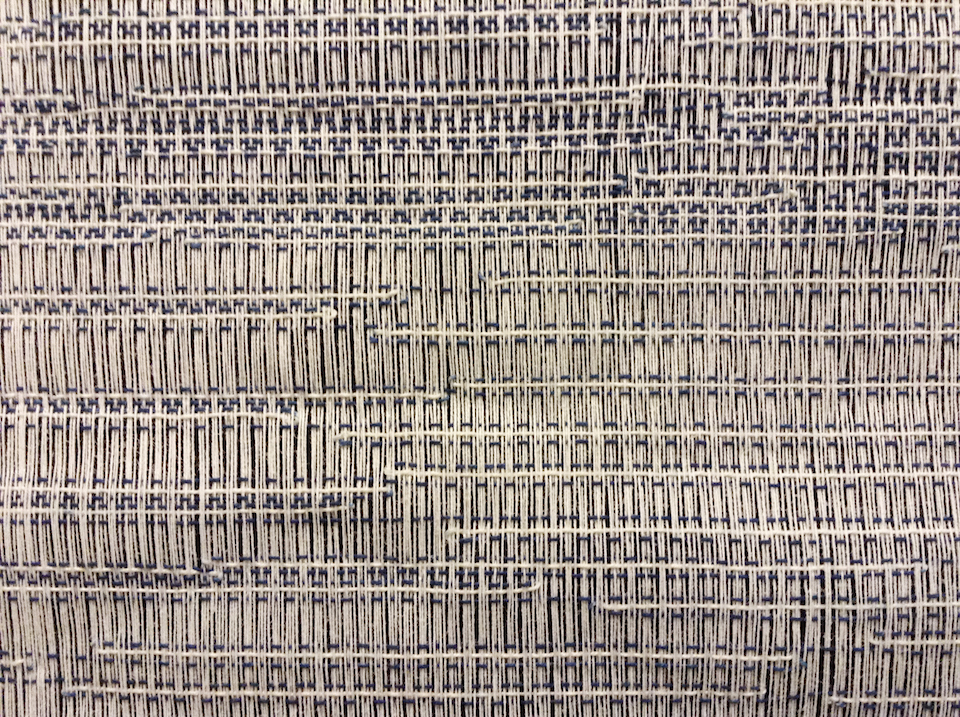
Deconstructed Ikat, 2015
technique: indigo dyed hand-weave
Ikat weaving has a long history and a rich cultural heritage. It’s an old textile technique where the threads are dyed and then woven into a fabric.
I used this traditional textile technique but approached it in a new and experimental way – letting the dyed weft tread lead its own way through the weaving structure. Therefore creating a deconstructed structure with a fragile appearance.
CLAIRE BLABY (Australia)
RMIT University, Melbourne
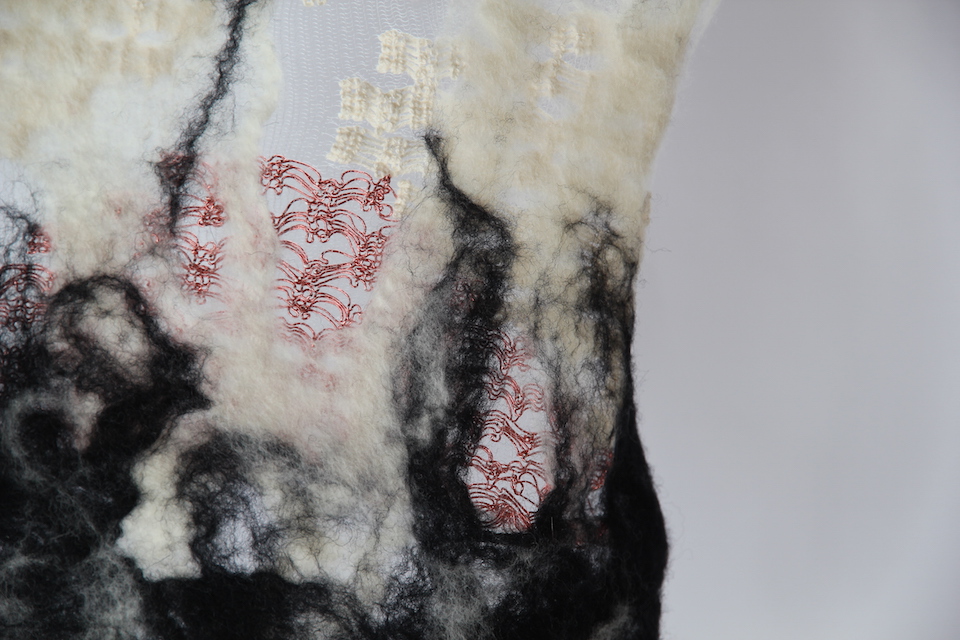
Convergence, 2015
technique: machine knit, hand felted in merino wool with nylon, cotton & metallic yarns
In biology, convergence is “the tendency of unrelated animals and plants to evolve superficially similar characteristics under similar environmental conditions” or “a location where airflows or ocean currents meet, characteristically marked by the upwelling (of air) or downwelling (of water).”
In this hand felted wool swatch, laces made of cotton, nylon and metallic yarn are interwoven to create multiple layers of tactility; mirroring our current interest in embedding different elements to create a hybrid – a cultural collage that merges the natural with the synthetic.
DANIELA ALVES (France)
ENSCI – Les Ateliers, Paris
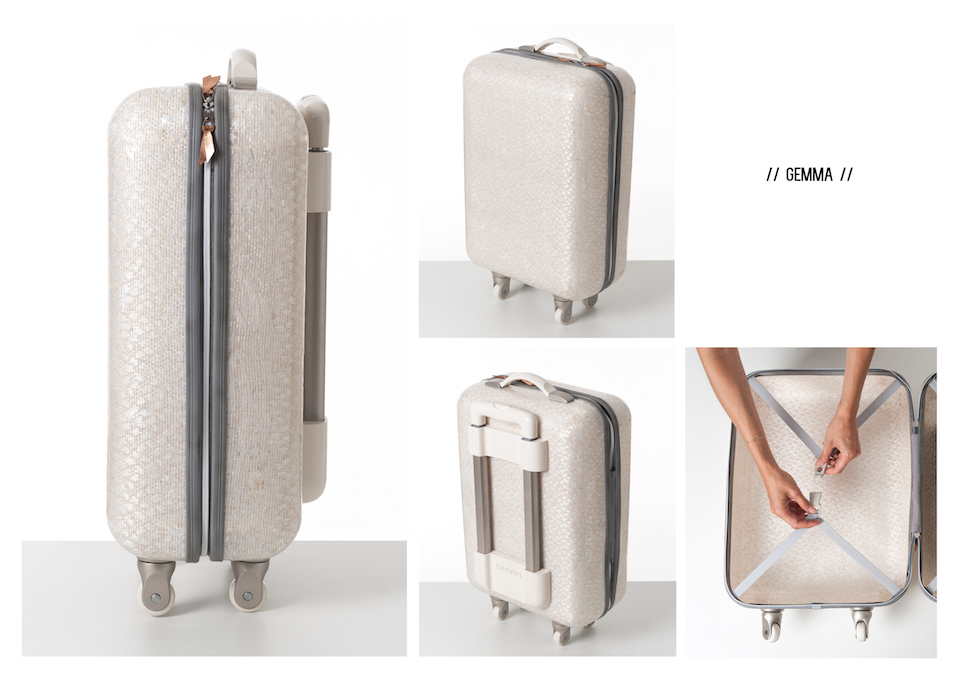
Gemma, 2014
technique: handwoven polypropylene tape
Textiles are a means of communication, often what we see first, sometimes even before we consider the object’s utility. That’s why the surface is, as important as the meaning of the object; textiles give an orientation to our appreciation. The heart of my project was to reach a harmonization between perceptions of quality and quality of use.
Eager to find new proposals and responses in the luggage market, this project aims to use material innovations to best suit travel needs – needs which are constantly evolving (lighter, stronger, easier to use). The choice of textiles and materials used is, therefore, a critical one. My project proposes a union between the hard-case trolley and its textile counterpart; making a hard-case by weaving a plastic material.
The plastic used is Polypropylene tape; woven, this material can be self-reinforced and used in the thermoforming process. That way, my woven fabric can directly become a hard material and be manipulated into the desired shape. This material has the advantage of showing excellent impact properties as it also has bulletproof and blast protection applications. This aspect makes the woven polypropylene suitable for luggage, as it is extremely resistant to shocks. It is a real technological advance as luggage made from this material is said to be the strongest and lightest ever made. The textile collection developed here was inspired by gems – their refined sheen and texture.
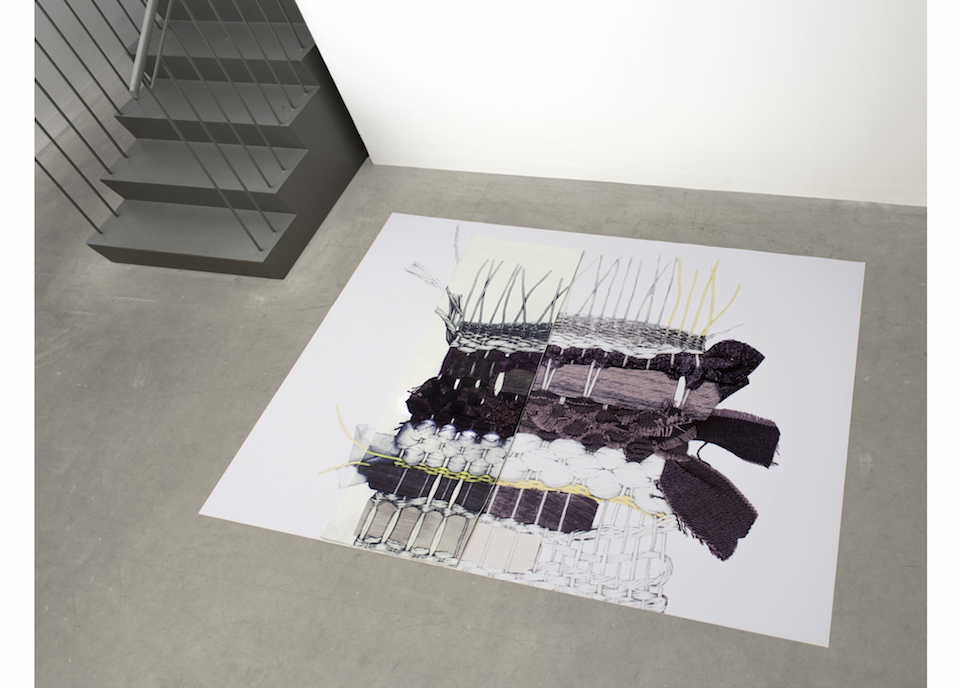
GITTE LÆGÅRD (Denmark)
Design School, Kolding, Denmark
Up Close Rugs, 2013
technique: digital print of hand-weaves on wool felt
This project grew from an interest in visualising authenticity in textiles. The word authenticity has been very popular and used in a lot recently. But what does it mean if something is authentic and how can I visualise it in terms of my profession?
My inspiration came from a meeting with an older man and his home with ticking clocks everywhere, rough walls, dust, mess and a lovely joy that permeated the entire house. I made my first studies on a children’s weave. It was a quick and immediate way to examine materials and expressions, but I thought the samples were too primitive. I therefore went quickly to a larger weaving machine.
After a series of experiments, I realised that the textiles were too perfect, all life in them had disappeared! The initial children’s weave pieces, with their coincidences, gravity and lots of mistakes, radiated the sensuality that I was looking for. I sensed the hand’s presence, and it stood in contrast to the monotonous mechanical expression.
For the finished blankets, I chose to use giant oversizing. I scaled images of the small weaving samples to massive proportions and printed them on thick wool felt, which gave a huge depth to the motif. The magnified expression overwhelms and surprises, and the rugs invite you to explore the entire area. The combination of the crafted look with modern print techniques creates an interesting tension in the rugs.
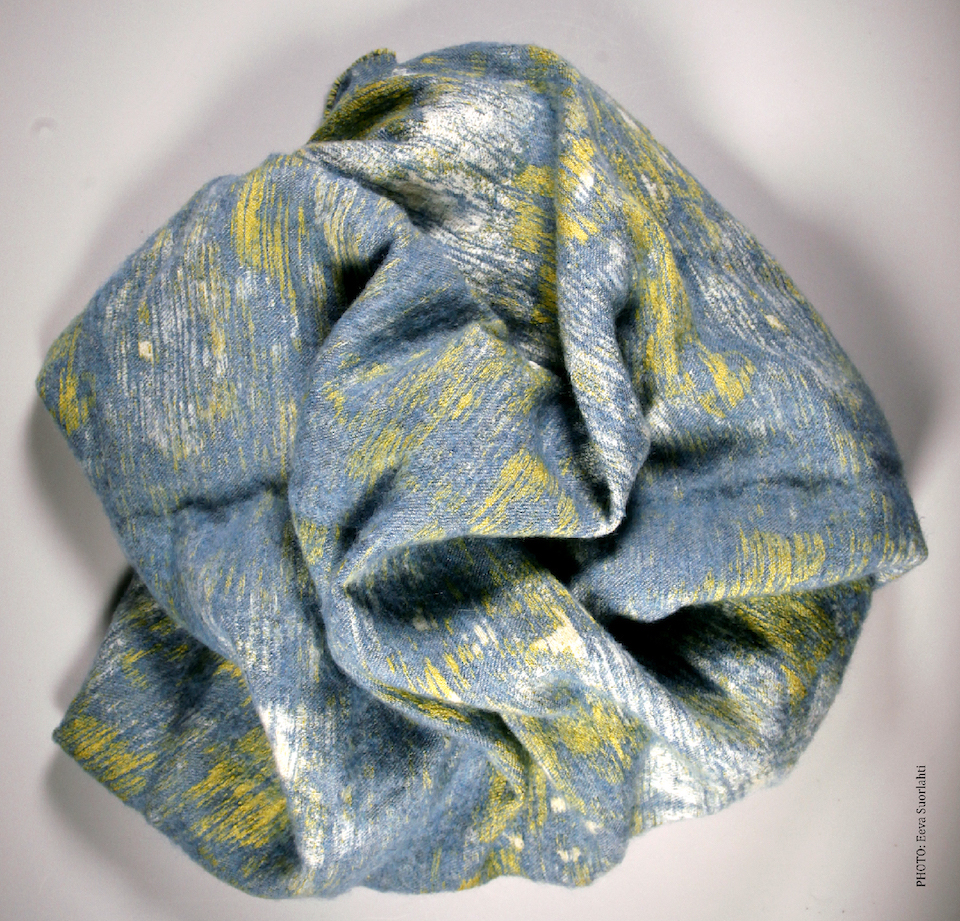
HANNA-KAISA KOROLAINEN (Finland)
Aalto University School of Arts, Design & Architecture, Helsinki
Daisies and Friends, 2014
technique: grattage on handwoven & industrial jacquards on mohair, wool & silk blends
I’m interested in testing different sketching methods in order to achieve varying results. In this jacquard fabric, I have used the scratching method. The very same technique we all learned in kindergarten, at least here in Finland. First I draw a picture with oil pastels, then I cover it with darker colour. After that I reveal the hidden picture by scratching the surface with a needle. The resulting image now has multiple layers and becomes more 3-dimensional.
For weaving I used a 3-weft system: I used one weft color similar to the warp to give a fresh effect. The warp is off-white cotton, and the wefts are dusty blue and white mohair, mixed with straw yellow wool-silk. The textile is scratched horizontally and bindings vary frequently on the surface of the fabric. Lines create an effect that resembles an old tapestry. Both sides of the fabric can be used as the front face.
I was interested of creating something that looks old and new at the same time. The lines made by the grattage-technique create an illusion of used fabric. This is the way that I face the idea of creating ecological textiles, when you fall in love with something that already looks some way old, you don’t mind when it actually will get aged. Choosing good quality materials, which will only become more beautiful with time, is part of my design philosophy. I design textiles that feel soft and comforting to touch.
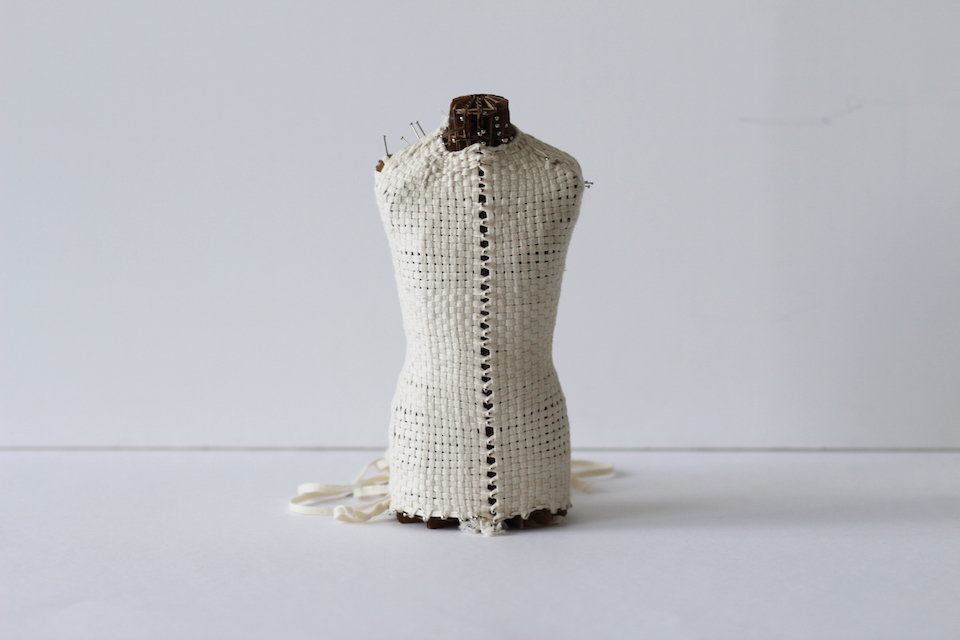
JACQUELINE LEFFERTS (United States)
Royal College of Arts, London
Mannequin Loom, 2014
My project challenges the status of makers. It is also meant to challenge designers’ acceptance of tools without questioning the tool’s efficiency or modern relevance. Why is fashion subservient to weave? Why do fashion designers always take the fabric from weavers and cut into it? Why is design separate within itself? Why can’t garments be woven the same way they can be knitted?
The project shown is a mannequin loom; a tool that allows materials to be directly woven onto a form creating a seamless 3-dimentional woven structure and simultaneously making a garment. The form is taken from a 3-D scan of a male mannequin, which was laser cut from cardboard. My ambition is to replicate this in wood and create a stand so it can be rotated whilst being woven. The material used to weave directly onto the mannequin loom is expensive tape yarn but I intend on experimenting with different materials and leather.
I currently only have access to a jacquard loom with a 12” repeat. In order to do this to scale I need to work with a mill that has a single repeat jacquard loom, meaning there is no size restriction.
I have also been exploring how to make this method accessible for mass production, such as on a jacquard loom that intersects and simultaneously weave pattern: three-dimensional garments can be woven in what appears to be a flat piece of cloth, before simply needing to be cut and turned inside out, eliminating the sewing process. Not only does this method reduce waste, it also eliminates steps from the supply chain, reducing the carbon footprint.
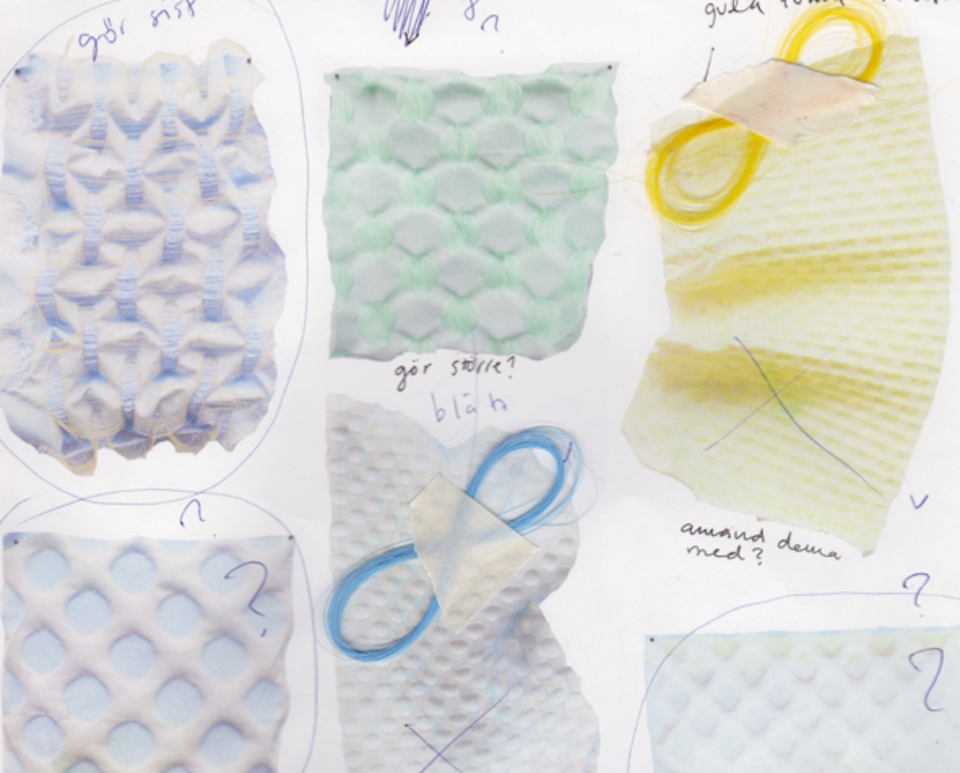
JOHANNA DE RU (Sweden)
University of Borås, Sweden
Satiprick, 2015
technique: various industrial jacquard weaves
This project investigates the relationship between one pattern, jacquard weaving and materials. With the aim, to find new expressions within in the field of woven textile design, as well as alternative ways of approaching the textile design process.
My ambition has been to fully explore one pattern and its expressive potentials in relation to weaving, yarns, density and scale. Through putting emphasis on the yarn and technique exploration, unexpected three-dimensional surfaces were developed, but also, a deeper knowledge of the inherent properties of materials.
The polka dot pattern has throughout the process functioned as a conceptual framework, but also, as the structure and expression of the result.
During my earlier bachelor and master education, I have deepened my knowledge of both traditional handicraft of weaving, but also how to manipulate and handle the industrial jacquard machine. With the intention to use the machine as a sketching tool rather than a production tool, and in extension, build a close relationship between the hand and the machine.
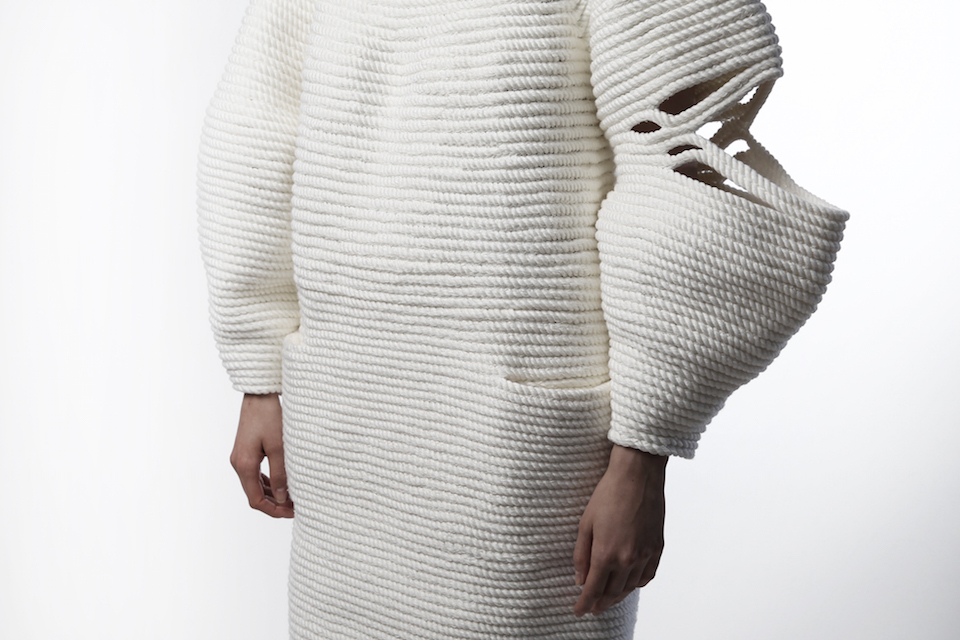
KATHERINE MAVRIDIS (Australia)
Parsons, The New School for Design, New York
Mokuba, 2014
technique: fully fashioned rope garments
I am a knitwear designer based in New York City. After my undergraduate degree at the University of Sydney, I was accepted into both Parsons the New School for Design and the Royal College of Art to complete a Masters in Fashion Design, majoring in knitwear.
For Mokuba, I developed a technique of coiling rope into fully fashioned three-dimensional garments which resemble a knitted construction. This graduate collection is currently on show at the Parsons graduation show in Manhattan.
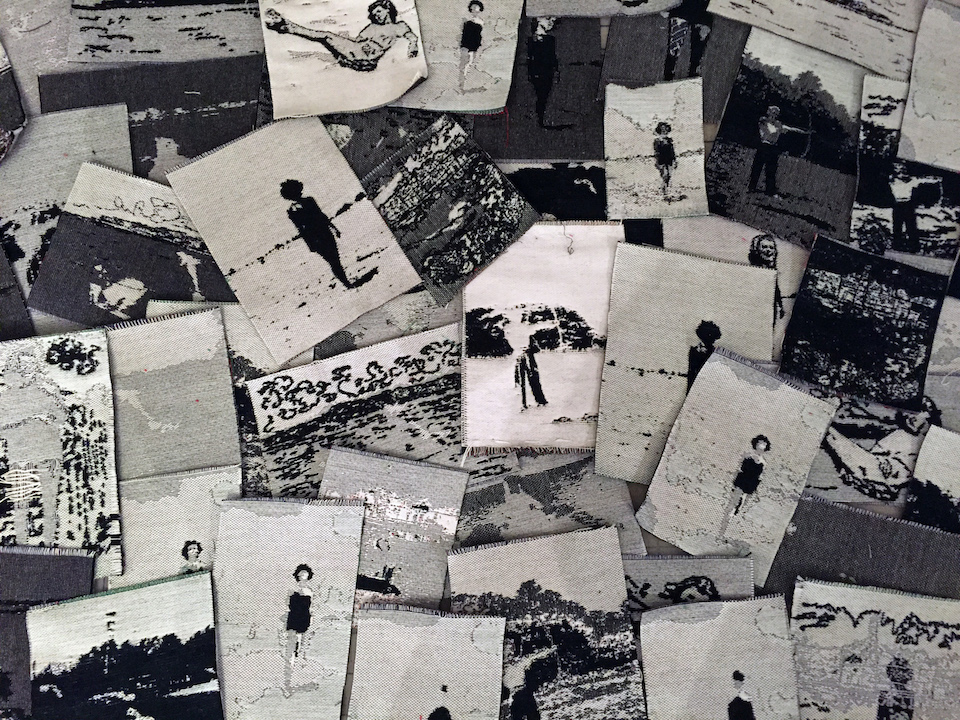
KELLY BOGAN (United States)
College of Textiles, North Carolina State University, Raleigh
Ruth Joseph, 2015
technique: cotton woven on an electronic Staubli jacquard loom 3 colorway
software using Photoshop, Kaledo Print & EAT
The intimacy of a memory is often lost in translation. The act of remembering is recreating a story with a mental photocopy. Research has proven that the more often a person remembers an event it will be further distorted from the pure truth of that event. Each time a memory is recreated in the mind elements change and certain parts are mis-remembered.
This collection of woven photos is an interpretation of how the memories would look today. The intricacy of a woven textile is a romantic medium for this collection because the sum of every yarn and every weave pattern create the visual of this new memory.
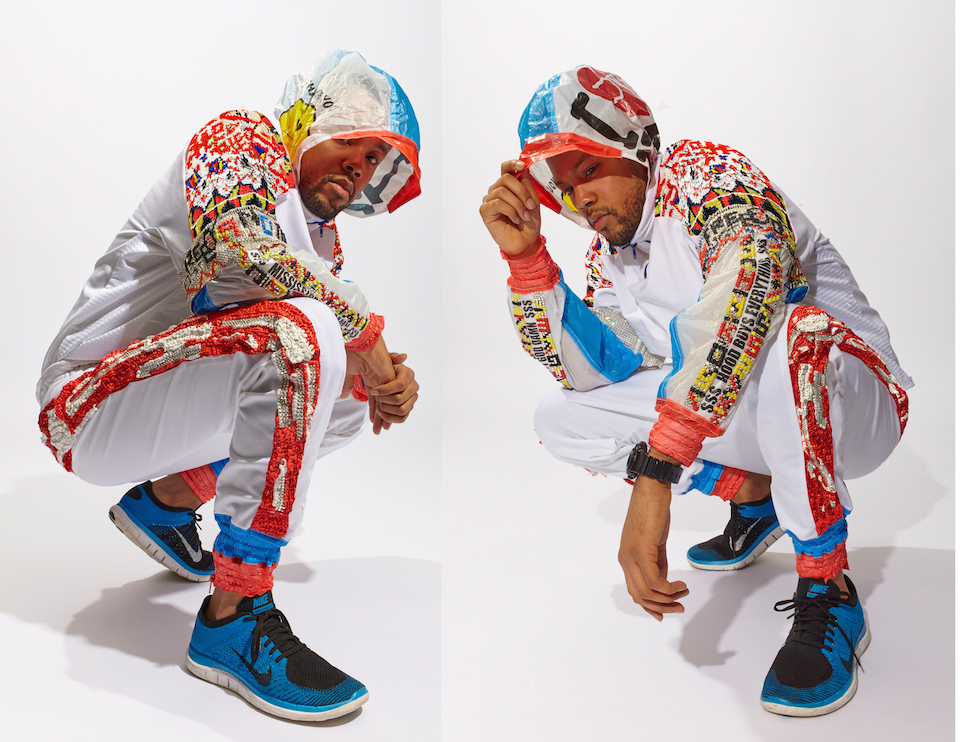
MARIA KAZAKOVA (United States)
Parsons, The New School for Design, New York
Playground of Americas, 2015 (in progress)
technique: mixed media including crystals, plastic bags, mirrors, stones, newspapers & organza
It is a duty of an artist to reflect the times. I see fashion as a powerful tool that can help bring attention to the problems that we face in the society, through cloth we can empower people, build workplaces, develop craftsmanship and provoke important conversations. Craft and creativity have no colour, no language, no religion. Today we have got to look at our past and to learn on mistakes in order to move forward. People of all nations must unite for the benefit of the whole, so that we can give to one another. Building one royal tribe.
I seek to reestablish ‘ethnics’ in a contemporary way, reconnecting people to the knowledge of the past and promoting hand skills and craftsmanship. Bringing ethnicity out of its costume status, to make it desirable, elevating the value of craft, clothes and materials. I want to rebuild the power and pride of formerly oppressed communities by developing traditional skills and creating employment. Craft empowers people and brings souls back through making.
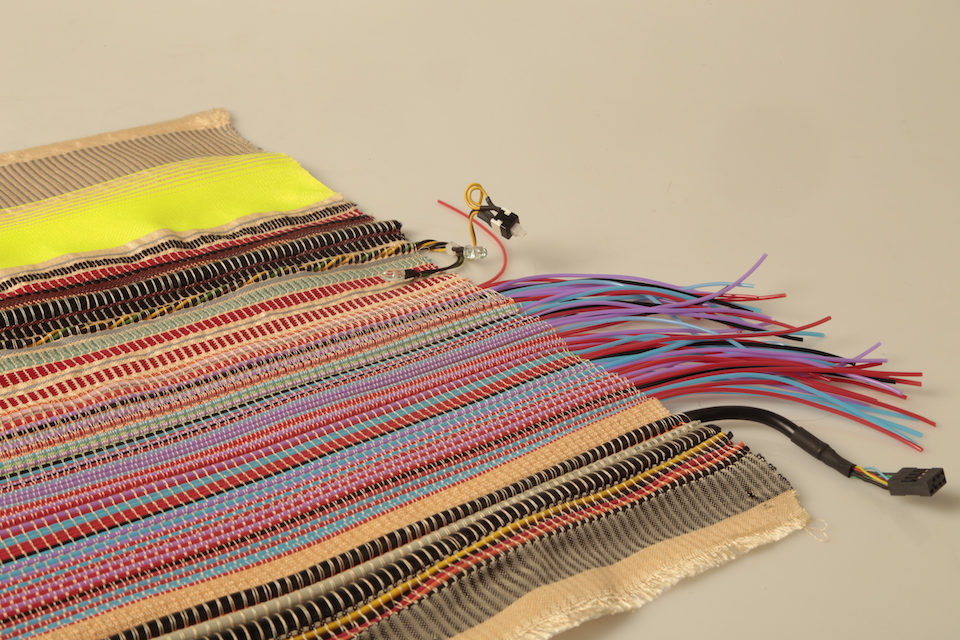
PIERO D’ANGELO (Italy)
Central Saint Martins, London
Hybrid, 2014
technique: I weaved my samples mostly with polyester threads combining fleshy colours with others bold and industrial, recycling plastic threads, wire, ropes and incorporating cables found in the computer.
These two designs form part of a five part collection made at the beginning of this year. I have explored the theme of Psychokinesis “a psychic ability allowing a person to influence a physical system without physical interaction.”
I started researching about people that claimed to have psychokinetic powers, but the heart of the project was to investigate what could happen in our brain if this could be possible and if not, perhaps it would be with the help of new technologies.
I experimented with materials such as liquid latex, plastics and wire and deconstructing a computer not just to understand its mechanical process, which somehow could be compared to our brain that works like a machine, but recycling and adapting some of the parts in my samples as well, giving to them another function.
For one of my samples I weaved hair extension threads and used liquid latex for the finishing, trapping the end of the warp in the liquid latex precisely. I cut the hair creating many neat and asymmetric layers. I used techniques such as twill, crêpe, diced, honeycomb and distorted weave effect. I created patterns inspired from my research through the extra figuring technique to give some of the samples a 3D relief. The result is a hybrid between human and machine.
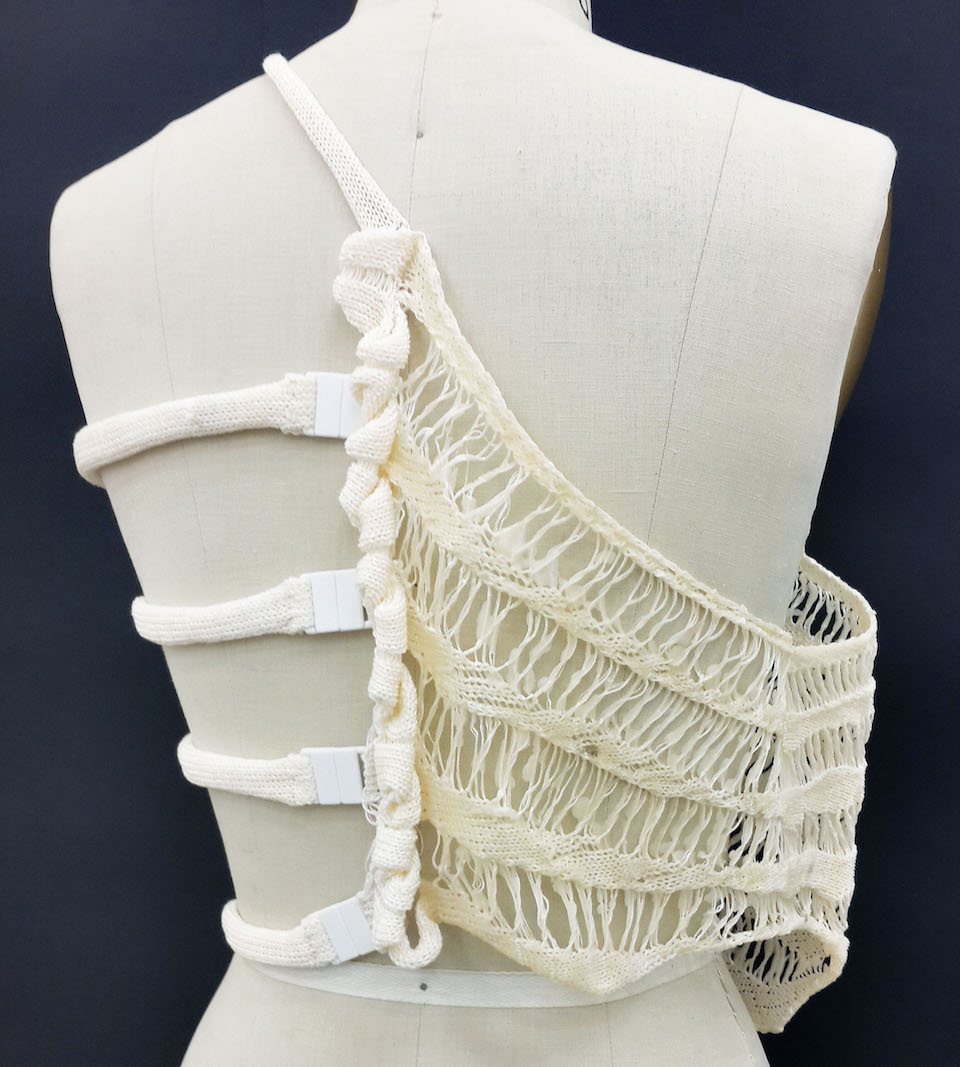
TATIANA ELKIND (Israel)
Shenkar College of Engineering and Design, Tel Aviv
Skeletons In My Closet, 2013
technique: partial knitting on a manual knitting machine in cotton with wax hardening in sections
I'm currently in my senior year for Bachelor's degree, Textile Design at Shenkar College of Engineering and Design. My specialisation is knitwear.
I believe that designers should always put in their work something out of their inner world and self. All that we experience in life affects what our hands do. In my projects and knits I love mixing two (or more) worlds, cultures, inspirations.
I love adding bright colors to black and darkness or darken sweetness. I’m drawn to historical and magical themes and inspirations and try to bring that in my work.
I love telling stories through the pieces I make. I usually wear black and I'm pretty much a cynical person but my works and projects are full of color and truth.
These sculptural pieces are inspired by bones and twisted spines, thinking about wearing the “skeletons in your closet”, secrets, shame in our society.
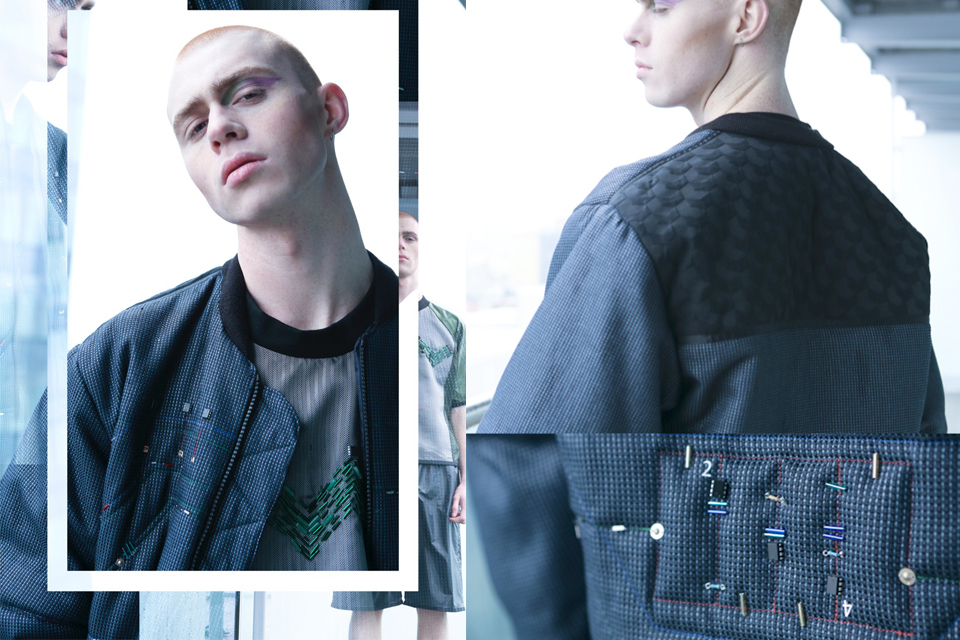
ZAKI MUSA (Great Britain)
London College of Fashion
Chipboard Circuit, 2014
technique: mixed media hand & machine embroidery
Drawing inspiration from random access memory (RAM), these textiles speak a story of a lost tribe of boys, integrating ”old technology” into their everyday lives. The collection deals with ideas around sustainability and waste, combined with the value of craft and tradition in a digital age.
For the Circuit Bomber I used assorted beading, combined with tech chips and hand-turned resistors to form beads. The numbers were “printed” out with cut vinyl. The textile was then machine quilted with metallic embroidery thread. For the Aztec Pattern I incorporated beading onto silk tie fabric, with bugel beads, aventurine beads, resistors hand-turned and tech chips. And to make the Resistor Shorts, I hand-turned resistor beads, forming details along the sides of the shorts.
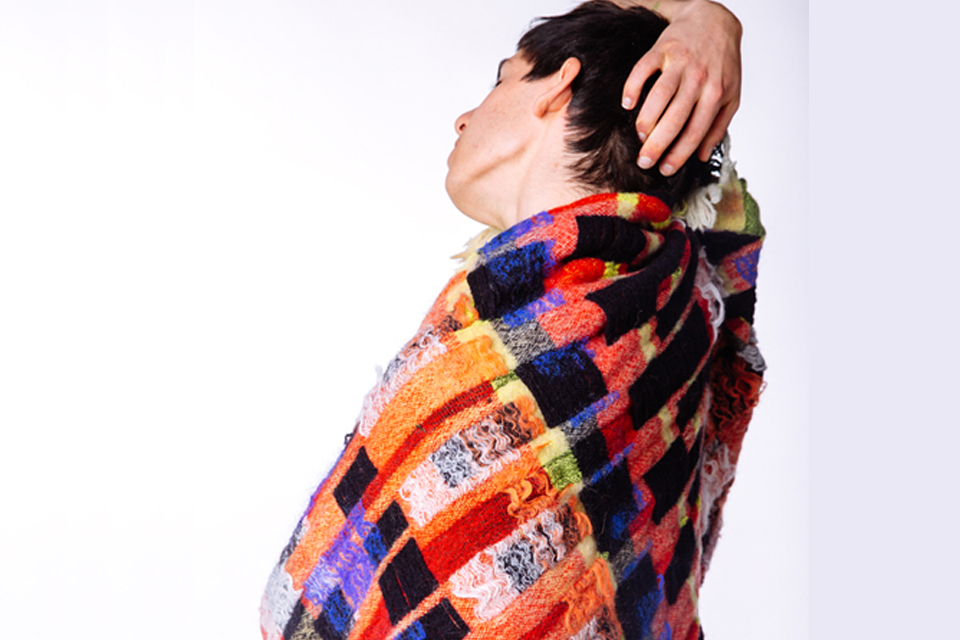
ZOE CLARK (United States)
Rhode Island School of Design, Providence
Madness Woven, 2014
technique: woven wool, mohair & rayon
My work seeks to represent the phenomena and nuance of our world through material, texture and color. I imagine the fiber as a paint brush of sorts, using the inherent structure of fabric as a medium to bridge the imagined with the physical world. Reality, identity, light, memory and culture are important in my work.
This piece is part of a collection of woven blankets that explore the idea of “madness”. I was particularly inspired by Freud's explanation of the sub-conscious; Egon Schiele's angular, contorted self-portraits; Klimt and anatomical photography developed in Vienna 1900.
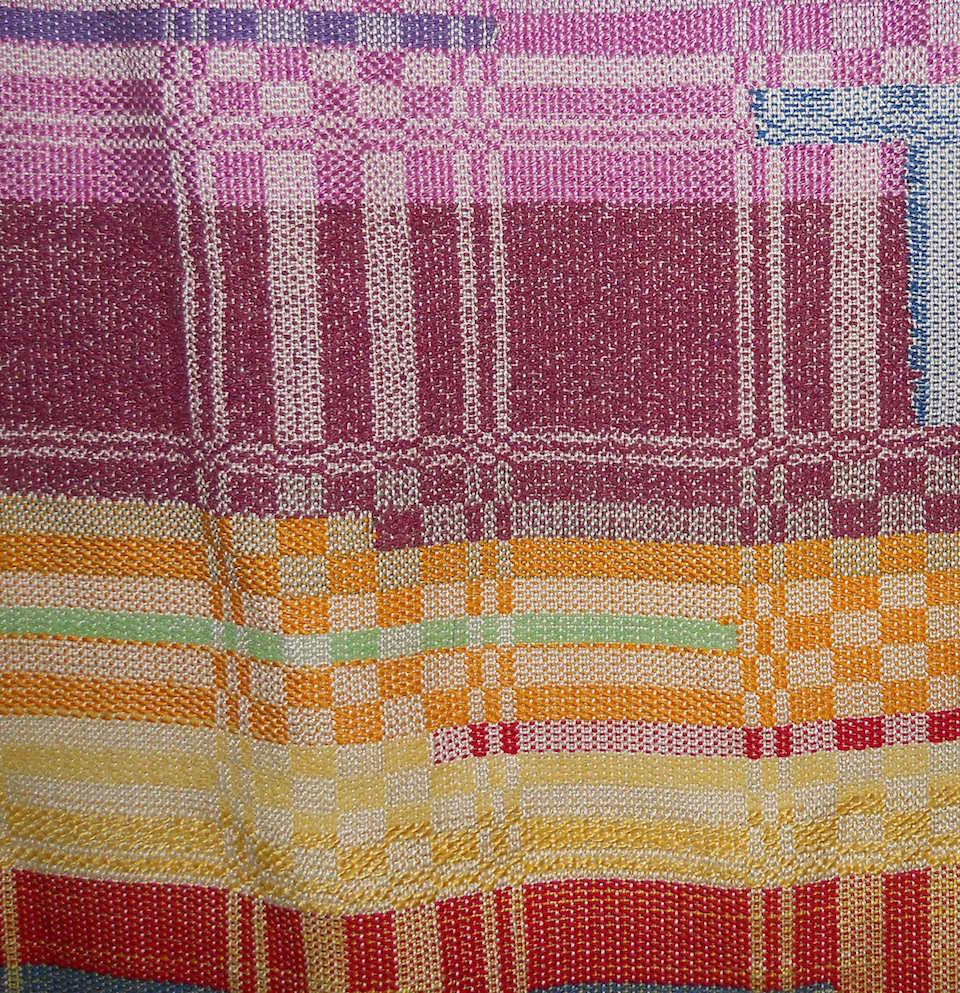
KATHERINE MITCHELL (United States)
Fashion Institute of Technology, New York
The River That Flows Both Ways, 2014
in memory of Pete Seeger, 1919 – 2014
technique: handwoven silk with inlay & tapestry techniques
Peter “Pete” Seeger was an American folk singer and activist. A fixture on nationwide radio in the 1940s, he also had a string of hit records during the early 1950s as a member of the Weavers, most notably their recording of Lead Belly's "Goodnight, Irene", which topped the charts for 13 weeks in 1950. Members of the Weavers were blacklisted during the McCarthy Era.
In the 1960s, he re-emerged on the public scene as a prominent singer of protest music in support of international disarmament, civil rights, counterculture and environmental causes.
The weft is recovered yarn, primarily remnants from tapestry projects and unraveled items. It forms part of a larger body of work I have worked on during my studies at F.I.T.
Dorothy Waxman Textile Design Prize 2015
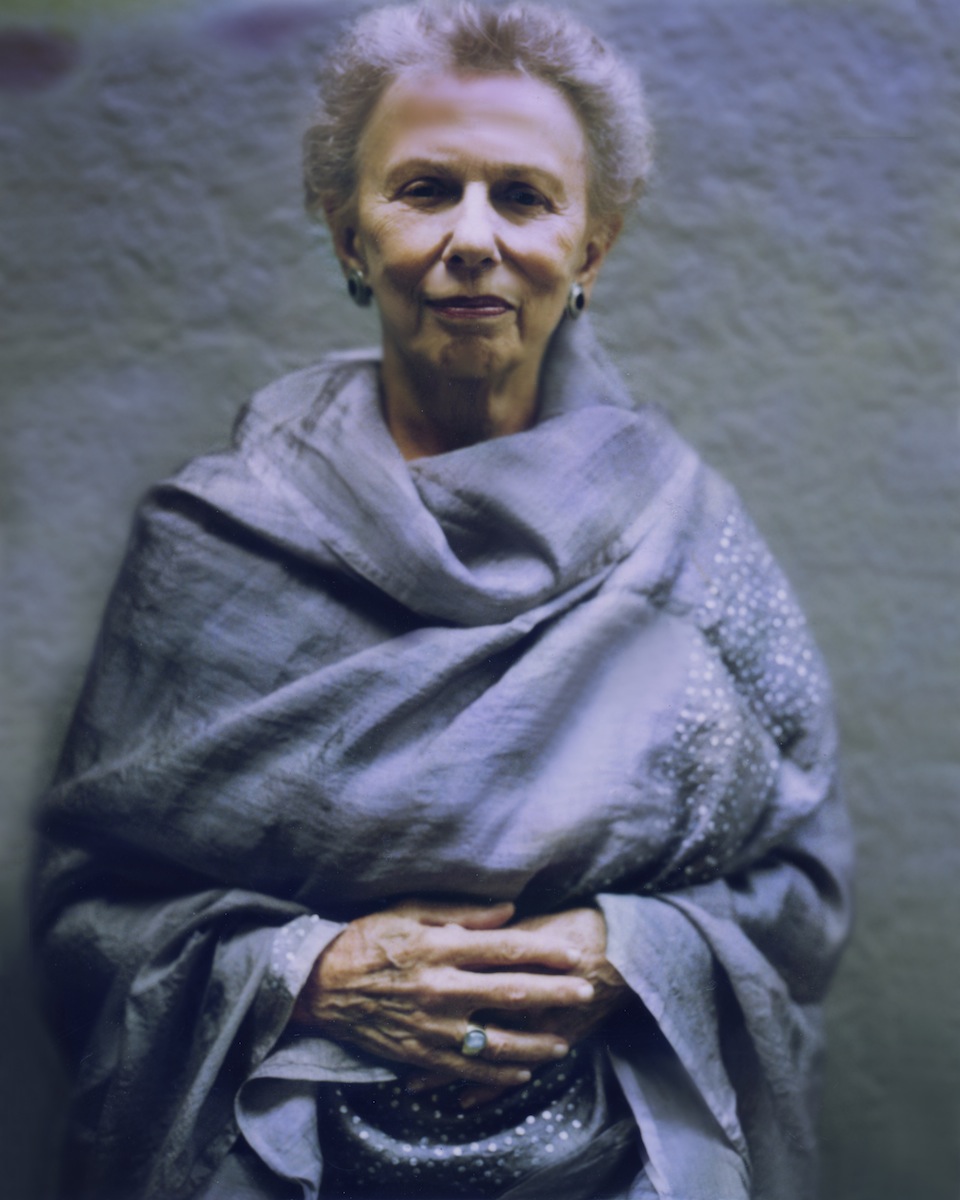
Dorothy Waxman - photo by Marie Taillefer
Trend forecaster Li Edelkoort and fellow curator Philip Fimmano are pleased to announce the creation of a new international design prize to be awarded to a textile or fashion design student who exhibits innovative thinking and inspiring creativity in textiles.
The Dorothy Waxman Textile Design Prize honors Dorothy Waxman, the original driving force behind Trend Union and Edelkoort Inc. in the United States and contributing reporter to the magazines View on Colour, Textile View and Viewpoint. Waxman’s insatiable curiosity and discerning eye for the avant-garde has inspired Edelkoort and her team for decades. Waxman also introduced the American fashion industry to European textile partners with her work at the Fashion Group. As an avid textile aficionado, she believes that creative fabrics can change the design landscape in profound ways.
Proudly supported by Edelkoort Inc. in New York, the award winner will receive a prize of US $5,000 and coverage on the online interactive trend platform, TrendTablet.com. The award is part of Edelkoort and Fimmano’s Talking Textiles initiative that promotes textile education, creativity and awareness.
The competition is open to students from any country currently enrolled in a textile, fashion or knitting course. The winning design will be chosen by Dorothy Waxman based on its aesthetic and creative identity. Applicants should fill in the attached form and send their entries by post or email.
worn stories
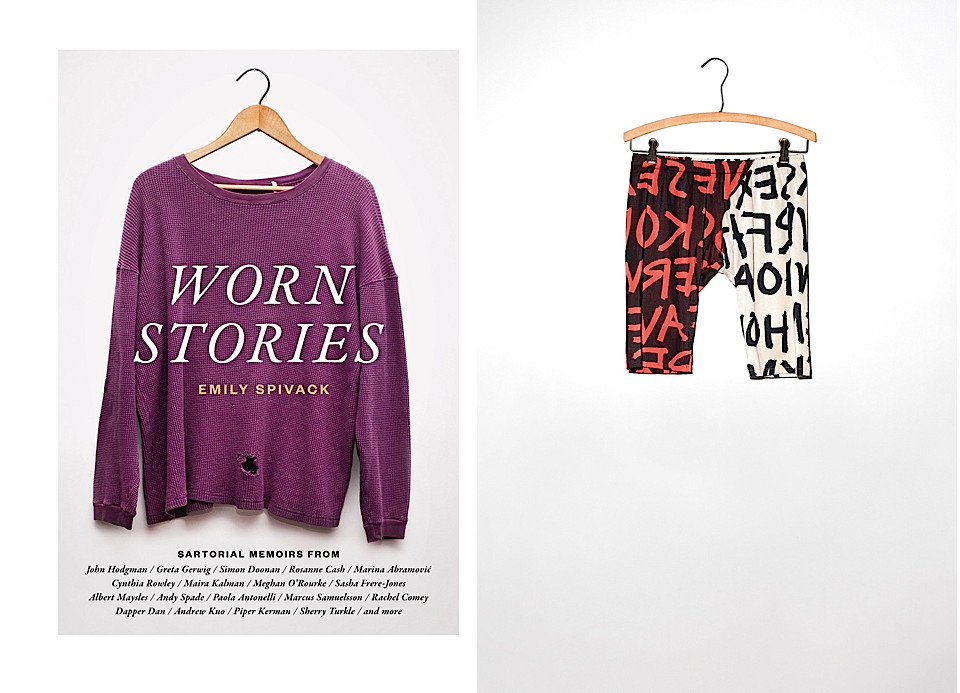
Recently published, the book Worn Stories is the evolution of a project which started in 2010 with the aim of collecting and preserving the stories incorporated by clothes. As explained in the introduction “We all have a memoir in miniature living in a garment we’ve worn ... in all of these are encoded the stories of our lives.”
Considering wardrobe “an evolving archive of experiences, adventures and memories” and clothing a universal storytelling device full of memories and meaning, the curator, Emily Spivack, has collected stories from friends, family, strangers, and of the personalities she admired with the aim of making the readers think, and to get them to reconsider the role of clothing in their lives.
The publication contains a multitude of clothing-inspired narratives regarding, among others, well-known personalities such as curator Paola Antonelli, artist Marina Abramović, dancer Tiler Peck, fashion designer Cynthia Rowley, author of Orange Is the New Black: My Year in a Women’s Prison Piper Kerman, and professor Sherry Turkle.
As well as reminding us that clothes contain pieces of our life and incorporate past experience and emotion this work highlights the importance fulfilled by garments when, for example payday loans no credit check, they help us to express or hide our identity, when they protect us, when wearing them becomes a sort of ritual that help us to feel more assured.
Alessia Zanelli
wornstories.com
Alessia Zanelli, graduated in Discipline of Art, Music and Performing Arts and in Systems and Communication of Fashion at the University of Bologna, is a freelance writer and trend researcher. Since 2011 she collaborates as a trendwatcher at the International Observatory Tomorrow Now, behind the Capri Trendwatching Festival.
Join Alessia
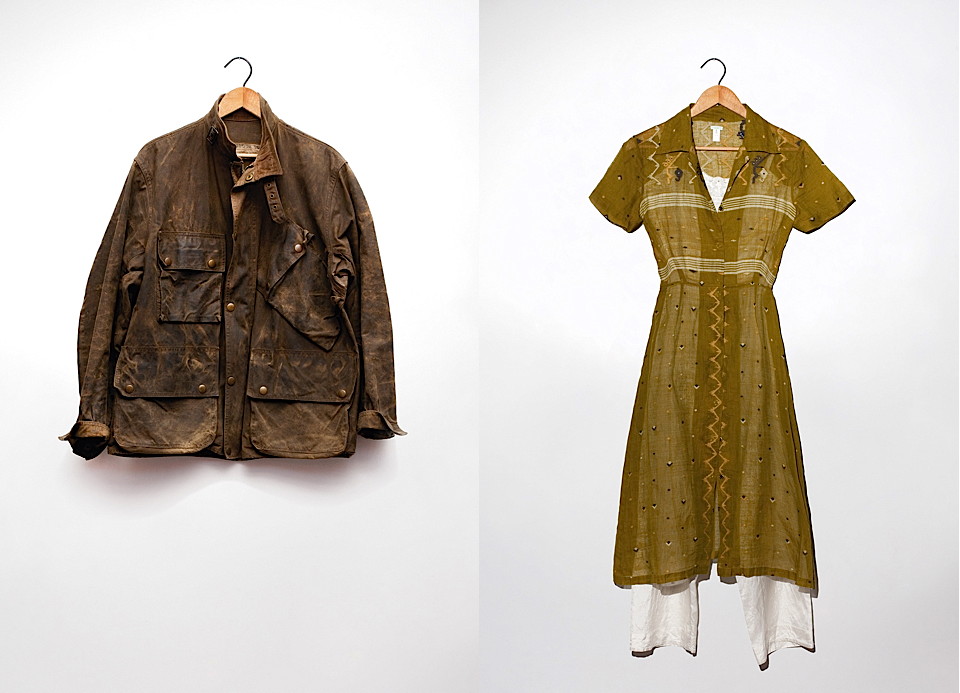
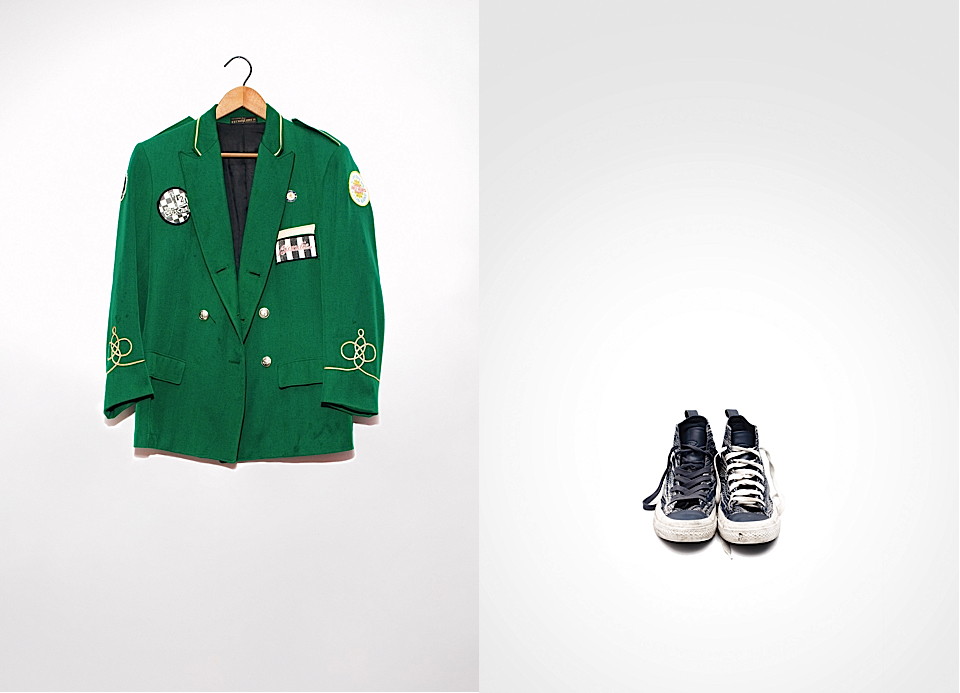
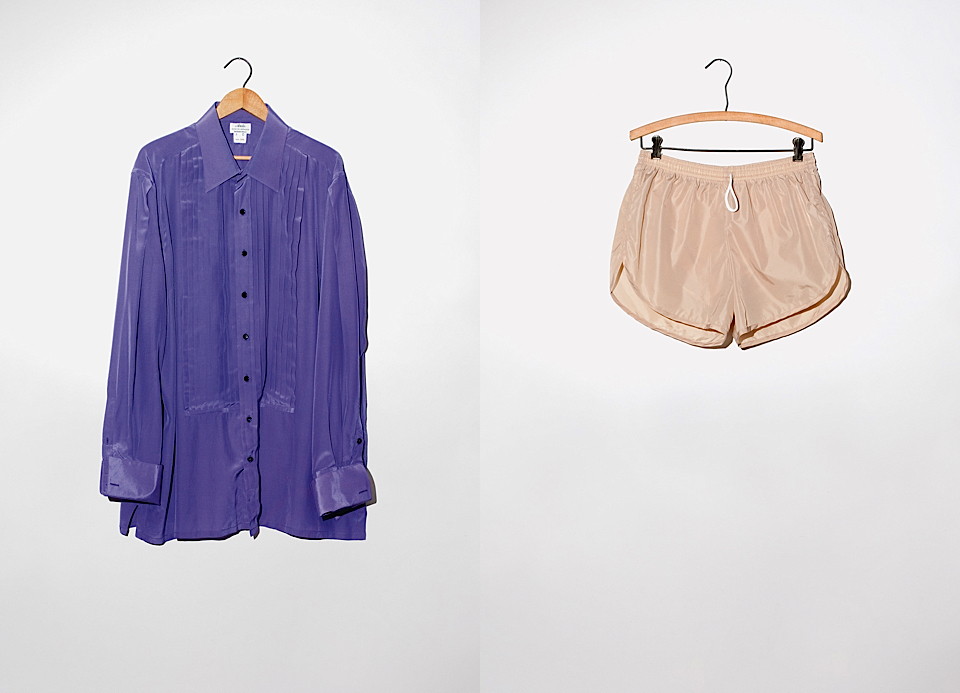
create culture from nature
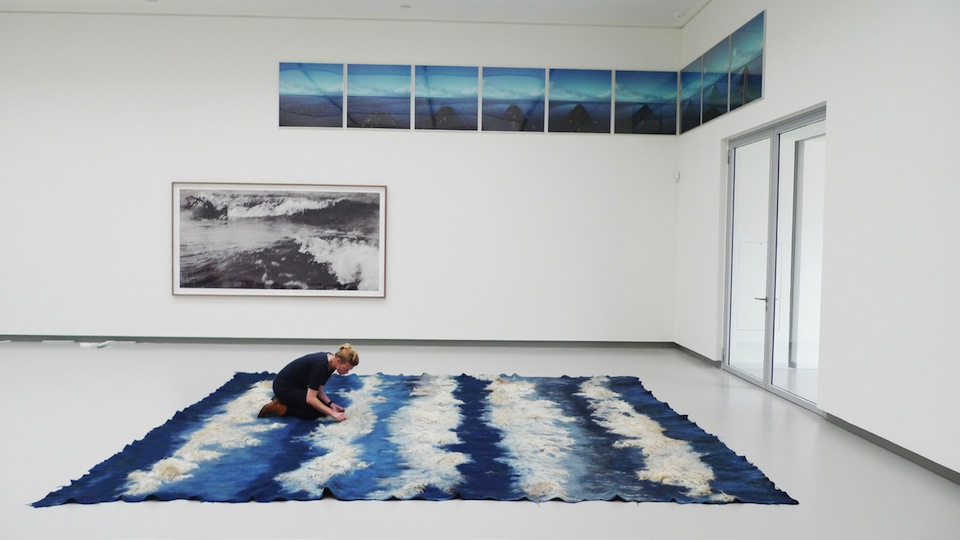
Studio Claudy Jongstra
We are proud to announce that Studio Claudy Jongstra has just won Best Studio Artist Design for the carpet design award at DOMOTEX in Hannover.
Her project shows how to create culture from nature.The process involves the harvested woad being chopped up and ground. The ground leaves form a clay-like substance, the pastel.This is shaped into balls, called cocagnes.
A process of decay then sets in. Once they have dried, the cocagnes can be used to dye in an indigo color.
Claudy Jongstra is also exhibiting in Talking Textiles, now in its last days at the Textielmuseum in Tilburg.
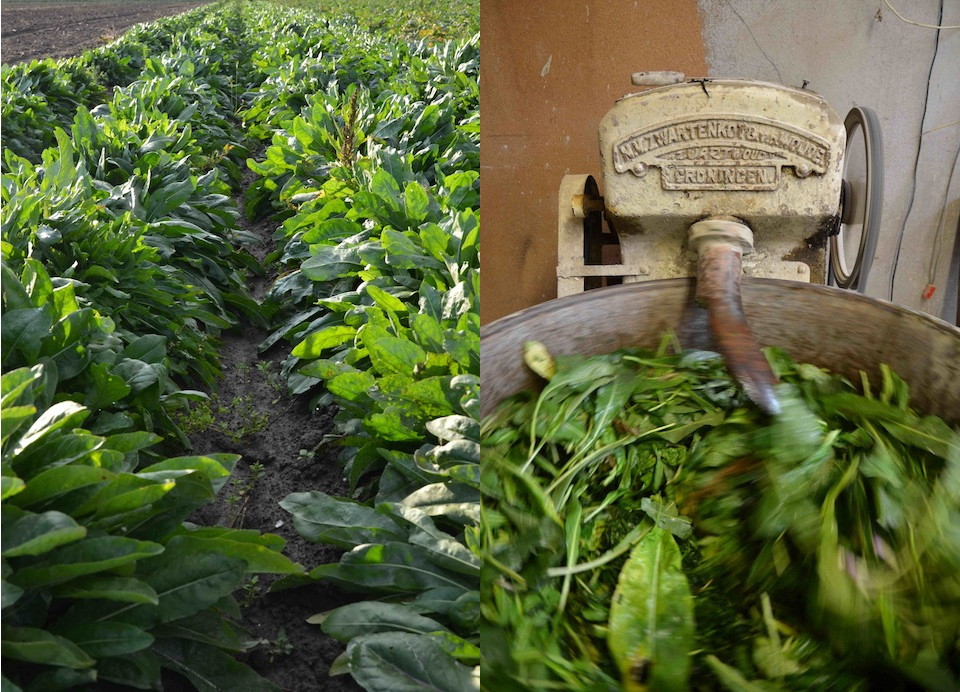
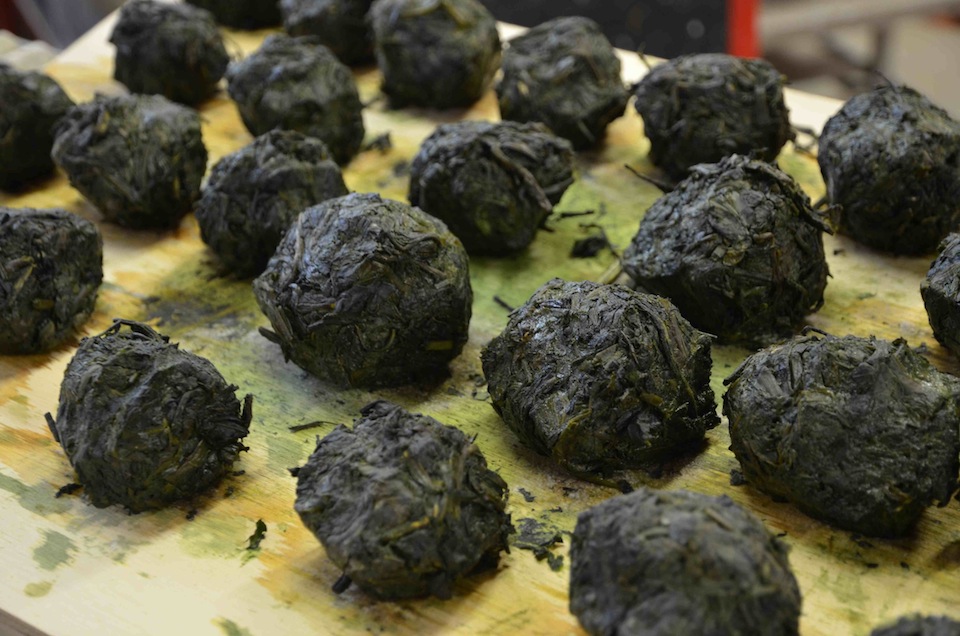
natural - local & social
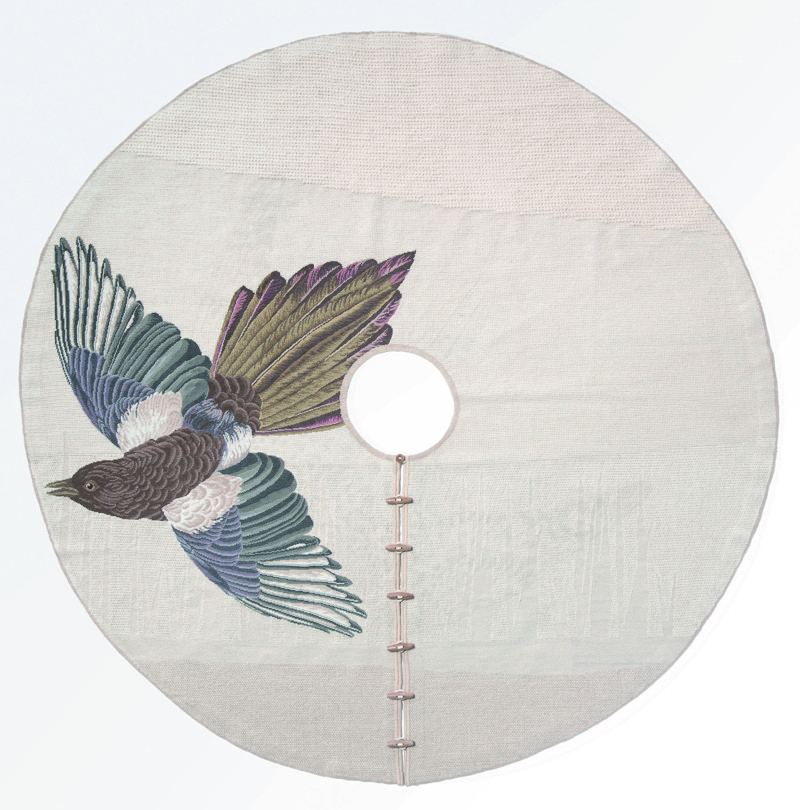
Migration (2011) by Formafantasma - production: Nodus
Designers such as Formafantasma and Claudy Jongstra have been turning to natural materials for designs coming from local sources that are produced locally as well; such as wool from Texel (Roland Pieter Smit) or woven fibre from Palestine (BCXSY).
The designs are sometimes produced by outsider communities of local women or disabled people.
The natural outlook includes hybrid materials blending wool and synthetic wovens and wool and silk felts that procure a contemporary ethno/techno expression.
The regional aspect and the will to work in collaboration are becoming important social trends.
Lidewij Edelkoort
Talking Textiles remains on view until January 26, 2014 at the TextielMuseum in Tilburg
constructivist - colour-blocked
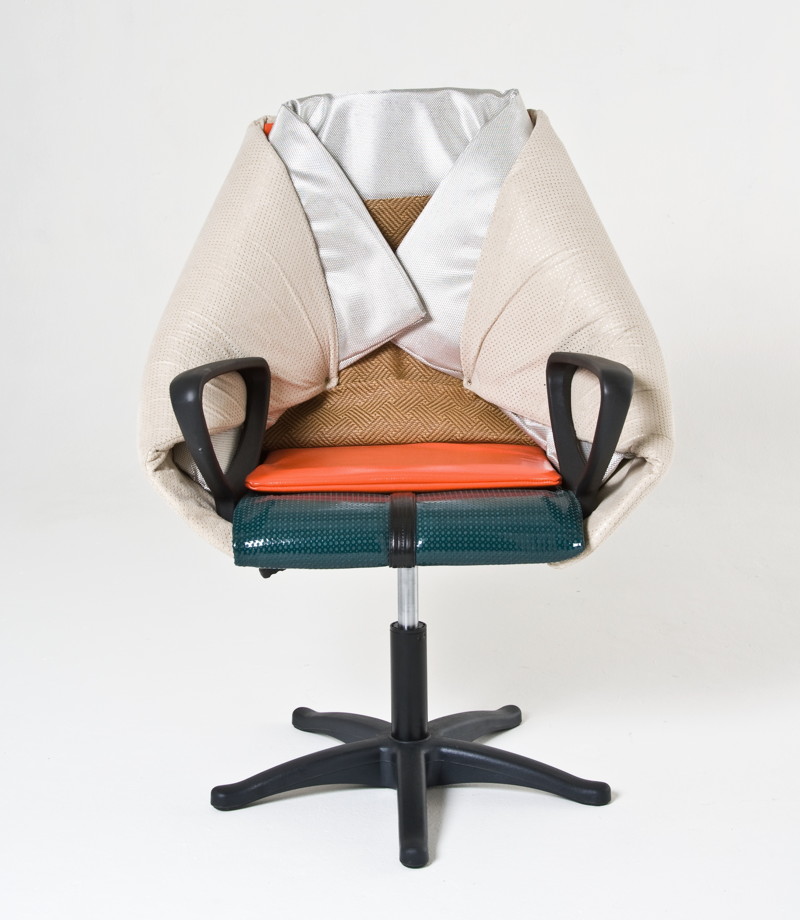
Rei (2009) by Rodrigo Almeida - collection: C.N.A.P.
At first glance it looks like as if the de Stijl movement has come back and that design is becoming linear and constructed again.
However this revival is a contemporary citation and a pure product of the 21st century where severe lines are used playfully like textile collage or in a recycled product.
Dying, winding, double-weaving, layering and packaging are lively ways to give a spirited aspect to rigorous form.
Colour, material and shape come together in happy and almost comical designs. Form is found within the textile.
Lidewij Edelkoort
Talking Textiles remains on view until January 26, 2014 at the TextielMuseum in Tilburg
instinctive - wild tactility
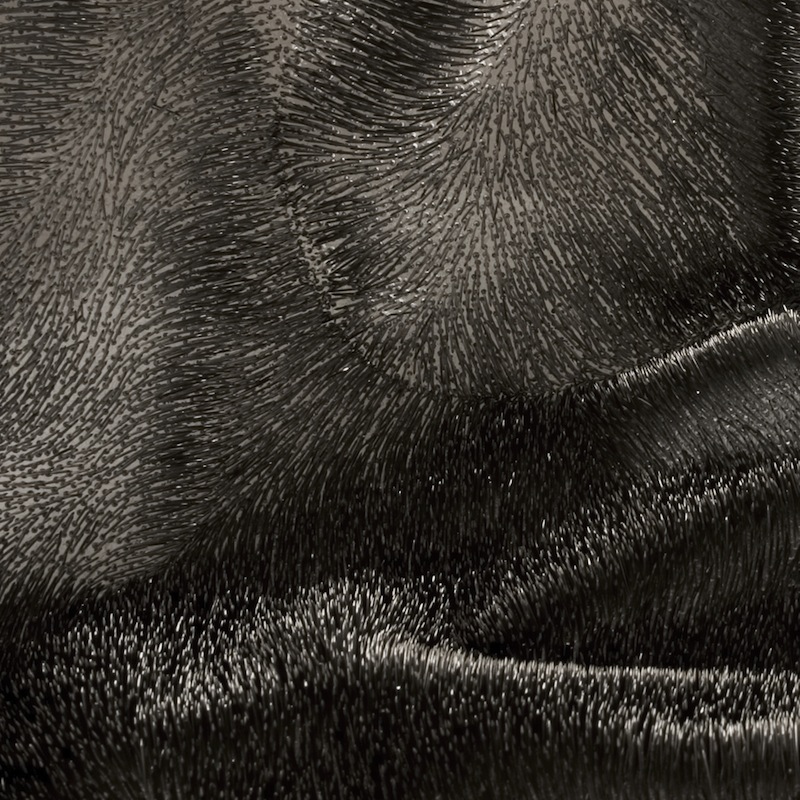
Hunt for High Tech (2010) by Bart Hess
Humans are mesmerised by animals and long for a more instinctive existence, where the intuitive wildness in their character is addressed and challenged. Thus animal skins and beastly forms are translated into technological materials and three-dimensional products by designers such as Bart Hess and Maarten Baas.
Phoebe 4, a new experimental lampshade by Marcel Wanders, has been made from knitted mohair balls, using the human body as an erotic structure and accompanied by a film for twelve magical hours of illumination. Tactility is the first requirement.
Lidewij Edelkoort
Talking Textiles remains on view until January 26, 2014 at the TextielMuseum in Tilburg.
Hunt for High Tech (2010) by Bart Hess
narrative - telling stories
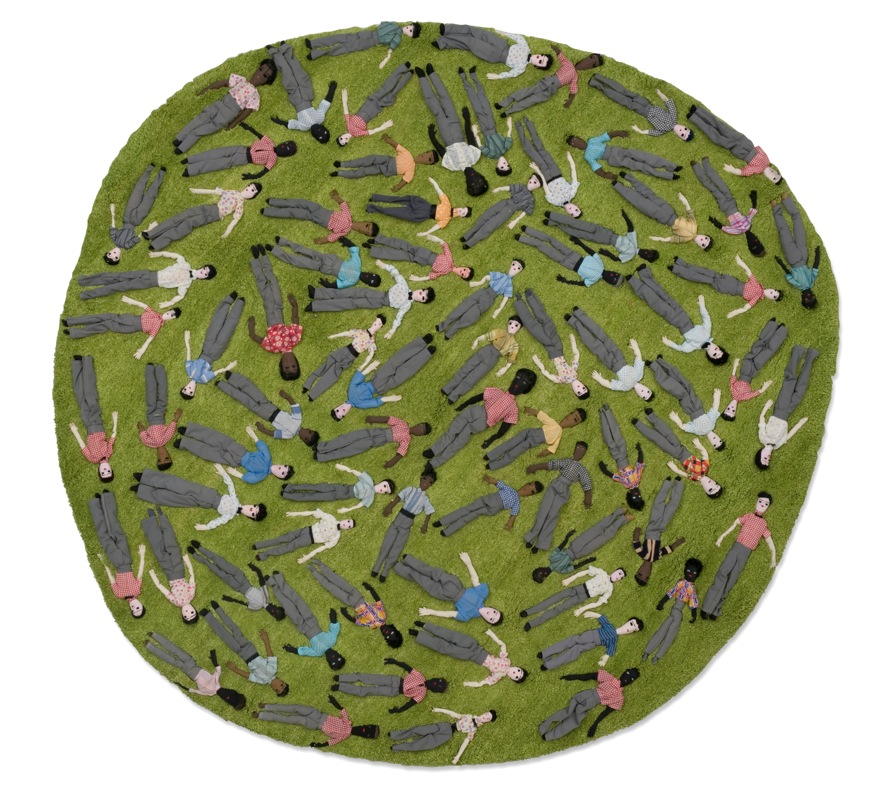
Circus Rug (2010) by Fernando & Humberto Campana, production Nodus
A social trend for storytelling and narrating fairy tales is reflected in design where the idea of the figurative form comes back to life. With their products, designers want to tell stories about our existence and the future of our world. Ideas about house and garden are embroidered, woven and collected into tender and detailed form.
A romantic vision able to seduce the consumer/curator to collect quite a personal story. A nostalgic journal of existence.
Lidewij Edelkoort
Talking Textiles remains on view until January 26, 2014 at the TextielMuseum in Tilburg
nomadic - on the move
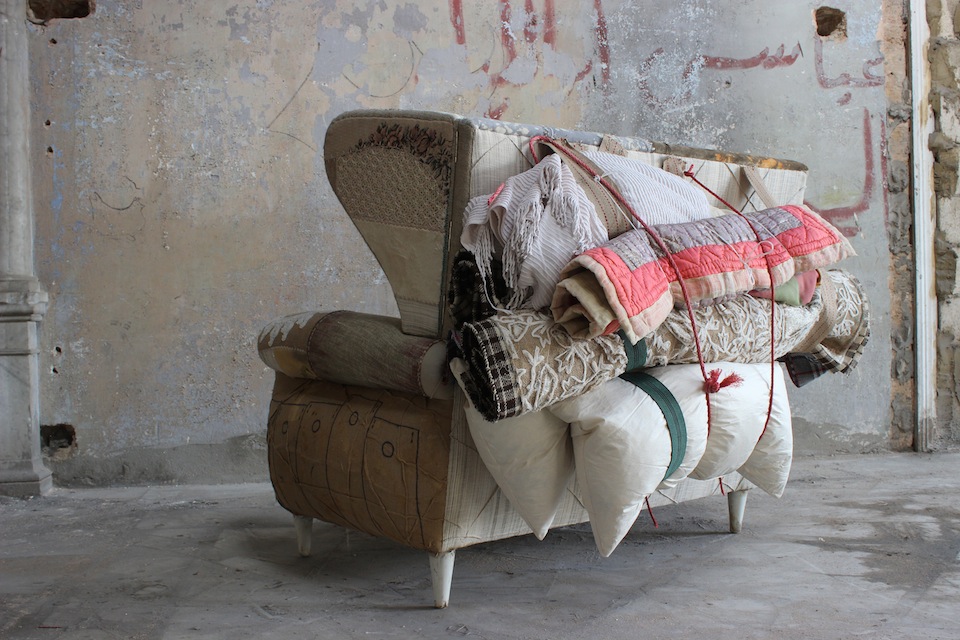
Migration (Love Boat) (2013) by Bokja
The interest in textile design is growing and transforming our world with noble materials, ethnic origins and natural colourings. Once more, the youngest designers experience the challenge of the loom. Enabled by our smart phones and tablets, people feel freer and decide to make their life a nomadic one, without rules, without borders, without walls.
Consumers take their houses on their back and turn to textile for its flexibility and caring character.
Sitting on the floor, lounging on mattresses and delving into cushions, we will transform our life into an adventure. Transformation will become the norm.
Lidewij Edelkoort
Talking Textiles remains on view until January 26, 2014 at the TextielMuseumin
abstract - neutral & essential
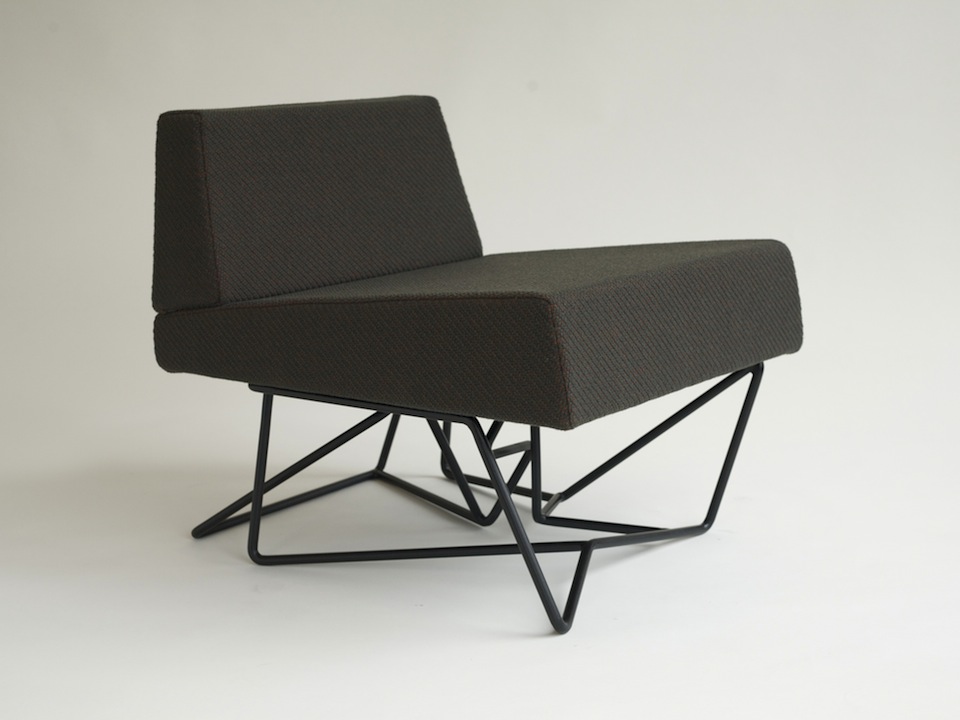
Single Wire (2011) by David Lynch, in collaboration with Raphael Navot - production: Domeau & Pérès
Design is coming of age and enables people to choose an object of reflection like a moment of rest and inner vision. A spiritual choice that gives peace to the soul and rest to the brain, a silent witness of our time.
Furniture becomes geometric in form, objects behave in spiralling movement, function is undressed and minimized, colours are chiaroscuro neutrals; all done to come to the core of what life is all about.
These essentials are often made in natural fibres yet also include metallic and plastic components to give them a futuristic character.
Lidewij Edelkoort
Talking Textiles remains on view until January 26, 2014 at the TextielMuseum in Tilburg
the exhibition in tilburg
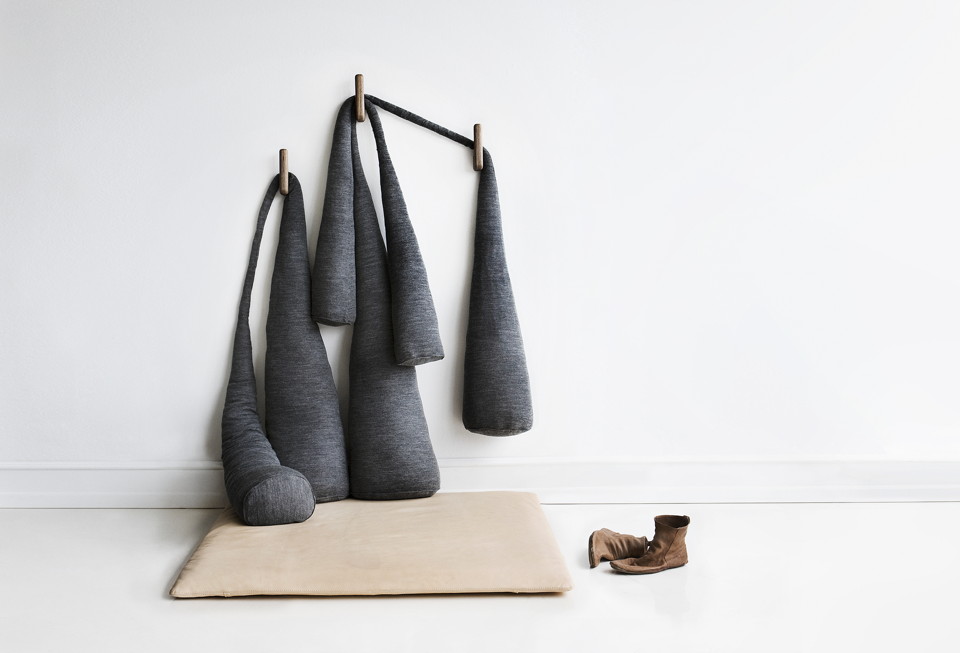
photo: Gym de Luxe by Christina Liljenberg Halstrøm
Within a short period of time, the house will dress up in all different expressions of textile: knitted, crocheted, printed, embroidered, as jacquards or as colourwovens. The consumer will start using a bit of fabric here and there; a knitted pouf, a felt plaid, a tactile carpet or traditional table linen. People will think about a bigger surface and will reinvent the curtain, consider wall-to-wall fabrics and upholster furniture with tweeds and patterns instead of leather.
In reaction to our virtual existence, we will need more real emotions and unknown surprising scenarios: tactility and dimension to compensate the flat screens in our lives, to give pleasure to our fingers. This seems why many designers have recently started to reinvent textiles with often handmade and traditional but also high-tech processes. This focus from designers and other creatives will arrive just in time to prevent the demise of the textile industries. We have only a few years left to save these endangered species. Let’s talk about textiles for the years to come!
Lidewij Edelkoort
TREND SEMINAR
on November 27, Lidewij Edelkoort will present the House of Textiles, a look at design and interior trends that are inspired by textile
Session One: 11.00 - 12.30 (English)
Session Two: 14.00 - 15.30 (Dutch)
€ 35 or € 40 (including lunch)
Students & museum members discount: 27.50 or 32.50 (including lunch)
RSVP is essential: aanmelden@textielmuseum.nl
EXHIBITION OPENS
Talking Textiles brings together contemporary design and creative textiles at the TextielMuseum in Tilburg on show until January 26, 2014.
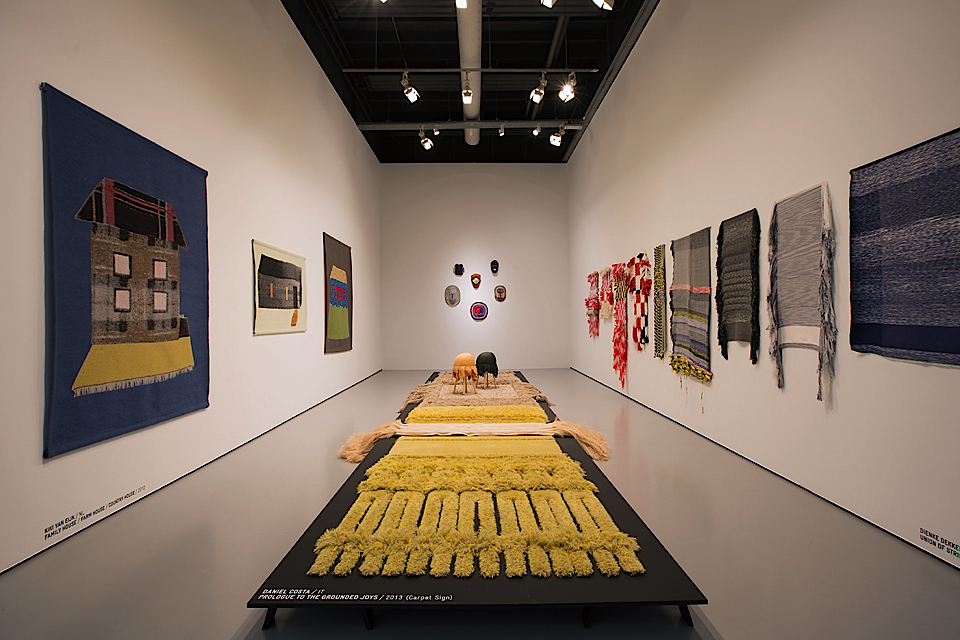
photo: Tommy de Lange / TextielMuseum. Nomadic Textiles (from left): Kiki van Eijk, Bertjan Pot, Dienke Dekker, with Daniel Costa and Lenneke Langenhuijsen (both centre)
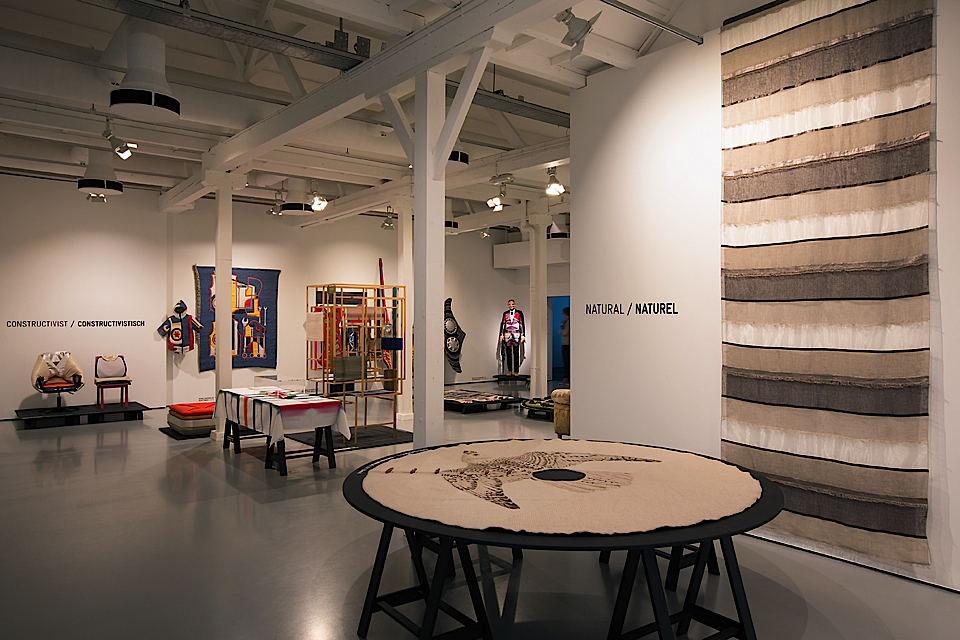
photo: Tommy de Lange / TextielMuseum . Exhibition view
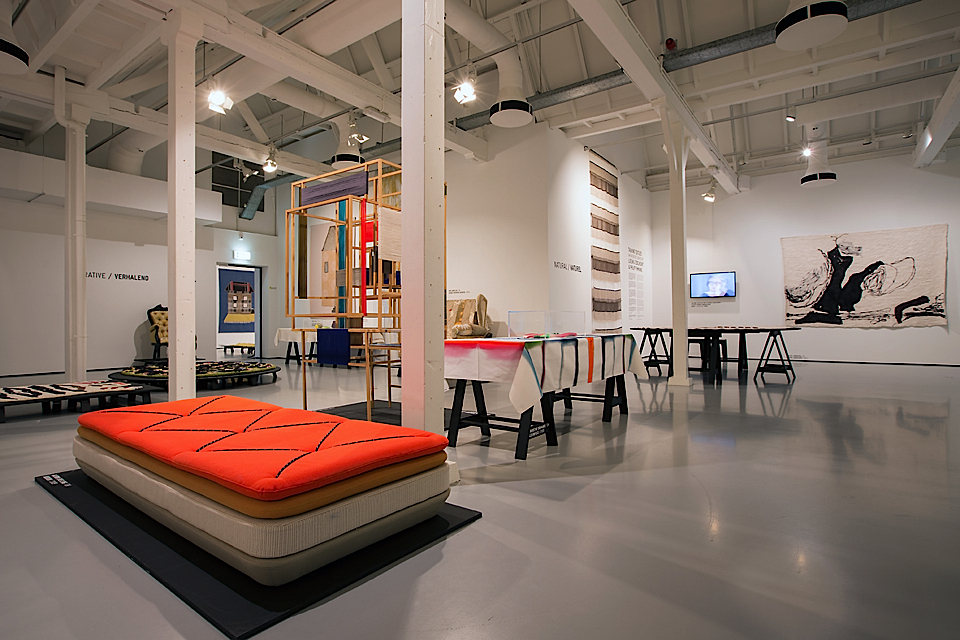
photo: Tommy de Lange / TextielMuseum. Exhibition view .
a new exhibition in Tilburg
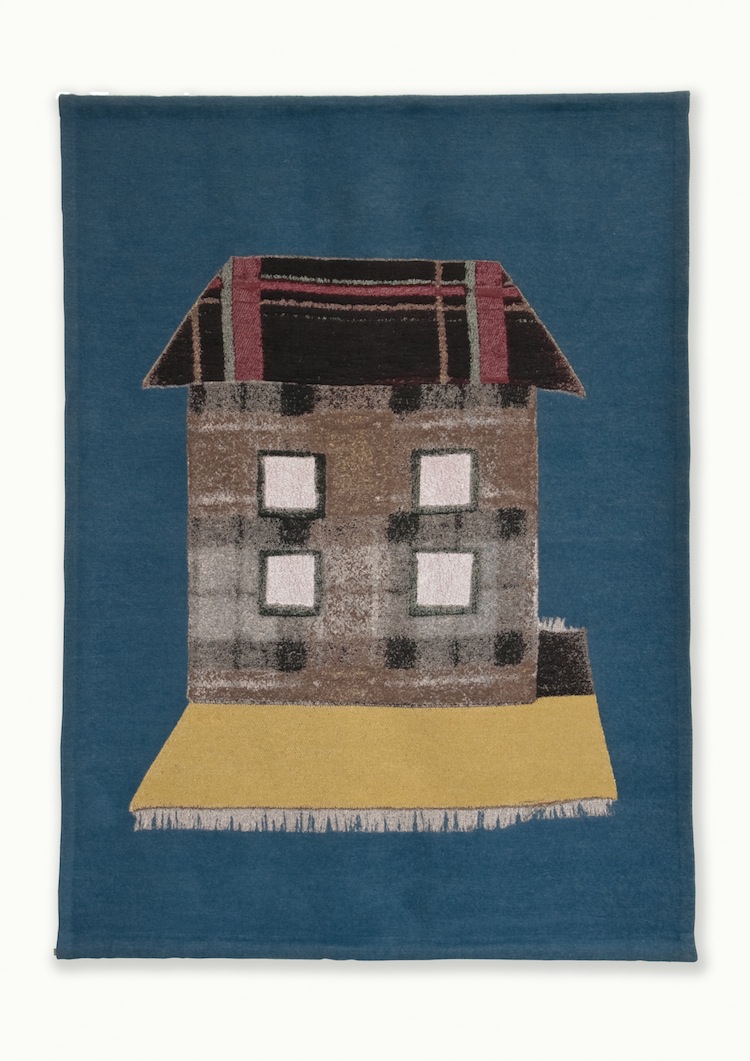
'Family Wall Hanging' by Kiki van Eijk (collection: TextielMuseum, Tilburg)
Trend forecaster and design curator Lidewij Edelkoort will present contemporary creative textile design in Talking Textiles at the renowned TextileMuseum from September 28, 2012 – January 26, 2014.
The 2013 Talking Textiles exhibition has been especially expanded for the TextielMuseum to include new or rarely seen items, some of them exhibited in the Netherlands for the first time. Recent Design Academy Eindhoven graduate designers will also be showcased as part of Edelkoort’s ongoing effort to promote fresh design talent, including a sensorial carpet by Italian designer Daniel Costa, intricately printed textiles by Dienke Dekker and fabric woven from wood by Lenneke Langenhuijsen.
Talking Textiles is curated by Lidewij Edelkoort and Philip Fimmano from Edelkoort Exhibitions. The curators will also be incorporating new objects from the TextielMuseum’s own collection. A textile and design seminar for the public with Lidewij Edelkoort will take place on November 27.
Download the English Press Release
Download the Dutch Press Release
ilana efrati
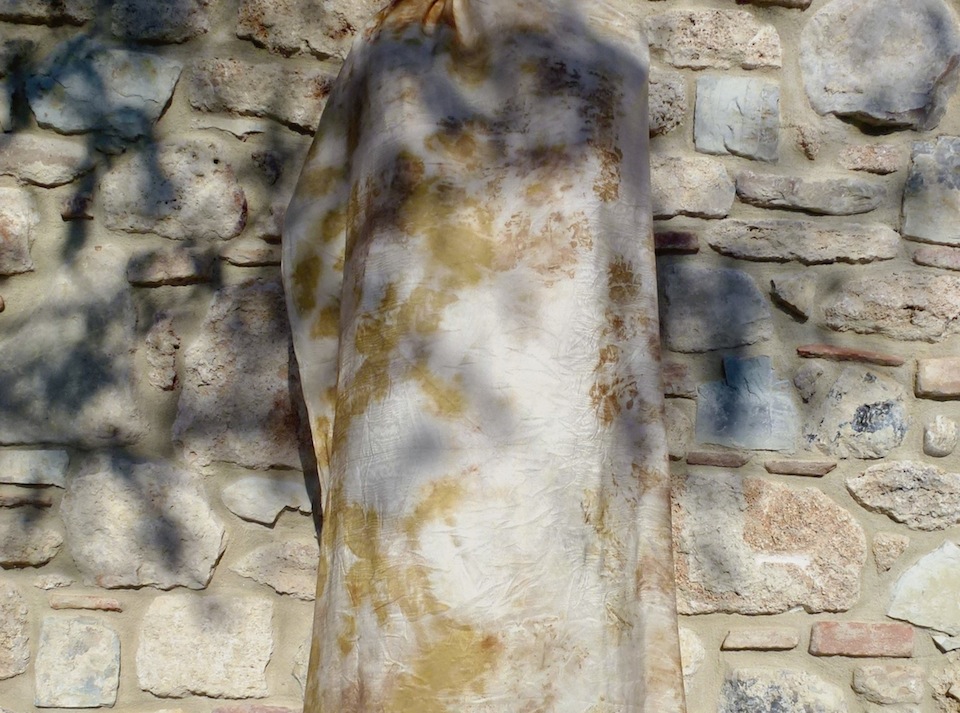
"natural artificial" photo by Ilana Efrati
Ilana Efrati is an independent fashion design and the creator of the Ilana Efrati and AA fashion labels. In 1985, after graduating in Arts and Graphic Design, Efrati launched her independent fashion label Ilana Efrati in Tel Aviv, Israel. She has made an important contribution to Israeli fashion design ever since, developing a unique style inspired by the urban life of Tel Aviv and by Italian quality tailoring know-how. Since 2005 Efrati divides her life between Tel Aviv and a small village in Umbria, Italy. She renovated a medieval rural house, where she now lives and produces organic olive oil and wine. Life in the country side allowed Efrati to reflect on her professional ethos, dedicating greater attention to the natural seasons, to the impact of consumerism on nature and to the environment we live in.
At a time when the world, and in particular the world of fashion, is oriented towards chasing the trendy and temporary, losing touch with nature, Efrati wishes to take a pause. She leaves her busy urban workshop to wander in the Italian countryside, and her work echoes the beauty in the simplicity of everyday nature. She dedicates time and space to observing the flow of the natural cycle, and the basic ways in which people use the materials they find in the environment. In her works, Efrati tries to track down the most primordial processes of nature: the cycle of seasons, germination and decay, light and shade. In her minimalist interventions she wishes to leave the 'protected zone' of the city and return to a life in which humanity was still synchronized with those natural cycles.
The fabrics seeks to ‘freeze’ a moment in the garden’s seasonal cycle. Silk, linen, wool and cotton cloths were hand-printed with plants, flowers, leaves and buds, all found in the vegetable garden's immediate environment. Thus, the printed fabrics become a unique and unrepeatable aesthetic memory of a moment in the infinite natural cycle of seasonal change. Efrati explores the relations between nature and the repeated attempts of mankind to appropriate and organize it.
Efrati creates a comparison between the earth and the fabric as a canvas upon which she produces compositions to investigate the relations between the wild and the aesthetic, and to distill their unique essences. She creates an intentional blurring between the natural and the artificial and uproots the dichotomies of man-made/natural, art/fashion, particular/universal.
Efrati, who for many years perfected the functional and aesthetic harmony of fabric and cut in fashion design, turns with these textiles to artistic practice. In a rough and intuitive manner she observes and narrates the beauty hidden in the process of creation, growth, decay and disappearance of raw materials in nature.
"duplicity" photo by Ilana Efrati
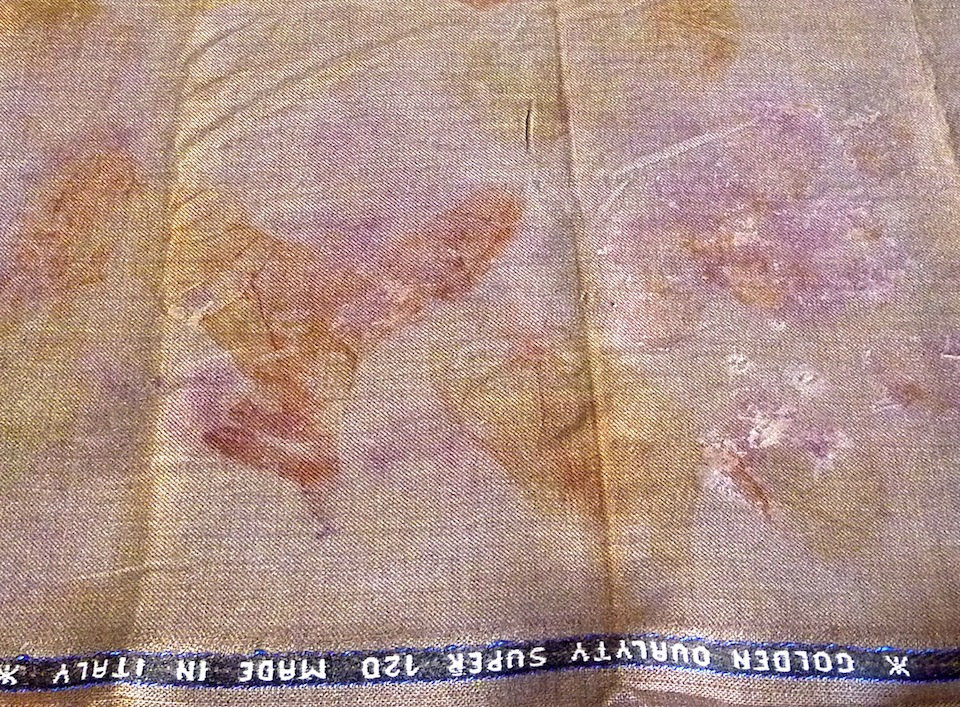
"urban rural" photo by Ilana Efrati
turkish red
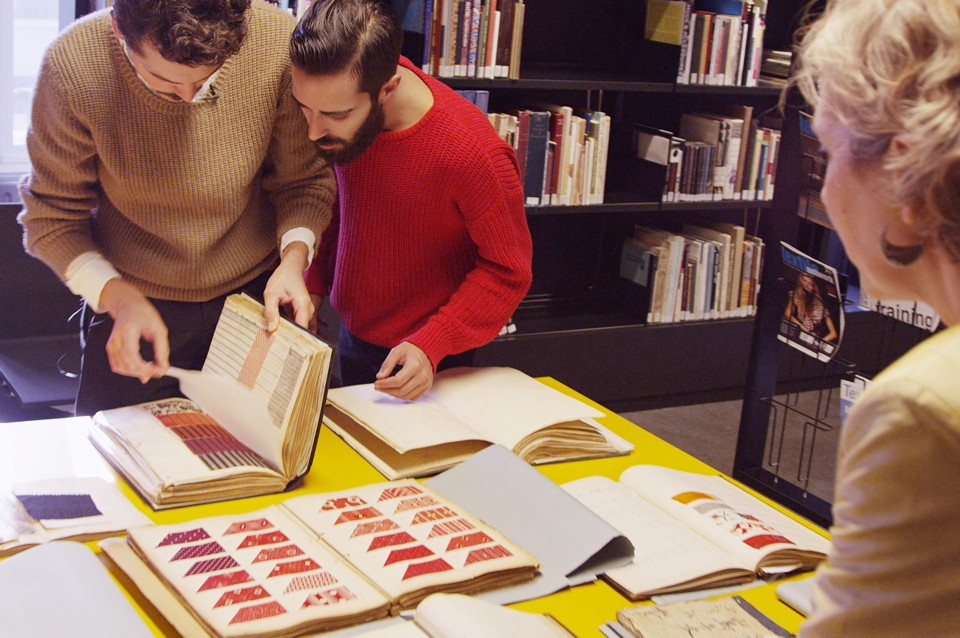
photo by federico floriani
Digging in the archive of the historical collection of the TextielMuseum in Tilburg, Studio Formafantasma has been drawn by the so-called Driessen collection. This has been donated by one of the members of the Driessen family to the TextielMuseum once the activity of the cotton printing company LKM (Leidsche Katoen Maatschappij) ended. The collection is composed by a large series of textile-related books, notebooks, material samples and printing experimentations collected by various generations of Driessen’s family members and colourists working for the company.
In these books fragments of textile collected around the world or tests developed within the company are mixed creating unexpected texture and combinations. Numerous are also the collected colour tests and the recipes that are testifying the transition between the use of natural pigments and the synthetic ones. In this respect the work of Felix Driessen is particularly relevant. He in fact largely investigated Turkish or madder red. The so-called Turkish red, a particularly vibrant tone of red sourced from madder roots, is one of the most researched colours in the history of textile. First developed in India and later expanded till Greece and Turkey, its bright tones have intrigued different cultures, becoming one of the first examples of globalization.
Drawing inspiration both from the Driessen collection and the history of Turkish red, Studio Formafantasma has designed a series of 17 silk textiles which are dyed with madder roots in collaboration with a German colourist.
The design of the silks features patterns from Driessen’s books and other visual elements as a reference to the history of Turkish red. Traditional design elements such as colour and texture are used as tools to both testify the work of the Driessen’s family and to evoke the symbolic, economic and social impact of the Turkish red in history: from The Roman Empire, through French Revolution till the chemical synthesis of alizarin, one of the major dyes obtainable from madder roots. The title of the project, BTMM1514, is referring to the way the Driessen collection's books are numbered.
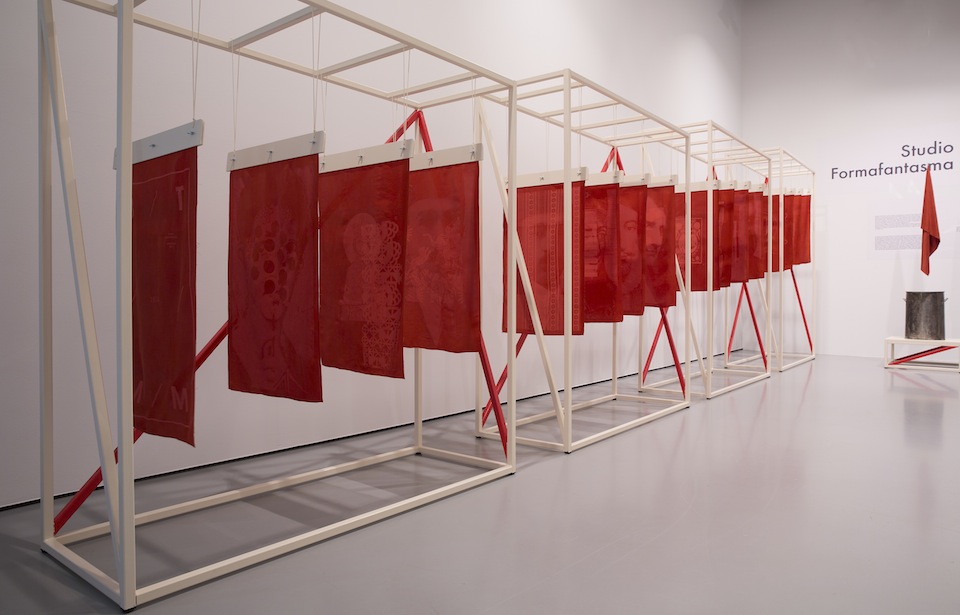
photo by federico floriani
photo by federico floriani
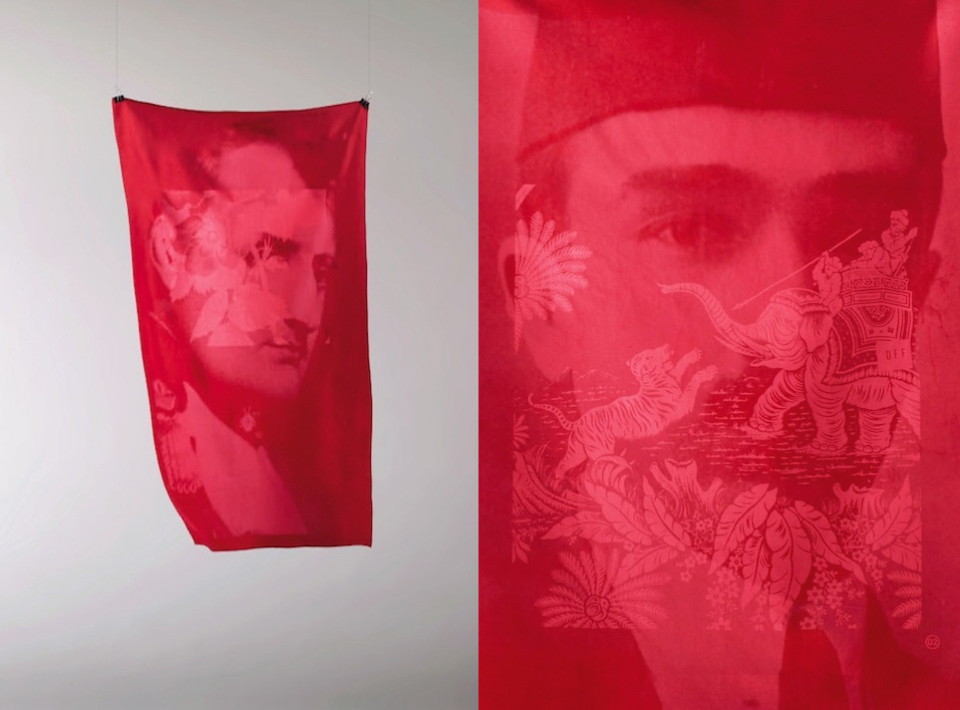
photos by federico floriani
miniartextil
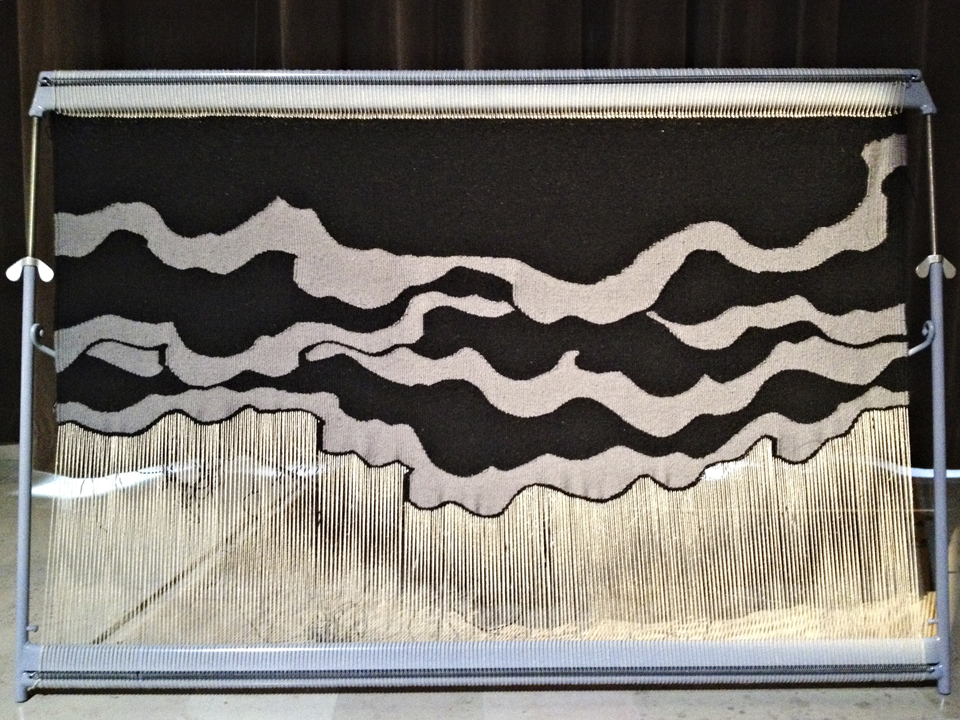
Tonje Soerli
The Miniartextil exhibition, originated from Como in Italy and organized by Italian collectors, explores annually the infinite creativity of selected artists throughout the world. With mini-textiles of a size of 20 cm3, maxi-textile installations and lace creations, over fifty artists compete with their imagination, know-how, innovative spirit and freedom to offer the most exciting art overview of a simple thread.
The theme 'contemporary agora' was chosen for this year’s collection, showing a fresh view on the ancient Greek city. The exhibition is hosted for his single date in France, in the most beautiful setting: Le Beffroi, a new cultural center of the Paris-neighbour city of Montrouge. The exhibition will then travel to Venice.
Natural and industrial materials have created an intersection of art, design and fashion, all exhibiting the contemporary aesthetic.
Miniartextil offers a variety of textile art in all its possible forms. Miniartextil, lets the visitor enter the heart of the matter, where there are no boundaries between craft, art and design, neo-textile science and fashion. Stunning almost poetic work made with intelligence and elegance combining traditional know-how and innovative use of materials.
From fibres over weaves, whether goose feathers and epoxy resin, as in Matyna Golik’s 'Reflection' or simple paper and wire usage in Michiko Sakuma’s „Budding“. Surprising encounters, unexpected visual dialogues, exchanges and confrontations will awaken your creativity at the Miniartextil.
54 pieces, each a maximum size of 20cm3 intersect and interact with several maxi-textile pieces, which allures you into a global universe of fabrics. The vision of the artists of what surrounds them and their interpretation of the contemporary agora made Kyionori Shimada create a labyrinth of nylon fabric and Irene Anton, an “intervention invading network” with tights.
Many pieces express how the contemporary agora remains in our virtual communities, without burying the essential aspiration of the agora where once political, religious, fests and commercial matters lead a community. A modern interpretation of today’s society.
Miniartextil 9th edition, from Saturday february 2nd to 24th, 2013. Le Beffroi, 2 place Emile Cresp, 92120 Montrouge.
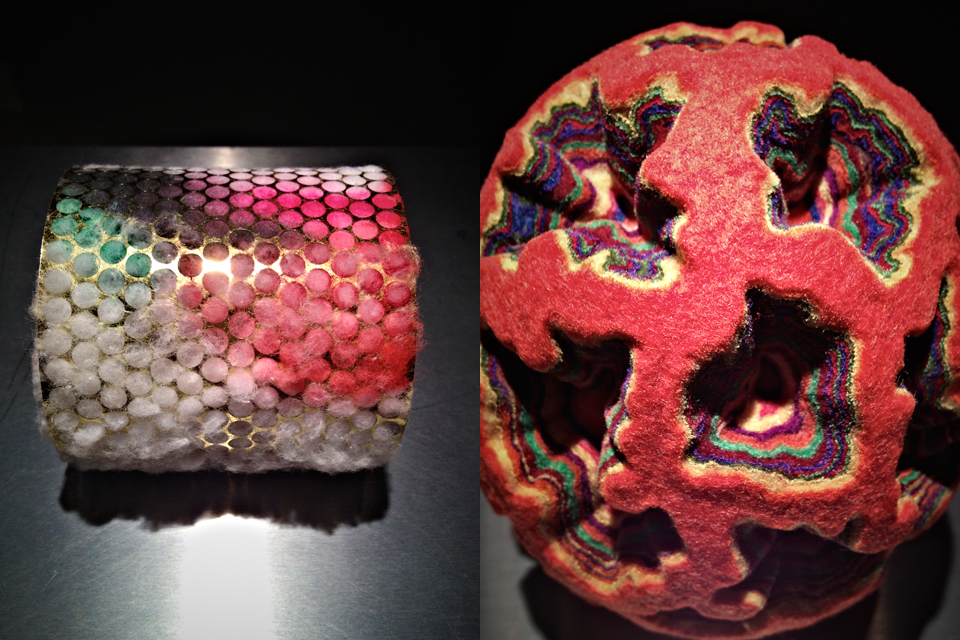
Left: Guido Bosco - Right : Yukako Sorai
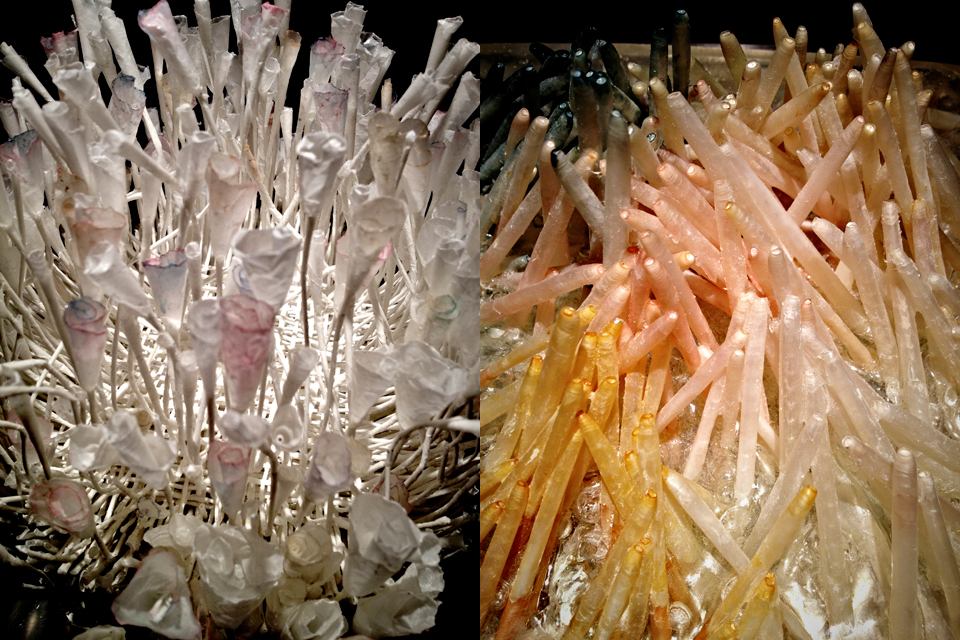
Right by Martyna Golik
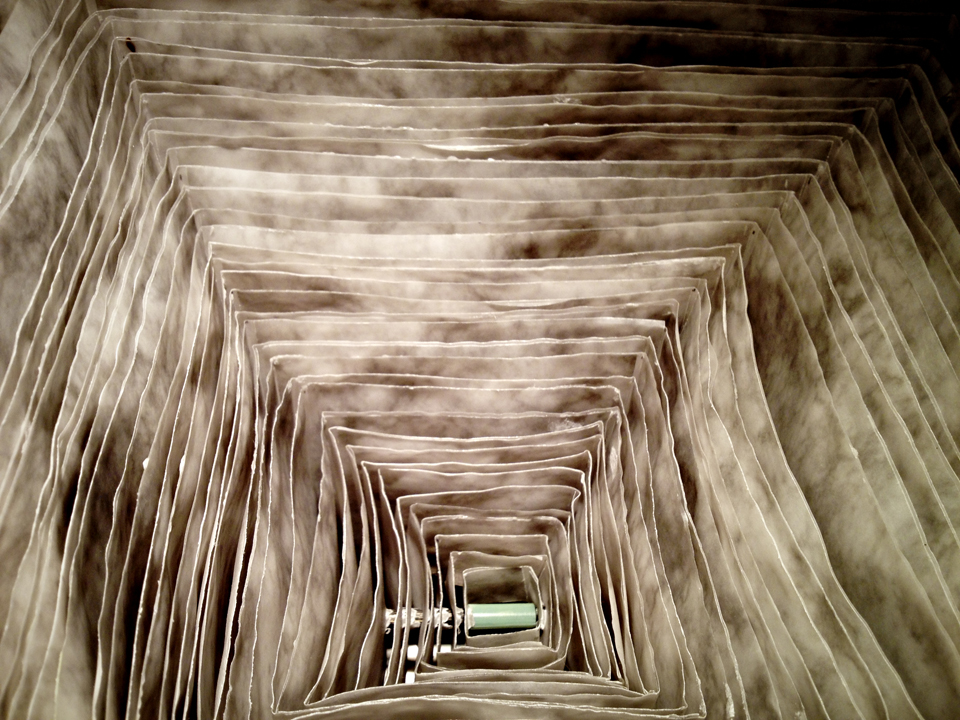
Gerda Ritzmann
time tells - a project by diana blok
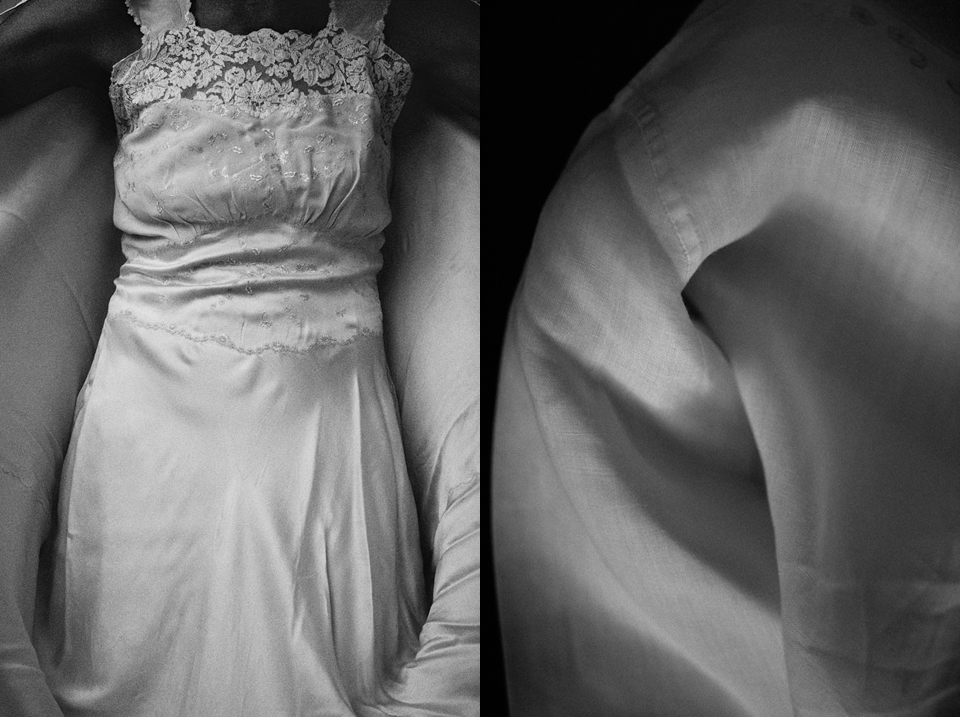
photos by diana blok
"After my father’s death, I began a process of rescuing memories, searching for clues which would lead me to discover more of who he was and as a result, more of who I was. Memories of his past were carried through photographs and negatives stored in boxes. Seven years after his death, my mother followed, leaving behind her personal archive in the form of a precious collection of handmade garments.
Her legacy was embodied in the delicately stitched and embroidered clothes she created for us for the key moments in our lives: baptism, communion, weddings. But all the while, my Catholic, Argentine mother’s needle was patterning secrets, unutterable events of the past: indelible images that would eventually surface and give light to her prophetic words: “el tiempo lo dira”, that is, ‘Time will tell.’
My father was a young Dutchman hired by the Turkish Embassy as their personal assistant first in The Hague (1934-1935), and then, for a second term, from 1936 until 1946, in Buenos Aires. Tall, blond and blue-eyed, he was my mother’s Prince Charming. They married and together raised four daughters. They lived a charmed life as, after the war, my father transferred to the Royal Netherlands Embassy as a diplomat and rose steadily through the ranks of the Dutch Foreign Service in Colombia, Guatemala and Mexico. By the time he retired, he had accumulated a string of decorations including the prestigious Knight in the Order of Orange-Nassau.
Silently however, my father suffered under the weight of an unacknowledged identity: he was Jewish. He therefore carried alone the knowledge that his parents and only brother were murdered in Auschwitz. He had escaped the Holocaust through the good graces of the Turkish ambassador who had re-employed him for the duration of the war. However, in the anti -Semitic climate of Argentina, a revelation that he was in fact Jewish, would have burst the fairytale bubble of our existence.
My parents came from disparate worlds but they loved each other dearly. For my sisters and me, his tragic story, her inability to acknowledge his roots, and the garments she so lovingly made hold the key to our identity. Without this specific past and the repercussions it had in their lives and ours as their children, we would not be who we are today.
For this reason, I am piecing together the unspoken tale of my parents’ lives thru photographs of the garments my mother crafted, with archival and abstract images found along several journeys made in search of answers to the profound connectedness I have always felt with my Jewish ancestors.
In 2009 on a journey to Istanbul in a most unexpected way, I met the children of the Turkish ambassador, now 80 and 82 years old, (former ambassadors themselves). They had grown up knowing my father, first in The Hague and later in Buenos Aires. As they told their stories and unlocked some of the mysteries surrounding my father, I knew the time had come for me, as a visual artist to tell the story. I heard my mother’s voice: ‘El tiempo lo dira’.
In a documentary film, cinematographer Sonia Herman Dolz documents my recent meeting with the Turkish ambassador’s children who shared memories about my father during their 10-year period together.
The book that goes with the project is designed by Stephen de Smet and published by Diana Blok & Witteveen Visual Art Center. The total project is evolving into multiple layered installation combining photography, film and sound."
Time Tells by Diana Blok can be seen until november 6th in Amsterdam at:
Sponsors:
Mondriaan Foundation - Amsterdam Fund for the Arts - 7 Hills Foundation - NL/Turkey 400
photo by diana blok
photos by diana blok
photo by diana blok
photos by diana blok
photos by diana blok
photo by diana blok
carioca’s lifestyle
courtesy of caju collective
Last year, three designers from Rio de Janeiro, Brazil, launched the Caju Collective, a design studio based in Brooklyn, NY. Caju (kah-joo) in portuguese means cashew, a tropical, yummy, exotic, colorful fruit.
The studio’s proposal is to bring the creativity, playfulness and warmness of their culture to the NYC’s design scene. Bridging Art, Design and Fashion: the 3 of them participated in On Going, an exhibition focused on the creative process of Brazilian artists rooted in NYC, where they presented etchings, video and typographic works.Caju Collective will be releasing their first textile print design collection at Indigo/ Premiere Vision NY. Dani Moura and Patricia Bomeny met while working for La Estampa, the largest textile supplier in Brazil, where they created textile print designs for high- end and mid-market fashion brands.
In 2010, Dani decided to move to NY to attend a School of Visual Arts program. A year later, Patricia did the same. Gustavo Prado, who’s fine artist, graphic designer and Patricia’s husband, came right after her, bringing the french bulldog Pingo, the mascot of the team.
As they all live in Brooklyn, they decided to open their studio in Williamsburg, where they are able to keep their carioca’s lifestyle, going to work with bicycles and having lunch at the park.
courtesy of caju collective
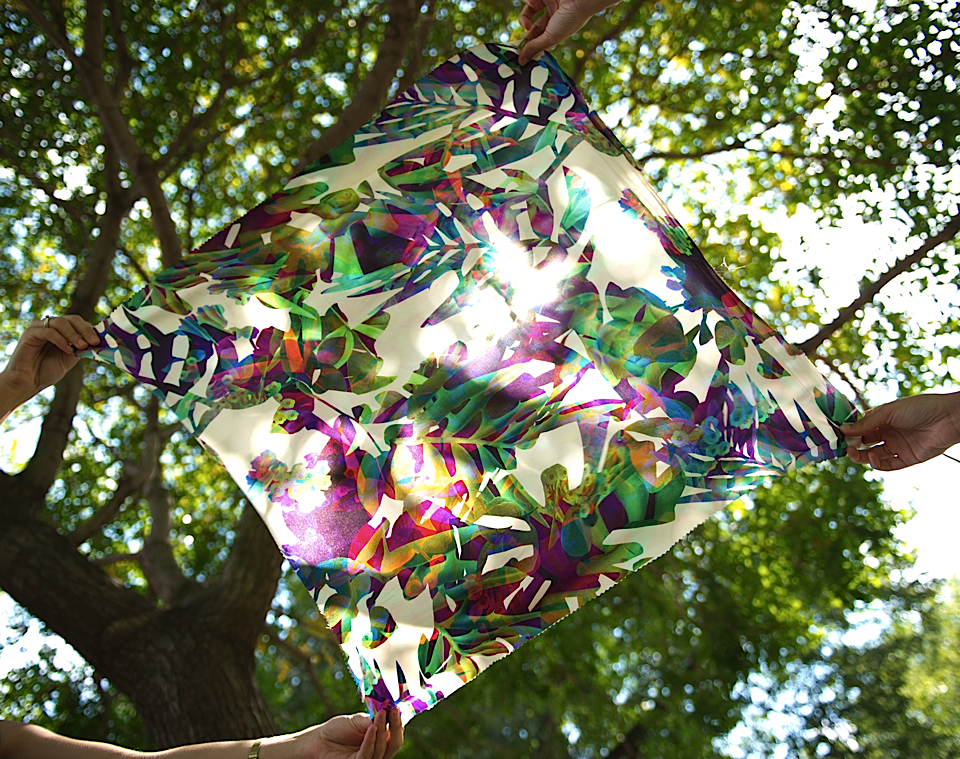
photo courtesy of caju
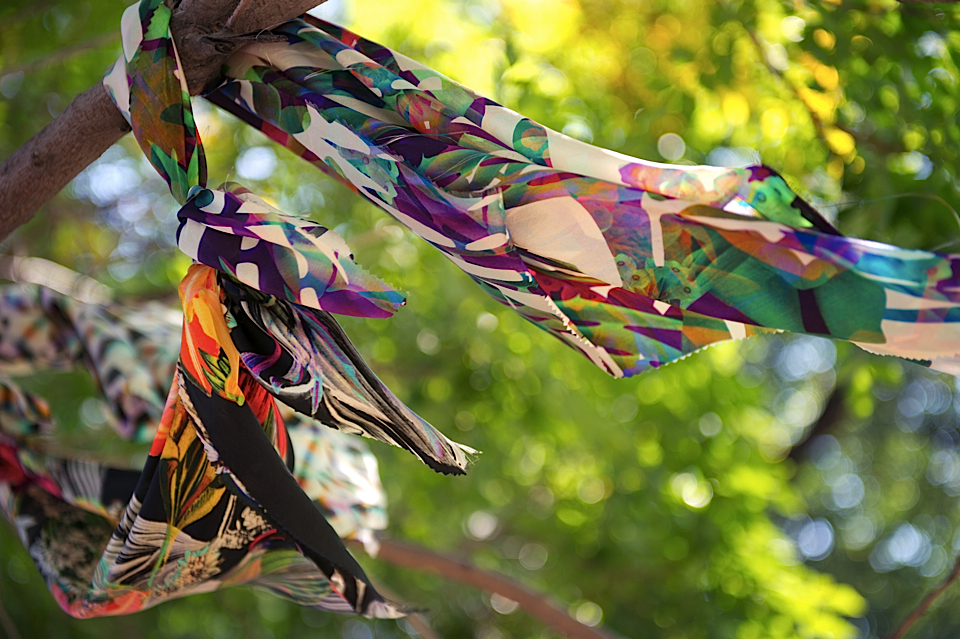
photo courtesy of caju
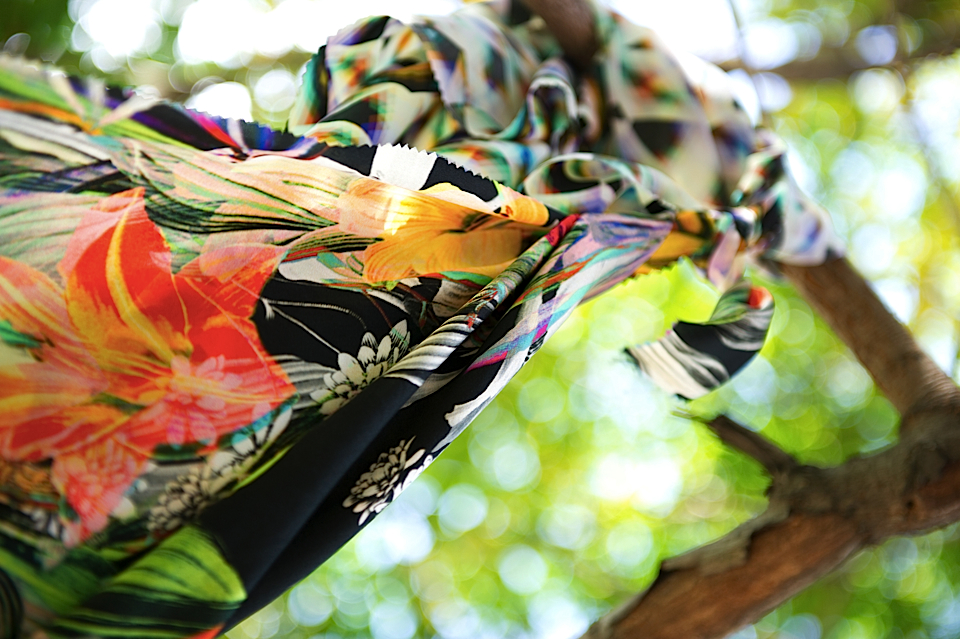
photo courtesy of caju
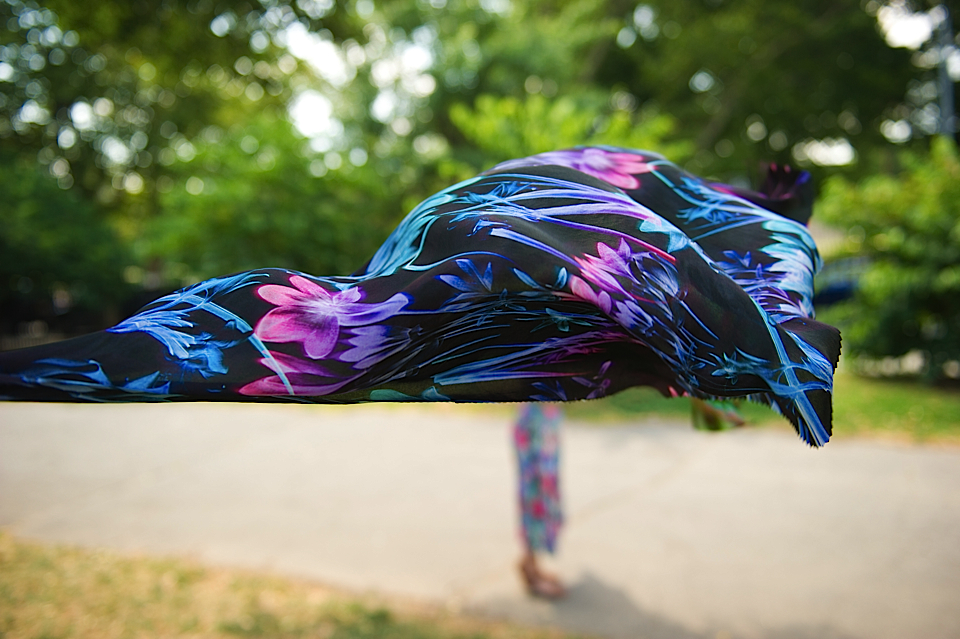
photo courtesy of caju
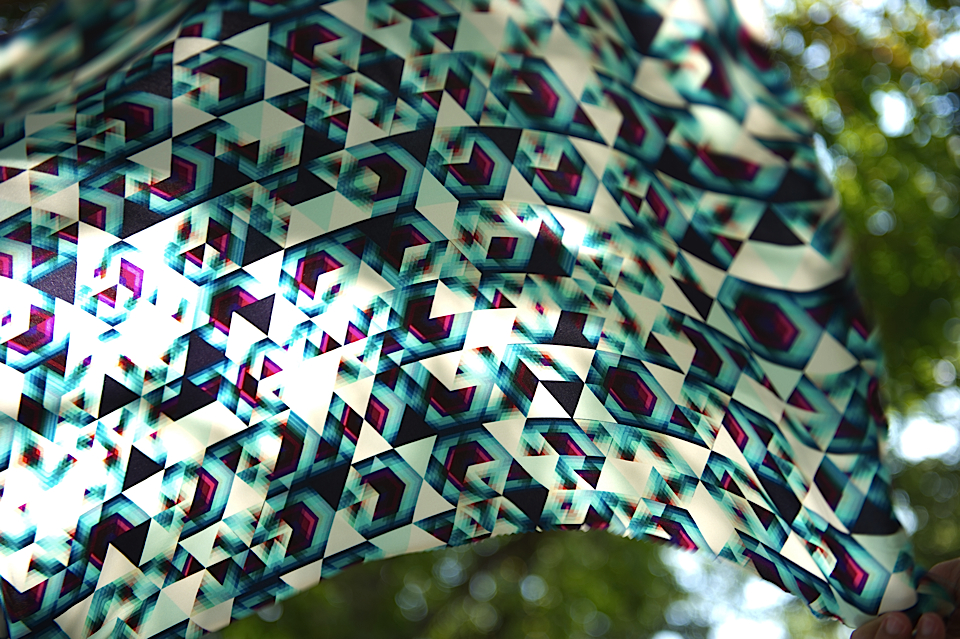
photo courtesy of caju
modeling milk
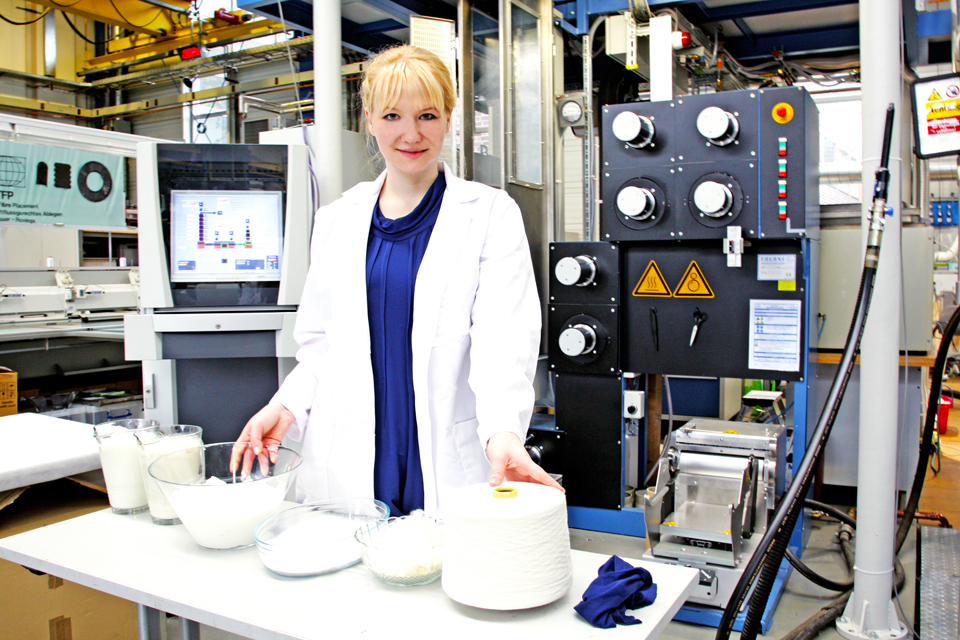
Anke Domaske — a German born, biochemist and fashion designer— is the inventor of an award-winning new textile made entirely from milk. Called “Qmilch,” it drapes and folds like silk, but can be washed and dried like cotton. The fabric is also eco-friendly and a wonderful solution for people with skin allergies.
Qmilch – a combination of quality and the German word for milk – won the innovation award of Germany's Textile Research Association, which recognized it as a new, sustainable fiber that could revolutionize the clothing industry.
After two years of trial and error in a research lab, Domaske and her team of six finally created a process of reducing milk to a protein powder that is then boiled and pressed into strands that can be woven into a fabric.
According to Domaske, the strands can be spun rougher for a heavier texture, or shiny smooth, to create a soft jersey feel. She uses only organic milk that cannot be consumed because it has failed Germany's strict quality standards.
By reducing waste and our reliance on byproducts from oil, and other indispensable resources such as water, Domaske’s work promises greener fashion and a greener future.
Text by Beth Lauck.
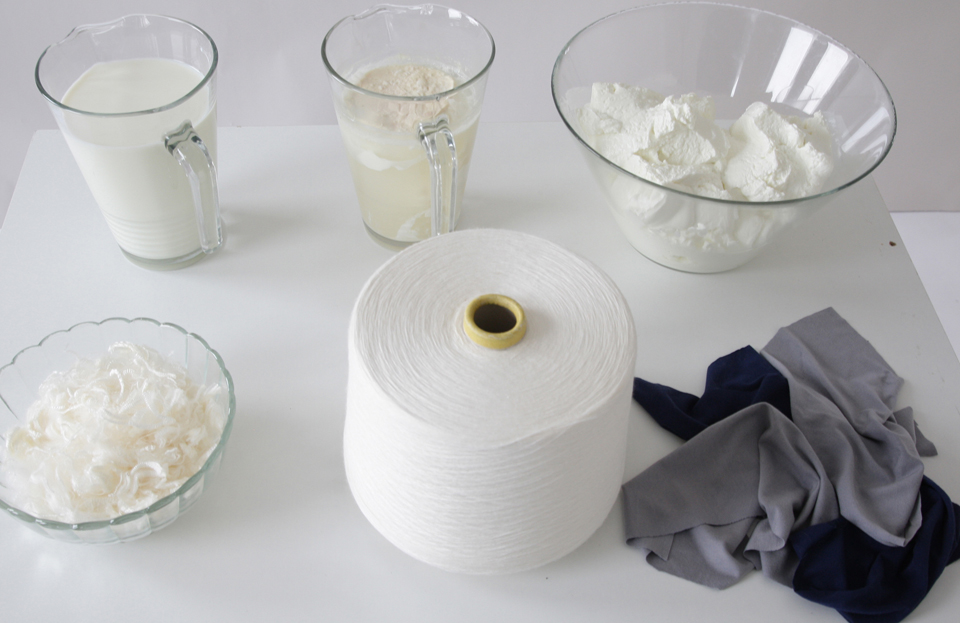
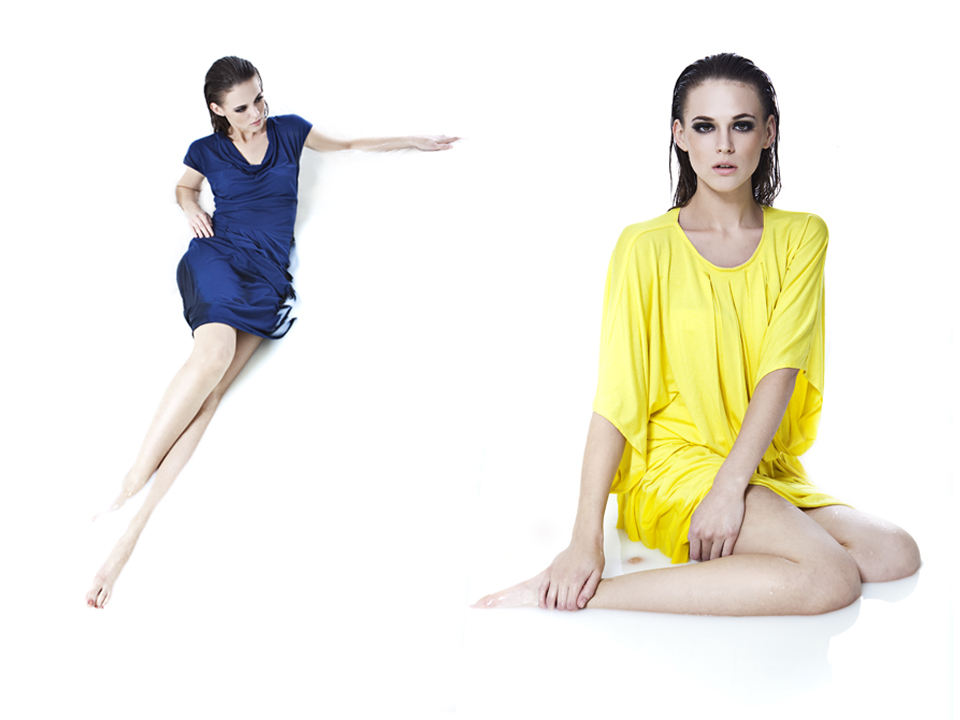
photos by jannes frubel
rubelli
photos by sabine pigalle
At 2012's Salone Internazionale del Mobile in Milan, Rubelli will be showing how the design world can integrate with the decorating world in an austere installation at Spazio Rossana Orlandi. One of the galleries will be transformed into a dark vision of romantic beauty, reflecting two important trends in design: the revival of textiles for interiors and a focus on black.
As part of an ongoing collaboration, Lidewij Edelkoort has been asked to select textiles and contemporary design, upholstering the space and previewing a revival of the gothic movement. On display will be a special edition of Maarten Baas’ Smoke! armchair produced by Moooi and dressed in Rubelli’s Les Indes Galantes fabric, a chandelier by Piet Hein Eek including textile lampshades, re-upholstered modernist armchairs by Gio Ponti and Franco Albini, a Fortuny Floor Lamp re-edited by Pallucco, and a mysterious new flock of birds by Guus Kusters & Maarten Kolk. All the works feature fabrics by Armani/Casa Exclusive Textiles by Rubelli, Dominique Kieffer, Donghia and Rubelli – including Rubelli’s re-edition of original Gio Ponti designs.
Edelkoort feels that black resonates in today’s world, saying that, "Black is becoming the order of the night, the guardian of dark humour and the romantic troubadour of cynical songs. Whether dozing upon a daybed, draped against a male torso or piously kneeling on a gothic chair, it is all the more beautiful in black. The Rubelli family of brands is conscious of the newest societal trends exploring the austere and sometimes even surrealistic side of interior design… Design will embrace black and faux-black in every texture, for a black-on-black celebration of glorious gloom and doom, in an audacious and eccentric enactment of the night, where all is a majestic sombre monochrome of soft shadows lit by the full moon."
photo by sabine pigalle
photo by sabine pigalle
photos by sabine pigalle
our recommendations for the salone del mobile
Underworld, by Studio Job for Nodus Rugs
As part of its commitment to sharing information about creative textiles, Trend Tablet is pleased to present its selection of several exhibitions taking place in Milan during April 2012's Salone Internazionale del Mobile.
This year, designers continue to explore the tactile and inspiring use of textiles. Some highlights include:
- The Romantic Rubelli Room, Lidewij Edelkoort's selection of contemporary design using Rubelli textiles at Spazio Rossana Orlandi.
- Hair and Skin Human and Animal, Me and the Black Sheep, by Gruppo di Installazione in Ventura Lambrate.
- Rodrigo Almeida's first solo show, at Galleria d'Arte il Costello.
- Nodus presenting rugs by Studio Job, estudio Campana and Kiki van Eijk as well as 10 new vegetable colours in their Himalayan Collection by Bartoli Design.
- Kvadrat presenting new work by Bless and Katrin Greiling.
- Vitra presenting a limited edition of Hella Jongerius' Polder Sofa using Maharam textiles.
details on the edition in Stockholm
The new edition of Talking Textiles will take place from February 3 – April 15, 2012 at the Designhall, a new venue for presenting design in Stockholm, located opposite the Konstfack University campus.
On show will be a large selection of design that uses innovative textile techniques, heralding the revival of textiles in our interiors.Here is a focus of some artists.Stay tuned for more information very soon!
KARIN AHLIN When the Rain Came (2008)
A textile and communication designer who views patterns as icons of reality’s surfaces composes a digital collage visualisation of her work in this animated short film.
BART HESS Hunt for High Tech (2010)
Research to create technologically-armoured skin and fur, with nature and technology blending into one in order to create a new human archetype incorporating animalistic and fetichistic instincts.
GINNA LEE Visible Emotions, 2010
Ginna's aim is to create abstract visual manifestations of specific emotional moments or states; recreating and representing such moments through textiles in the same way that body language and facial expressions are used to represent the internal emotions of humans.
MEREL KARHOF Wind Knitting Factory (2010)
Talking Textiles in Stockholm
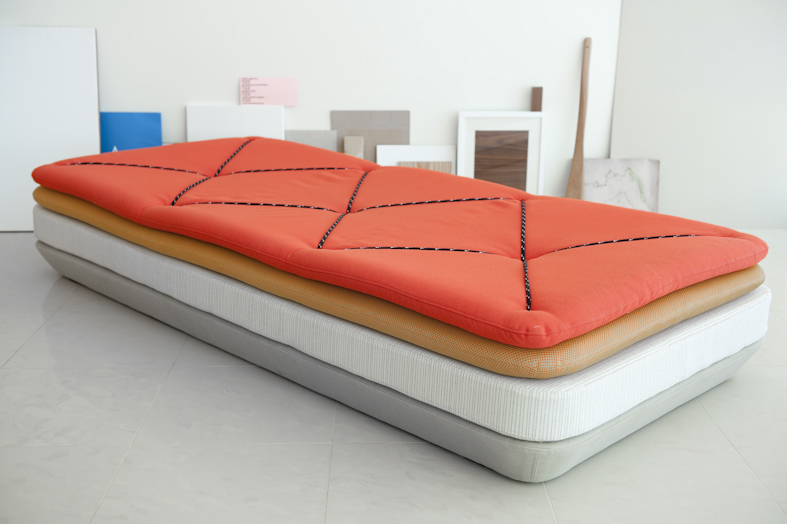
Bidoun Sofa by Katrin Greiling
Lidewij Edelkoort is proud to announce that a new edition of Talking Textiles will take place from February 3 – April 15, 2012 at the Designhall, a new venue for presenting design in Stockholm, located opposite the Konstfack University campus. On show will be a large selection of design that uses innovative textile techniques, heralding the revival of textiles in our interiors. The exhibit is part of an initiative to discuss textiles, highlighting the importance of creativity and education at a time when the global market has put many textile mills in danger of disappearing. Lidewij explains that "Talking Textiles" will expand our perception of where textiles can take us: “After a reaction to the increasingly digital landscape of our lives, a craving for tactility and dimension has led several designers to reconsider the role of fabrics once more.
The near future will see the overwhelming return of textiles in our interiors, covering floors, walls and furniture in an expansive and personal manner. These textiles will speak loud and clear and become the fabrics of life, narrating stories, designing pattern, promoting well-being and reviving the act of weaving”.
Stay tuned for more information very soon!
Download the press images here
"penelope"
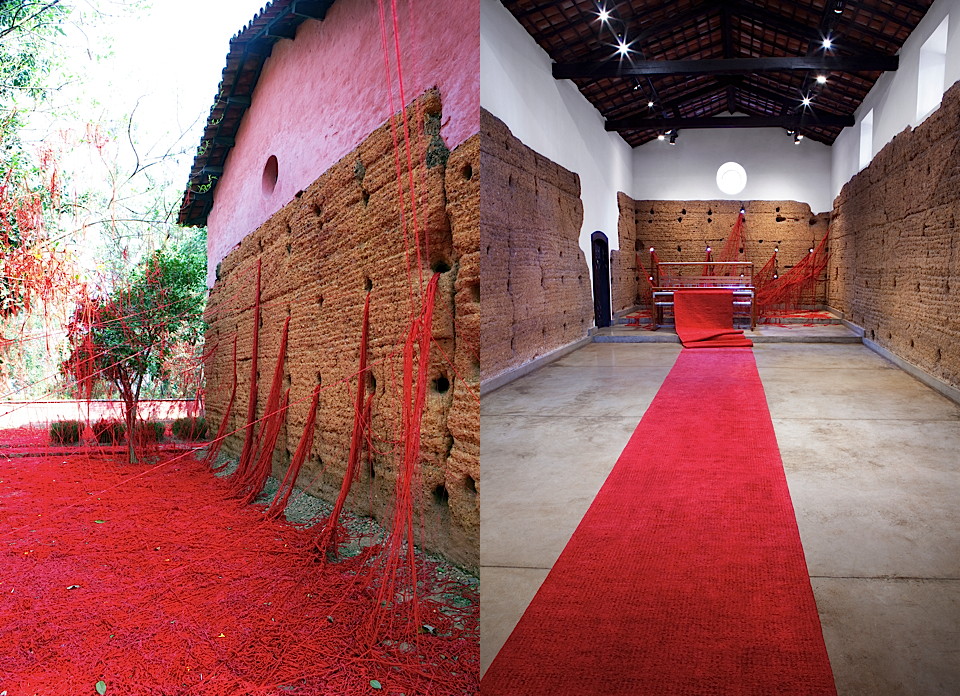
photos by everton ballardin
"Penelope", a recent exhibition by Tatiana Blass, is a storied installation. Borrowing its name from Greek myth, "Penelope" is a tribute to the power of love and the praxis of weaving.
Built to fill the Chapel of Morumbi in São Paulo, Blass has displayed a large pedal-loom at the altar. Attached is a intricately woven, red carpet that extends to the courtyard; red, to signify both power and nobility, as recounted in Greek legend.
Blass’ installation aims to connect the internal and external worlds of belief through a web of tangled wool, yet it is unclear whether the carpet is in the process of being woven or unraveled (as goes the tale of Penelope).
On the opposite side of the loom, the threads run wildly; a matrix of red yarn envelops the exterior gardens, further confounding our perception of space and place. Merging the religious with the architectural and the enigmatic, Blass is deeply interested in “the abstract.” She conceals as much as she reveals, blending complex stories with elaborate textile creations.
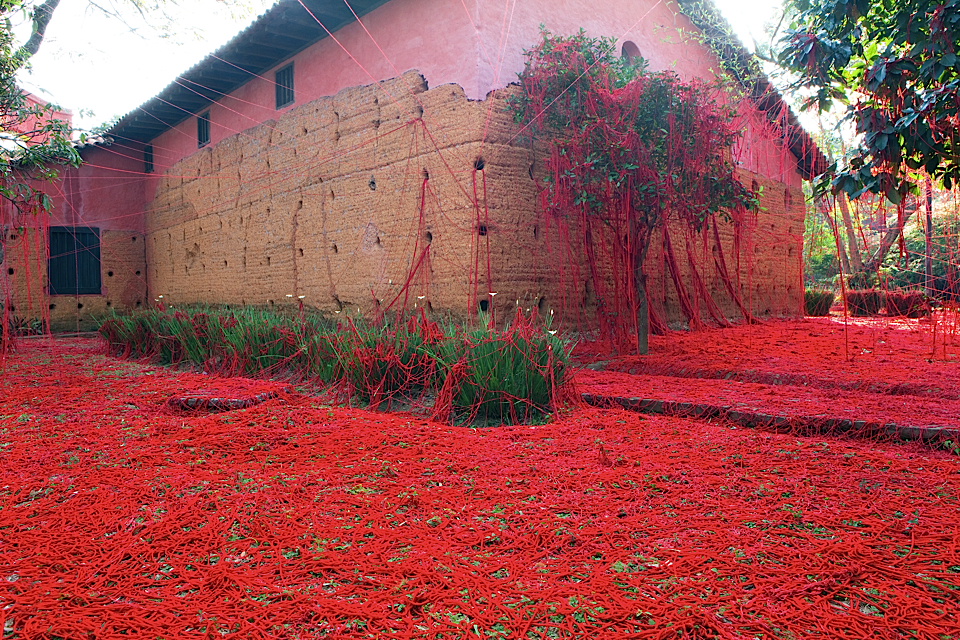
photo by everton ballardin
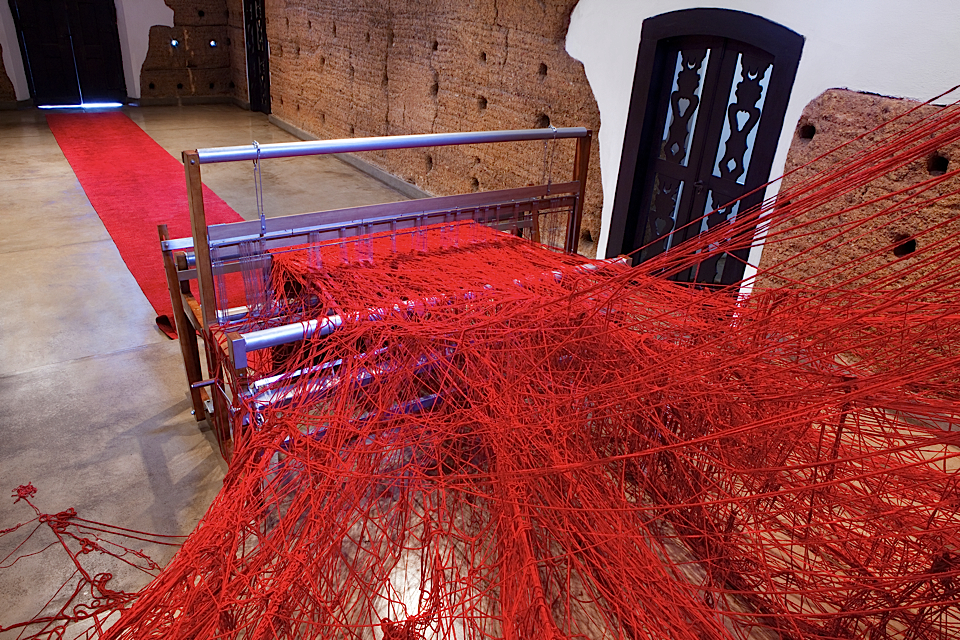
photo by everton ballardin
teixidors
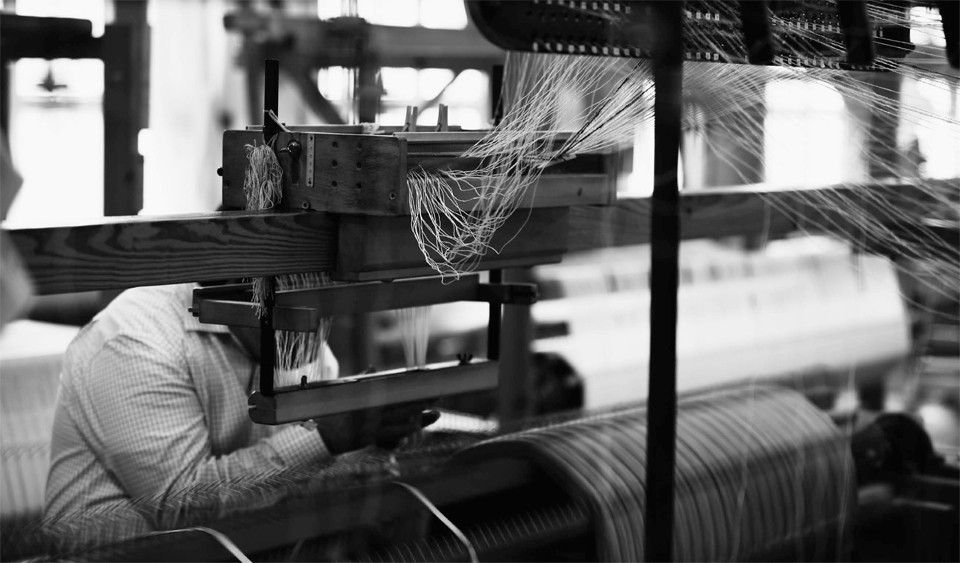
When a company has a sense of purpose that goes beyond increasing its profits, that is what makes for a truly great project. Since its establishment in Barcelona (Spain)in 1983, Teixidors has been committed to generating well being for people with learning disabilities by supporting them and giving them a specialized, integrating job as manual weavers. While doing this, it has maintained the highest level of quality both in the manufacturing and the raw materials used to create their woven pieces. Those products exude a quality which can be appreciated through the sense of touch, sight and smell.The noble materials with which each piece is hand woven in the wooden looms convey a process of memory, dedication and dignity.The looms — based on the design from 19th Century models — are used to help develop coordination and psychomotor skills in people with learning difficulties.
The weavers, with their know-how, shape the products into scarves, shawls, plaids, blankets, curtains, tablecloths, towels.Only the finest materials nature can provide are used to create the range of textiles. The softness of cashmere is used to make light and sophisticated fabrics.The freshness of linen is used to create breezy textiles that promote relaxation and wellness. Elegant silk is combined with other materials to add softness and resilience. Noble Merino wool adds a rustic and warm touch. A very good example of luxury where the process and the raw materials used to make the products are environmentally and socially responsible. From Binichic.
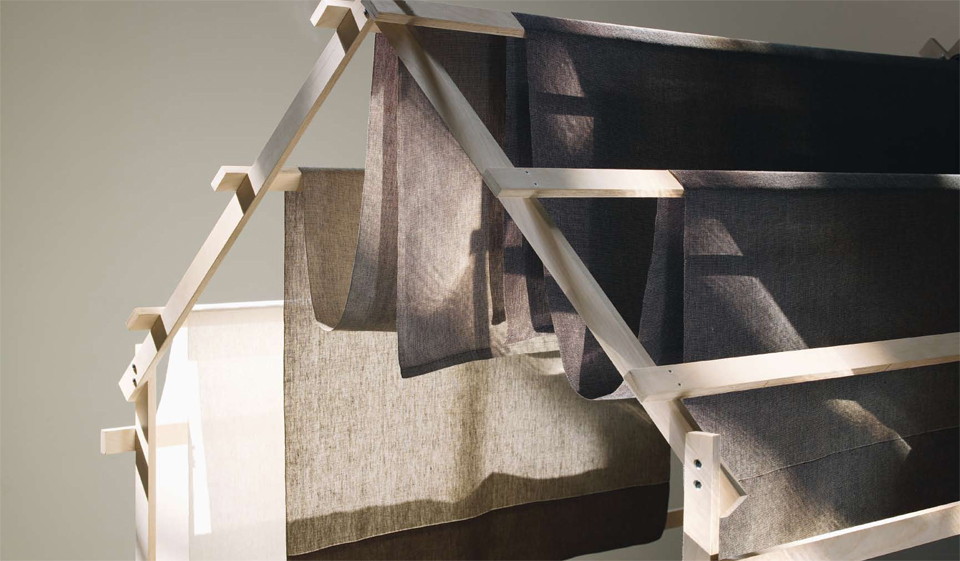
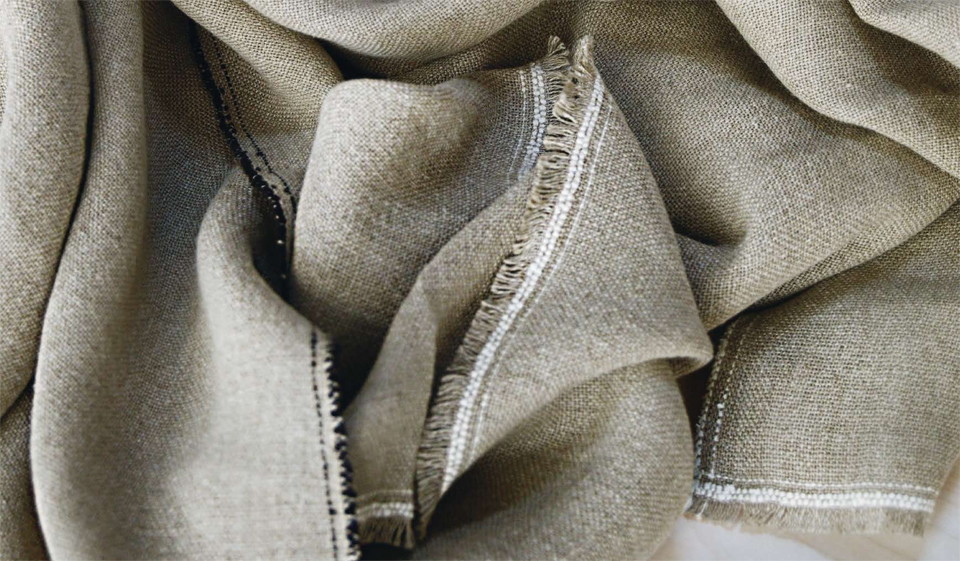
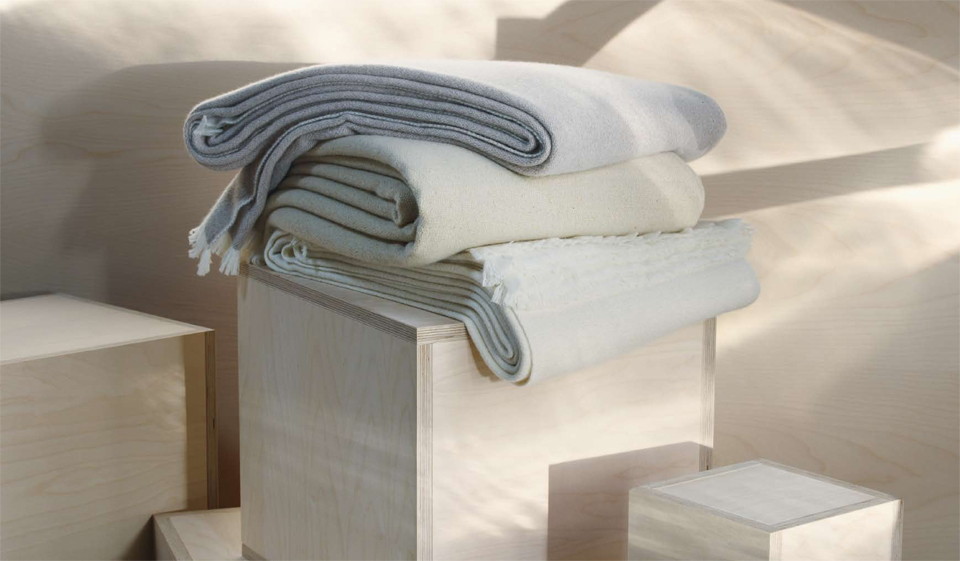
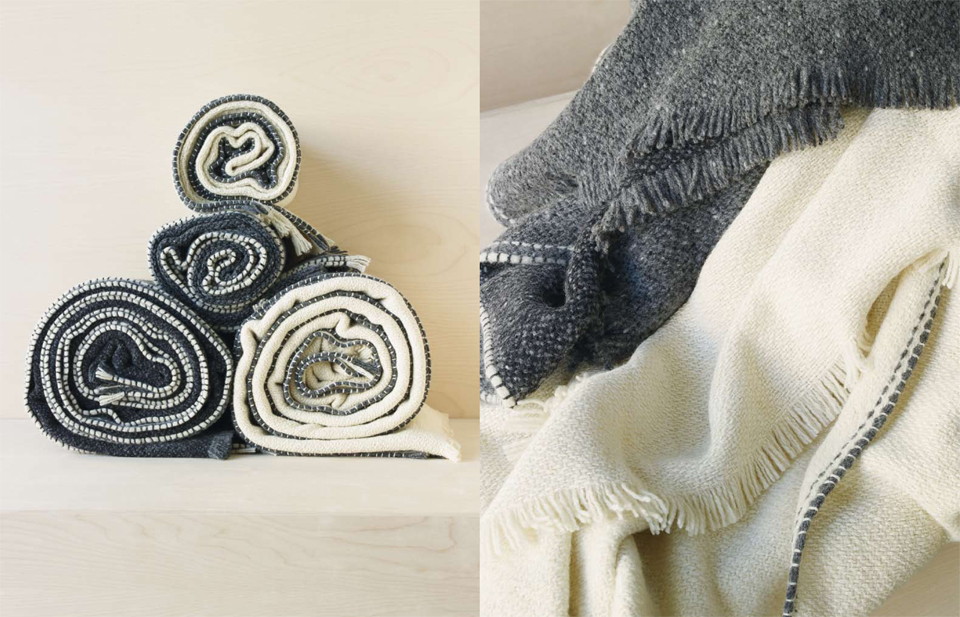
an initiative curated by lidewij edelkoort
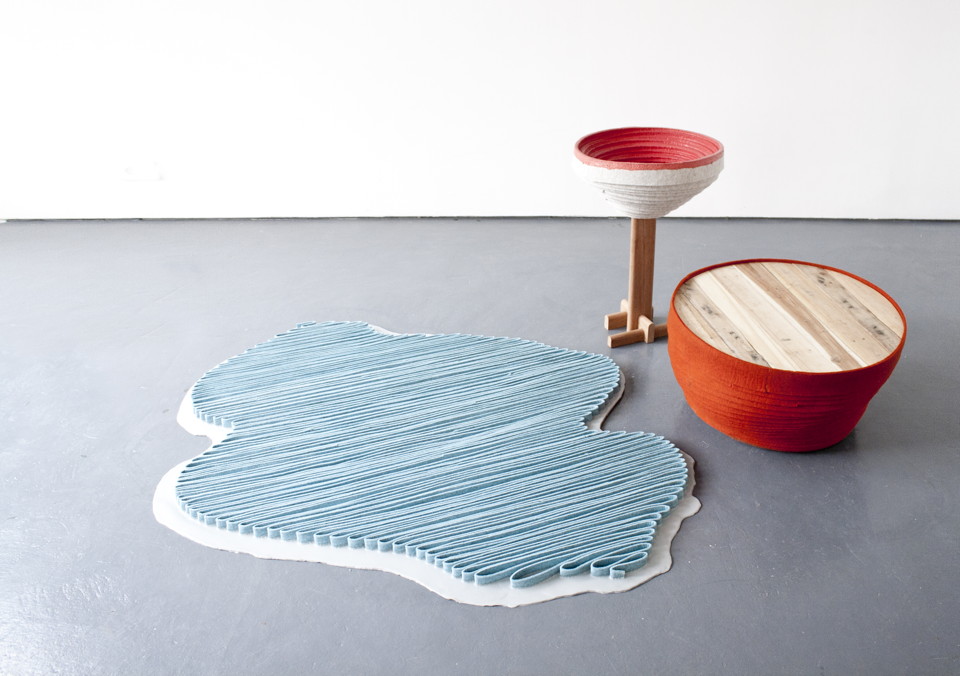
raw edges - the coiling collection 2011 - editions available at FAT Galerie, Paris
Milan, April 12 / 17, 2011, Edelkoort is promoting textile design talent at 2011’s Salone Internazionale del Mobile with "Talking Textiles".
In the innovative "Ventura Lambrate" area an exhibit features the work of recent graduates showcased. The installation brings the freshest European design talent to public attention and expand our perception of where textiles can take us.
On show at the prestigious "Spazio Gianfranco Ferré" in Via Pontaccio 21 is a large selection of design that uses interesting textile techniques, heralding the revival of textiles in our interiors.
This large space includes the latest textile-based work by Maarten Baas, BCXSY, BLESS, Bokja, Fernando and Humberto Campana, Nacho Carbonell, Kiki van Eijk, Ora-ïto for Stepevi, Studio Job in collaboration with the Audax Textielmuseum Tilburg,Hella Jongerius for Maharam, Claudy Jongstra, Dominique Kieffer for Rubelli, Maarten Kolk and Guus Kusters, David Lynch in collaboration with Raphael Navot, Christien Meindertsma, Ulf Moritz for Sahco, Raw Edges, Scholten & Baijings, Inga Sempé for Moustache, and Paul Smith for Maharam, among many others.
"Talking Textiles" is organised by Edelkoort Exhibitions in collaboration with Rossana Orlandi and Spazio Gianfranco Ferré, with sponsorship courtesy of Cerruti Baleri, ComON, Kvadrat, Loro Piana Interiors, Maharam and Ratti division b. Cocktails are provided by Campari. The graduate designers are supported by British Fashion Council, Mohair South Africa, Skillset, Texprint and UK Fashion & Textile .
To down load the press kit click on the links :
For images of the exhibition at "Spazio Gianfranco Ferré"
Part one "Spazio Gianfranco Ferré"
Part two "Spazio Gianfranco Ferré"
In Situ "Spazio Gianfranco Ferré" Part one
In Situ "Spazio Gianfranco Ferré" Part two
For images of the exhibition in "Ventura Lambrate"
In Situ "Ventura Lambrate" part one
In Situ "Ventura Lambrate" part two
In Situ "Ventura Lambrate" part three
2011-06-22 01:00:31
2011-06-22 01:00:28
2011-06-08 01:56:44
2011-05-25 08:56:35
a series of interviews
During Talking Textiles in Milan , a series of interviews was made by charlotte bjorklund.
a guided tour of the exhibition with lidewij edelkoort
We are happy to present you an interview given in Milan , enjoy the visit!
an interview for DOMUS
2011-05-01 14:21:00
2011-04-29 19:08:55
Spazio Gianfranco Ferré
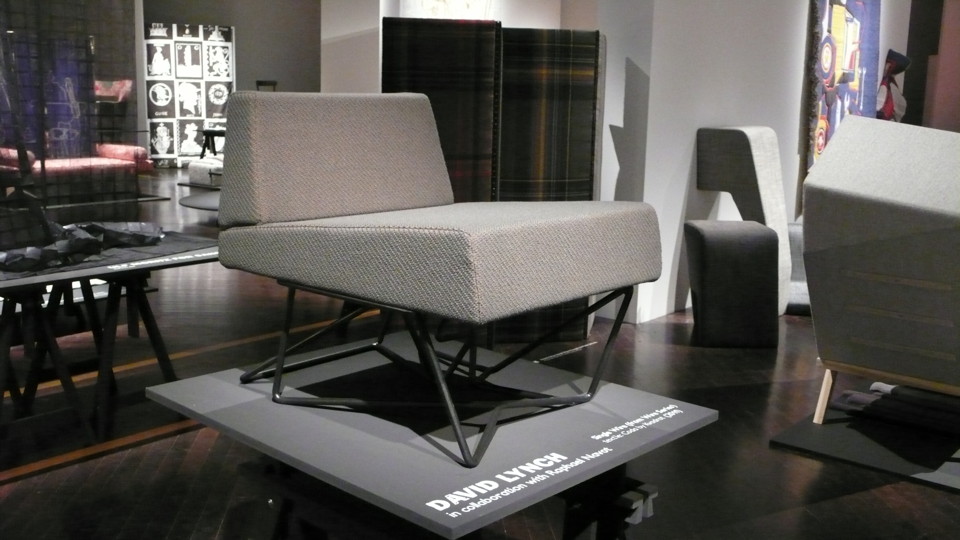
photo raphael navot
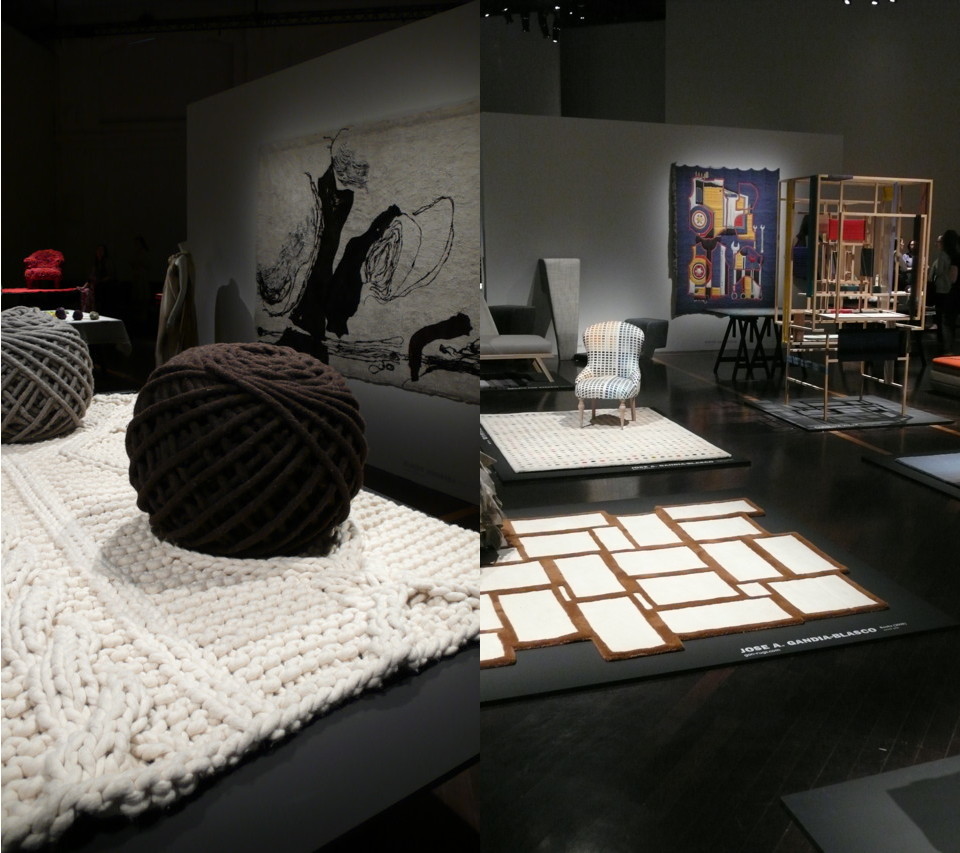
photo raphael navot
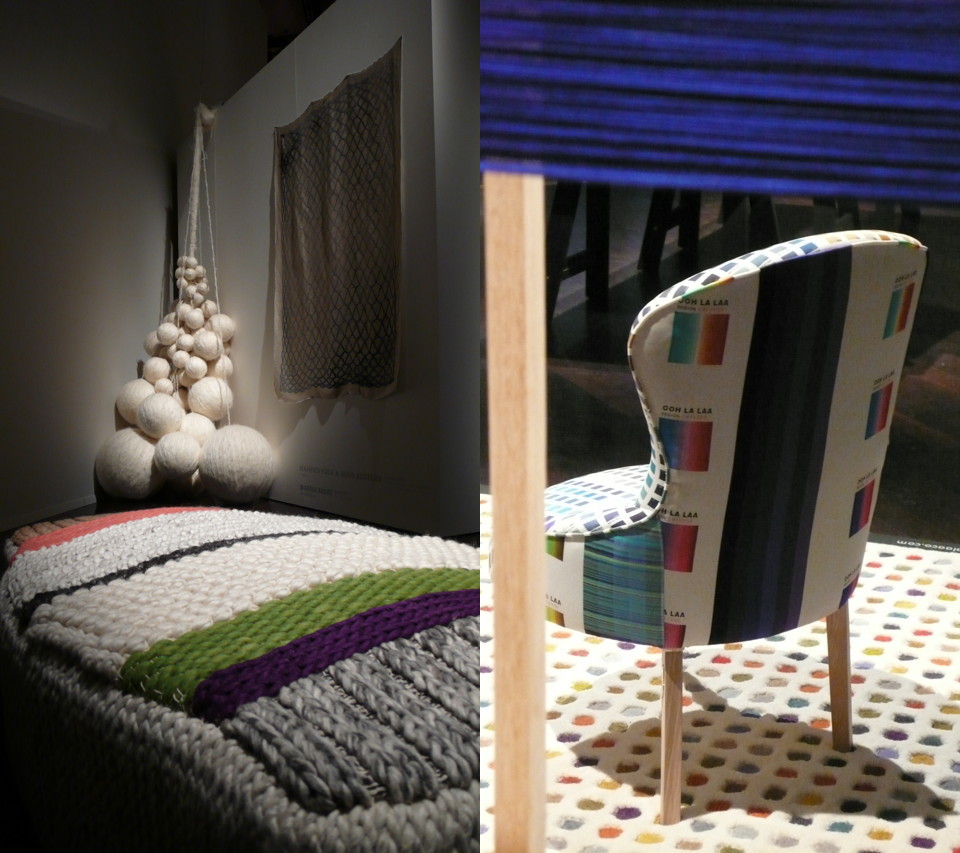
photo raphael navot
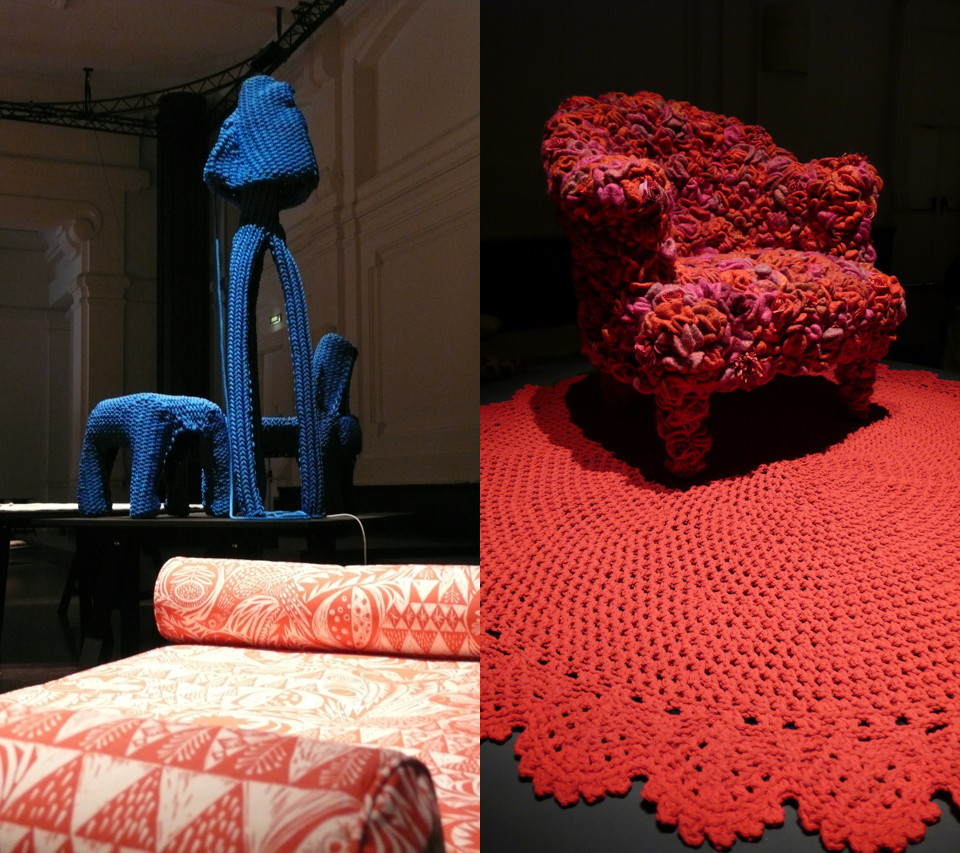
photo raphael navot
emilie pallard
Interested in dissecting the moment, Pallard has created a series of Domestic Disguises to interact with the interior. Longue Vue is a lamp design that allows the user to encapsulate light,seeing cosmic light planes when looking into it, and doubling as a
vantage point from which to spy. These ghost-like, ephemeral silhouettes envelop us like a chadoor, veiling away the world so we can concentrate and contemplate.
(France) Design Academy Eindhoven, the Netherlands
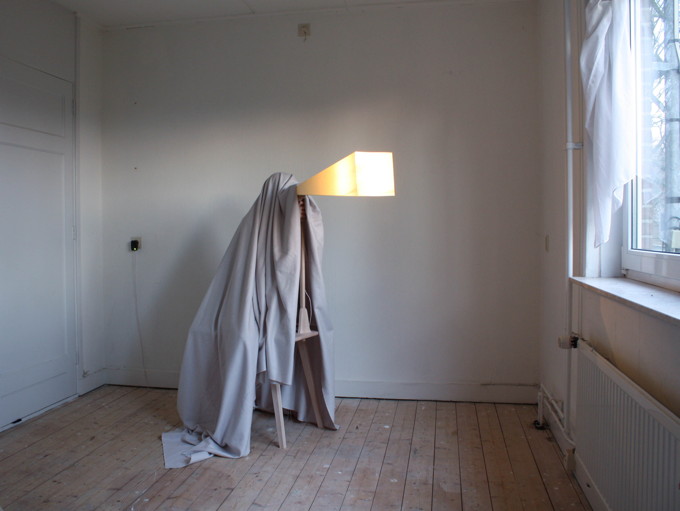
longue vue 2009
laduma ngxokolo
The maturing of young men is an important part of Xhosa culture; marked by traditional events to which boys commonly wear geometric knitwear in styles imported from the West. Determined to create a series of motifs that would better reflect his true identity,
Ngxokolo has created an award-winning collection of knits inspired by the colours and shapes of Xhosa beadwork, now resonating with overwhelming success amongst his contemporaries.
(South Africa) Nelson Mandela Metropolitan University, South Africa
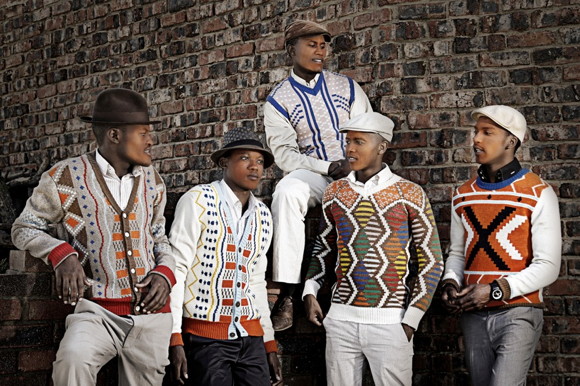
inspired menswear 2010
2011-06-30 17:33:16
freya godwin-brown
By studying the empty skeletons of buildings under construction across the Shanghai skyline, Godwin-Brown was inspired to develop sculptural textile installations that
incorporate several unconventional medias. The result is a weighty still life of solid forms made up of various tactilities.
(Australia) Chelsea College of Art & Design (London), England
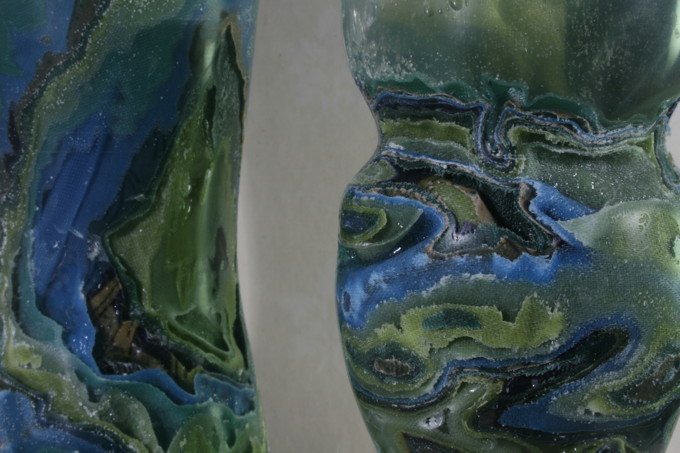
rocks 2010
ruth duff
Duff has explored the use of discharge printing to enhance hand-woven fabrics for interiors; screen printing onto the fabric once it is off loom or printing
onto the warp before weaving to create a comtemporary ikat effect.
(Scotland) Heriot-Watt University, Scotland
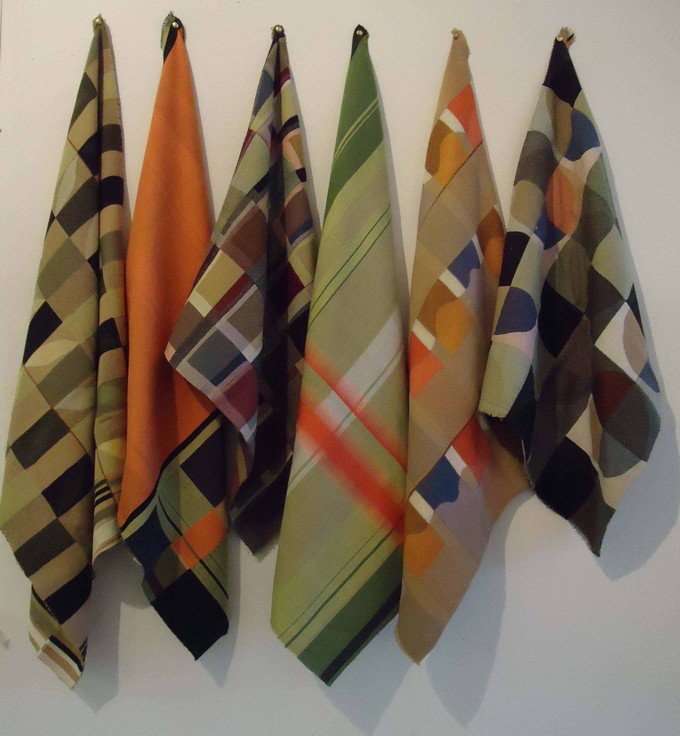
textiles 2011
laura mcpherson
Experiments with tube knitting create a whirlwind impression of line and colour, mixing
silk, viscose, Lycra and plastic.
Royal College of Art, England
laura.mcpherson@network.rca.ac.uk
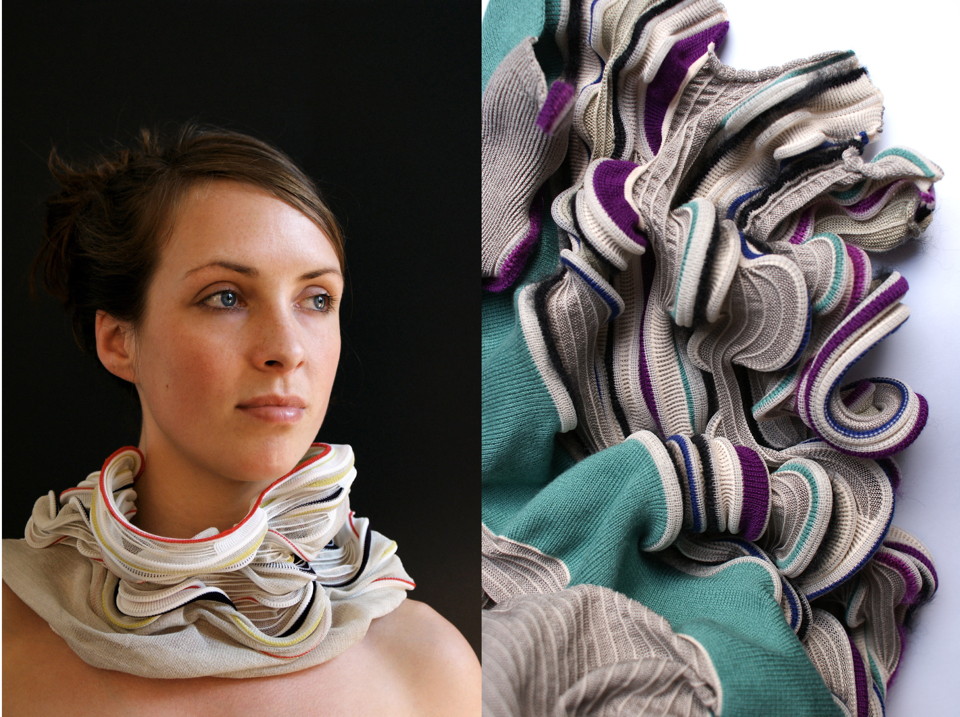
3 dimensional tube piece 2009
2011-05-04 08:23:09
lynn tandler
On a quest to redefine conventional ideas about textiles, Tandler was inspired by blacksmith techniques to surprisingly transform alloys such as copper and tinned copper
into a malleable draping cloth suitable for upholstery and even fashion. The textile’s structure is derived from cotton threads and a specially-developed weaving technique to support its metallic wires.
(Israel) Royal College of Art, England
http://www.lynntandler.com/cat.html
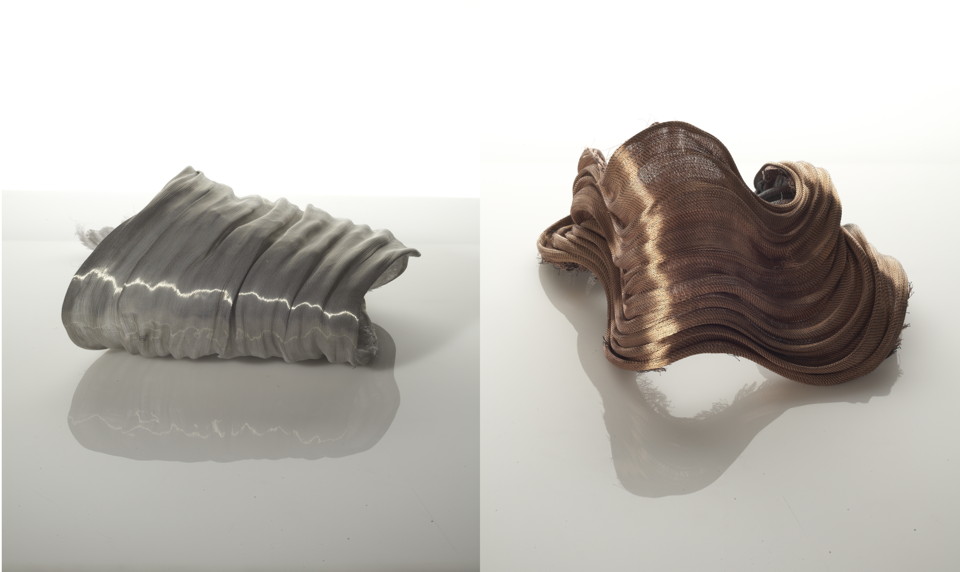
taking a blacksmithing approach to textiles 2010
bethan silverwood
In a graphic collection derived from of a wide range of inspirations, Silverwood has abstracted the motifs of military insignia into a geometric vocabulary, informing layered
treatments onto wool.
(Britain) Central Saint Martins College of Art & Design, England
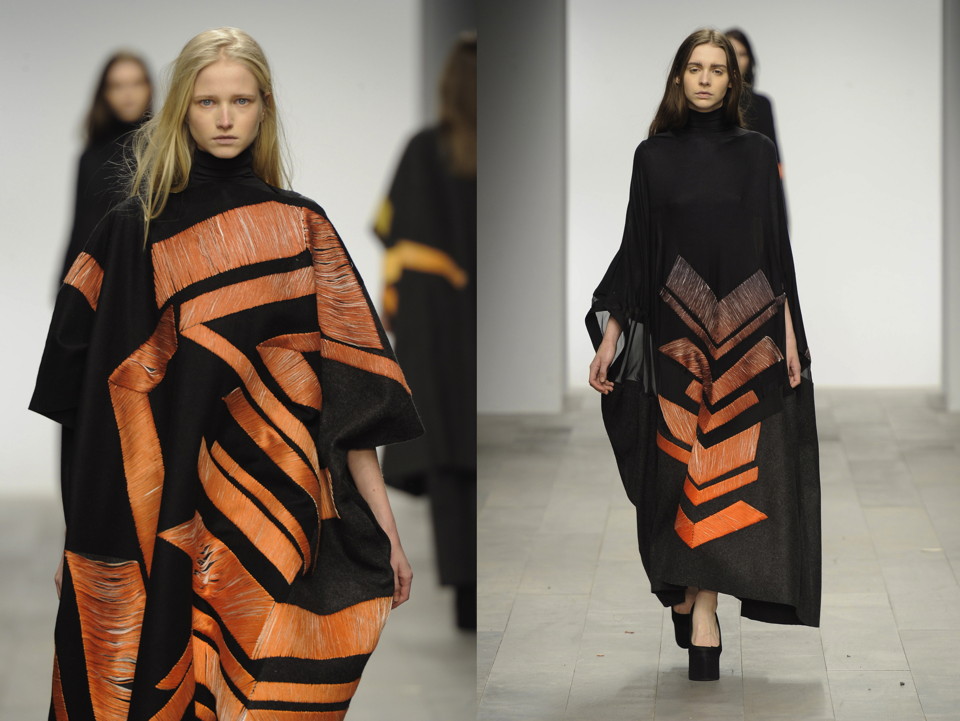
printed and embroidered black wool dress
jenny postle
In a riot of patchwork, haberdashery, embroidery and crochet, Postle’s graduation collection is an intricate reflection of today’s multi-faceted culture; these exotic
millennial silhouettes are colourful and complex compositions that ignite the kind of dynamism that can establish our contemporary folklore.
(Britain) Central Saint Martins College of Art & Design, England
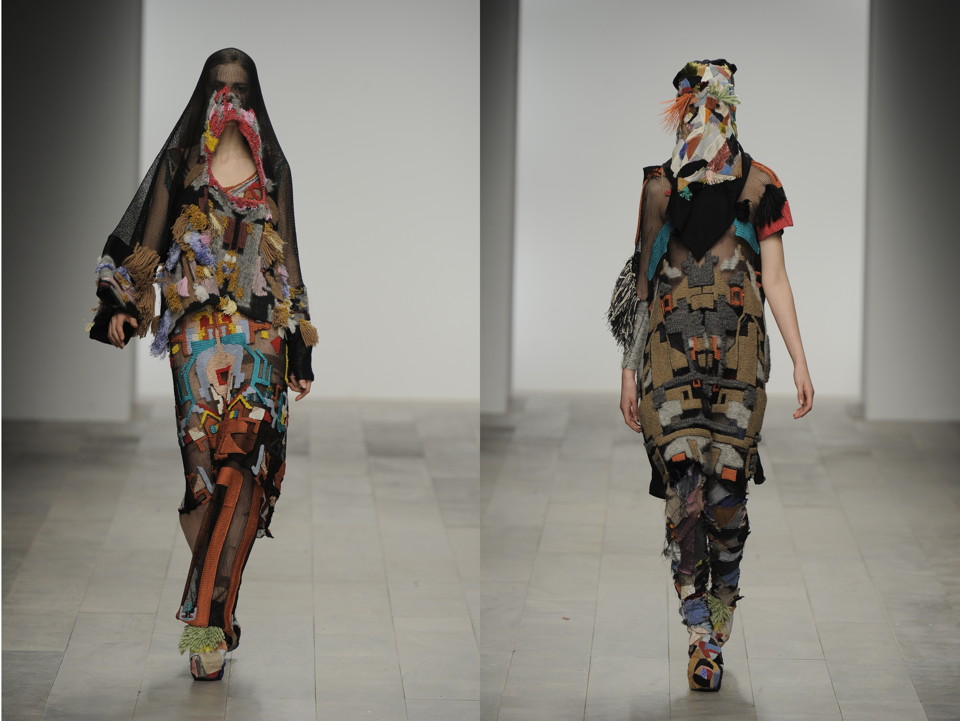
graduation collection 2010
lenneke langenhuijsen
Having investigated the roots of producing textiles from bark in Tonga, Langenhuijsen experimented with wooden textiles by using lazer cutting, shaping, pleating, embroidery,
washing, printing and colouring; developing an innovative collection of versatile interior textiles that can even be washed at 60 degrees.
(the Netherlands) Design Academy Eindhoven, the Netherlands
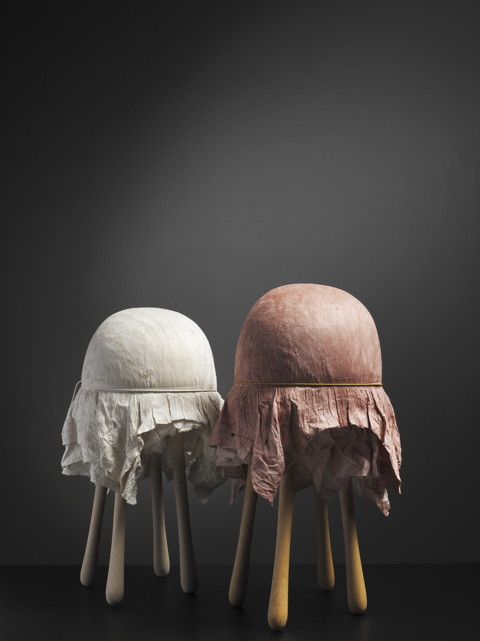
wooden textiles 2010
garance echazarreta
Inspired by the forms of haystacks, a mound of polyurethane tubes are tamed to become The Beast, a recluse in which to hide and be protected; one’s interactive presence helping it come to life. Constantly on the hunt for new tactilities,
Echazaretta’s tests and interventions indicate a future where materials will have body, grit and guts.
(Chile / France) Design Academy Eindhoven, the Netherlands
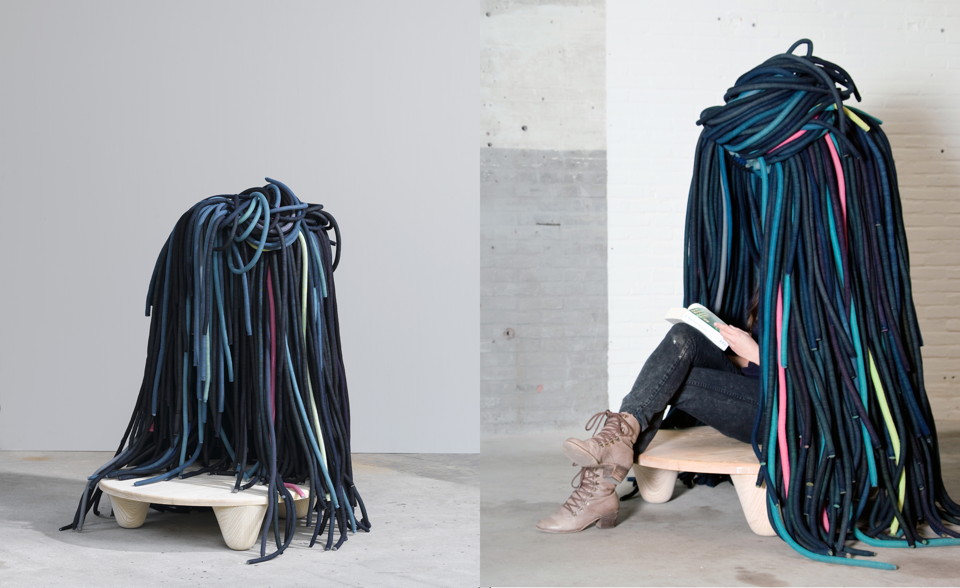
the beast 2010
2011-04-18 15:41:56
lærke hooge andersen
A conceptual approach to considering new materials has led to the exploration of biotechnology, sustainability and synthetic biology; tactile propositions that include
the use of fur, hair and hide, harking back to a more primal source while inspiring the fabrics of the future.
(Denmark) Central Saint Martins College of Art & Design, England
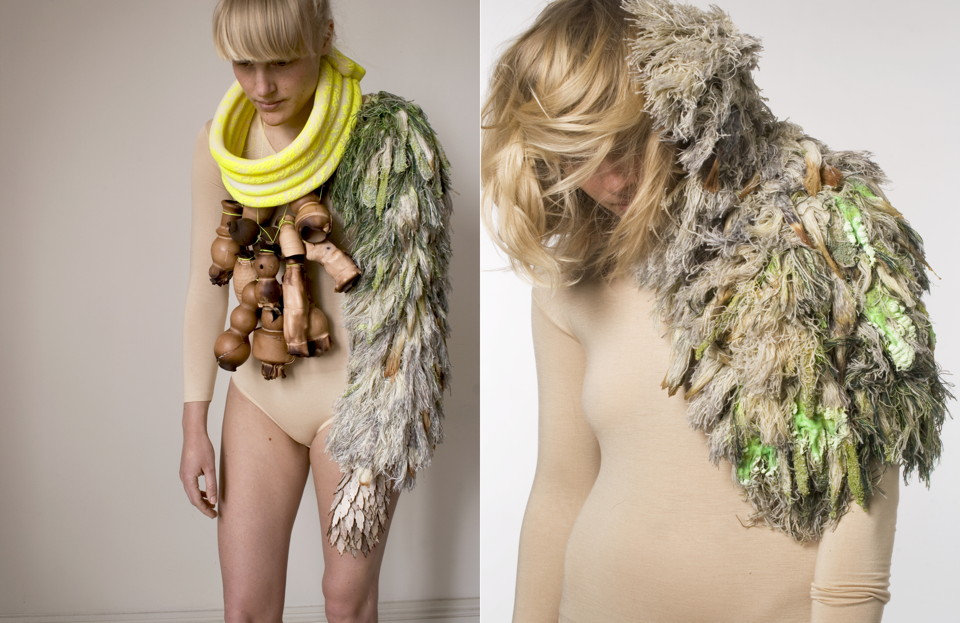
urban masai
elaine ng yan ling
Embedding technology into the design process for materials, Ng has incorporated memory shape alloys and polymers into botanic motifs that mimic the movements in nature when reacting to electromagnetic energy.
Reaching out to the frontiers where science and design will connect, the architecture of textile offers an exciting glimpse of the future.
(Britain) Central Saint Martins College of Art & Design, England
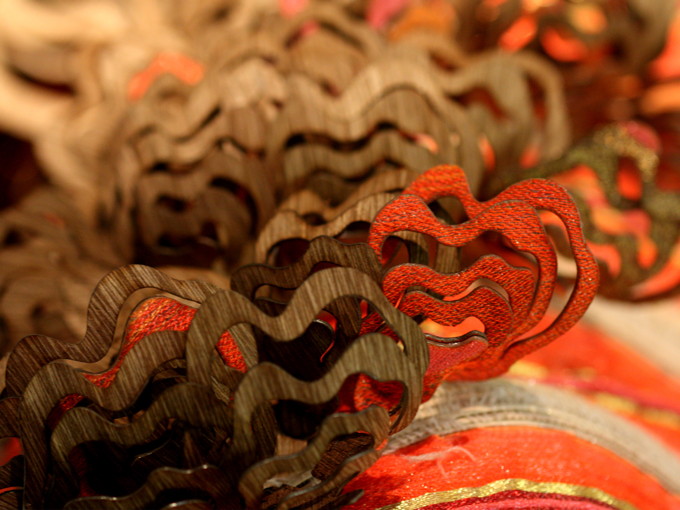
the flapper
jrumchai singalavanij
By recuperating scrap pieces of yarn, this Thai designer proposes a tactile collection
of fibrous organisms to mushroom throughout our interiors.
(Thailand) Royal College of Art, England
j.singalavanij@network.rca.ac.uk
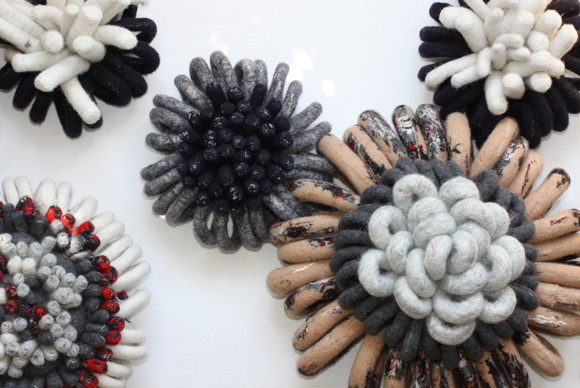
pumkins 2010
jy yeon suh
A concept for light-weight flat-pack textile homeware, becoming playful lamps and stools once inflated.
This amusing collection of products is at once naïve and utilitarian.
(Korea) Central Saint Martins College of Art & Design, England
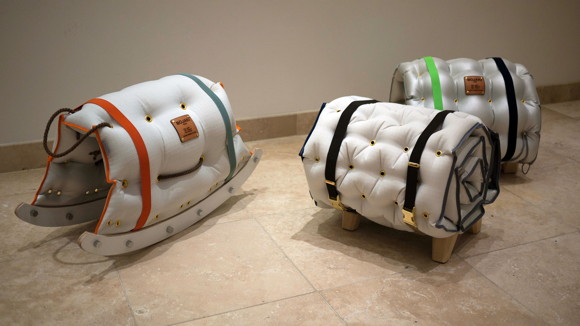
bojaki 2011
grace du prez
Du Prez interweaves hair, hide and other materials to create a raw interpretation of furniture and accessories.
Unexpected injections of colour introduce an almos tribal sense of folklore to her definitely hip idiom.
(Britain) Royal College of Art, England
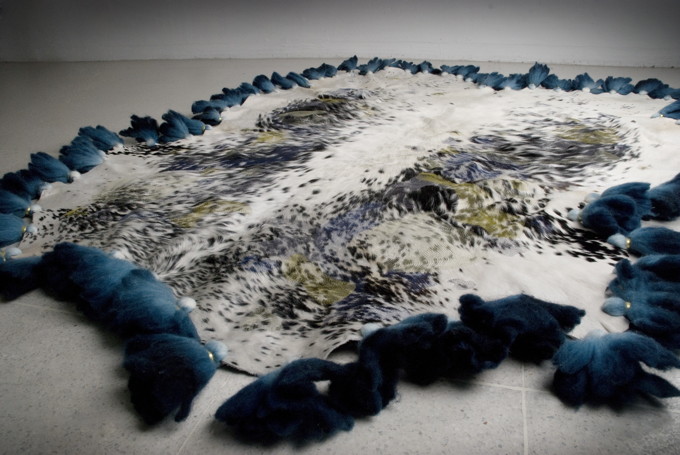
2011-04-18 16:00:18
collette paterson
By developing an innovative technique to fuse latex and wool, Paterson creates organic shapes that sprawl like growing organisms, reefs and seed pods : garlands
of contemporary matter that are coloured in vegetal greens, deep sea darks and coral brights.
(Scotland) Royal College of Art, England
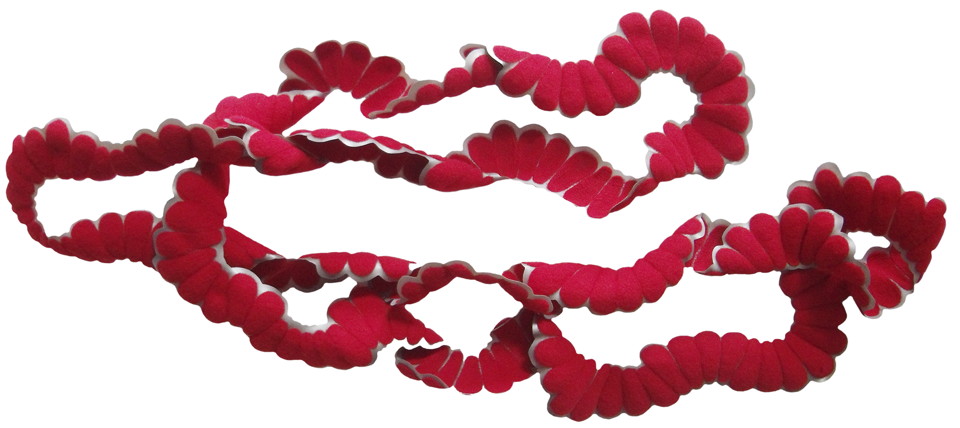
pathways 2011
ella robinson
Inspired by the Brighton coastline on which she grew up, like a true beachcomber, Robinson collects interesting driftwood elements upon which she incorporates brightly-coloured haberdashery to reflect the contemporary urban condition.
Balanced by the wood’s natural presence, her graphic totems and planks are studied compositions of optimistic colour.
(Britain) Royal College of Art, England
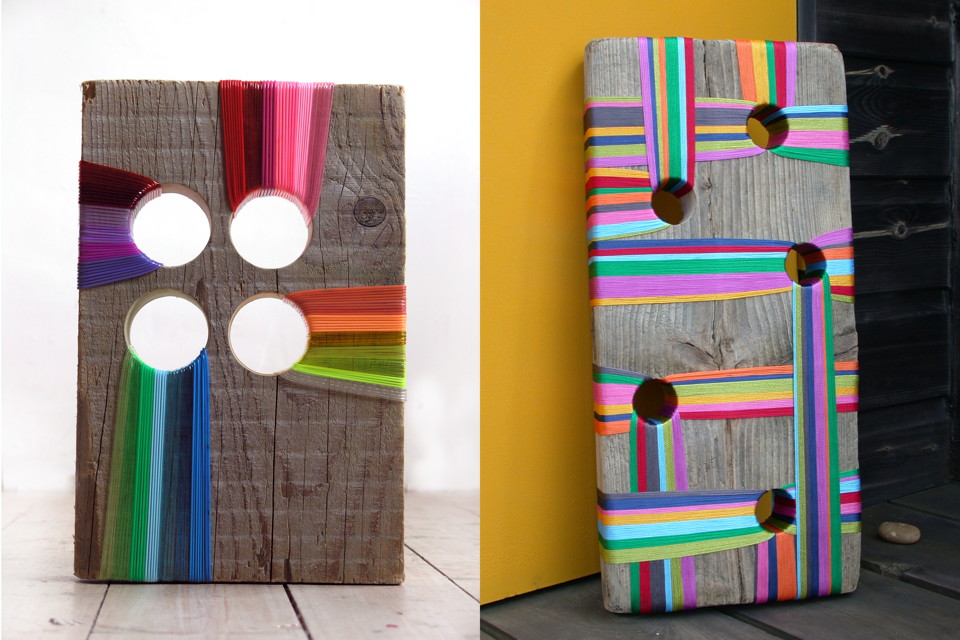 spining turttle
 hugh
jane bowler
Bowler’s designs demonstrate that sustainability and desirability are not incompatible; that sustainable design can be turned into appealing consumer products. She brings longevity to her materials, which come from a London
post-use scrap facility transforming plastics from old bath mats and shower curtains into luxurious, beautiful textile pieces.
(Britain) Royal College of Art, England
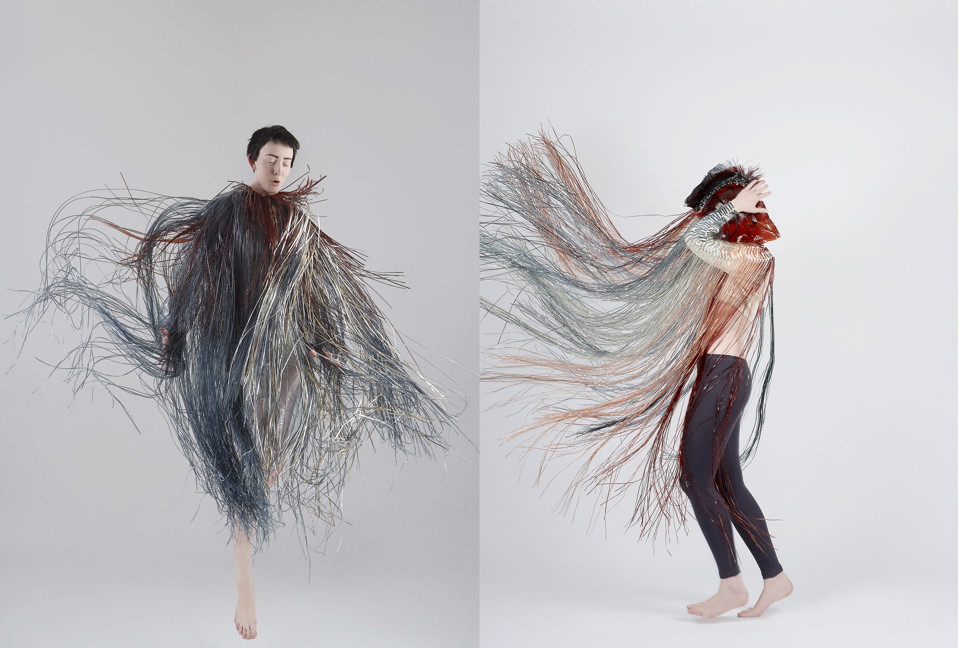
blue fringed raincoat 2010 - photo by joanne warren
randi grønnerød huseby
Investigating unique treatments to materials, craft techniques and the use of
natural ingredients, a Scandinavian sensibility informs this ecologically-minded collection of textiles.
(Norway) Nottingham Trent University, England
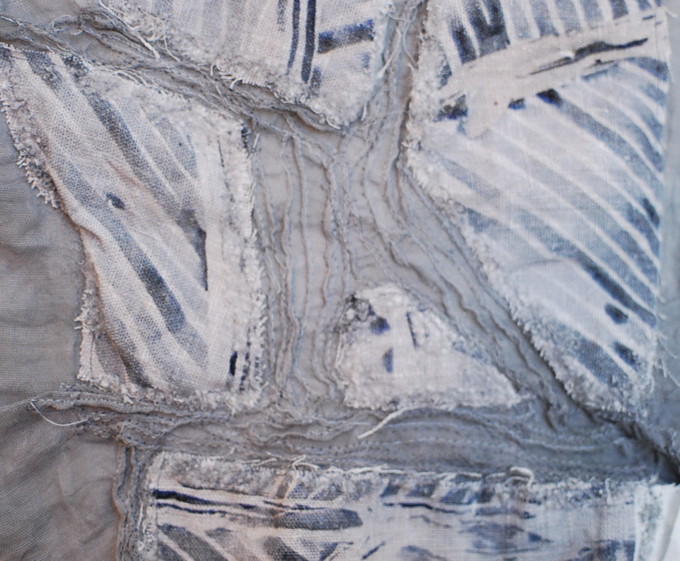
organic structures 2011
banke kuku
The dialogue between a life in Britain and roots in West Africa has resulted in this designer creating an interesting collection of optical weaves.
A vibrant visual language where north meets south, linked to the irin ajo weaving tradition.
(Nigeria / Britain) Central Saint Martins College of Art & Design, England
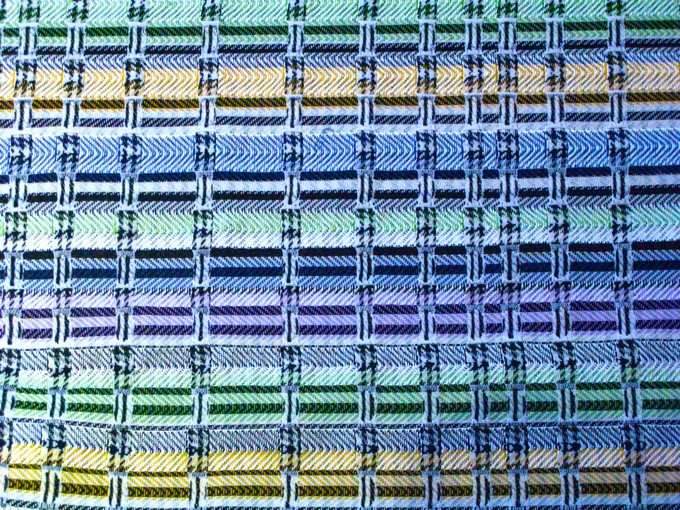
hangings 2010
wendy marchbanks
Navigating a unique terrain where childhood memories merge with surreal stories and sophisticated colour palettes, Marchbanks’ work has evolved from her reflection on childhood and a longing to nurture and cherish her imagination. Her compositions “aim to capture the nostalgic feeling of being told a story as a child,
yet they have no fixed narrative. Instead they work as ingredients, the imagery floats on the page, allowing the viewer to assemble their own story.”
(Britain) Royal College of Art, England
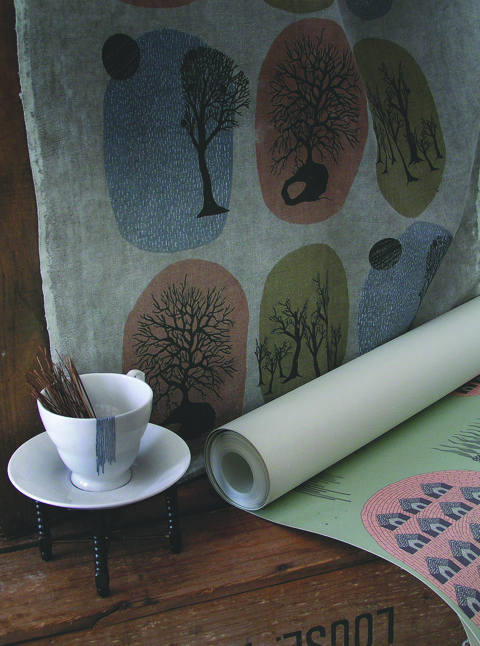
multi tree fabric 2009
marie paysant-le roux
Bridging the frontiers of landscape, memory and culture, Paysant-Le Roux explores the way biology and botany can be translated into poetic textile concepts. Incorporating
craft and even performance, her intimate works are like design haikus that illustrate where biomimicry and the handmade will meet.
(France) Royal College of Art, England
http://mariepaysant-leroux.blogspot.com
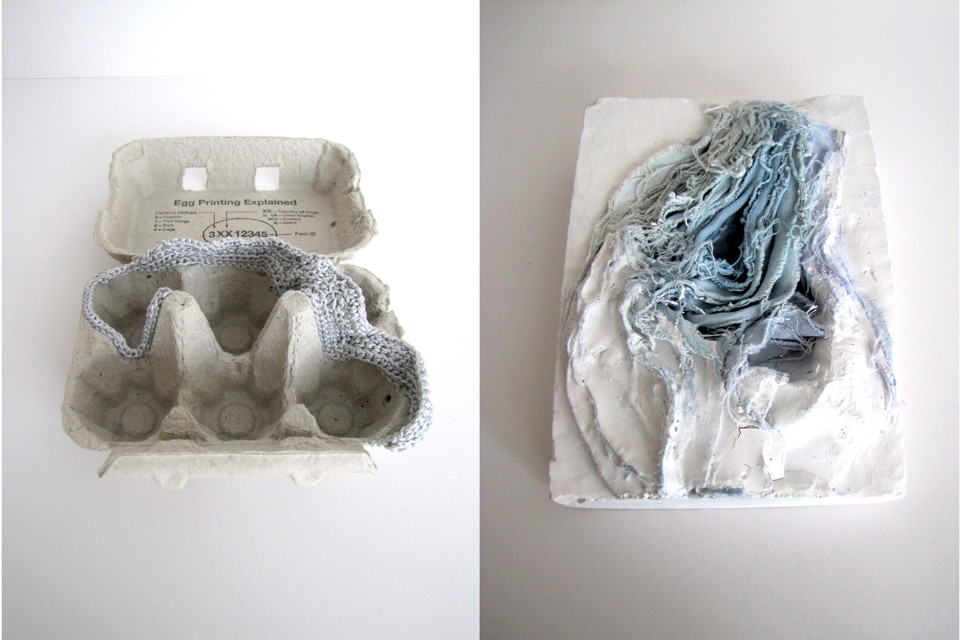 movements blocked in ice 2011
 mountains? 2011
']
2011-05-20 17:20:19