

HANDMADE
all the fruits
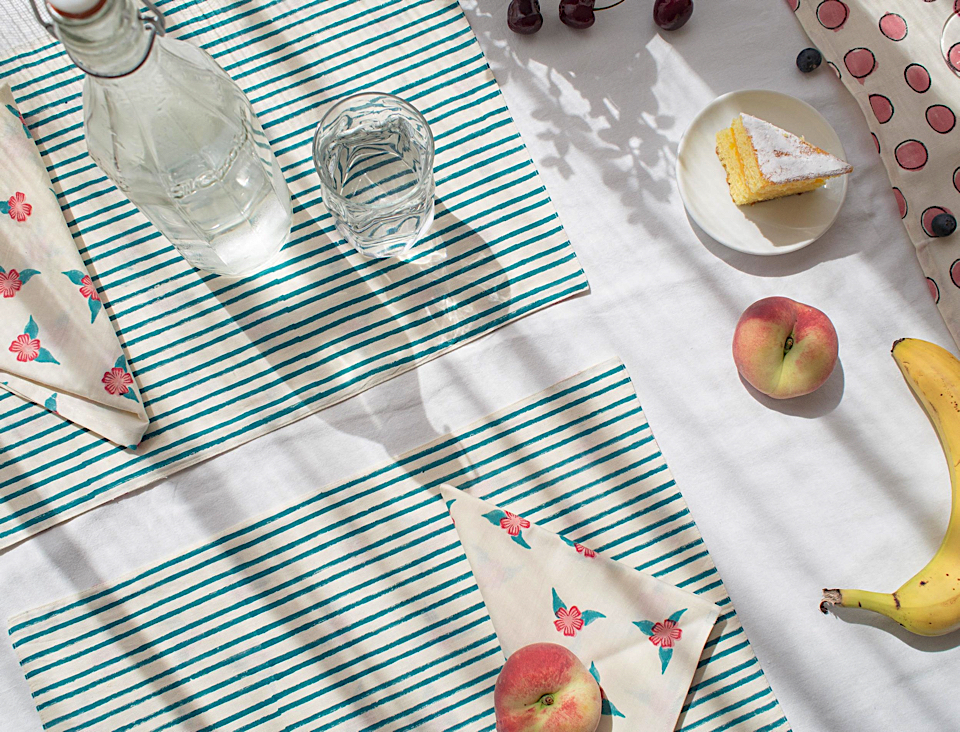
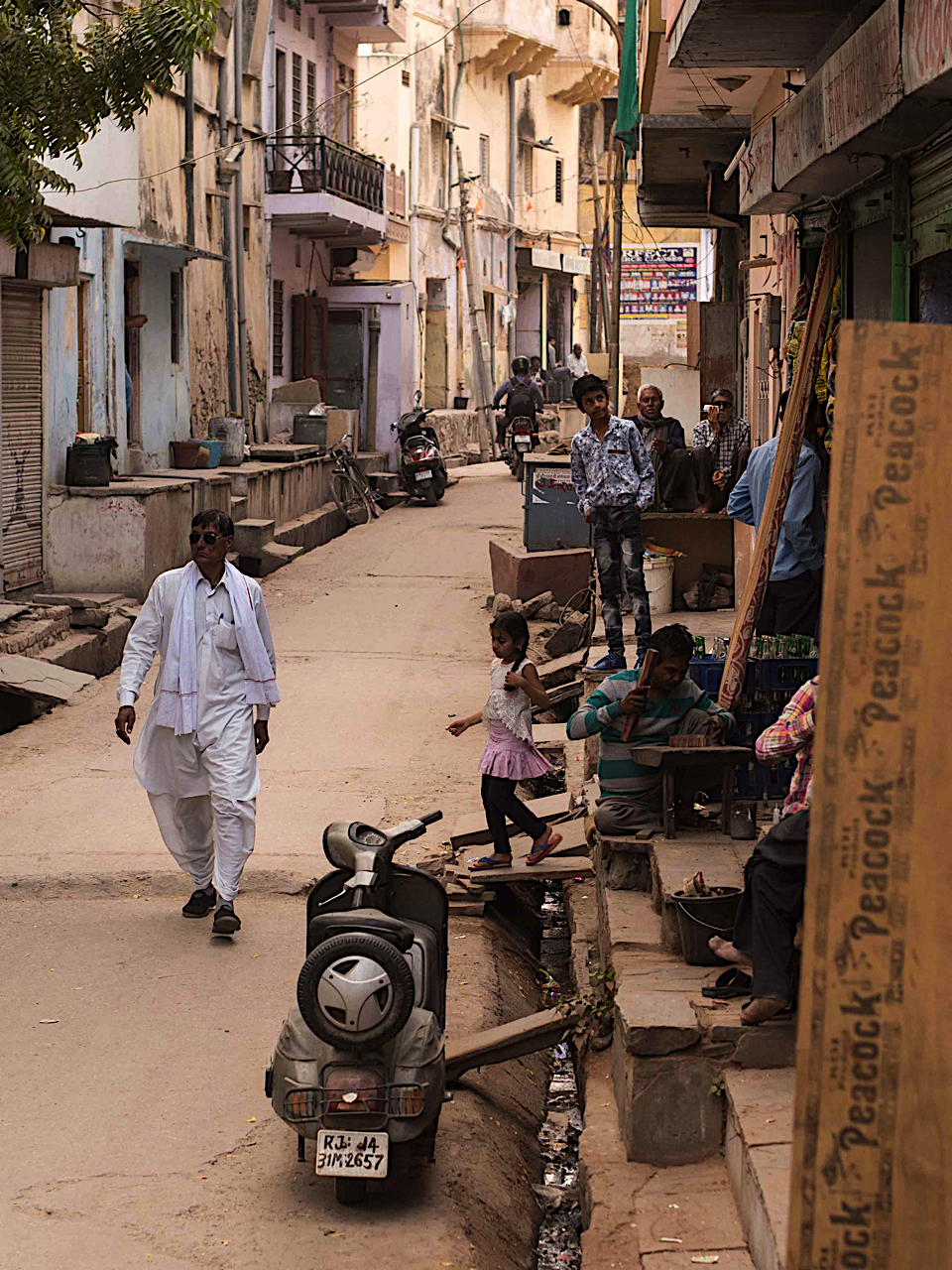
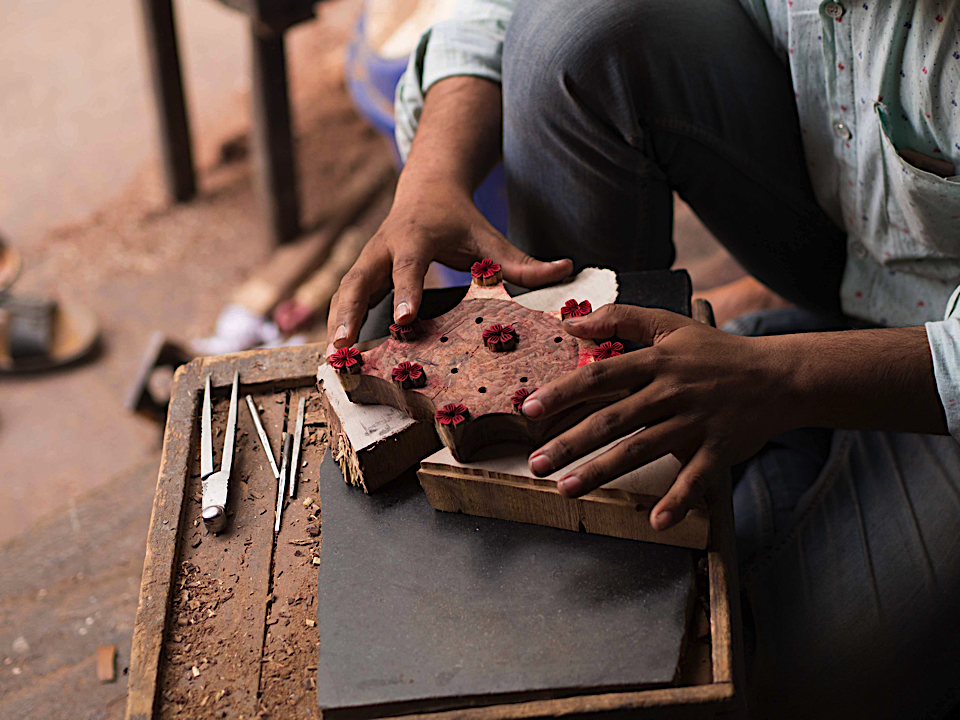
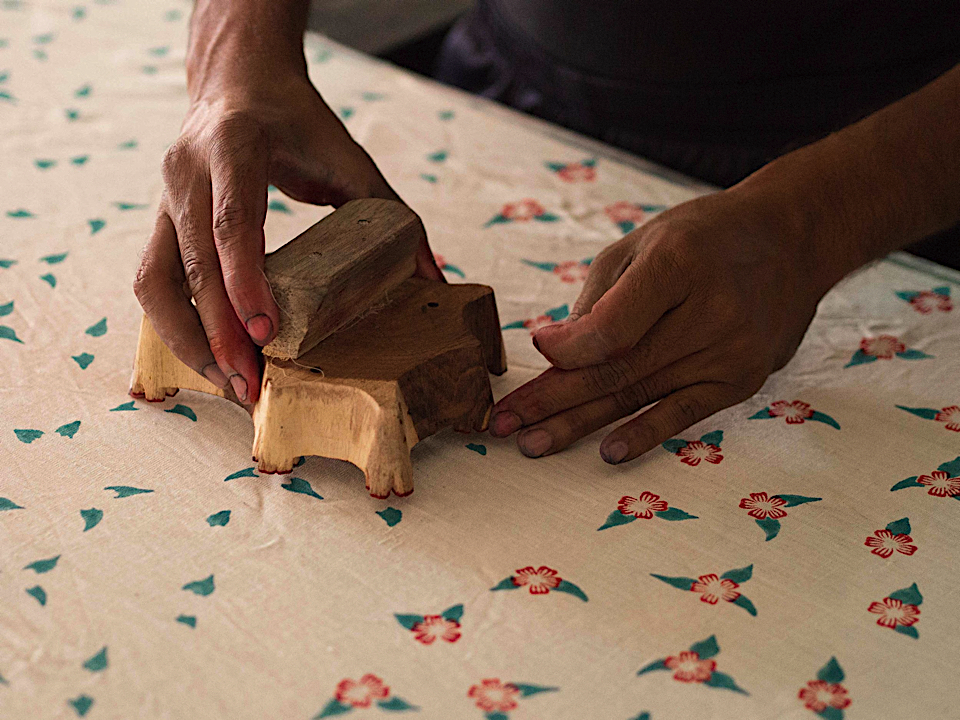
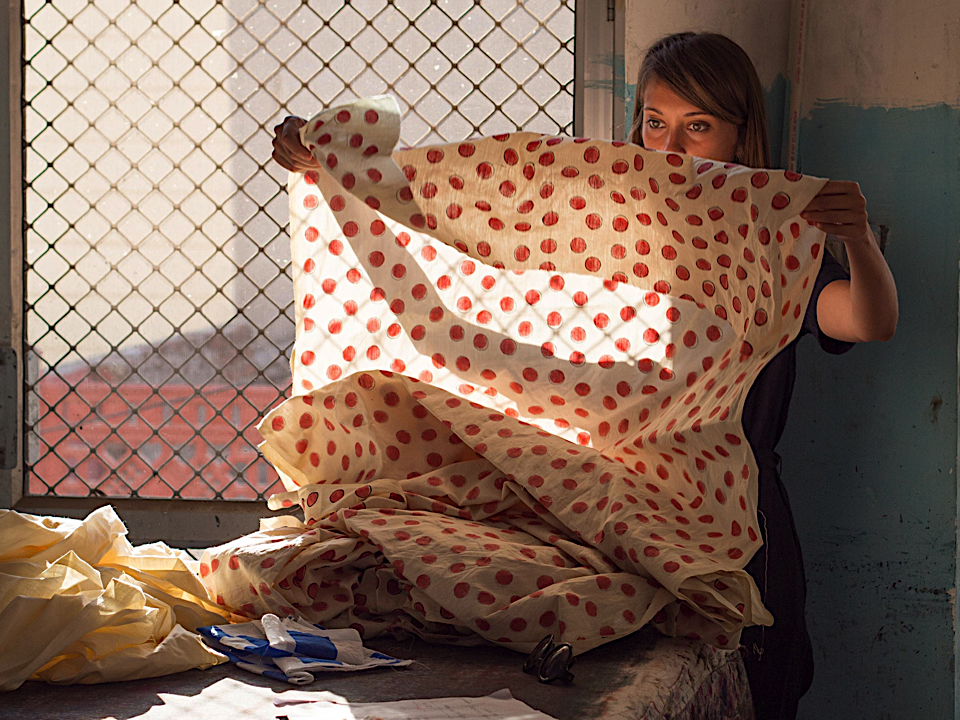
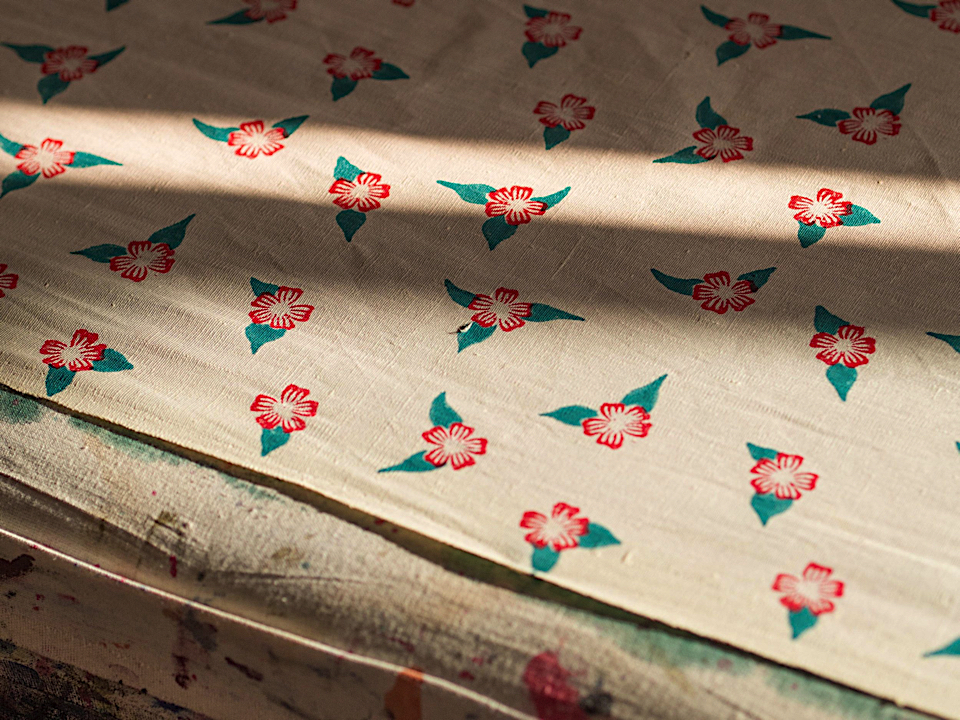
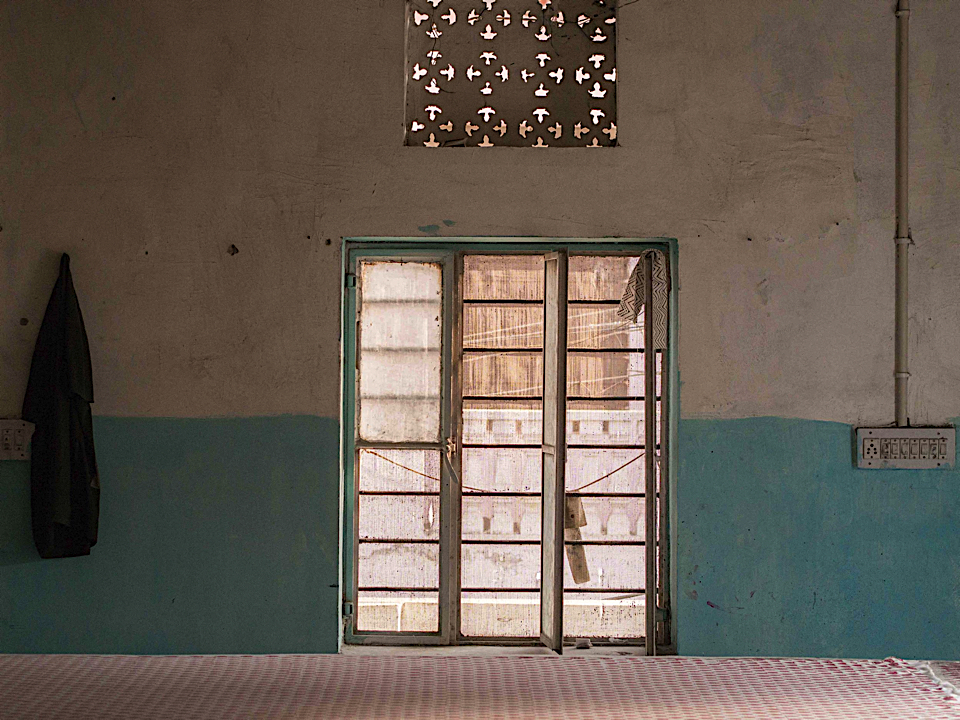
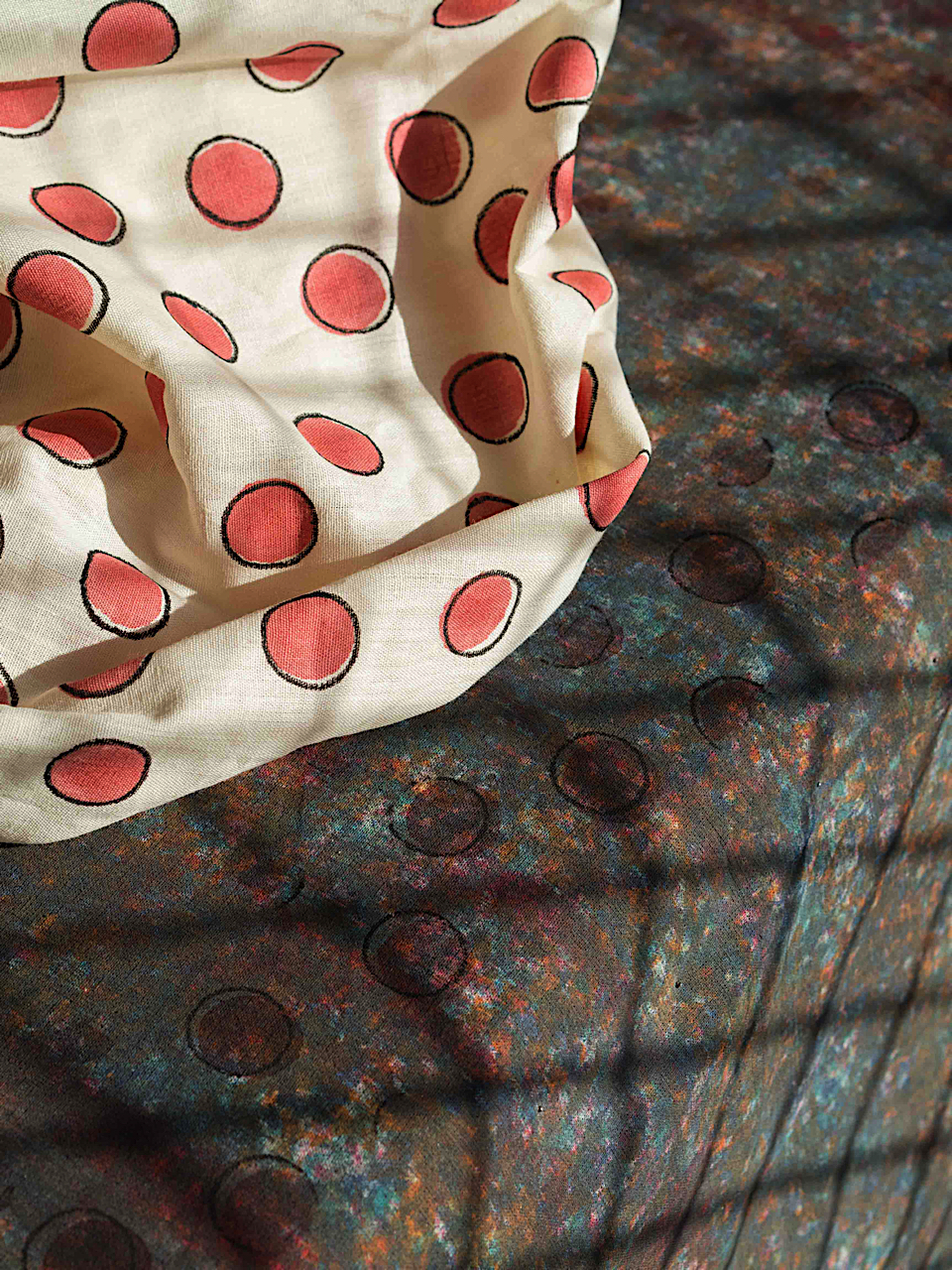
Jessica and Stephen started working together back in 2013, both living in London and working in interior design.The city gave them opportunities to start collaborating on a few decorative and interior design projects. They received a very positive response from these first interior projects with their design studio All The Fruits. Their inspiration comes from a variety of sources, and often change from project to project. At the core of their our work are two things that inspire them the most: people and places. Their recent collection of printed linens have been inspired by traditional art movements in India. Over a period of five months while living and working in Jaipur, India, they ventured into the traditional technique of block printing, discovered incredible fabrics like khadi and fell in love with the vibrancy of our surroundings and the people they met. The collection consists of cushions, drawstring bags, tableware and pouches. The items take advantage of the beauty of block printing and khadi, showing off the textures, prints and colours to the fullest. Khadi is a handwoven organic fabric that can be made out of cotton, silk or wool and we instantly fell in love with it for many reasons. It’s the worlds most sustainable and eco-friendly fabric as it does not require any electrical support or fossil fuels. It supports millions of people living in rural India as artisans and micro-level weavers, still dependent on traditional skills and techniques to make their living through handmade products. The process of creating Khadi is very slow and delicate. In fact, spinning the yarn used for Khadi is a completely manual process, done on a spinning wheel called a charkha. The irregularities in the weave give it a beautiful texture full of character and charm. It is a fabric full of history, with its production encouraged by Mahatma Gandhi as a way to promote Indian self-reliance and resilience in the weaving industry. Every product is unique due to a manual printing method of Block Printing. The master carver starts from a drawing of our design on paper, traces it onto a Rosewood block and carves out the pattern by hand. The block represents the single repeat, which is then stamped in rows across the fabric creating the seamless pattern. Each colour in the design has to be carved into a separate block, with each colour being printed separately. Once the blocks are complete, the master printer mixes the colours which will be used for printing and pours them into wooden trays. Each colour is printed individually onto the fabric; the pattern must be stamped repeatedly across the fabric, with the printer doing his best to align each print by eye. To help with the block alignment, a guide marker is carved onto the edge of each block. The subtle gaps and overlaps between prints are a beautiful reminder of the hand work and give block printing it’s characteristic look. This is what makes this printing method so beautiful.
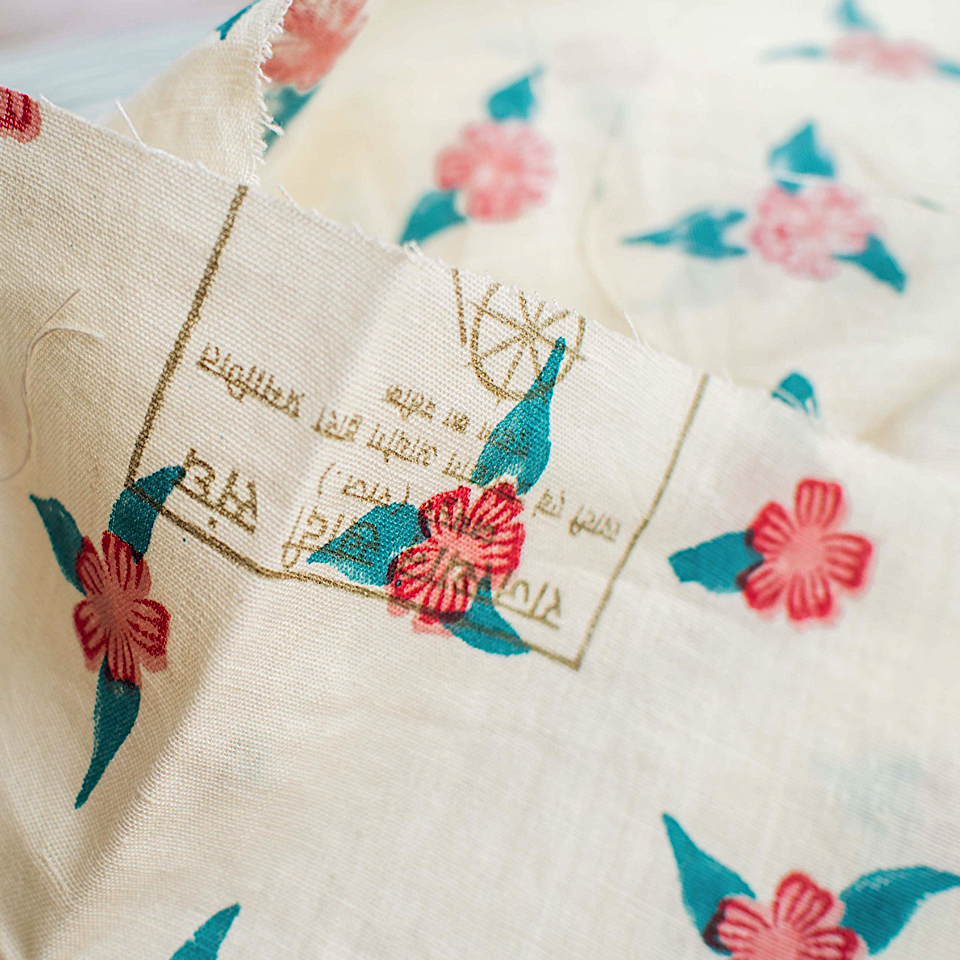 Cécile poignant | Trend Tablet
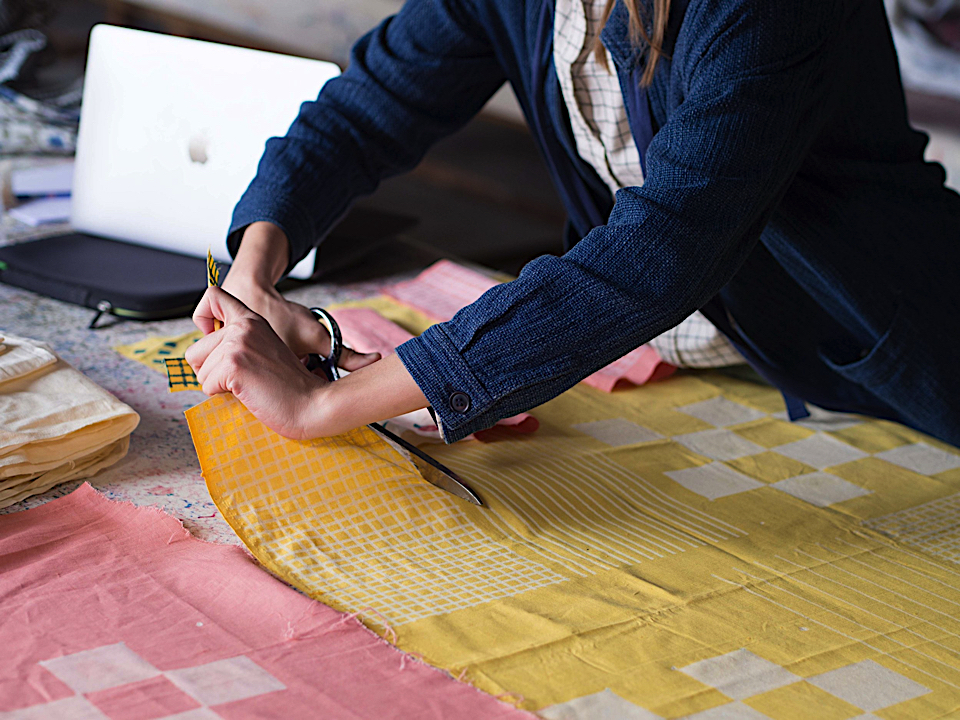
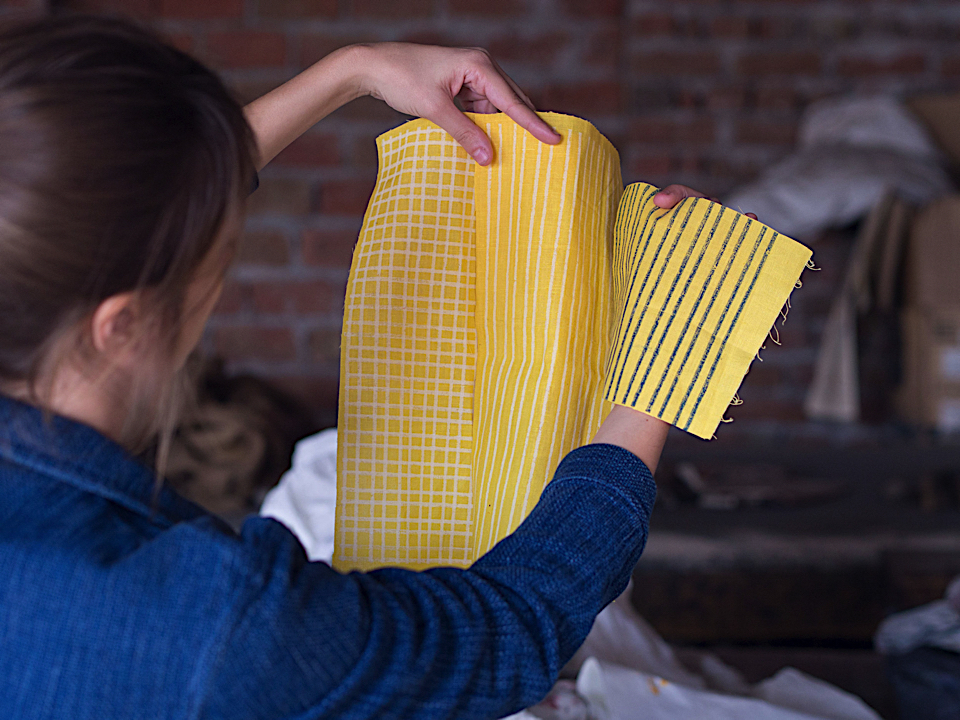
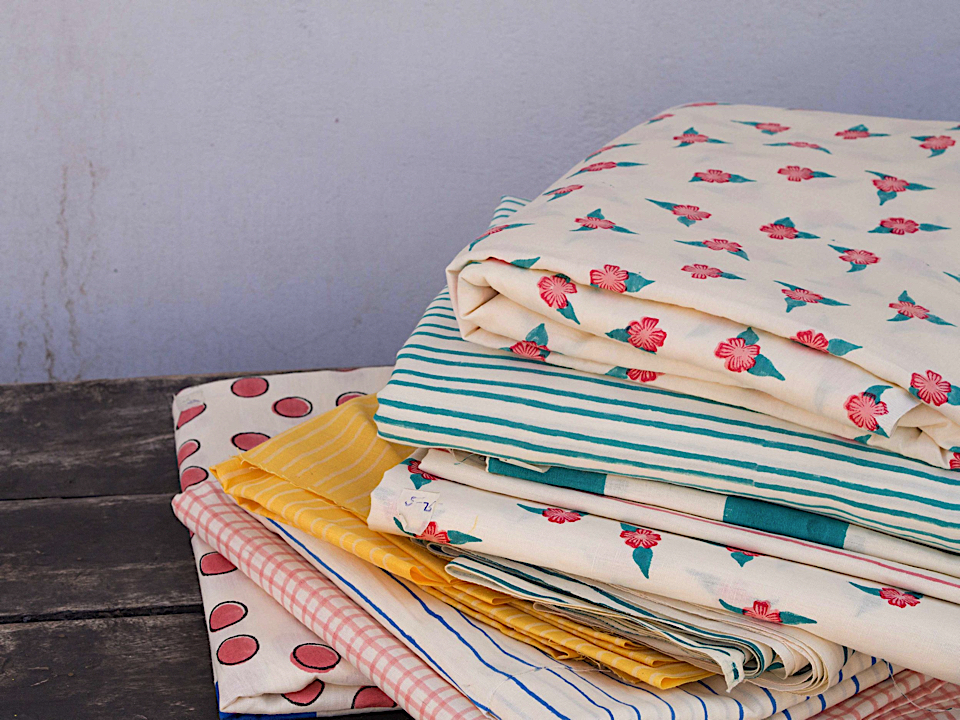
cultures indigo
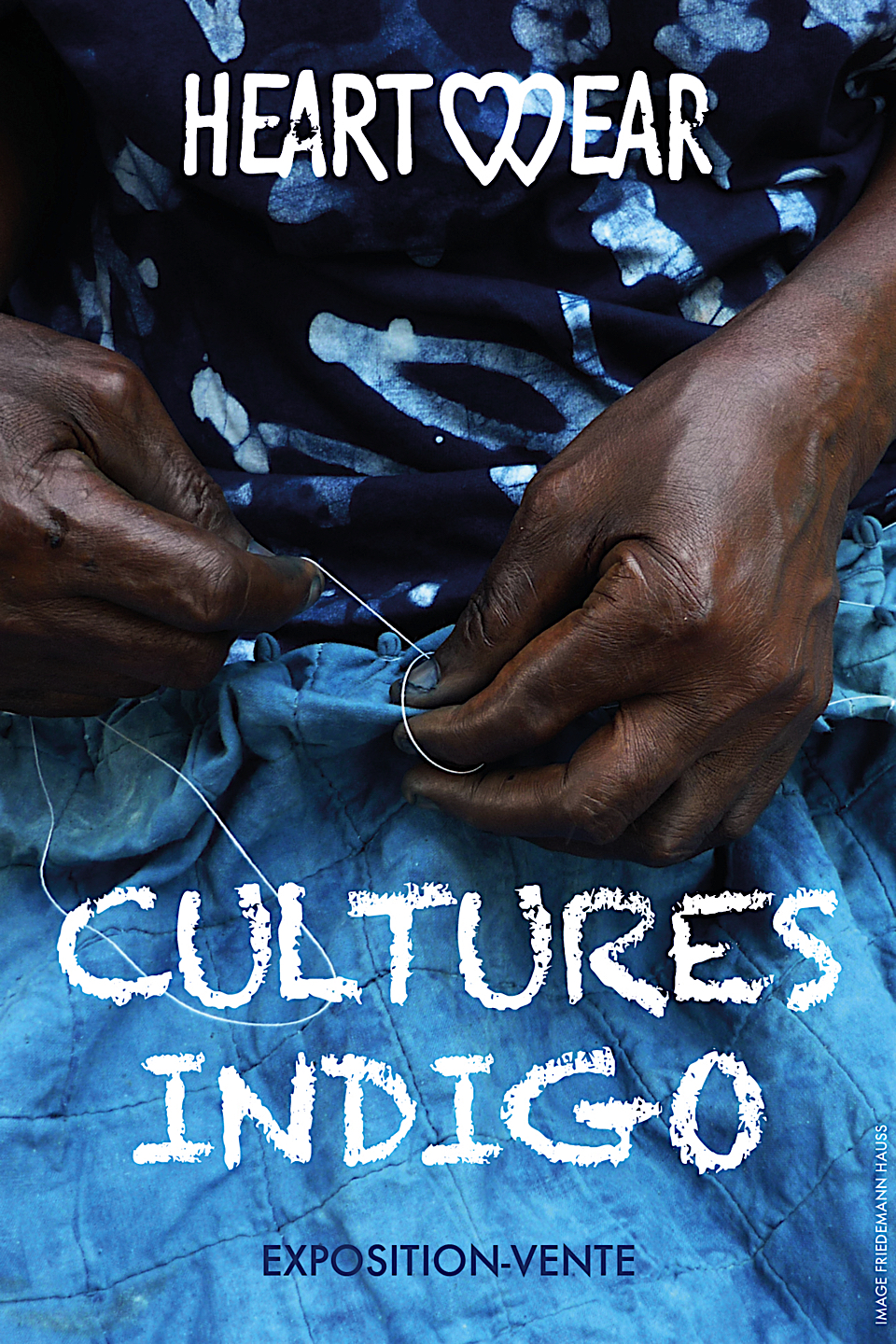
Heartwear is a non-for-profit and self-financed association, founded in 1993 by a group of textile designers and stylists during a trip to West Africa.
Heartwear's goal is to sustain handcraft techniques and to participate in the transmission of their know-how. We collaborate with different countries yet mainly with Benin and India.
Members of the association are all benevolent and have expertise and experience in art, fashion and communication. Collaborating with the same artisans since the beginning of the adventure, we share creativity and skills to conceive, produce and distribute fashion and home collections.
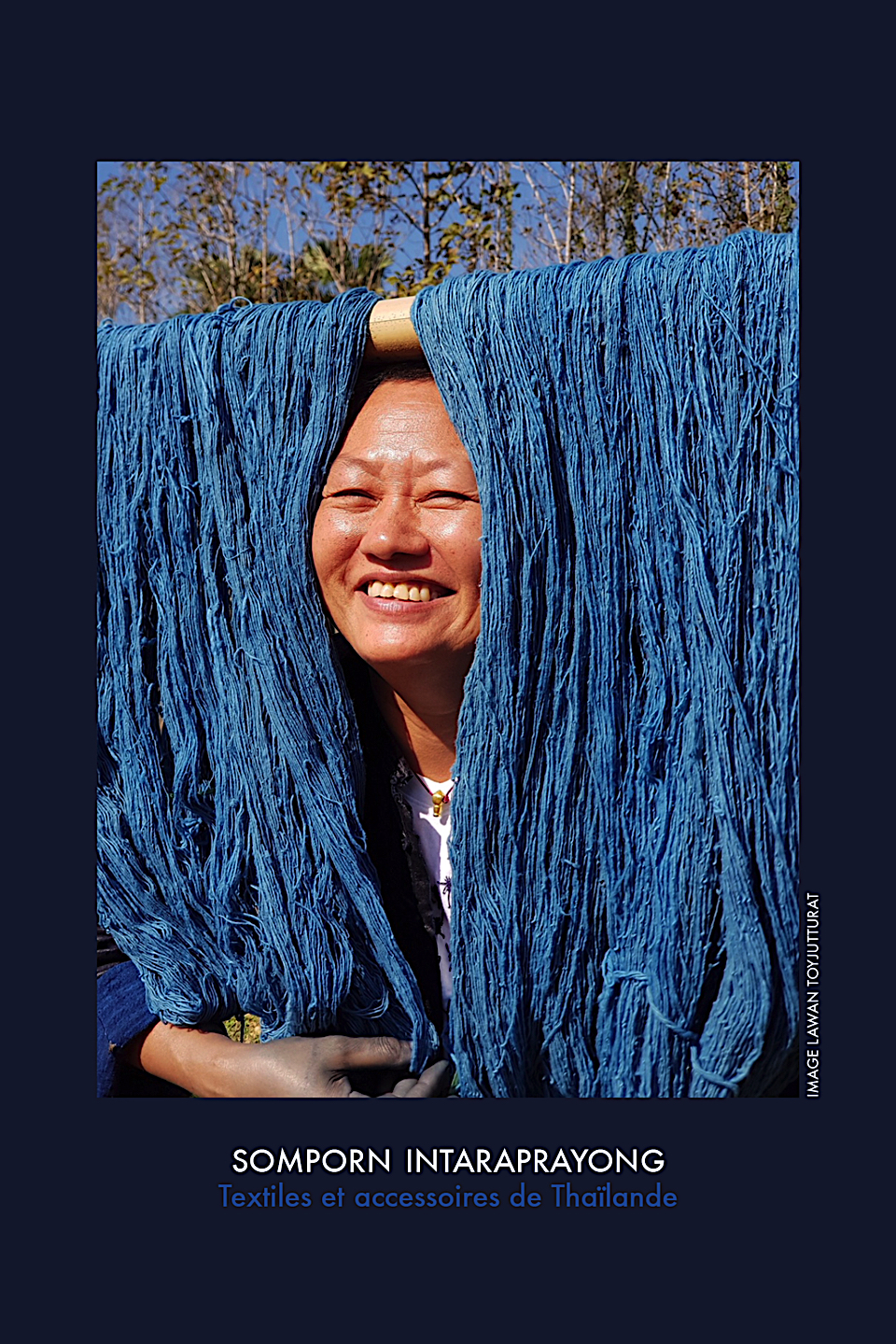
For 2018 Paris pop up exhibition, CULTURES INDIGO, Heartwear is pleased to welcome Somporn Intaraprayong from Thailand where she collaborates with local artisans on natural dyes and fibres including indigo and mud. Her wish is to sustain weaving and dying techniques in South East Asia. She considers it as a life achievement and is now developing her activities internationally since 10 years. For Somporn, handcraft work is happiness and she looks forward to share this happiness with people who will wear her clothes. Furthermore, Somporn and her associates reverse part of their profit to schools, helping local children in her hometown.
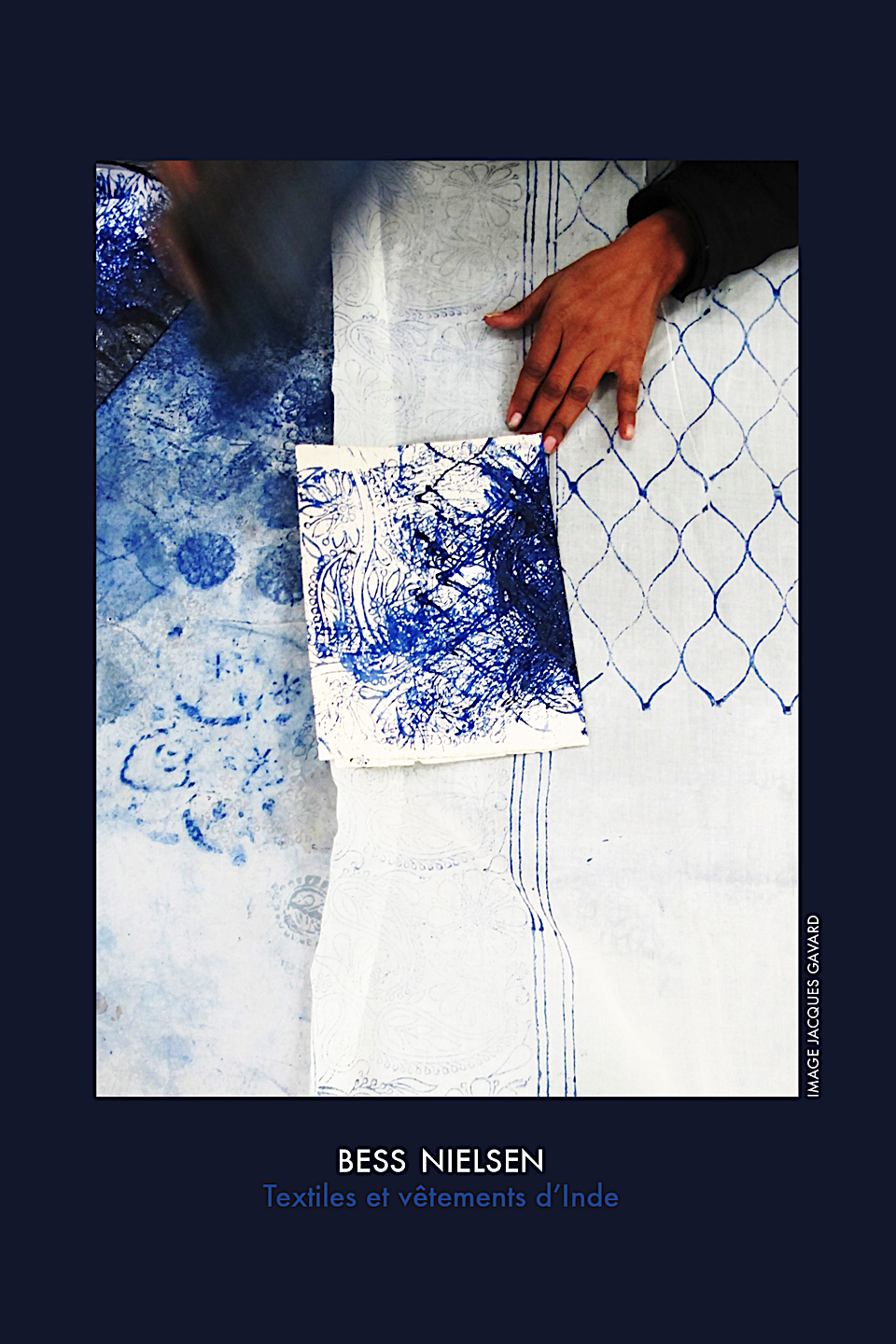
Heartwear is also pleased to welcome a special collection created by Bess Nielsen, member of Heartwear and founder of Epice and Khadi and Co, renown for her work with master khadi weavers. For this capsule collection, Bess Nielsen used wonderful khadi textiles in cotton, linen and silk to create light yet textured pieces for men and women in soft colours ranging from an enlightened white to a warm gold, a tendre indigo blue, a pale grey and deep yet mild charcoal for an 'Indian summer' touch.
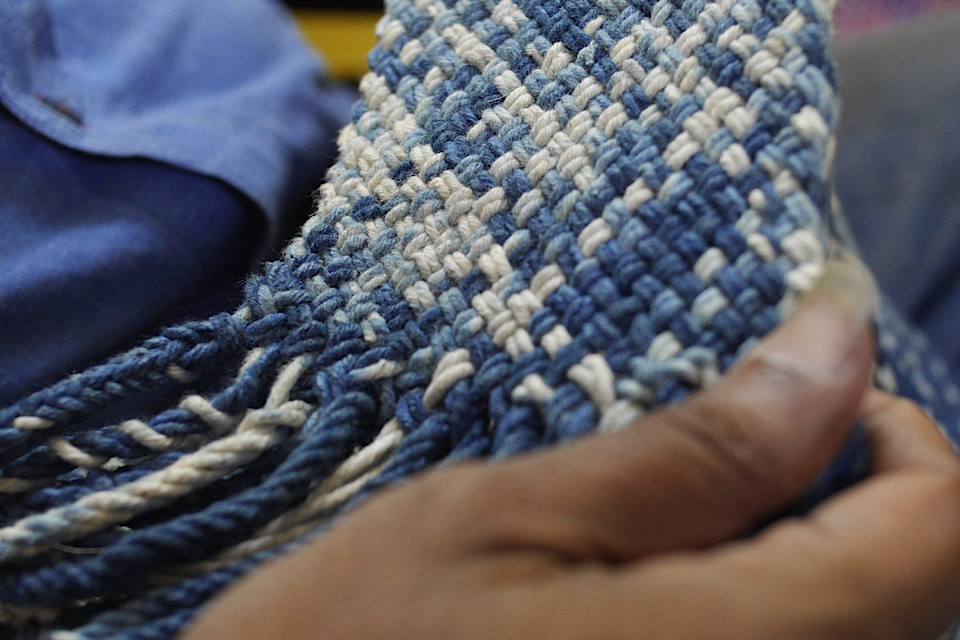
Indigo: indigo is all these different green plants which create the same blue. This know how is ancient and exists all over our planet. Each continent has, or had, its own indigo traditions and local plants.
Heartwear through CULTURES INDIGO wishes to honour these traditions and to share them with you.
Sophie Carlier
Pop Up Exhibition
Du samedi 26 mai au dimanche 3 juin 2018
De 11h à 19h samedi et dimanche
De 13h à 19h en semaine
30 boulevard Saint Jacques
75014 Paris
'tiane tenui
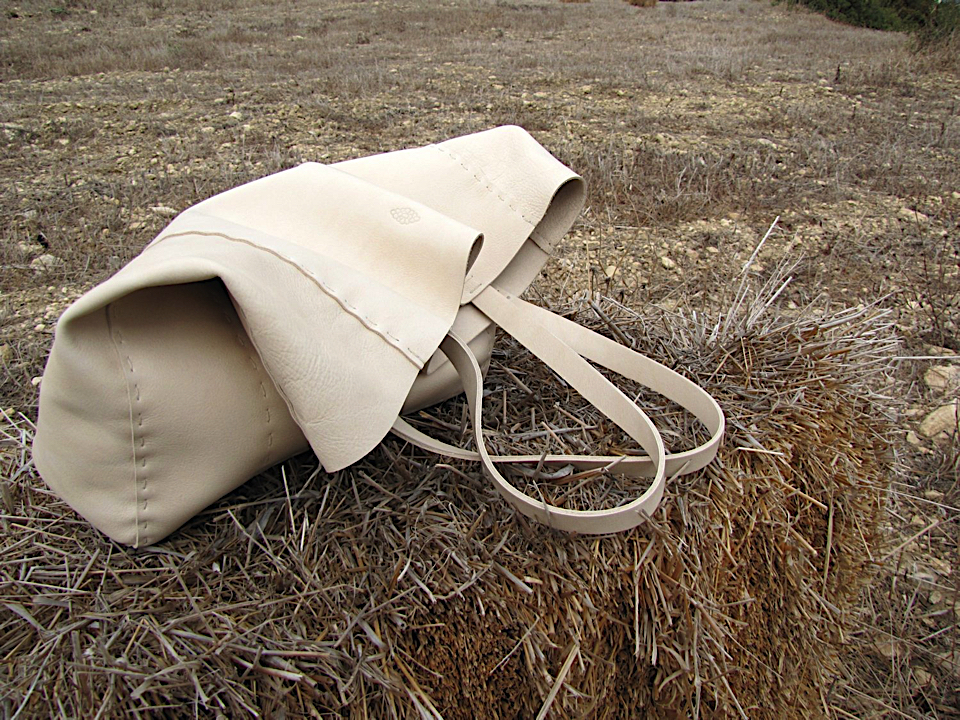 photo by Christiane Smit
'Tiane Tenui is a bag brand that recognizes the importance of longevity, the nuances of elegance and the power of our feelings around purchasing something so special, and individual. There are only ever two bags made from the same materials and colour, ensuring an authentic bespoke experience for each client.
Christiane Smit - the mind and hand behind 'Tiane Tenui - believes that each bag should become a part of her clients daily lives, telling a personal story through the marks and impressions left over time. Before taking an order, she sends each client small leather samples so that they may experience the feeling and actual color of the leather, thus becoming a part of the creation process. She also believes in the emotional connection her clients have with their bag — the way you feel when you carry it throughout your day, revealing in it’s handmade nature, an appreciation for the energy put into this special piece. Hard to find elsewhere, she believes in the gentle notion that sometimes the best items involve some searching.
The technique of hand stitching she is using is borrowed from the shoe and saddle making trades. This is really at the core of what defines her craft. As Christiane explained : "Each stitch is formed by hand with nothing more than an awl, one needle and a length of waxed linen. Very few companies can invest the time necessary to hand stitch their items, but the strength and resilience of hand stitching far exceeds the machine made equivalent."
Trend Tablet caught up with Christiane for an interview.
When did this new adventure started?
While I was occupied in former occupations I discovered my talent in creating bags and at the same time I was exploring my style. Just before I came to Greece, I created my first hand stitched leather bag. Since I moved to Paros, taking Art History classes, I developed through working with leather my technique in hand stitching. I am working and living between Amsterdam and the island of Paros. As I need very much both, the energy of the city and culture and the nature inspiration of the island... also my company is based in the Netherlands.
What is your motto ?
It was my love for soft though strong colors, structures of fine textiles, simple shapes, quality and unique and rare pieces of art, clothes and objects of nature and my passion for creation that through my former experiences and education gave life to a dream. I create customized bags that correspond to my standards for "Refined Simplicity" and high quality. That highlights femininity and serve the needs of contemporary women. The idea underlying is uniqueness through customizing, every woman is unique!
How to do you create your bags ?
I work by listening to my heart and selecting colors of leathers listening to my feelings. Creating my own trend but classic and durable... choosing colors and qualities that lasts and which are not subjected by trends! Buying qualities from Spain, Italy and Portugal and Holland. Advising the client by choosing the model and color living up to her needs... sometimes corresponding up to 30 mails!
How do you see your future?
Loving what I'm doing and being inspired by living in the Aegean sea, people and many more... enjoying always my passion for hand stitching... craftsmanship and creating...
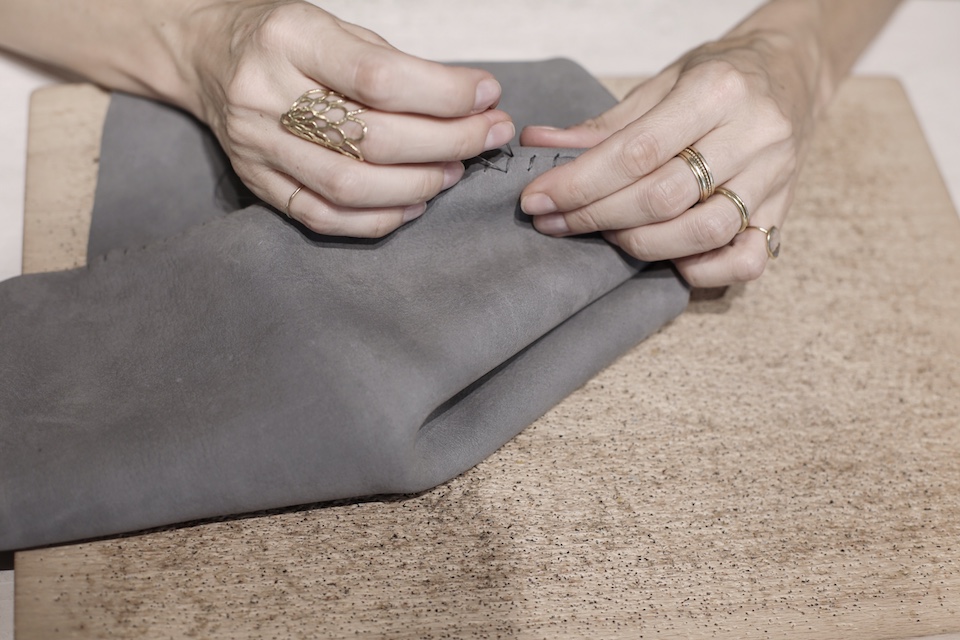 photo by Olivia Ghalioung
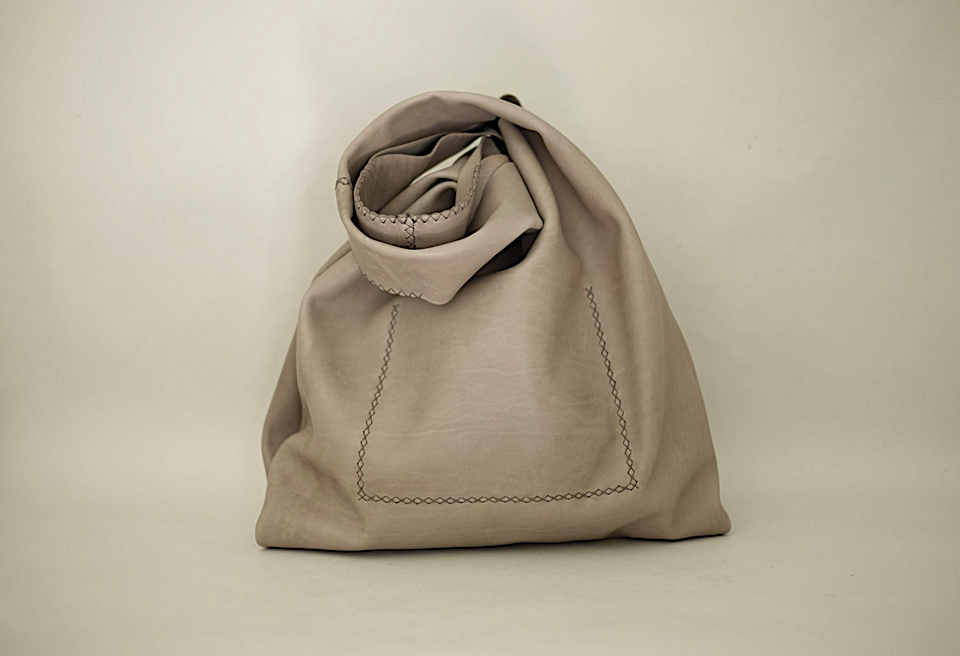 photo by Christiane Smit
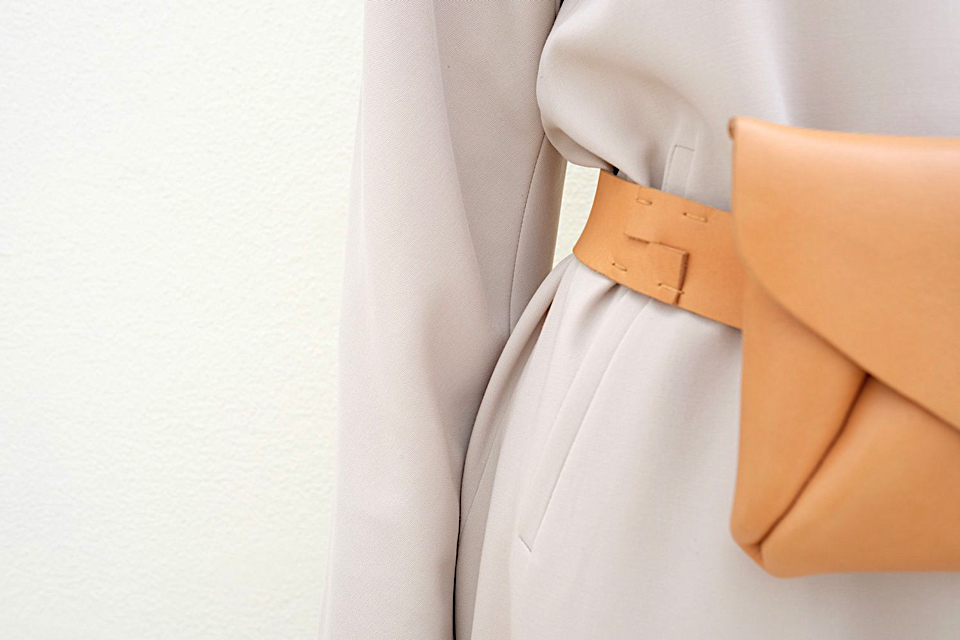 photo by Christiane Smit
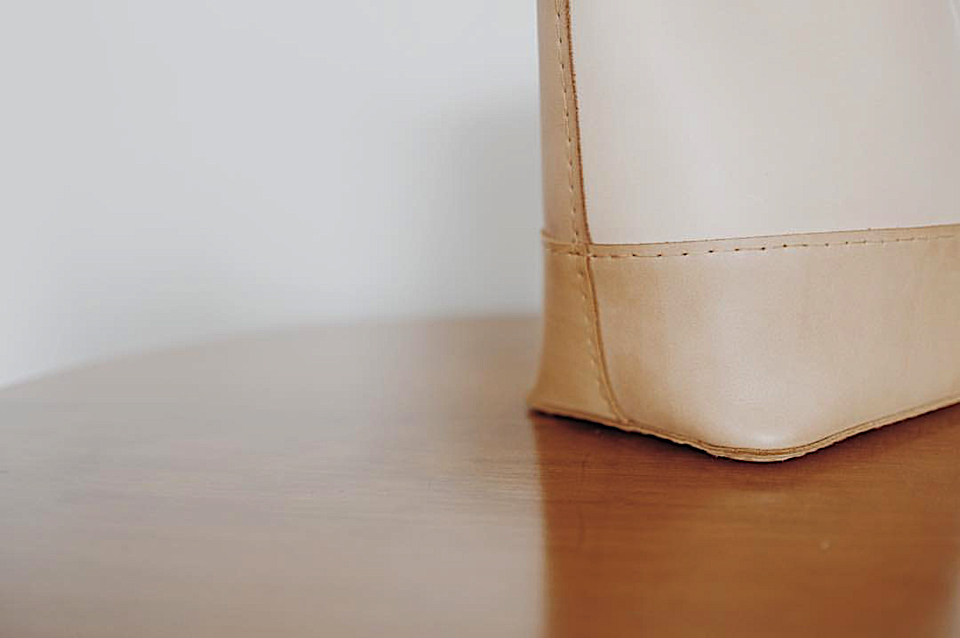 photo by Christiane Smit
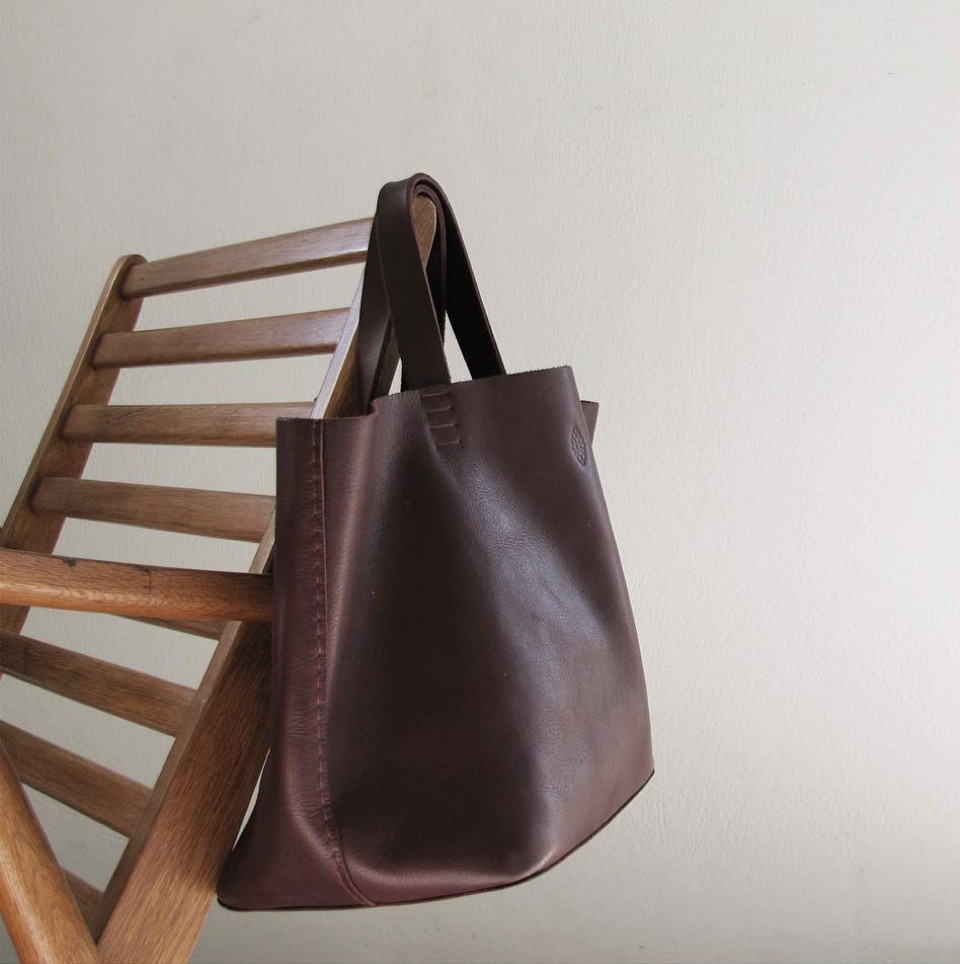 photo by Christiane Smit
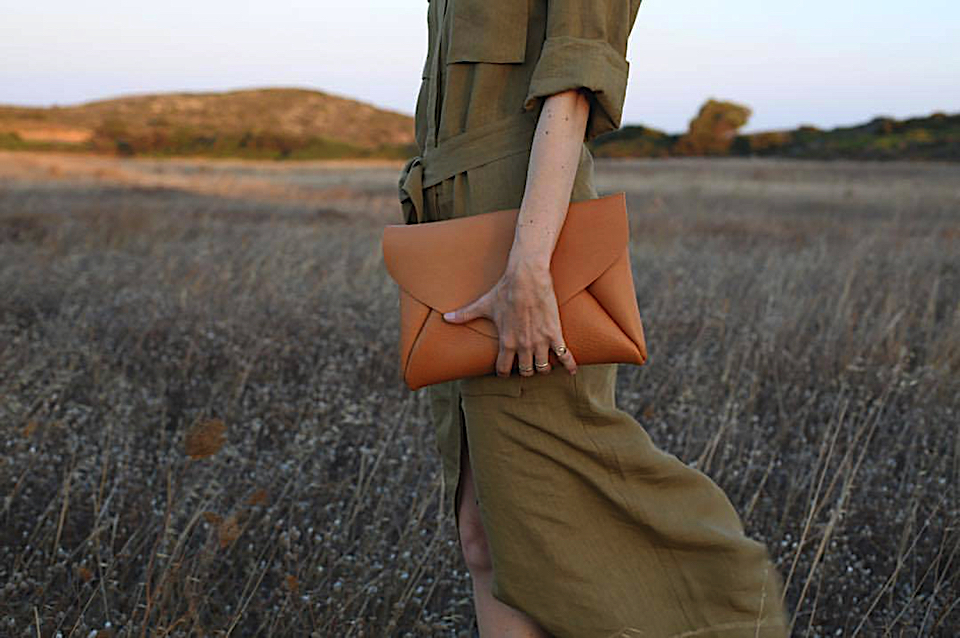 photo by Olivia Ghalioung
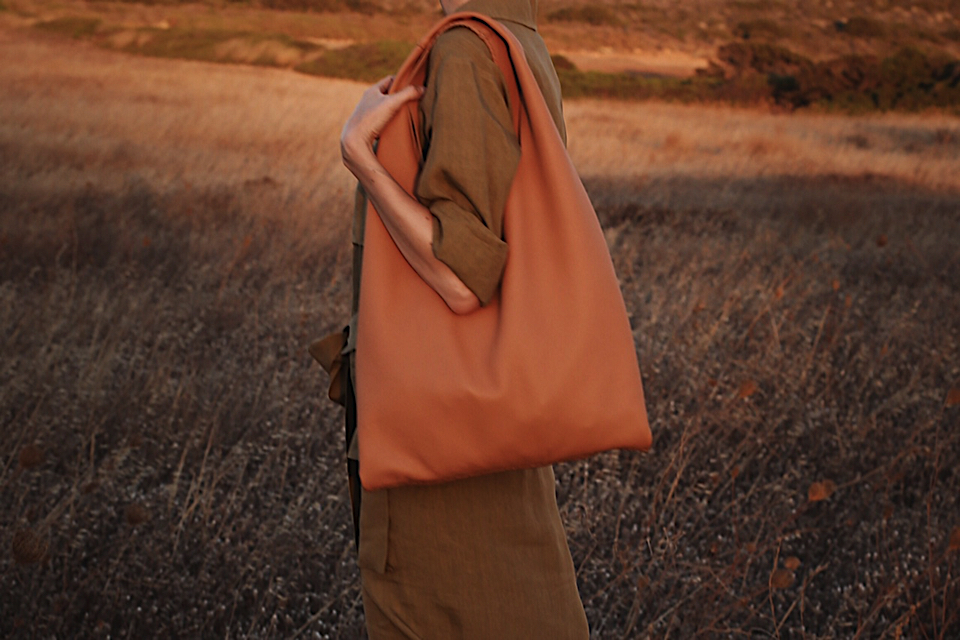 photo by Olivia Ghalioung
santa fe folk art market
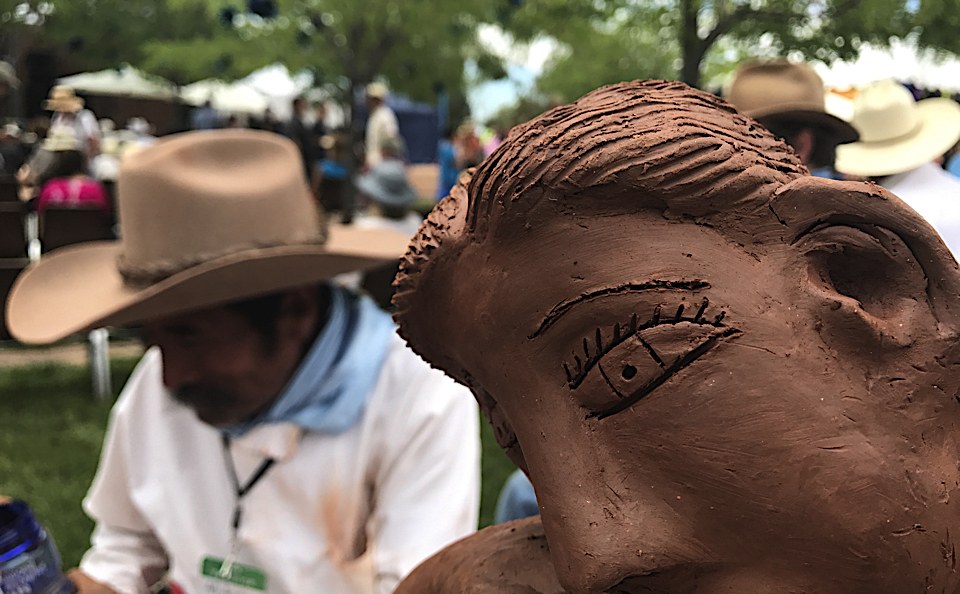 Jose Garcia Antonio, blind master potter from Mexico and one of his seductive clay mermaids, made onsite at the market
There are incredible markets around the world and then there is the International Folk Art Market in Santa Fe, New Mexico, an event that has been happening every July in Museum Hill since 2004. Named the face of peace and the number one arts festival in the US by USA Today, this is the biggest global gathering of its kind. This year, 25,000 people from all over the world came, including 2,000 volunteers, thousands of travelers, shoppers, collectors and, most importantly, 160 folk artists from 53 countries.
The market starts with a parade of the artists welcomed by the city of Santa Fe as they gather in the main plaza welcomed by a Cuban live band. Li Edelkoort, the honorary chair for 2017 and Keith Recker, the creative director, read the names of each country and cried when Syria was called. “This market is humanity, humanity at its core” said Li to an audience of culture bearers who blur borders with an eye-dazzling convergence of handmade forms, textures, and designs—textiles, jewelry, beadwork, basketry, wood carvings, ceramics, rugs, glass and metal work, sculpture, mixed media, toys, and more. “In these turbulent times, it’s an amazing experience to be part of something based on beauty and respect. Face to face with artists from over 50 countries, there to explain what they do, to invite you to know something about their lives and traditions — my faith in what we can accomplish as a species is restored. As one of the 154 artists who participated this year said, “The market is everything that’s right with the world” affirmed Keith Recker, IFAA Creative Director and board member.
Kavita Parmar from IOU Project was a first time participant in Innovation Inspiration, a special exhibition area featuring works by 30 artists who are reinterpreting time-honored materials and techniques into innovative works that express new meaning in the modern age. “I have had the opportunity as a designer to present my work in many shows and fairs around the globe including fashion capitals like Paris, New York, Florence, Milan etc. but I have never encountered such a strong sense of community and an incredibly beautiful empathy within the artisans, the clients and the many staff and volunteers of the IFAA. The client response I have had even after coming back from the show has reinforced my belief that the customer is looking for authenticity and a direct dialogue with the craftsperson and this is one of the answers to the future of a true luxury shopping experience. Carla Fernandez, from Mexico and also a first time participant, said that she was very surprised to encounter a spiritual experience sort of a boot camp of the positive, the possible and the future where sharing is the currency. She has been to many shows around the world just selling her products but this is the only time where she has felt a real support, a real sense of community. The show reaffirmed her belief that the future is handmade, that this is a possible and relevant future that can be a sustainable thriving business. She also said she encountered the real America, one that favors diversity and culture and a very different one from the one in the news.
Porfirio Gutierrez from Oaxaca who participated in 2013 and 2017 says this is a unique show because it caters to people who know and appreciate folk art. To be accepted means to receive a special recognition and be the beneficiary of all the knowledge and care by a pull of top specialists in different areas such as branding, entrepreneurship, marketing etc. Porfirio was very proud to be chosen as a mentor this year, helping first time artisans to get around.
Somporn Intaraprayong from Thailand, represented by Chinalai, has participated 8 times at the market. Her booth is the first stop of any serious textile collector and one of the first to sell out. This year she was invited as a panelist where she spoke from the heart about her community of seamstresses and sewers who use stitches to tell stories of the rice fields and their daily lives. She includes everyone who needs and wants to work, they all have a chance and get the most important teaching of all: there is also beauty in imperfection, beauty in every process, beauty in every stitch.
Olga Reiche from Guatemala has been to the market 8 times representing pik’bil textiles from the Queckchi ethnic group of Coban. These lace type textiles were nearly extinct with all the Chinese imports. Olga, the daughter of a German and an indigenous woman from Coban, remembers visiting her grandmother and being mesmerized by her silver jewelry and intricate white lace dress made using one thread hand spun cotton, back strap loom and white on white. Eight years ago, Olga saw the market as the perfect place to present to the world this technique and to use this as an “excuse” to rescue the knowledge and convince the artisans that there is a market that appreciates their heritage. “I have the highest respect for the show, I know I will be surrounded by the best of the best, all chosen carefully according to principles of ethics, respect, tradition, heritage and culture. There is no place in the world where artisans are respected and honored like in Santa Fe”. Olga travels to the market with Amalia Gue, a weaver from a remote village who at 36 has 6 children, one of them born during the market four years ago to everybody’s surprise, including Olga’s. Fe Francis is the name of Amalia’s baby, named after the patron of the city and the market. Indeed, this is not a market, this is a miracle, as one of the slogans claims.
The Santa Fe Folk Art Market is a community of ideals around sustainability, entrepreneurship, empowerment, diversity, well being and cultural preservation. Artists go home with 90 per cent of the sales. This impact is especially great for disenfranchised women and artists from developing countries, where artisan work is second only to agriculture and daily income averages less than $3.10 per day. “For both consumers and artists, the most positive path to the future is handmade.” Affirms Keith Recker. “Seeing these cultural treasures and meeting the artists creates a connectivity that stirs the heart, opens the mind, and invites us to speak a single language,” says Judith Espinar, a co-founder of the Market. “Through folk art, hope grows and understanding spreads across the world.”
Marcella Echavarria
Marcella Echavarria is a Colombian-born, Mexico City based lifestyle specialist. She collaborates with designers and artisans around the world developing links that connect local knowledge with global trends. Her specialty is branding luxury and sustainability in a way that preserves cultures and traditions.
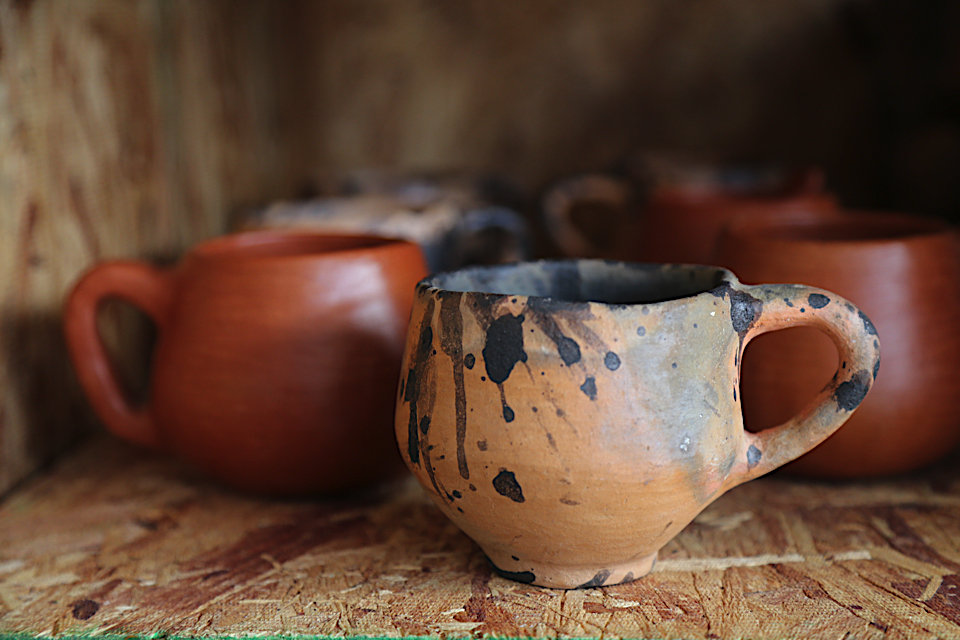 Collectivo 1050 Grados, a collective of Mexican potters, makes modern forms using traditional methods and finishes.
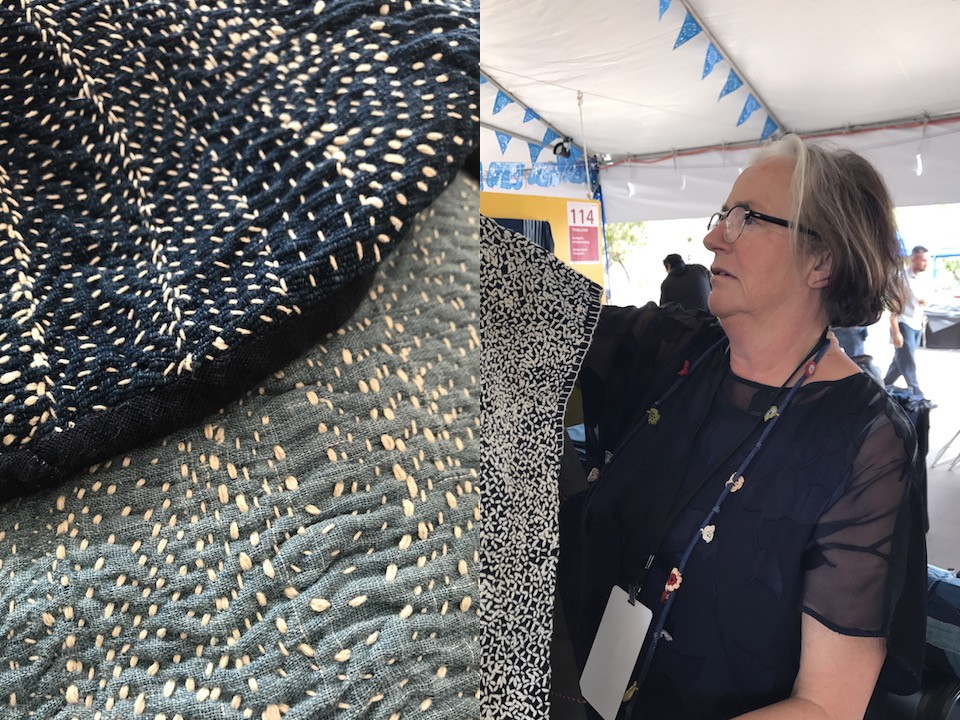 Left: Densely stitched indigo textiles by Thailand’s Somporn Intaraprayong Right: Li Edelkoort shopping at Somporn’s stand.
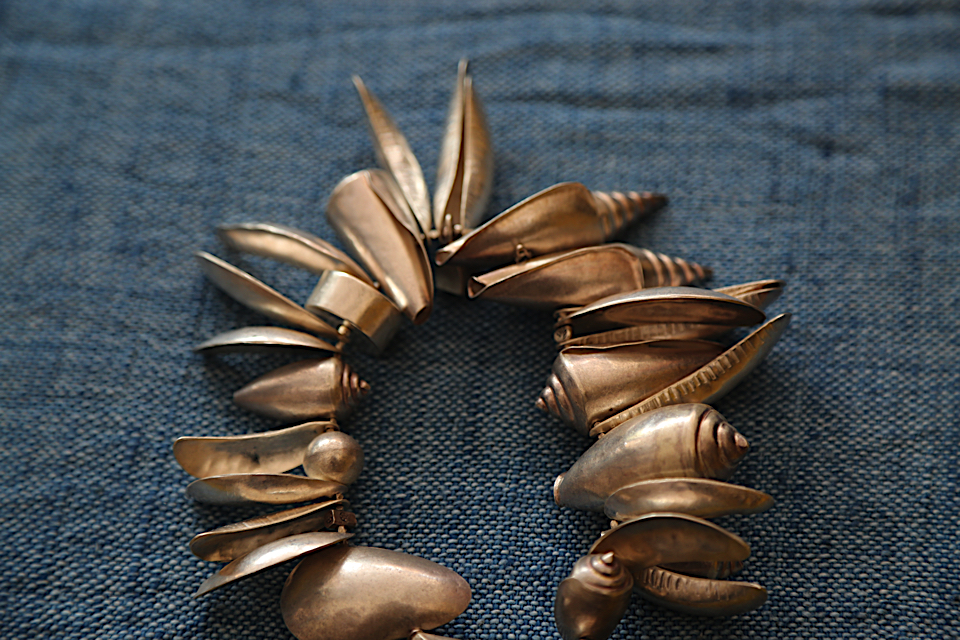 Generously scaled Thai tribal silver jewelry was included among the textiles at Somporn Intaraprayong’s stand.
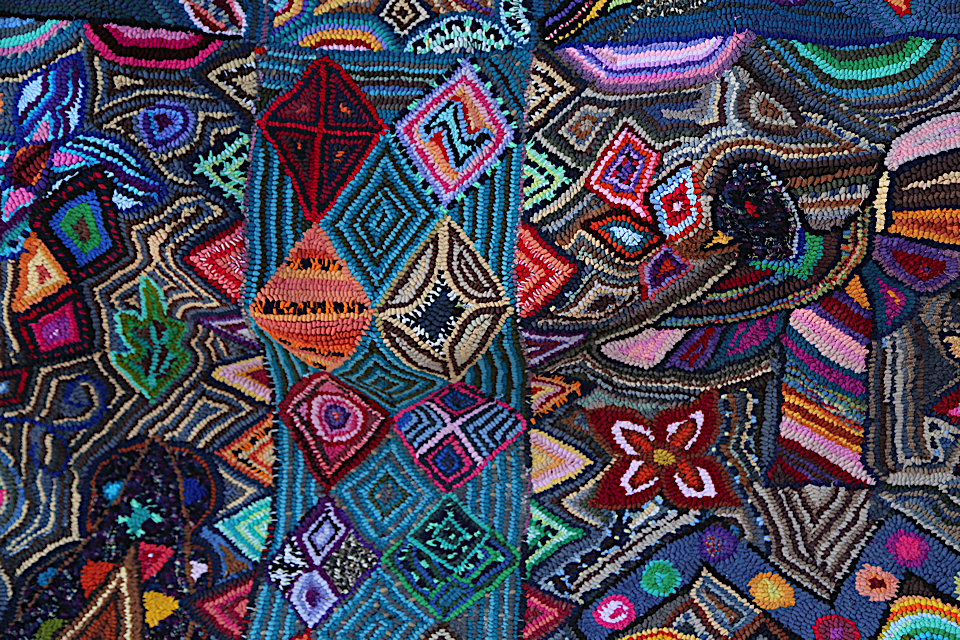 Detail of a hooked rug made from recycled clothing by Cooperative de las Alfombras de Mujeres Mayas de Guatemala, a group of over 60 indigenous women adapting motifs from their traditional clothing into a vibrant new art form.
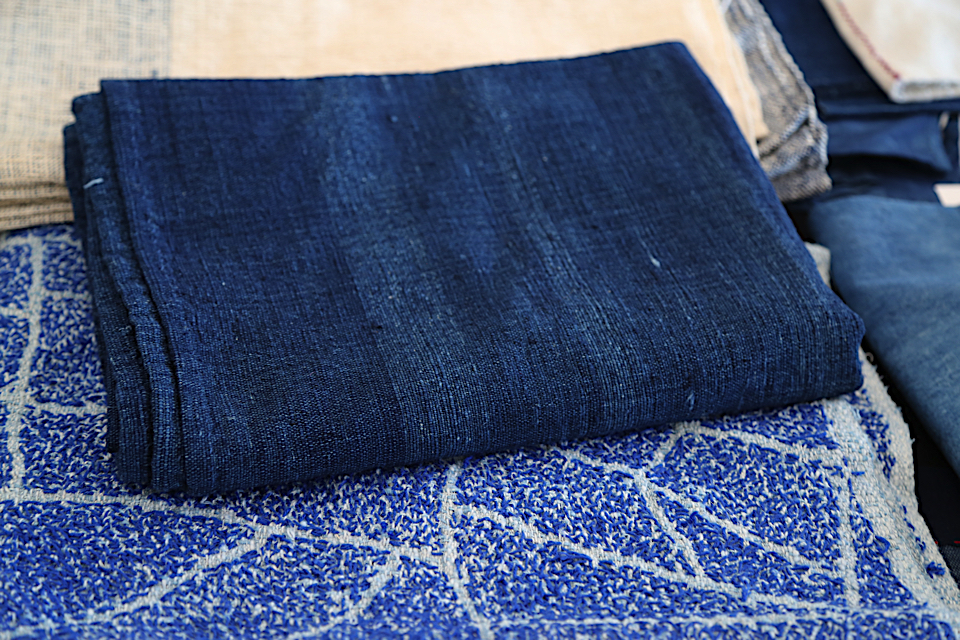
An array of indigo and natural cotton textiles by Somporn Intaraprayong
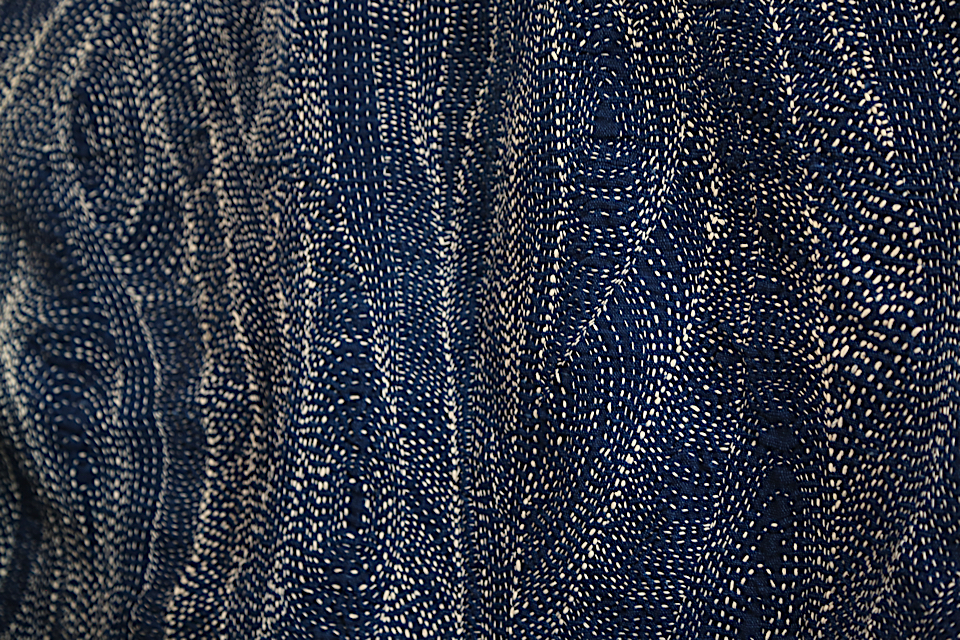 Detail of the sensuous stitchery of Somporn Intaraprayong
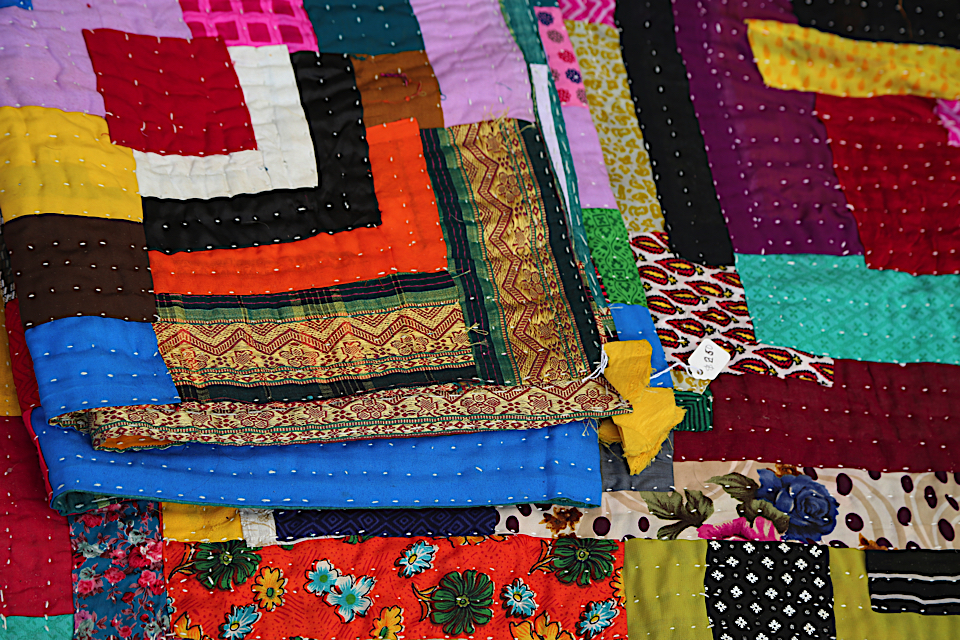 Detail of the recycled running stitch quilts of India’s Siddi Quilters, an African diaspora group whose work combines Indian and ancestral influences.
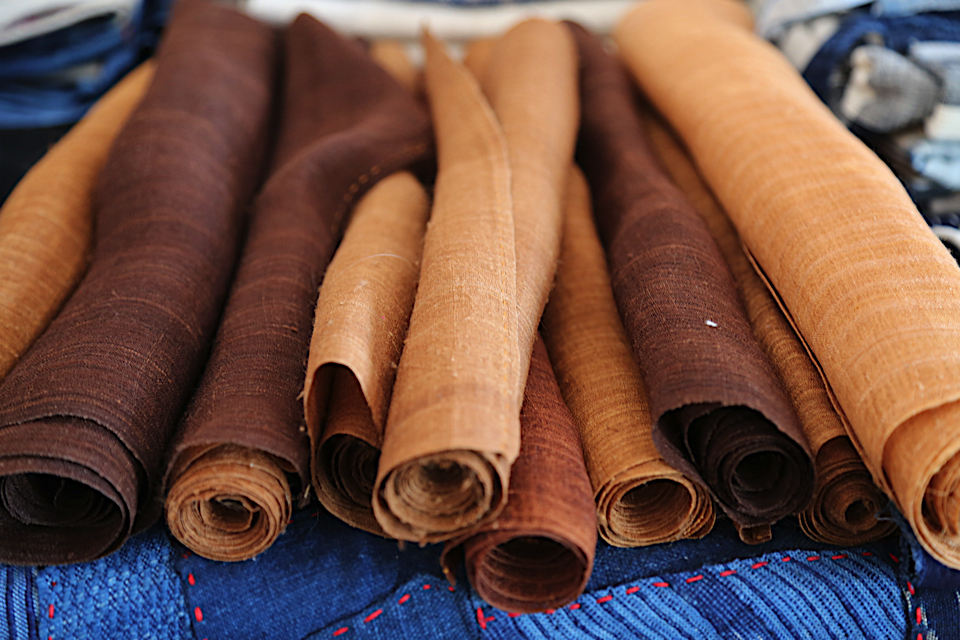 Naturally dyed silks by Somporn Intaraprayong.
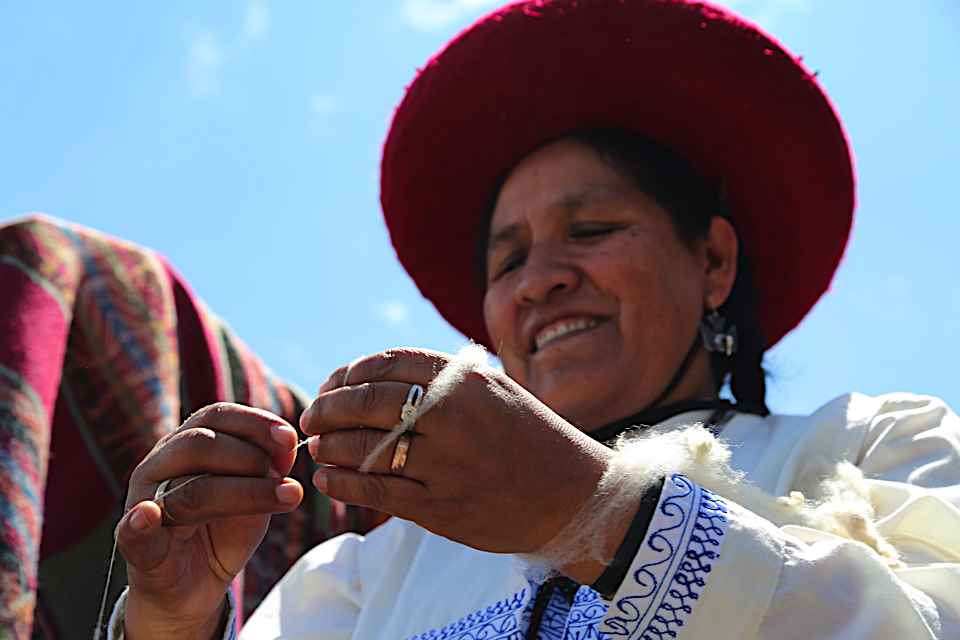 Peruvian textile artist, author, and community organizer Nilda Callanaupa demonstrating the basics of hand spinning the Incan way.
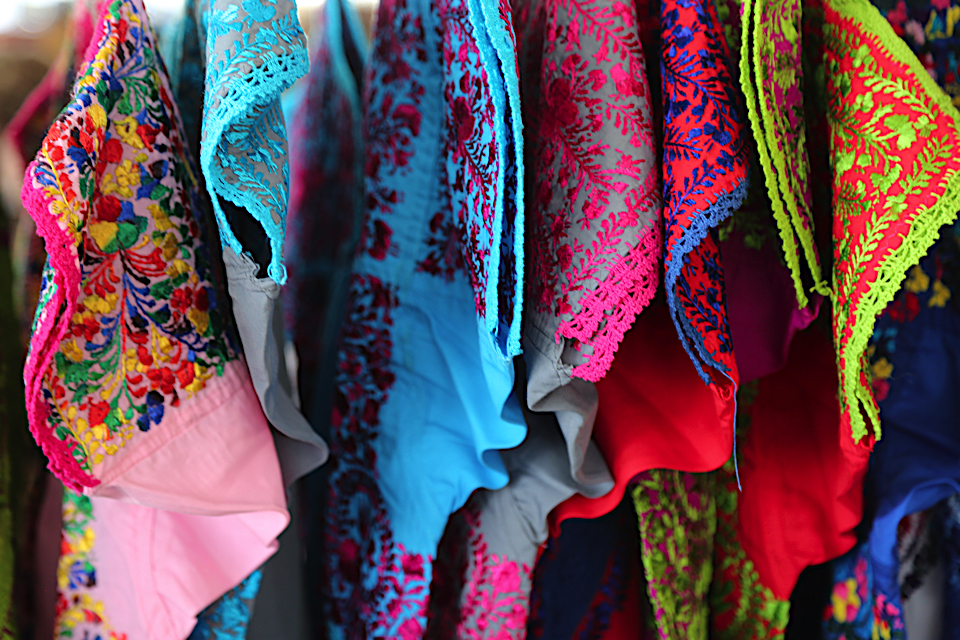 Details of hand-sewn, hand-embroidered, and hand-trimmed traditional Mexican blouses
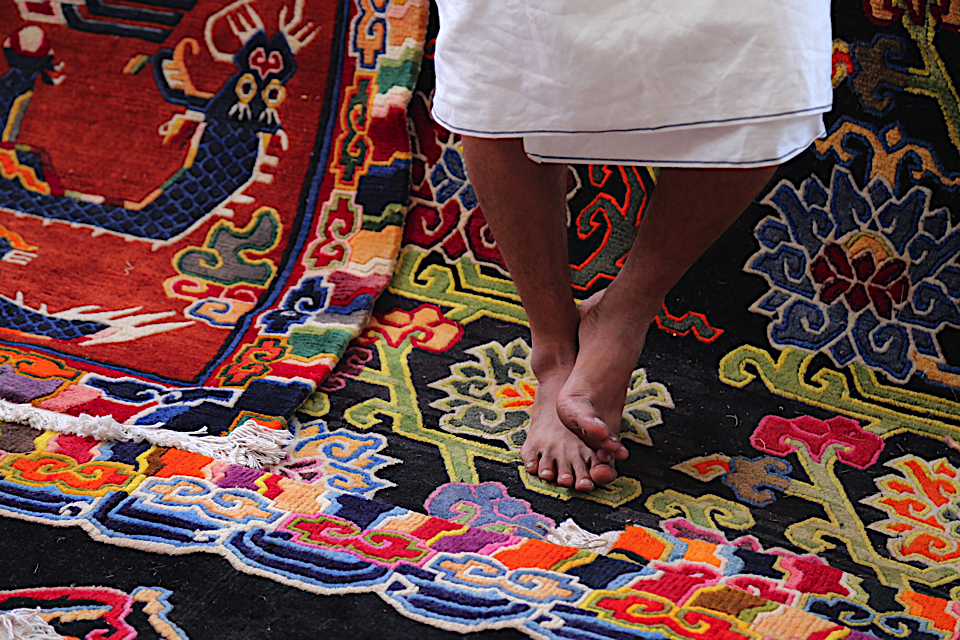 Nepalese carpet weaver Sandeep Pokhrel shows off the lush tactility of his work.
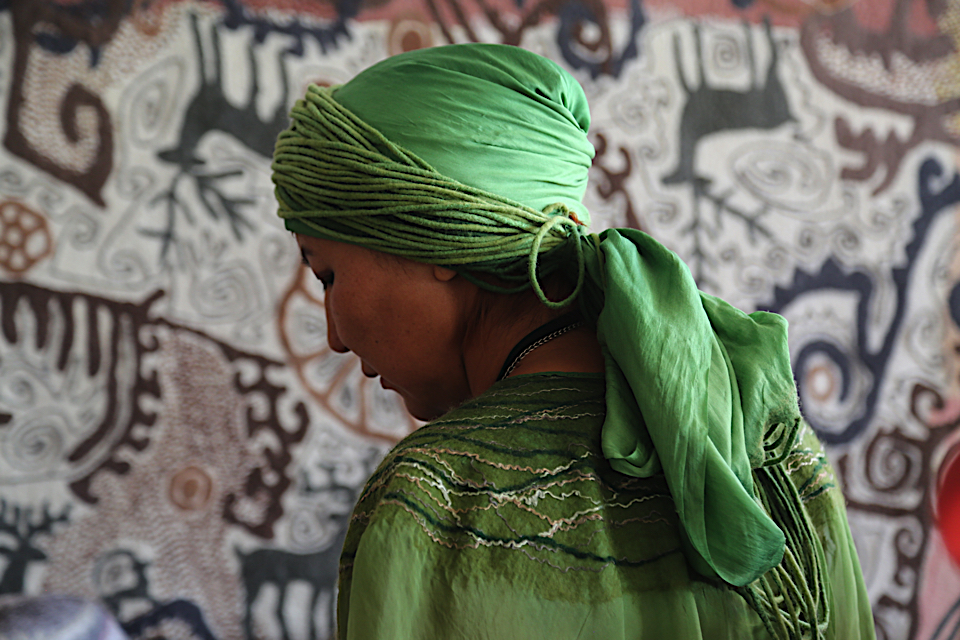 Kyrgyz felter Fariza Sheisheye stands in front of a massive, masterful felt carpet that sold moments after the opening bell.
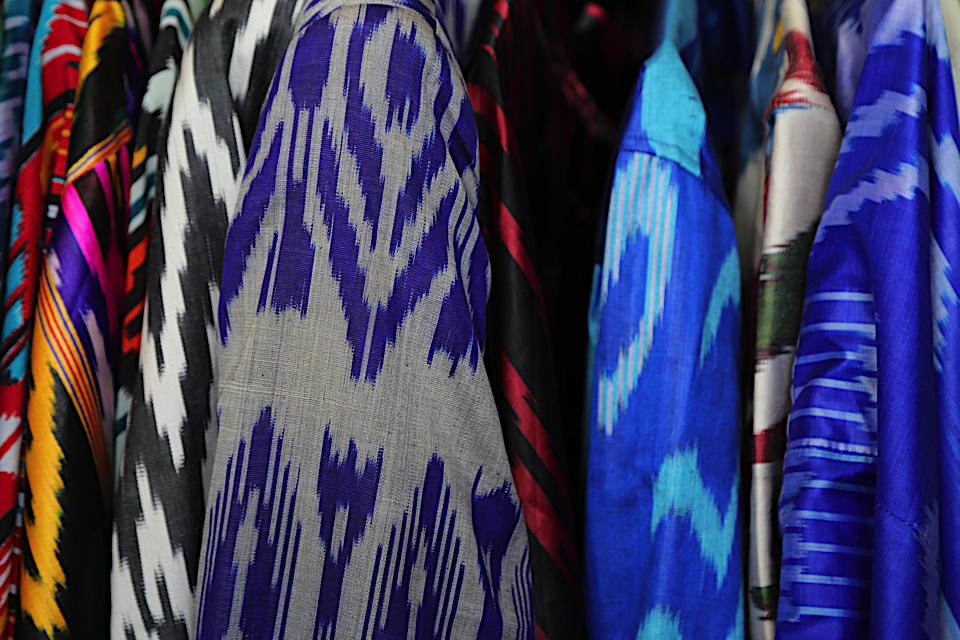 Details of jackets and tunics from the workshop of Uzbek ikat master Fazlitdin Dadajonov, who learned his skills from his father and grandfather.
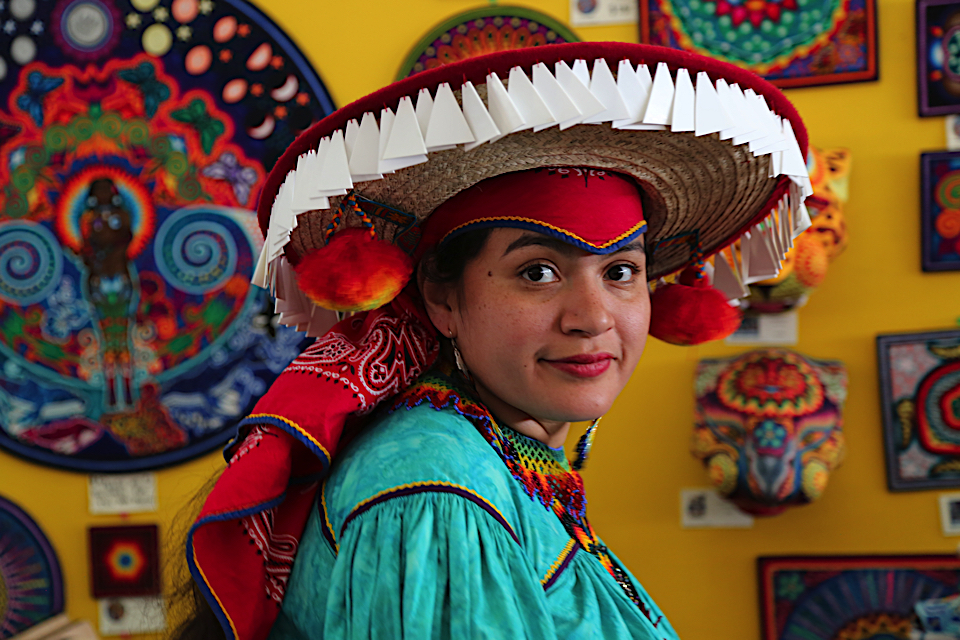 A member of the Valadez family, whose Huichol yarn paintings and beaded objects are market favorites for over a decade
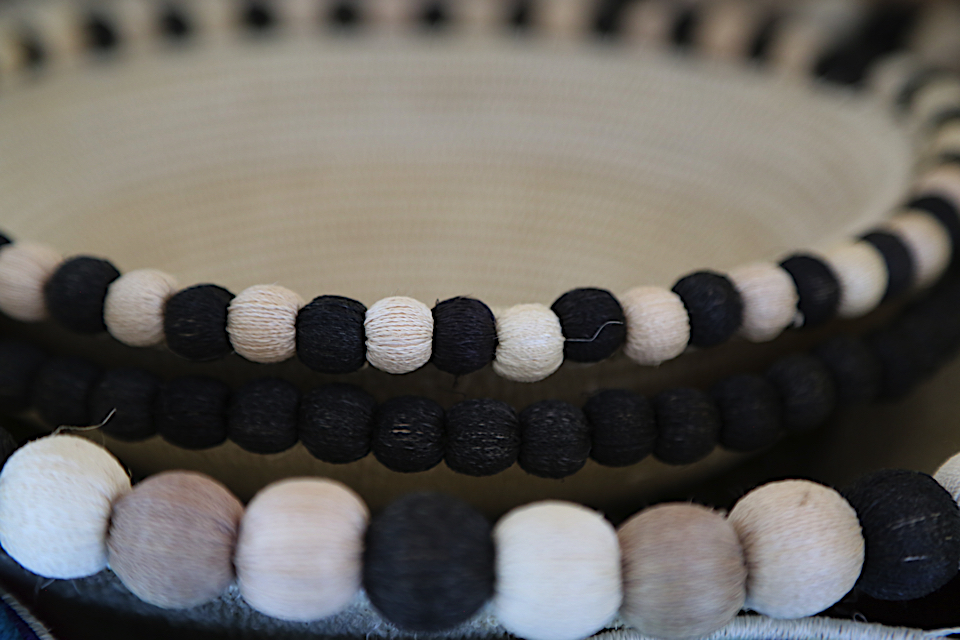 The sisal-beaded edges of Tintsaba baskets from a women’s cooperative in Swaziland.
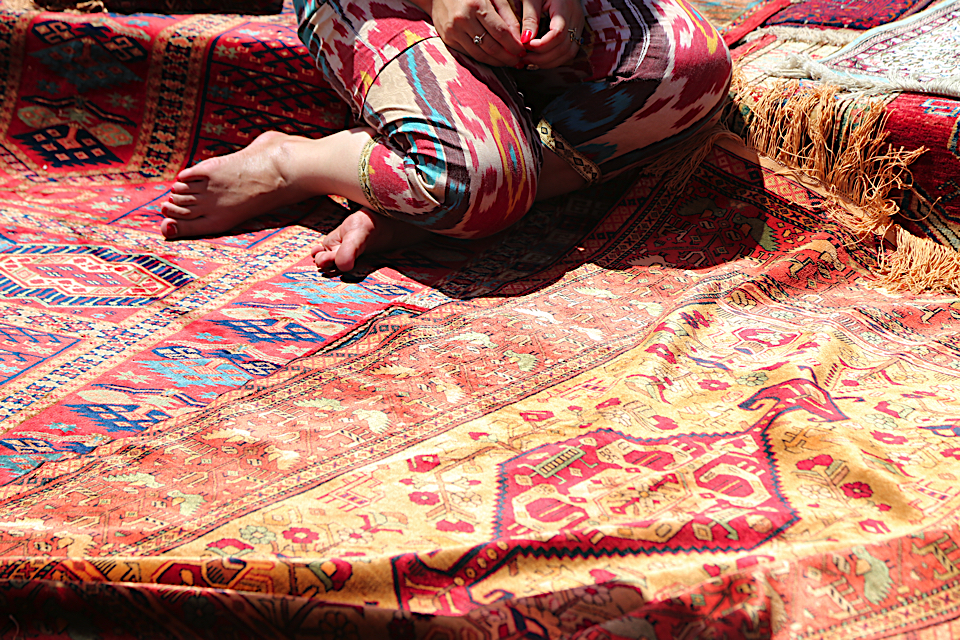
Rushana Burkhanova sits atop a luxuriant pile of intricate Uzbek rugs from the Bukhara Carpet Weaving School.
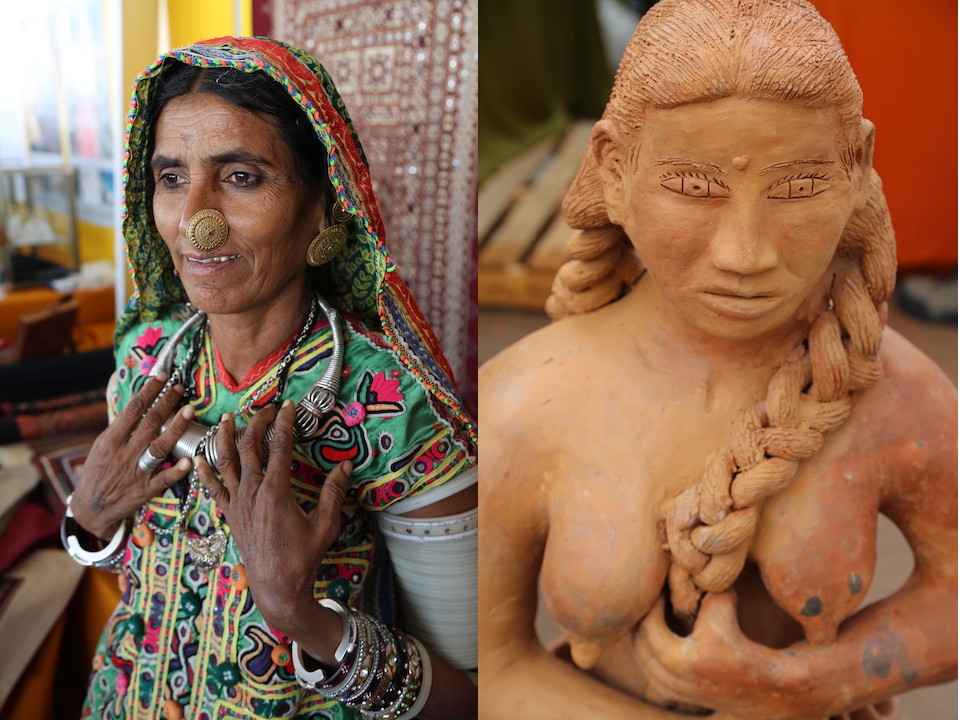 Left: an embroidery artist from Qasab Kutch, whose revival of 19th century clothing motifs produced some of the loveliest textiles of the 2017 market. Right: a sculpture from Mexico’s Juan Garcia Antonio
stitch by stitch
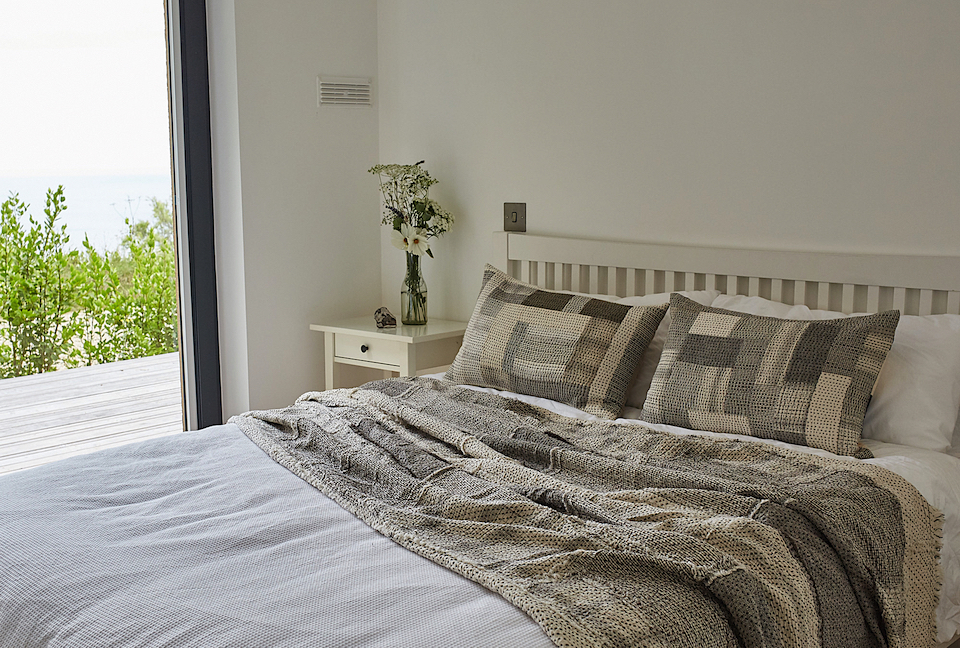
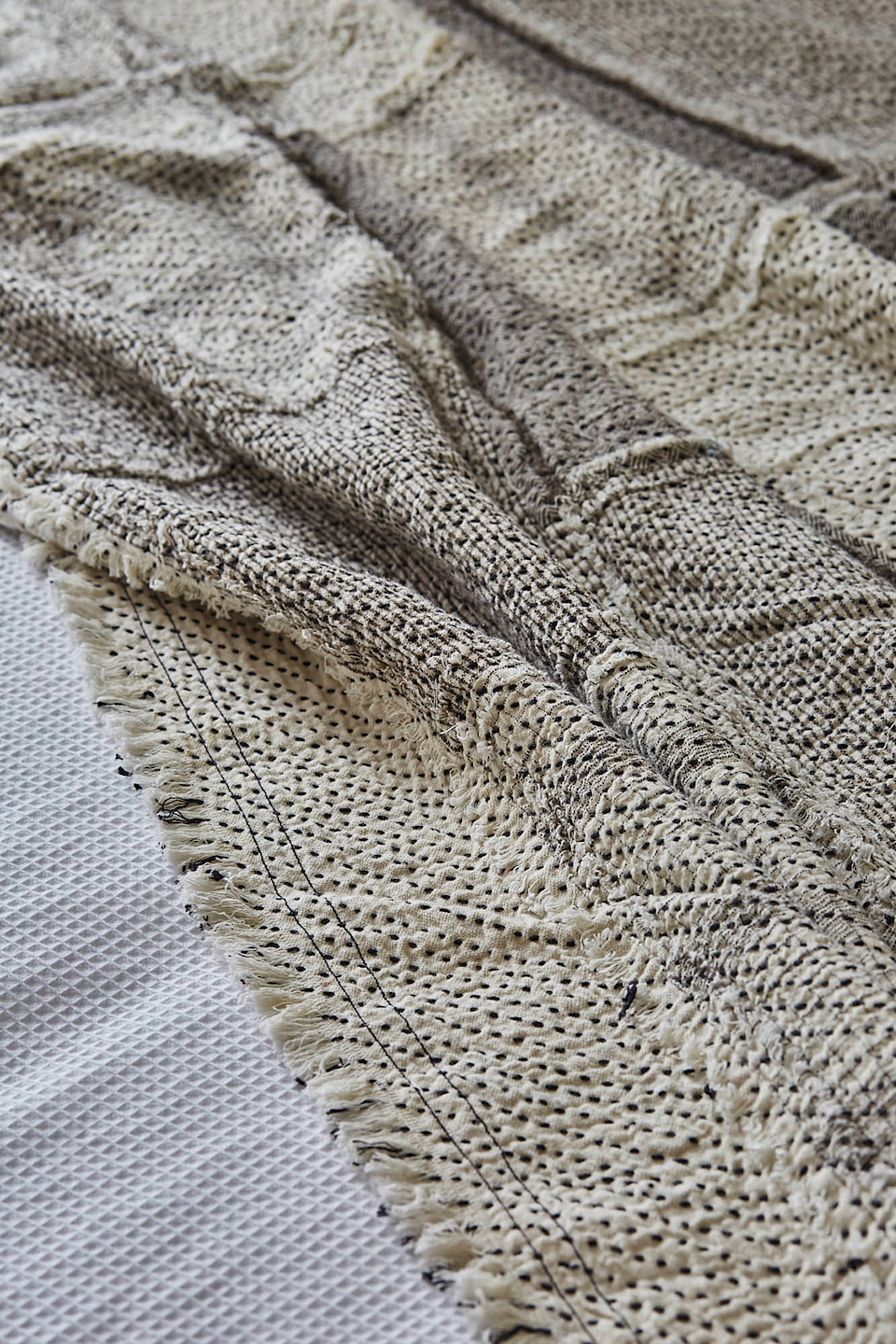
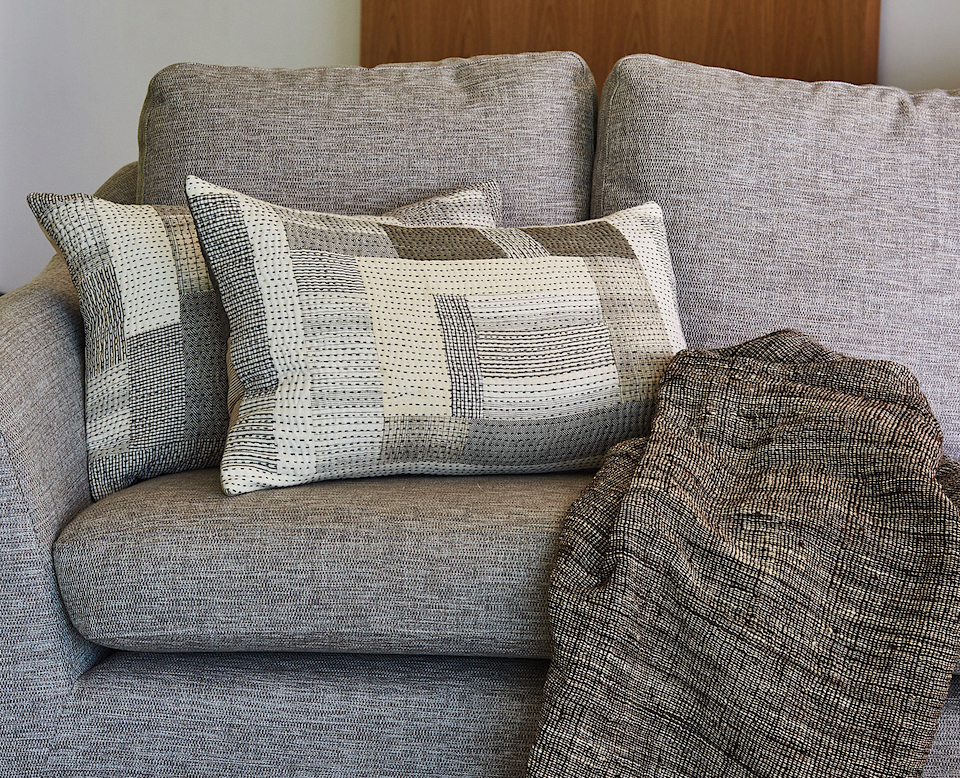
Stitch by Stitch founded by designer Graham Hollick is run by Graham and Karen Sear Shimali. They work with embroiderers and textile artisans in Gujarat, India to create hand crafted contemporary textiles for the home.
After several life-changing trips to India, Graham admits to feeling as though he must have lived in India in a past life. "One of the things that really excites me about India, is the visibility of craftsmanship everywhere you go: statue makers, weavers, kite makers...people who paint rickshaws! This is lost in our culture - it's just not an everyday thing." says Graham.
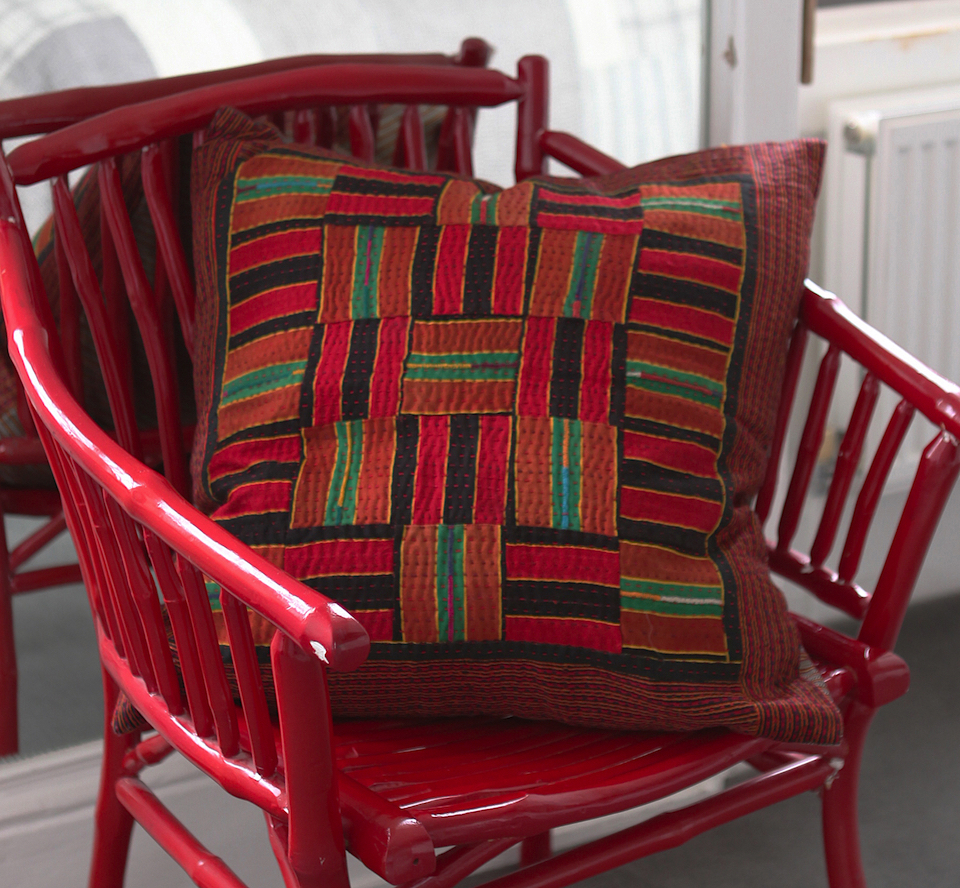
On one of his first trips to India, Graham had the opportunity to work with embroiderers from the remote Kutch region of Gujarat, an area famed for its textile crafts. Their skill and knowledge of complicated embroidery stitches, passed by women to their daughters over the generations, inspired Stitch by Stitch's first collection of home textiles.
In 2010,Graham exhibited this first home textile collection in Paris and London during Design Week. ‘The response was very encouraging. However he realised that he needed to join force with others. He shared his thoughts with Karen Sear Shimali, his friend and classmate from art school, and she agreed to get involved in his initiative.
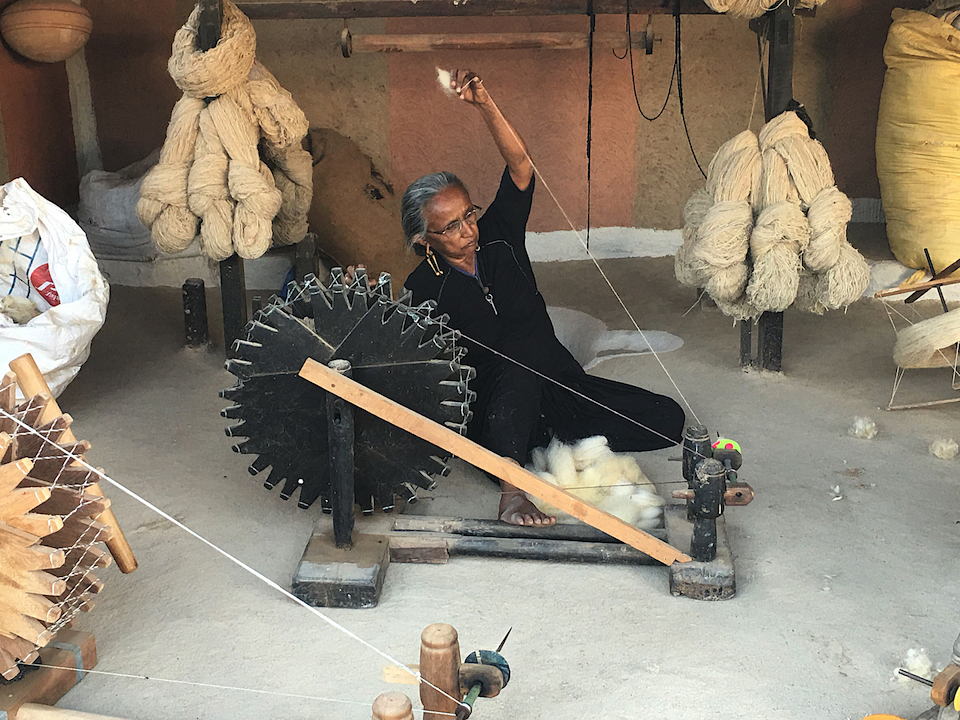
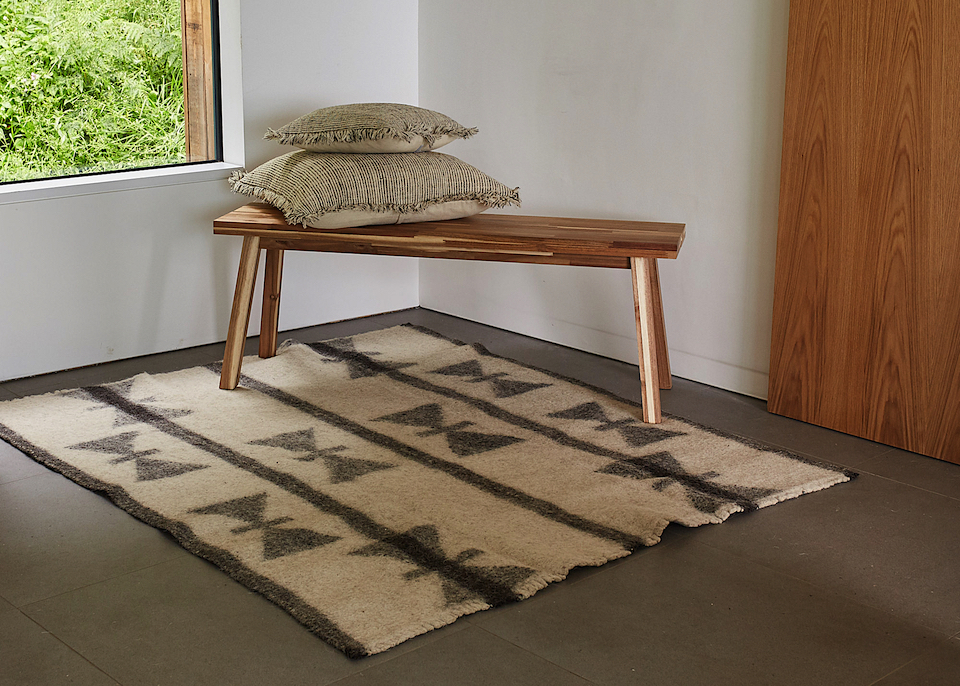
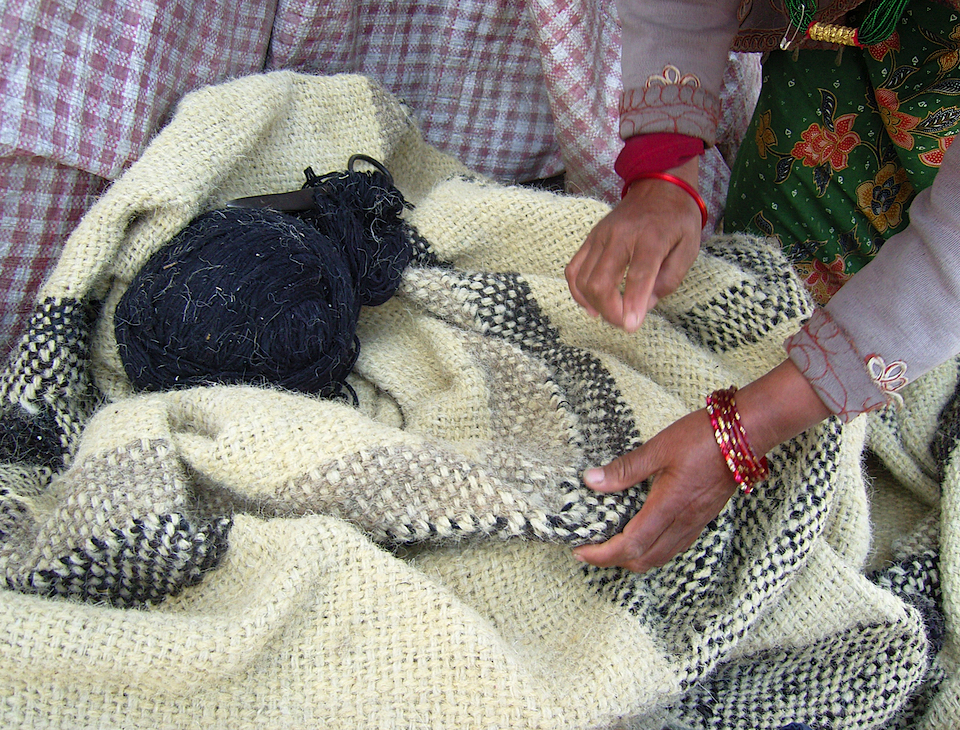
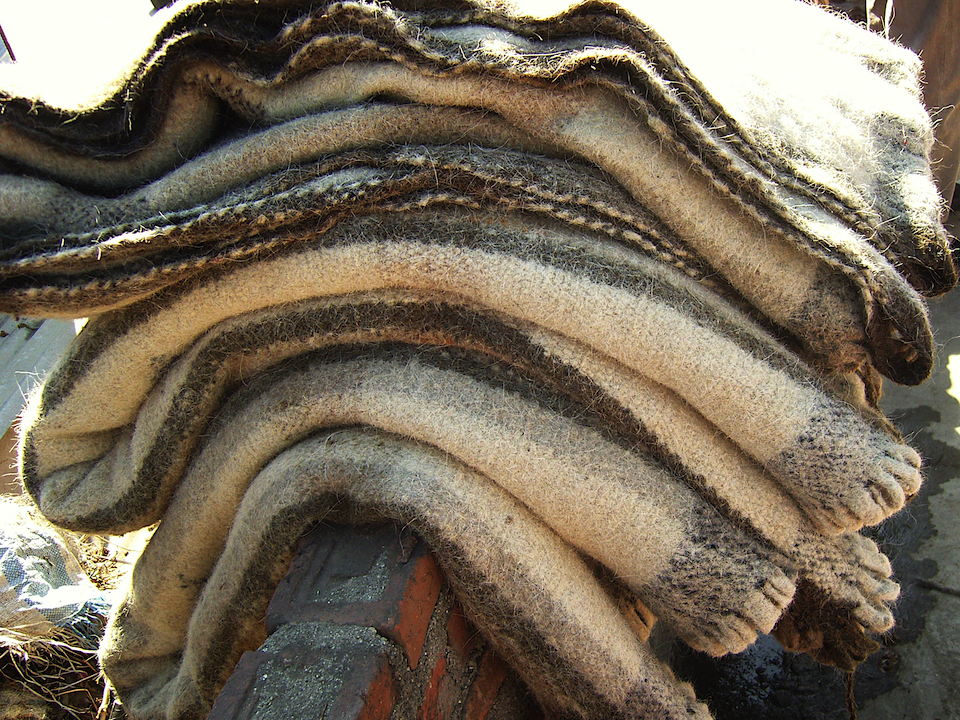
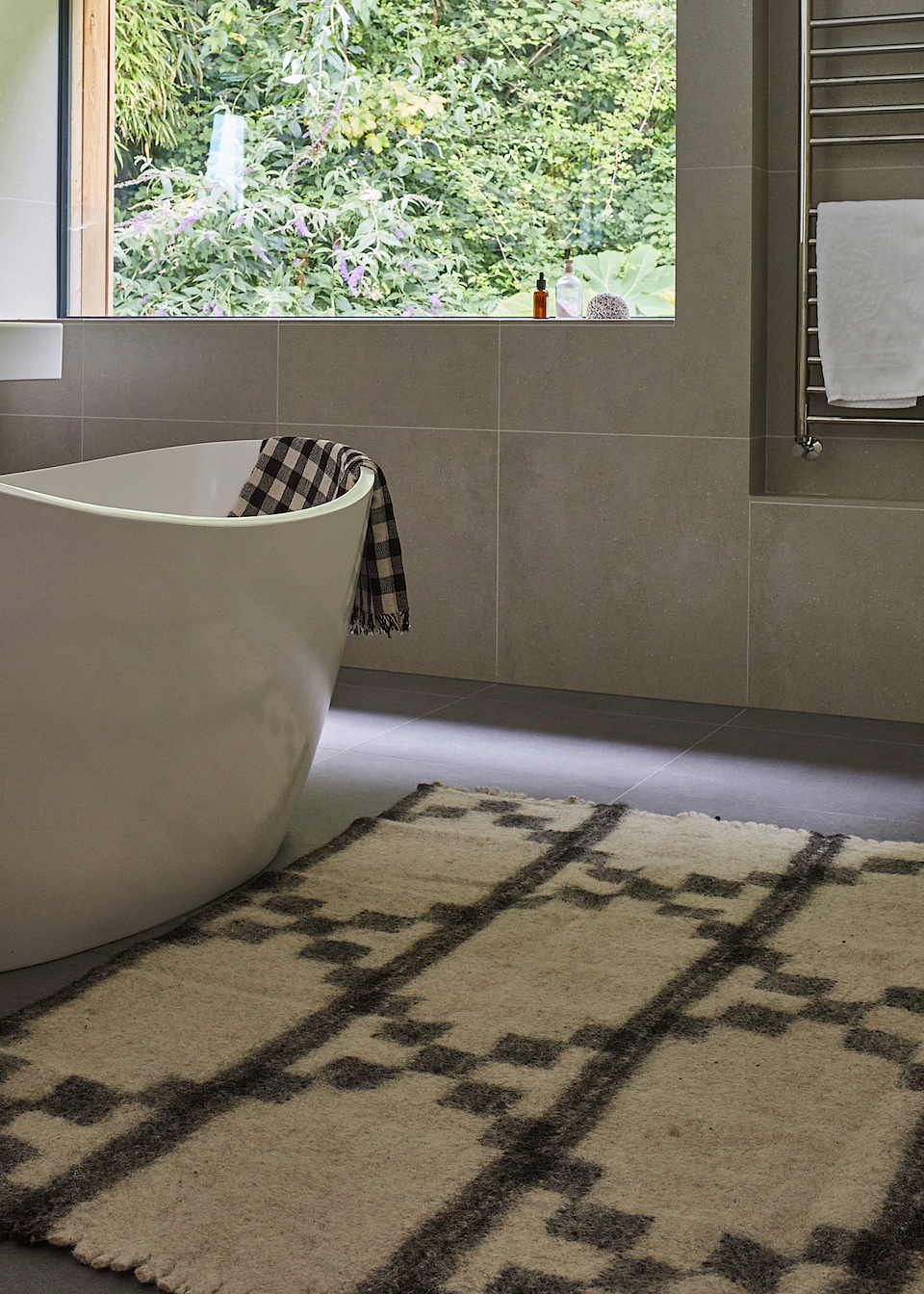
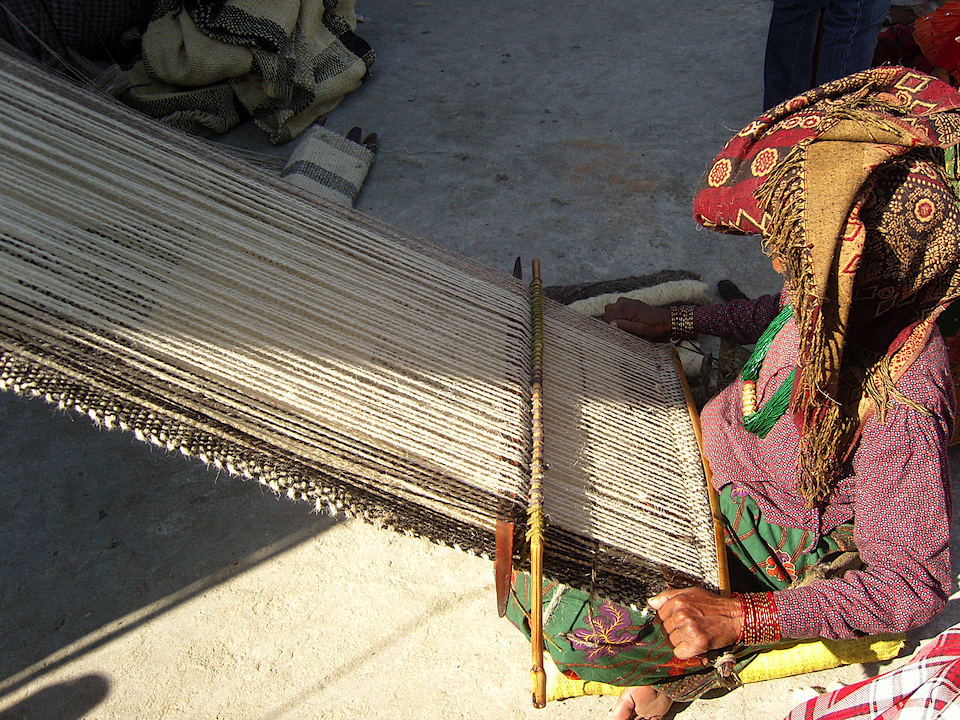
The brand has evolved over the years to work with groups of hand weavers and a master quilt-maker, as well as with embroiderers, all based in Gujarat and Kutch. Graham's travels have also taken him into the Himalayas of Nepal where he developed a relationship with weavers of traditional Radhi.
Graham and Karen design the collections of home textiles : cushion covers, throws and quilts – in their London studio and then work out the product range with a design and production studio in Ahmedabad.
To better understand Graham, his motivations and the creative process Cecile Poignant met him for an interview :
When and how did you start Stich by Stich ?
In 2009, I was invited by a friend at the Alliance Française in Ahmedabad to participate in a project with SEWA (the Self-Employed Women's Association), which represents thousands of women embroiderers living in the remote villages of the vast Kutch region of Gujarat. SEWA are dedicated to empowering women home-based workers by helping to develop a market for their artisan skills. Out of this project came the idea to launch my own line of textile products utilizing the ancient embroidery skills. Stitch by stitch was formed in 2010 and I was joined 4 years later by Karen Sear Shimali who was an old friend from art college, and has experience in selling and marketing.
How would you describe yourself ?
I am a creative person who has always had a passion for artisan and folk crafts. I love the element of mistake and error that machines can never replicate, the wobbly line, the unevenly spun yarn the raw edge.
What is your personal connection with textile?
I trained in textile design and have always had a passion for textiles but it was only about 20 years after graduating that I had this chance to launch my own collection.
What fascinates you about India and Nepal ?
I love India and Nepal because of the artisan techniques that are all around and their unique creativity.
Could you describe your creative process ?
I love to immerse myself in the craft process and adapt those skills to create something new. I want to put their work into a new context
Is ethical production something meaningful for you ?
Ethical production is very important I want people to invest themselves in what they are doing and have a pride in it, therefore people have to be treated well and paid fairly.
Do you think you are giving a modern twist to a traditional heritage?
I don’t think of this as a modern twist more a personal interpretation of traditions . I prefer the idea that our products have a timeless quality.
What are your plans for the future?
We would like stitch to grow slowly and steadily to gradually add new products and work with new artisans. We are just beginning to sample a new cashmere blanket with a group of women weavers in Afghanistan.
Cecile Poignant
stitchbystitch.eu
cultivating our heart
Handcraft more than ever is a strong direction for the future. Since the two past decades, we have seen an increasing interest in handmade; first to rediscover nearly forgotten shapes and techniques, to associate these manmade objects with industrial ones, then to inspire serial productions with a handmade twist and now, more and more, to map a new road for creation taking into account not only local talents yet also local and sustainable production. A new way to look at history of man and to rethink ancestral knowledge in order to shape rooted, human and smart design for the future.
Nelson Sepulveda, passionate and expert in handcraft techniques, collaborates closely with handcrafters to understand their history, their identity, their knowledge, their material resources and their process of work. He cooperates with them to bring up new designs to the market without forgetting a complete reflexion on their long-term existence to avoid producing for the sake of producing and thus better adapt to the evolution of our society.
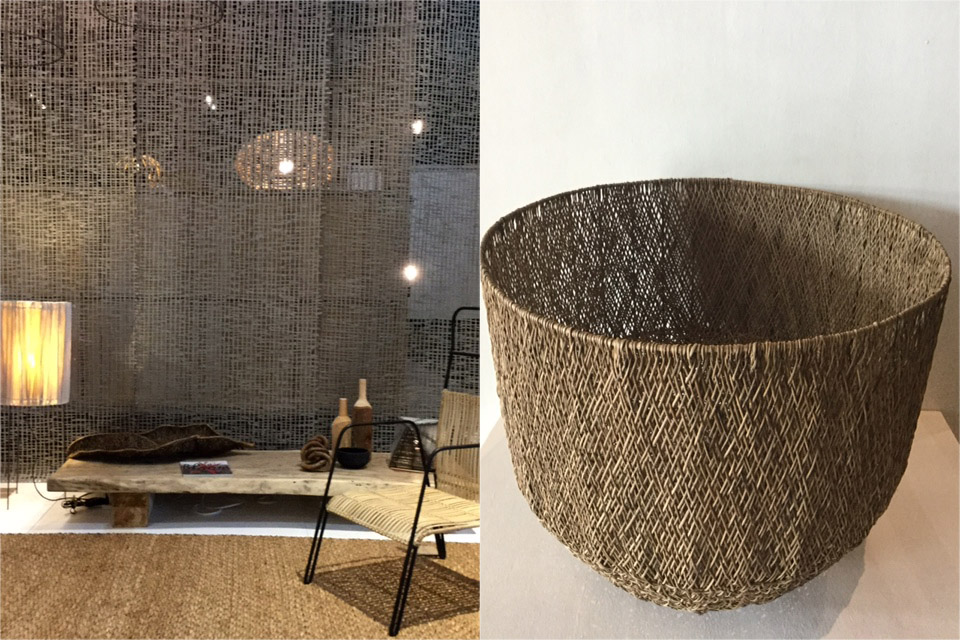
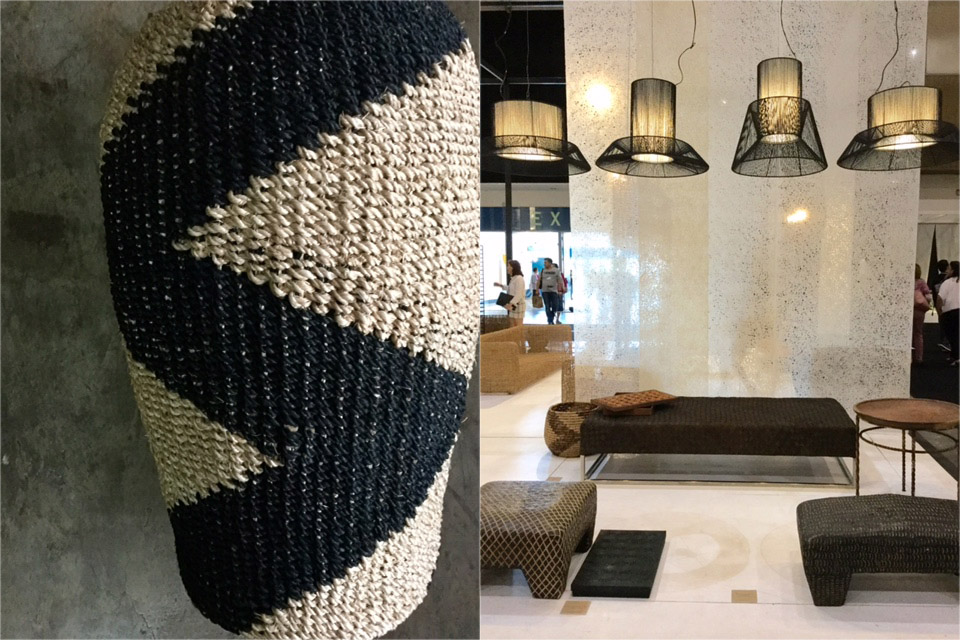
With the CITEM, organization managed by the Philippines Government, Nelson Sepulveda co-worked with about fifteen basketry handcraft companies to create design-, human- and market-driven items that were presented last October in Manila Fame and this January in Maison & Objet.
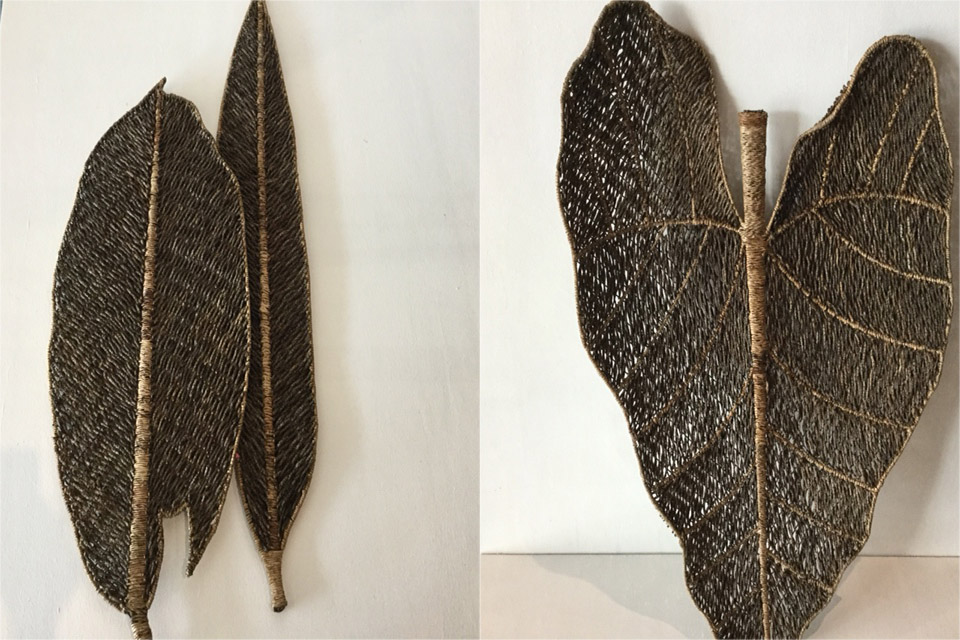
Lamps, sofas, daybeds, carpets, baskets and decoration pieces in wood, in paper or in vegetal fibres such as abaca, rattan, bamboo, seagrass… came to life, bringing our homes tactility and grace as well as a deep sense of belonging.
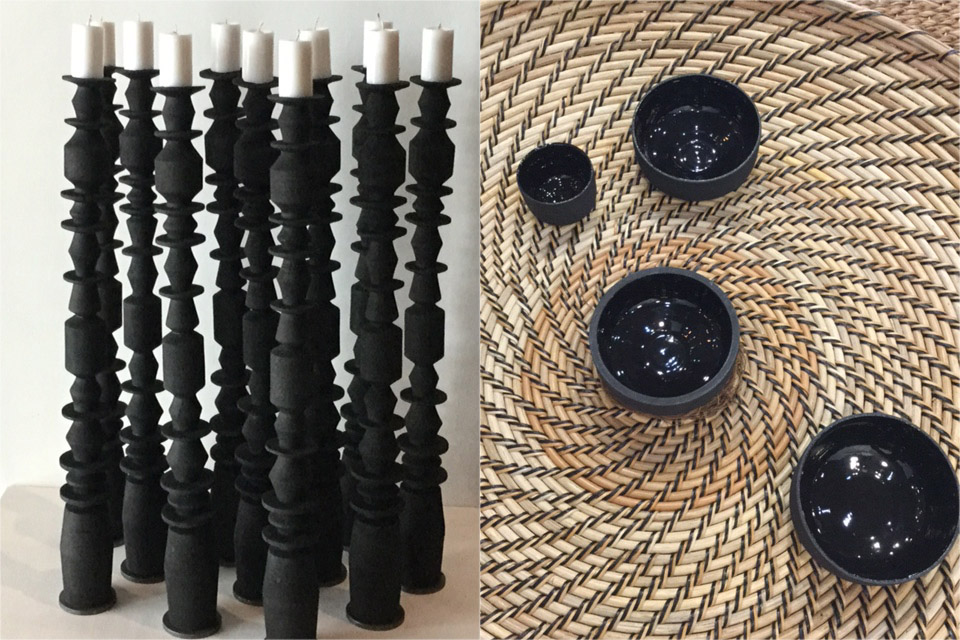
in collaboration with nature
Cécile Daladier
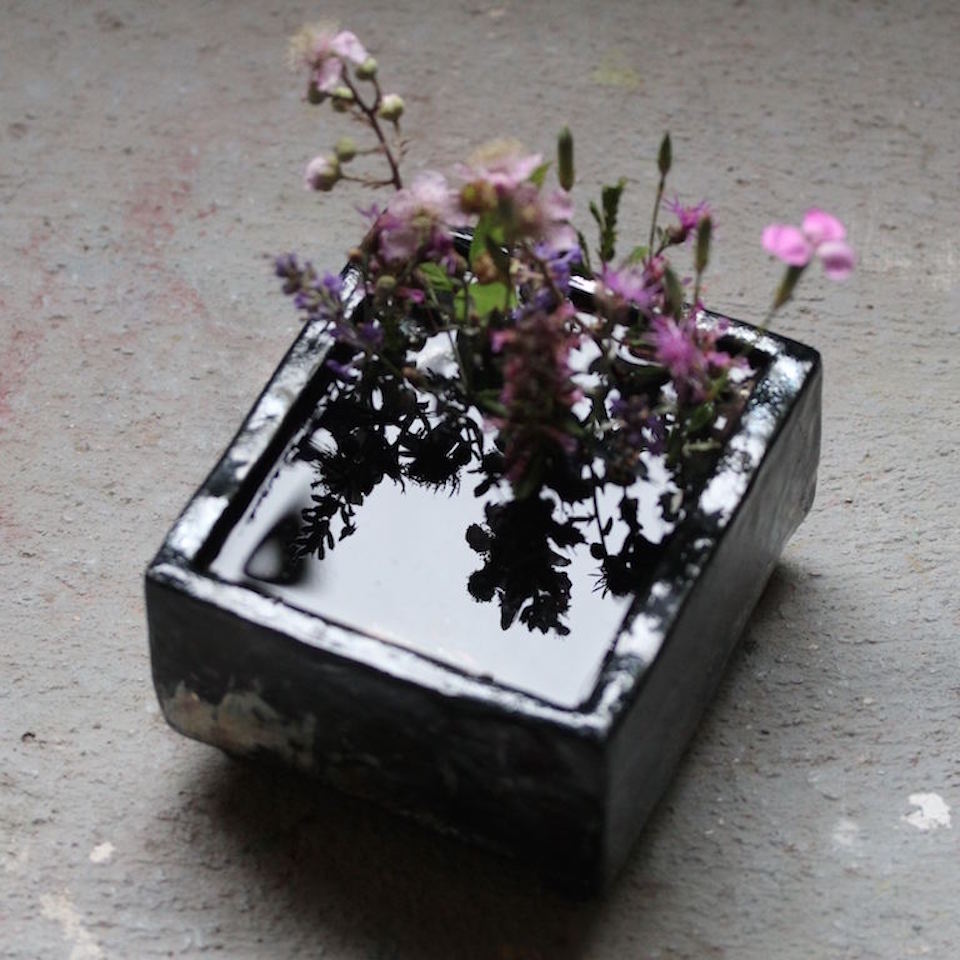
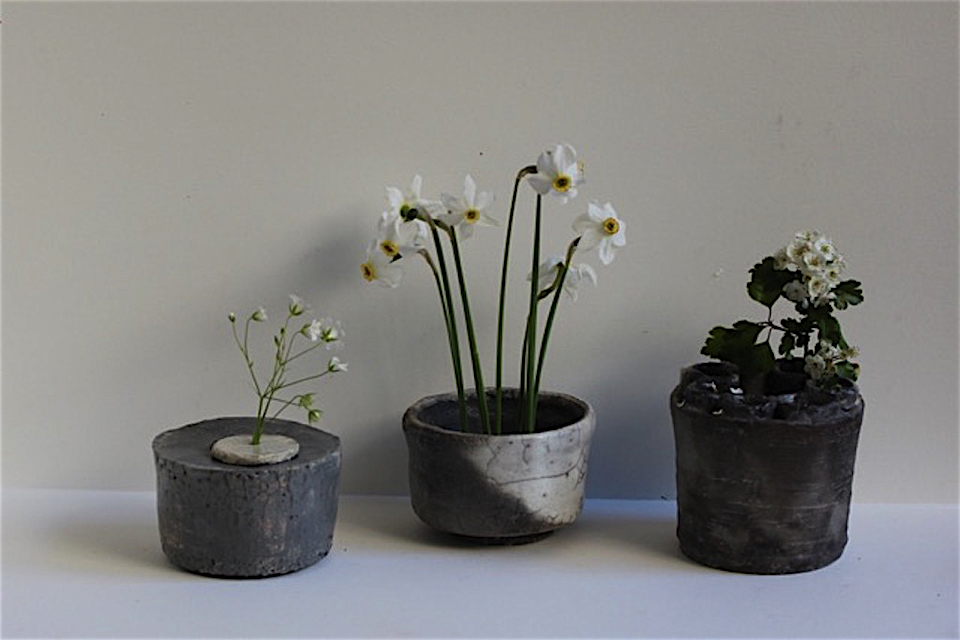
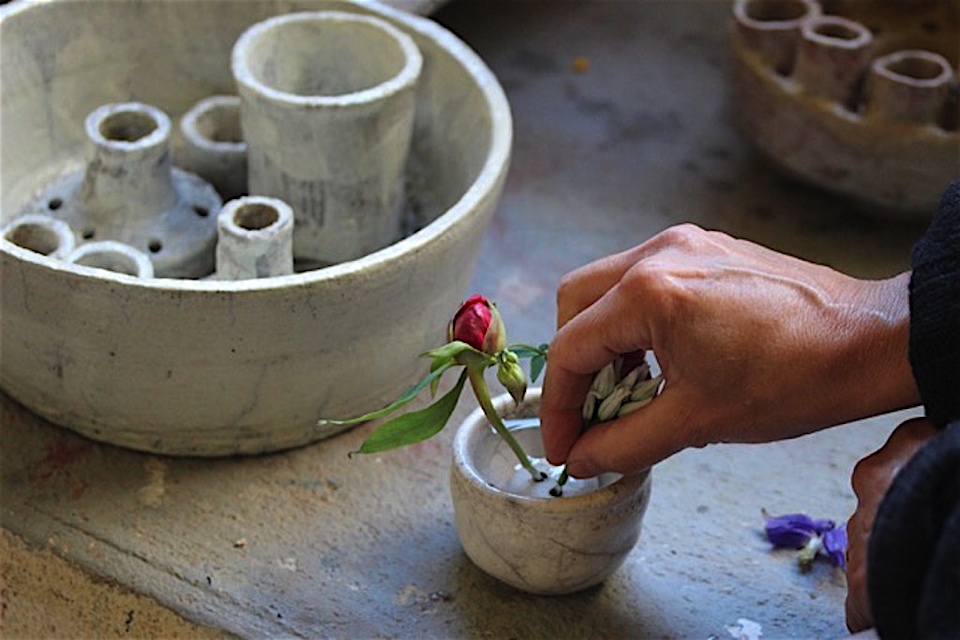
French artist Cécile Daladier, creates ceramic vases and vessels that make unexpected bouquets and offer a new way of looking at the natural world around us. Originally trained as a musician, Cécile also worked as a painter and a landscape designer before turning her attention to making hand built and Raku fired ceramics, but her deep passion for the botanical world has always been an integral part of her work since the beginning of her career.
Finding inspiration for her vases in the streets of Paris, collecting the small, fragile weeds that pop up in between the cobblestones, as much as in her thriving, wild garden in the heart of the Drôme in the French countryside where she now lives and works, her unique, sculptural vases and vessels feel like an ideal reflection of wabi sabi.
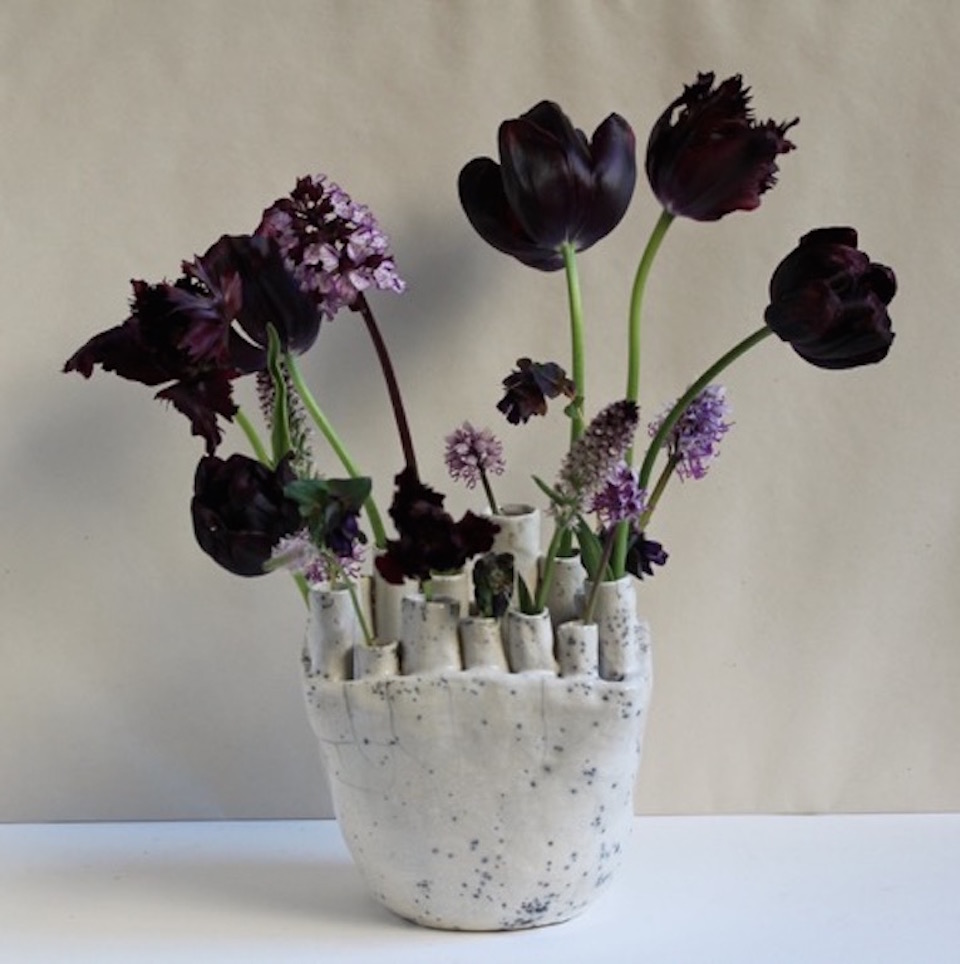
Not pristine nor perfectly formed, her work is none the less intuitively beautiful, poetic and harmonious. The earthiness of the glazed surfaces retain a raw quality, tending towards the neutral monochromes of grays, beiges, whites and creams, a perfect contrast to the colors of the plants and flowers.
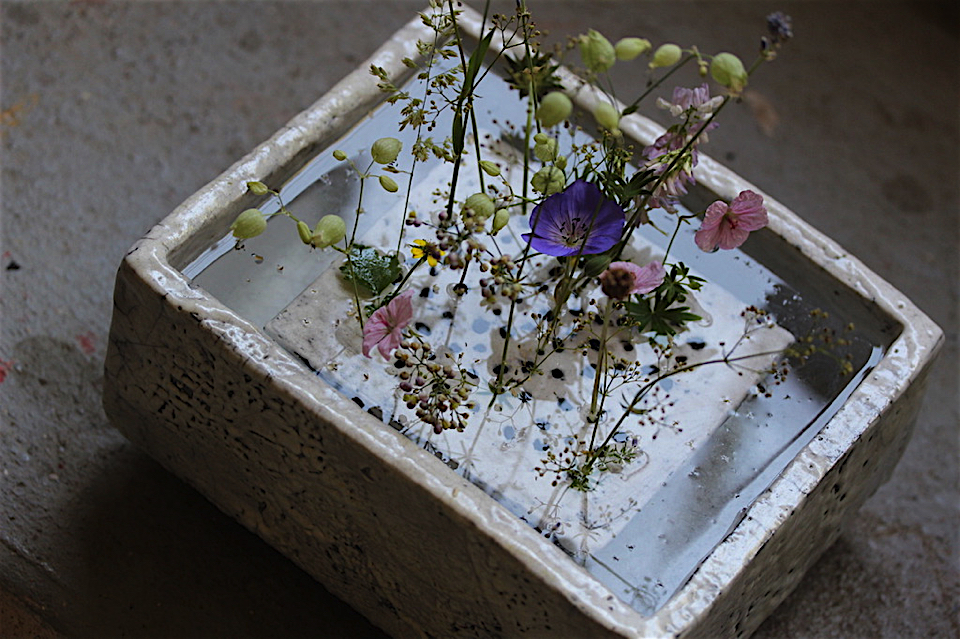
Most of the vases have multiple openings, small, punctured holes for the wispiest of stems and larger, raised cones for tulips and bigger flowers, and they are often made to interact with the water, offering surfaces that reflect the light and their surroundings.
Why did Raku become your focus, if not your passion?
It is a way of making ceramics which is very free and open to improvisations, to invention, and I like how elements of the unexpected, of chance and surprise are part of the process. It is a very physical process as well and demands a rapidity which I also really like. It allows each person to develop their own style, their own technique.
Have you always worked with a wood burning oven when making ceramics?
It depends on the work. I have a very basic open framed, outdoor wood oven which was built according to instructions laid out by French ceramic artist, Camille Virot. My relationship with this oven is very engaged, like with a musical instrument. I use it most of the time as I live in the countryside and have access to a lot of wood, and I like using dried leaves and straw to smoke the pieces. Since we don’t have any neighbors it doesn’t bother anyone either.
Your work feels like a real collaboration with the botanical world, both urban and rural landscapes?
Since the beginning of my career I have worked with plants, whether taking their imprints on canvas or as a source of inspiration. And I love to garden. I don’t know how to live without plants. When I was living full time in the city I used to seek them out in the most remote locations where they seemed to be absent, like on a busy street, and appreciate their subtle beauty and their presence.
Do you make certain styles and shapes of vases in connection to the flowers and plants in season?
Yes. I like to gather various small bouquets from the garden and bring them inside, into the house. These collections are like memories of and witnesses to the outside world. With these pickings I create vases and they allow people to make small, indoor gardens in their homes. The change of seasons resonates indoors through the flowers and foliage, stems and colors. All of these factors might lead me to create a different type of vase depending on the time of year.
Did you study botany?
I really know plants by experience. I have always had a garden. For a time, I had a small, urban garden when I was in they city, but now that I am in the country my garden has a life of its own, it is without limits. And I really enjoy learning through books, gardening classes, working with other gardeners and cultivators. I appreciated a lot the seminars in Ethnobotany of gardens given at the Museum of Natural Science at the Jardin des Plantes in Paris, and learning about the history of man and plants, the different ways plants have been used and cultivated across various cultures and generations.
Can you talk a bit about your connection to water? It seems to be an important part of your work?
Yes, it is an important part of my work. I have developed different types of vases and sculptural objects using metal and glass which are not for holding water to keep plants alive, but simply for the water itself, as vessels to observe the water, the wind, the light and evaporation. A simple layer of water struck by light and air can serve as a tool for for observing the world around us, as a way of capturing and offering us a way to see a place. This series of work was called les capteurs. A little bit of water is enough to develop something very beautiful, very alive. A few flowers too. And these two go very well together…
Blaire Dessent
ceciledaladier.com
Blaire Dessent is an American in Paris working as a cultural writer, copywriter and translator with a specialization in the cultural and lifestyle industries including contemporary art, design, fashion and beauty. She is also special projects manager for American design at Triode, a leading design showroom located in the 6th arrondissement in Paris.
blairedessent.com
Cécile Daladier
Cécile Daladier
Cécile Daladier
Cécile Daladier
the secret garden of karuna balloo
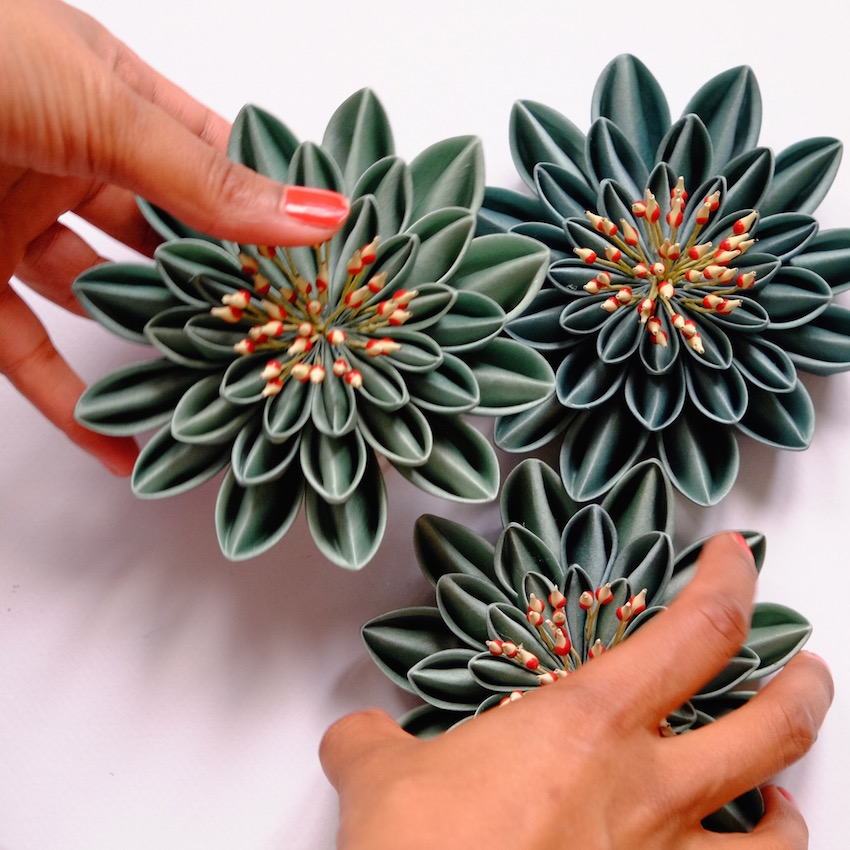
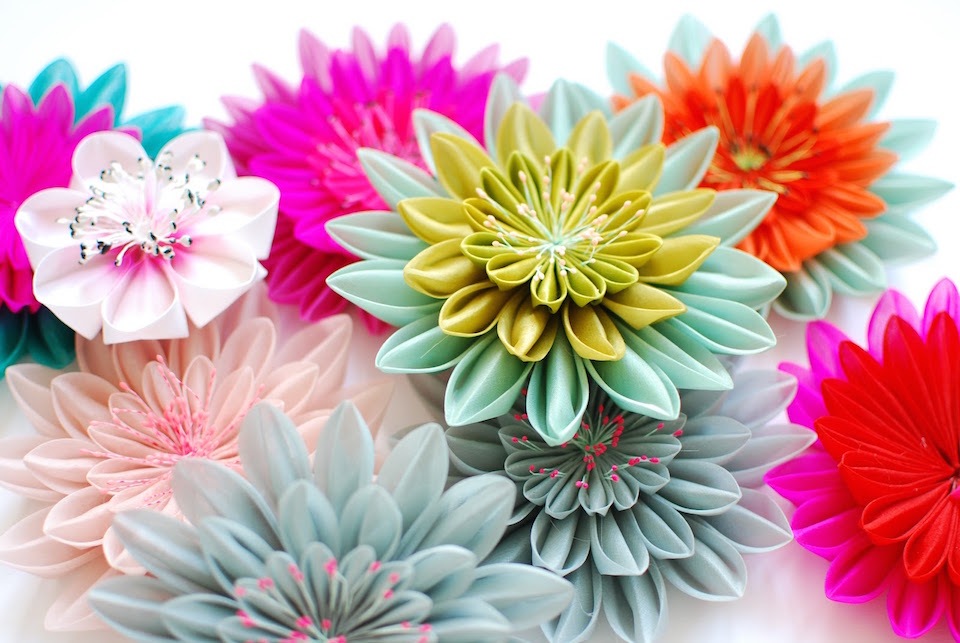
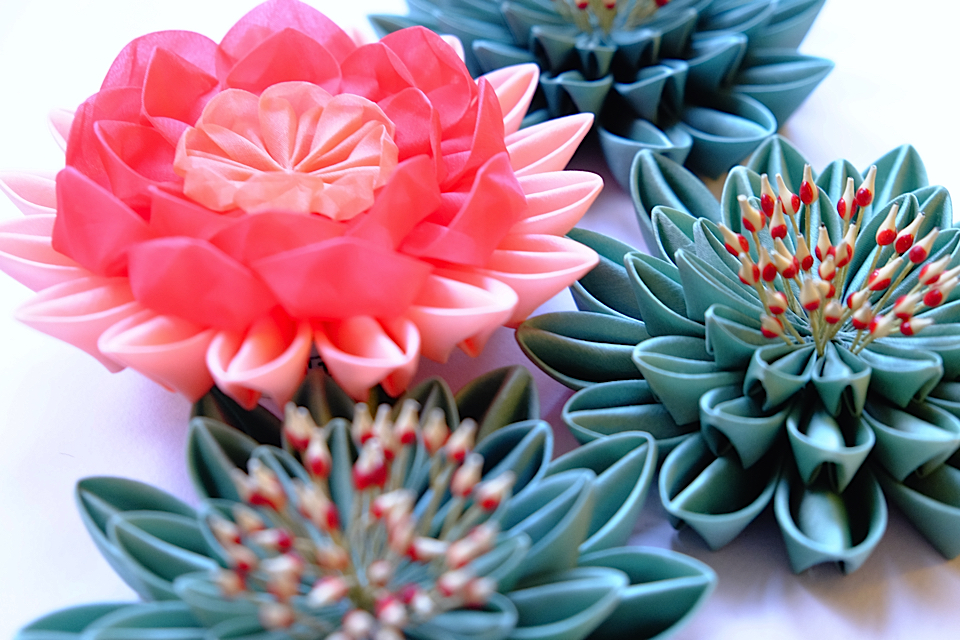
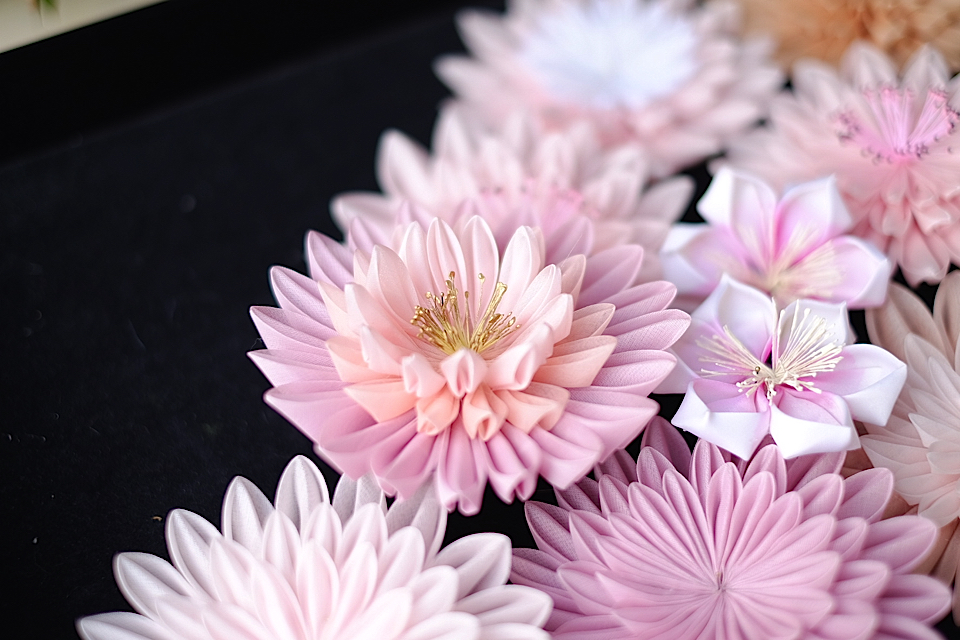
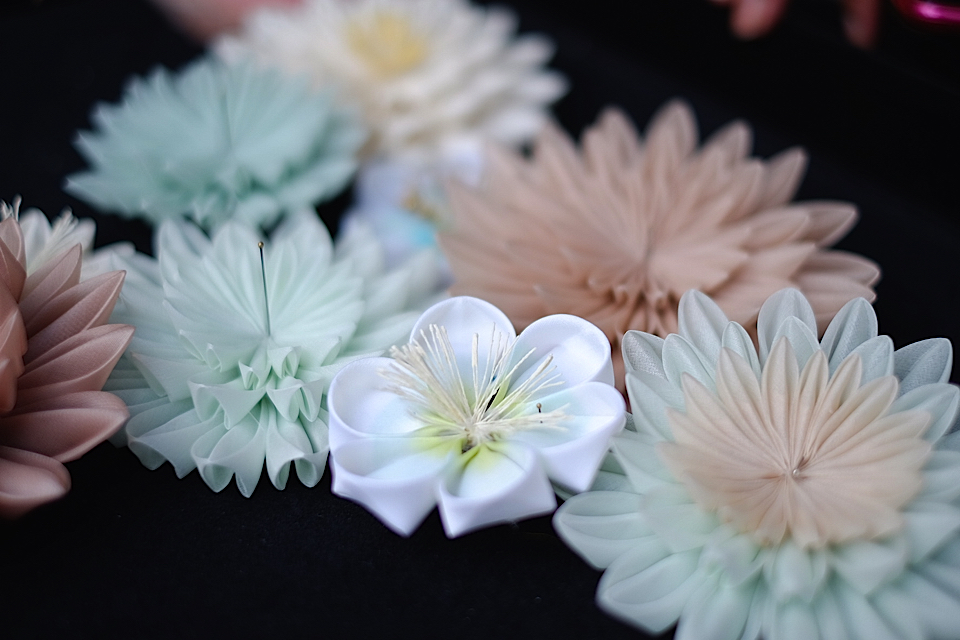
Short, obscure winter days make us dream about springtime. This most desired time of the year is now officially here and along with it, there is a growing necessity to express happiness. Little handcrafted textile flowers by the Paris-based textile artist Karuna Balloo seem to be the best way to show ones’ vibrant feelings.
The story behind Balloo’s designs is very simple. After accomplishing both her History of Art and Fashion studies, she devoted herself to textile and costume design. Whenever she went out with her friends in Paris, she wore a colorful flower made of fabric as a hairpin. It is not hard to guess that after some time some people started requesting about it and made orders. Today, her horticulture textiles became a burgeoning business.
Her designs are not only about the final product – Balloo produces each design just as she was giving a new life to each flower. The base is made from carefully selected fabrics, which she often dyes herself. The perfectly sharp shapes of her flowers are the outcome of precisely folded squares of clothes – the artist admits that origami technique is one of her main inspirations. The center part of these gentle little art pieces is finely decorated with vintage stamen and pistils. If that was not fascinating enough, even the names of each design are unique – Balloo names them after her favorite songs. With her honest devotion and personal input, these little blossoming accessories will soon bloom on every corner of the street, and not just in Paris. It’s spring; let’s dress for it!
Kamila Garczyńska
www.karunaballoo.fr
worn with love
photos by Gisela Torres
The resurgence of Hand-Made design in today’s world of mass produced products is a welcome alternative for those seeking a distinctive and original product handcrafted by an artisan. You can own a machine-made, digitally crafted replica or a one of a kind that is imperfect, tactile and unique.
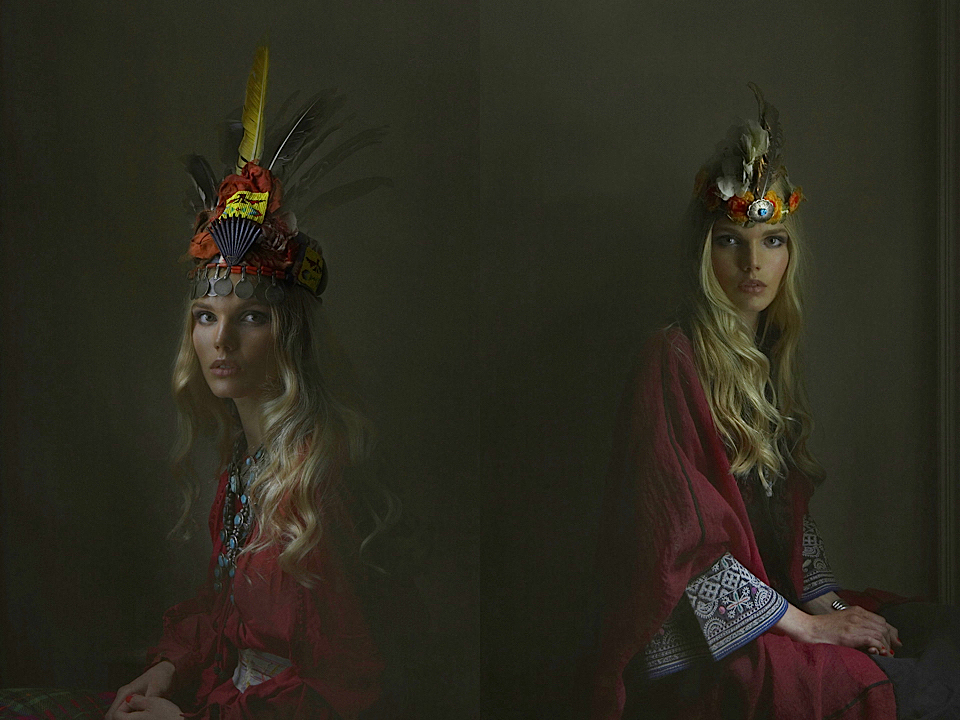
The eclectic stylist Emma Freemantle a curator and collector at heart is a lover of anything hand- made. Her label 'worn with love' established in 2007 expresses her passion for creating one of a kind pieces from treasures she finds at charity shops, car boot sales, flea markets and house clearances.
Her signature headdresses are inspired by her travels to South America and Asia and reference the twenties, sixties with some Navajo thrown in. Incorporating recycled and vintage textiles, brooches, geese, parrot, guineafowl feathers she creates headpiece tapestries by layering and combining various textures and details.
Gisela Torres
Photos : Gisela Torres
Hair and Makeup artist: Katie Campbell
Model: Ilona Ecott /Premier Model Management
Stylist: Emma Freemantle
Location: Will and Charlotte Fisher
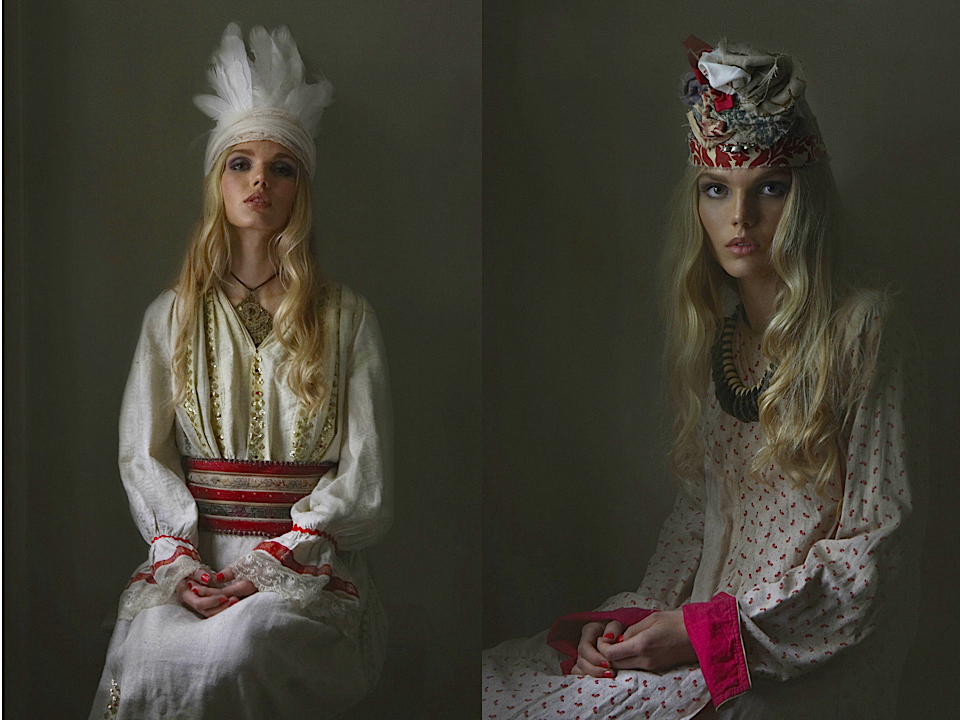
photos by Gisela Torres
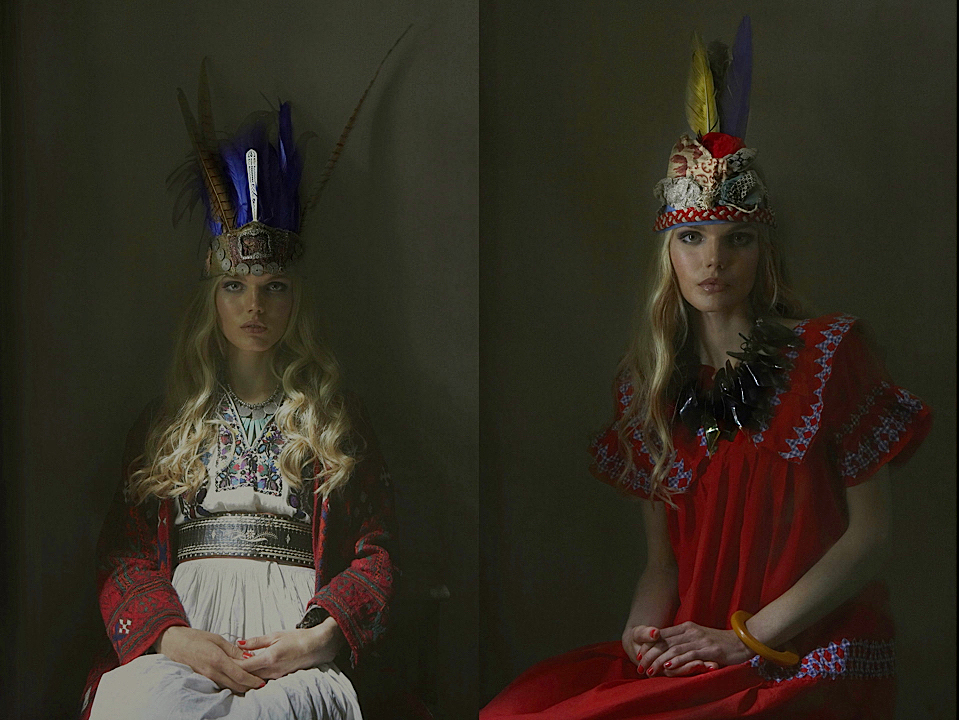
photos by Gisela Torres
sensory paper work
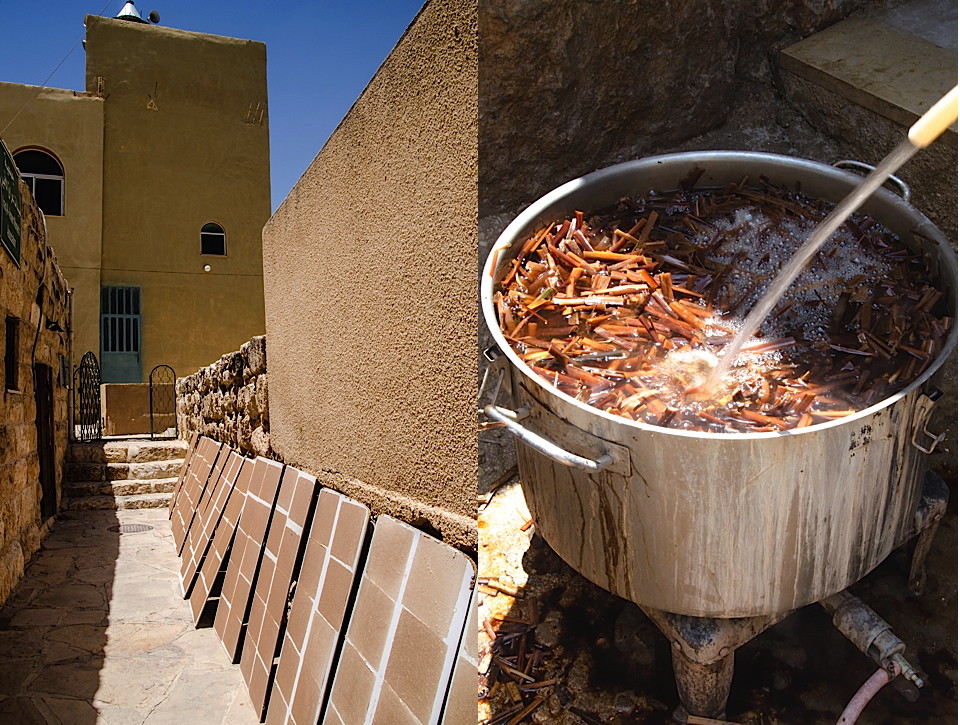
Discovered at one of the most beloved locations of the London Design Festival; the design shop named “Mint” located in Kensington, a humble and touching project by Studio Gutedort and the woman from Iraq El Amir in Jordan, generates nothing but great empathy.
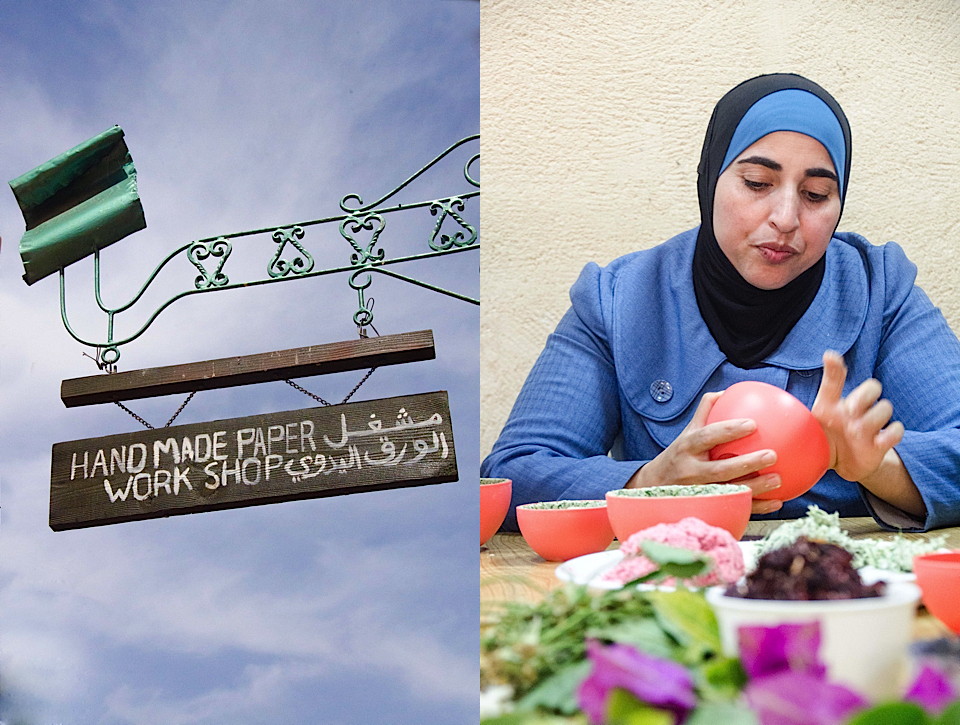
Invited by Lina Kanafani, the mastermind behind Mint, Studio Gutedort travelled to the Middle East to work together with women from a popular historical site named Iraq El Amir. The aim of the project was to invent ways to produce locally crafted products in a sustainable way to generate a solid income for the community.
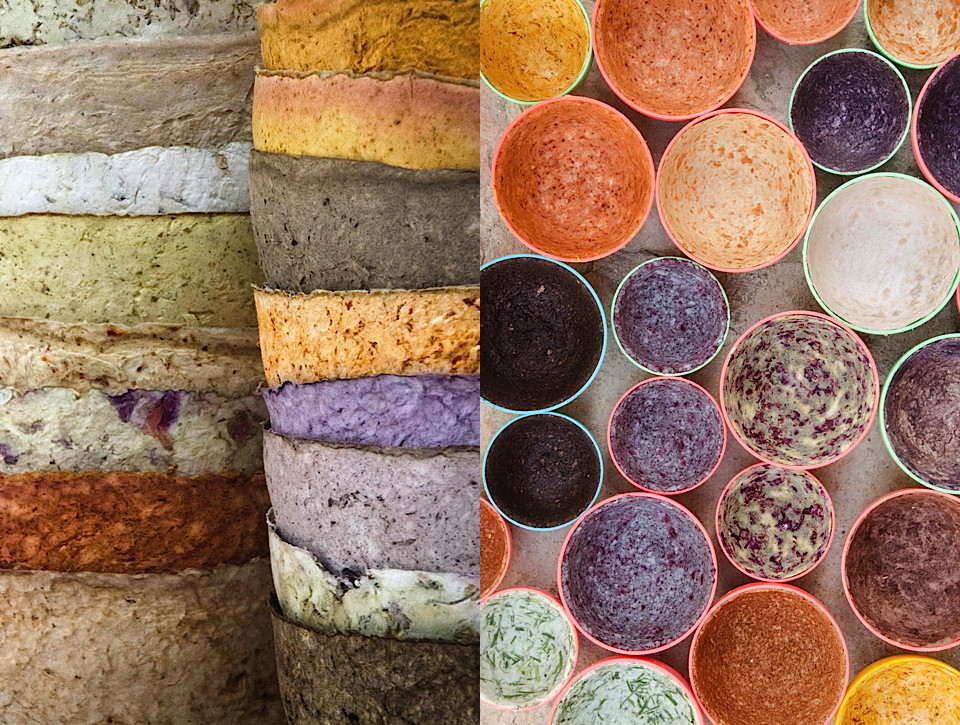
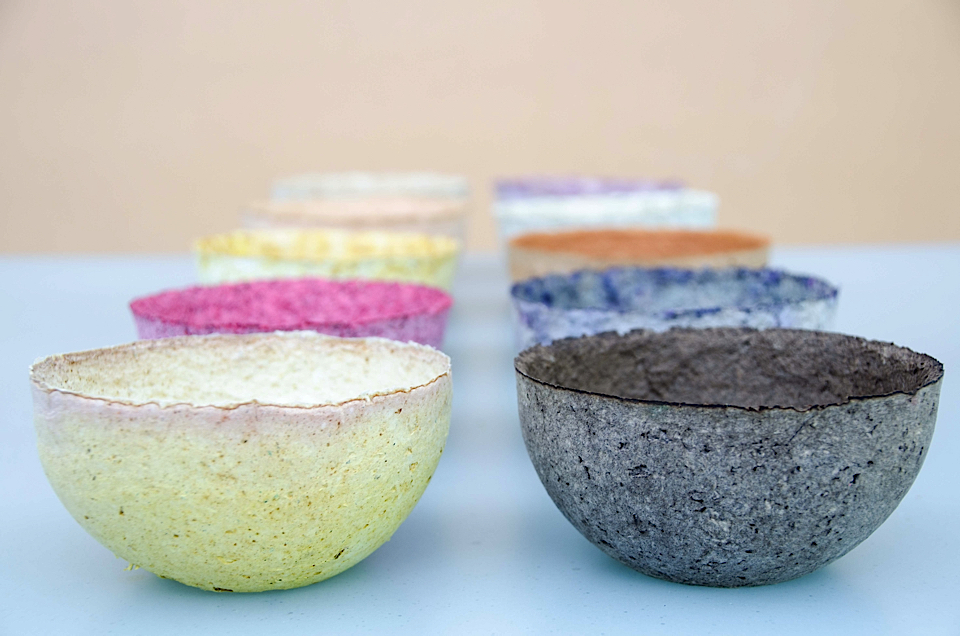
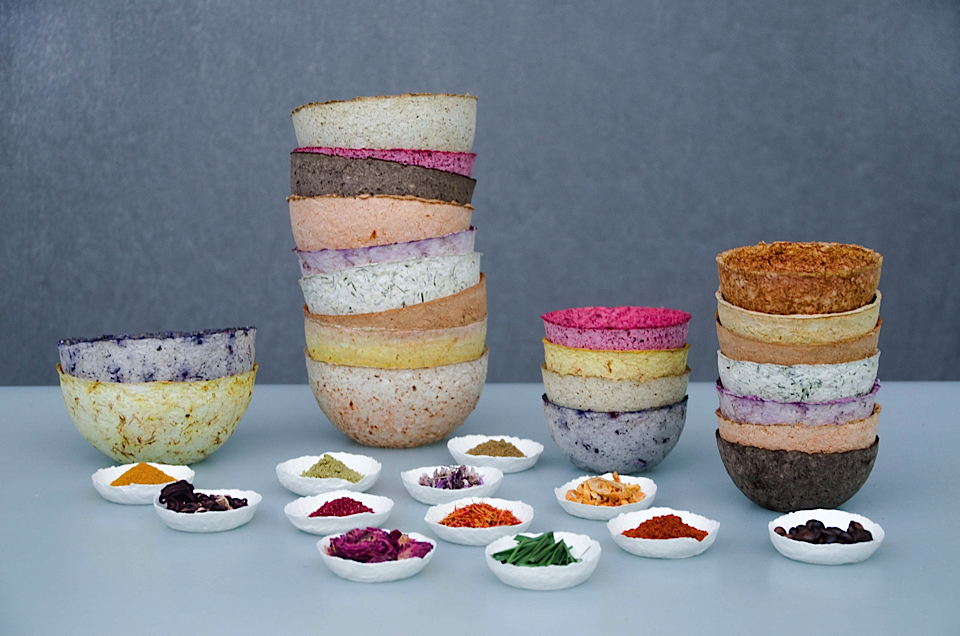
Lina invited the girls of studio Gutedort for their expertise and innovation in natural colors. To continue on their work for “Krautfarben”, where the studio investigates the dying possibilities with red cabbage, they decided to work together with the community in making naturally dyed paper bowls using as little water as possible.
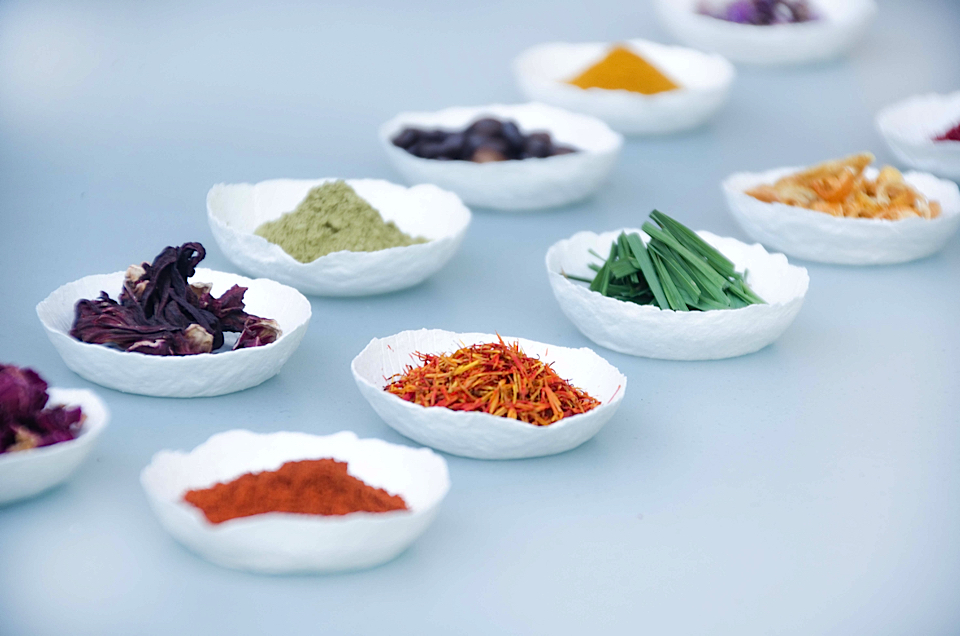
The paper bowls are fully absorbing their local environment, using natural spices and herbs from the local market for dying the paper in different hues. What makes these bowls so charming is the use of curcuma, coffee, paprika powder, sumac, carcade, palm leaf and mansaf green as color pigments, products which are usually used as a spice to change taste and to add flavor. The result of considering spices as color pigments for the process of paper dying is a sensory product that becomes alive. Each individual bowl evokes a different sensation, spreading culinary smells; combined with beautifully dyed papers in resembling colors and touch.
Willem Schenk
master weavers of bhujodi
MOOWON is an online magazine unearthing noble values of the past, capturing the essence of a place, and inspiring respect for the ways people make or do things. Its stories connect readers to the unique, extraordinary people and things of our world: masters who revive vanishing arts, ideas and places that embody beauty and authenticity. The following is an excerpt from its story on the master weavers of Bhujodi in the Kutch region of India.
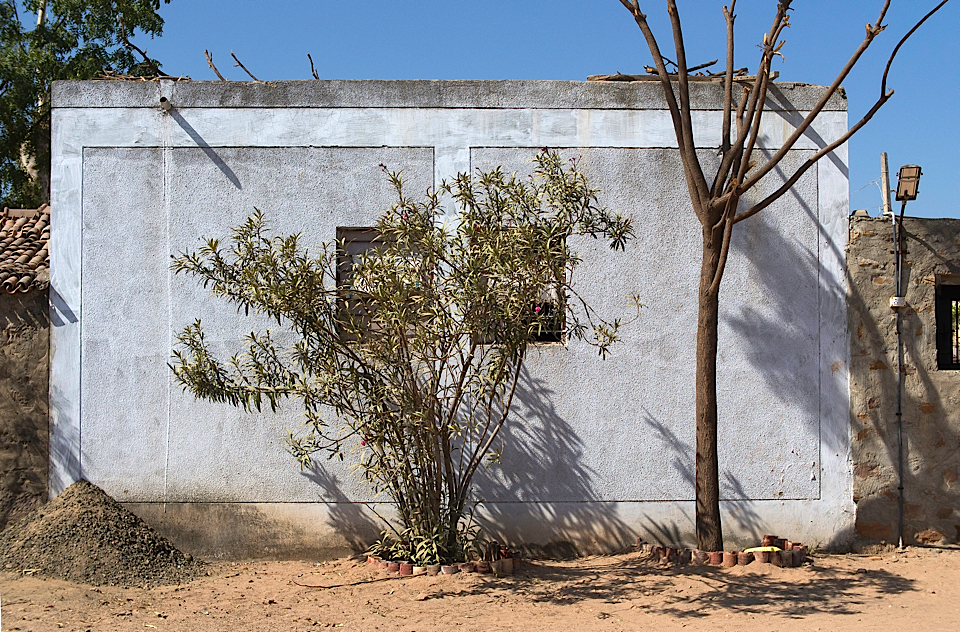
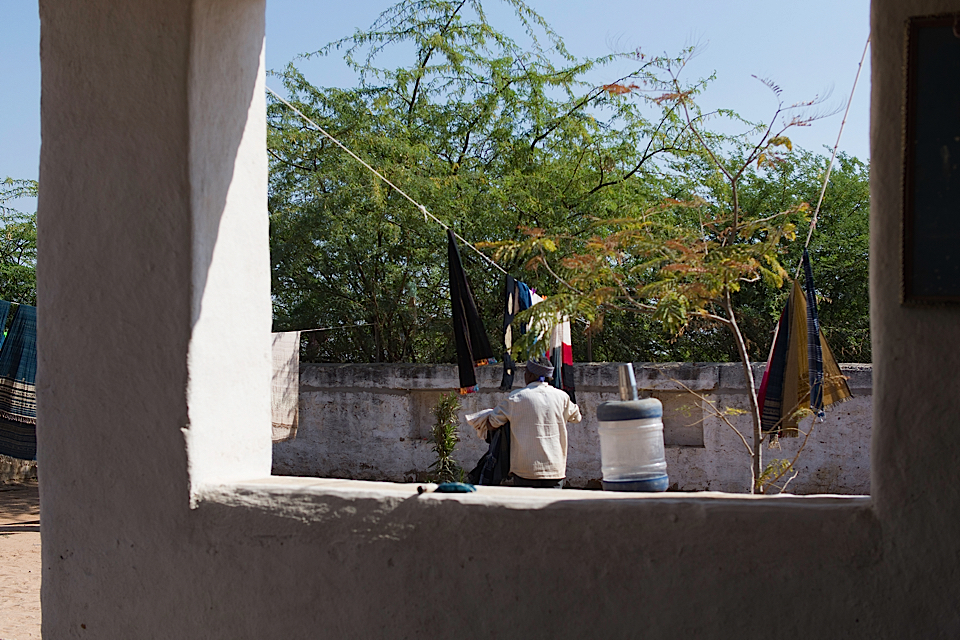
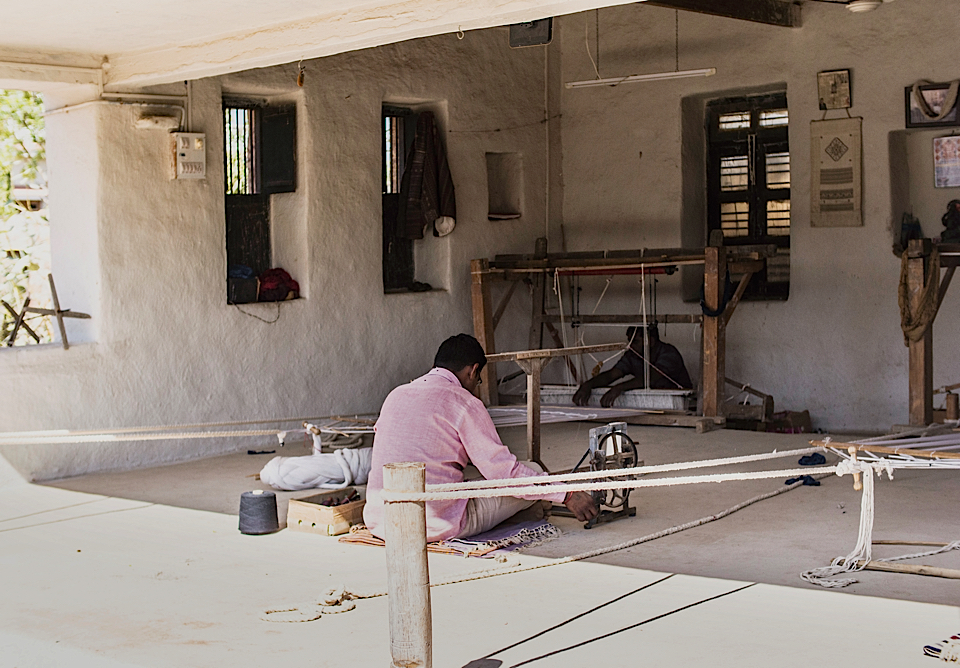
A sun-drenched yard.
An airy, low-lying stone workshop.
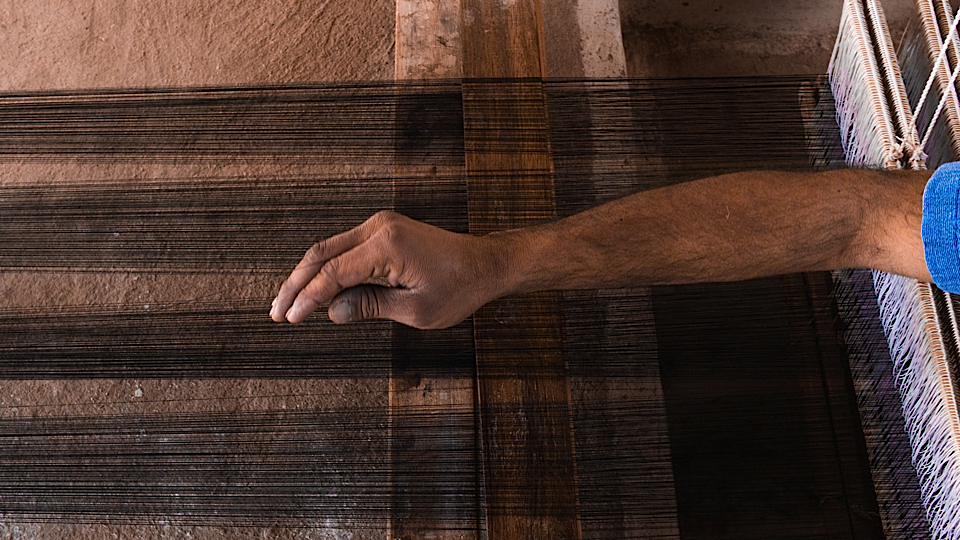
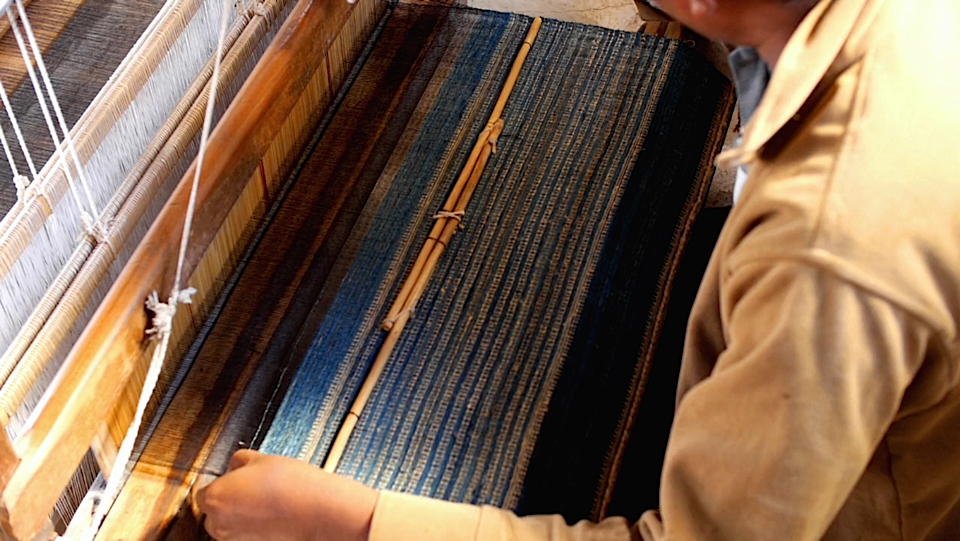
There, meditative rhythms of traditional looms set the pace of time.
A tree canvased against whitewashed wall stands bearing one lone rose bud.
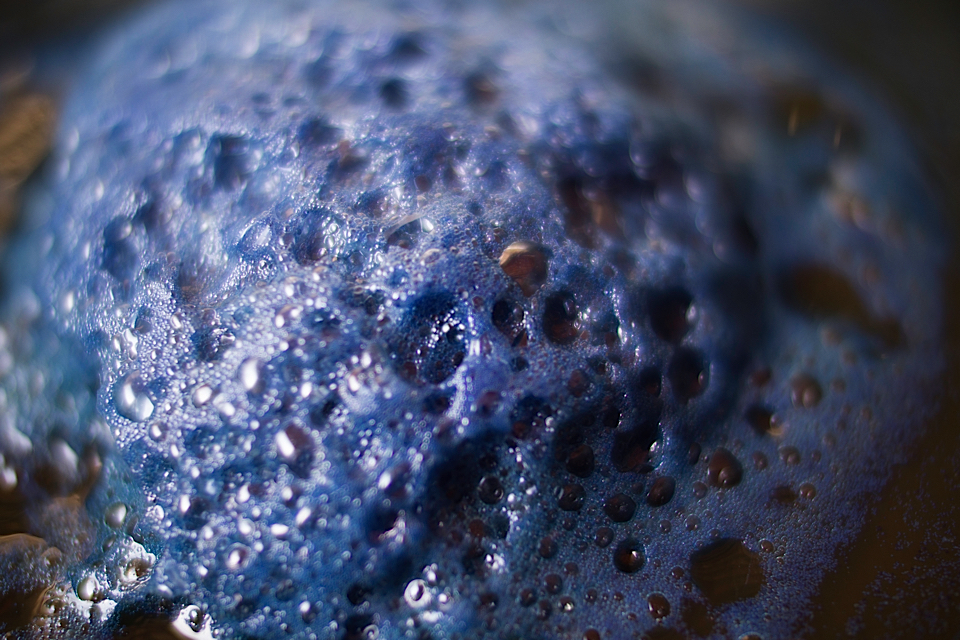
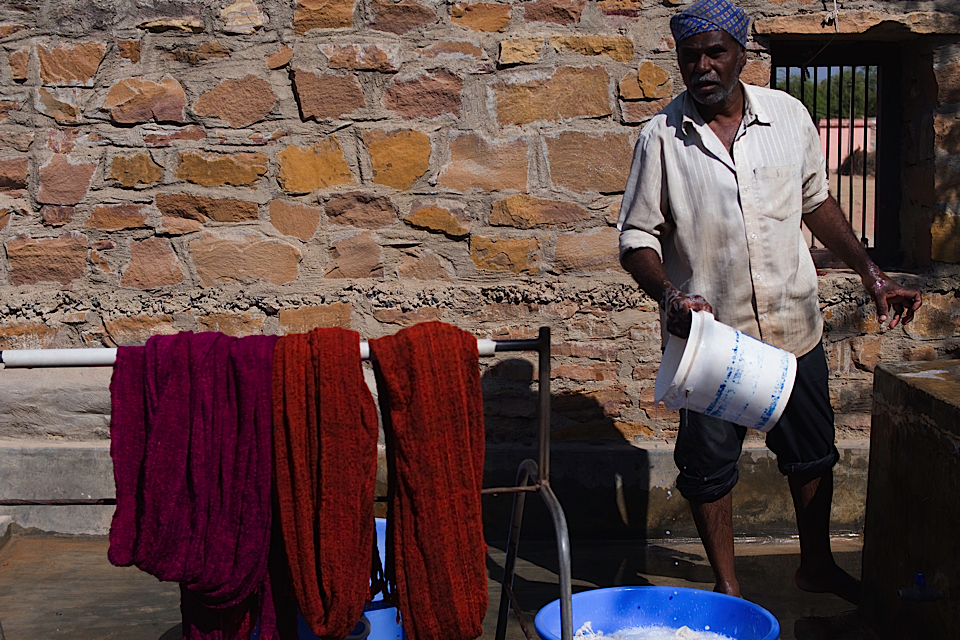
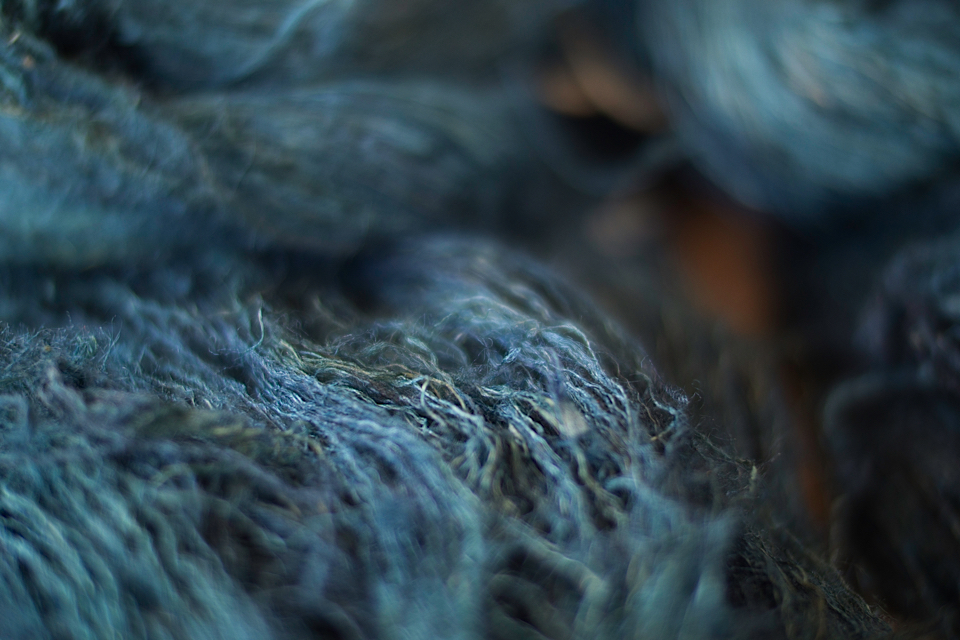
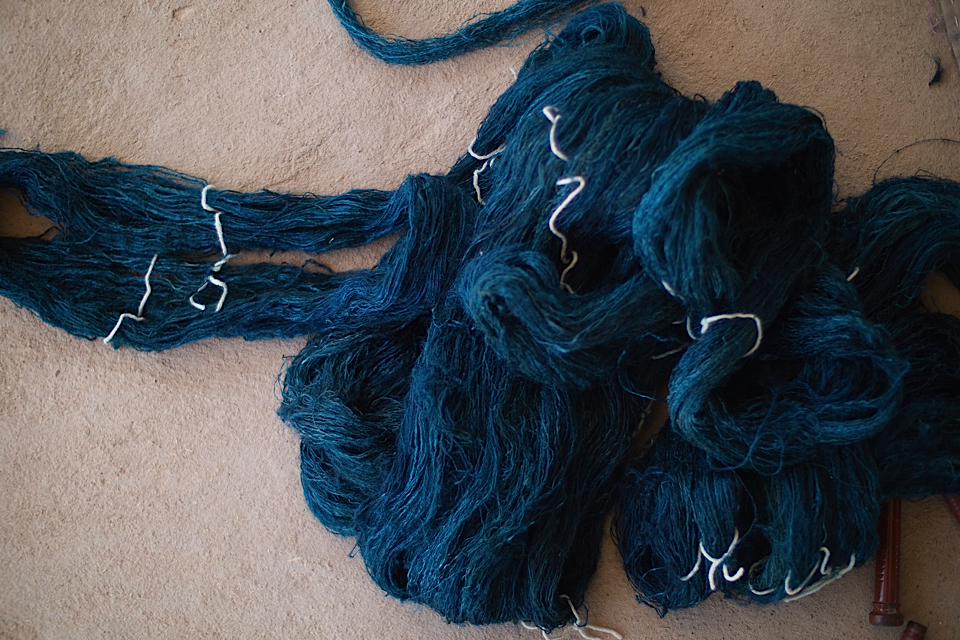
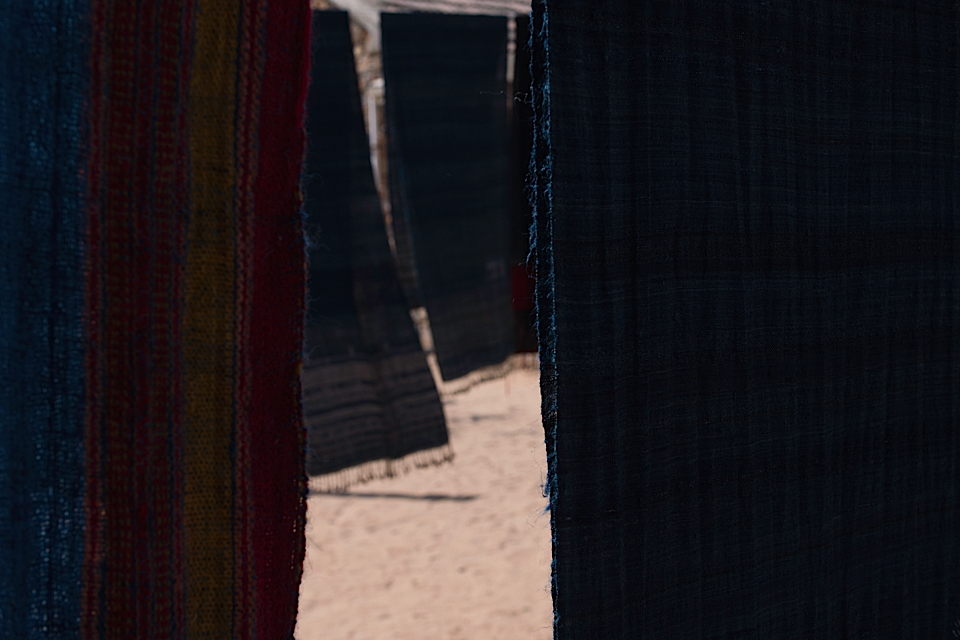
Anchored to the ground are pots— opaque wells of indigo, seemingly bottomless and infinite.
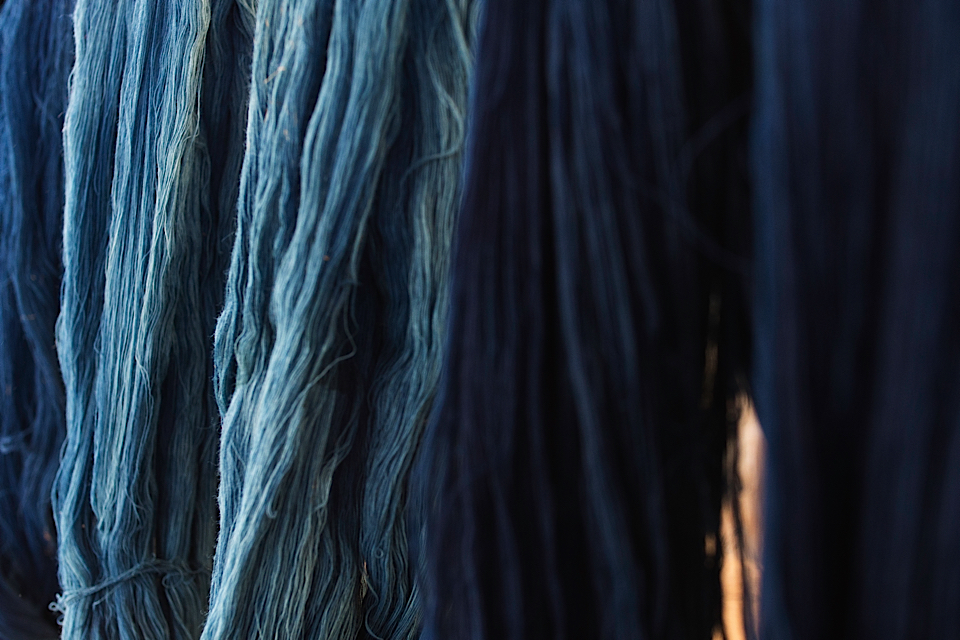
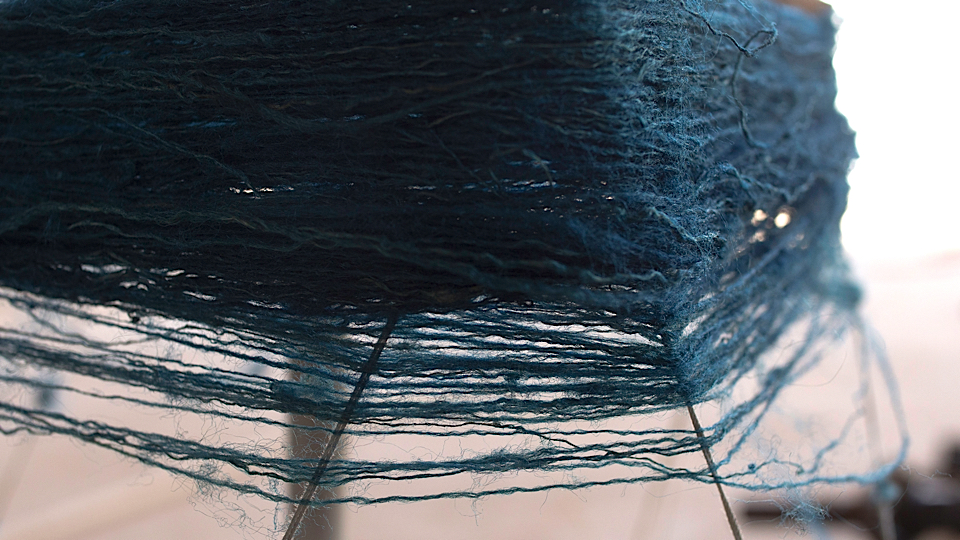
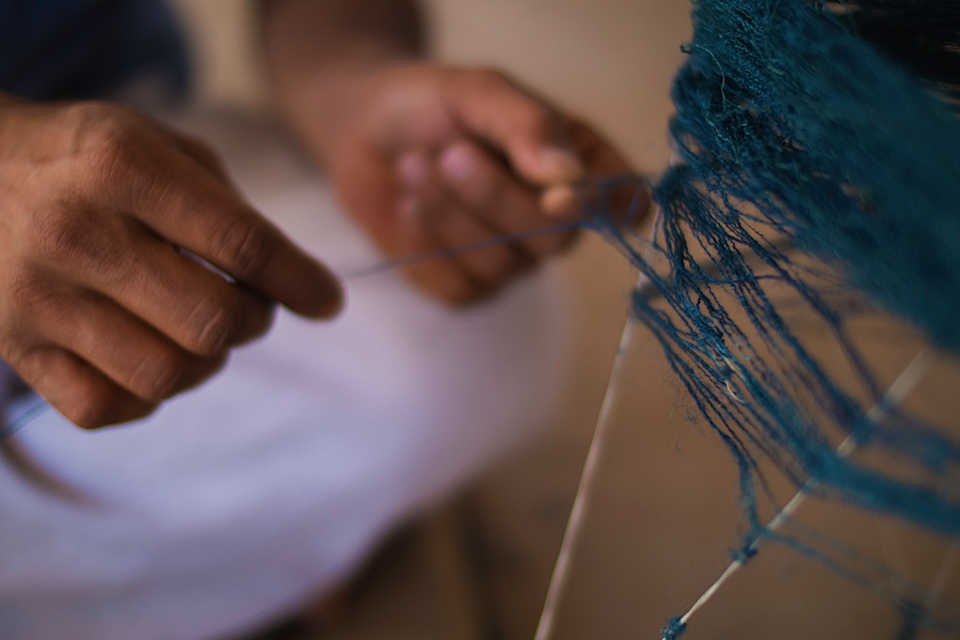
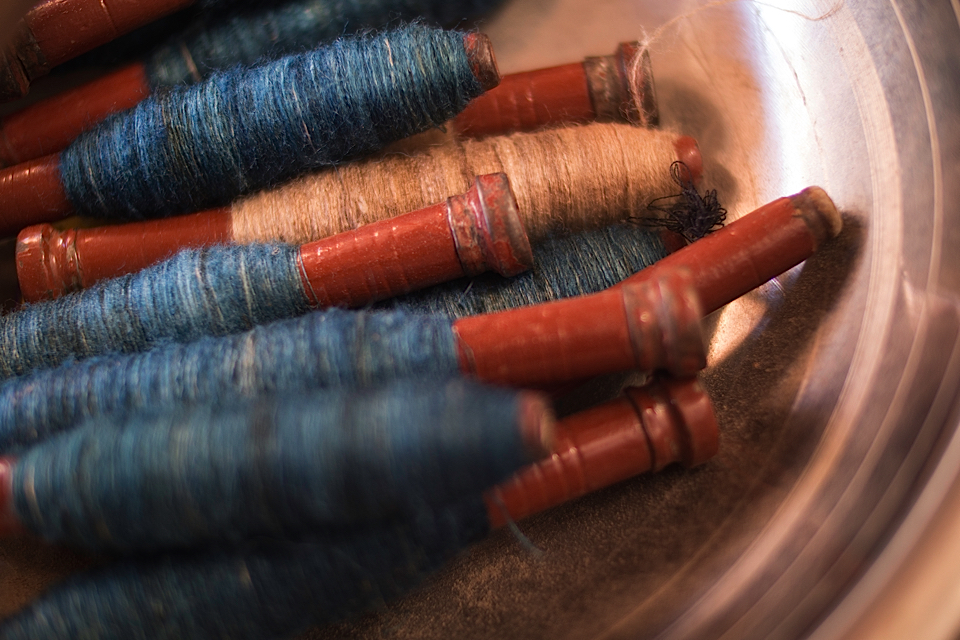
Above, handspun yarn in subtle gradations of indigo flirt with the silent arid air.
Woven into the rhythm of this open-air atelier are the soft yet lively melodies of Kutchi conversations.
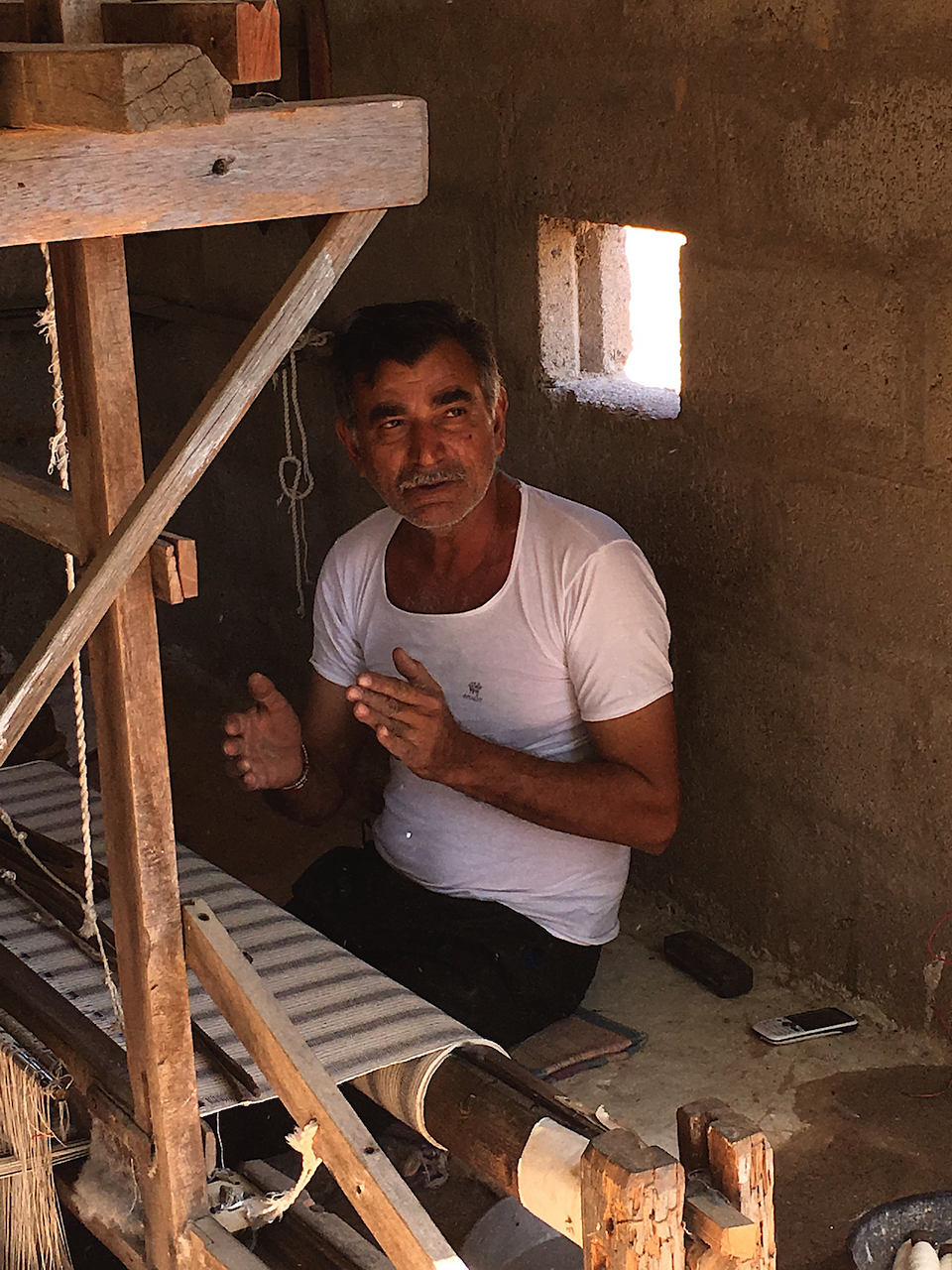
Welcome chez Vankar Vishram Valji, where a multigenerational award-winning family continues the heritage of fine weaving par excellence. Vankar is a name of a social group whose main occupation is the weaving of cloth, and Bhujodi has been home to the « weavers » for centuries.
Up until fifty years ago, weaving was not an year-round activity. Bhujodi’s inhabitants dedicated half of the year to farming, and the other half to weaving. But due to climatic shifts that caused inconsistency of the monsoon and its consequential lack of water, farming became less reliable. In order to sustain a living, the shift to weaving became the community’s main livelihood.
The Vankar brothers, Shamji and Dinesh, two of the six sons of Vishram Valji, shed light on a quintessential factor that defines a highly skilled weaver.
The village of Bhujodi is now full of weavers. But how does one distinguish the quality of a weaver’s work from that of another, beyond that relative degree of « taste » that one may own, or years of expertise most people do not possess? Dinesh’s response is humorous and poignant: « It’s just like handwriting. Some have good handwriting, some have bad handwriting.
Good weavers work with their mind. The mind needs to « see » the pieces. Some people do not see it. But those who have been the benefactors of generational continuity see it. According to Dinesh, it is not just about weaving—the mind needs to be trained. They have lived with the art and have been weaving for generations so they recognize what quality needs to be.
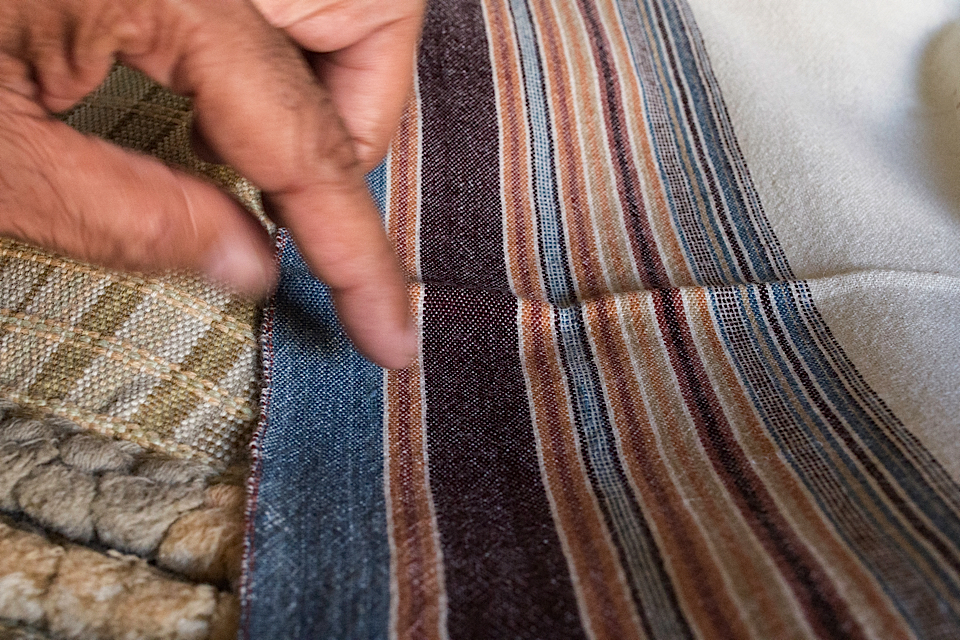
The best weavers are recognizable by the borders they weave. Tradition dictates a certain technique for the weave, identifiable in the amount of thread counts, a specific design, and orientation of the weave. In essence, the weaver knows and understands the technique. This refined « language » and code help distinguish the novices from the skillful artisans. The newcomers don’t know.
Besides its telltale function to identify the skilled, the border also has a functional purpose. When a shawl is worn, the edges are the first to deteriorate. Hence, the borders are not just about design or aesthetics, it is also about function.
"Certain weavers, they just want to sell. They don’t even think about tradition and what our forefathers did."
Mona Kim
www.moowon.com
Mona started a campaign on Kickstarter to publish a beautiful book ...
Support her to never forget how beautiful the world is !
tree of life
Courtesy of moowon.com / Photo by Mona Kim
MOOWON is an online magazine unearthing noble values of the past, capturing the essence of a place, and inspiring respect for the ways people make or do things. Its stories connect readers to the unique, extraordinary people and things of our world: masters who revive vanishing arts, ideas and places that embody beauty and authenticity. The following is an excerpt from its story on the rare art of Rogan.
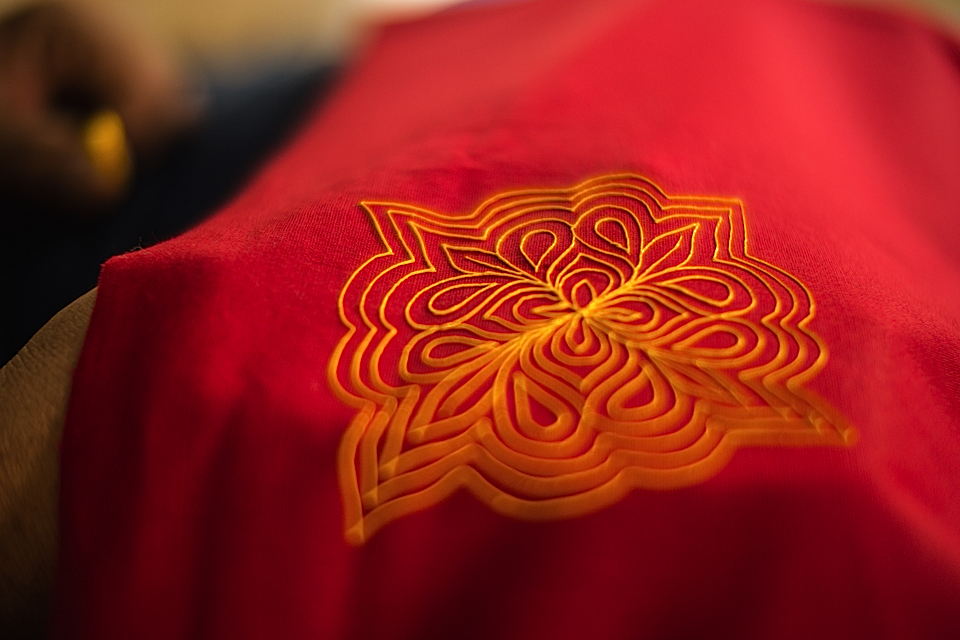
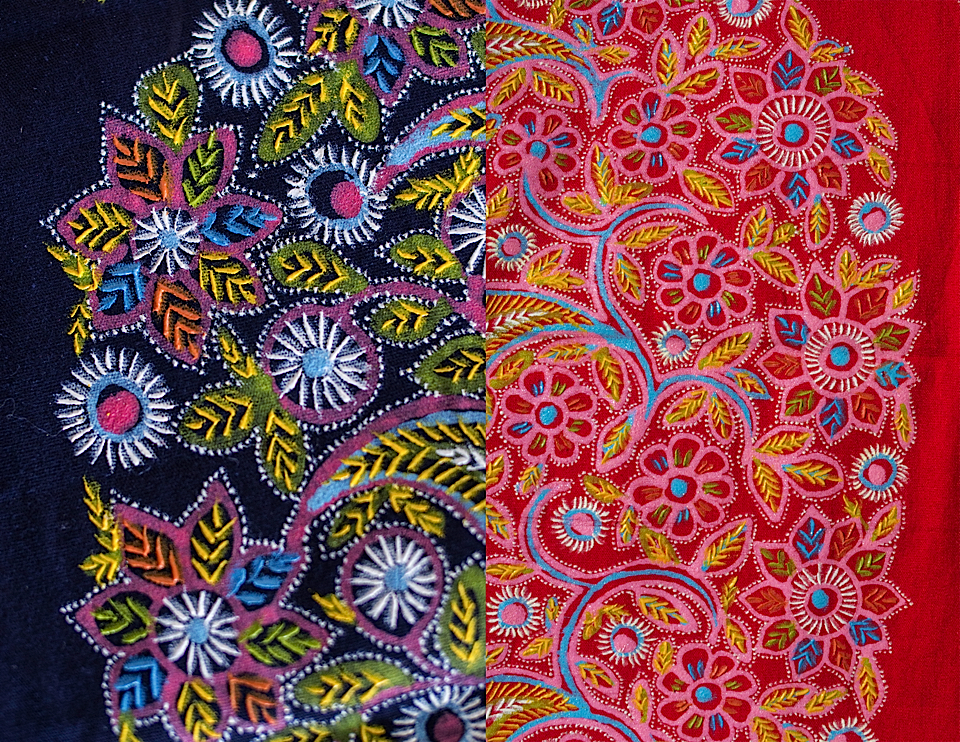
The ancient and rare craft of Rogan art comes from Persia. Rogan in Persian means "oil-based". The motifs used in Rogan art, such as geometric flowers, peacocks, and the tree of life, evoke a once-sublime culture and its understanding of beauty.
In the sleepy hamlet of Nirona in the Kutch district in India, there lives a family who has kept this art form alive while others had decided to abandon it. The Khatri family has held steadfast to this intriguing craft for over three centuries, preventing it from becoming yet another vanishing art.
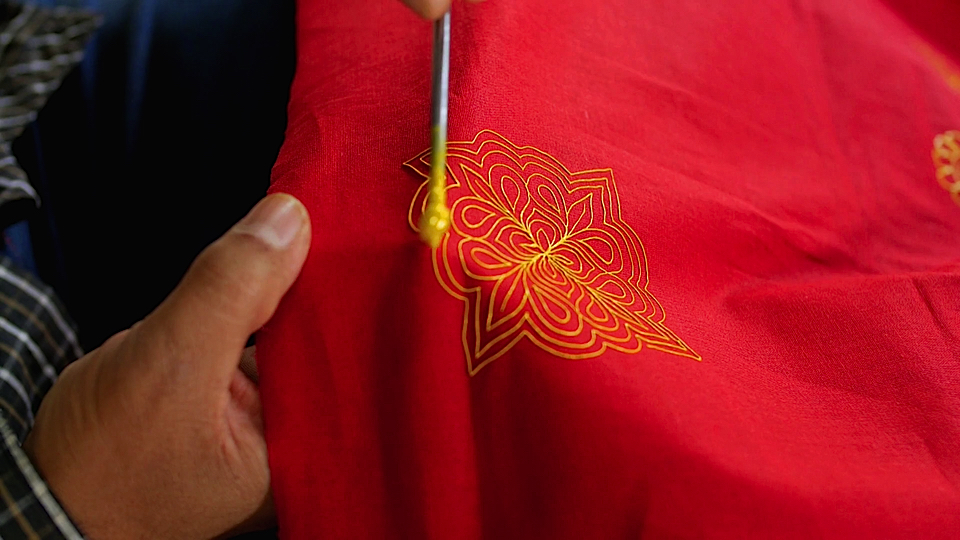
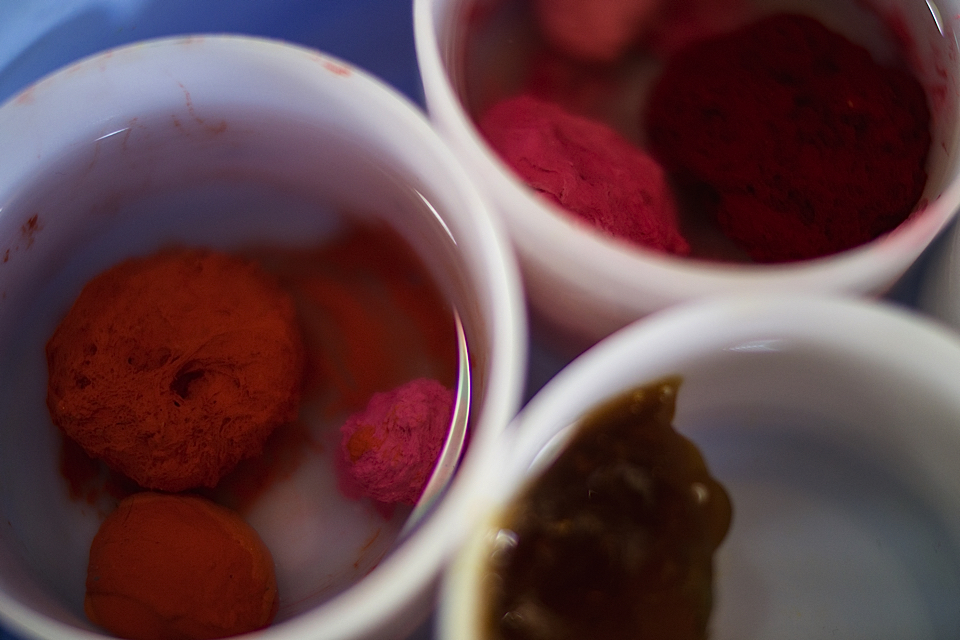
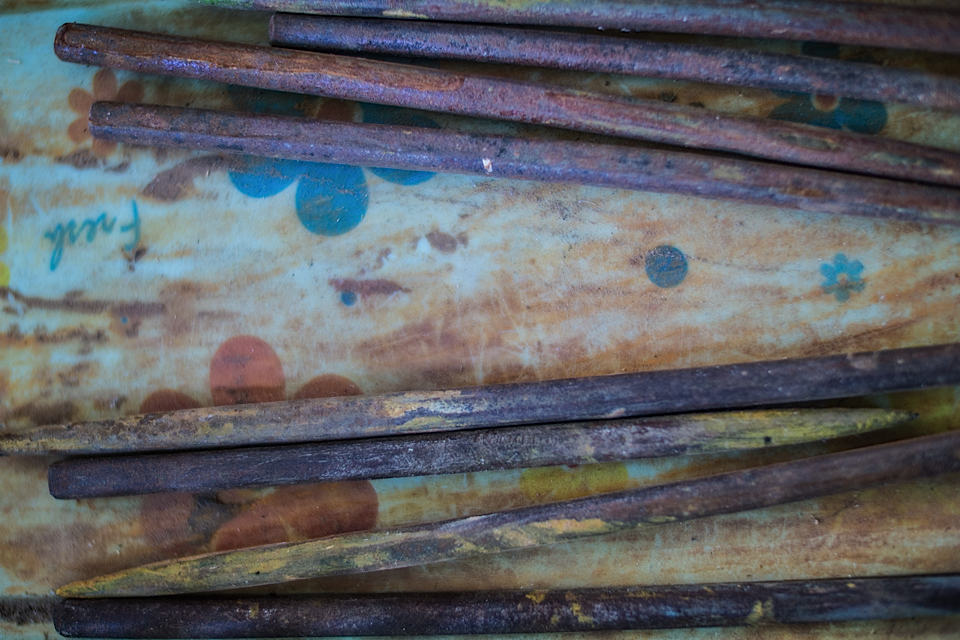
Mysterious incongruent spheres of vibrant natural colors mixed with castor oil adorn the small bowls within a larger bowl. Sumar Khatri, a soft-spoken craftsman of remarkable humility, takes a rod resembling an oversized blunt needle and dips it into the yellow pod. What follows are a series of enchanting maneuvers instrinic to Rogan art. Nimbly, he twirl-wraps the color around one end of the rod. Against the base palm of his right hand, as if it was an easel, he mixes the color to achieve a perfect consistency. Sumar then gently stretches out a vibrant yellow strand from his "easel" with the rod, creating that perfect fine "thread" to transform it into an exquisite flower.
Air weaving: Our common understanding of weaving involves a needle and color thread that pierce through fabric to generate imagery. Rogan defies this logic: the rod "pre-manipulates" the strand of color in the air to create intended motifs before it hits the fabric; the fingers under the fabric help shape the final form into the fabric. In this sense, there is a dialogue between the two hands.
It is only when one witnesses the time, agility, and the utmost control required to draw a simple flower, that one begins to understand the virtuosity behind highly intricate pieces such as the tree of life. It is a calling for those with Buddha's patience, willing to embark on the long road of practice to perfect beauty. "No drawings, no planning. It comes from the heart, to head, to hands."
Mona Kim
www.moowon.com
Mona just started a campaign on Kickstarter to publish a beautiful book ...
Support her to never forget how beautiful the world is !
Courtesy of moowon.com / Photo by Mona Kim
Courtesy of moowon.com / Photo by Mona Kim
Courtesy of moowon.com / Photo by Mona Kim
Courtesy of moowon.com / Photo by Mona Kim
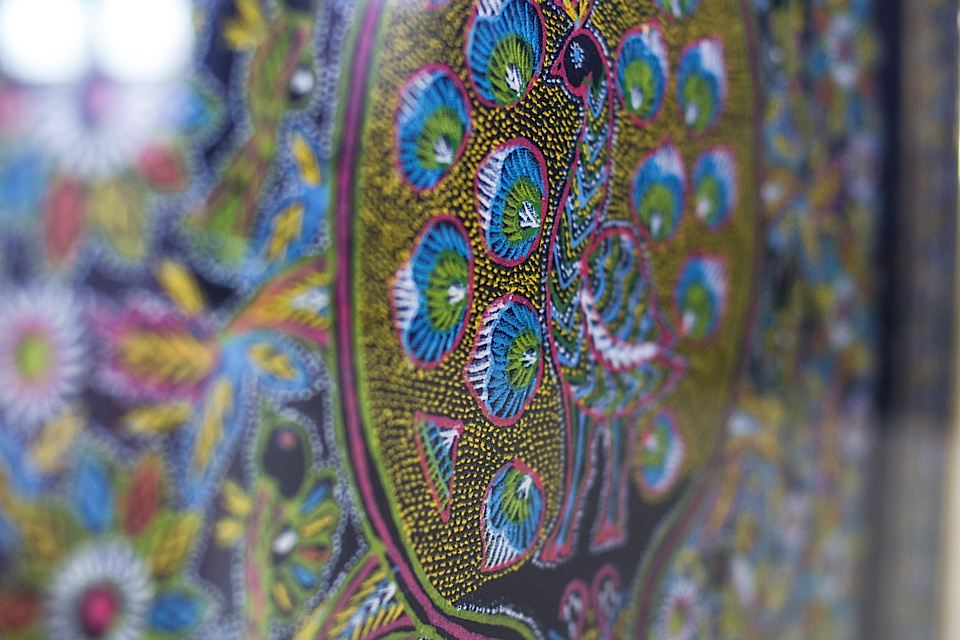
Courtesy of moowon.com / Photo by Mona Kim
emilie roche
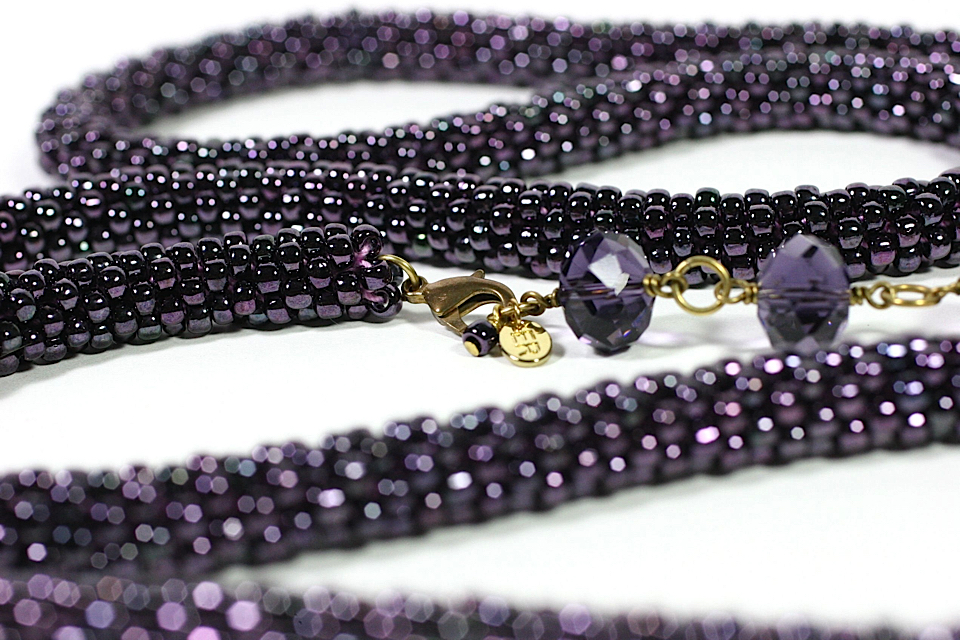
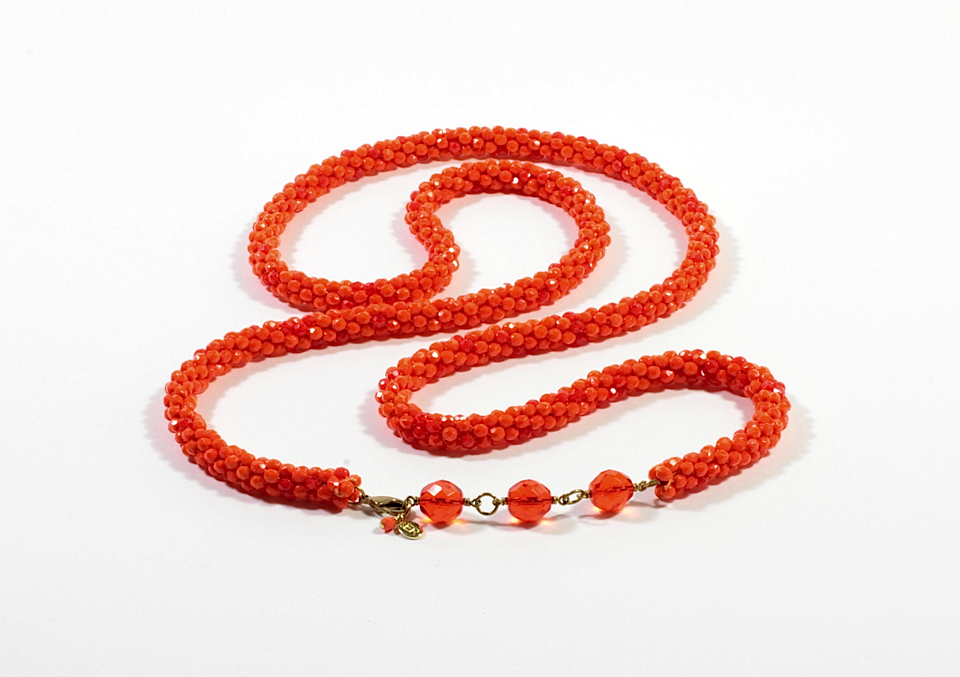
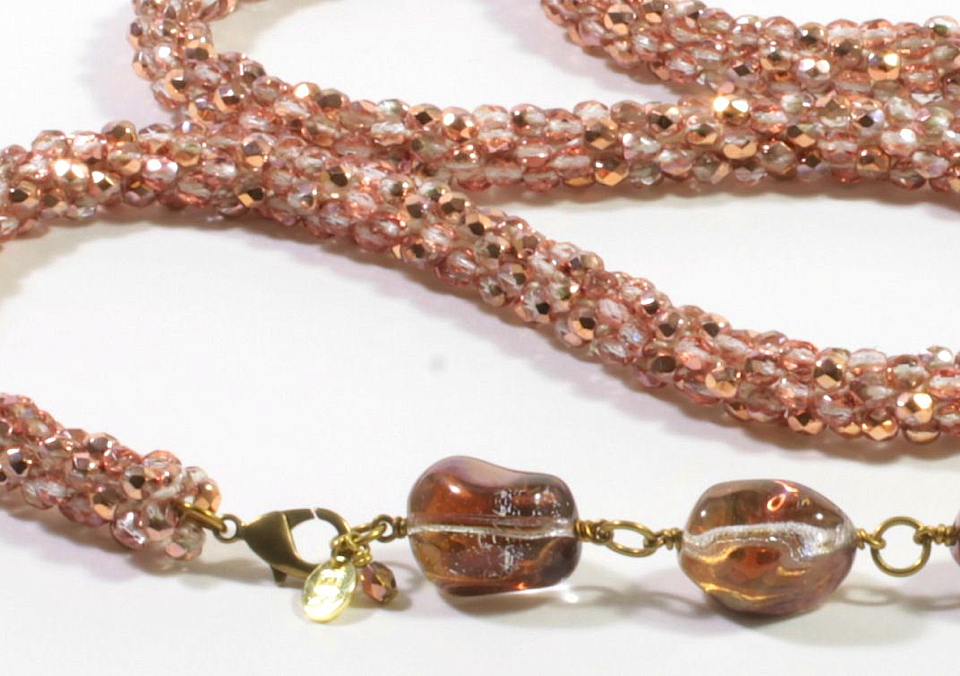
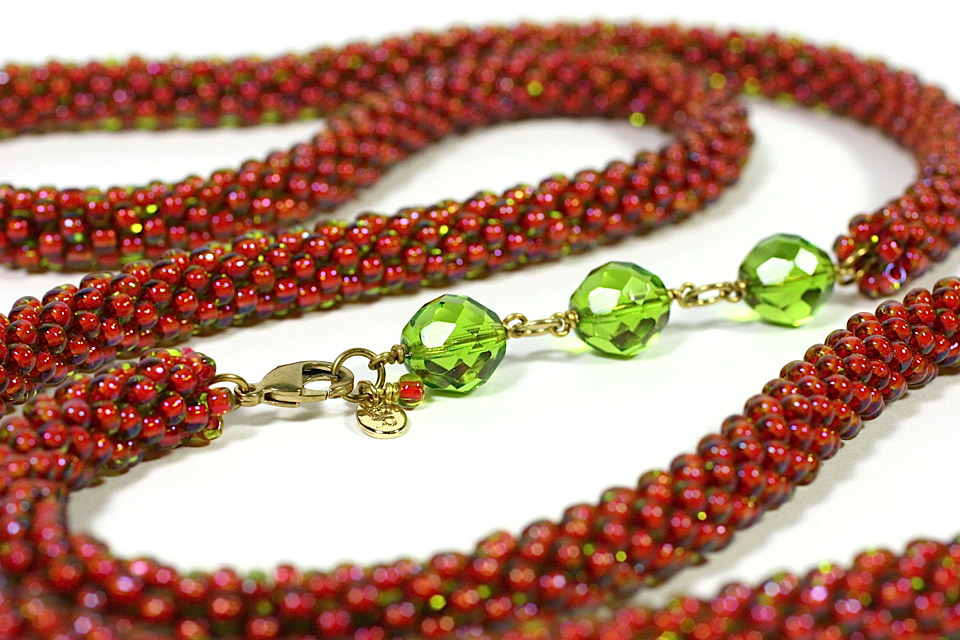
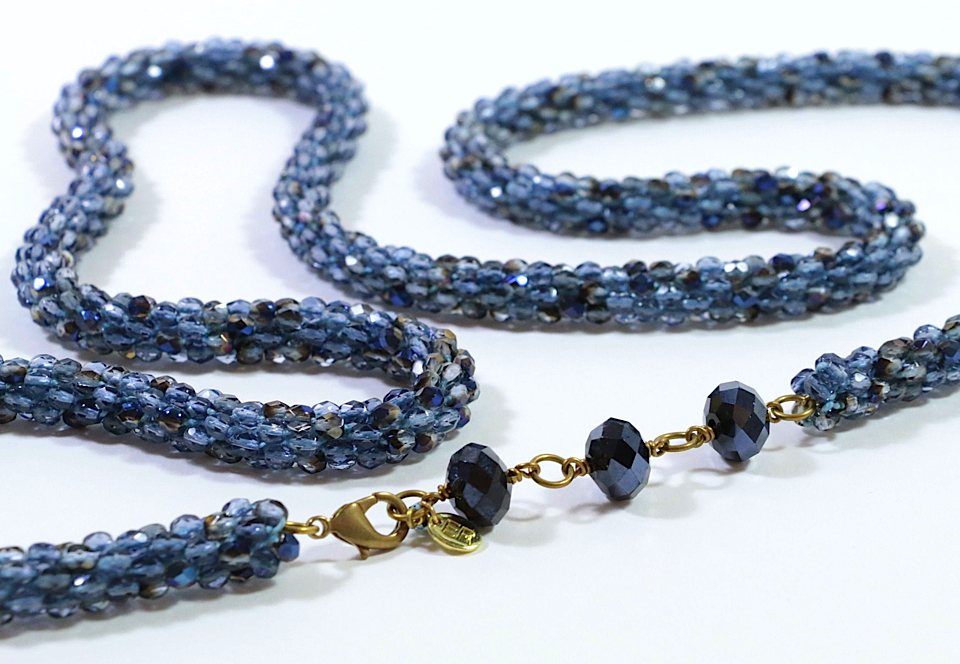
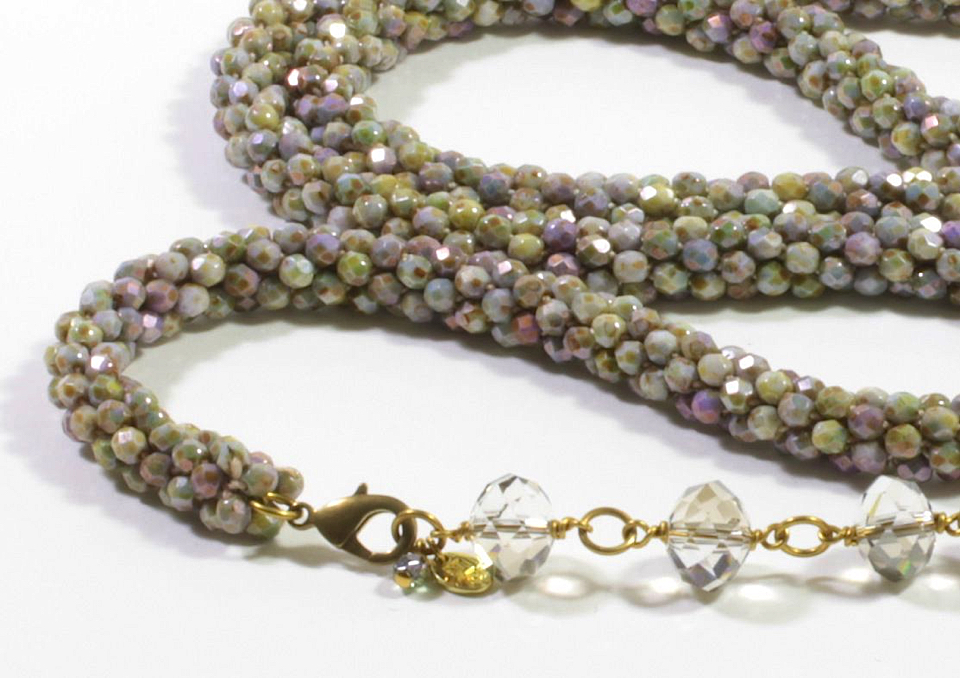
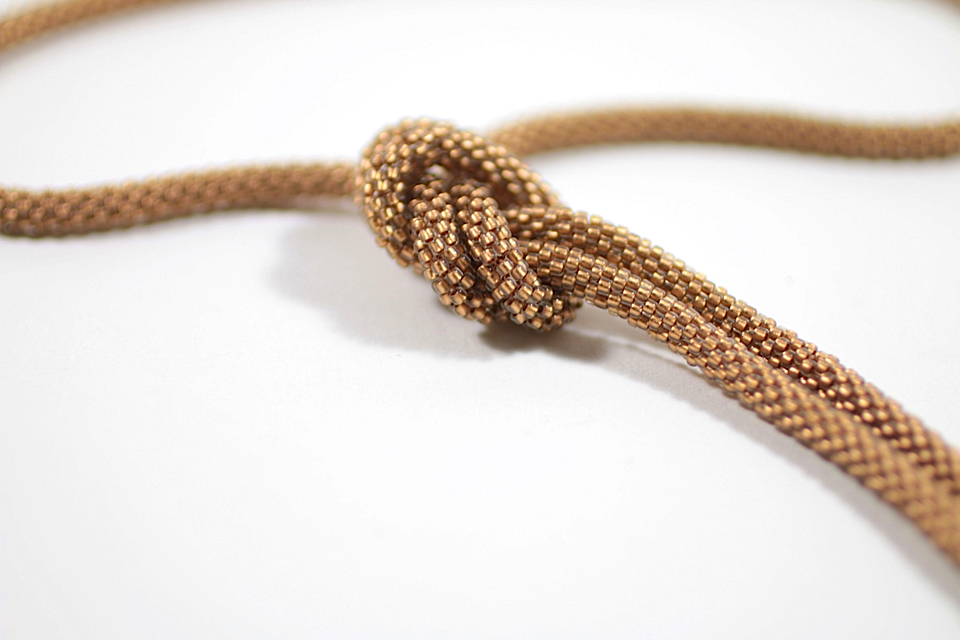
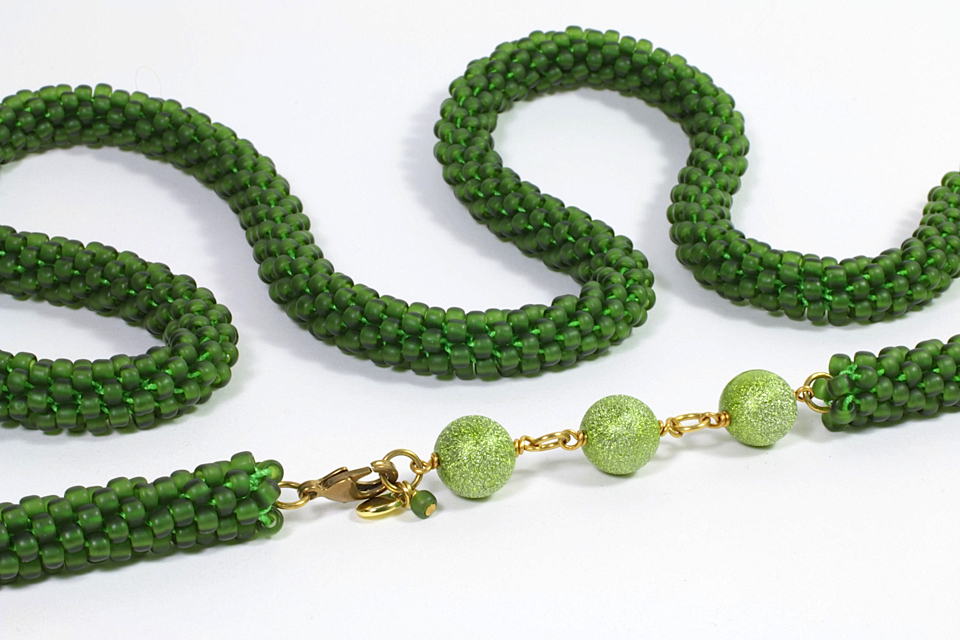
Flowing and supple, Emilie Roche’s creations dress the skin as fine fabric would. Their bearing lends them a surprising presence considering their featherlike weight. Cool at first, the glass snake coils itself around your neck, curls up on your wrist or underlines a waistline that shies away from the constriction of a belt. Little by little, your fingers invite themselves on its moving body, stroke it and lose themselves in highly sensual games of chance. Handcrafted but not plaited or stiff, these smooth jewelry bestows your skin with an incredibly relaxing sensation. Spontaneously, your fingers play with the material and loosen up.
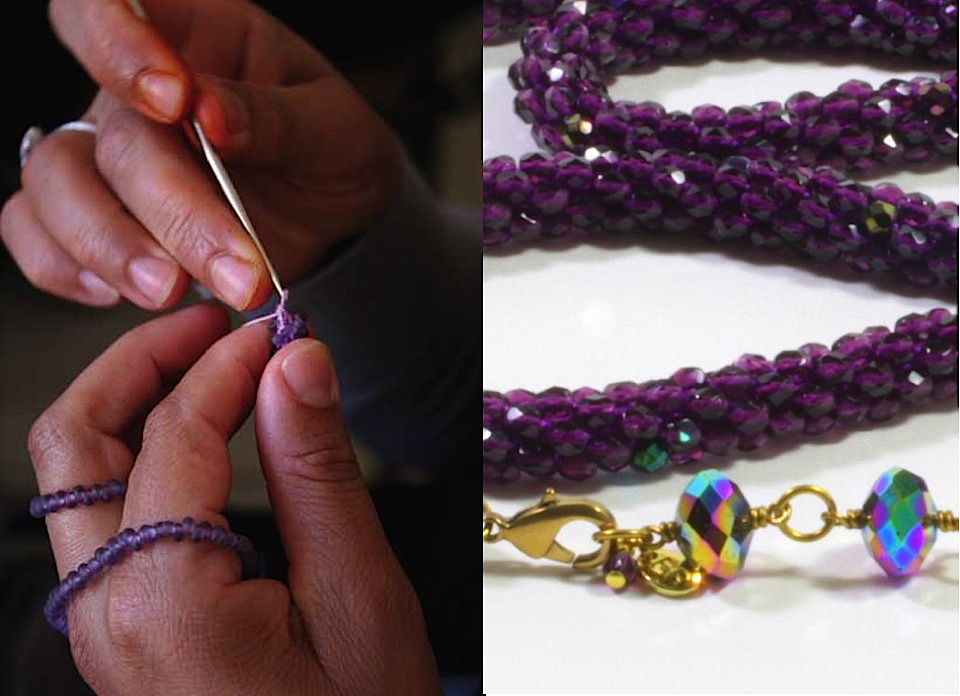
Bead crochet is Emilie Roche’s technique. The first pieces of work using this technique date back to the mid-19th century.
Purses, little bags, bell-ropes or children’s bonnets were then made by idle upper-class ladies.
Curiously, the same technique was found in the Balkan villages and… in the Ottoman Empire’s jails!
To stave off boredom, Turkish prisoners crafted snakes and lizards with bead crochet to give as presents or to sell as a means to better their daily lives. During the First World War, many of them made dozens of bead reptiles, some of these up to 1.50m long!Imported from Japan or Bohemia, the beads come in an endless number of shades, transparencies and shimmers. Matt or shiny, smooth or faceted, they play with light like a stream’s water with the sun’s reflections.
The story started in the corner of a dark shop in Alexandria, Egypt. There was a shambles of items straight out of the One Thousand and One Nights. Emilie spotted an orange necklace, made of tiny beads, took it in the palm of her hands and stroked it. This tiny snake of living light was about to change her life.
The orange necklace remained an enigma for a long time. No matter how much Emilie studied it, analyzed it and dismantled it, she could not penetrate the mystery of its manufacture. Until the day she understood that it had been made by a right-handed woman… From that moment on, left-handed Emilie began to redesign the whole technique the other way around.
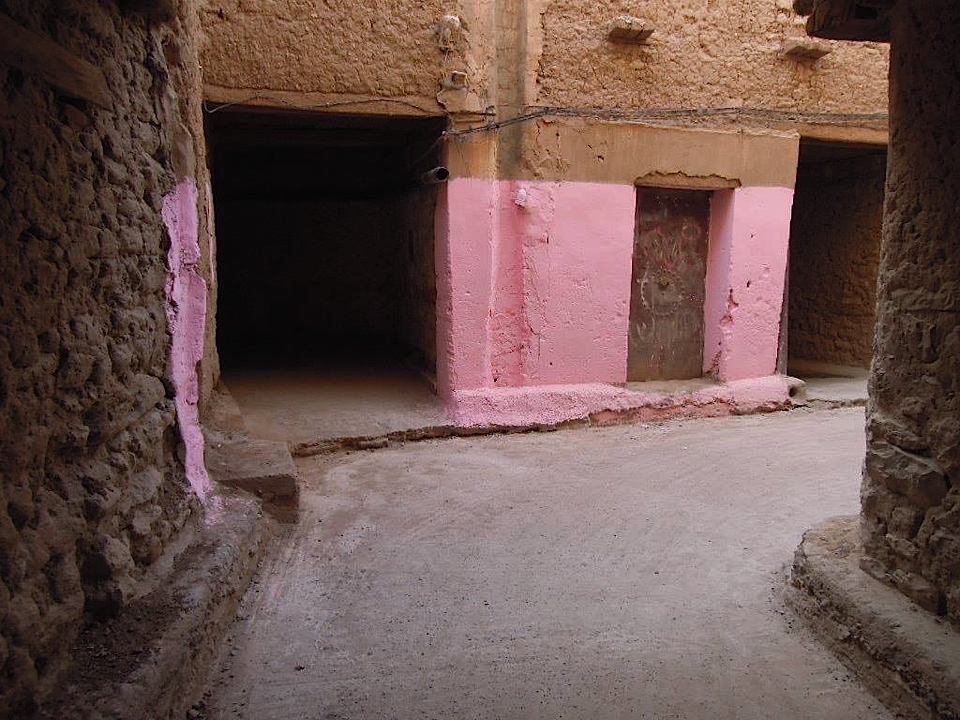
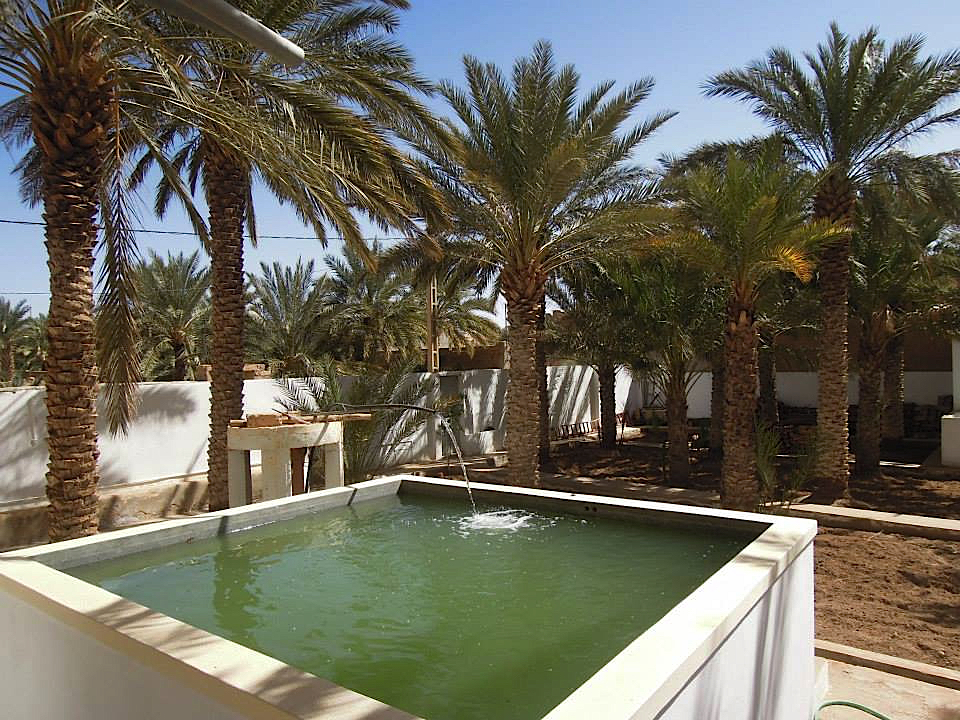
When the beaded ropes were first shown to friends and family, the response was unanimous: she could not stop there! Emilie had to set up a production unit and put her creations on the market. Admittedly, she was trained in jewelry and had just left Fried (the Parisian bead and trimming manufacturer and wholesaler), but she simply could not picture herself going to China and looking for a factory to manufacture her jewelry… At that point, a journalist friend told her about the small Moroccan oasis of Figuig, where the women knew how to work with beads.
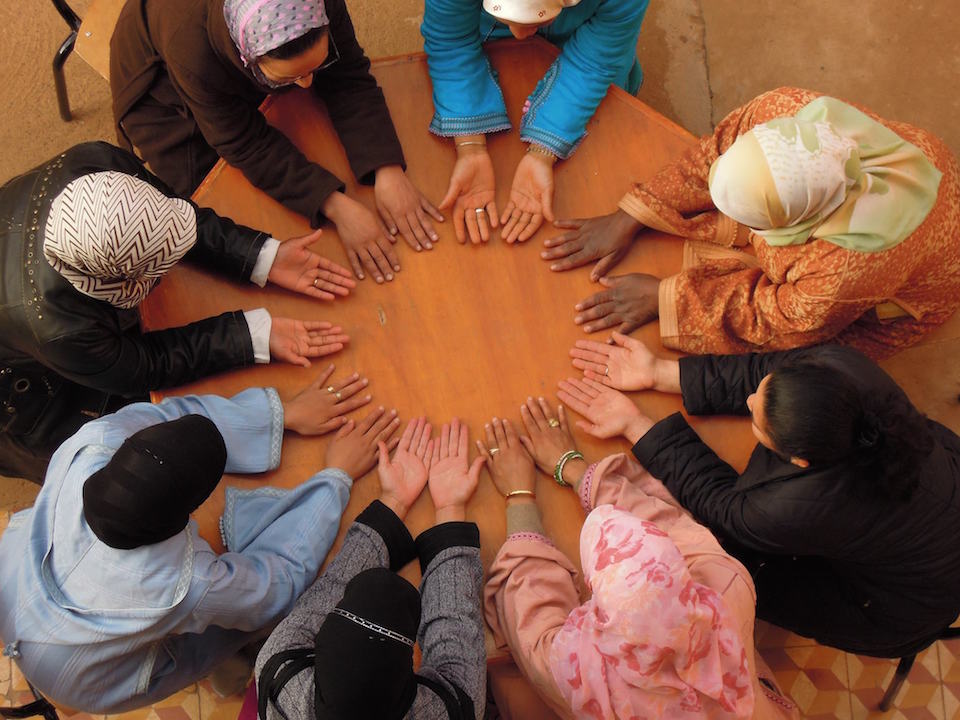
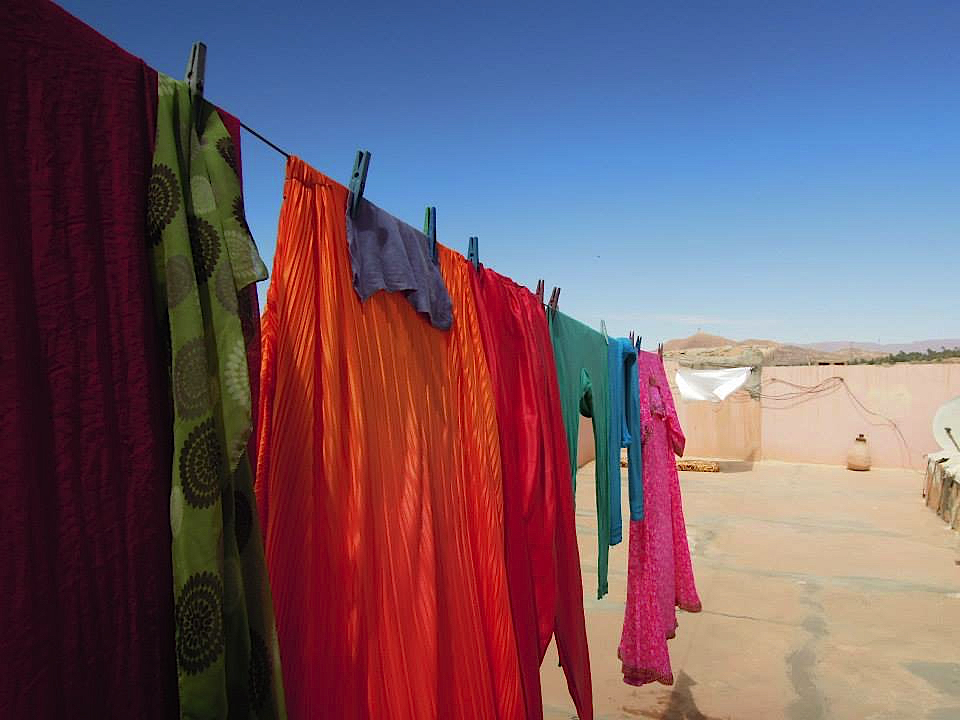
Once in Figuig, Emilie Roche explains she can only train three women, due to the technique’s subtleties. On the first day, ten trainees turn up, around fifteen the next day and about thirty in the following days. Emilie finds herself alone facing these women dressed in haïk, whose ways and language are not her own. Yet the magic happens: after all, isn’t Emilie herself a woman and clever with her hands?
Having developed her own teaching technique (for the right-handed!), Emilie began training the women.With much patience and humor, she transmitted, showed and joyfully explained the know-how that had taken her so long to make her own… After several visits and dozens of hours of training, Emilie Roche can now count on a team of about fifteen “beaders”, all members of women’s organizations based in Figuig.
Ultimately, Emilie’s idea is to ensure that the women in Figuig take up the bead crochet technique to create their own models, adapt them to Figuigi culture and add to the range of handcrafted goods marketed in the oasis.
You can find Emilie's creations in France, Japan, UK , Spain ...
She will also be at Premiere Classe in Paris Sept 4-7 2015

my teacher was out in the desert
Courtesy of moowon.com / Photo by Mona Kim
We are happy to introduce you to MOOWON an online magazine unearthing noble values of the past, capturing the essence of a place, and inspiring respect for the ways people make or do things. Its stories connect readers to the unique, extraordinary people and things of our world: masters who revive vanishing arts, ideas and places that embody beauty and authenticity. The following is an excerpt from its story on Erroll Pires, the last living master of ply-split braiding.Enjoy!
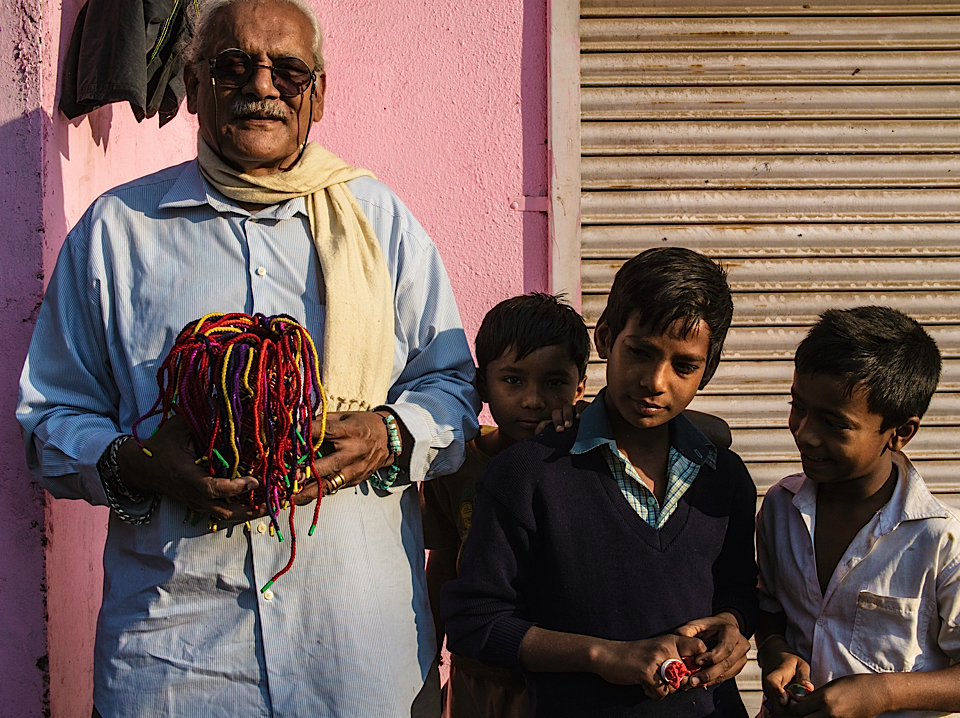
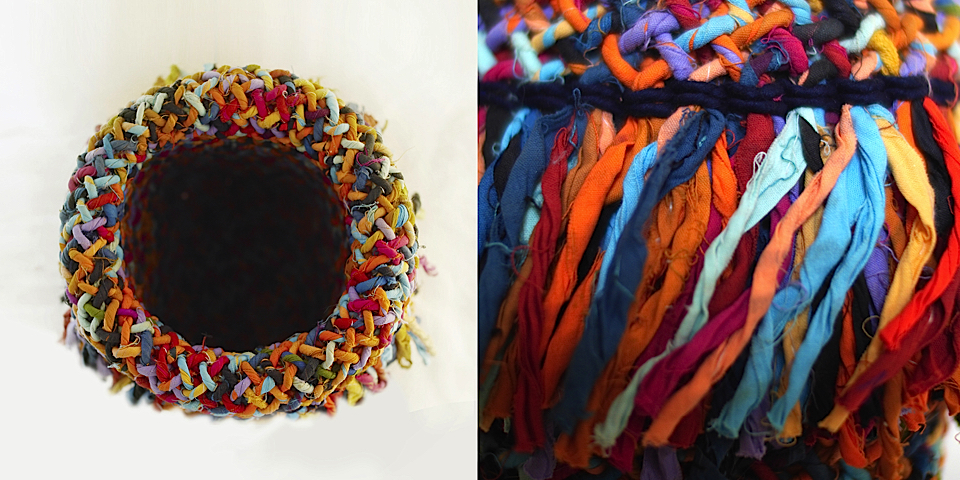
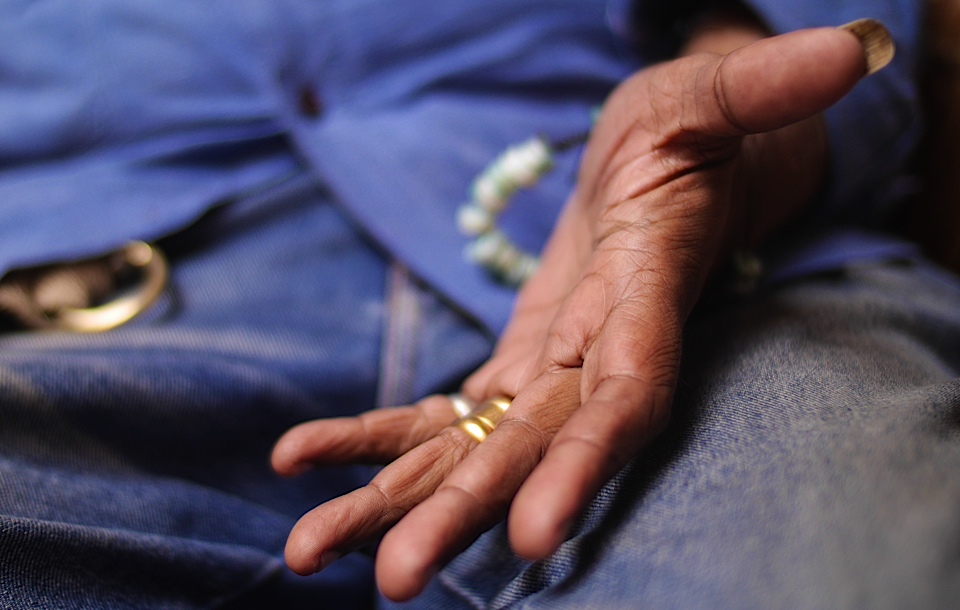
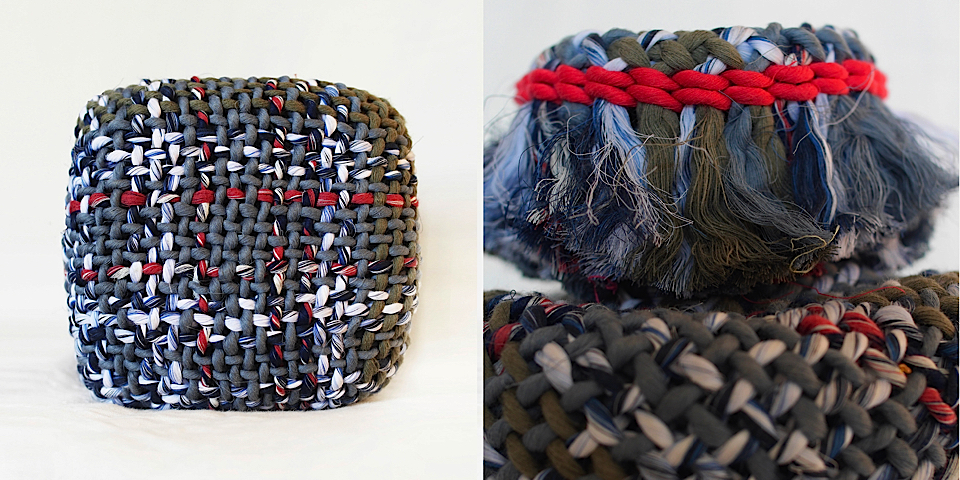
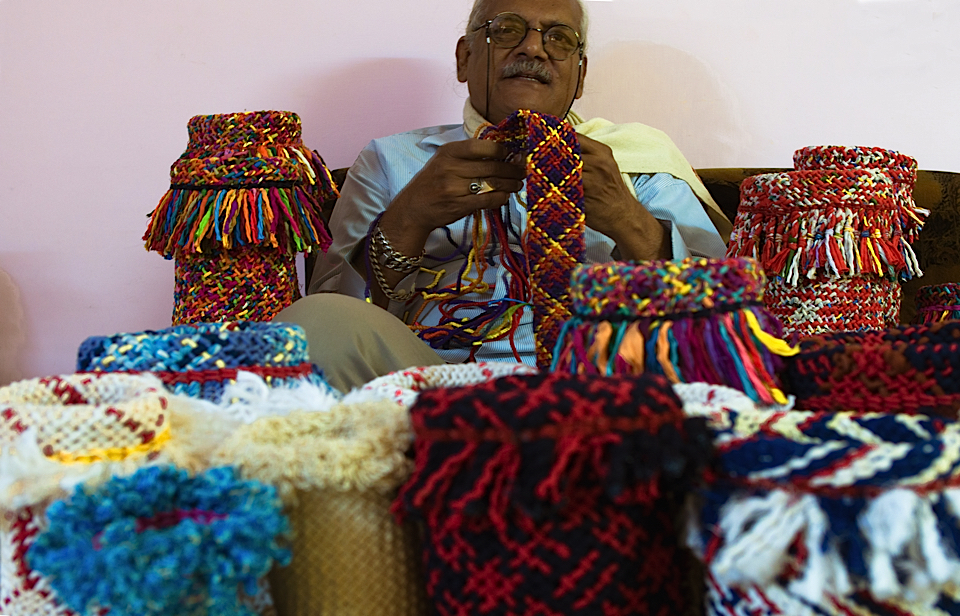
In the ancient modernopolis of Ahmedabad, India, lives a singular man of towering guru-like presence, godly white ponytails, and two extraordinarily long thumbnails. Erroll Pires has devoted his life to ply-split braiding, a traditional technique utilized to make camel belts. He has refined, transmuted, and reinvented its usage for over 30 years in what some would call an obsessive dedication, purposefully refusing the boundary between art and object. His repertoire now extends from traditional camel belts to avant-garde three-dimensional objects and seamless dresses. His tools: his hands. His universe: the magnificent explosion of braided colors.
How had a man who once led the hectic and pressured life of a textile designer, so gracefully transform into an ancient soul embodying the simplicity of the desert and the generosity of a guardian angel? For those of us willfully enslaved to today’s reality of ‘too many’ — choices, devices, interests, tasks to accomplish—, this is a curious disposition that is both aspirational and enviable.
The confluence of events and people in life often instigate profound change and compels us in directions previously unimagined. For Erroll. the impetus came from the pre-eminent British artist and master weaver Peter Collingwood, his beloved mother, and his ply-split braiding master Shri Ishwar Singh Bhatti of the Jaisalmer desert. The camel belt, as a result, became his story and a force that has shaped his life philosophy as a craftsperson. Persistence, wisdom, simplicity, patience, and generosity were his guiding principles in his long path to the mastery of the art form.
Erroll Pires is a celebrated contemporary ply-split braider based in Ahmedabad. He was a faculty member of textile department at the National Institute of Design (NID) of Ahmedabad for 27 years. His work has been exhibited in United States, and several countries in Europe including United Kingdom, and his pieces are part of the permanent collection in Whitworth Museum in Manchester. Currently, Erroll « splits » his time between a meditative state of transmuting the traditional 2D technique into 3D, and conducting conferences and workshops in art and design institutions internationally.
Mona Kim
Courtesy of moowon.com / Photo by Mona Kim
Courtesy of moowon.com / Photo by Mona Kim
Courtesy of moowon.com / Photo by Mona Kim
Courtesy of moowon.com / Photo by Mona Kim
Courtesy of moowon.com / Photo by Mona Kim
Courtesy of moowon.com / Photo by Mona Kim
Courtesy of moowon.com / Photo by Mona Kim
Courtesy of moowon.com / Photo by Mona Kim
tangible truths
tangible truths by sybille paulsen
The truth will always be the truth, especially when that truth is our own sincerity. But when something unpredictable happens and we feel exposed and vulnerable, our truth all of a sudden becomes tangible. That tangible truth asks for our ability to open up to change and transformation.
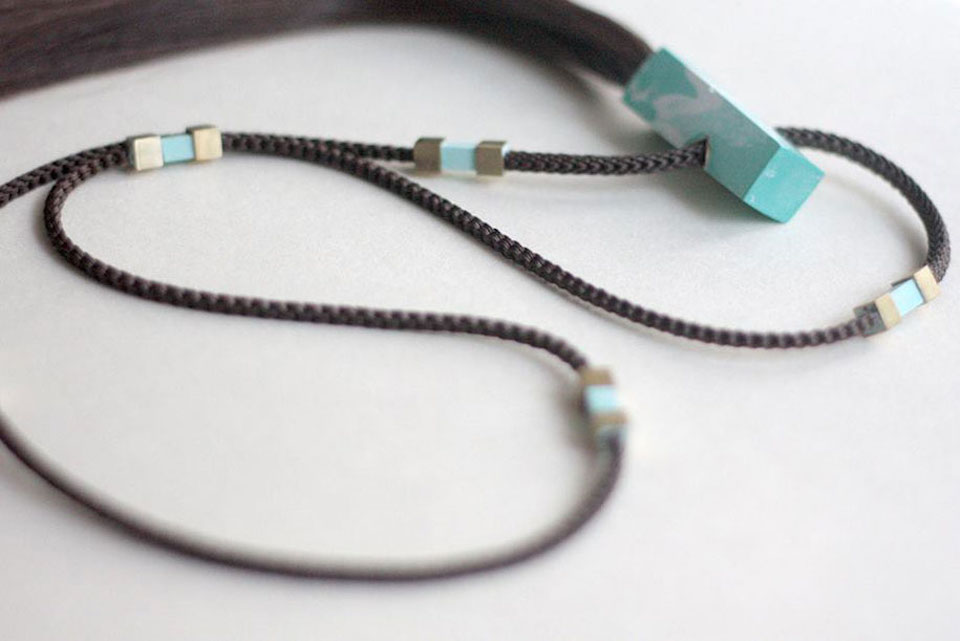
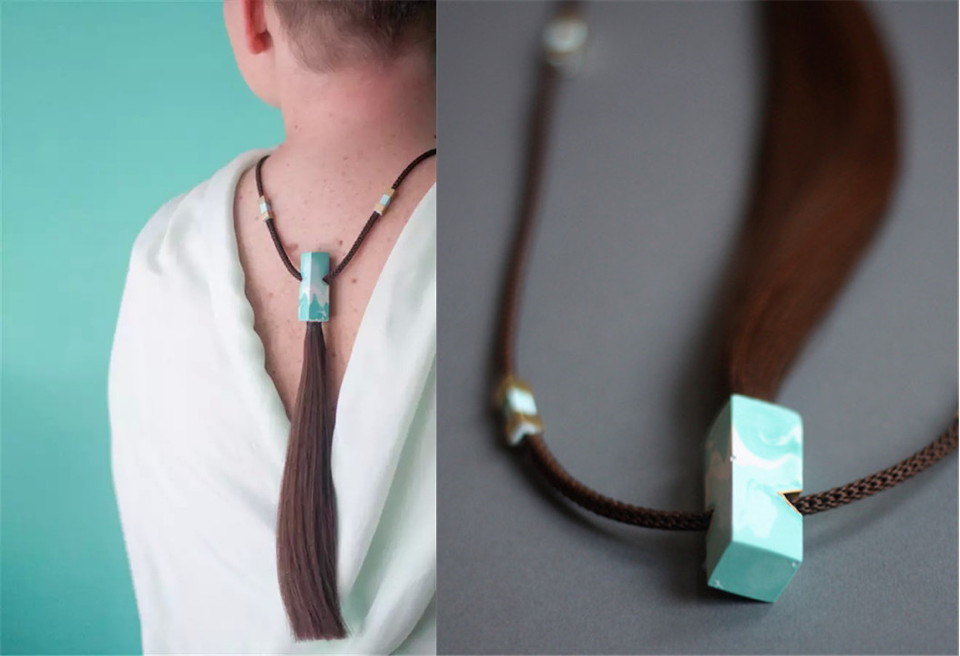
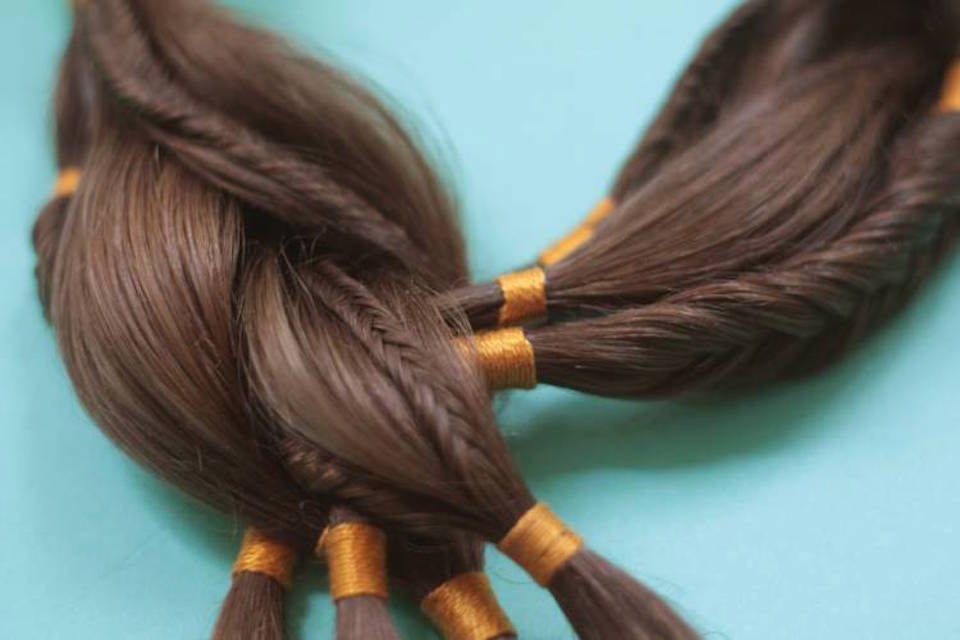
Tangible Truths is a heart-warming project by Sybille Paulsen that focuses on the transformation of loss by turning it into a personalized and stunning piece of art. Sybille, who is a Berlin-Based fiber-artisan and designer, works primarily with a very exceptional material, namely hair. She believes that hair is a unique substance that awakens a lot of feelings. In her designs she tries to honour these believes by creating artefacts that go beyond the basic intention of jewellery.
“My inspiration is ignited by the sensuous experience of materials - their roughness, their weight or color - as well as details from my daily life” - Sybille Paulsen -
The art-project Tangible Truths turns the hair of cancer-patients, who lost it due to chemotherapy, into personalized jewellery. As every woman is unique and experiences her illness differently, every piece is different as well. It is an intensive cooperation between Sybille and the concerning woman, who get to learn each other deeply to create a perfect story. A serious illness, such as cancer, unfortunately does not only effect the patient but her whole environment, therefore Tangible Truth offers additional pieces for friends a family to support their beloved ones by functioning as a unbreakable bond and to visualize the togetherness one seeks for in difficult times.
Every single piece Sybille Paulsen creates is handmade and asks for tremendous accuracy. A single piece can therefore take several days or even weeks to be completed into one of her breath-taking designs that, piece by piece, tell the personal story of a beautiful human being.
Tangible Truths is a perfect signal of “positivism” as it turns an overwhelming sad life experience into an unforgettable artefact. It transforms a loss into a precious gift and makes the situation discussable. Tangible Truths is the embodiment of societies changing attitude regarding alter negative happenings into added value. In a way we can even pose that it is the ultimate form of “personalization” as it literally makes a part of our human being immortal.
Cecile Cremer
Extremely curious and always searching for little weak signals that tell us things are changing. Cecile is a trend researcher and creative concept developer with the wanderlust of a cosmopolitan.Her aim in life is to develop things that matter to others and to help others change their strategy to be ahead of the future. Because she believes “The future is ours”.
Tangible Truth by Sybille Paulsen
Tangible Truth by Sybille Paulsen
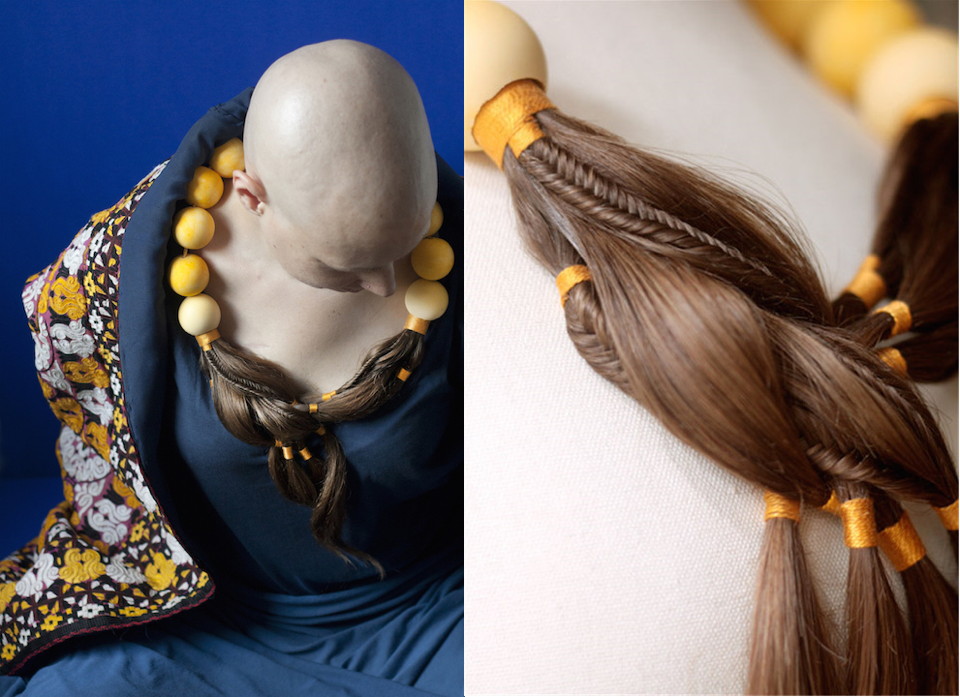
Tangible Truth by Sybille Paulsen
little dandelion
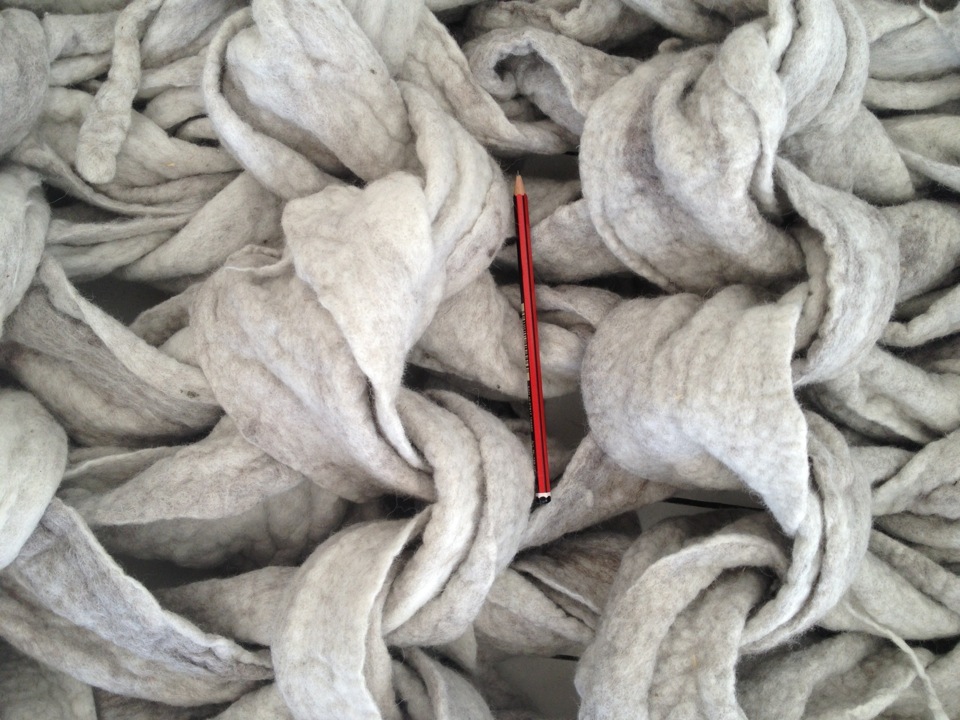
photo by Jacqui Fink
Trend Tablet is a huge fan of Little Dandelion we asked Jacqui Fink, the hands behind Little Dandelion to tell us her story. Here you are!
"I’m a mother (41) of three children and I live on Sydney’s Northern Beaches in Australia with my Husband Eric, two cats and a menagerie of wildlife who visit for a daily feed. I have a law degree but am otherwise untrained in fine arts, design and textiles.
I launched Little Dandelion in 2012 after a long and intensive search for a creative outlet. I had been searching in earnest for something to call my own and I knew it needed to be creative: the need to work with my hands was powerful.
To cut a long story short, in November 2009 my Mother received a life saving double lung transplant. In the weeks that followed, I found myself in a heightened creative state culminating in a dream that was as terrifying as it was profound. In the dream, a very loud booming voice told me that I needed to knit blankets and that the knitting needed to be “big”. Okay then! The very next day I started the process of bringing Little Dandelion to fruition.
I suspect the fact that the answer to my search for a creative outlet was so intimately connected to my Mother was no accident. My Mum taught me to knit when I was quite young. Mum was and is a profuse knitter and I noticed that it was a beautiful respite for her. As a child though I was too impatient to commit to the language of knitting to be able to follow a pattern. But, I did work really hard to perfect my tension and the consistency of my stitches. I also enjoyed the respite.
Fast forward five years, some intense experimentation and the making of many mistakes, I now produce by hand oversized scale blankets, throws and installation works using naturally coloured high quality unspun merino wool and other natural fibres from Australia and New Zealand and a set of massive knitting needles made from PVC pipe.
My work is informed by three great passions: my need for sensory feedback and my love of both texture and natural fibres. At the heart of my work is the extreme scale the unspun wool allows me to achieve. For the observer, the scale provides the perfect platform to showcase the beauty and rawness of the natural fibres I use. The textures are rich, luxurious and have the ability to imbue both solace and joy to the handler. On a personal level, each piece is as much a physical challenge as a loving creative exercise and pushing the boundaries of what is possible is a huge driver.
However, knitting with unspun wool is problematic due to its delicate nature. To overcome this, I felt each piece once it has been knitted. This is no mean feat given that most of my creations weigh a minimum of five kilograms. The felting gives stability to the unspun wool and allows for a greater stitch definition. The resulting texture is both rustic and sculptural in its appeal. My self-taught process is laborious and often menial but it is equally satisfying. I suspect my lack of technical know how actually helped me push the boundaries of what was possible because I had no concept of what wasn’t.
Essentially, Little Dandelion is my quiet rebellion against mindless mass production and my loving contribution to a kinder and more conscientious world. I am currently developing my own Little Dandelion oversized knitting yarn so that others can experience the joy of slow craft and extreme knitting."
Follow Jacqui Fink on Instagram
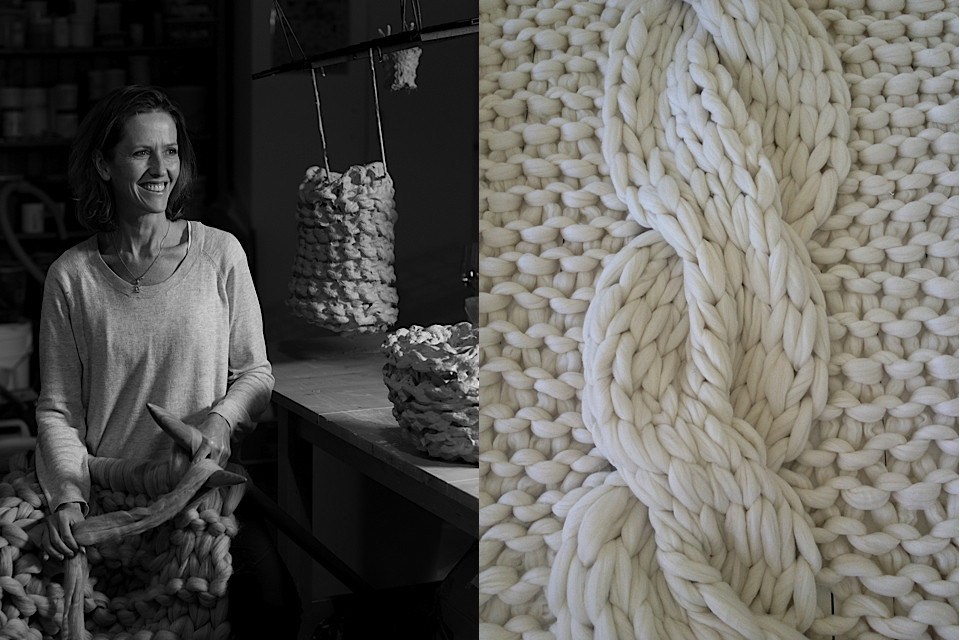
Portrait by David Hutton
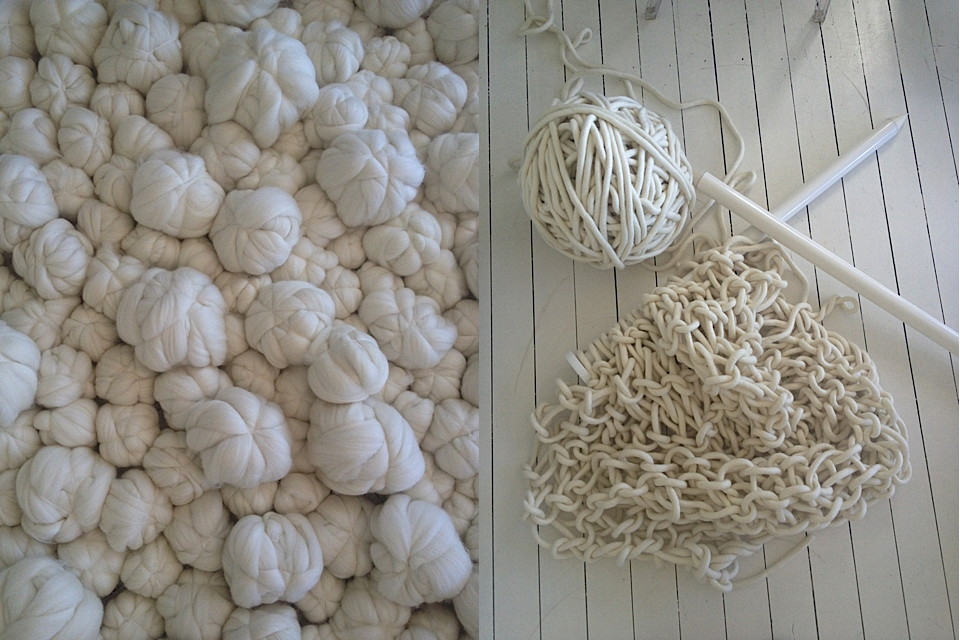
photos by Jacqui Fink

Styled by Lara Hutton and photographed by Sharyn Cairns. Sea Art- An Aesthetic Convergence. Exhibition by Lara Hutton in collaboration with Jacqui Fink. November 2013

Styled by Lara Hutton and photographed by Sharyn Cairns. Sea Art- An Aesthetic Convergence. Exhibition by Lara Hutton in collaboration with Jacqui Fink. November 2013
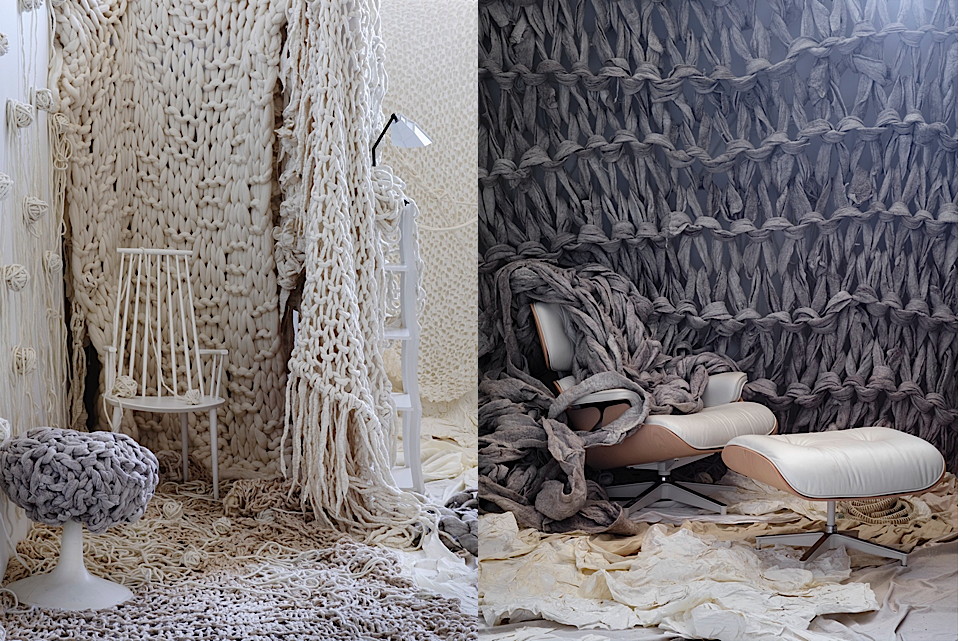
Originally styled by Lara Hutton and photographed by Martyn Thompson for Vogue Living Magazine Australia May/June 2014 issue
"carpet of life"
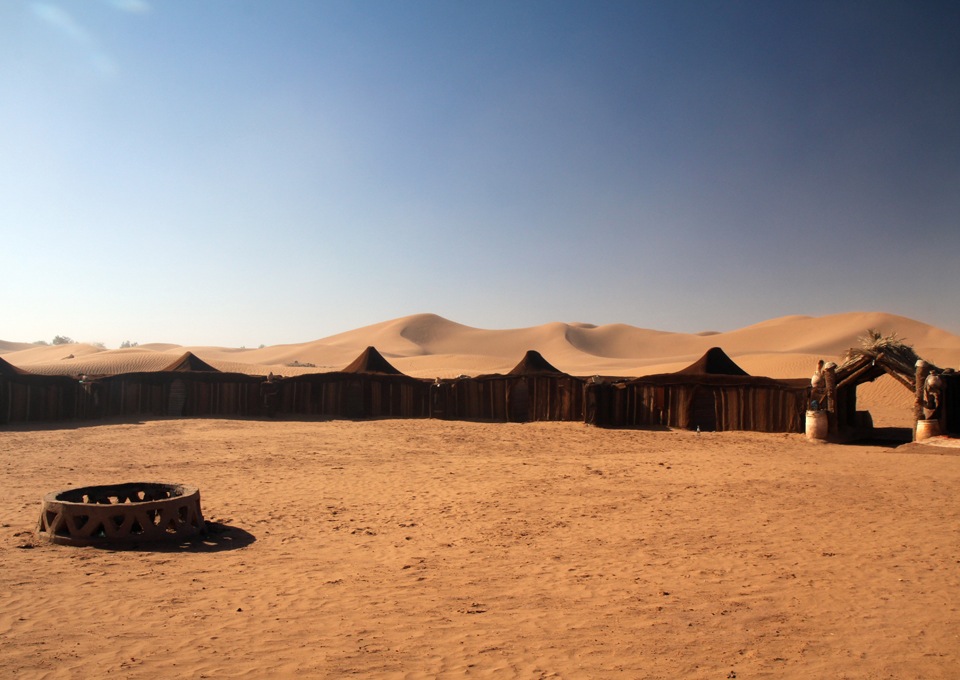
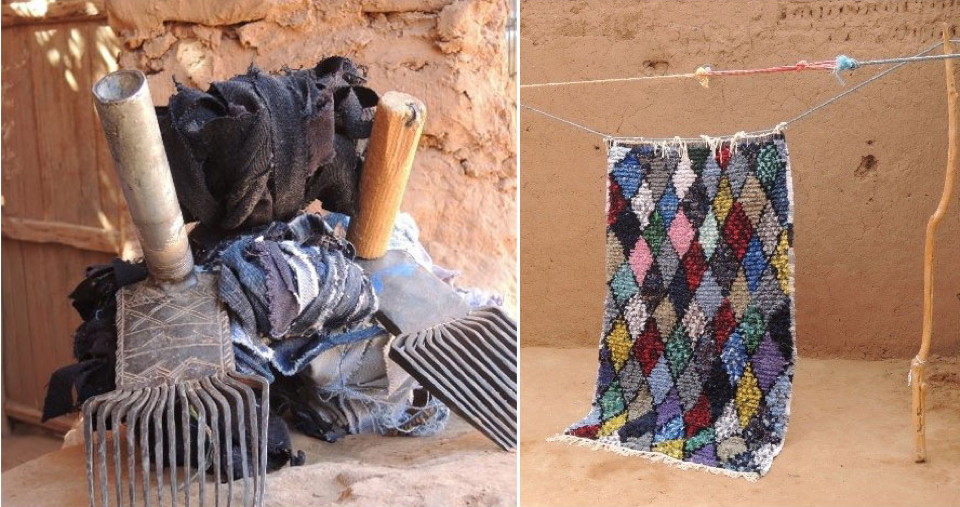
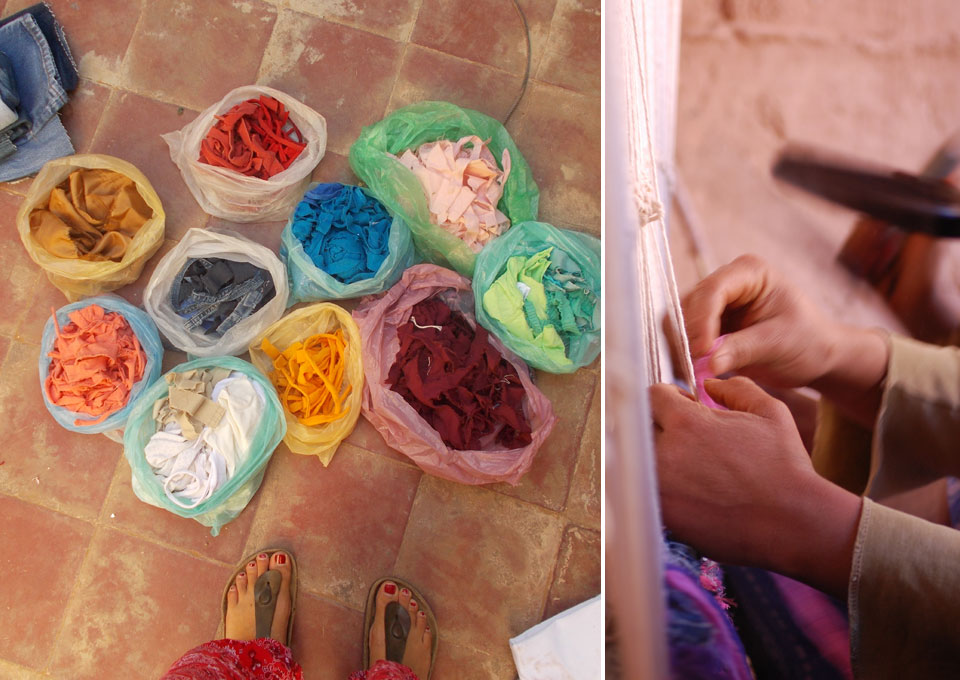
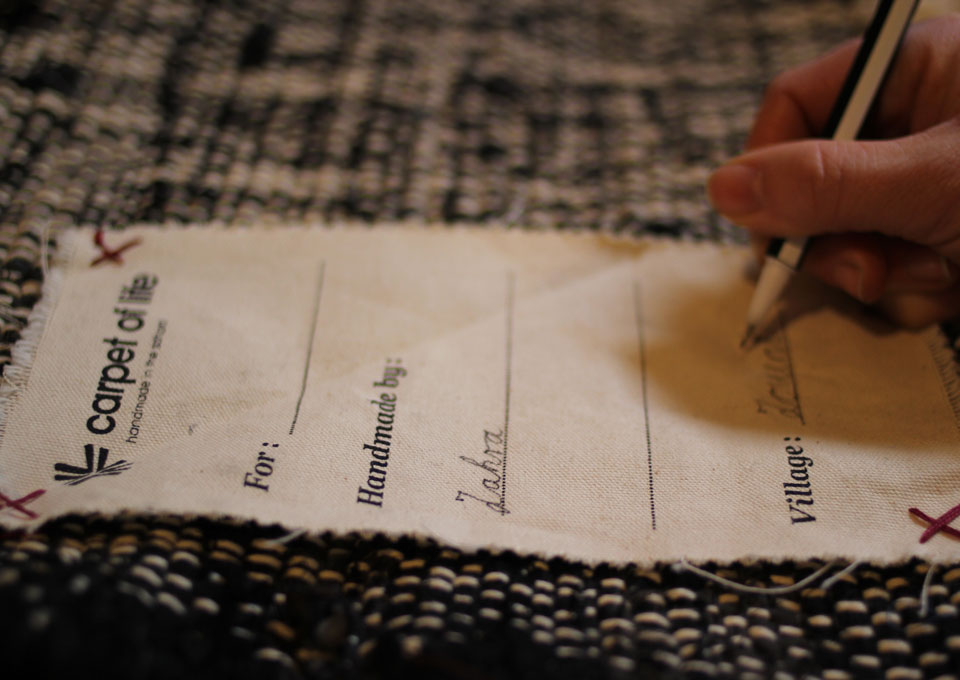
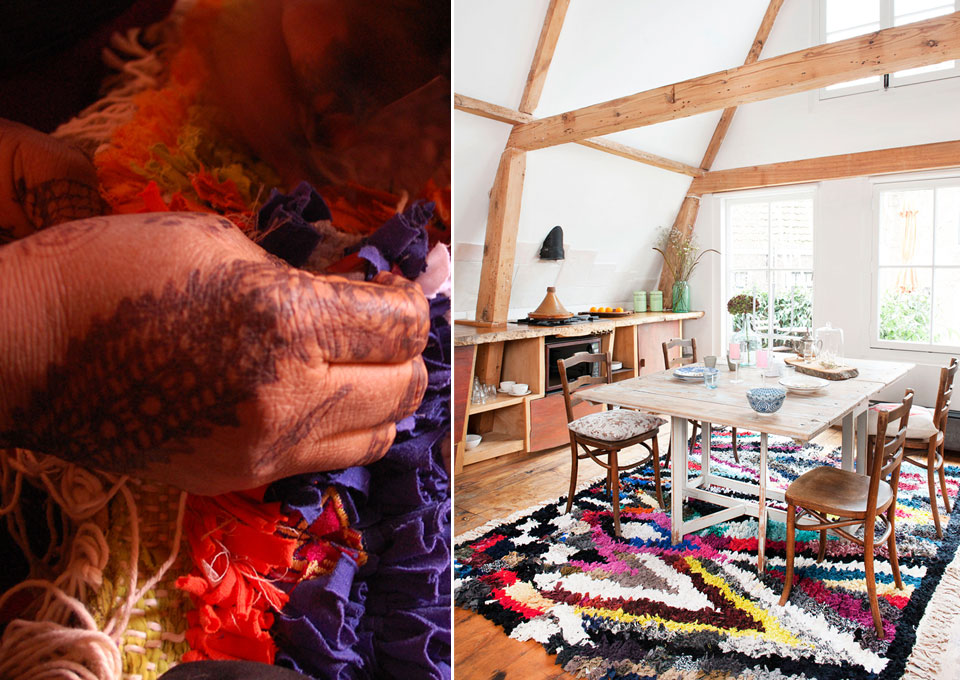
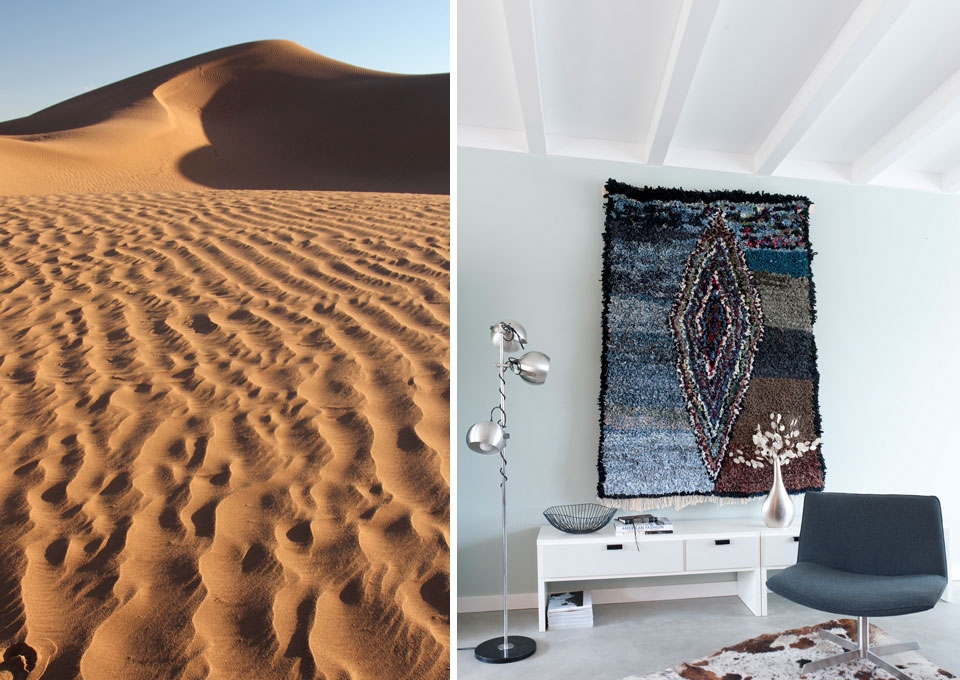
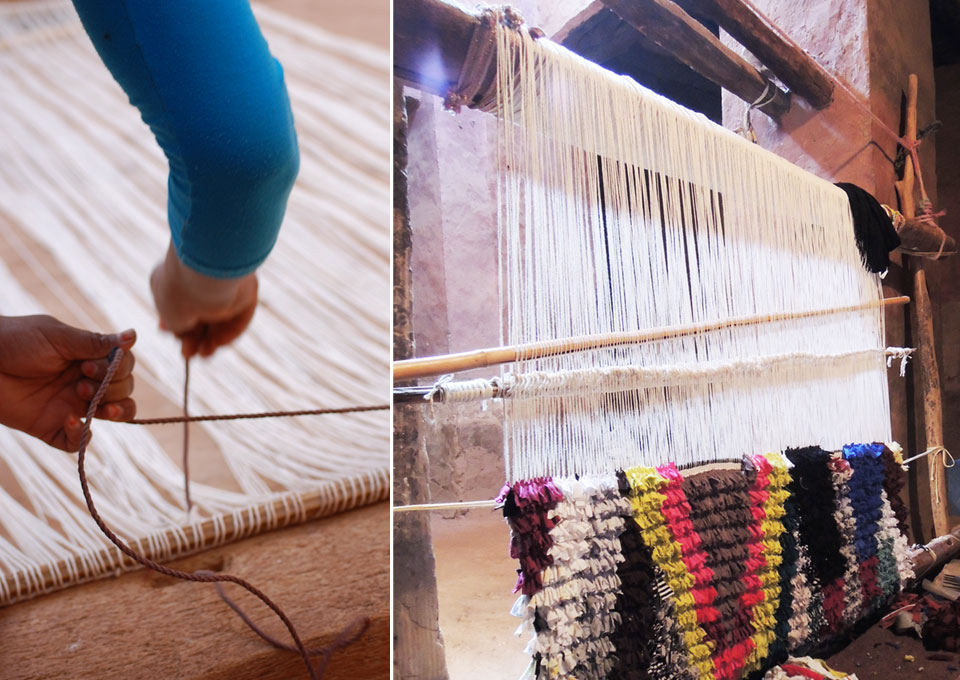
“Boucherouite” or "Boucherwi" are carpets made by most Berber families in Morocco since the 1960’s. A social design company named Butterfly Works is working with local women in 6 villages in the Sahara on the border of Morocco and Algeria to create Boucherouites under the name "Carpet of Life".
They connect western consumers directly to the women who weave the fabrics of life. Butterfly Works 's main aim is to create social cohesion and economic value for the women. In this region they are working closely with the family Sbaï (son of the lions) from the de Ouled Bou Sbaa tribe, historically the most influential tribe spread across Senegal, Mauritania, Morocco, Algeria and Mali during the time of the great Caravans.
Since 35 years, due to economic, political en environmental hardship, the nomadic communities have been forced to stop the caravan trade and to start new ways of living in the oasis, that used to be one of the most important trading posts on the way to Timbuktu.
With lack of their natural habitat, hierarchy, and source of income the oasis people are barely surviving, which leads to lost dignity, poverty and fading creativity.
With this collaborative design intervention - “Carpet of Life” - the Family Sbaï and Butterfly Works are trying to co-create hope, pride and economic sustainability, through design and capacity building. Carpet of Life is part of a bigger concept called “Taragalte” (meeting place in the Sahara): focusing on creating awareness on the environment, entrepreneurship and cultural heritage ... with the aim to learn from the past to prepare for the future.
design for humans
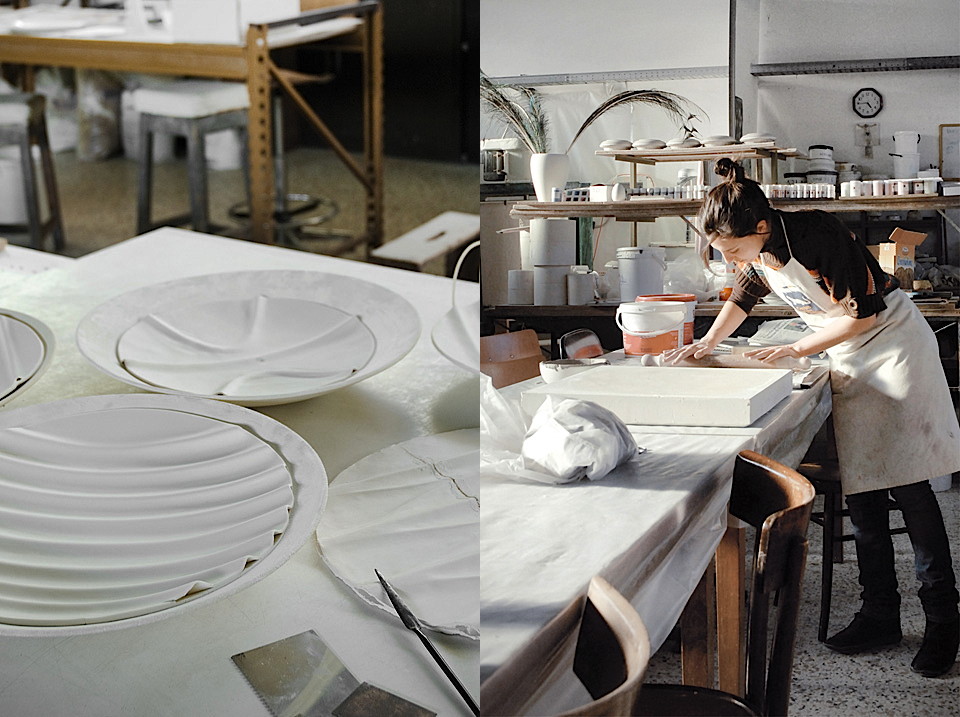
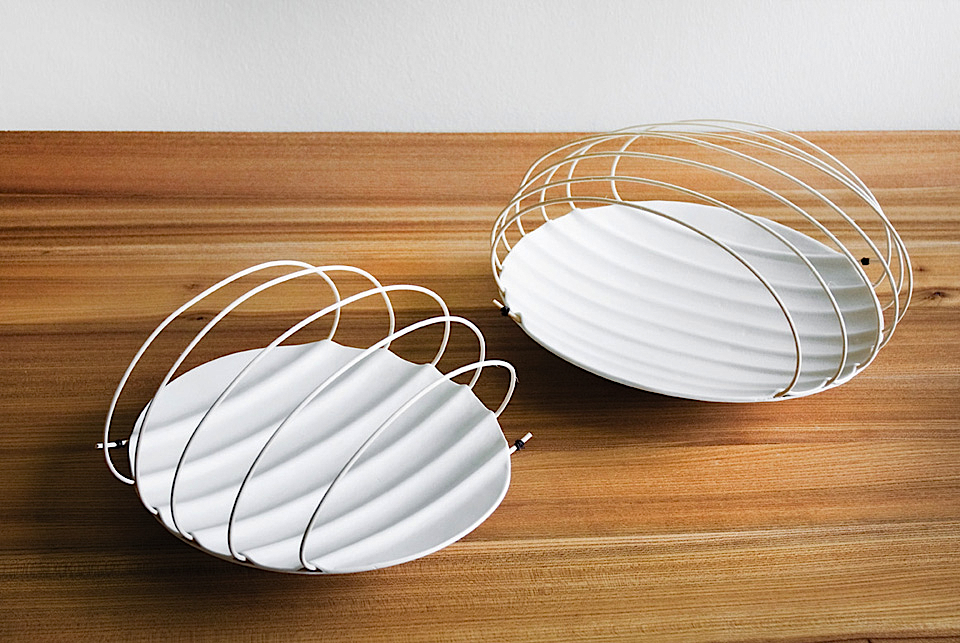
Workbench Tray - photos Paola Amabile
Alberto Fabbian and Paola Amabile are two young Italian designers based in Northern Italy. They identify their role as responsible explorers by investigating new connections among actors, processes and knowledges. Their purpose is to create positive impacts by transferring contents that can be shared in several forms, whether they be objects, situations or food for thought.
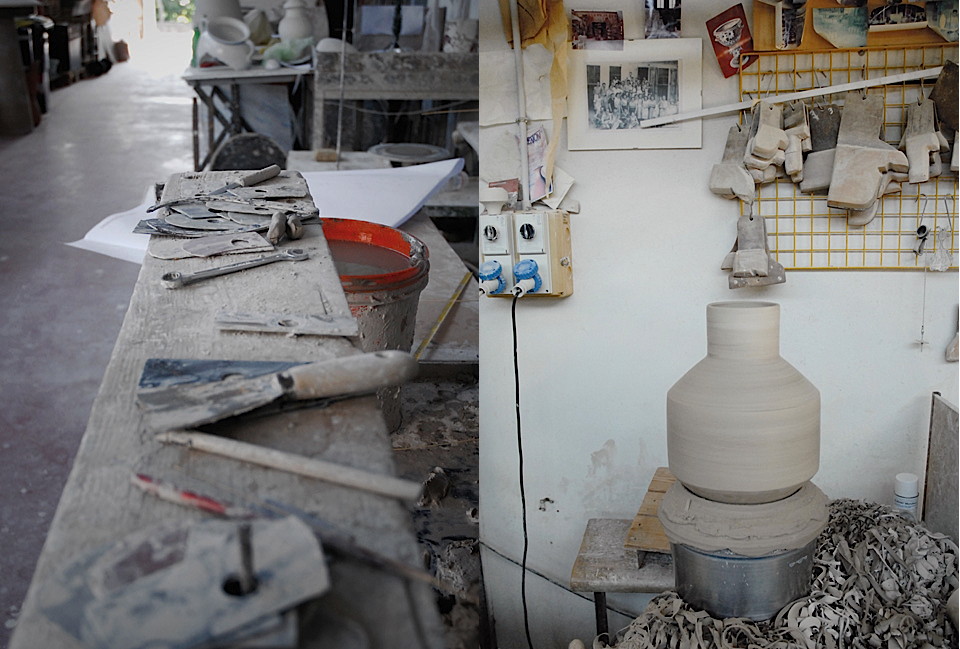
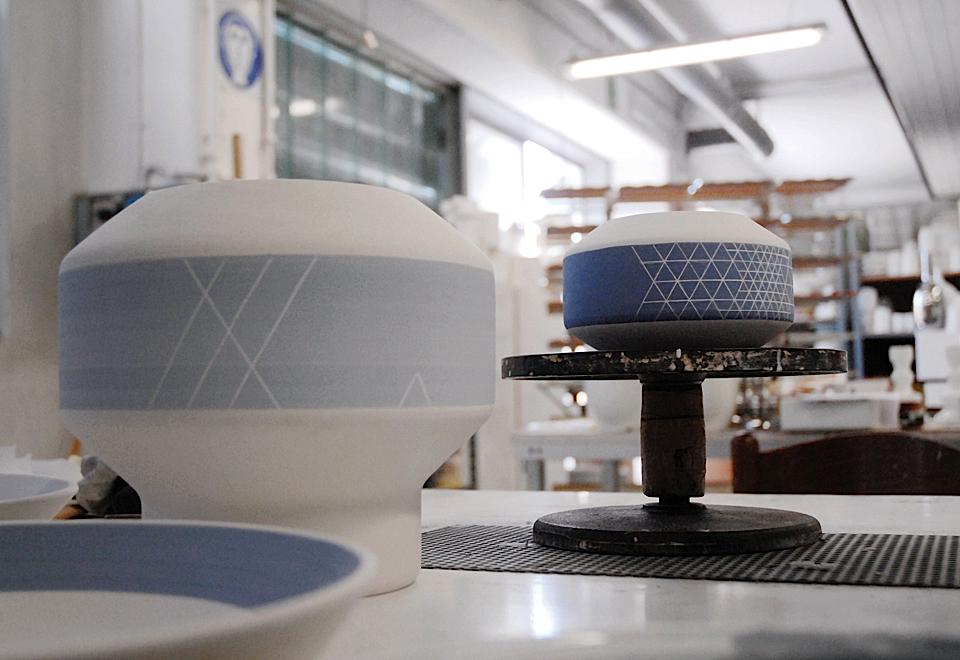
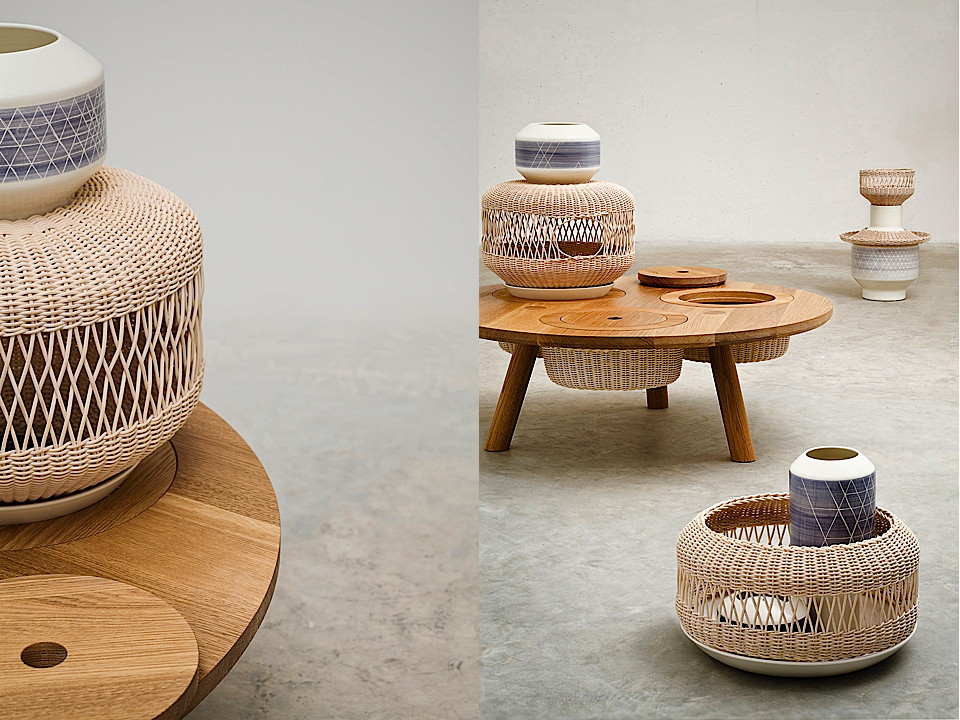
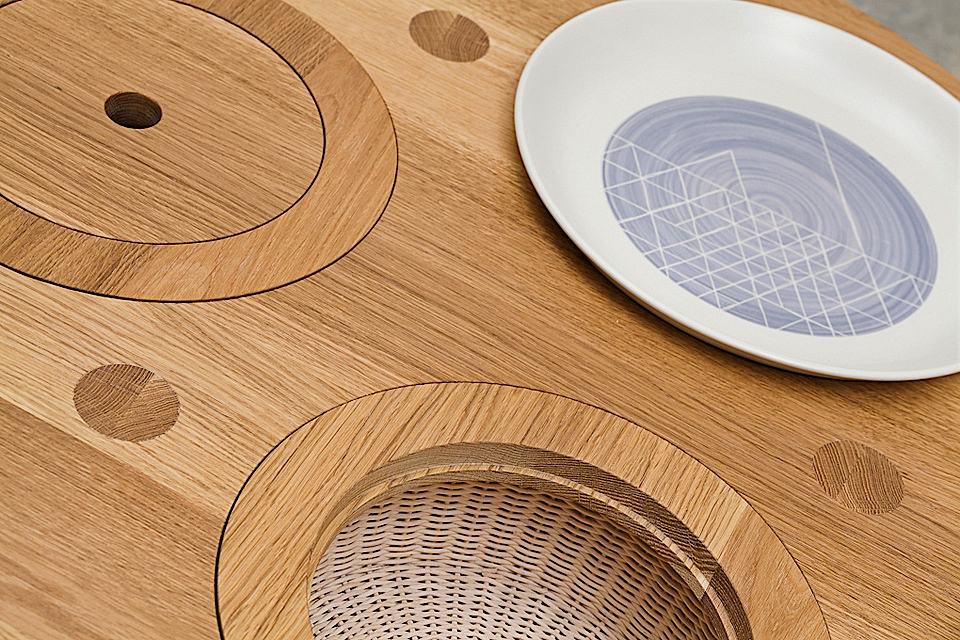
They recently worked with local craftsmen to create "Workbench" project, which represents the result of a collaboration between two traditional artisanal realities as wicker and clay. "Workbench Tray" represents a deep research project that explores feelings and technical possibilities of wicker and clay combining them together, in order to identify new languages and processes. Entirely handmade with natural materials, "Workbench Tray" is the result of knowledges and intuitions reached inside different craftsmen workshops. The delicacy of porcelain joins the flexibility of wicker thanks to a single wire that runs all along the tray, completing naturally its essential shape. A wood base sustains the object highlighting its lightness.
"&Ability" wants to interpret networks as personal and business intersections reflecting culture and land, through unique and matchless know-how.
Wicker weaving, decorated weaves on ceramics: different materials and processing, to develop and rise the tradition in which identify, to interface with “the diverse”, promoting innovation.
The name itself - "&Ability" - is the union between the junction par excellence, “&”, (from Latin, Et) and “ability”, to underline the importance of sharing different expertise.
"&Ability" is made of one wooden table holding different components: lampshades, bowls, wicker baskets or ceramic vases, each of them carrying its own identity, even though they’re part of the same project. Components are connected in a dynamic dialogue and may be combined upon user’s taste and needs, creating different compositions, in which weaving is the continuity element.
Workbench Tray - photo Paola Amabile
&ability - Process
&ability Process
&ability - photo Alessandro Guerriero
&ability - photo Alessandro Guerriero
pampa

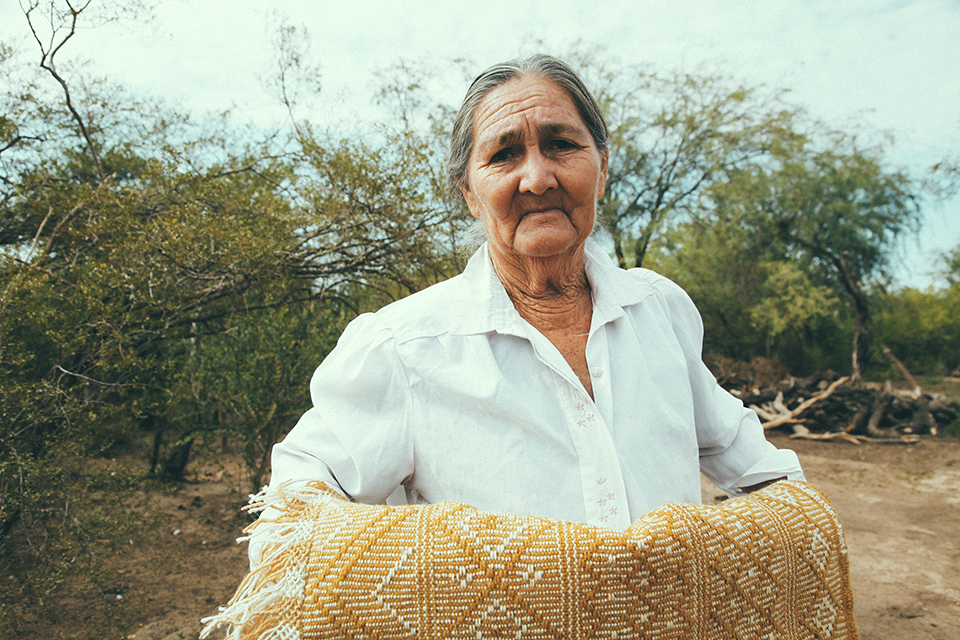
Victoria Aguirre and Carlyon Wilson are photographers, Victoria is from Argentina and her partner is Australian. After years of exploring the world with their cameras, they launched "pampa". As Carlyon explains it : "Pampa is the word used in Latin America to describe the open plains, lands that lay uninterrupted to the horizon. It is hard not to feel a sense of freedom when being surrounded by such a vastness."
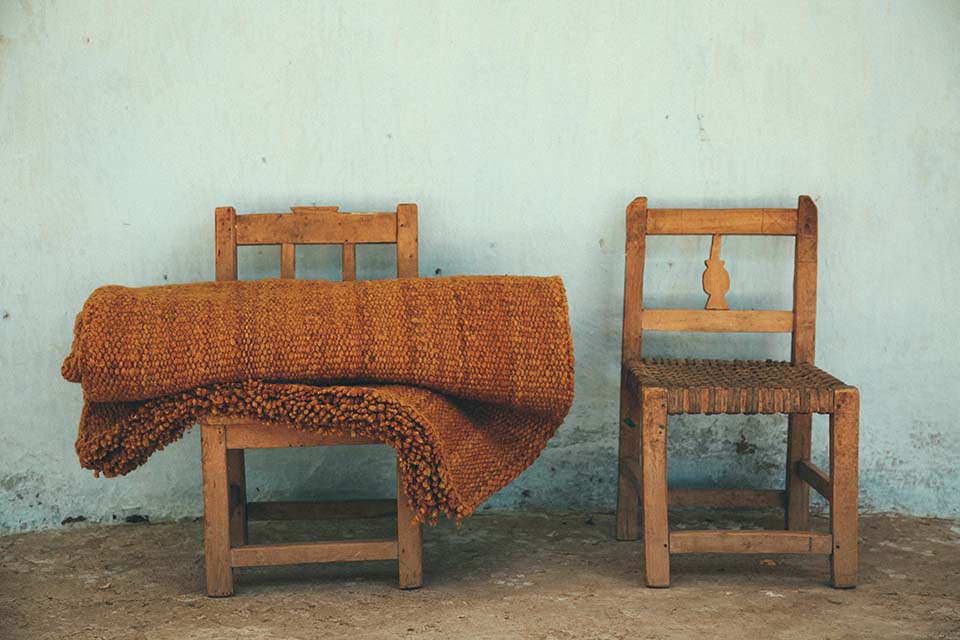
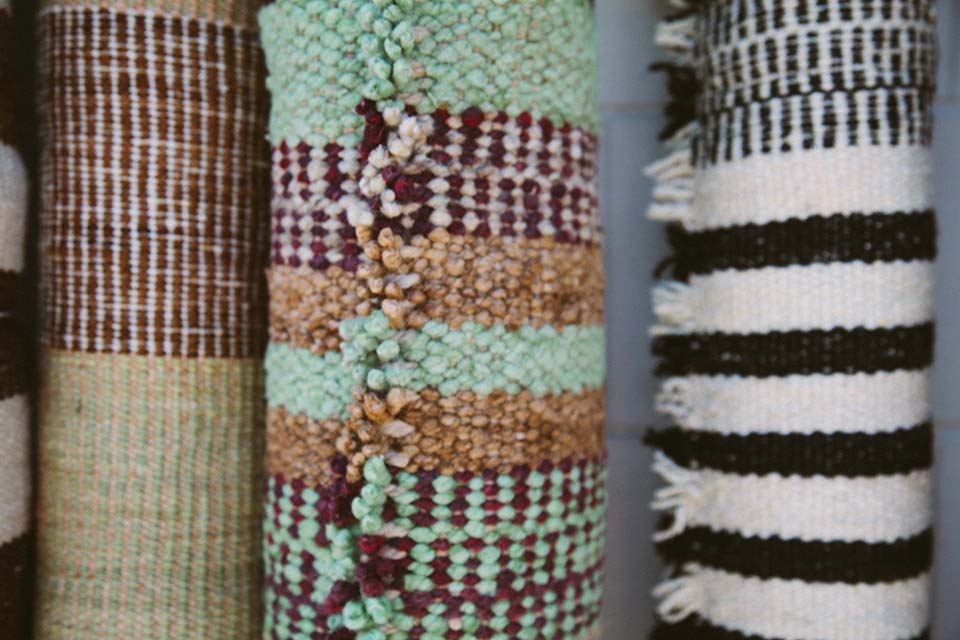
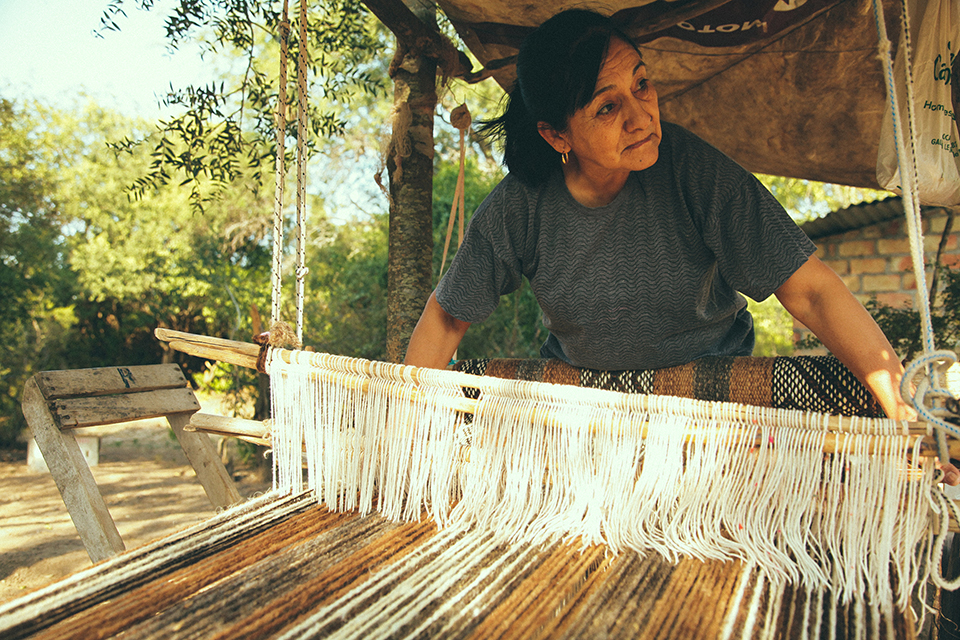
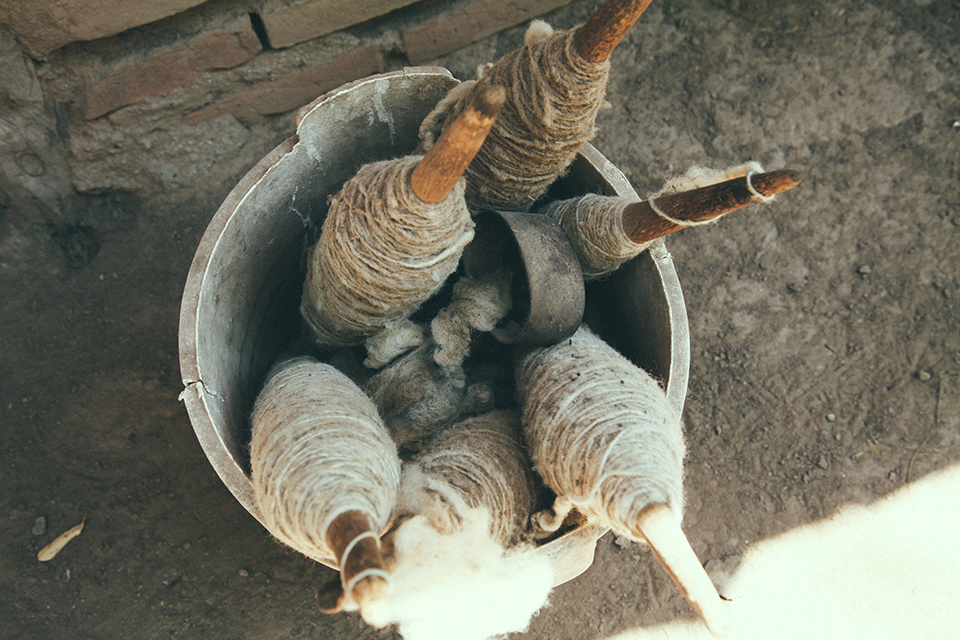
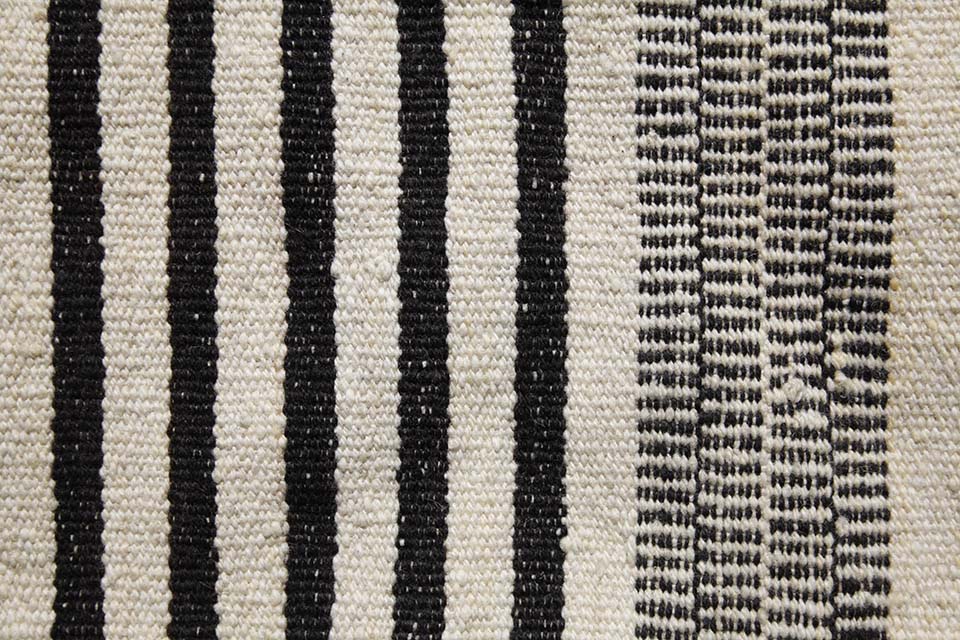
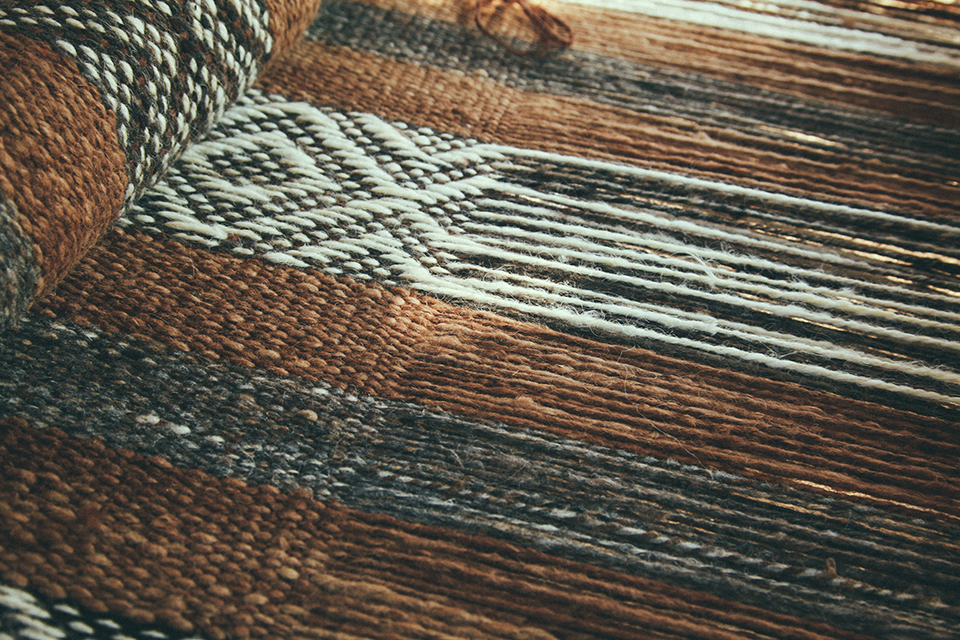
Pampa is specialized in Hand-Woven Art Rugs made in native communities from Argentina. These pieces are unique products handcrafted with great knowledge, art, technique and humility.
Through each rug we can discover new customs and new ways of being. Each unique piece represents a way of living that shows simplicity and wisdom. These textiles come from a world of older times, filled with identity and truth. Truth is what you see in these peoples eyes. Victoria and Carlyon both feel that their photography is the perfect way to show what Pampa is all about…
Pampa unites territories through art . Pampa traces heritage, as to return to simple basics. Pampa connects culture by its memories and creations. Pampa is tracing a map.

gone rural
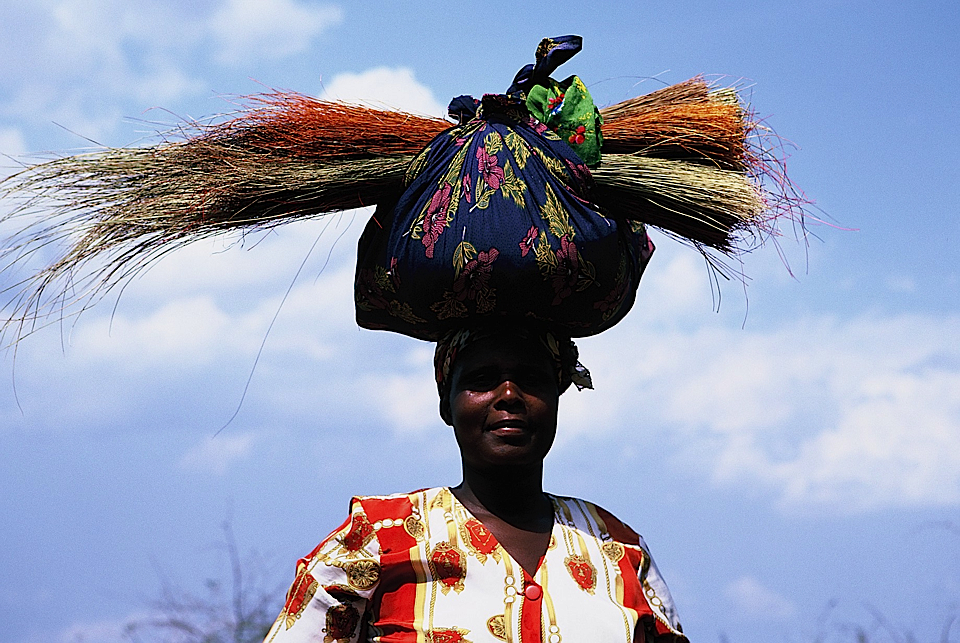
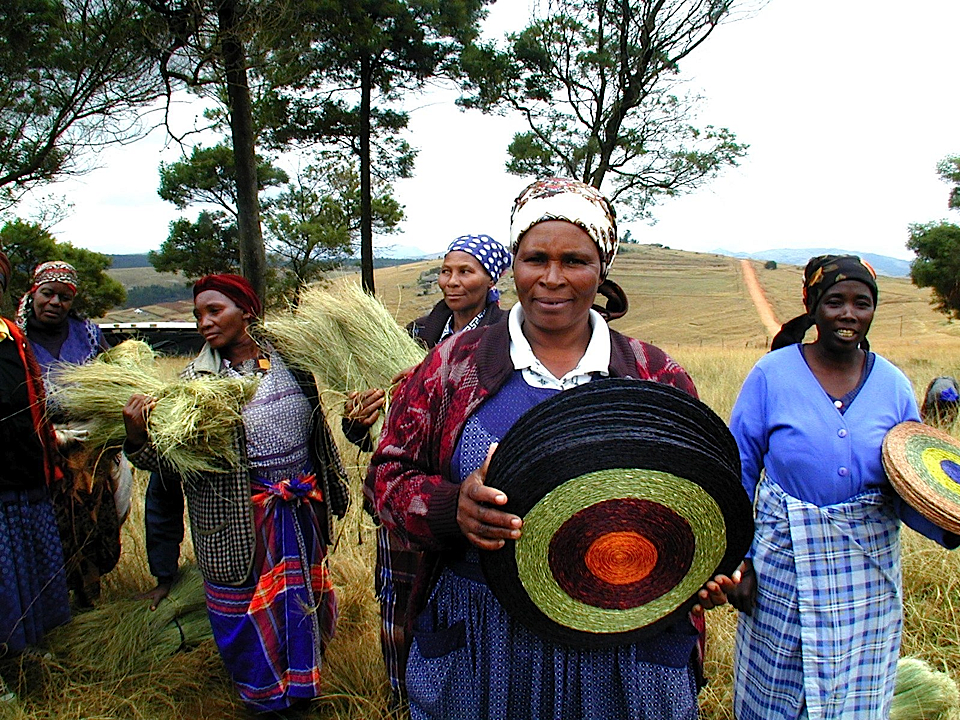
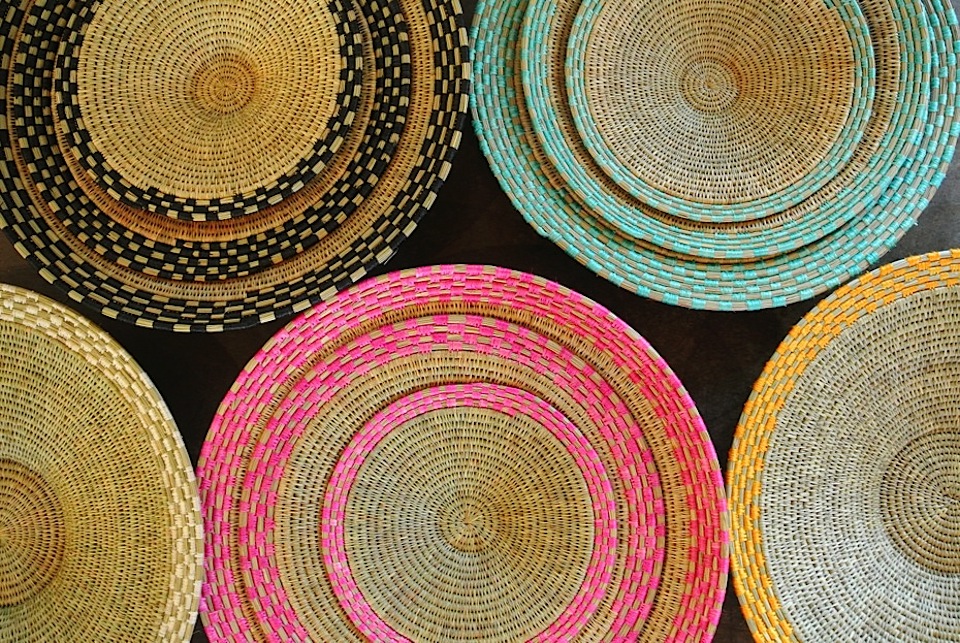
The rural Swazi reality isn’t as bright as the colorful pieces crafted by them. Finding themselves having to pay for transport to clinics, school fees and support an average of 7 children, Swazi women found their way to overcome the challenges instant approval loans and empower themselves financially.
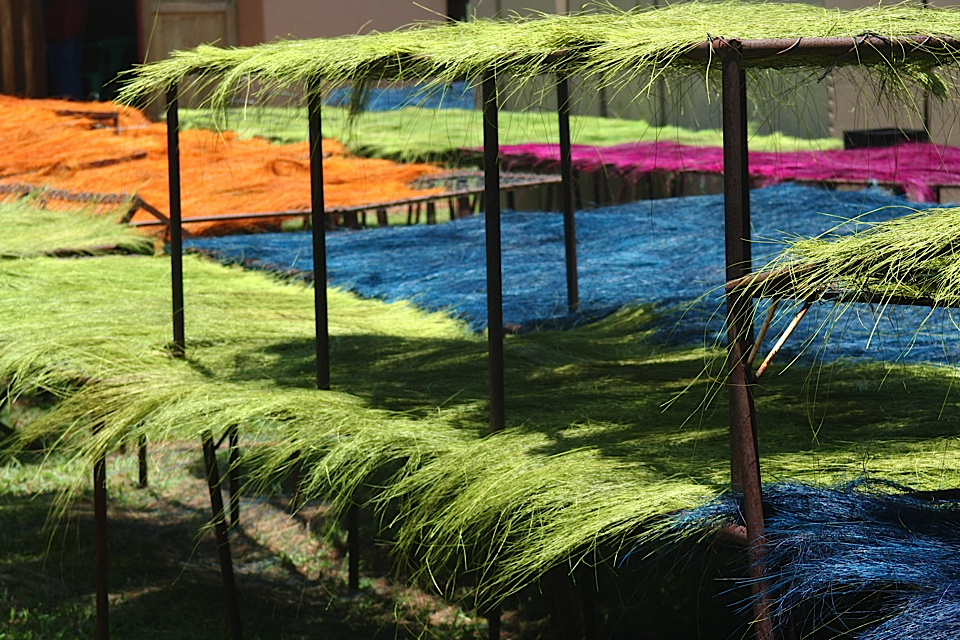
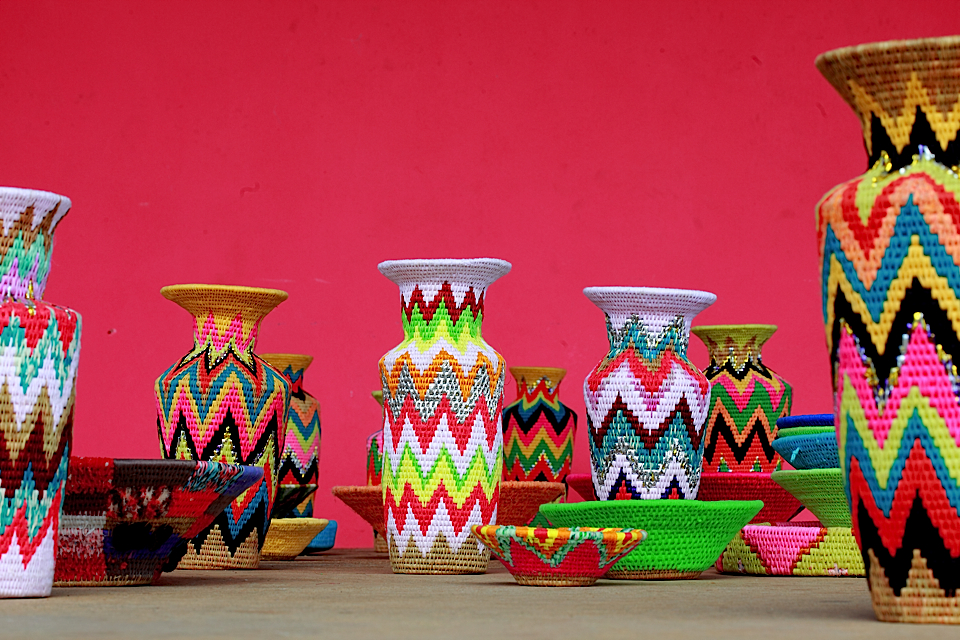
Gone Rural is a holistically sustainable company that enabled the craft of over 760 Swazi women to reach 32 countries, establishing a respectful relationship between the world and the Swazi cultural heritage and community. The company, creatively directed by Philippa Thorne, a Central Saint Martins graduate, was very successful with their use of local resources and keeping Swazi traditions – the invasive weed, sisal fibre, used as one of the materials for the products, grows the year-through and doesn’t threaten the biodiversity; the lutindzi grass, which in Swazi means “Flora of Swaziland” is another fibre used for the fabrication, harvested once every 12 months without damaging the roots, is enough for the whole year.
The community work enables generations to work together and share skills and precious moments with their families and friends. The women naturally developed their own network and side jobs, trading food or clothes amongst each other. All the new designs or skills introduced to the production are studied and passed onto every woman, who then add their own creative touches to it.
A complementary non-profit company was then founded, in 2007, by Philippa, in order to provide the community with access to education, guarantying it for 360 children annually through School Fees Bursary Fund, Motivational Training and Early Childhood Development; health through Mobile Wellness clinic, Peer Education and access to holistic homeopathic care; community development through clean water, food and shelters; and women’s empowerment, through teaching artisans how to read and write, save and invest money and learning about their basic human rights.
Mixing traditional techniques and aesthetics with contemporary ethical designs, the psychedelic homewear and accessories pieces are handmade and unique, and a true example of what design can change lives.
Lydia Caldana
nadia albertini
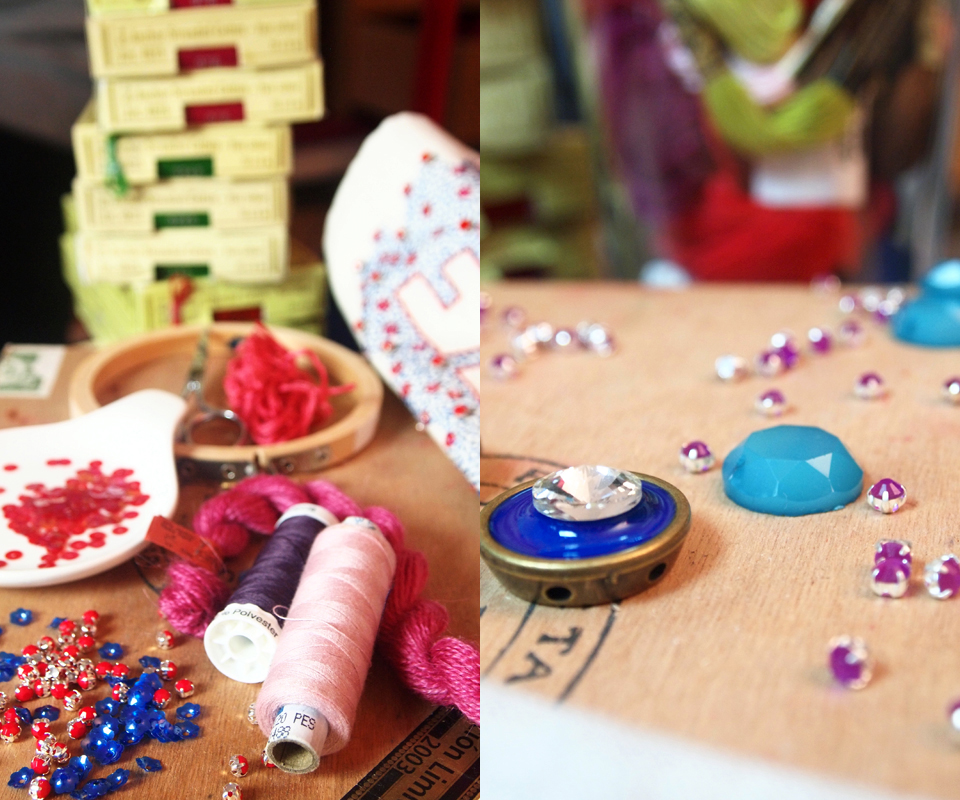
Nadia Albertini, born and raised in Mexico City, is an embroidery and textile designer based in Paris. Her interest in embroidery started when she was just eight years old, when her grandma taught her the basic stitches for the first time. "I remember seing her embroidering a floral cushion with the most amazing colors! "
She has been working in fashion for the past six years. She has collaborated with Chloé, Chanel, Balmain and Jason Wu among others, creating hand embroidery designs for their ready to wear and haute couture labels. She had the chance to meet and work with very talented and inspiring people, either in Paris, London, New York or Mumbai.
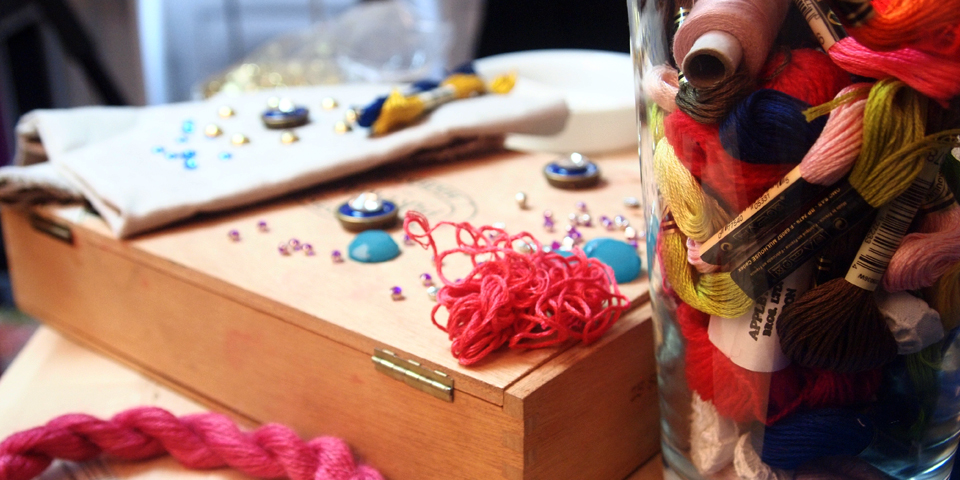
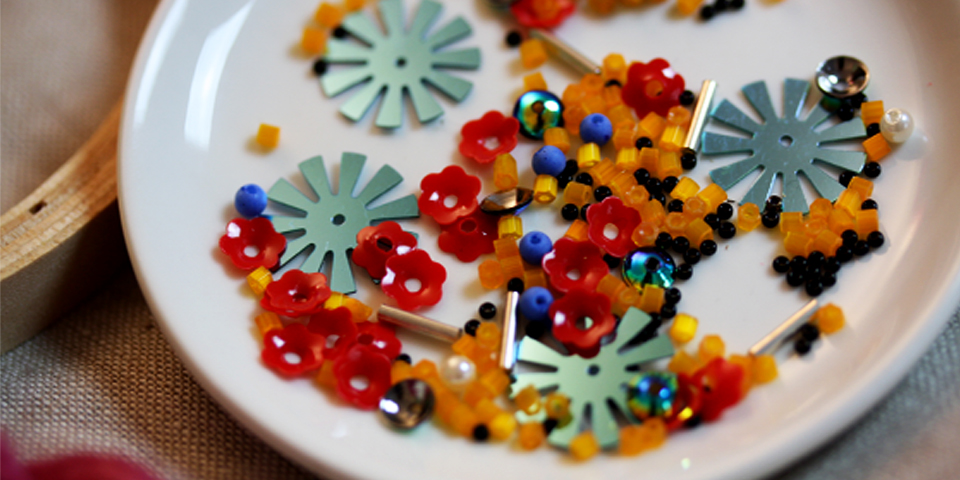
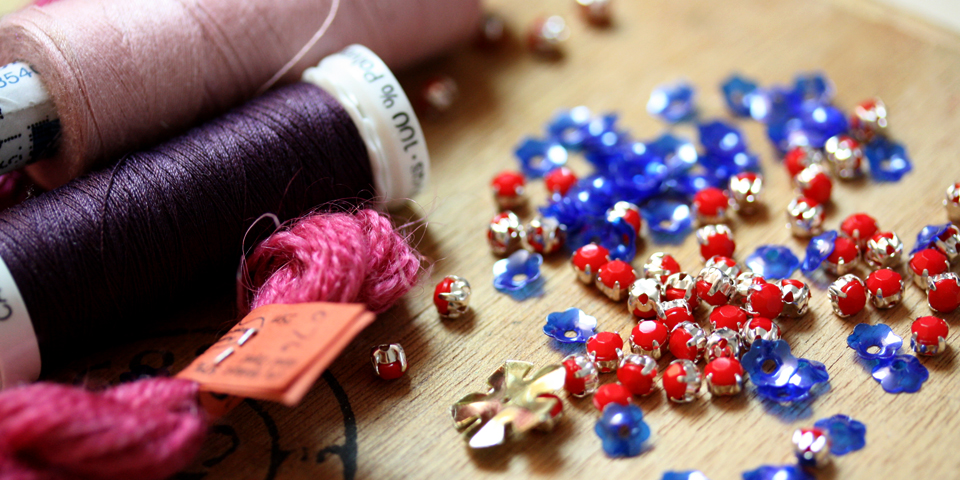
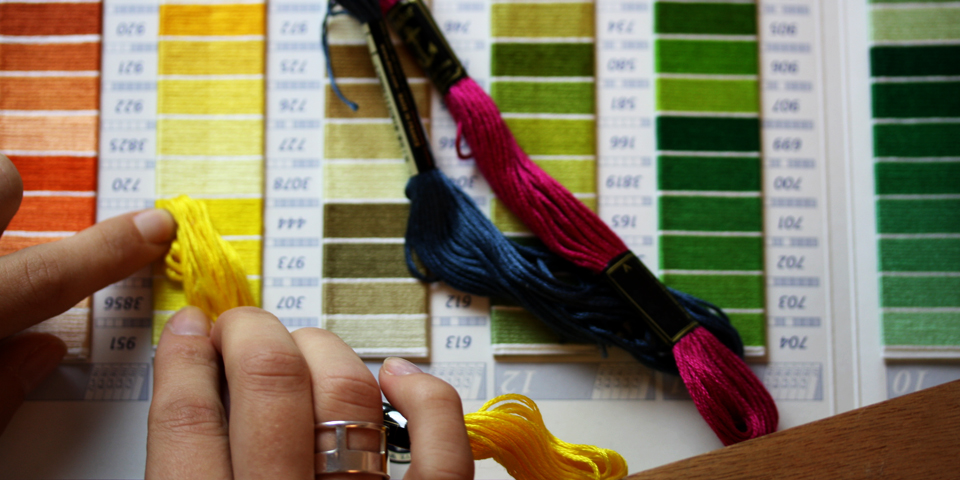
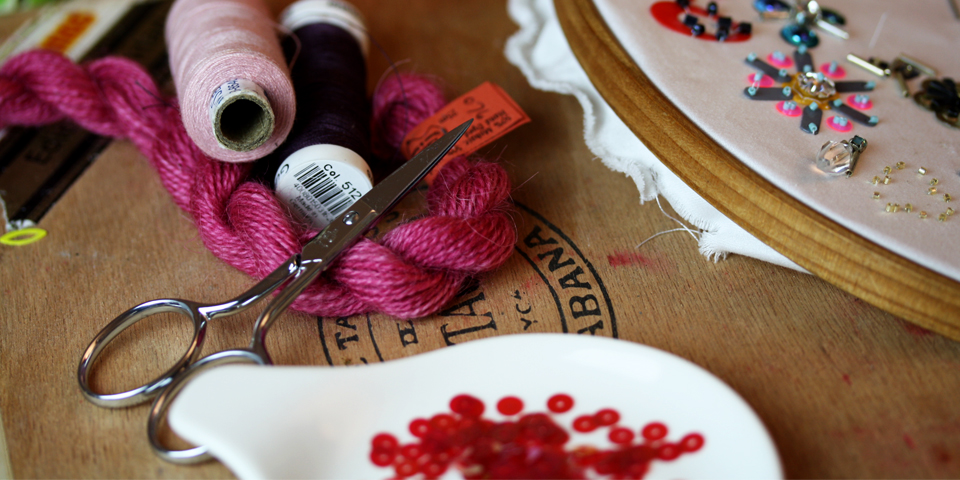
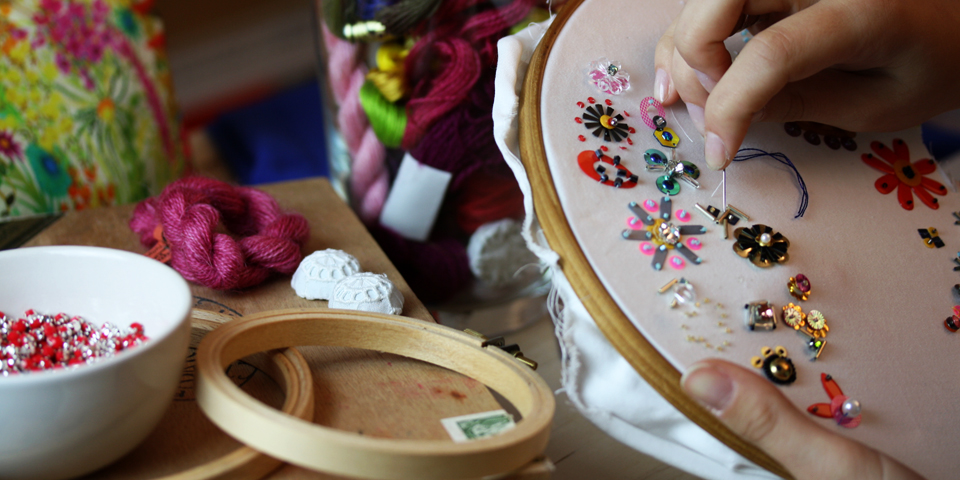
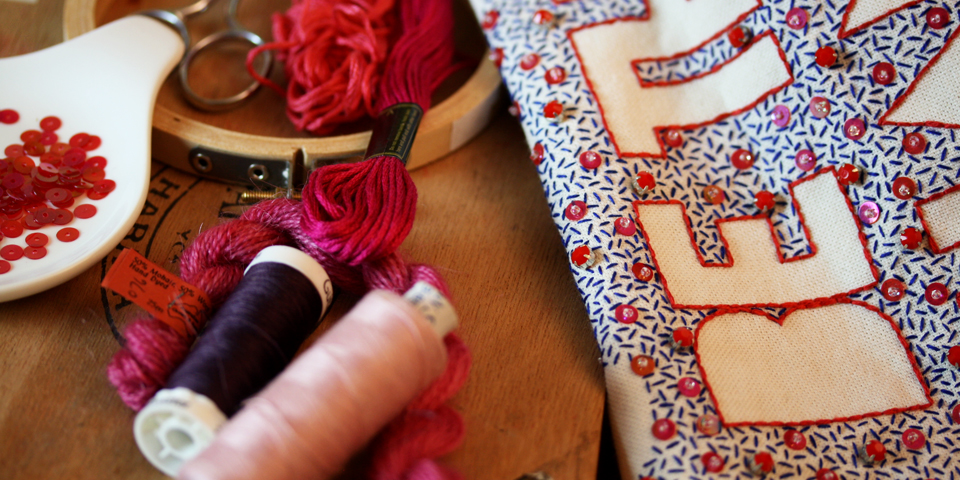
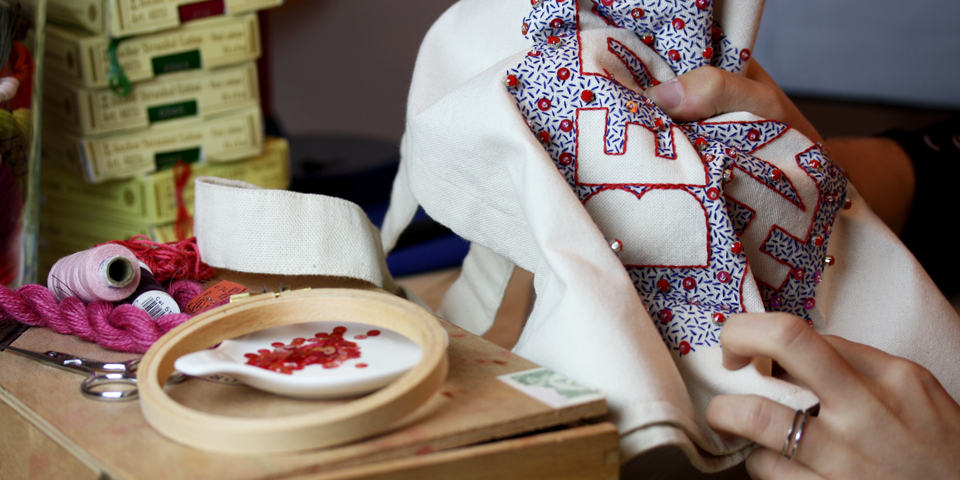
Her latest project "All over Sequins" is the brand she is just launching for all the DIY fans of embroidery.Trend Tablet caught up with Nadia for an interview.
What lead you to a career in textiles & fashion?
I was born in Mexico City in a family where art and design are very important. My parents had a book-binding atelier, so I always saw them making things with their hands. I think seeing my grandmother doing embroidery was also very inspiring, even if I wasn’t aware of it at the time. As a kid, I could spend hours drawing, painting. I enjoyed silk painting too but I never thought about studying textiles or fashion. That world was very far from ours. It all really started when I was 15, when I participated in the International Swarovski Elements Accessories Design Competition. We were to use their materials to embellish a fashion accessory. I remember I could have all the stones and beads and rhinestones I wanted for my project. I fell in love with their shine. After graduating from high school I moved to Paris to study textiles and fashion at the Duperré School of Applied Arts. I didn’t know what I wanted to do exactly but then, I had my first internship at Chloé. And they needed help in the embroidery department. So I helped with the making of samples, hand embroidery swatches, fabric manipulations. It was a mix of a lot of techniques, some of which I learned from my grandmother. We had the chance to work with different materials from the best suppliers. After two months there, I knew I wanted to be an embroidery designer.
During the design process is there a suggestion of your multicultural background ?
There is, yes. My sister and I were always educated in both languages and both cultures, which gave us a very rich base for everything we do. I think being French/Mexican and having been raised in Mexico City surrounded by so much color and patterns trained my eye from a very young age. I remember wearing all sorts of embroidered and hand woven huipiles when I was a kid. We used to make trips to the countryside very often, especially to Oaxaca, to discover the most amazing places and crafts. I think we had a very free and inspiring childhood in Mexico, I don't think it would have been the same had we lived in Paris from a young age. Also, Mexican people do think outside the box. If we don't know how to make something, we try different things, we experiment, we explore possibilities, some of them quite surprising and unexpected. It is what my mom calls the "ingenio mexicano". It's a very instinctive, intuitive way of doing things and I hope to have a hint of that in my work.
You travel often to India, what has been the most significant experience while working there?
I love going to India. Every project and every team is different and I learn new things every day. Funny, when you know I don’t speak Hindi and most of the people I work with don’t speak English.
I have a fond memory about the first time I worked directly with the karigars (the embroidery workers). In France, only women do embroidery. There, it’s the opposite, only men do. I was trying to explain to them how to do a special technique but I could not find the words. So I took thread and needle, sat down in front of the frame and then… 60 people stopped working to look at me. It scared me a little bit, I thought they did not approve of that. But it wasn’t that, they were just amused and curious.
Why did you decide to launch DIY embroidery kits?
One of the main reasons I’ve started this project is to make embroidery and fashion embellishment more accessible. Not everyone can afford to buy an haute couture gown but everyone can learn a few stitches and make their own embellishment at home. Also, people still have this idea of embroidery being an outdated and old-fashioned pastime. I want them to look at it in a new way, to bring a younger and more contemporary version of this amazing technique. Working with your hands and making things yourself is deeply rewarding and can become an almost therapeutic activity. Friends often tell me embroidery is too complicated or hard to learn. So I wanted to give them an easy, funny and refreshing way to do it. My students at the London College of Fashion always kept asking for more techniques, more tricks, more designs, so I decided to launch the All Over Sequins website. I have been working for the fashion and embroidery industries for the past seven years. Each house, each atelier and each of the artisans I have collaborated with taught me different styles and techniques. With All Over Sequins, I want give back for everything I’ve learnt, by sharing this knowledge with a broader audience.
Do you have others DIY kits in preparation or any other plan for the future? Yes, I’m working on a series of kits like cushions, bags, pouches and lampshades inspired by different themes such as nature or tiles ornaments. They will be available online in the next couple of months. The blog is becoming a collaborative space where we share not only techniques and tutorials but also inspirations from our trips or research around our points of interests: exhibits, textile art, DIY craft, books, printing, vintage furniture and architecture. Through this project, I want to explore the relationship between illustration, print and embroidery, using a wide range of media and a variety of materials like sequins, stones, beads. I really enjoy teaching so I’m planning to open some courses in my atelier in Paris for people who want to learn more and explore hand embroidery.
Where can we find "All over Sequins" DIY?
The kits are available online in our website and are also at 'le Bon Marché' department store in Paris.
urban tribe
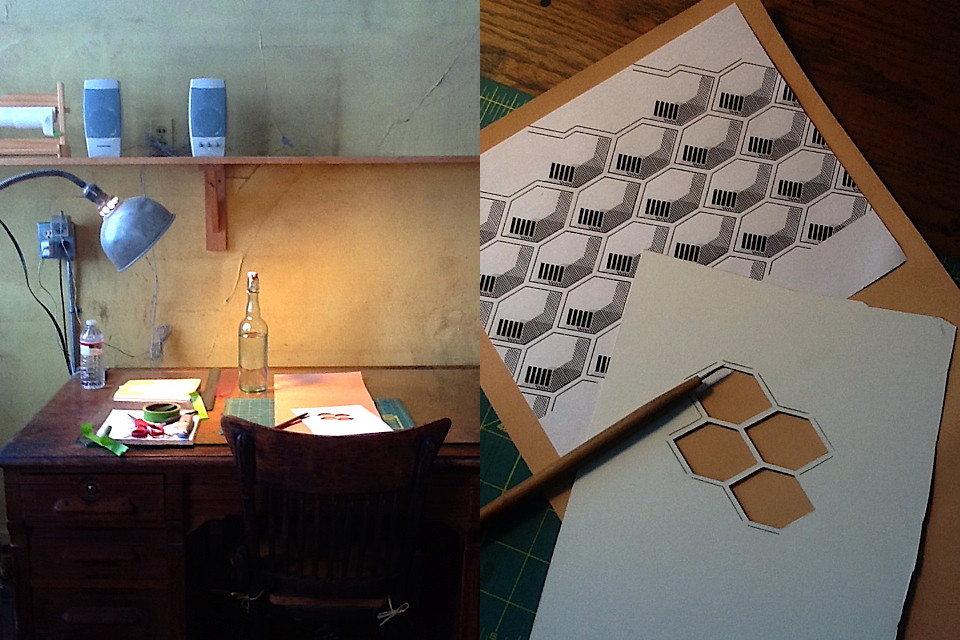
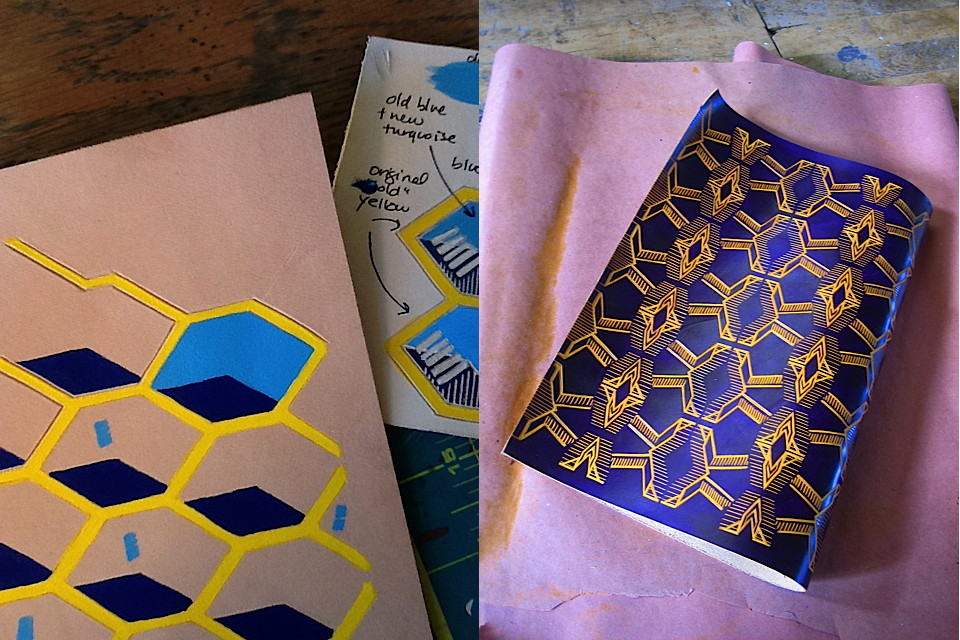
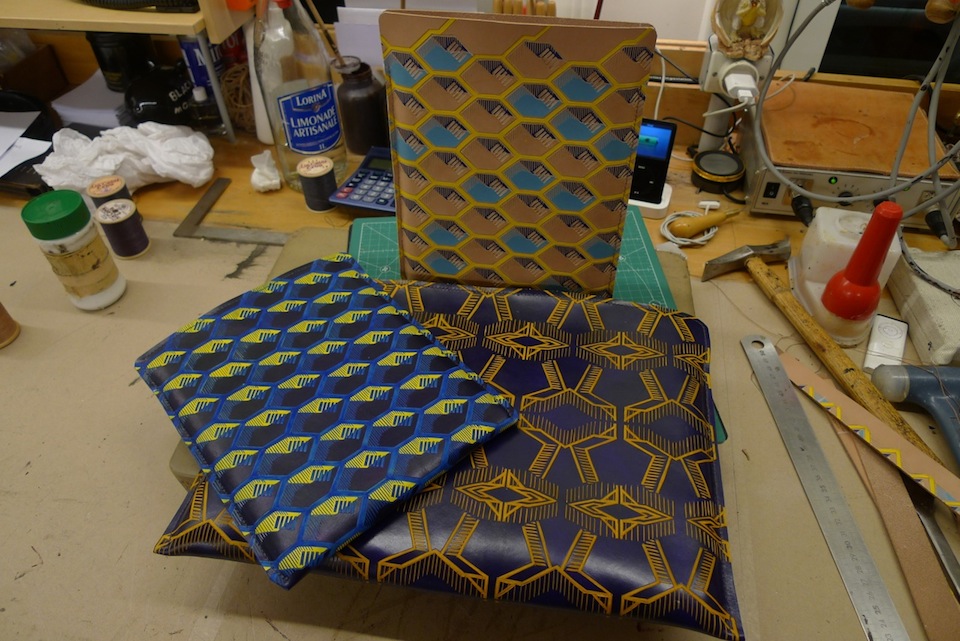
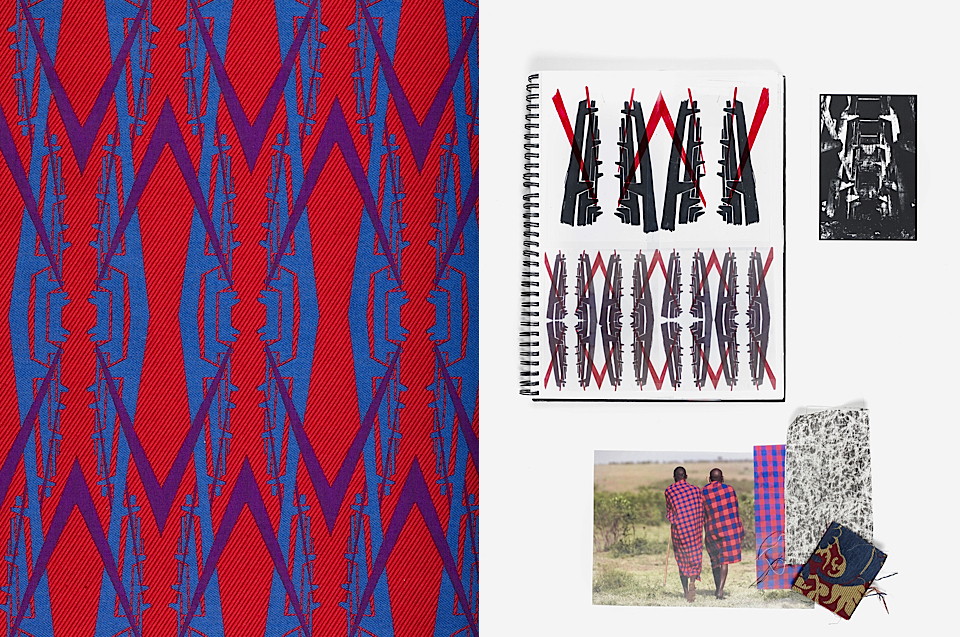
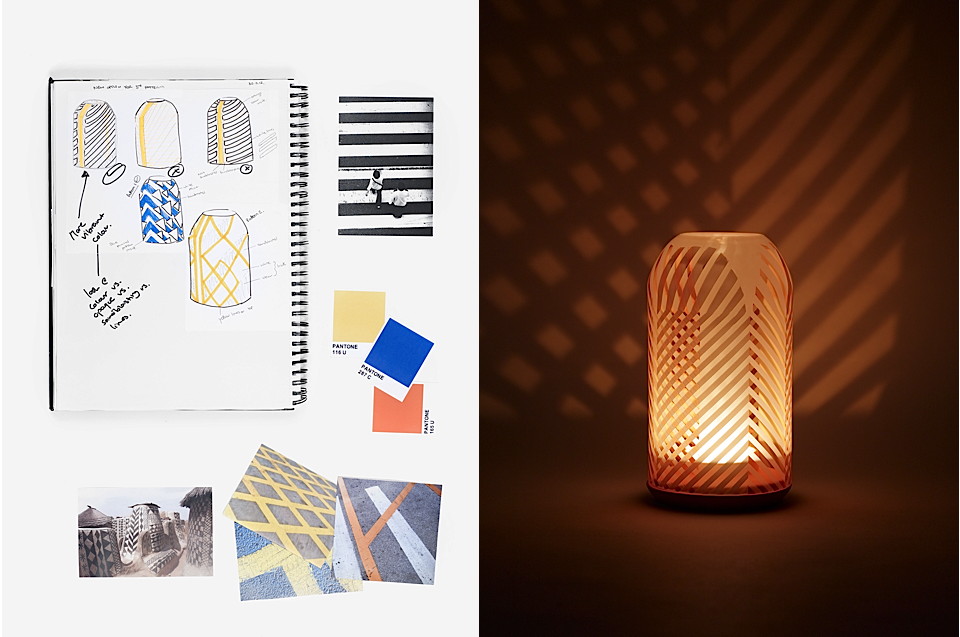
At the last Salone in Milano, in her 'Urban Tribe Series' Fiona Krüger proposes an urban take on tribal artefacts and patterns. The resulting products reflect key elements of an urban environment: industry, architecture and transport.
To date the series features two textiles, leather accessories for tablet and laptop and glass candleholders whose patterns take their cue from factories, engines, fire escapes and road markings.
Each product was made in collaboration with artisans who use traditional production methods.
The final pieces are a juxtaposition of graphic urban patterns, inspired by today’s modern cities, and traditional fabrication techniques, which bring a personal quality to the series.
A unique feeling of products hand made with love.
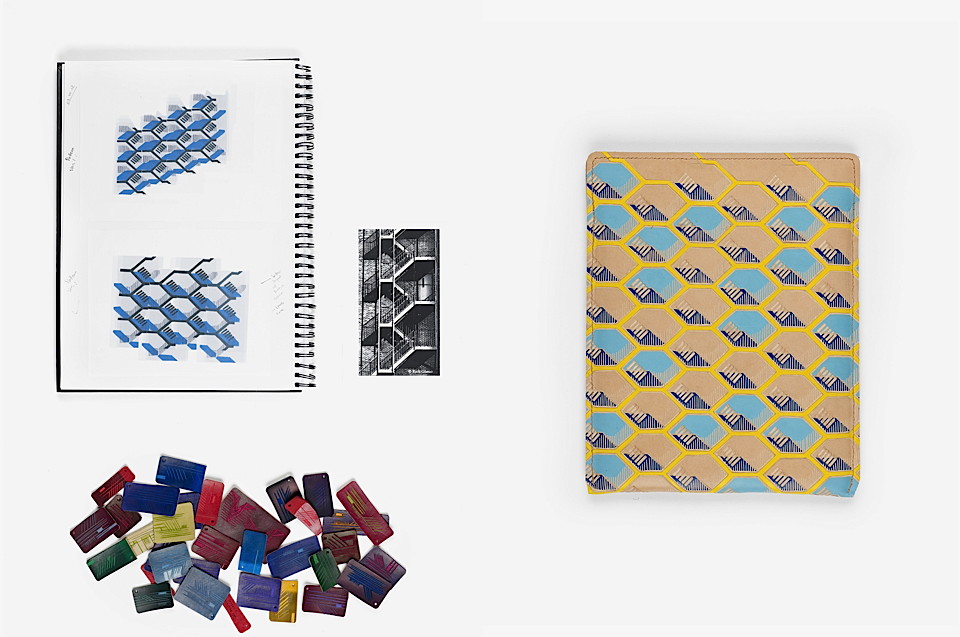
Architecture - urban tribe series - photos Nicolas Genta
Industry - urban tribe series - photos Nicolas Genta
Traffic - Urban Tribe Series - Photos Nicolas Genta
jorge diego etienne
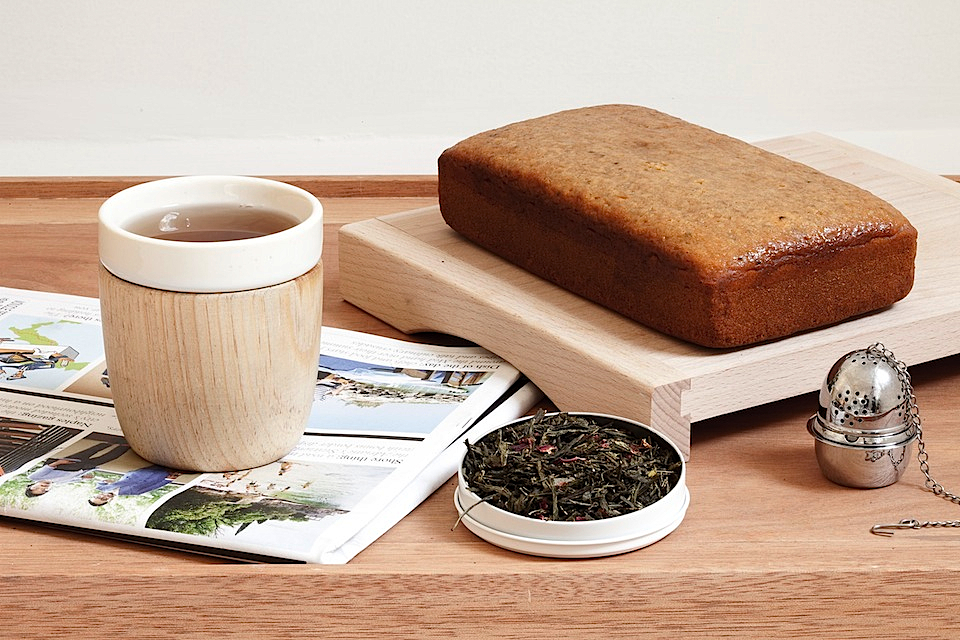
photo by Savvy Studio
Jorge Diego Etienne is a highly young motivated Industrial Designer from Mexico with a global perspective on design. He has experienced design at many levels and through alternative perspectives with studies at renown design schools like Central Saint Martins in London, Domus Academy in Milan, and Parsons the New School for Design in New York.
His studio in Monterrey, Mexico specializes in product design, furniture design and strategic consultancy for companies in Mexico and abroad. His products bring design into daily routines, combining cultural factors and technology, creating memorable experiences for every user.
We are happy to present two of his latest design: "The Second Object" and "the Service Trolley".
"The Second Object", designed in collaboration with Savvy Studio for Casa Bosques, is a mug that continues to work with the ideals of the brand by amplifying the rituals suggested by nature."The Second Object" is a personal item that’s kept close to its user during this process of contemplation. The design is inspired by traditional Japanese lacquered cups, although in this case, a ceramic container holds hot liquids and is held by a wooden cup that helps disperse heat.
The wood will gracefully age contrasting with ceramic that keeps a pristine appearance through the years. Both components of the Second Object are produced at local workshops with an outstanding family tradition in Monterrey, Mexico.
"The Service Trolley" rescues an old furniture archetype through an updated simple yet elegant design. Ediciones Jalapa invited Jorge Diego to create this object for their service furniture collection produced in collaboration with La Carpintería MX workshop. Ediciones Jalapa is a space dedicated to research, promote and develop design through limited edition contemporary objects. Parting from the typical form of a service cart constructed from two trays placed vertically, Jorge Diego shifts these basic elements, reworks the structure into a cantilever design and adds oversized front wheels to create a refreshed and dynamic language. Production was made at La Carpinteria MX, a traditional wood workshop focused on producing high quality handmade furniture with a revitalized sensitivity.
Jorge Diego 's sensible work is made to be used in our every day life, his products give us a deeper relation with nature and hand made productions.
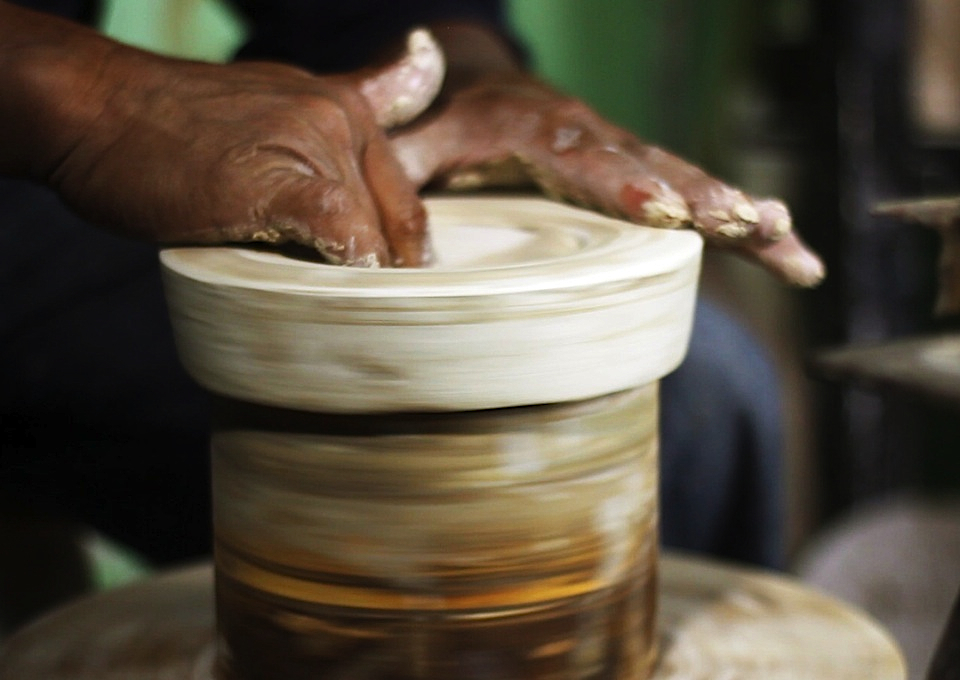
photo by Savvy Studio
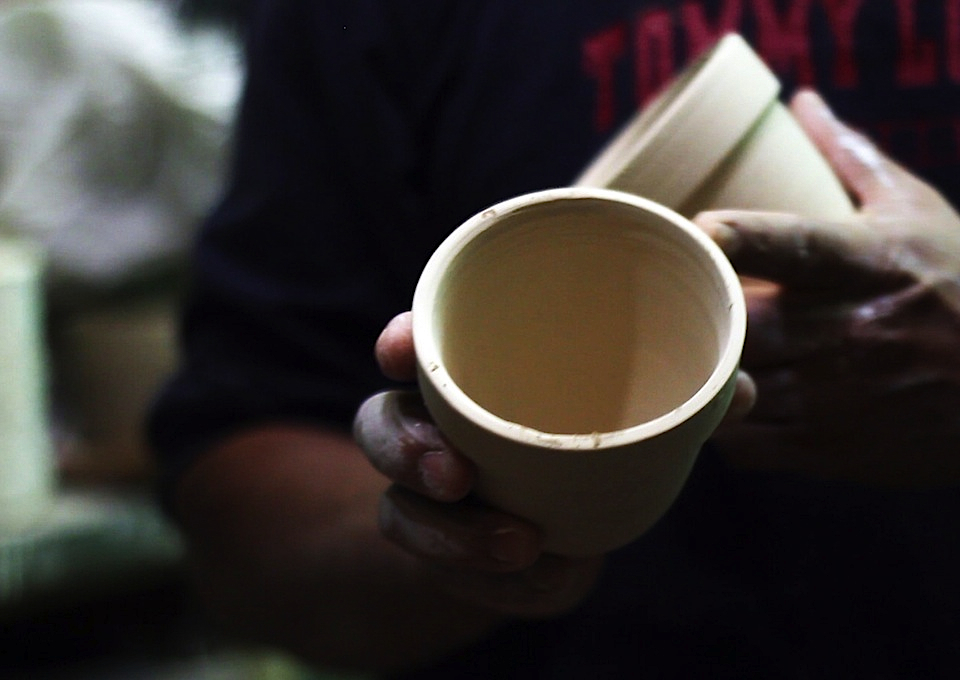
photo by Savvy Studio
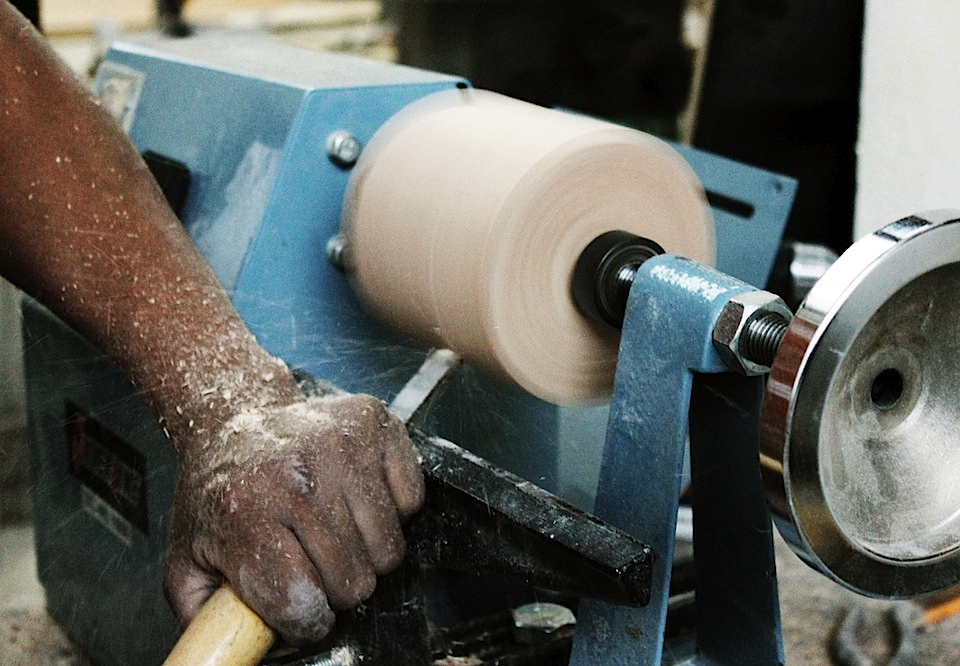
photo by Savvy Studio
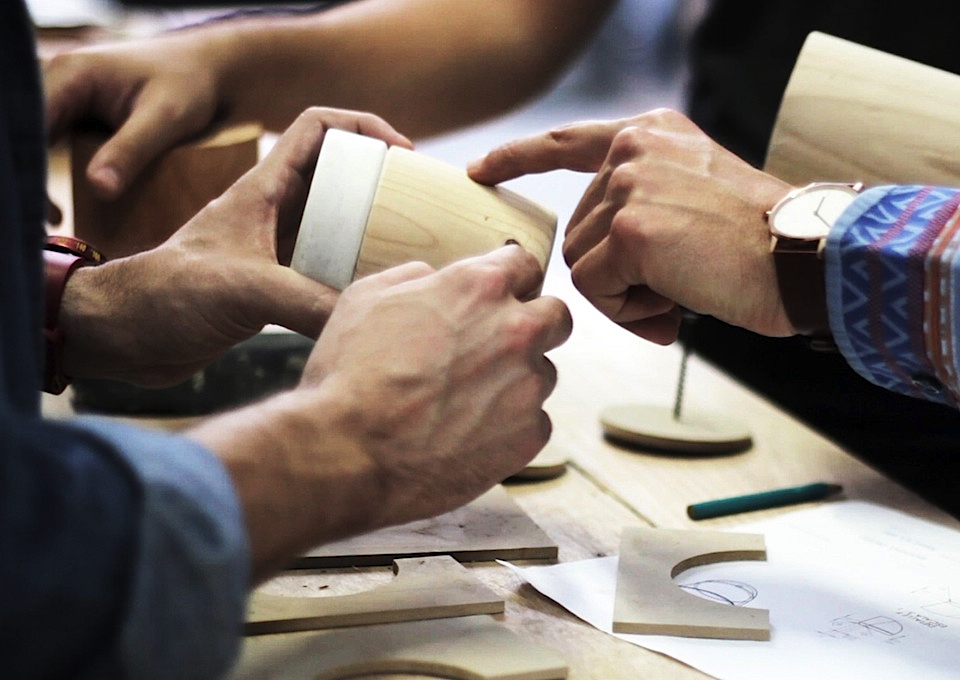
photo by Savvy Studio
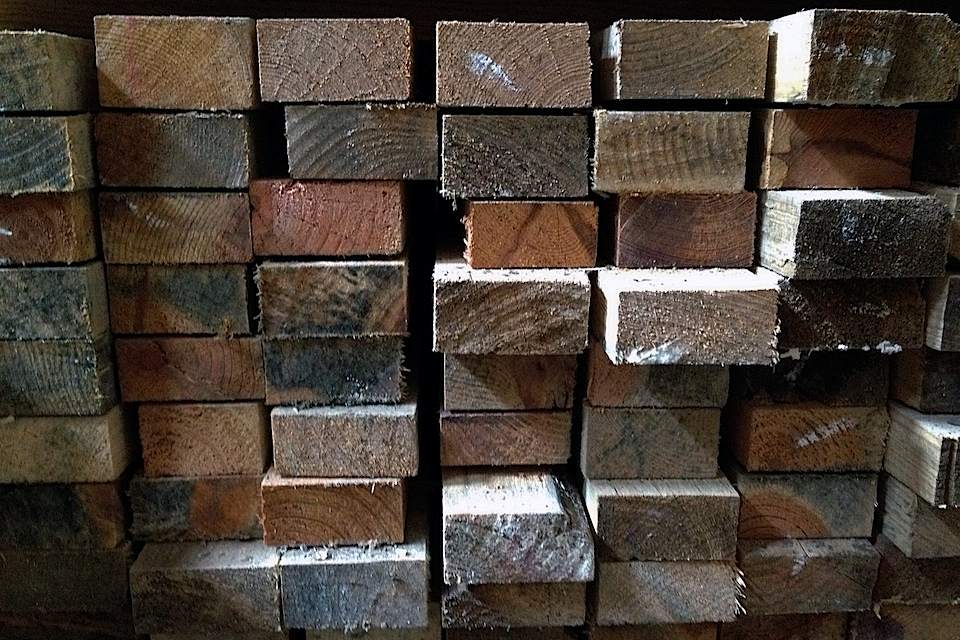
photo by Ricardo Rodriguez Elias
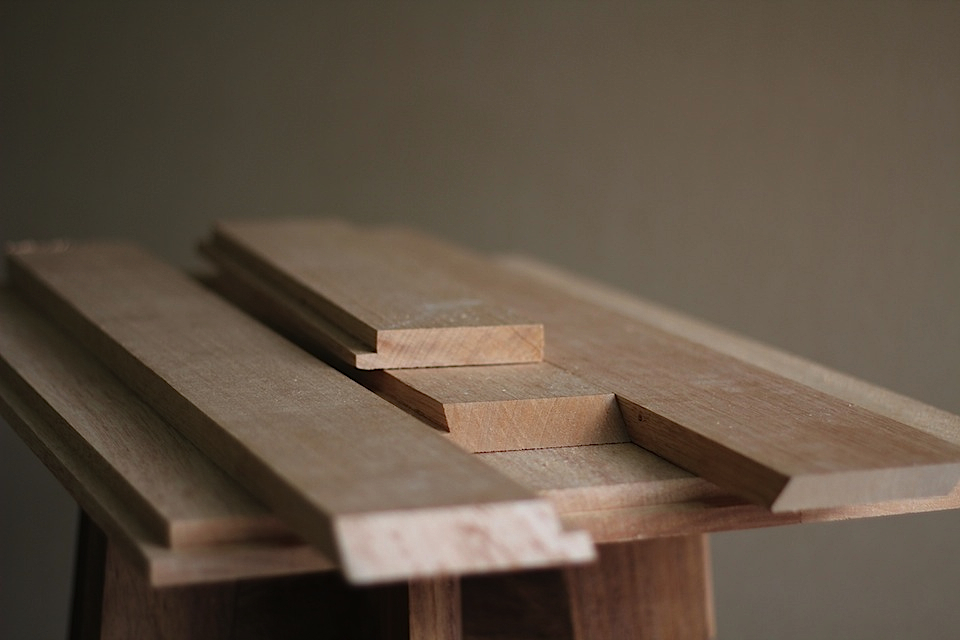
photo by Ricardo Rodriguez Elias
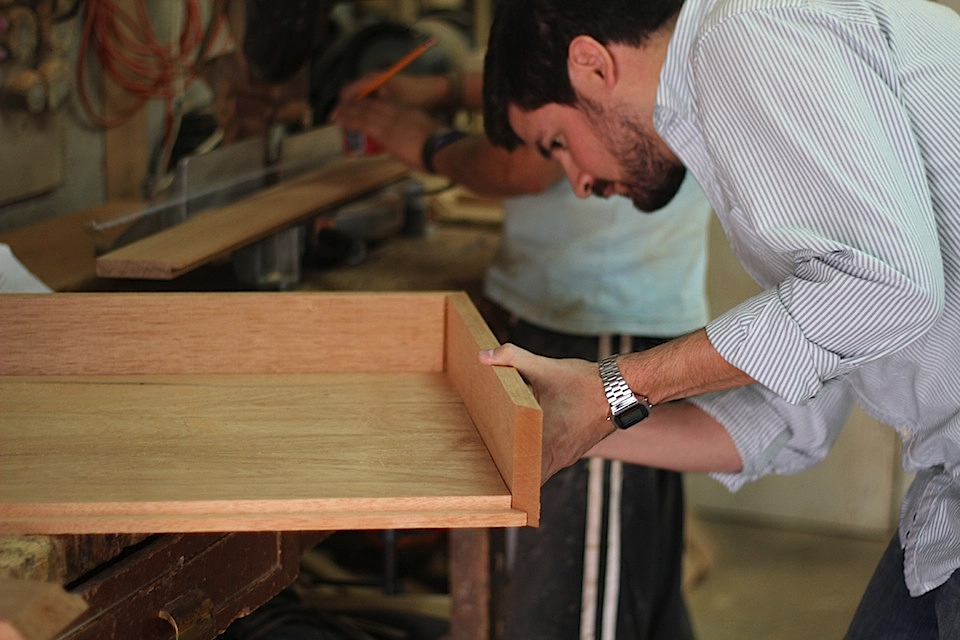
photo by Ricardo Rodriguez Elias
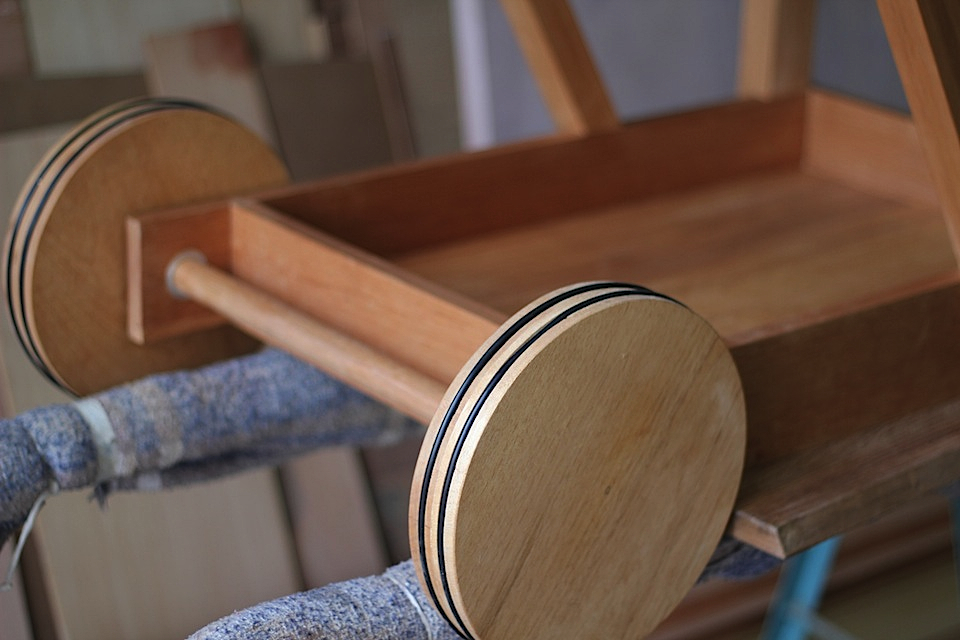
photo by Ricardo Rodriguez Elias
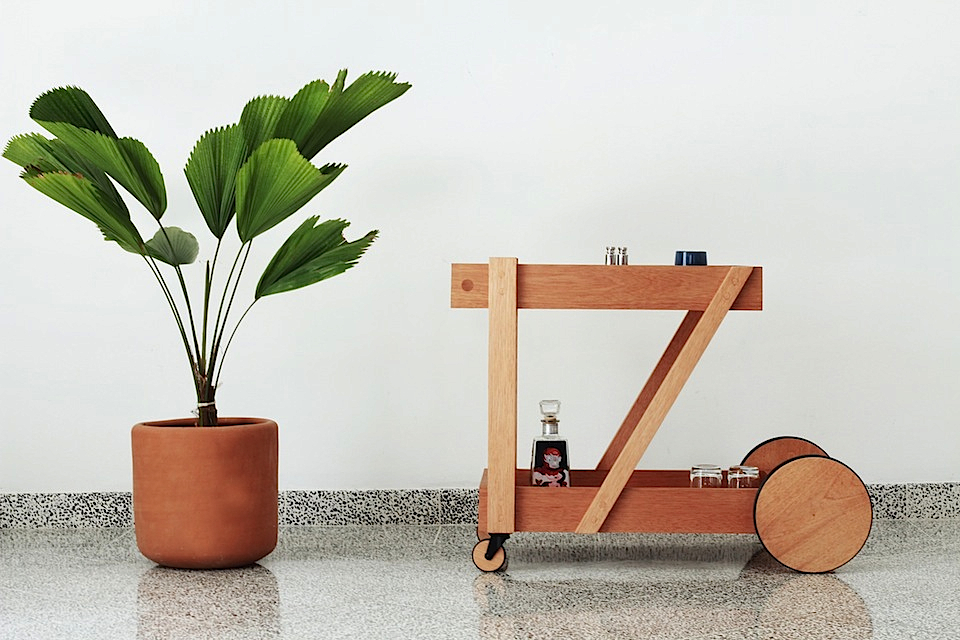
photo by Ricardo Rodriguez Elias
siba sahabi
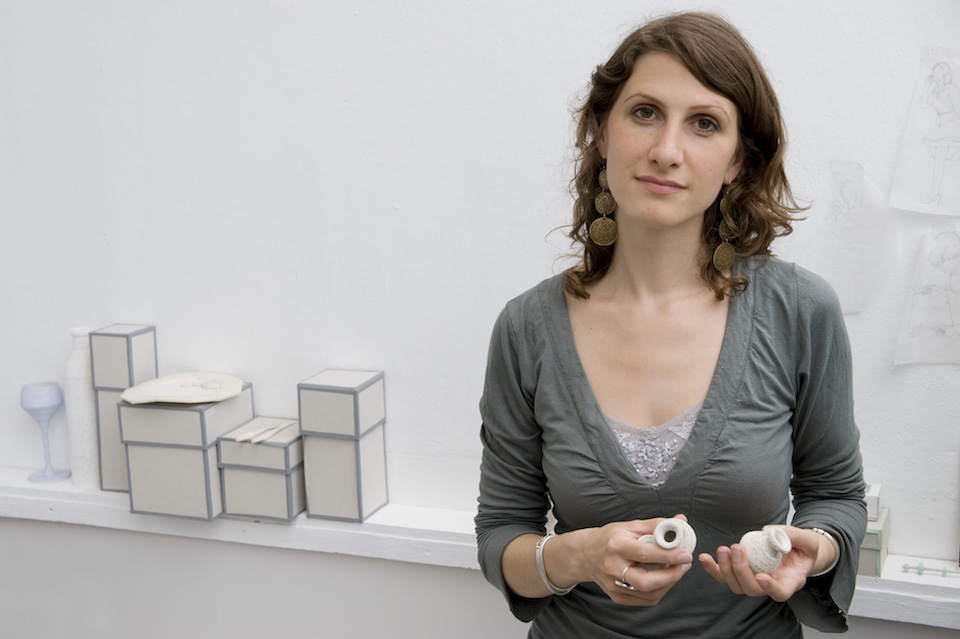
Siba Sahabi in her studio photo by Annemarijne Bax
Sophie Hérolt Petitpas is a french journalist free lance found of design and lifestyle. She is also passionate by astrology and its mythical and symbolic aspects. Curious and sensitive, she loved linking and describing her trend hunting with the eyes of mythology in her blog.
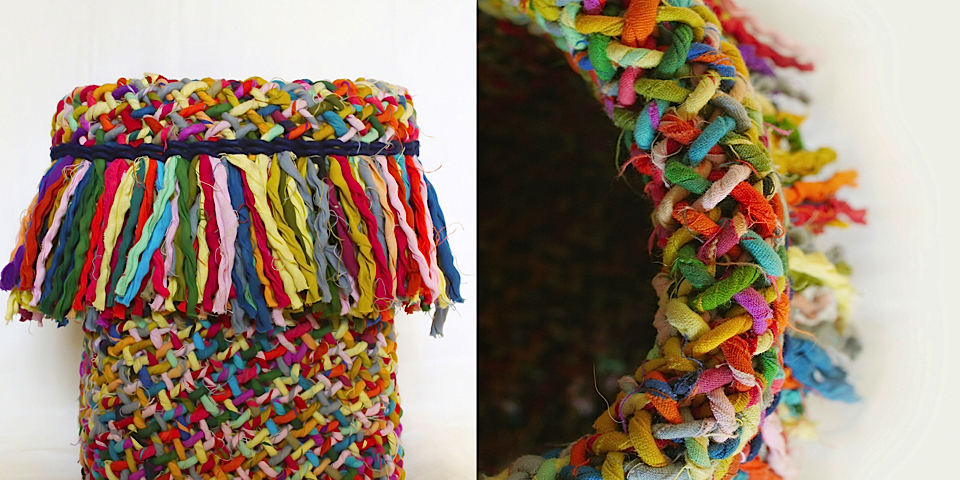
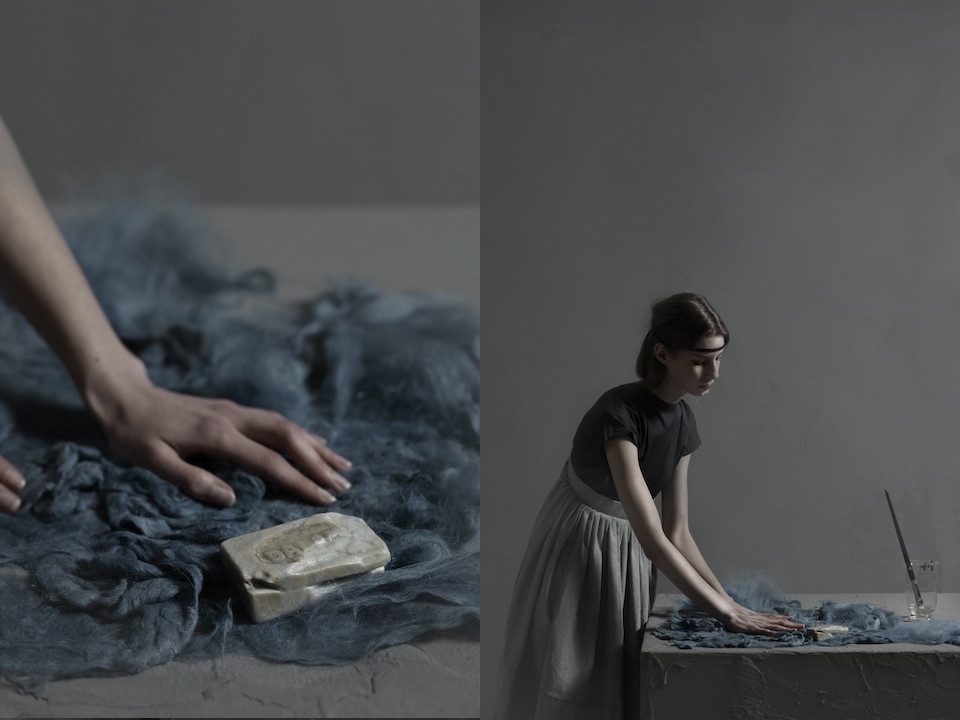
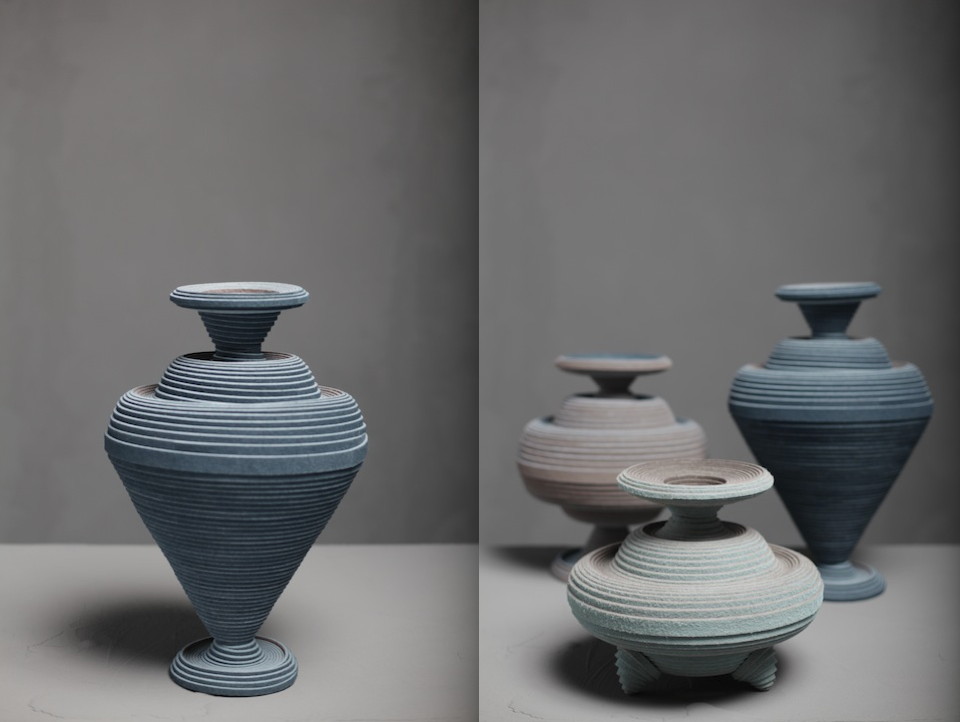
Siba Sahabi (Gerrit Rietveld Academy Amsterdam) poetic designer mixing her German and Iranian roots, proposed to the last Winters Salon in Amsterdam, a magnificent series of carafes, cups made from coiled coloured felt strips coated with a layer of paint on both sides. This collection took its inspiration from deep ancients times. Called “Between two rivers”, this serie evoks the ancient Greek translation of the term Mesopotamia, the cradle of Western civilization, birthplace of the pottery turntable. As a contemporary designer, Siba Sahabi has been inspired by the connection between this ancient land – located between the two rivers Tiger and Euphrate – and Western ceramic culture using new technologies. She works with the ideas to linked the tradition, the history and innovations, mixing both of them for an amazing result.
The turntable, that aided potters to design circular objects more accurately and faster, was invented in 3500 BC in Ur, an ancient Mesopotamian city, located in modern Iraq. Around 2200 BC, this invention was introduced in Greece and gave birth to a new style of Greek ceramic called Minyan Pottery which Siba has reinterpreted style in her modern felt sculptures.
The result is spectacular, because it’s almost impossible to know if it’s a genuine antic piece or a modern one. A circular, ribbed finish is one of the distinguishing characteristics of Minyan ware, which reflects its production process on a potter’s turntable. Although the turntable non longer plays a significant role in the production of modern large-sacle pottery today, the appearance of hand –turned ceramics is often imitated by producing cicular shapes with fine ridges. Siba reproduced this effect in the old way. Each object shows three colours : the original colour of the felt (surface of the ridges), the inside and outside of the objects. The dense and felt material translate the heavy appearance of the Minyan ware and exaggerate the size of the oversized vases, some of which are up to 50 cm.
A superb film entitled “ Pallas Athena” made by Siba Sahabi in collaboration with Lisa Kapple and Niels van den Top, shows the setting of a Greek pre-antique pottery workshop with the modern techniques of the felt coiling used by the artist. This film is beautifully dedicated to the spirit of Greek Goddess. The link between ancient technics and the renewal of craft is done with grace and talent.
Sophie Hérolt Petitpas
photos by Lisa Kapple
photos by Lisa Kapple
the soft world
Aldwin van Krimpen
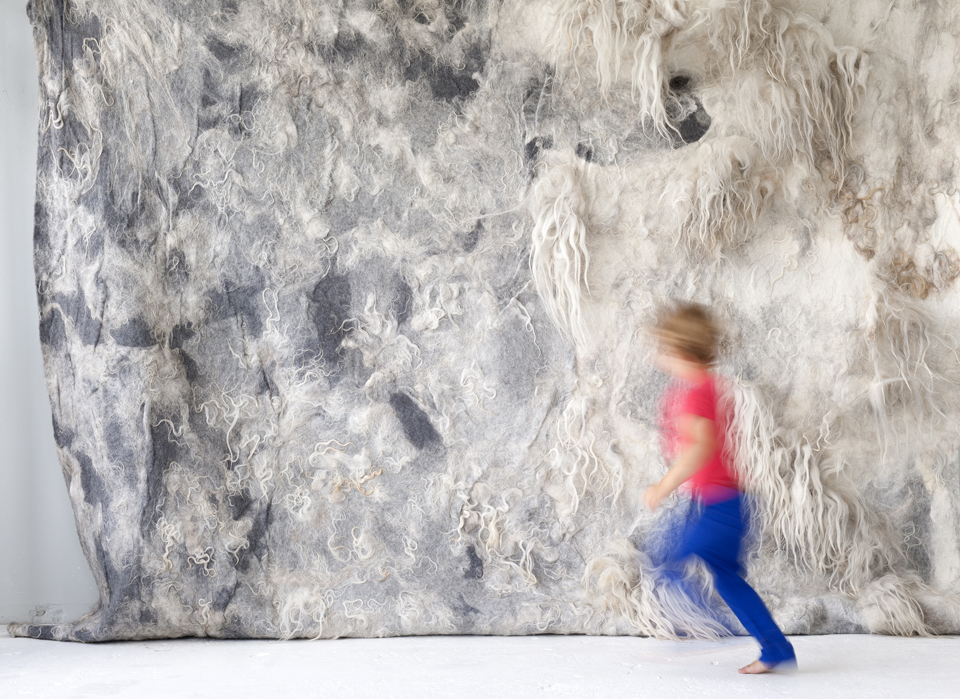
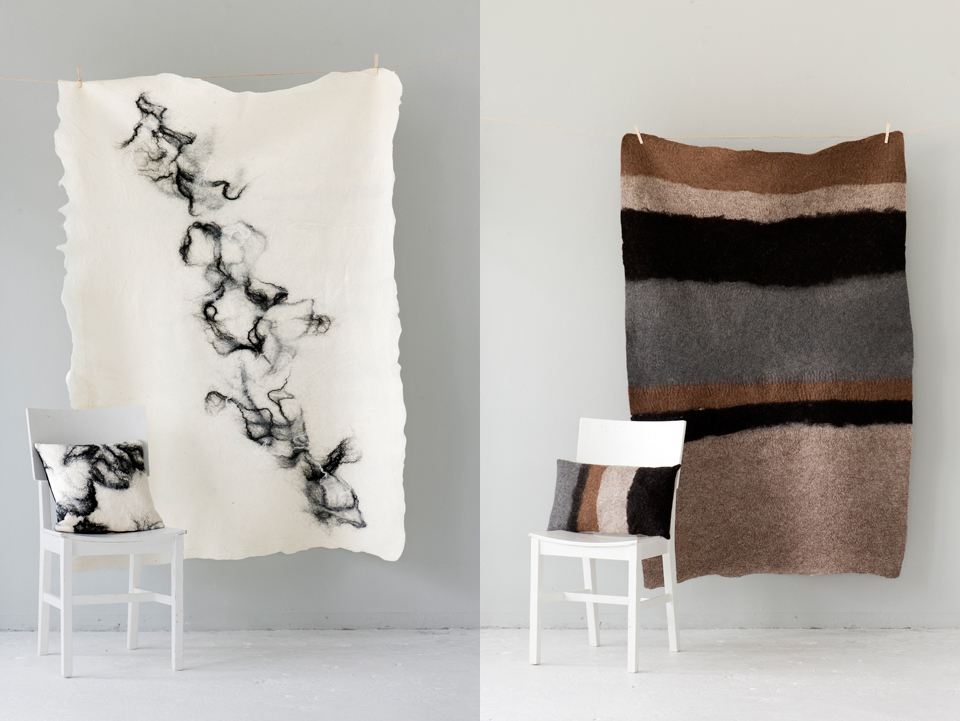
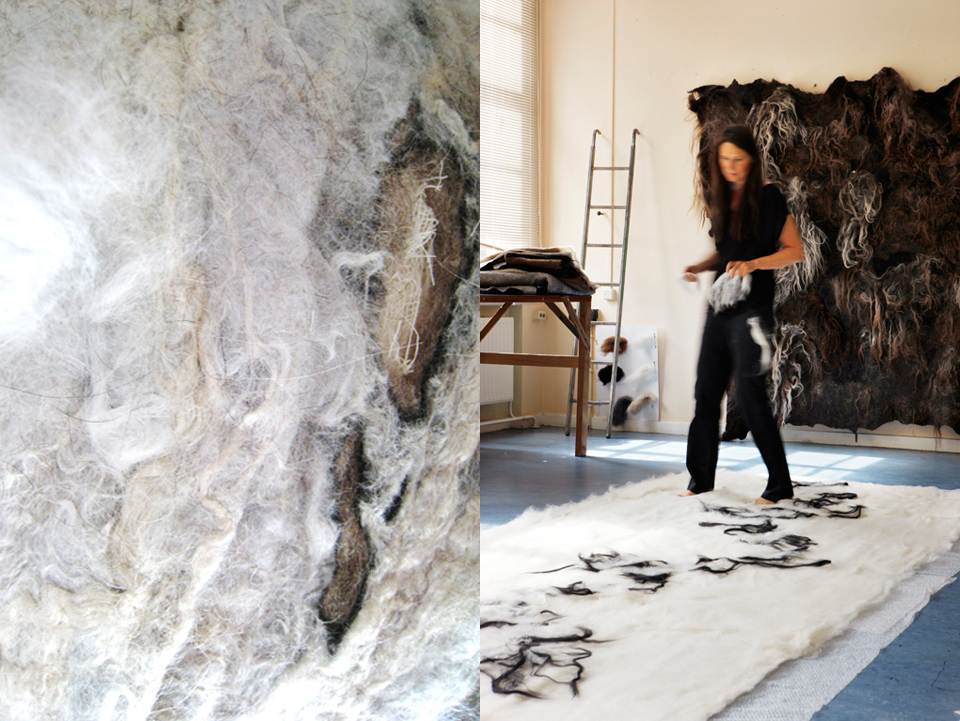
The Soft World is a Dutch studio based in Rotterdam, Netherlands, specializing in unique felt products for the home and interiors. Launched in 2008 by Beatrice Waanders, the studio is one-of-a-kind for its innovative concept of felting raw and un-dyed wool from special sheep breeds in combination of traditional luxurious materials such as angora, alpaca, cashmere, and silk.
Environmentally friendly, The Soft World does not use chemical products, but rather exploits the rich color palette of the animals themselves. Beatrice travels around The Netherlands to find her wool at hobby-farmers and old heritage sheep-flocks that keep alive the old forgotten sheep breads, often using rare European breeds like the English Wensleydale Longwool, Blue Faced Leicester, and Swedish Gotland Pels. Each breed has a variety in structure and colors range from white to grey to browns.
While the mixture and sheep wool and other fibres is unique to Beatrice and her studio, the felting process is the oldest manner of making fabric. Felting began in Central and North-East Asia and was often used as clothing and shelter for nomadic peoples.
The Soft World's line ranges from products for the home interior including cushions, throws, poufs, carpets, and footstools. The Soft World also makes custom pieces for special projects for architects and interior designers.
Currently, in addition to hand-making her products, Beatrice gives Master classes on the felting process.
100% handmade felt, 100% eco-friendly, 100% craftsmanship, 100% natural colors and no dyeing, 100% wool of old european sheep breeds, from rabbits and goats, 100% animal friendly, 100% slow design, 100% made in Holland: 100% made with love.
Aldwin van Krimpen
 Tessa Francesca
 Aldwin van Krimpen
fete for the senses
Left by Abigail Doan - Right by Zaida Adriana Goveo Balmaseda of Balmaseda studio
Rhiannon Silver Gilmore is a visual researcher and maker, creator of the inspiration blog Intelligent Clashing and writer on all things found beautiful and inspiring. She collects images and ideas and connects them to each other.
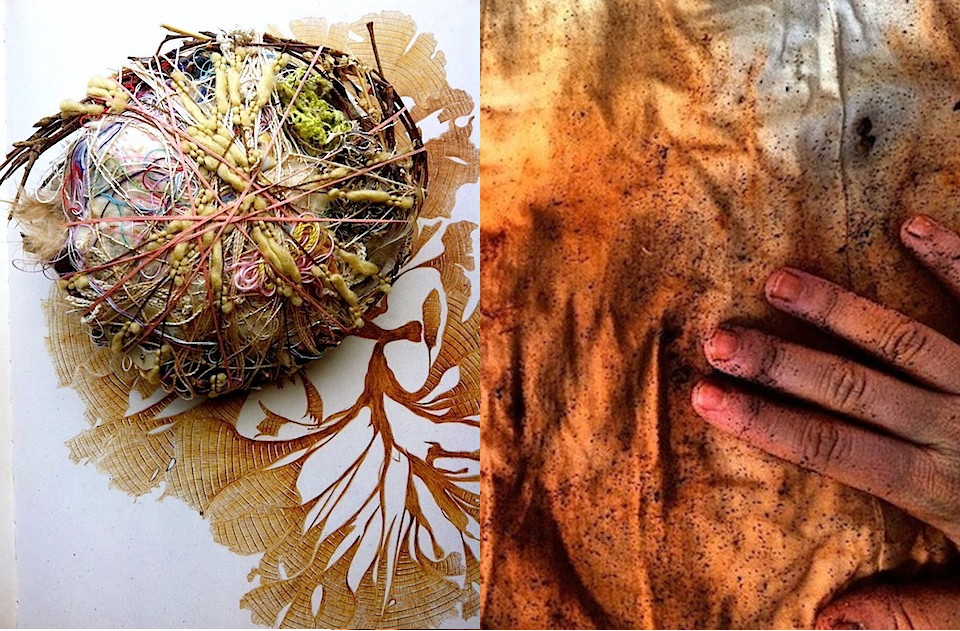
"Fete for the Senses" was a three day event that took place earlier last december in the Manhattan apartment of fibre artist Abigail Doan. With roots in Doan's own upbringing on a farm, where objects tended to have multiple functions and deep connections to each other, this celebration of organic goods, fibre art, fashion and collected objects sought to connect people via multi-sensory and tactile experiences. All of the work included in Fete for the Senses was either handmade, artisan-produced, textile rich, or completely organic in nature. For several years now Doan has been traveling between the U.S and Eastern Europe, and so for her holiday fete, she wanted to create a bridge between objects produced in NYC as well as in Bulgaria. She reached out to perfumer Parfum Lalun, who makes connections with unique ingredients indigenous to the landscapes of Eastern Europe, and selected works by Bazaar Bayar in Istanbul, Bulgar USA, Balmaseda, Eko-Lab, Marion + Willson and Sassa Bjorg in Sofia.
The Fete opened on a Sunday afternoon with organic treats and refreshments, invited guests included close friends, lovers of the handmade, gardeners, fiber experts, educators, a textile conservator, designers, a concert pianist and long-lost school acquaintances. All came to experience organic perfumes, savour locally made truffles and possibly try on a 'moss formation' dress by Balmaseda with no real agenda besides identifying what might be pleasurable and restorative for them. Botanicals and scents permeated the space and guests were invited to freely explore and discover objects from Doan's own home collection that were offset by the designs of featured participants.
Each maker was given their own room in the apartment and encouraged to immerse themselves in their specific zone. In this way sensual connections were made between object and space, the inner sanctuary of the bedroom became the setting for Eko-Lab's Dark Blossom collection and the aromas of organic scents created by Parfum Lalun were presented like an exotic recipe alongside Doan's own fibre forms and found botanic illustrations on the dining table.
The idea itself came from Dali's Les Diners de Gala, a 1971 publication with extravagant fete recipes and surrealistic visuals that explore the pleasures of taste and unbridled artistic passion. Inspired, Doan wanted to apply this spirit to the organic realm, one 'where fibre and slow craft methodologies might be at play and seem rich' connecting people with their senses and so providing them with vital information for meaningful decision making and more balanced consumption choices. In this way Fete for the Senses was meant to be more than a party, an exhibit, or a showcase but ultimately a way to sensitise each person to experiences that better inform them about what their true passions might be and in turn what they are hungry for and attracted to. In Doan's own words 'Desire is something that needs to be examined both as a way for creating deeper relations but also for gaging how sustainable strategies are ultimately implemented and shared.'
Rhiannon Silver Gilmore
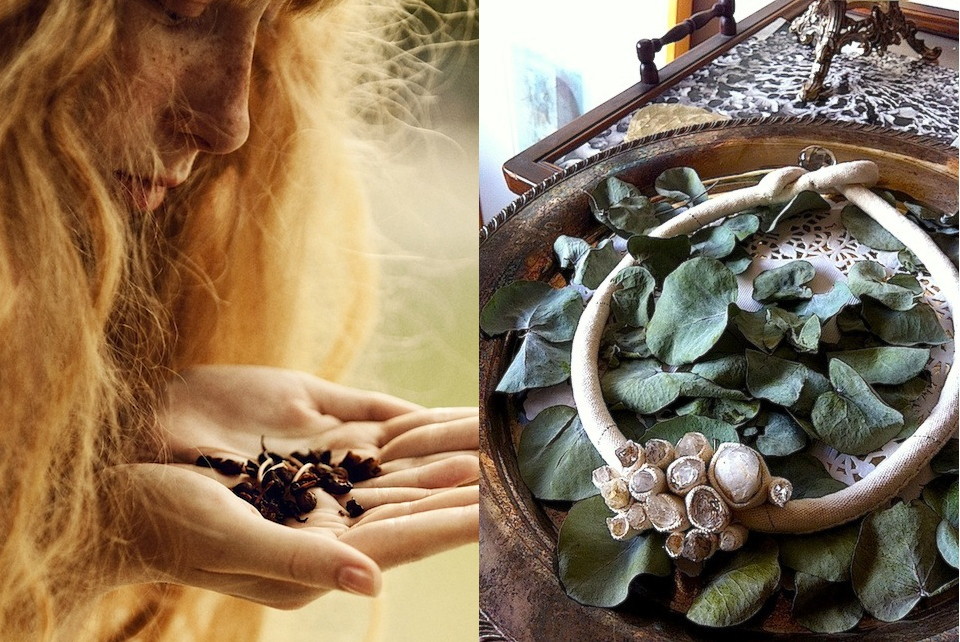
left ‘Lost in Sunday’ by Sassa Bjorg photo by Zlamitir Arakliev - Right by Eko-Lab & Abigail Doan
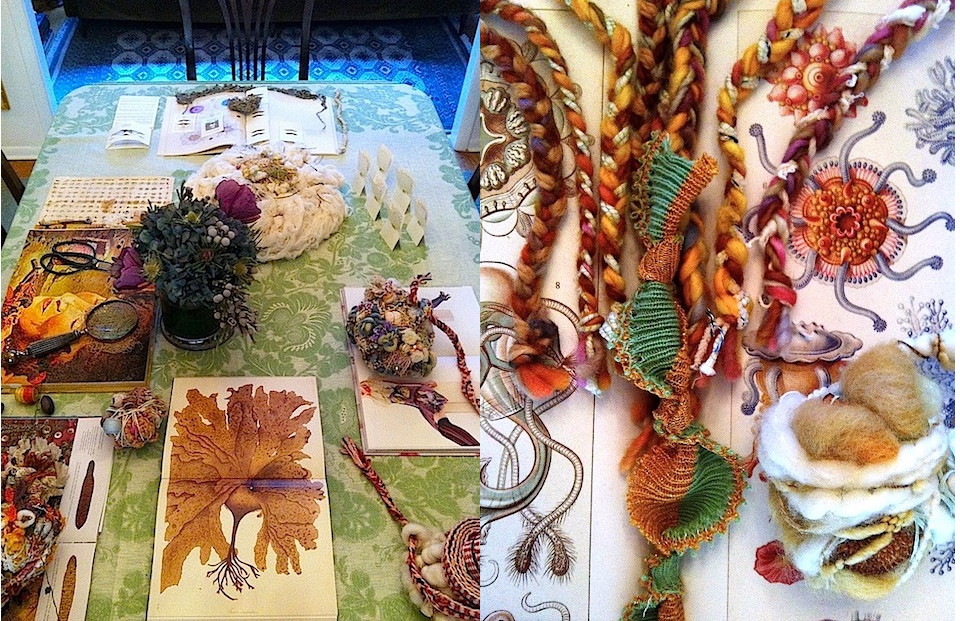
Photos by Abigail Doan
julie l. parisi
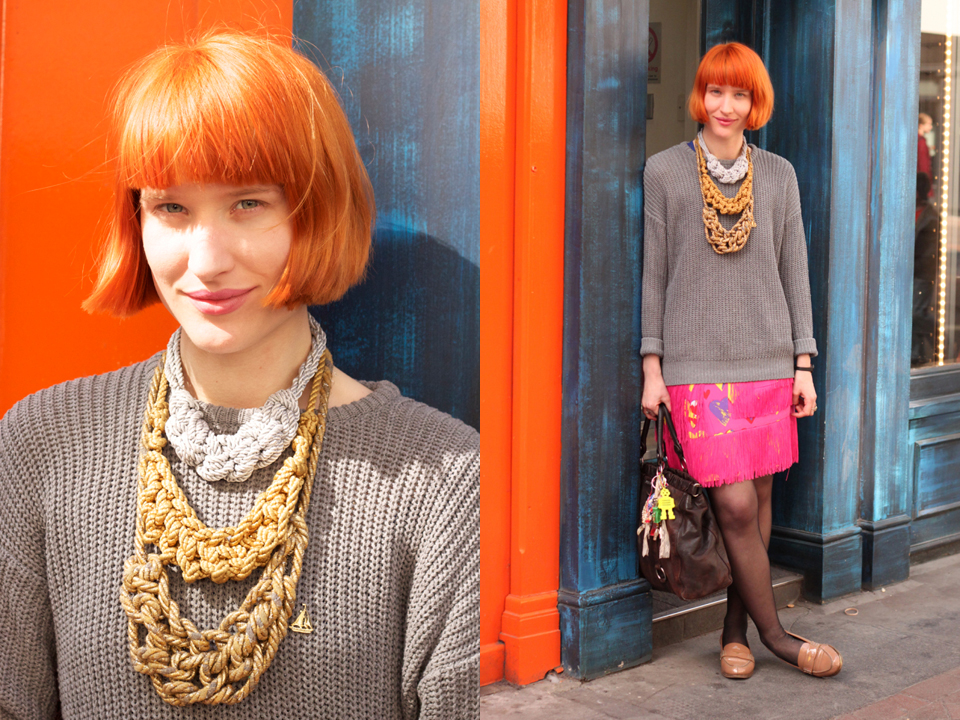
Julie L. Parisi photos by Miyelle Karmi
Julie L.Parisi is a jewelry and textile designer from Oslo, Norway. Her fiery hair and pleasant disposition are reflected in her designs, both for their uniqueness and concept.
The current collection "Gold?" is made from braided metallic cord, and the artist plays with the idea of a visually heavy and chunky form which is lightweight and airy. The result is a contrast that gives the designer inspiration.
"A rose is a rose is a… And then you go up to ti and see, for the sake of argument, that it is an artificial rose. Then you become aware of the material it is made of, cloth or plastic or paper. But at first glance you were certain of one thing only, that it was a rose." -'Design as Art' by Bruno Munari.
Speaking on further inspiration, Julie states that she sees "patterns and colors everywhere!" After studying surface design in San Francisco, she continues that the city inspired even more color in her work and personal style.
Beyond jewelry, the artist created a Pop-up shop on a wheelbarrow with Astrid Wang to raise money for a school project in South-Sudan. She is currently working on a 'secret' project to support designers in Norway, a community that is creative and talented.
Check back with Julie on her blog to see where she goes next.
Text by Ryan Moritz
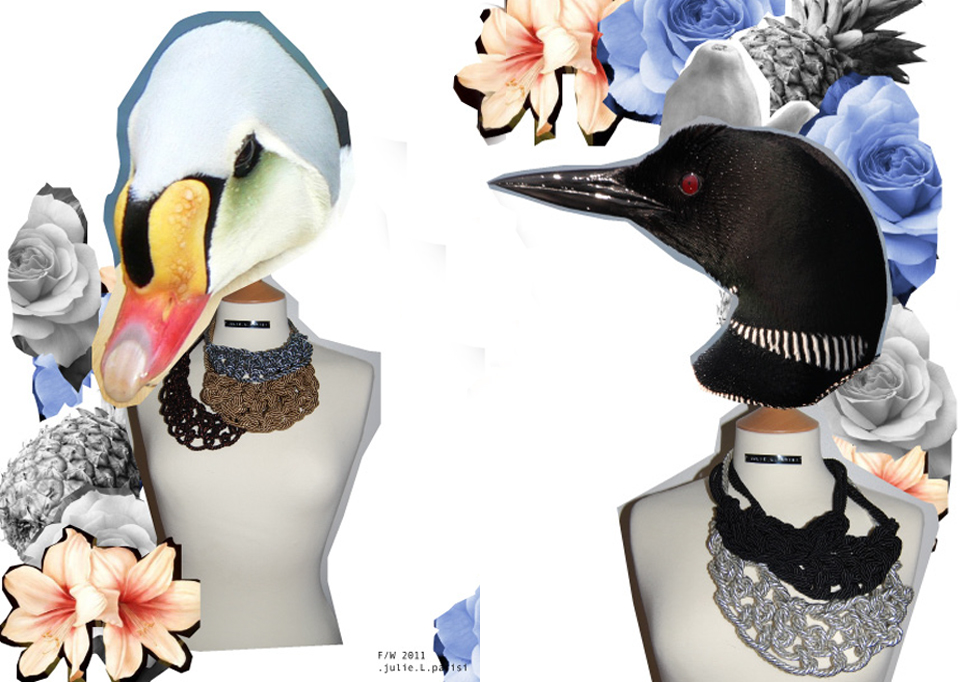
by Julie L.Parisi
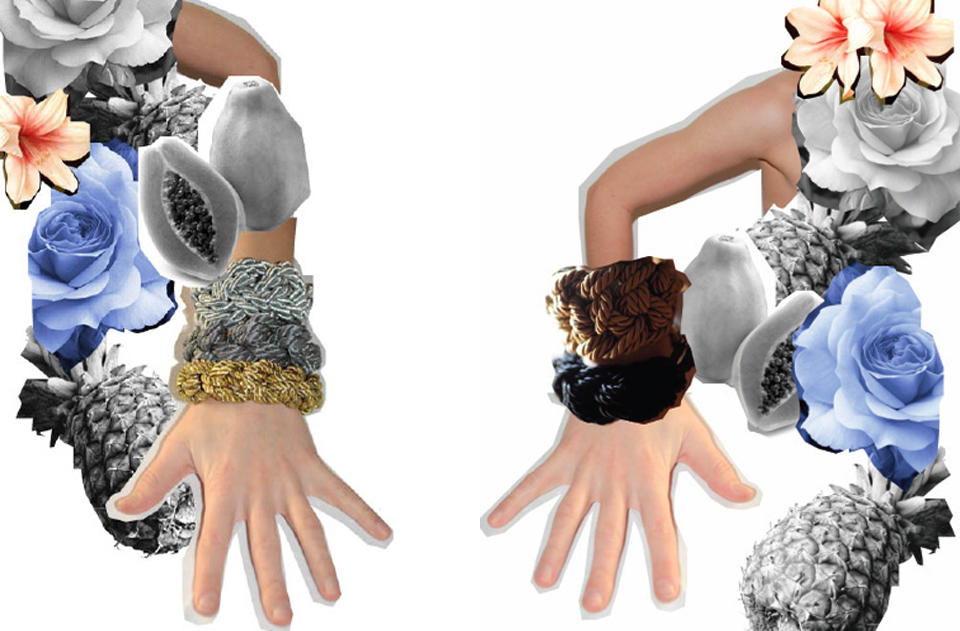
by Julie L.Parisi
bosenco
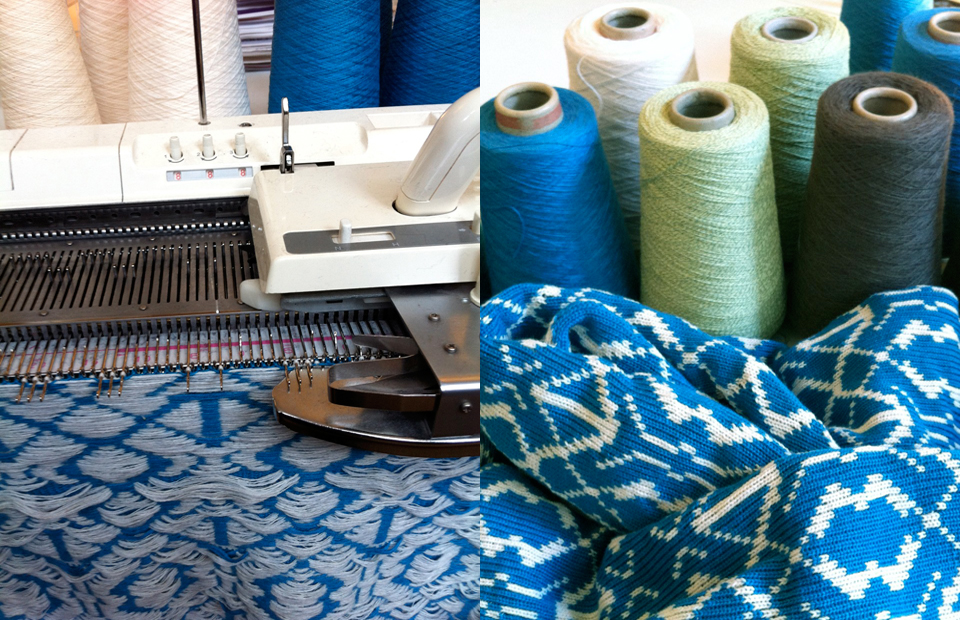
Photo courtesy of bosenco
Corien Forest is a textile designer and carpet maker. Under her company name, Bosenco, Corien creates brightly patterned textiles inspired by nature and traditional or folkloric patterns.
The motifs of these handmade textiles are derived from nature in the far north, with forms like stars, snow, ice, needle branches, hearts, and geometric lines. A variety of color combinations are visible, which comes from the necessity to create a strong and warm effect using two threads.
Originally a graphic designer, Corien is inspired by the designs and colors of Scandinavian, English, and French patterns with a rich history. Communities in these areas have for centuries had their own pattern and color combinations using a variety of crosses, diamonds, and roses to make lovely designs.
Bosenco carpets were born by putting these historical and geometrical motives in a large formats and in a new context.
For the future, Corien hopes to reflect sheet music from organ books into designs which will be named after the titles of the music. Among her favorites include the color red, stretching in the morning, wool, Phillip Glass, and a cold potato salad on a summer day.
Ryan Moritz
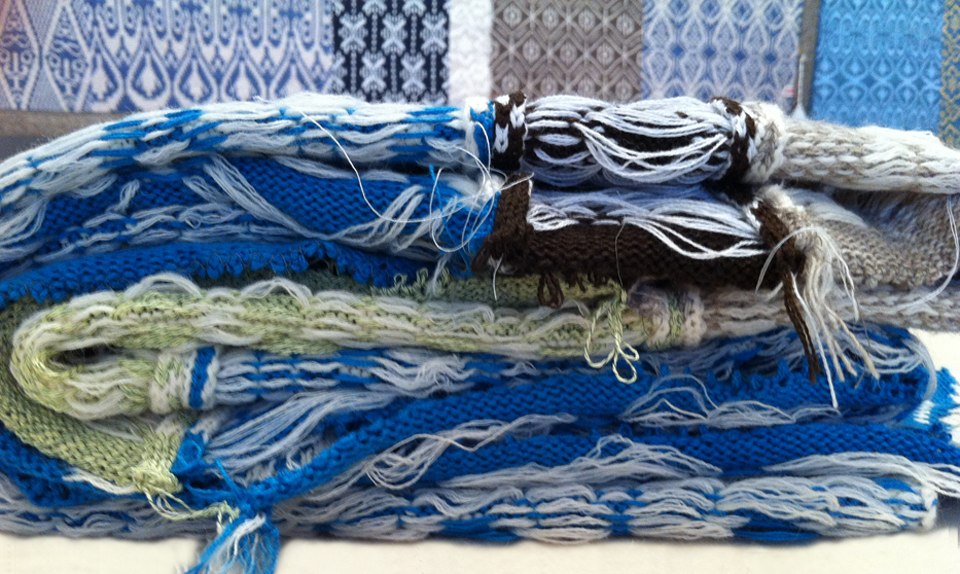
Photo courtesy of bosenco
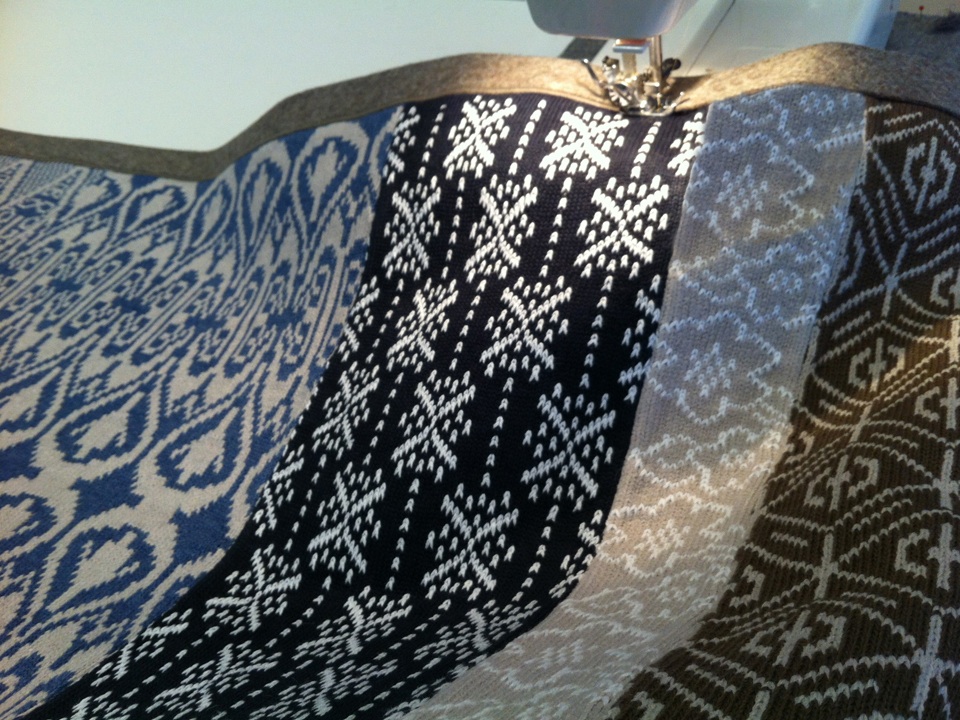
Photo courtesy of bosenco
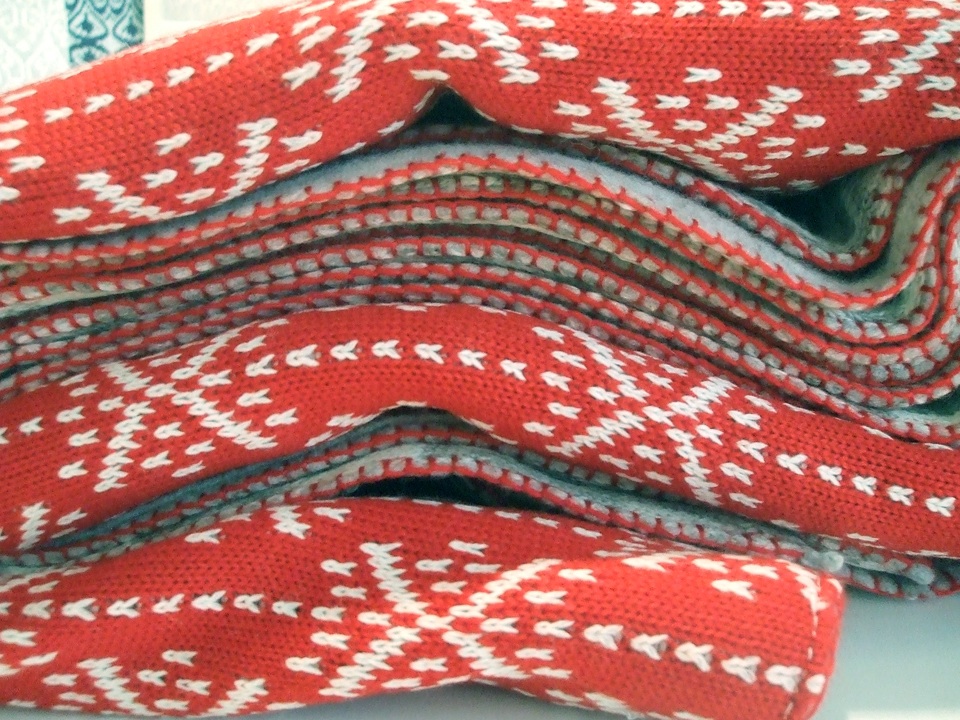
Photo courtesy of bosenco
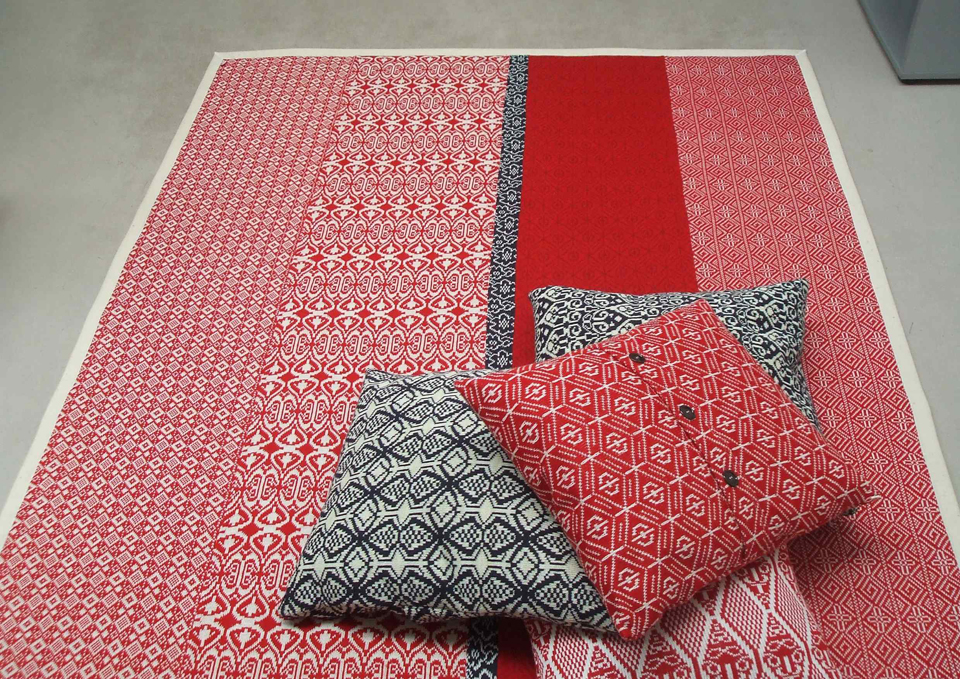
Photo courtesy of bosenco
india flint
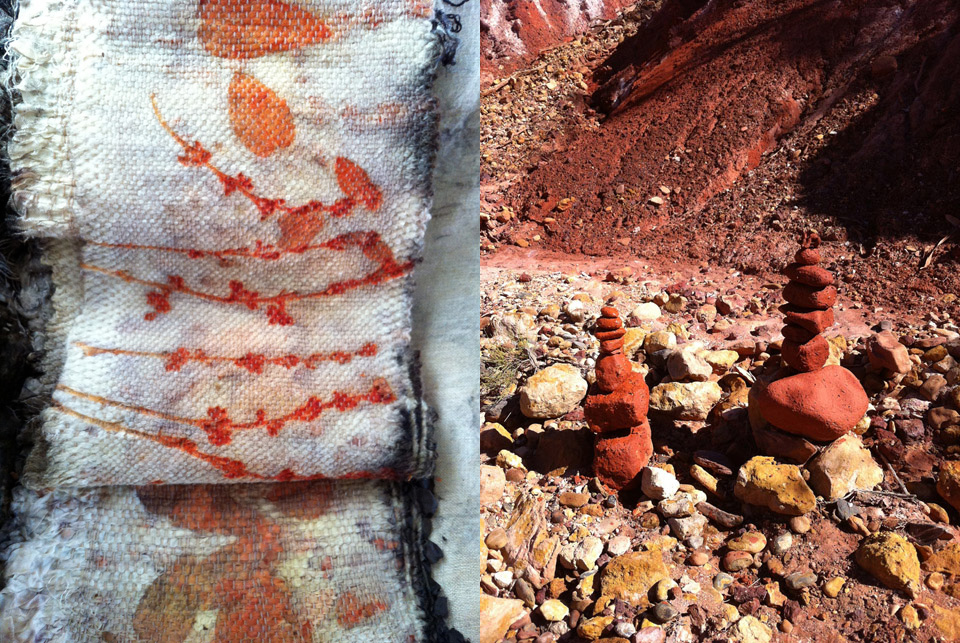
photos and design by india flint
India Flint is a visual artist, specializing in natural dyeing techniques in the deep south of the Australia. She uses bio-regional and ecologically sustainable dyes from windfallen leaves, bark, and earth pigments with cloth, paper, felt, and weaving. The artist was recently featured in our Bloom magazine. On the subject of handmade objects, she writes:
"in my travels i am finding more and more that people are searching for "meaning in handmaking"
and wanting to learn how to use their hands again
to have the satisfaction of creating an object for themselves
for myself, the return to constructing cloth through weaving
is a meditation
forming the cloth line by line
thread by thread
i work white or undyed
and then
at the end
dye the hand woven cloth "path" with leaves
and
ochre"
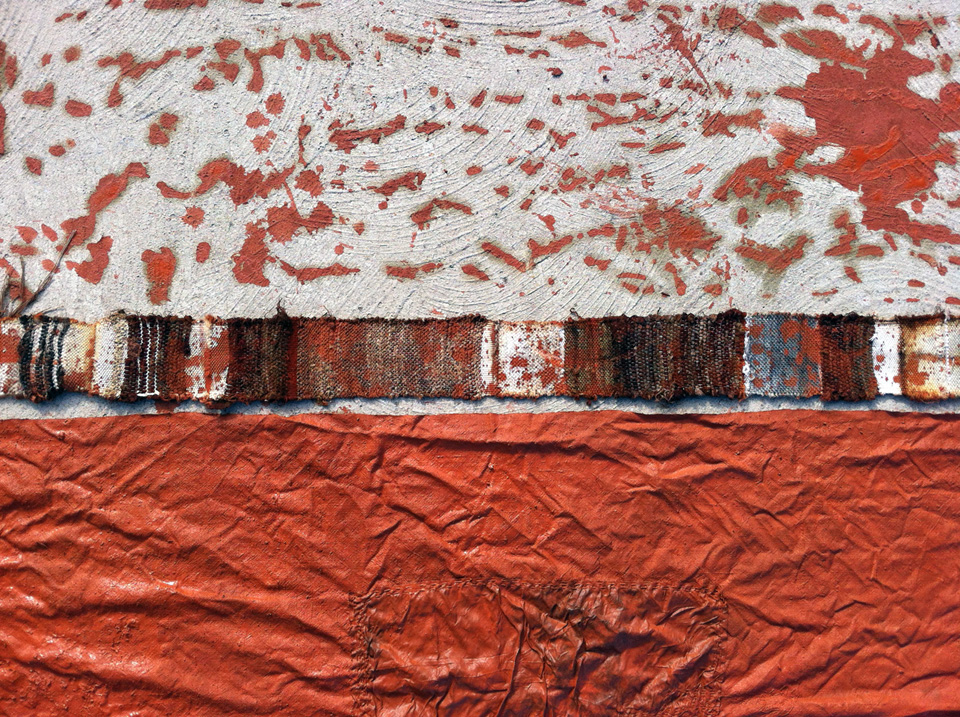
weaving and ochre india flint
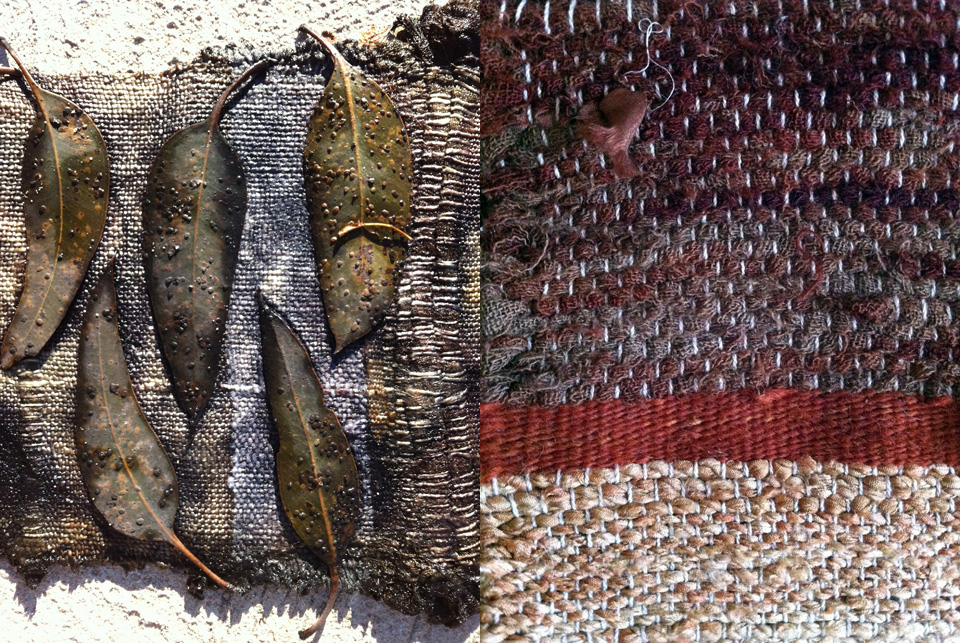
photos and design by india flint
rina menardi
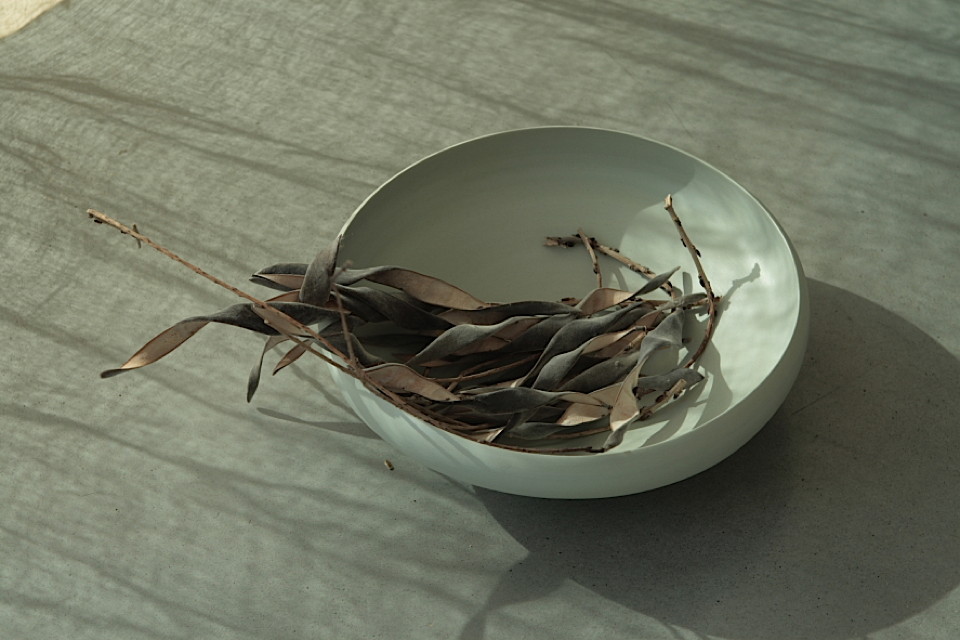
photos by Carlo Vidoni styling Magda Di Siena
Magda di Siena is an architect, an interior stylist and an art consultant. Her work is focused on projecting and setting exhibitions, fair stands, paper advertisements. She met Rina Menardi in her studio in Italy and shares with us this delicate work.
Wearing a soft, bright blue dress, Rina Menardi moves confidently around the factory that bears her name. The large glass entrance to her workspace lets in a warm, inviting light. You quickly become aware of a positive energy, a kind of silent music languidly lurking in the background, among pots arranged in compositions suggestive of journeys and resting places. The upper floor is accessed by a winding staircase made of polished metal, designed by Rina and built by a local artisan. The staircase is a parenthesis. A short poem among other poems, almost a Haiku (like the wooden walkway over the reflecting pool that leads to the entrance) inviting you to proceed with caution, to linger, to slow down. The upper floor looks out onto an immense natural landscape. In order to work and immerse herself in the creative process, she says she needs "an upper level from where I can observe things."
Her creations are arranged here like characters in conversation. Their variety is extraordinary. Every work is different: a detail, a curve along an edge, a reflection, making each at once characteristic and unique. She has just managed to obtain a colour that expresses the power of the earth, and she is thrilled with it. Every pot tells a story, yet it is also the natural evolution of a thought. 'Project' is a poor word for these works, which go far beyond mere projects; the word 'thought' occurs often as she talks. Perhaps her work can be defined as a pure thought that sets out from a suggestion and returns as a form. Her relationship with her material is not one of domination but accompaniment. She speaks to the material and it speaks to her in a reciprocal act of giving as the work comes into being, then of separation into two individual entities that resemble each other at the end of the creative process. Only then has the object absorbed Rina Menardi's thought and intention, only then has the artist absorbed all the sensations that the material, through its transformation, has succeeded in passing back to her: strength/fragility, tactile/ethereal qualities, subtlety/richness of colour, fullness/sense of empty space. Her research is focussed on the balancing of contrasts.
These journeys between opposites, through the medium of her hands, have made Rina Menardi sensitive to every stimulus offered by natural forms. Her perceptual relationship with nature and a spiritual sphere, which she sees as of equal reality to its earthly double, is perfectly intelligible in her works through references to ancestral forms.
With the certainty of a person who knows her subject thoroughly, she declares, 'this is what the future really means: creating a relationship of respect towards everything that surrounds us, with what existed before us and what is to come.' She repeats this phrase, yet finds it inadequate. Words are limiting, she wants to express more than they can convey; and at this point she entrusts her message of simplicity to the forms and colours of her work, which are – she says - a natural extension of herself. The pots, the bowls, and the infinite forms expressed are described with their dimensions, but their uses are varied and not decided a priori.
Today her creations, shown by the best design galleries, can be found as often in private homes as in restaurants that combine exquisite cuisine with the most careful attention to aesthetics. This is a source of personal satisfaction to Rina, and she expresses a desire that her ceramics should be treated with care, 'a care' - she explains – 'that human beings should exercise in relation to the things they touch every day, which should be transferred, on a larger scale, to their relationship with the whole world.' She adds, 'If I can make people better through the tactile and visual sensations communicated by my work, I have achieved my goal. I believe firmly in the infinite positive power of beauty.'
Magda Di Siena
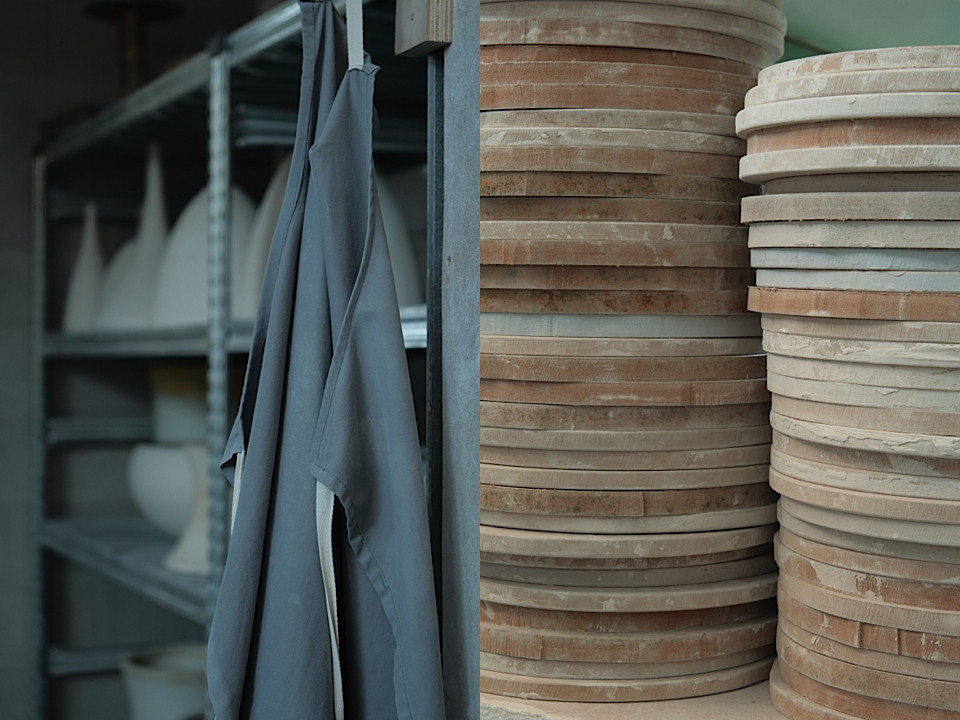
photos by Carlo Vidoni styling Magda Di Siena
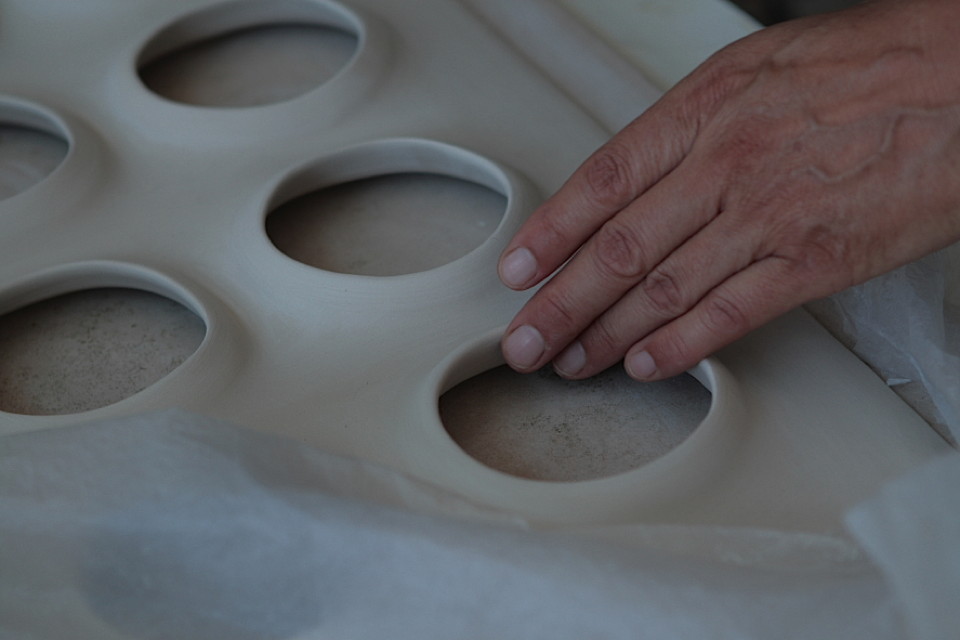
photos by Carlo Vidoni styling Magda Di Siena
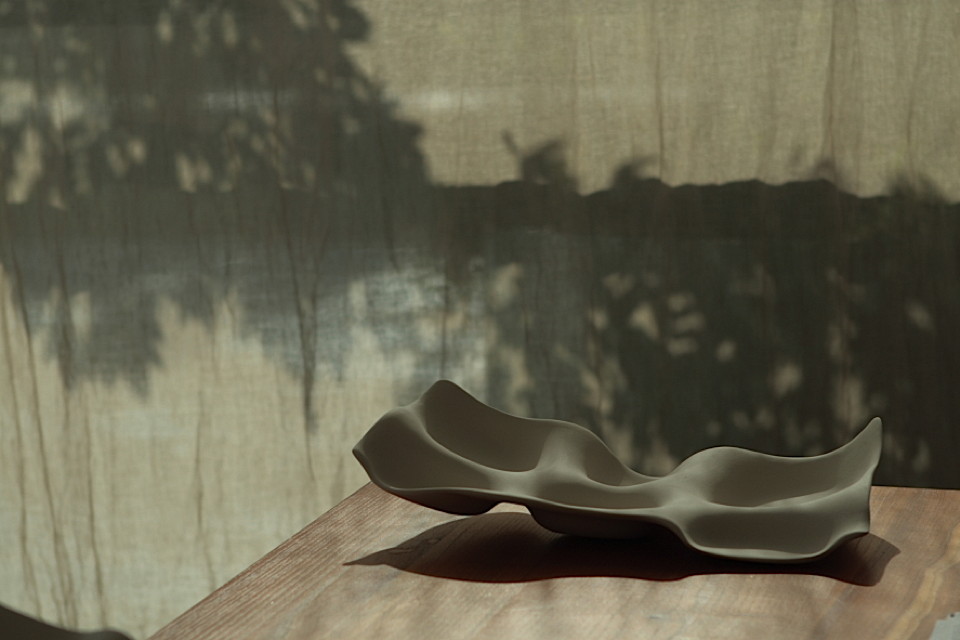
photos by Carlo Vidoni styling Magda Di Siena
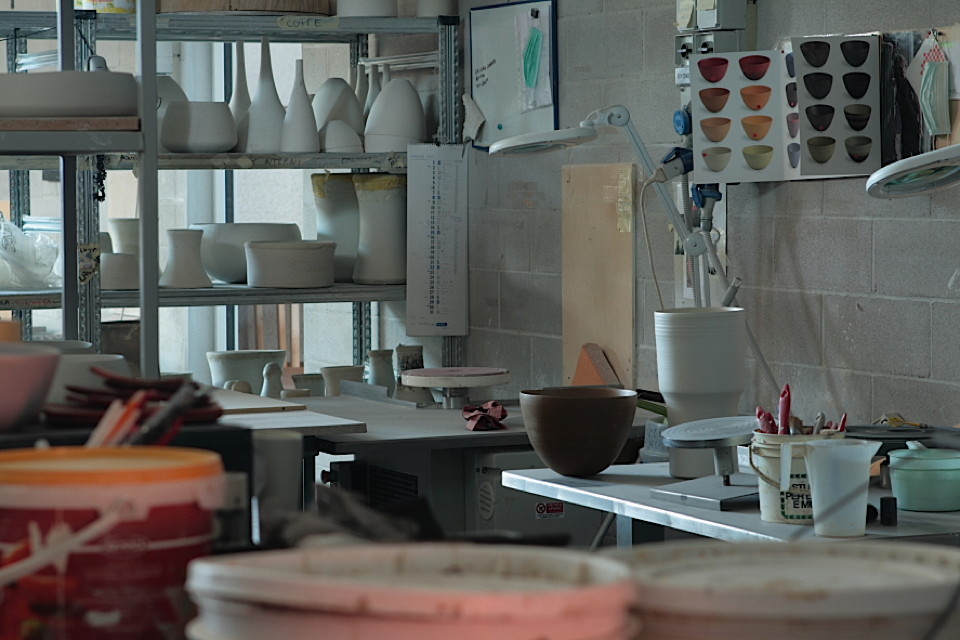
photos by Carlo Vidoni styling Magda Di Siena
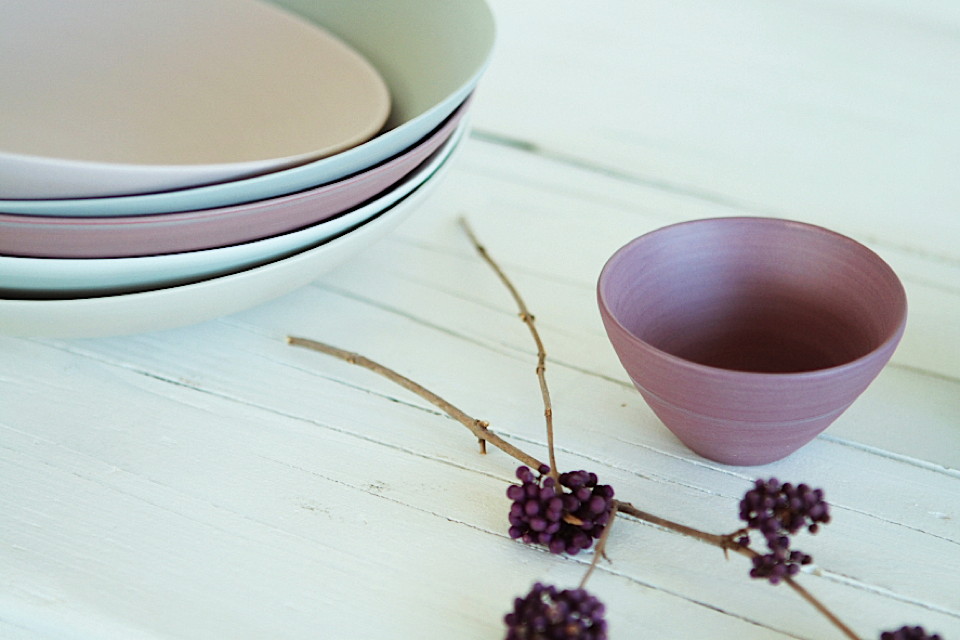
photos by Carlo Vidoni styling Magda Di Siena
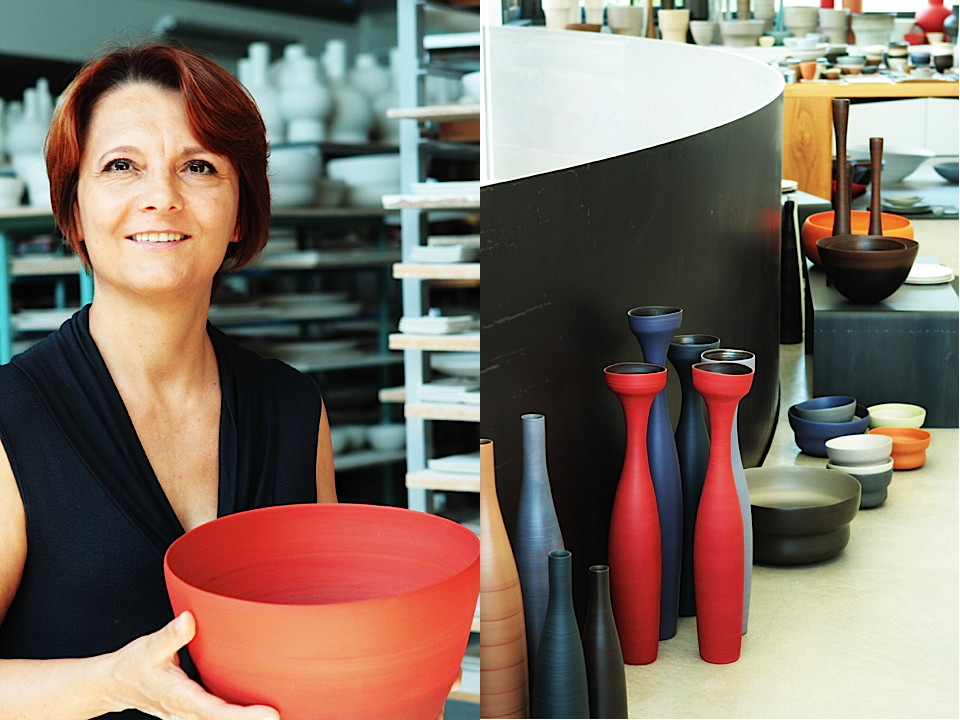
photos by Carlo Vidoni styling Magda Di Siena
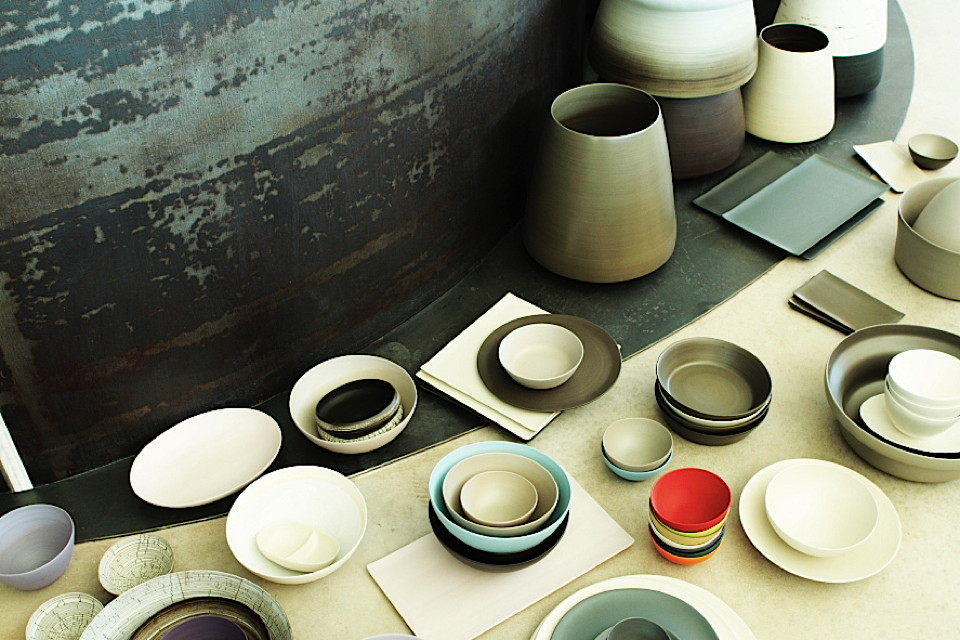
photos by Carlo Vidoni styling Magda Di Siena
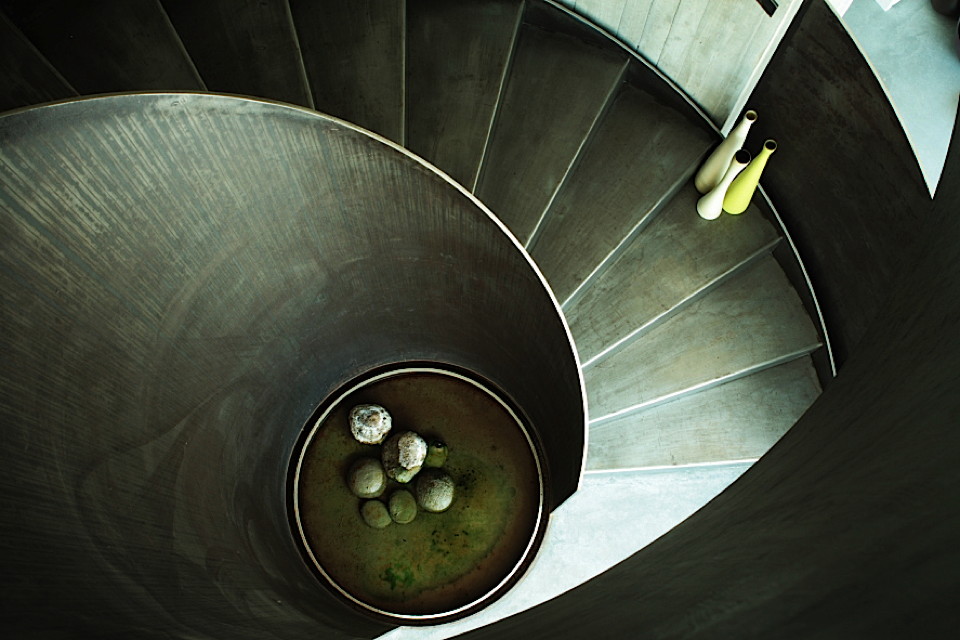
photos by Carlo Vidoni styling Magda Di Siena
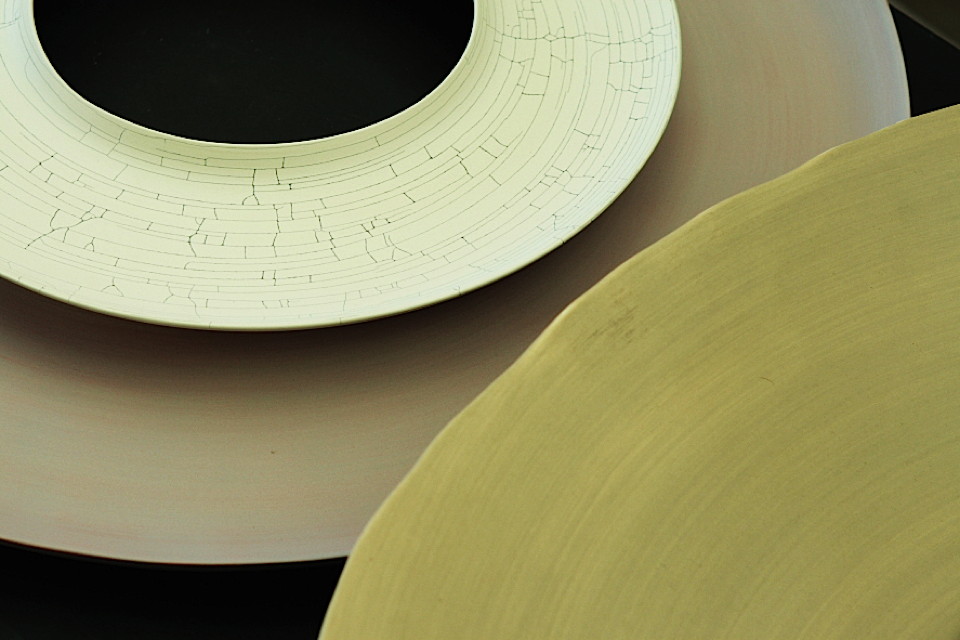
photos by Carlo Vidoni styling Magda Di Siena
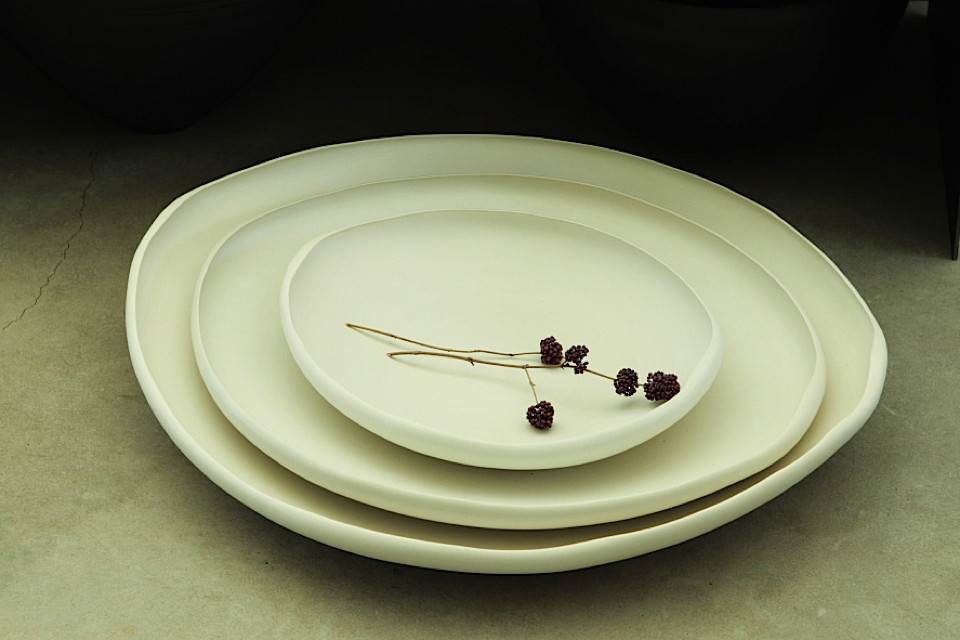
photos by Carlo Vidoni styling Magda Di Siena
brioni
The last edition of Wallpaper - one of our favorite lifestyle magazine - is dedicated to a long term trend we believe in since many years: Handmade. Wallpaper's team had been doing an incredible work: they had been briefing great designers, craftsmen and manufacturers to produce unique furniture, fittings ... The "Handmade" issue is presenting the production of the designs delicacy exhibited this year's Salone del mobile.
One of the coolest things we saw in Milan was the video produced for Brioni House - a legendary Italian fashion house founded in 1945, specialized in the sale of luxury handmade men suits.This video was shown in a specially-designed outdoor cinema at Brioni HQ. It arises naturally from the marriage of Brioni's bespoke craftsmanship and Wallpaper's Handmade theme.
The film is realized by Lernert & Sander two Amsterdam-based artists creating commercials, documentaries and installations since 2007. Their aim is to produce works that bring down the barriers between contemporary art and commercial projects; their pieces are highly aesthetic and humorous. Enjoy!
once upon a time
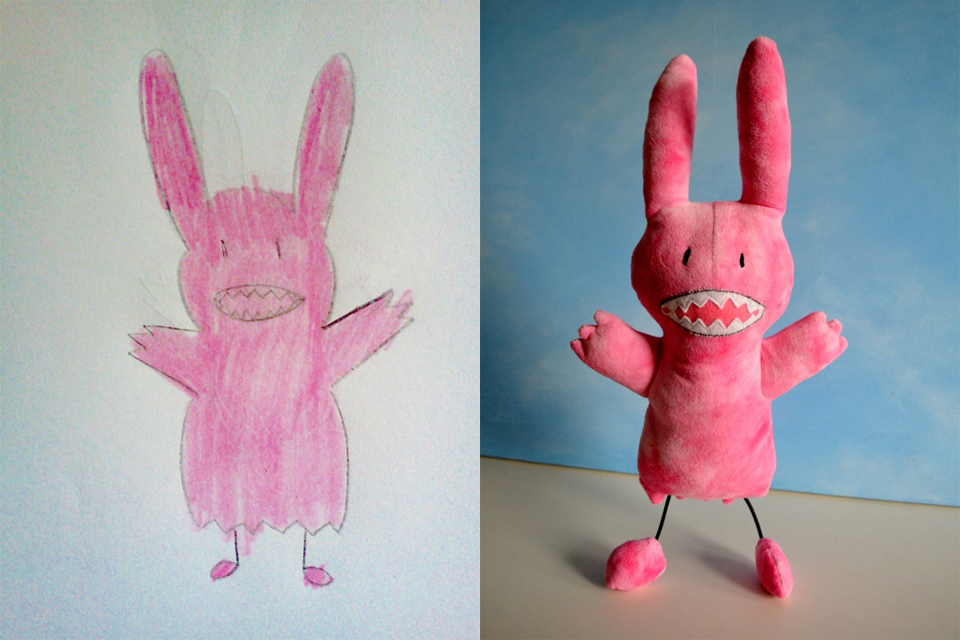
courtesy of childsown - by eileen age 8 -
When we were kids we all have dreamed that our favorite drawing could be a real cuddy toy or a 3D doll to cherish… Child’s Own Studio makes this dream come true, by celebrating children’s art and their imagination with handcrafted one-of-a-kind soft toys.
Wendy Tsao started her home-based craft business after having the simple idea of making a recognizable comfort toy for a 4 year-old boy based on his drawing.
Since then, she has custom made a few hundred soft toys, based on children’s drawings that was sent to her. Details and color choices are reproduced as closely as possible so that the stuffed toy that is sent back in the mail is immediately recognizable to the child who designed it.
Each toy is as unique as the child who drew it.
Sofie Brodén
courtesy of childsown - by maya age 4 -
courtesy of childsown - by paige age 4 -
courtesy of childsown - by isla age 4 -
courtesy of childsown - by kennedy age 4 -
nathalie costes
photo by philippe costes
Nathalie Costes is a gifted person who creates magical handmade accessories, her new collection is a variation of poetic and sensitive collars and cuffs crocheted with cotton thread.
After managing a workshop pretty heavy to lacquer wooden beads, her previous collection was necklaces, she felt a need for lightness and to reconnect with the pleasure to work almost anywhere.
Trend Tablet caught up with Nathalie Costes for an exclusive interview. Join us in discovering what makes Nathalie tick and what to expect from her next creations!
Why did you choose to create collars?
Perhaps because I have a long neck and I always looked for a way to dress it up ! With the reappearance of "cols claudine" in many collections, I wanted to reappropriate this accessory in my own way.
How do you work?
I have a fairly obsessive way of working, with a tendency to focus my attention on one single product. Treat the simplicity and the obvious: ensure that when you see the finished article, you can say that it was obvious.
Is crochet a technic you already knew?
Thanks to my sister, I learned how to master it when I was ten years. It is a childish pleasure seeing a spool of thread take another form with just one single tool.
The pleasure to make and unmake in the simplest way and to hold your atelier in your bag ! These are the pleasures of the crochet !
What kind of materials do you like to use?
Cotton is very logical to me since it is ductile to all my whims. You just change working technique to make the material more stiff, starched, or more softer. It is a true friend and it loves both complicated points and smooth aspects. The collar in cotton also fits and looks great on every garment: a simple t-shirt, a silk dress, a masculine shirt, or a wool sweater. I do of course not exclude the use of other materials such as the alpaca, wool and more rustic, like the leather thong...
What can we expect in the future?
Today, this Peter Pan collar leads me to other paths, with the desire of concentrate my attention to specific parts of garments: collars, sleeves, cuffs, shoulders …
Maybe, one day I will pick parts more consistent with neck, shoulder, wrist ...
photos by philippe costes
photos by philippe costes
photos by philippe costes
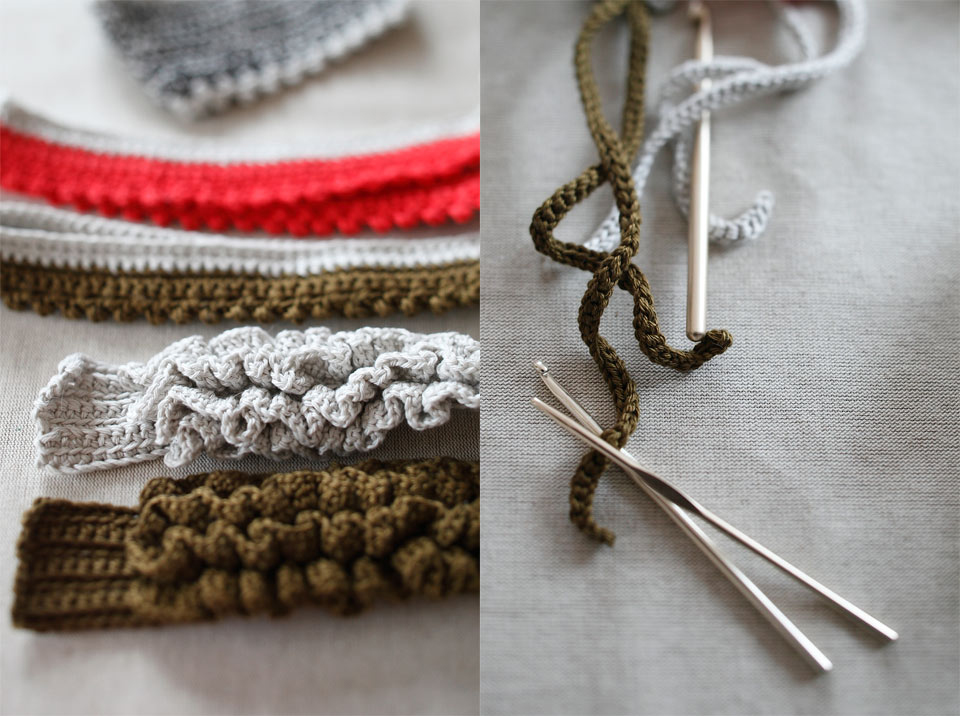
photos by philippe costes
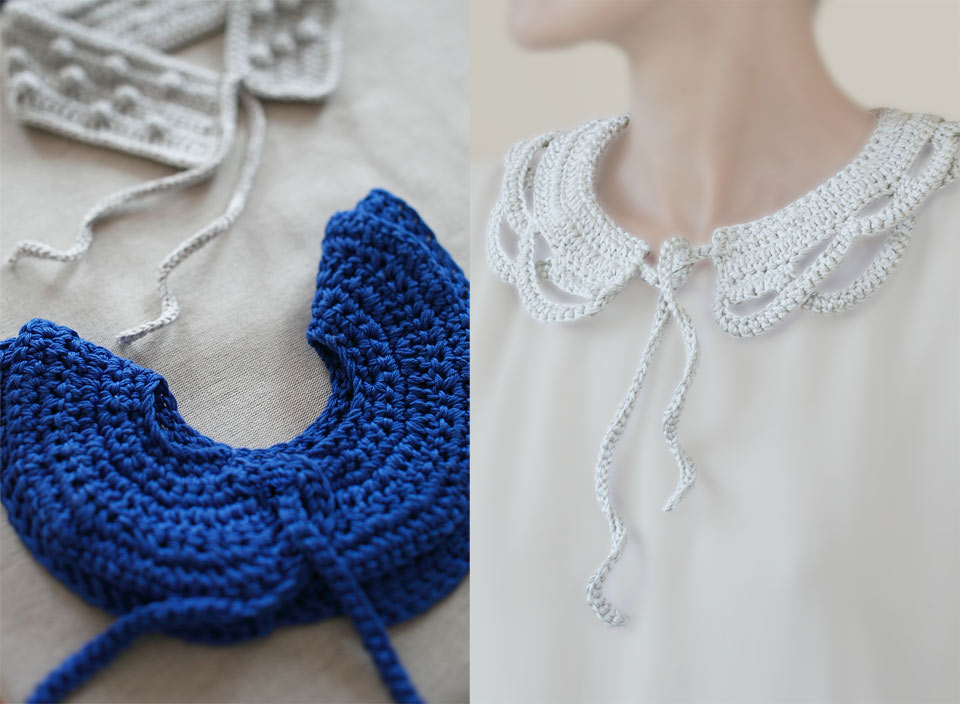
photos by philippe costes
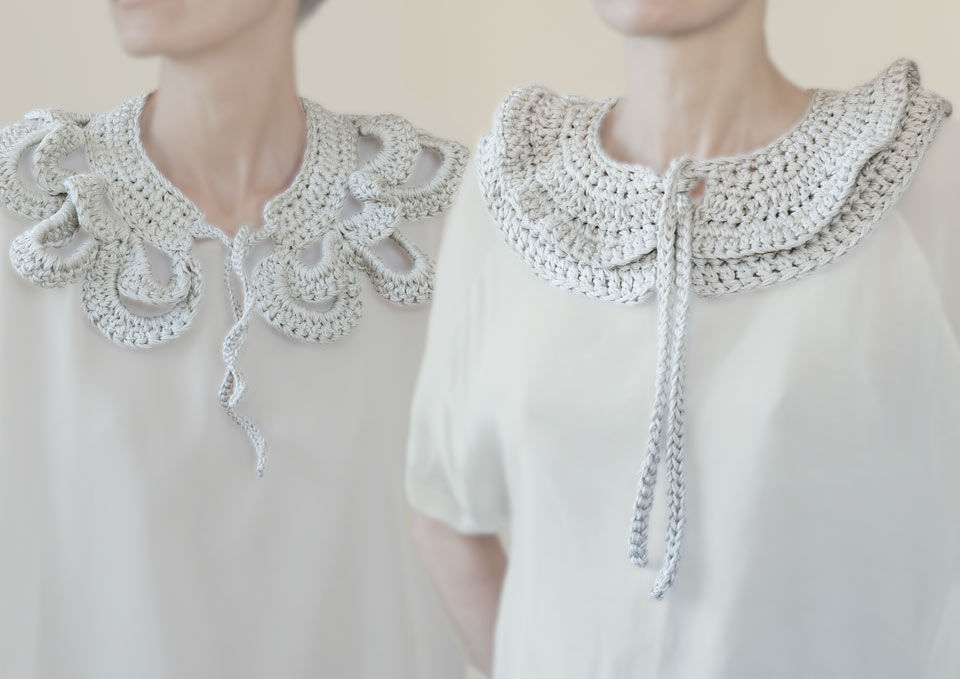
photos by philippe costes
modern blue
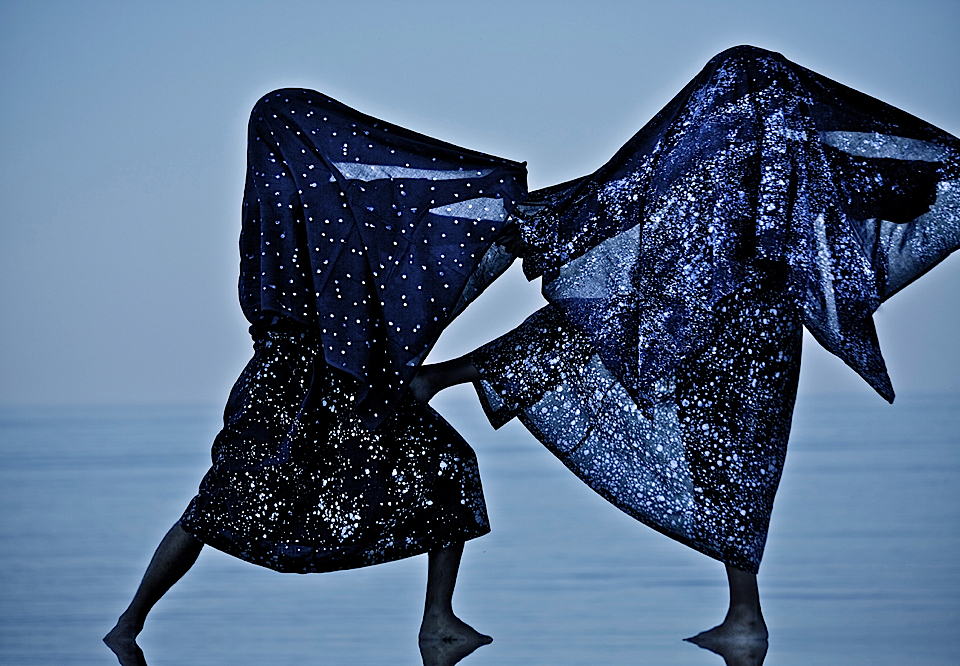
photos by yuriko takagi
Of all the natural dyes that have coloured history, it is perhaps indigo which has the most resonating presence; its dark and deep blue has been much sort-after since ancient times and it enjoyed flourishing trade up until last century when synthetic dyes became preferable for industrial production. The continued success of denim blue bares witness to indigo’s most recent heritage, and the colour has been embraced by yarn and cloth weavers the world over from Japan to Martinique.
There are more than 200 known varieties of Indigofera, although only a dozen or so provide qualities that work best for textiles. First known from the Indus Valley from which the plant is named, indigo’s lush and green-leaved shrubs are present across South Asia, Africa and the Caribbean, traded by the French, Dutch, English and Spanish, and transplanted along with the slave trade and colonial farming.
Known for their dermatological benefits, indigo-dyed fabrics are perfect to keep close to the skin, whether as garments, carpets or bedding. Once reputed as body-paint for warriors and even used by the Egyptians during mummification, indigo is a magical dye that can be considered a healer and a coloured talisman of sorts.
Indigo’s appeal was also discovered by eight special textile lovers following a research trip to the West African nation of Benin in 1993. Once they understood that local indigo was endangered by imported and synthetic competition, as well as a move away from local styles, a visionary non-for-profit association called Heartwear was initiated to support the survival of indigo crafts and promote their beauty around the globe; designing fashion and textile products in fine cotton and linen, true to their indigenous identity and enhanced along the way.
Having worked with numerous tie-dye and batik techniques, including favourites such as banana leaf and fish bone patterns, Heartwear’s yearly collections are sold each spring in pop-up venues completing a long craft chain that starts with those who knot the textiles, to those who dye the batches, to those who remove the knots, to those who wash, dry and press the fabrics, to those who sew them into garments. Honouring the humanity within humanitarianism and respecting the artisan within artisanal, Heartwear has continually sought to elevate this cottage industry to appeal to a refined contemporary taste for local products in increasingly global times.
Only turning blue when the dyed object is removed from the vat and oxidised by air, recipes are often closely-guarded secrets, although their basic formula remains the same: dried leaves fermented with a variety of other natural ingredients. The more times an object is dyed and dried, the darker the indigo colour becomes; with the famous Yoruba Blue achieved after seven saturating dips.
Today, indigo is experiencing a revival in fashion and interiors, as artisan techniques are incorporated into the serial. Our craving for natural colour and a more intense blue value reflects a need by consumers for authenticity and the handmade, feeling more connected to the textile’s long history of craft.
The denim and casualwear markets have rediscovered real indigo’s power and that clients are prepared to pay significantly higher prices in order to enjoy the soft wear in colour and fibre that only true indigo provides. And with bountiful techniques employed to beautify the surface, indigo’s charm is universal, set to continue in the decades to come.
Text by Philip Fimmano. Pictures by Yuriko Takagi for the latest issue of Revue Canopée. Special thanks to Françoise Lemarchand.
To purchase Heartwear's products: visit the exhibition-sale from may 3rd to 13th, 30 bd Saint Jacques 75014 Paris
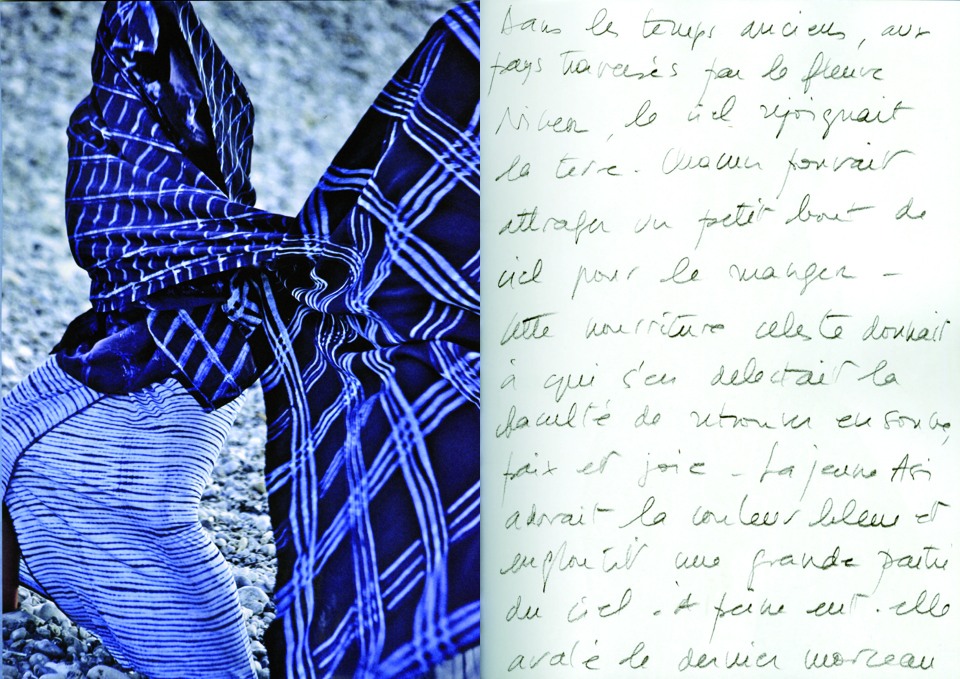
photo by yuriko takagi
photos by yuriko takagi
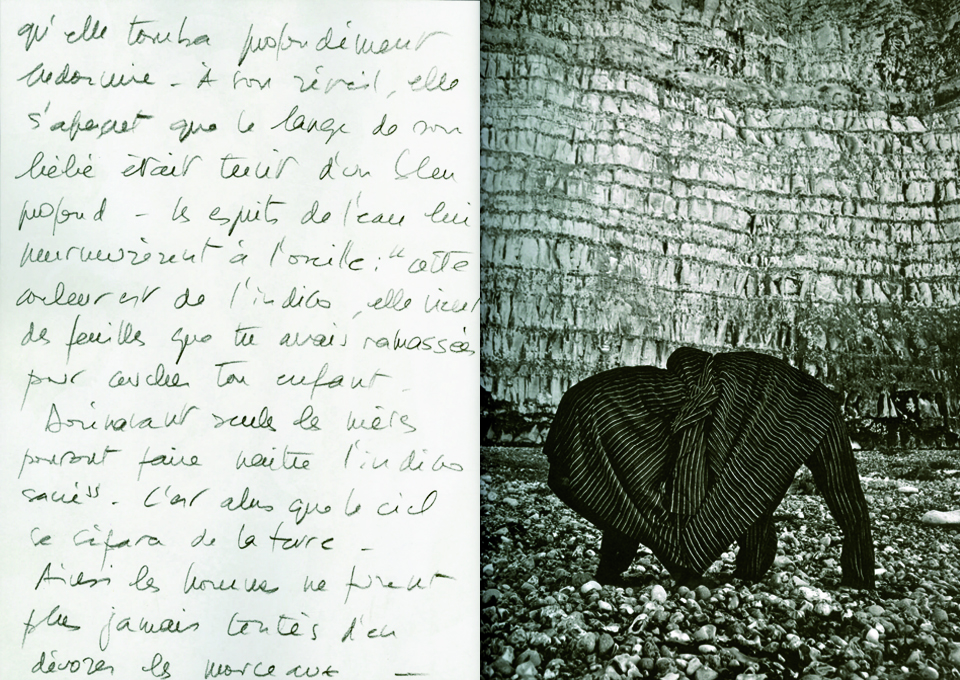
photo by yuriko takagi
photos by yuriko takagi
le moine tricote
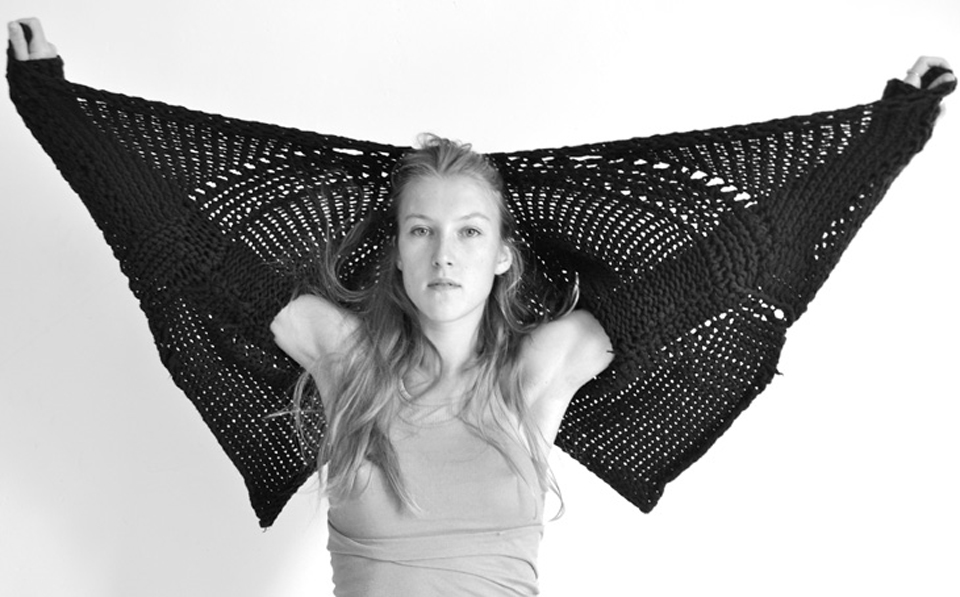
Le Moine Tricote is a new knitwear line from French designer Alice Lemoîne. After studying in Japan and starting out her carrier by creating knit designs for Rick Owens, Lemoîne launched her own line. The brand’s name—which means “the monk knits”—resonates with the designer, who prefers to work alone and spends countless hours, needles in hand, perfecting each design.
Lemoine’s unique creations—entirely handmade and available only in limited quantities—beautifully highlight and transform the female silhouette through a dense mesh of intricate threading. By creating her own brand she wanted to communicate her personal and cultural heritage: a strong tradition of French elegance confronted with the minimalism of contemporary art and architecture; now elements she seeks to merge in pieces with a conscious structure, allowing the garment to take its form three-dimensionally while remaining cool and natural.
Lemoine says: "My process is experimental and I oversee hand-knitted production to keep the soul of each unique creation." The collection includes shrunken jackets, tunic-length vests and charming cache-coeurs in blends of alpaca, mohair and bamboo. But don’t expect cashmere anytime soon. “I don’t need luxury materials,” she insists, “the luxury is in the design.” Text by Caroline Aufort
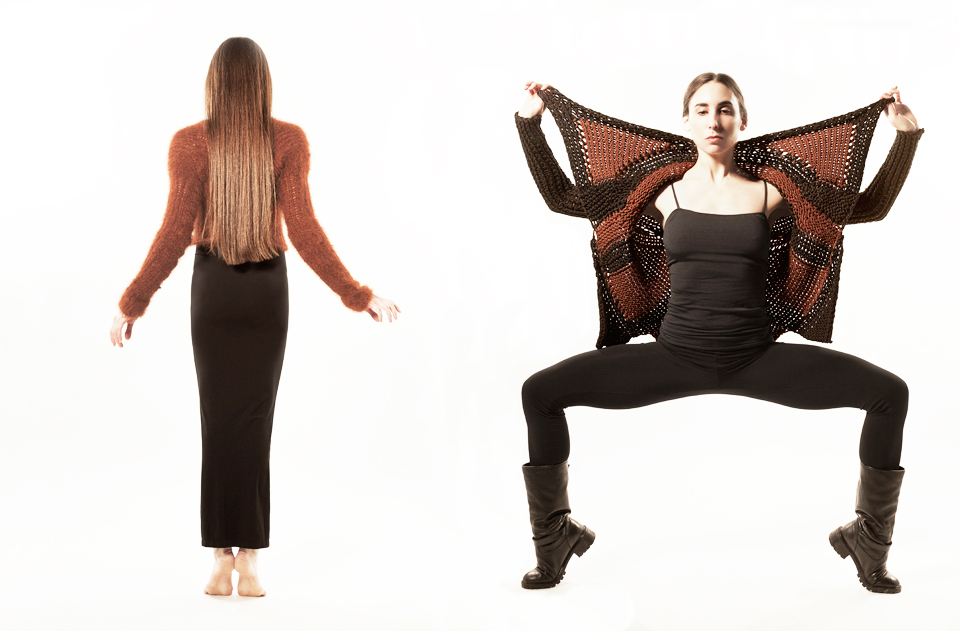
photos by Ramon Palacios Peletier - Dancer: Jenny Sandle
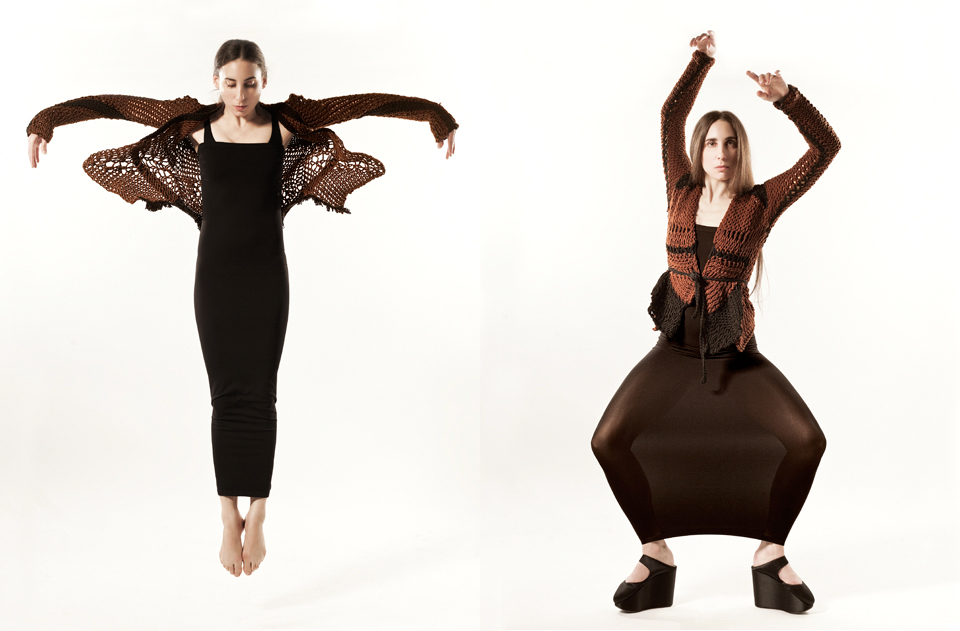
photos by Ramon Palacios Peletier - Dancer: Jenny Sandle
when design & craft meet
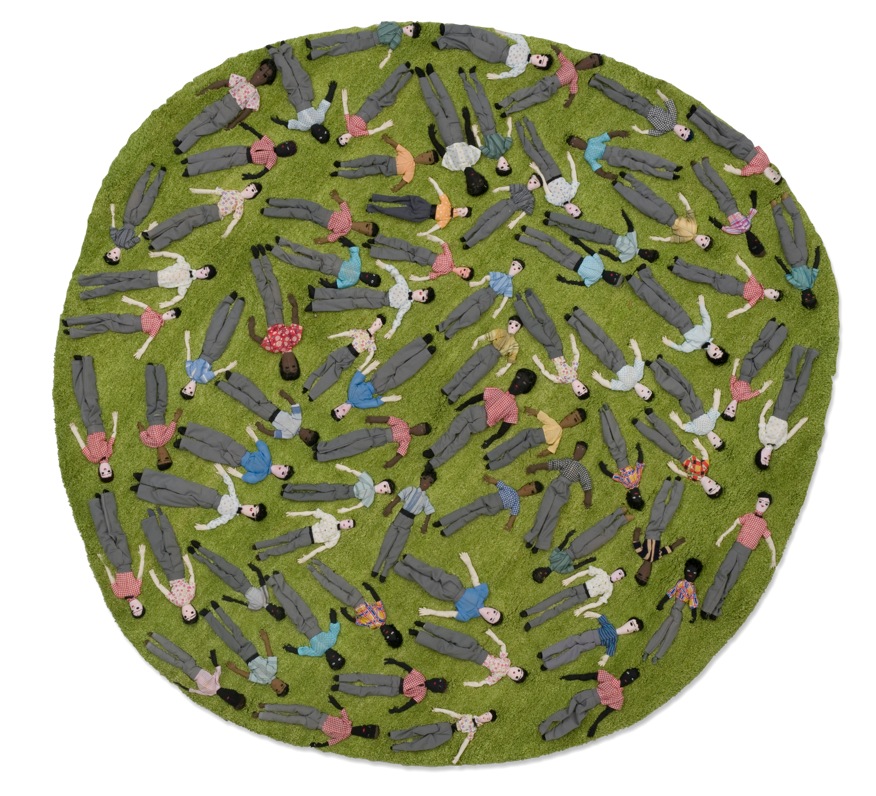
Fernando & Humberto Campana Circus Rug 2010
Design is a young discipline. A process engineered at the beginning of the industrial age that first and foremost developed function and derived beauty from it. Up until today, function was the trademark of industrial and serial design, reluctantly giving in to the emotional and the ephemeral. But man started to tire of function alone and evolved to decor, surface effects and inlay techniques, blending industry, art and design; a movement which is making a revival at this current time. Then came a moment of great innovation, aerodynamic design and streamlined form. What followed was a time of space-age shapes and science-fiction volumes: our fascination with form for form’s sake was born.
Function became remote and voice-controlled and morphed into virtuality, giving function an ungraspable quality. Thus arrived matter and the development of our fingertips as important consumer tools. Material development became a major focus of the art and design worlds, the concept of second skin was born, forecasting a future of genetic engineering and human cloning. The more virtual life became the more tactile we wished to become. Matter called for colour to make up its mind and express its mood, ultimately making colour the overruling reason to select an outstanding work of design.
When design had acquired a sense of function, decor, shape, matter and colour, the insatiable and by now global market, requested more. It needed a code, or a name, or a logo, or all of those, so it invented and perfected the brand: a passport to international shopping pleasure. With this last step, the world could sit back, relax and contemplate a century of learning, accumulating in a completed and perfected design process…
However, the demand for design had been explosive over the last decade, stretching our imaginations thin, and had engendered an insatiable appetite for new experiences which created a world full of stuff; a globe drowning in design, a situation ready to explode. Today, we experience a need for reflection and we feel a need to rethink the (non)sense of design.
The globalisation of the world as one market has brought about shopping boredom and uniformity with the alternative boutiques gradually disappearing in favour of chain stores, chain couture, chain food – and chain coffee houses. The idea that not only people in Paris, London and New York should live and consume the same, yet that the masses of Mumbai, Shanghai and Dubai will also do so seems stifling and impossible. Global marketing will eventually come to a standstill, making way for outsider brands and Sunday artist creations. The local will feed back to the global and will animate world brands to become passionately interactive and reactive. Introducing local colour and craft along the way.
To answer this growing global resistance to constant renewal and limitless expansion, humanity and integrity are requested for the years to come. It is time to empower goods with a new dimension; their own character, an invisible energy locked into the design process.
I believe that we will be able to make the object, concept, or service come alive to be our partner, pet or friend, and to relate to us on a direct and day-to-day level. Only when design will be empowered with emotion will we be able to create a new generation of things that will promote and sell themselves; they will have acquired an aura able to seduce even the most hardened consumers on their own terms. Only then will design have acquired soul.
Craft holds this promise: the turn of this century has witnessed a return to the arts and crafts movement in a step-by-step repetition of the last turning of the centuries. Haunted by similar fears and interested by a similar vision, designers and artists have once more taken on the handmade and the hand-finished with absolute fervour.
The growing influence of an all-encompassing digital fantasy world has triggered an enormous quest for the manual and the tactile, with our fingers deciding through feeling long before our eyes start judging form and volume, and with manually-powered production coming back to the fore. The realisation that we have to stop destroying our planet has made young designers adamant to produce ecologically and locally, thus creating less polluting proposals, reviving natural dyes and returning to timber, fur, hide, textile, ceramic and glass; original arts and crafts materials. In many cases the works come in limited numbers or on commission, and therefore minimise the damage done to the planet.
The crafted and handmade cottage industries currently flourishing in many countries are employing regionally and create a small yet reliable local economy. A movement we see blooming, bringing production back to our doorstep once again.
Collaborations between designers and craftspeople have opened up new dialogues across borders, often bridging language boundaries with the simplicity of visuals, colours and materials; contemporary designers such as Tord Boontje, Stephen Burks, Fernando & Humberto Campana, Natalie Chanin, Forma Fantasma, Front and Hella Jongerius (amongst many others) are helping to keep artisan techniques alive by designing small-run products that gain a lot of international attention. Taking advantage of the internet and supported by design-savvy distributors such as Afroart, Aid to Artisans, Artecnica, Editions in Craft, Heartwear, Mokeybiz and ZenZulu, developing communities have successfully been taught to be more self-sufficient and independent, maintaining their identities while telling their stories to the world market.
New computer technologies are also contributing to the craft revival with laser cutting, digital printing and robotics, recreating a space for fantasy and embellishment. With the promise of industrial technologies capable of making one-of-a-kind piece-by-piece productions, the reign of the artisan will be supreme since prototyping will have to be both unique and by hand.
Last but not least, this period provides a moment of reflection concerning our planet and its history of slavery and exploitation, and therefore the humanitarian aspect of production is becoming a key question of our times. Can we still accept the enslaving of young workers around the world, women and children included? How is it possible that we can produce a shirt cheaper than a croissant? Somebody must be suffering in this chain of making, selling, reselling and retailing; buying cheap merchandise will become a guilt-ridden activity and therefore will gradually disappear. The world is now focused on the history and identity of merchandise, labelling products as “designed by” as well as “made by”.
With a consumer ready to embrace the rare, the unravelled and the irregular in this quest for soul in a product, the arts and crafts movement is back at the forefront of fashion and design. The ritualistic qualities inherent to the making of the craft object or the symbolic quality in the concept of a human service will gradually become more important; in a quest for experience, consumers will want to embrace a spiritual dimension and select merchandise to appease this inner need. Some craft items will become new design collectibles within a matter of decades, and already we see the prices of some textiles, objects and artworks escalating to greater and never-before imagined heights…
Therefore the products of the future will be unique as well as universal. Using regional roots, local colour and universal references related to earth, animals, gardening and home. Living an unplugged yet wired lifestyle, considering rural romantic sources of inspiration, craft and design will merge to inspire a new more self-conscious and mature consumer to be. A consumer that becomes the curator of his or her own life. L.E.
On sunday march 18th, Lidewij Edelkoort will be in Dubai for a public seminar on “What Design can do for the Future?”
hidden gems
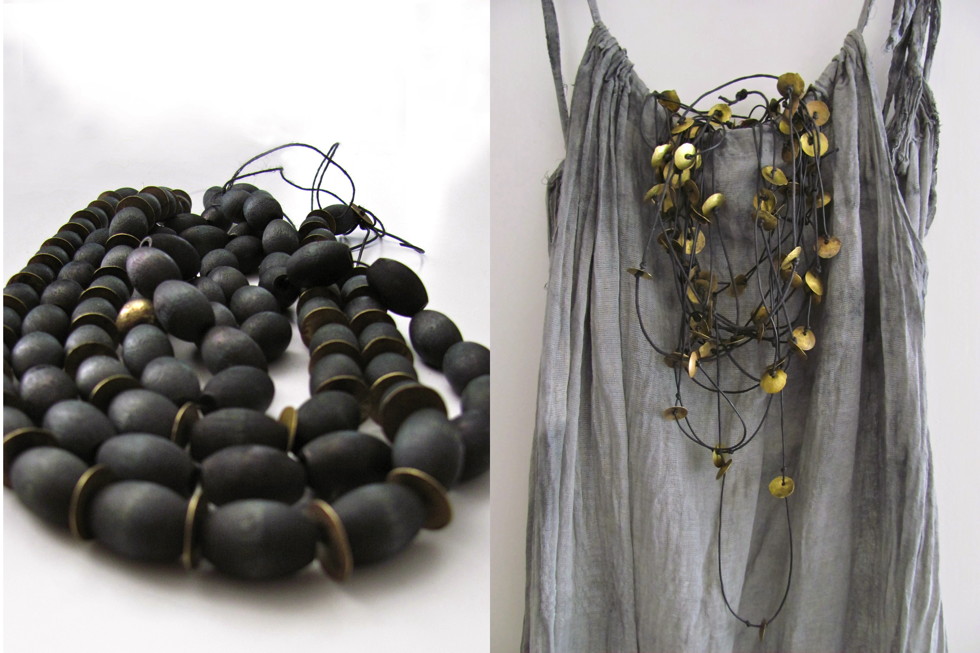
Lorraine Pennington is an artisanal jeweler based in Corona Del Mar, CA. Pennington’s designs are characterized by the interplay of texture and raw materials. No two pieces are exactly alike. Simple forms are accentuated by hand-forged and hand-textured metals; acrylics are molded, shaped and sanded. Her work also includes the hand-dyed dress shown below.
Emphasizing the importance of quality over quantity, Pennington’s craftsmanship imbues each design with a history and heritage not soon forgotten.
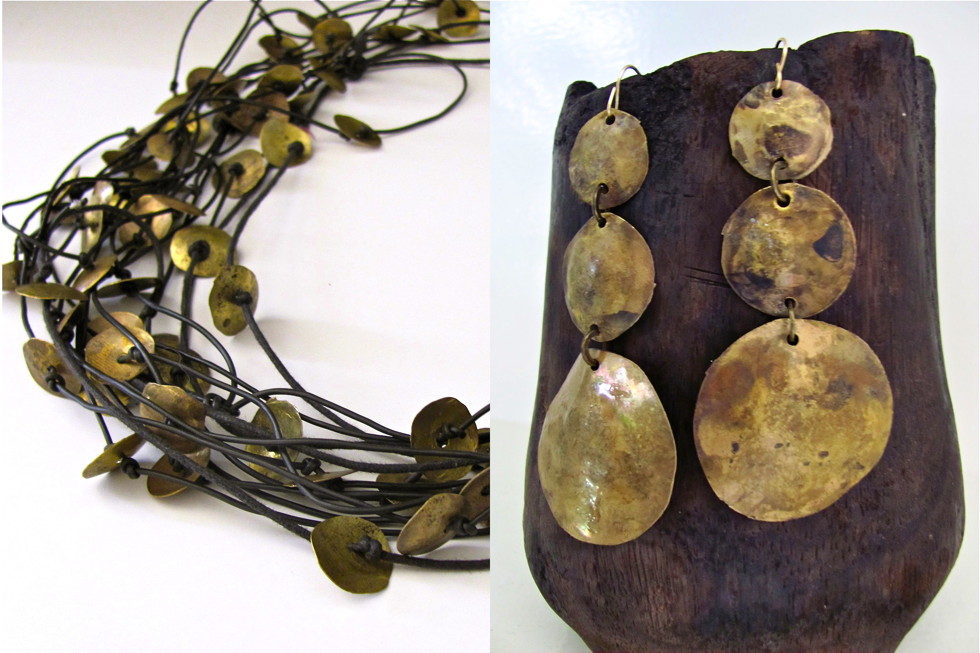
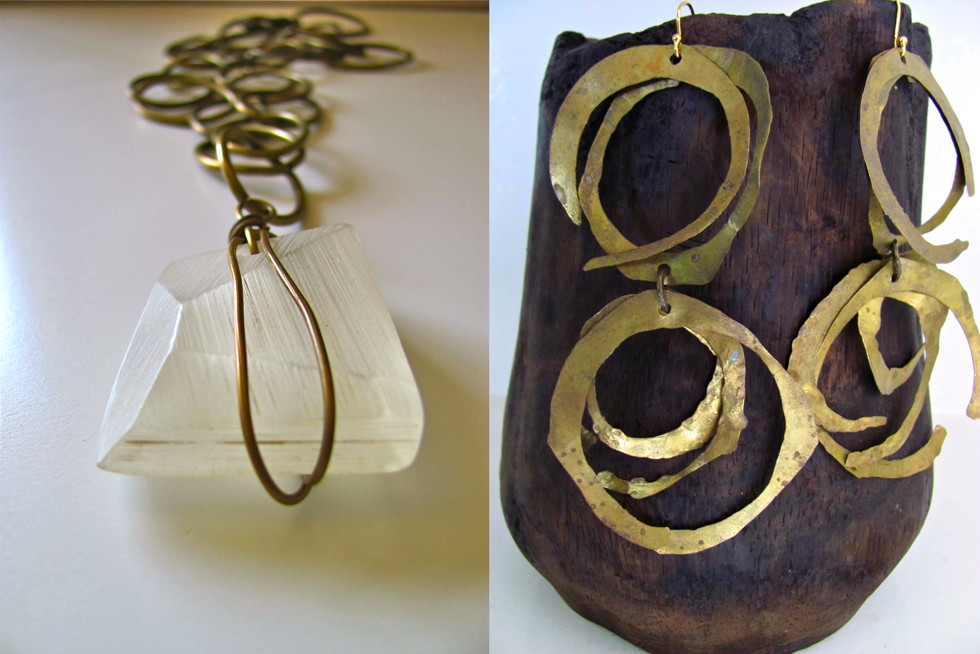
claudy jongstra
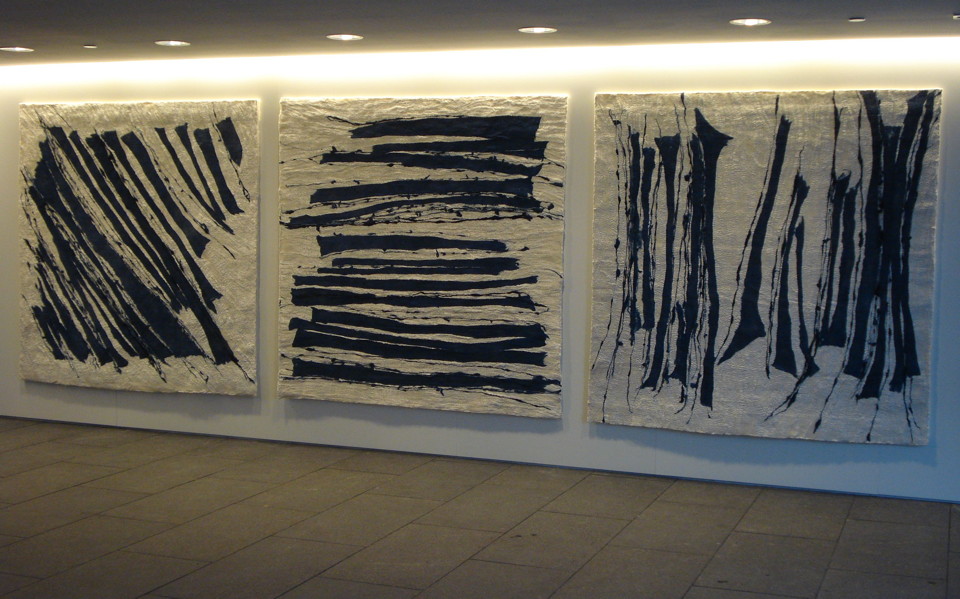
The work of Jongstra is created in a small village in the North-West of Friesland, Spannum, counting not even 300 inhabitants. A small church on a terp, a main street, several side streets – that is all there is. One small street could be called Claudy Jongstra street, having a house which is used as office and wool dyes-works, here living place, a wooden design studio and a shed for the production of the wall tapestries.“I have the feeling of being halfway my development as an artist”, Jongstra says. “We have arrived at a point which we have been working towards step-by-step”, Marleen Engbersen says. Jongstra and Engbersen intertwine the words connections continuously through their story. Jongstra: “My work is never an isolated thing. It connects to buildings which I design it for and intends to call up emotions in the persons in such buildings.
Next year I will work on a ballet performance together with dancers at an American university, Dartmouth in New Hampshire. With performing arts, architecture, - in all kinds of ways I look for connections.” A romantic artist lives for art and hopes to be able to live of it. Jongstra and Engbersen followed a different strategy. Their cooperation is a permanent search for a market. Who do they wish to work for? Where should the work finds its place? Engbersen: “We focus on educational institutions like schools and universities, on health care institutions, innovative companies and political buildings”.
Why? Jongstra: “I connect natural history and cultural history and this requires a permanent study. I want to learn from the persons I work with and work for. Reversely I hope that they also want to learn together with me. Then the strongest impact can be made in education, science, culture, healthcare and politics”.
No art pour l’art, no, but art with a mission. What mission? Jongstra talks about a summer class she has been given for several years on an estate in Umbria, Italy, in a Franciscan stern environment of bare rooms with a light-bulb hanging from the ceiling. With twenty persons from all over the worlds she works there: Americans, Argentinians, Japanese, musicians, physicians, psychiatrics, entrepreneurs.
“The entire week we are working with natural materials. With flowers we picked ourselves we dye wool and linen, in big pots on open fire of wood we gathered ourselves. During the week we really get to talk. People have lost a direct connection with nature and they miss social structures. They are astounded to see how culture is created from nature. They have busy lifes, great careers, but they feel a huge emptiness around them: caused by superficiality, of agitated consumption”.
So, let’s all go back to nature? Engbersen: “No! we are not a retro movement. The trick precisely is to create new things from old knowledge and craft. In architecture a fascinating school has come up, called ‘healing architecture’. Both natural and built environment have an impact on the behavior of mankind. We strive for inspiration and truthfulness in our work and get this across to people.”
Jongstra runs a company in Spannum with seven employees and about fifteen freelancers. They make felt from wool and spin the threads which Jongstra makes here art with. The material is colored with dye of the flowers grown by order of Jongstra. Bee colonies and beekeepers must ensure that the flowers are cross-fertilized.
Jongstra: “I experience the development of my work as a constant unwrapping of gifts. The past comprises an amazing amount of knowledge: botanical knowledge, craft knowledge. This opens a world for me behind the visible world. And I am convinced that this dive in the past also generates knowledge in its turn to develop sustainable production methods.”
Text by Gijsbert Van Es
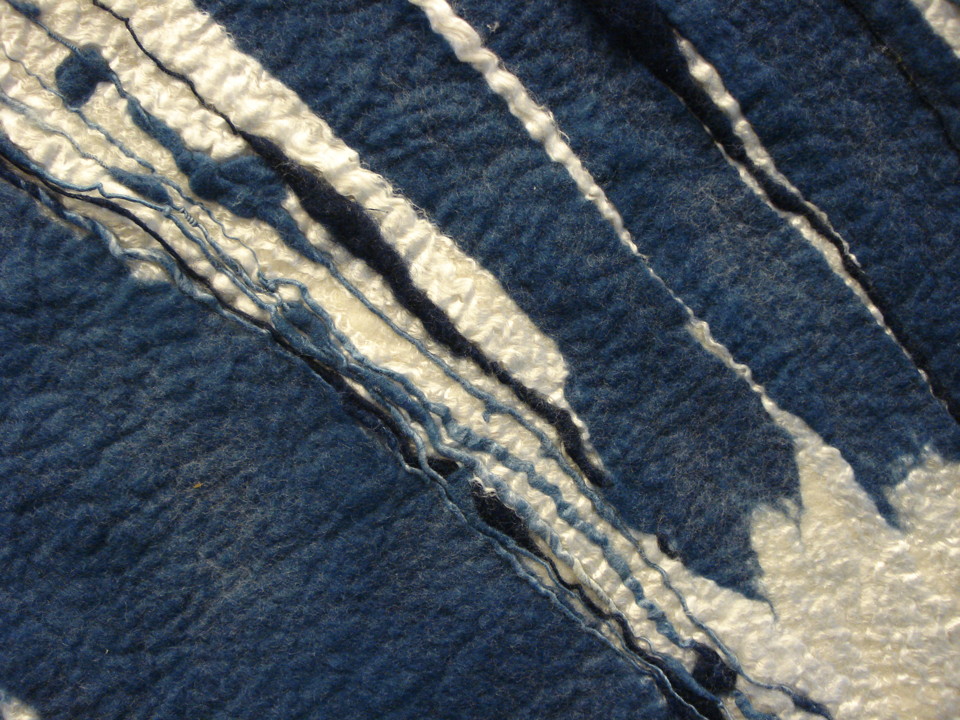
Since its founding in 1932, Bennington College, Vermont, has been known as a progressive college intent on bringing an intensity and breadth to undergraduate education that comes from building deep connections between doing and knowing, thinking and acting, passion and reflection. The Center for the Advancement of Public Action – CAPA uses critical world issues to organize and generate curriculum, aiming at commitment to the essence of life and the world, challenging students to discover what it means and takes to live a good life as well as a successful one.
The new buildings designed by Tod Williams and Billie Tsien will be home for liberal arts education, while expressing its new radical approach. Claudy Jongstra made the tapestries for the entrance hall.
taragalte
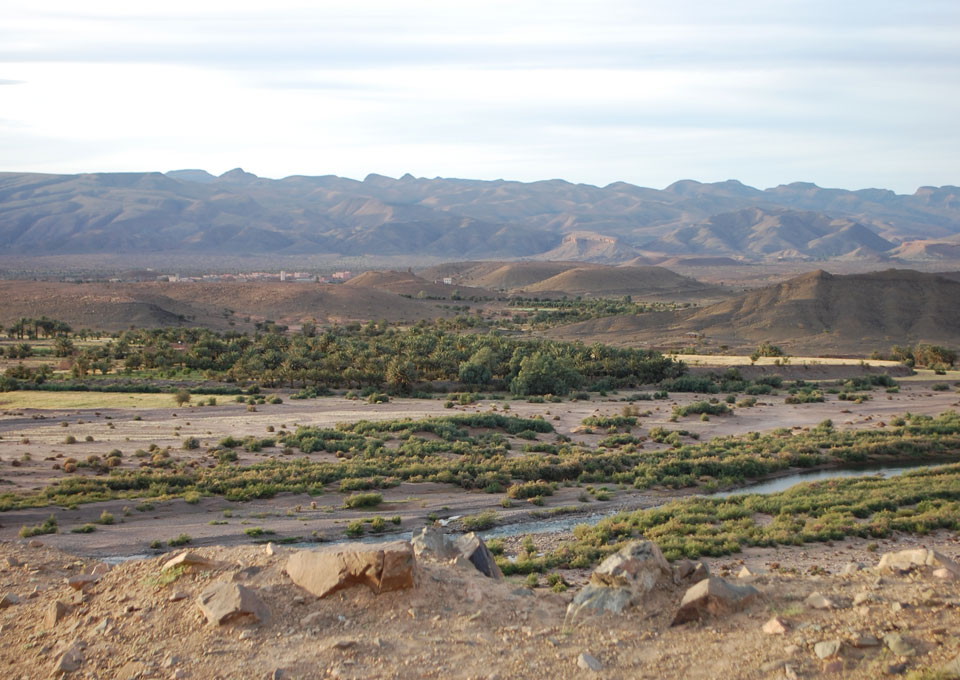
the Draa Valley photo by butterfly works
In 2003 Ineke Aquarius,Emer Beamer and Hester Ezra founded Butterfly Works with the wish to contribute to greater equality in the world through co-design.
Butterfly Works is based in Amsterdam and works globally with a core team of 15 designers and organizers. They work in emerging economies because they believe in undiscovered potential. Through serious media, social branding and experiential learning they share knowledge, trigger creativity and build sustainable businesses.
Butterfly Works is right now working on an amazing project in the Sahara in the South of Morocco: Taragalte. In association with 3 partners: l'Association Zaila, Sahara Roots and Bureau East they co-designed a hand made product-line, a yearly festival and a tourist accommodation in bivouacs and ecolodge. All that contribute to the social, cultural, economic and environmental well-being of the region.
On November 11th, with the full moon, the celebration of the old Trade Caravan will be held in during a festival with music, dance, and poetry performances - in the spirit of the Great Caravans making their way through the desert. We hope you can join them!
http://www.butterflyworks.org/
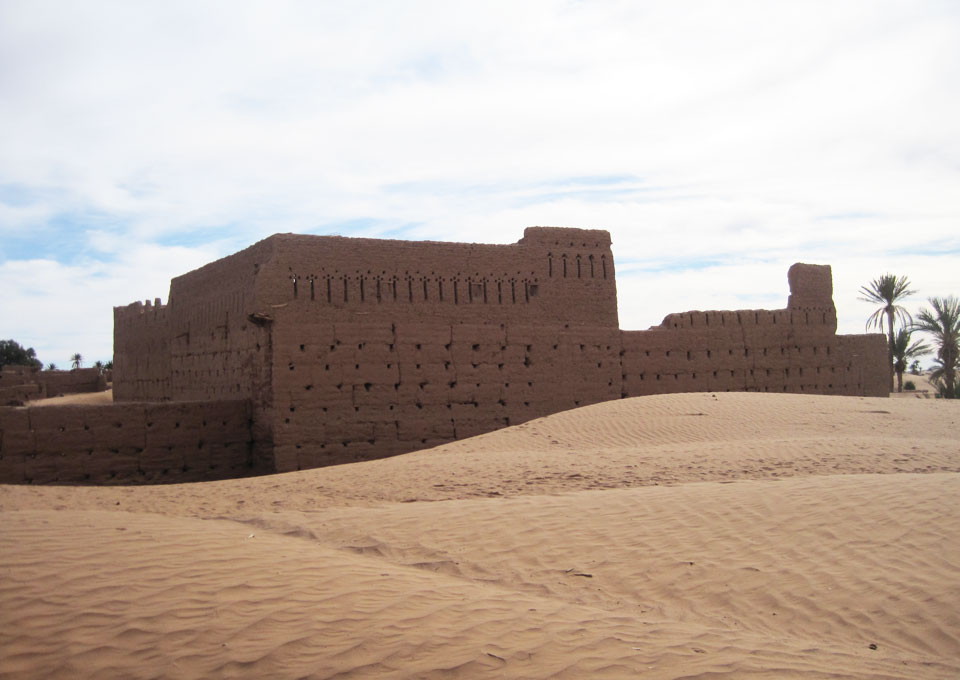
the village close to the bivouac photo by butterfly works
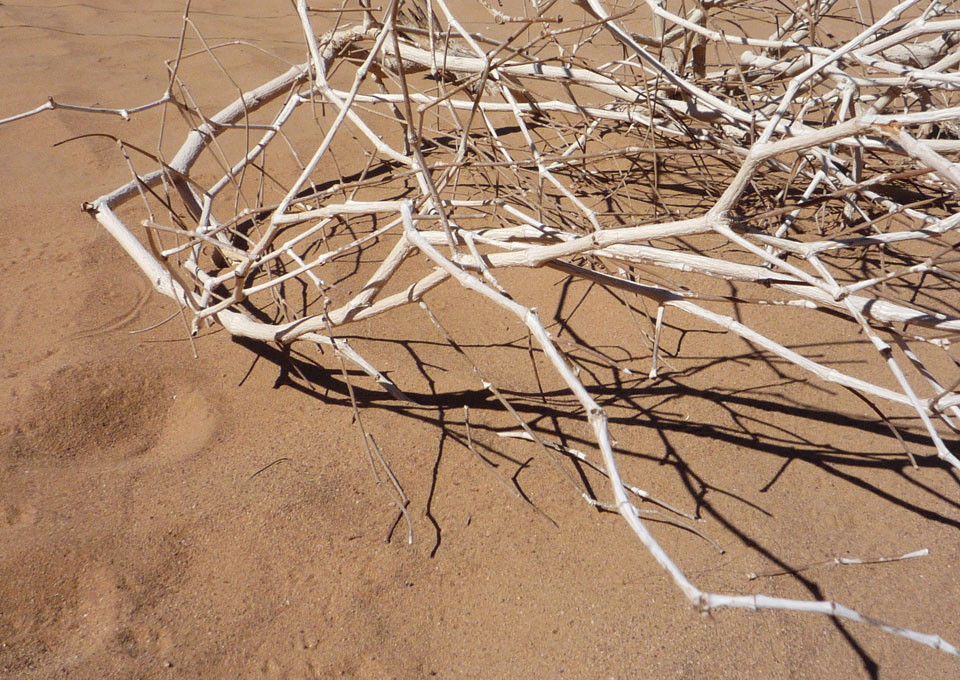
the desert photo by butterfly works
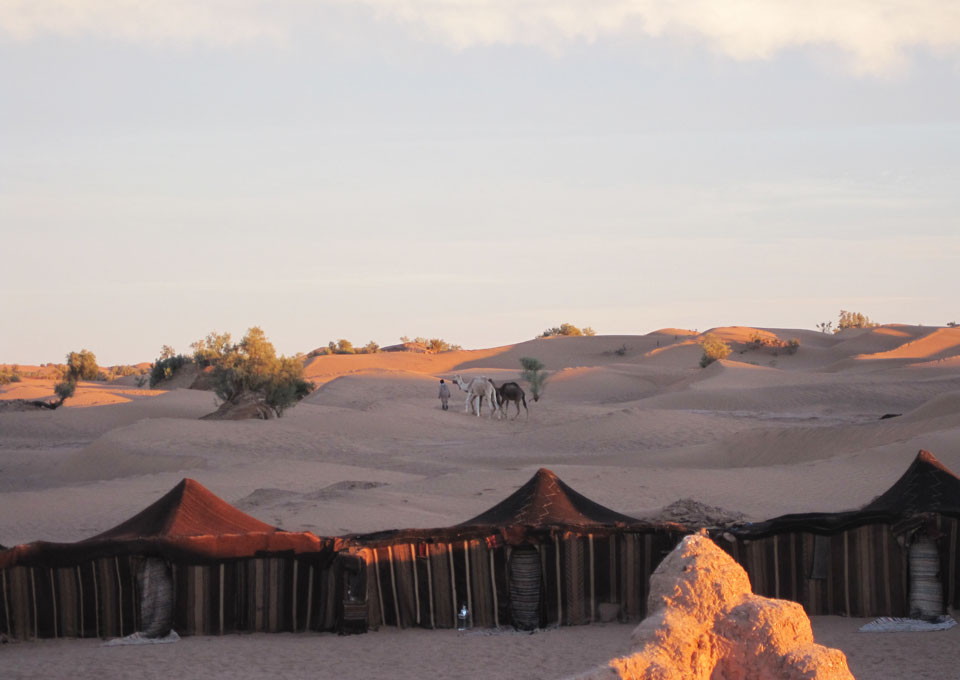
the bivouac in morning sun photo by butterfly works
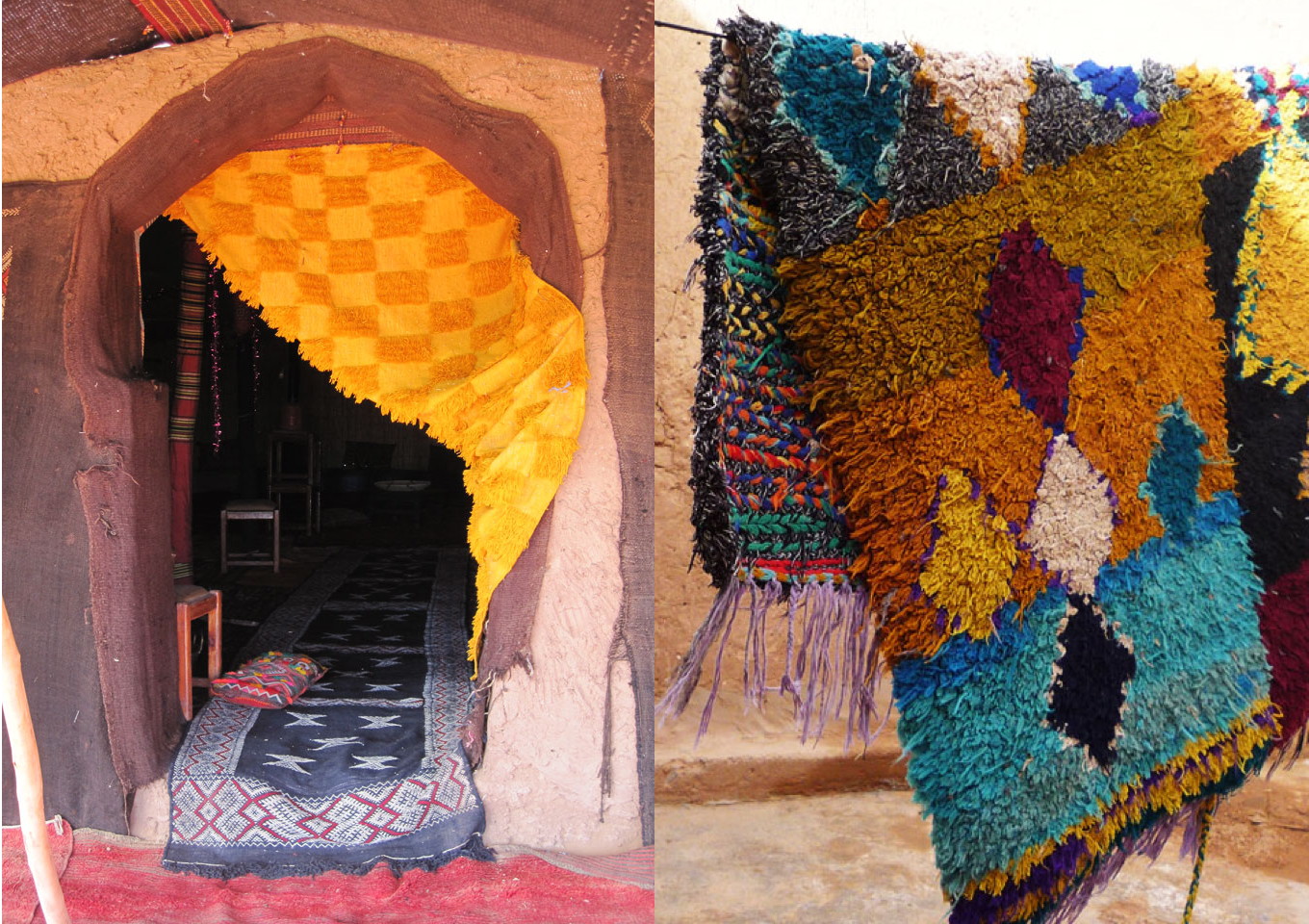
hand made textiles photo by butterfly works
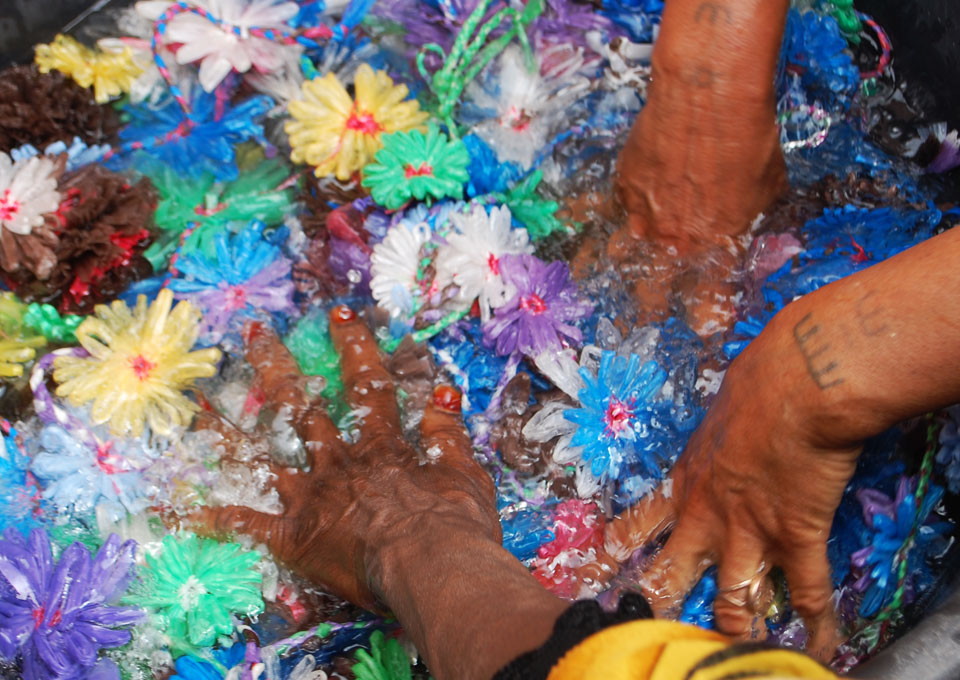
recycled flowers photo by butterfly works
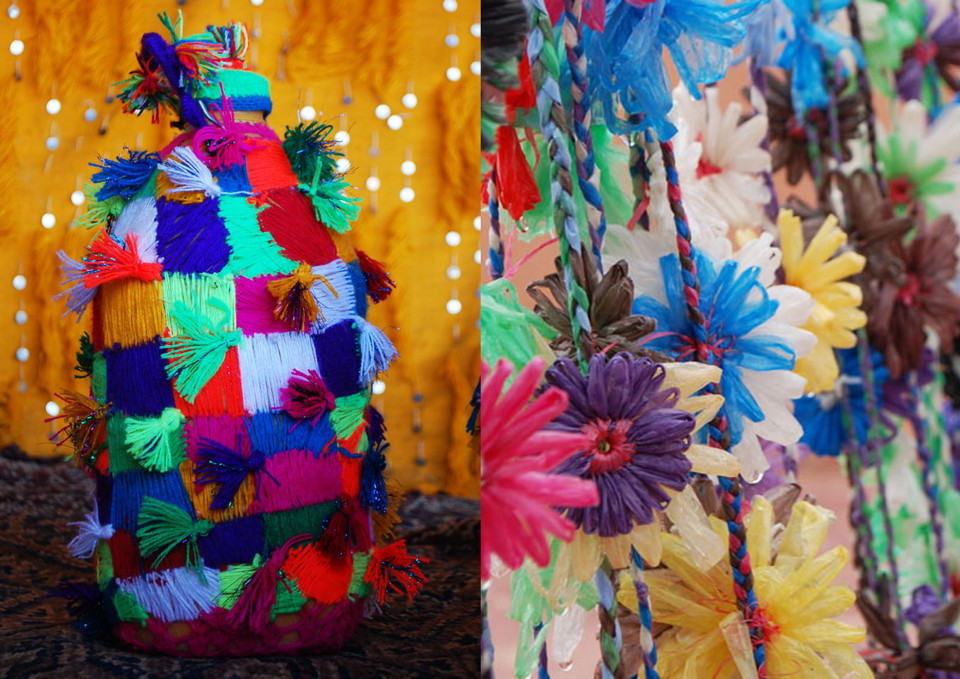
hand made products photo by butterfly works
elizabeth fonseca & gilberto paim
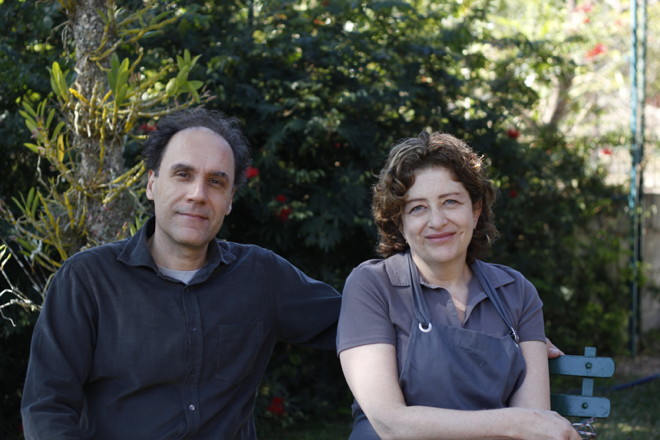
photo by nina paim
The modernity of Elizabeth Fonseca´s and Gilberto Paim´s ceramics is obvious. Simplicity, tactility and elegance of shapes are the essence of their four hands work. Elizabeth and Gilberto live and work together in Brasil.For you to get to know them better, we interviewed them for trendtablet:
What is your favorite material? Elizabeth: porcelain. Gilberto: porcelain. The color that moves you the most? Elizabeth: black. Gilberto: the blue of the sky. Your first gesture in the morning? Elizabeth: I kiss my cat. Gilberto: I prepare green tea.
The sound that carry you?Elizabeth: cello. Gilberto: the sound of a brook. Your favorite meal? Elizabeth: spaghetti with eggplants, mozzarella di buffala and home made tomato sauce. Gilberto: stuffed pumpkin with shrimps and catupiry (brazilian cheese). At what moment of the day do you feel great? Elizabeth: after a shower. Gilberto: at the end of the afternoon, after a walk.
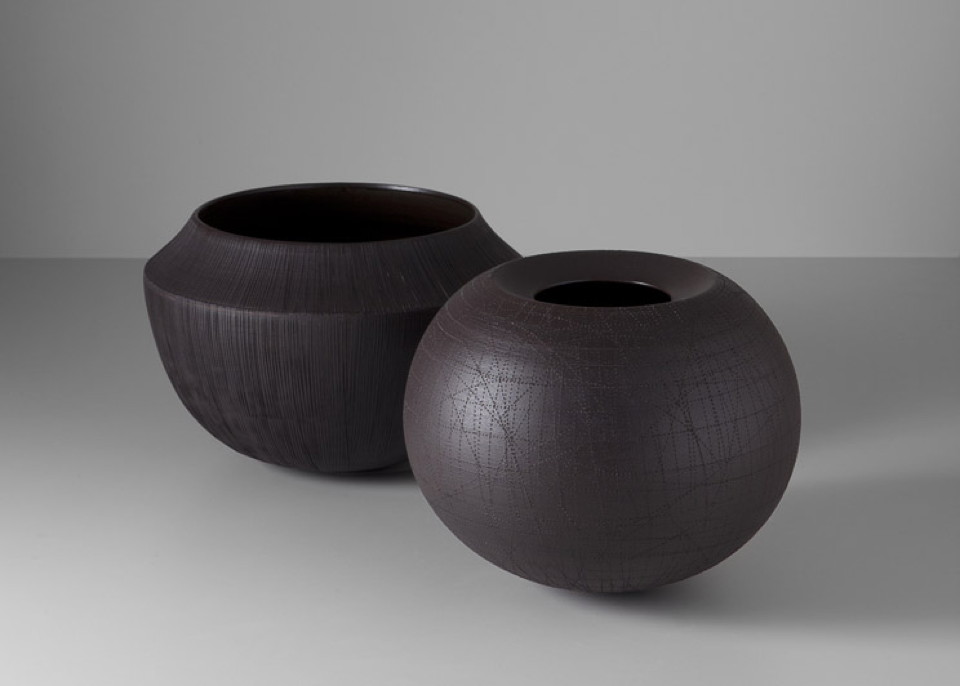
photo by eduardo câmara
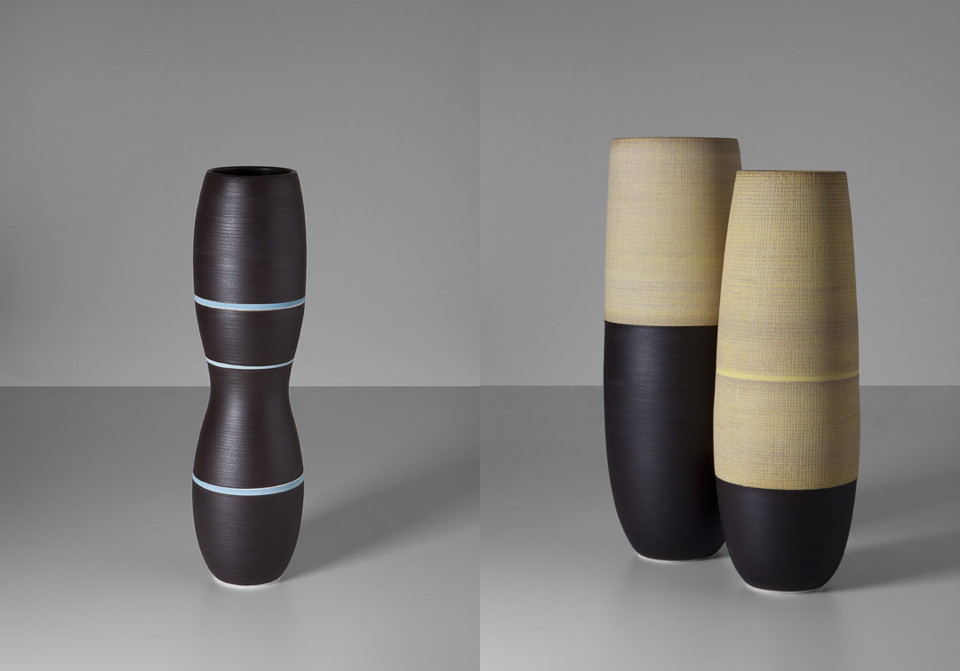
photos by eduardo câmara
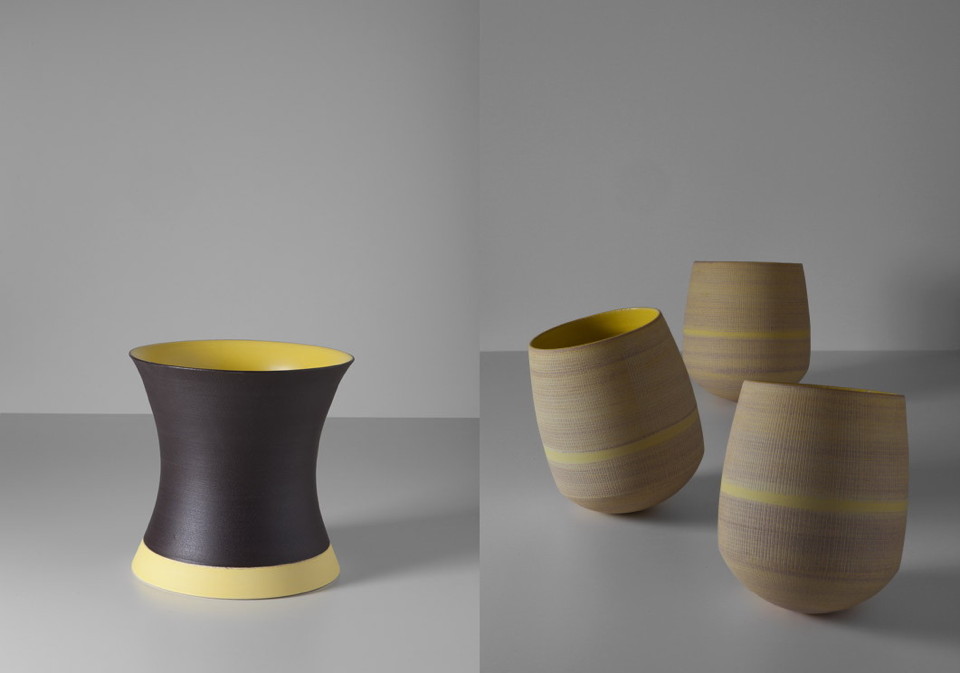
photos by eduardo câmara
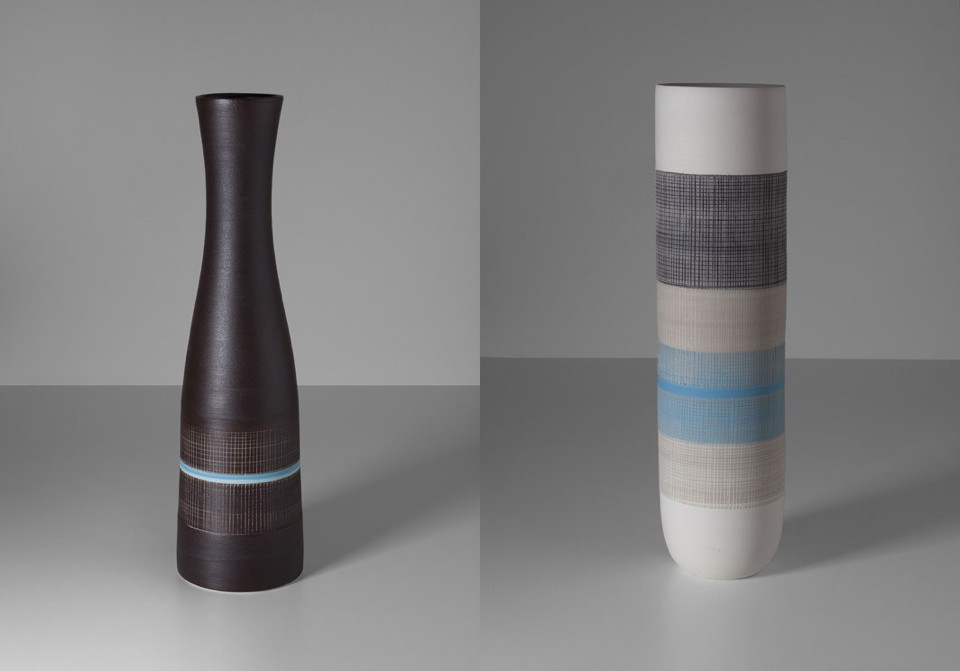
photos by eduardo câmara
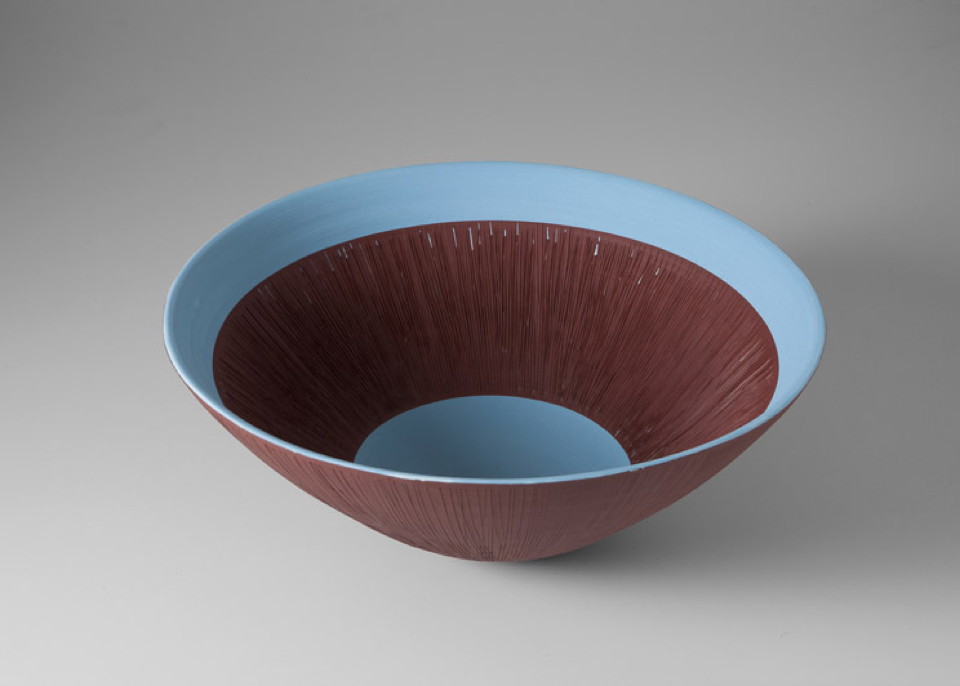
photo by eduardo câmara
barbara keal
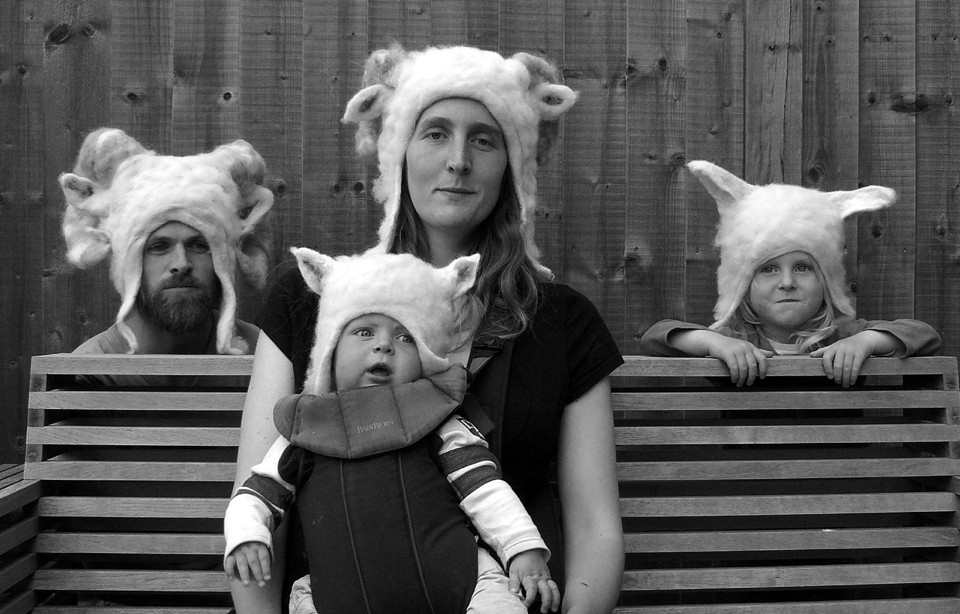
Barbara Keal hand makes felted hats and costumes inspired by animals both real and imaginary, relishing the joy they give to all who wear them. Since Origin London 2010 Barbara's dream for hats to change the world has become real. An important aspect of her work is the transformative effect the hats have on the wearer who usually ends up with a massive grin on their face and a jaunty spring in their step.
Barbara lives and works in Lewes, East Sussex in the UK. Lewes is a picturesque county town known for it's eccentric and welcoming attitude which is located in the South Downs national park.
Welcome to her world bustling with creatures: foxes, badgers, enormous hares, expressive rams and the odd minotaur, not to mention all the beasts you can't name...
nelson sepulveda
photos by mark eden schooley
Nelson is a magical person, the kind of people you rarely meet during one's life.It's like he has already lived several lives. For quiet a long time, he was the Art Director of the magazine Bloom. He has been imagining beautiful photos, choosing carefully the subject, the flowers, the objects, taking care with his team of every little thing and giving us a lot of emotion. Passionate, enthusiastic, generous and full of positive energy that is how he can be described. Since several years Nelson fall in love with craft. He had been traveling in Asia, in Morocco, in Egypt, in Tunisia to look for "artisans".
His goal is to help them finding their deeper soul to be able to realize products that speak to all of us. Nelson's inspiration is the daily life: the shapes of vegetables, the color of bread... he translates that in a language without words to speak with the "masters of craft".
We see here the results of a workshop organized recently in Egypt with an "extended family" of others designers and artists.
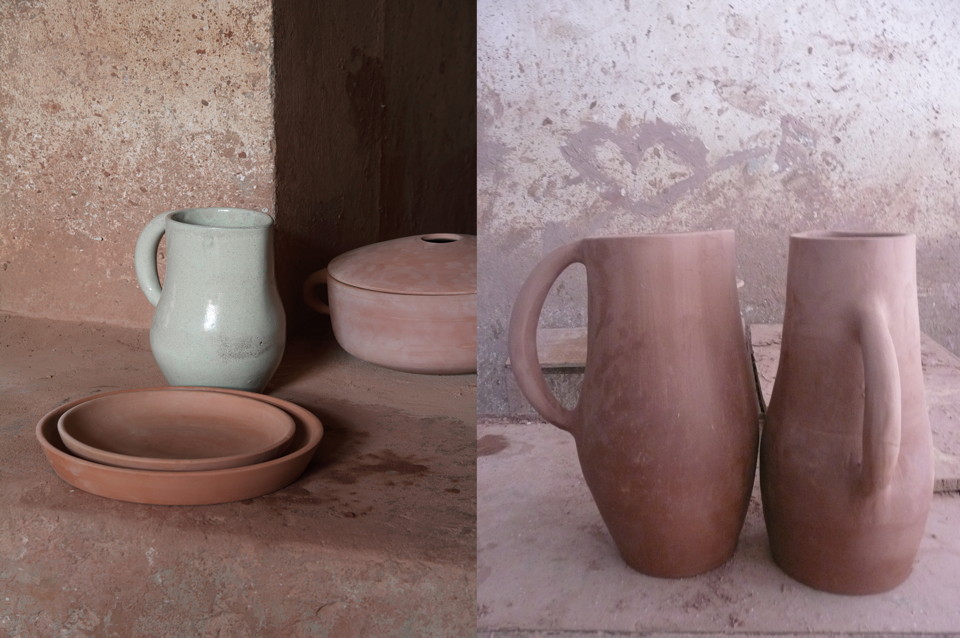
photos by mark eden schooley
an interview by cecile poignant
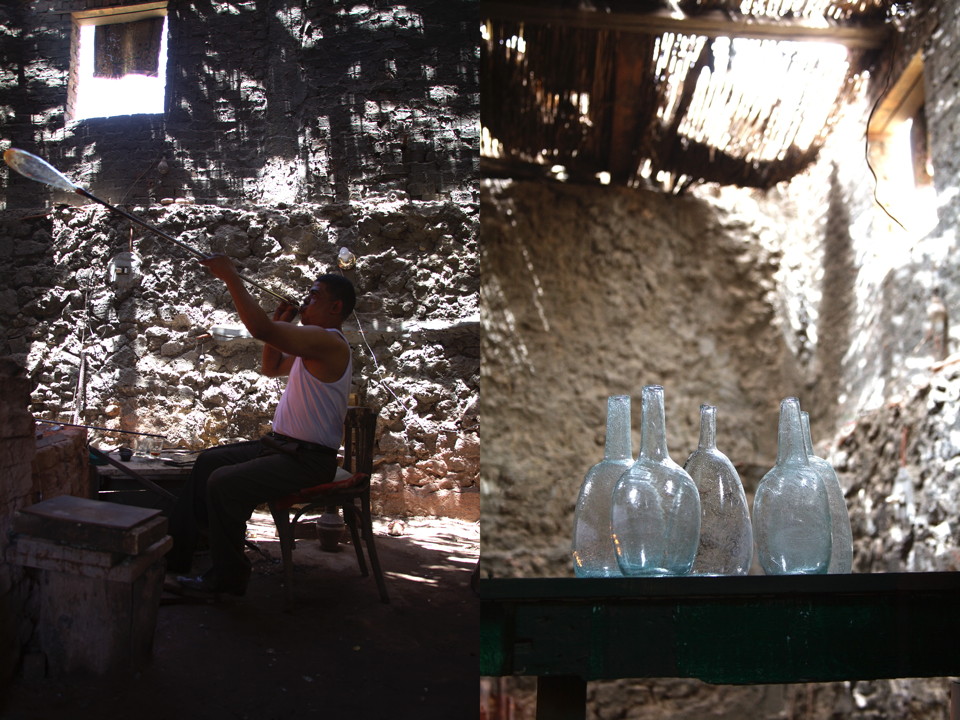
photos by mark eden schooley
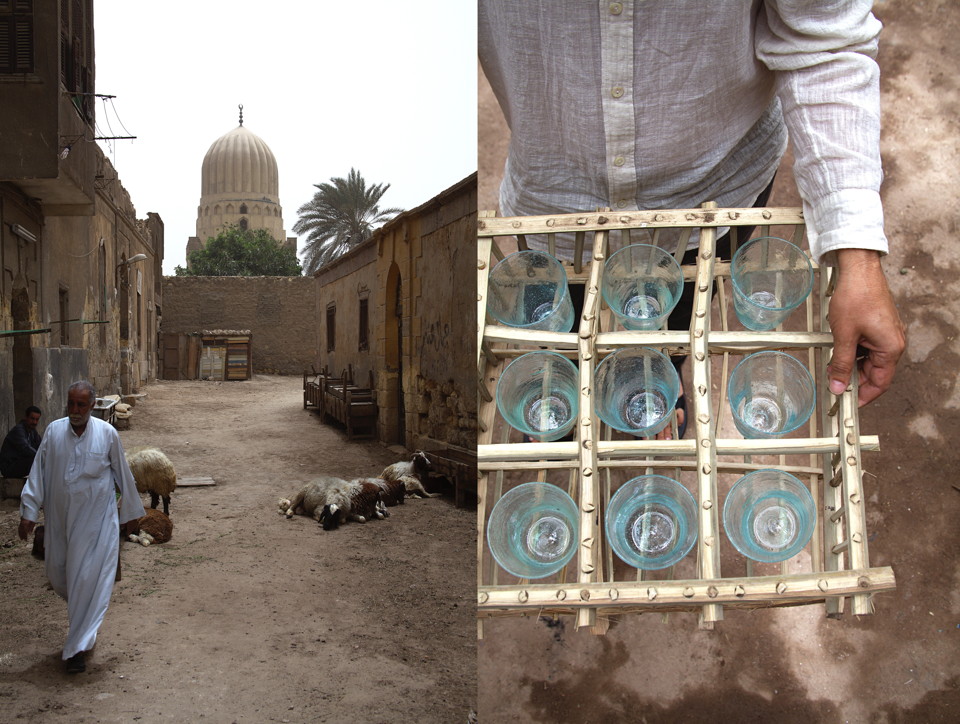
photos by mark eden schooley
casa clementina
photo by sissi castellano
Born in Florence, Stefano Panconesi is graduated in Economy with a thesis on the marketing of dye plants. Following his father's footsteps, he's always been passionately interested in natural dyeing, For over twenty years he has been active in promoting the industrial use of natural dyeing as well as biological textiles and teaching courses for various organizations. With Sissi Castellano, Milanese-born architect, he founded Casa Clementina an association whose aim is to rediscover and preserve textile traditions both in Italy and abroad. Casa Clementina is located in Pettinengo, a village near Biella, in Piedmont, Italy. The seat of the Association is an old villa which used to belong to Clementina Corte (1850-1935), photographer and director of amateur theatricals. After decades of being uninhabited, the villa recently underwent a careful and sympathetic restoration which preserved most of its original character, including frescoed ceilings and large areas of the original wallpaper.
Casa Clementina, which launched its courses in March 2011, welcomes weaving teachers, natural dye experts and teachers of natural dyeing, textile researchers and artists, as well as anyone interested in discovering new traditions and sharing experiences in traditional crafts.Courses are held monthly, and Casa Clementina’s charming rooms can provide accommodation. Meals are shared in the spacious veranda, or in the garden in fine weather.
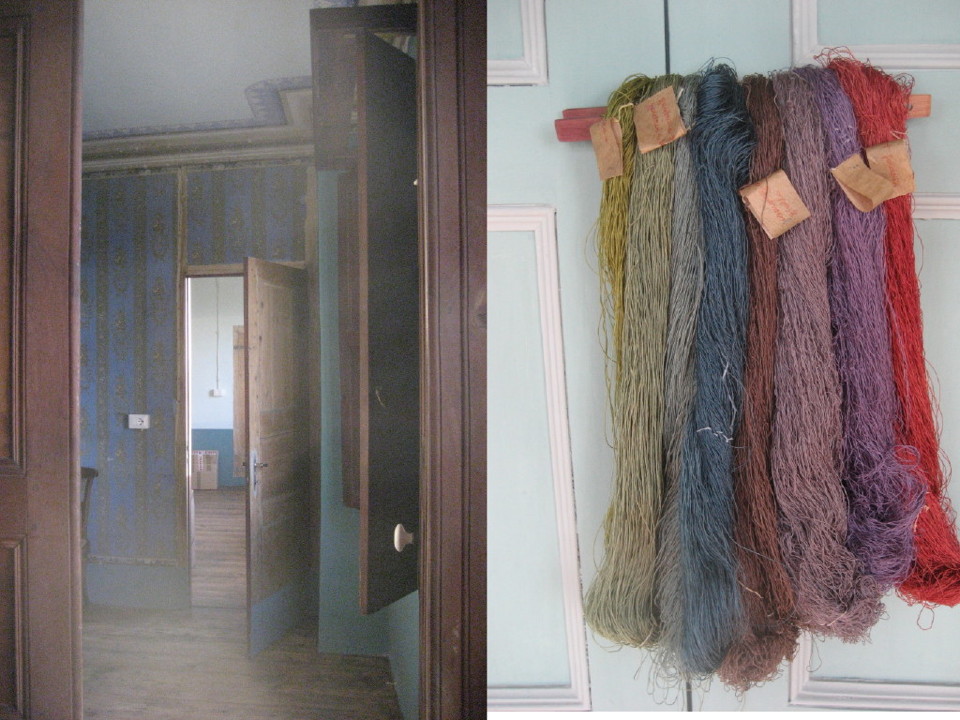
photos by sissi castellano
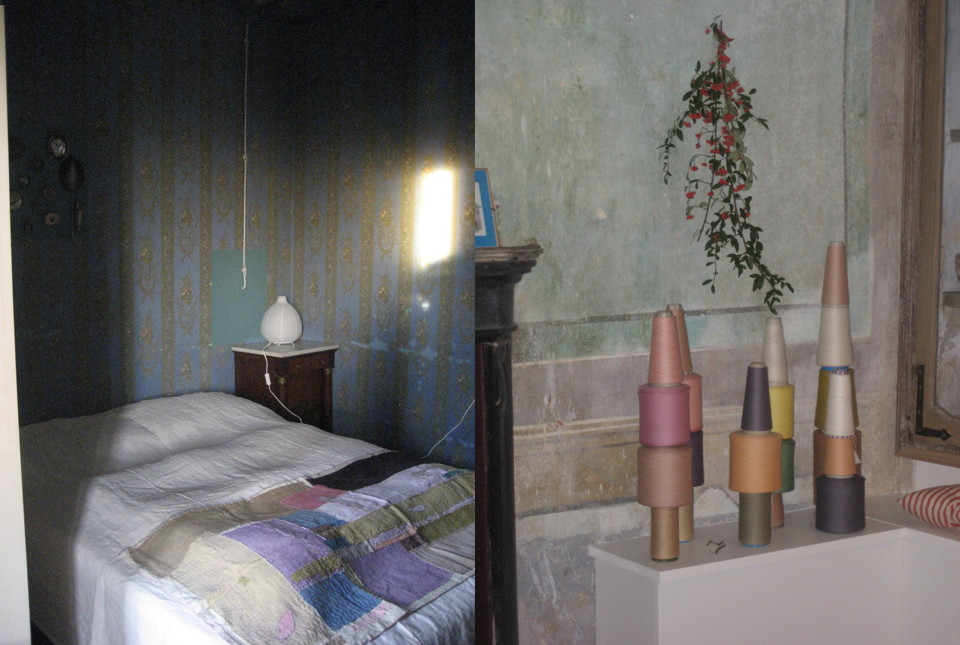
photos by sissi castellano
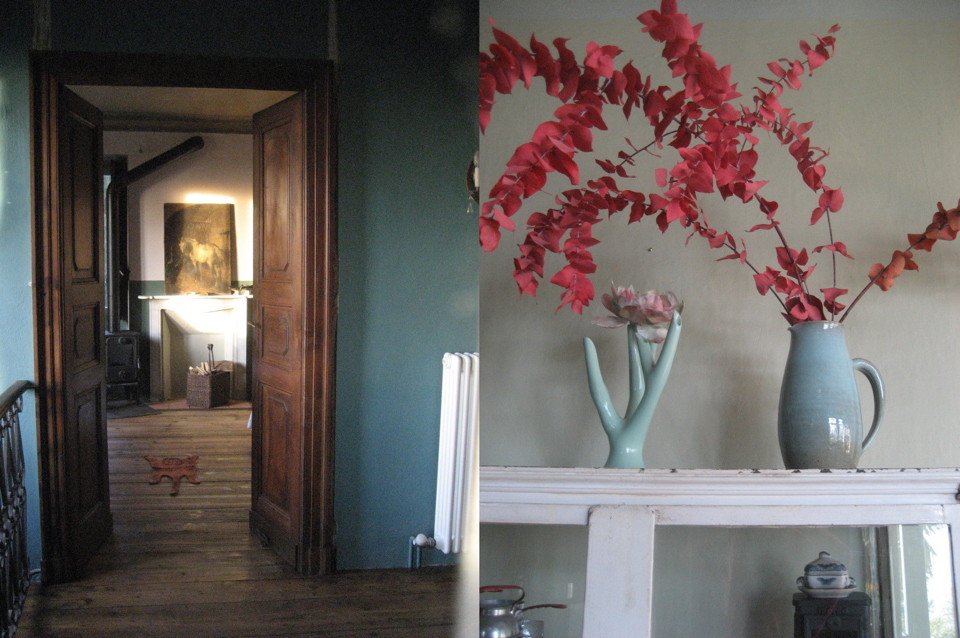
photos by sissi castellano
heartwear
In 1993, with a group of stylist friends, Lidewij Edelkoort created Heartwear, a non-profit association that helps to sustain handcraft knowledge and thus collaborates with artisans to tailor their products for worldwide export, without compromising the skill, knowledge, culture and environment of the region involved. Design talent is coupled with marketing insight. Trend forecasting skills are balanced with historical and cultural knowledge. Among its many projects, Heartwear has developed indigo textiles for home and fashion with artisans in Benin, ceramics with potters in Morocco, and khadi cotton in India.
Active members are :Lidewij Edelkoort, Karen Petrossian, Yves Venot, Daniel Cendron, Corinne Delemazure, Sophie Carlier, Gert van de Keuken, Lucien Aquilon, Donald Namekong, Sergio Machado.
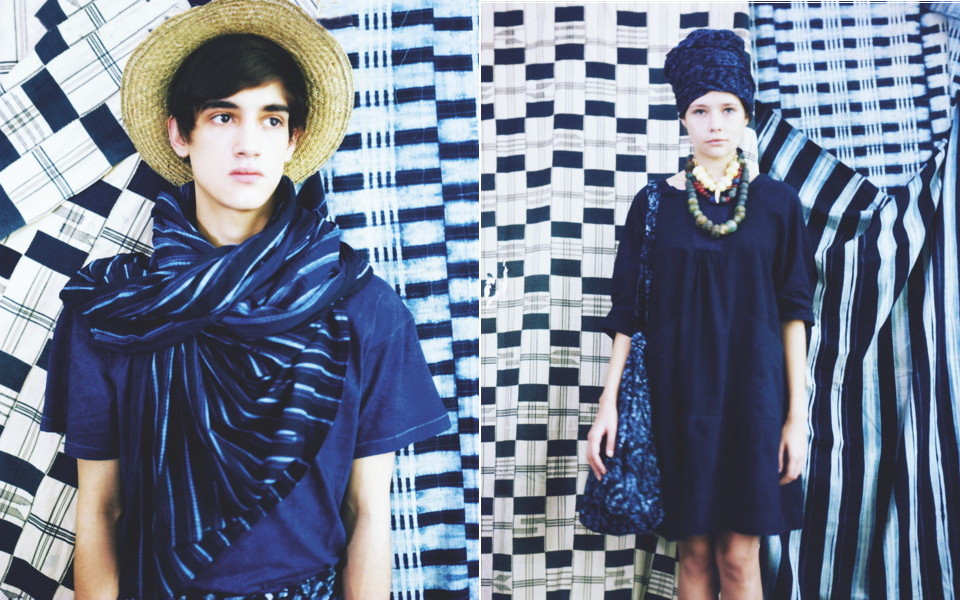
photos marie taillefer - styling sergio machado
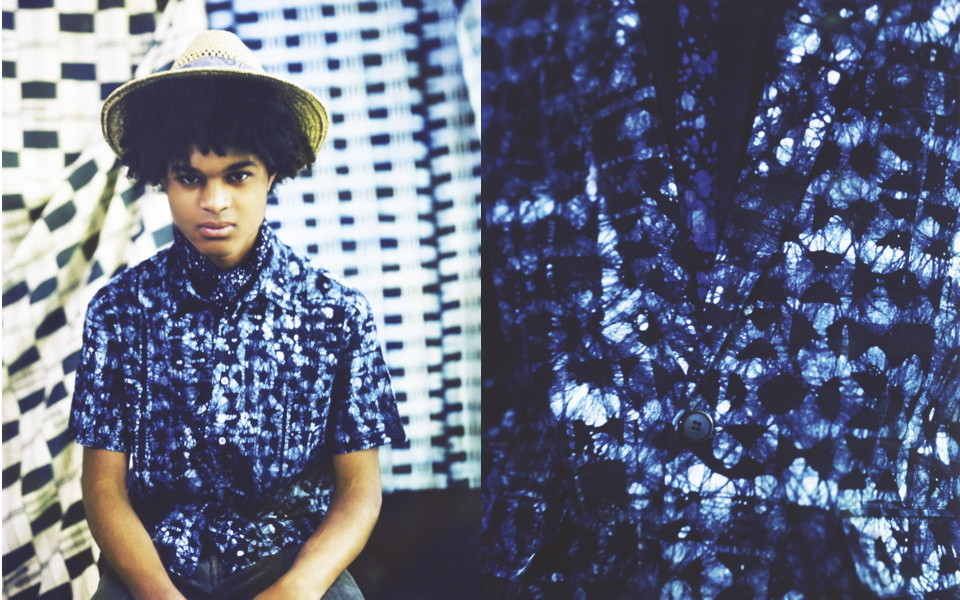
photos marie taillefer - styling sergio machado
Heartwear was at Merci' s shop in Paris for a beautiful installation called "UNIVERSAL BLUE"
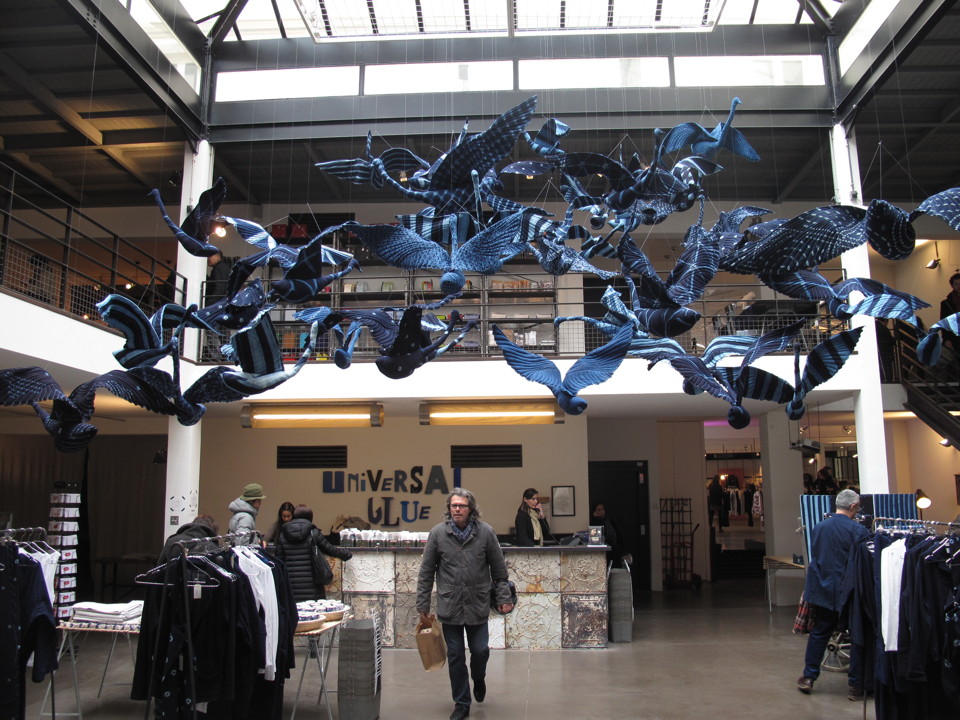
photo sergio machado
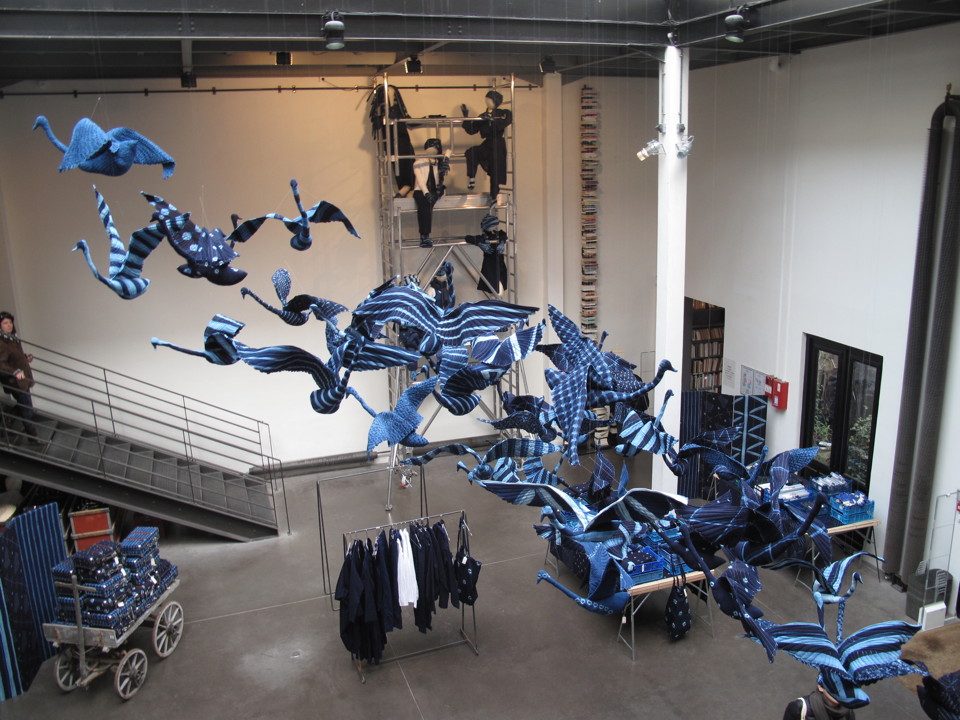
photo sergio machado
2011-05-24 11:41:41
2011-05-24 08:41:03
2011-05-21 12:25:06
2011-05-19 13:32:37
2011-05-18 14:18:50